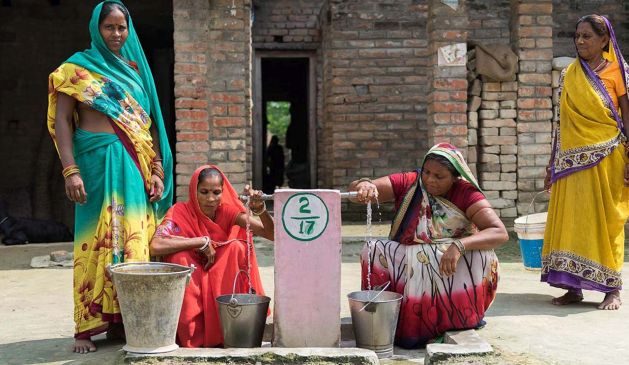
Goat rearing is contributing to economic independence and improved livelihoods of women thanks to a post-COVID-19 empowerment project. CREDIT: Umar Manzoor Shah/IPS
MILONPUR, INDIA, Aug 8 2023 (IPS) – Seema Devi is a 39-year-old woman hailing from India’s northeastern state of Assam. She lives in a village called Milonpur, a small hamlet with no more than 1 000 inhabitants. While most men from the village, including Devi’s husband, move to cities and towns in search of work, women are left behind to take care of the house and kids.
Devi says that after the COVID-19 lockdown in India in the year 2020, the family income drastically plummeted. As most of the factories were shut for months, the workers, including Devi’s husband, were jobless. Even after the lockdown ended and workers were called back to the factories, the wages dipped.
“Earlier my husband would earn no less than Rs 10 000 a month (125 USD), and after the lockdown, it wasn’t more than a mere 6 000 rupees (70 USD). My children and I would suffer for the want of basic needs like medicine and clothing, but at the same time, I was considerate of the situation and helplessness of my husband,” Devi told IPS.
However, there were few alternatives available at home that could have mitigated Devi’s predicament. With the small area of ancestral land used for cultivation, the change in weather patterns caused her family and several households in the village to reap losses.
However, in 2021, a non-government organization visited the hamlet to assess the situation in the post-COVID scenario. The villagers told the team about how most of the men in the village go out to cities and towns in search of livelihood and work as labourers in factories and that their wages have come down due to economic distress in the country.
After hectic deliberations, about ten self-help groups of women were created. They trained in livestock farming and how this venture could be turned into a profitable business.
The women were initially reluctant because they were unaware of how to make livestock farming profitable. They would ask the members of the charitable organisation questions like, “What if it fails to yield desired results? What if some terrible disease affects the animals, and what if the livestock wouldn’t generate any income for them?”
Wilson Kandulna, who was the senior member of the team, told IPS that experts were called in to train the women about cattle rearing and how timely vaccinations, proper feed, and care could make livestock farming profitable and mitigate their basic living costs. “At first, we provided ten goat kids to each women’s group and made them aware of the dos and don’ts of this kind of farming. They were quick to learn and grasped easily whatever was taught to them,” Wilson said.
He added that these women were living in economic distress due to the limited income of their husbands and were desperately anxious about the scarcity of proper education for children and other daily needs.
Devi says that as soon as she got the goat kids, she acquired basic training in feeding them properly and taking them for vaccinations to the nearby government veterinary hospital.
“Two years have passed, and now we have hundreds of goats as they reproduce quickly, and we are now able to earn a good income. During the first few months, there were issues like feeding problems, proper shelter during monsoons and summers, and how and when we should take them out for grazing. As time passed and we learned the skills, we have become very trained goat rearers,” Devi said.
Renuka, another woman in the self-help group, told IPS that for the past year, they have been continuously getting demands for goat milk from the main towns. “People know about the health benefits of goat milk. They know it is organic without any preservatives, and that is the reason we have a very high demand for it. We sell it at a good price, and at times, demand surpasses the supply,” Renuka said.
For Devi, livestock farming has been no less than a blessing. She says she earns more than five thousand rupees a month (about 60 USD) and has been able to cover daily household expenses all by herself. “I no longer rely on my husband for household expenses. I take care of it all by myself. My husband, too, is relieved, and things are getting back on track,” Devi said, smiling.
Kalpana, a 32-year-old member of the group, says the goats have increased in number, and last year, several of them were sold in the market at a good price.
“The profits were shared by the group members. Earlier, women in this village were entirely dependent on their husbands for covering their basic expenses. Now, they are economically self-reliant. They take good care of the house and of themselves,” Kalpana told IPS News.
Note: Names of some of the women have been changed on their request.
Simita Devi, whose daughter spent days in hospital recently suffering from typhoid caused by contaminated water, collects clean water brought to the surface by a solar pump. Credit: Umar Manzoor Shah/IPS
By Umar Manzoor Shah Champad, India, Jul 4 2023 (IPS)
Simita Devi spent over ten days in a government-run hospital a year ago anxiously watching her critically ill nine-year-old daughter, Gudiya, who was diagnosed with typhoid.
Gudiya was so sick she even went into a coma for a day. Medical staff attending to the child said she contracted the disease from drinking contaminated water.
After being discharged, Devi’s main worry was to get safe drinking water for her ailing daughter.
She was advised not to consume water from village wells or untested sources like river streams or springs.
Hailing from Champad, a tribal village in India’s Jharkhand state, Devi works as a daily wage labourer alongside her husband. With a limited income, Devi couldn’t afford packaged drinking water for her daughter.
She then decided to boil the water using firewood to make it safe to drink. But to get the firewood, she had to trek the treacherous terrains of the nearby forests – a long, difficult work and the fear of wild animals loomed.
It was not Devi alone impacted by contaminated water, it was making many people in her village ill, and there was nothing the inhabitants could do about it.
According to government records, 80% of India’s rural drinking water comes from underground sources. One-third of India’s 600 districts do not have safe drinking water because fluoride, iron, salinity, and arsenic concentrations exceed tolerance levels. India’s water quality is poor, ranking at 120 of 122 nations.
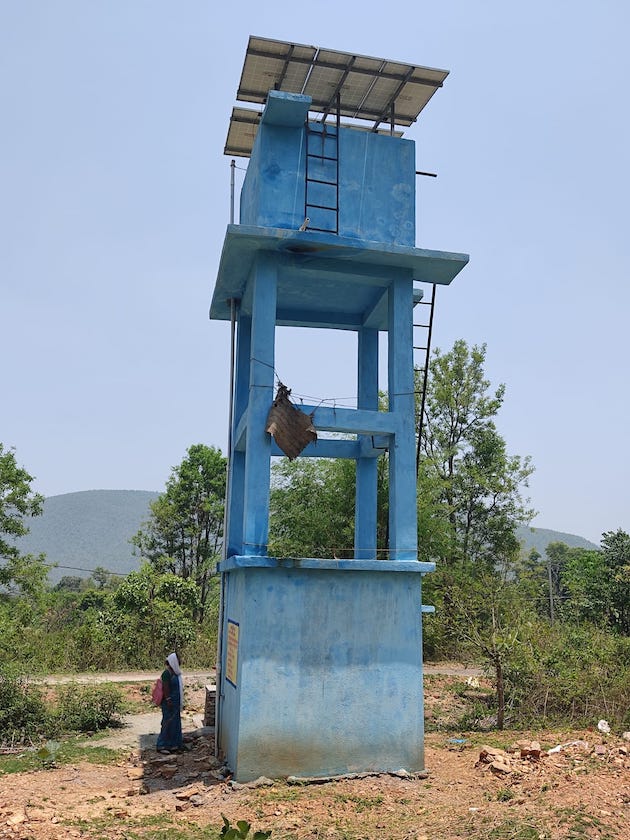
The solar panels on the water tower have meant clean waters for the villagers of Champad, a tribal village in India’s Jharkhand. Credit: Umar Manzoor Shah/IPS
Experts believe that the source of these heavy metals is industrial waste being dumped untreated into water systems and nitrates which surface due to excessive and prolonged use of fertilizers. The government estimates that every year, over one lakh (100,000) people die of waterborne diseases in the country.
Champad, a village inhabited by a tribal community, has 105 households per the 2011 census. Until 2022, the community depended on only two tube wells as their source of drinking water. However, these tube wells often experienced malfunctions, leaving the villagers with no choice but to fetch water from a nearby river or pond. Consequently, there has been a rise in waterborne diseases, particularly affecting the health of women and children. The need to travel long distances for safe drinking water has increased women’s workload, increasing their workload.
Perturbed by the threat of waterborne diseases, the village locals congregated earlier this year to try to find a solution. They at first visited the local politicians for help. Then they headed towards government offices. “Nothing happened—absolutely nothing. We were virtually left high and dry. Except for God, no one is there to help us. At times, we were told to wait, and at times, we were told that government funding wasn’t available. But we were slowly dying. Our children are suffering in front of our own eyes,” Ram Singh, a local villager at Champad, told IPS.
Earlier this year, a team from a non-governmental agency working to uplift rural areas in India visited the village to assess the villagers’ hardships.
The agency then mooted the idea of a solar water tower in the village. The villagers were made aware of the process involved in the tower’s construction and that government approval for the facility was needed.
The village representatives were taken on board, and a proposal was submitted to the water department of the district.
“Government liked the idea, and it was readily approved. The entire village worked together to make the project a success story,” says a member of the humanitarian agency who wished to remain anonymous.
The towers were equipped with solar panels, enabling them to operate sustainably and with minimal environmental impact. The selection of sites for the towers was a collaborative effort involving the village communities. The first solar water tower was constructed in February 2023, while work on the other two towers is still ongoing. As a result, 45 families now directly benefit from the convenience of having clean drinking water channelled to their homes through pipelines. The water provided is of good quality and considered safe, in contrast to the open well water that was previously relied upon. This development has significantly alleviated the burden on women, who no longer have to travel long distances to fetch water from various sources.
The impact of this intervention was significant. The community’s health improved, and they were no longer at risk of waterborne illnesses. The women and children, who were often responsible for collecting water from distant sources, could now spend their time on other activities. The community’s overall quality of life improved, and they could focus on their livelihoods and education.
For Simita Devi, the facility is no less than a major solace in her life. She excitedly uses this water for drinking and thanks God for such an endeavour.
“Safe water means life for us. The solar tower has become a messiah for poor villagers like us. We will cherish the moments for life when we find its water coming to our homes,” Devi told IPS.
Despite unprecedented challenges, 2022 also opened windows of opportunity to move the needle around critical anti-corruption issues, such as anti-money laundering, asset recovery, beneficial ownership, and renewable energy. Credit: Shutterstock.
Sanjeeta Pant, Jan 25 2023 (IPS) – The G20 India Presidency is marked by unprecedented geopolitical, environmental, and economic crises. Rising inflation threatens to erase decades of economic development and push more people into poverty. Violent extremism is also on the rise as a result of increasing global inequality, and the rule of law is in decline everywhere. All of these challenges impact the G20’s goal of realizing a faster and more equitable post-pandemic economic recovery.
But as India prioritizes its agenda for 2023, it is corruption that is at the heart of all of these other problems- and which poses the greatest threat to worldwide peace and prosperity.
An Idea Whose Time Has Come
Although the G20 has repeatedly committed to the Financial Action Task Force’s (FATF) anti-money laundering standards, member countries have been slow to implement policy reforms
Despite unprecedented challenges, 2022 also opened windows of opportunity to move the needle around critical anti-corruption issues, such as anti-money laundering, asset recovery, beneficial ownership, and renewable energy. When global leaders meet during the G20 Indian Presidency , they must prioritize and build on this progress, rather than make new commitments around these issues that they then fail to implement.
According to the UN, an estimated 2-5% of global GDP, or up to $2 trillion, is laundered annually. Although the G20 has repeatedly committed to the Financial Action Task Force’s (FATF) anti-money laundering standards, member countries have been slow to implement policy reforms. In the wake of the Russian invasion of Ukraine and ineffective economic sanctions against Russian oligarchs, governments have started reexamining existing policy and institutional gaps, especially recognizing the role of Designated Non-Financial Businesses and Professions (DNFBPs), also known as “gatekeepers.”
G20 member countries are responding to concerns and criticisms from their national counterparts regarding failures to adopt FATF recommendations and clamp down on “dirty money.” Grappling with the need to be able to prosecute money-laundering cases and recover billions of dollars worth of frozen assets, they are also amending national laws to be able to do so.
Lack of beneficial ownership transparency is also aiding the flow of laundered money globally. The G20 recognizes beneficial ownership data as an effective instrument to fight financial crime and “protect the integrity and transparency of the global financial system.”
The Russian invasion helped drive home this message, especially among countries that are popular destinations for those buying luxury goods and assets. FATF’s amendment of its beneficial ownership recommendations in early 2022 was timely. Member countries are also introducing new reporting rules, and fast-tracking policies and processes to set up beneficial ownership registers. While there are still gaps in the proposed policies – as identified here– these are important first steps.
Similarly, the transition to renewable energy, initially raised as an environmental issue and then as a national security concern is increasingly gaining attention from a resource governance perspective. Given the scale of the potential investment, there is a need to tackle corruption in the energy sector to avoid potential pitfalls resulting from a lack of open and accountable systems as we transition to a net zero economy.
The cross-cutting nature of the industry means a wide range of issues– from procurement and conflict of interest in the public sector to beneficial ownership transparency- need to be considered. The global energy crisis and the Indonesian Presidency’s prioritization of the issue have helped build momentum around corruption in the renewable energy transition, and this focus must continue.
Calling on India
Corruption-related issues identified here are transnational in nature and have global implications, including for India. For instance, with money laundering cases rising in India, it cannot afford to regard it as a problem limited to safe havens like the UK or the US. The same is true for the lack of beneficial ownership transparency or corruption in the renewable energy transition, which fuels illicit financial networks in India and beyond, and which often transcend national borders.
Finally, corruption has a disproportionate impact on the global poor. Almost 10% of the global population lives in extreme poverty, many of whom live in countries such as India. The G20, under the Indian Presidency, provides a unique opportunity to ensure the voices of the most vulnerable are heard at the global level. By prioritizing the anti-corruption agenda and building on past priority issues and commitments, the Indian government can lead efforts to bridge the North-South divide.
Sanjeeta Pant is Programs and Learning Manager at Accountability Lab. Follow the Lab on Twitter @accountlab
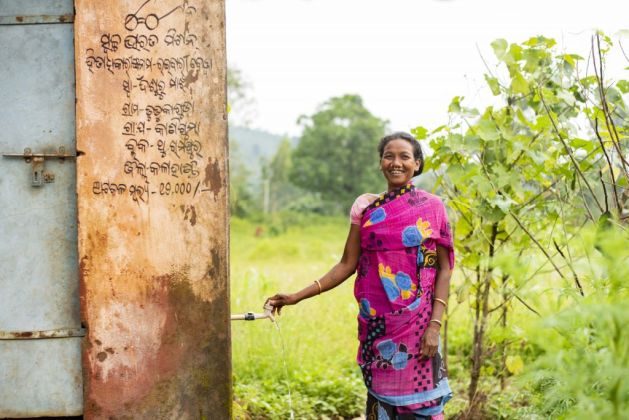
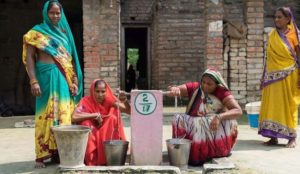
Raibari Bewa standing near the toilet, bathroom unit and collecting water from the third tap in Dudukaguda village, in Thuamul Rampur block, Kalahandi district of Odisha. On the walls, details of Swachh Bharat Mission benefits availed by her in Odia | Picture courtesy: Ajaya Behera
BHUBANESWAR, Odisha, India, Jul 30 2019 (IPS) – Research and experience across more than two decades in rural Odisha, India, show that an effective rural sanitation model requires both financial assistance and an integrated water supply.
There are studies and field reports that have analysed the Swachh Bharat Mission (SBM) in terms of coverage and use of toilets in rural India. The official government survey, the NARSS 2018-19, shows that 93 percent of rural households have access to a toilet and 96 percent of those having a toilet use them. Critiques of the survey point out the contradictions between NARSS and micro-level assessments in different parts of India. Other studies point out issues related to how comprehensive the approach to sanitation needs to be, if SBM is to truly address the large scale problems of ill-health, malnutrition, and poor quality of life caused by poor sanitation practices.
The Ministry of Drinking Water and Sanitation has already issued guidelines for follow-up components, such as the ‘Advisory on ODF Sustainability interventions‘. It is quite likely that with the Prime Minister and his government taking charge for the second term, the sustainability of the first generation SBM efforts will be given high priority. In this context, it is pertinent to throw light on some micro–level issues, based on more than two decades of experience in rural Odisha.
A rural sanitation model that works
Gram Vikas, the organisation I lead, started its work in rural sanitation in the year 1994. Our model of 100 percent coverage of all households in a village, all of them building and using household level toilets and a bathing room with piped water supply, has been recognised as a best practice nationally and globally.
Infrastructure alone is insufficient to sustain health benefits. Additional efforts are needed to motivate people to adopt safe sanitation practices…There are other aspects of personal hygiene and sanitation, including personal habits, disposal of child faeces, and menstrual hygiene; these need to be addressed by demonstrating workable models, accompanied by education
The integrated water, sanitation, and hygiene (WSH) intervention that we support rural communities with, is built on the following principles:
Participation of 100 percent of the habitation’s households; it is all, or none.
Cost sharing by the household, partially towards construction of the facilities, and fully for operations and maintenance.
Ownership and management by a village water and sanitation committee, consisting of representatives of all sections in the village.
A sanitation corpus fund built from a one-time contribution by all, towards providing cash incentives for future families in the village to build toilets and bathing rooms (ensuring 100 percent coverage at all times).
A maintenance fund through regular household fee collection, for maintenance of the piped water supply system.
In 25 years (up to March 2019), the Gram Vikas WSH model has been implemented in more than 1,400 villages, covering close to 90,000 households. The villages are financed primarily through the sanitation and rural drinking water schemes of the government, and Gram Vikas has mobilised private resources to fill in gaps.
What we learnt
Over the past two decades, working with rural communities of different types, we have realised that bringing about attitudinal and behaviour changes towards safe sanitation is not easy. When we began in the mid-1990s, saying that every house in the village will have toilets, bathing rooms, and piped water, most people laughed.
Between 1994 and 1999, we could cover only 30 villages—this resulted from our own efforts at motivating people, and not any felt desire on their part. Then started the gradual process of change—fathers of unmarried girls motivating future sons-in-laws’ village elders to take up the sanitation project; women taking the lead to convince their men to build toilets, and even stopping cooking for a day or two to make their husbands see reason; migrants who worked outside Odisha coming back to their own villages and motivating their parents, and so on.
When it comes to rural sanitation, government financial assistance matters
Between 1999 and 2007, the government’s support to sanitation, as part of the then newly launched Total Sanitation Campaign, was INR 300 per household, for below poverty line families. Support for community-led, piped water supply projects came much later, in the form of Swajaldhara in 2003.
The prevalent thinking among policy makers in the early 2000s was that financial incentives were not necessary to promote rural sanitation. This was based on the limited success of the subsidy-led Central Rural Sanitation Programme, that ran between 1986 and 1998.
Financial incentives to rural households for building toilets is more than a subsidy, it’s about society meeting part of the costs of helping rural communities build a better life. To compare, urban dwellers who may have built their own household toilets, do not pay anything for removing the human waste from their premises; municipal governments ensure sewage lines and treatment plants. The cost of this (which is borne by the government) is not seen as a subsidy. And yet, the upfront payment made to rural households to help build toilets is looked down upon as wasteful expenditure.
In 2011, the policy moved to a higher level of financial incentives to rural households for constructing individual household latrines, mostly likely in recognition of the fact that rural households needed the financial incentive as motivation to change sanitation behaviours. But today, with statistics showing 93 percent or more coverage of toilets, the policy prescription is likely to move to the pre-2011 phase–big financial incentives are not needed for building rural household toilets.
Our experience has taught us that nothing can be further from the truth. First, actual coverage of usable toilets is likely much less than what the numbers show. Second, households will need support for repairs and upgradation of the already built latrines. In addition, there are two categories for whom the financial assistance must continue: those who, for various reasons, have not constructed latrines so far; and new households that have come up in villages that have already been declared open defecation free (ODF).
Availability of water in the toilet is critical to encouraging use and maintenance of the facility
In most cases, where water is not available in proximity, the load on women to carry water has increased. A pour-flush latrine, the type mostly preferred, requires at least 12 litres of water per use. With 4-5 members in the household, the minimum daily requirement becomes about 60 litres, forcing women to collect at least three times the water they would otherwise collect. We have observed that without water in the household premises, women’s water carrying load increases to more than twice the pre-latrine times.
The addition of a bathing room, affords women more privacy, and a better way to keep themselves clean and hygienic. In most villages we have worked with, women especially, equate this part of their physical quality of life to what people in the city enjoy.
During the last few years, financial allocation for rural water supply has decreased. While the allocation to drinking water has reduced from 87 percent (2009-10) to 31 percent (2018-19), the allocation to rural sanitation has increased from 13 percent to 69 percent in the same period. This is definitely not a desirable situation, as noted by many.
Mainstreaming the community-owned and managed method of rural water supply will ensure equitable distribution
Doing this, rather than pushing for large water supply projects across many villages, will give rural communities and local governments greater control over managing their resources and meeting the needs of every household in an equitable manner. The Swajal programme of the Ministry of Drinking Water and Sanitation, which talks about village level, community-based water projects, is a step in the right direction. Much greater push is needed by the central government to ensure that the state-level apparatus moves to a more enabling and empowering approach in addressing rural drinking water needs.
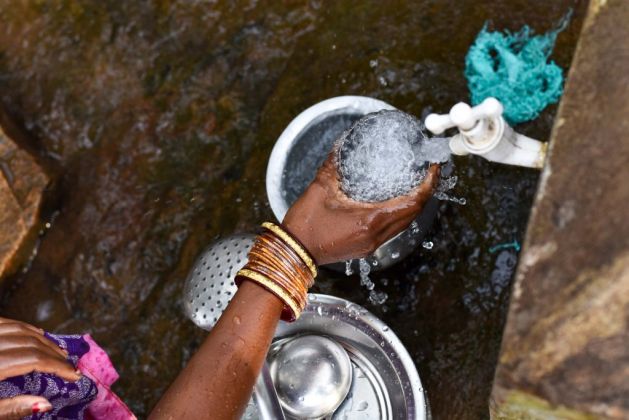
A woman collects the drinking water from the third tap in Simlipadar village in Thuamul Rampur, Kalahandi | Picture courtesy: Ajaya Behera
Second generation challenges
The water and sanitation infrastructure, when first built, contributes to a substantial decrease in water-borne diseases in villages. These are borne out of several studies conducted in villages in Odisha.
After the initial round of benefits, we find that the infrastructure alone is insufficient to sustain health benefits. Additional efforts are needed to motivate people to adopt safe sanitation practices. The ensuing issues have been highlighted by many. For instance, changing long-standing beliefs and attitudes related to toilet use requires intensive hand holding, particularly for older people. There are other aspects of personal hygiene and sanitation, including personal habits, disposal of child faeces, and menstrual hygiene; these need to be addressed by demonstrating workable models, accompanied by education.
From Gram Vikas’ experience in Odisha, we have been able to enumerate several challenges that need to be addressed. Even when piped drinking water exists, households prefer to store drinking water. We have found that handling of stored drinking water is an area that needs better education.
Disposal of child faeces, especially by mothers who do not think the child’s faecal matter is harmful, is another area of concern. We are also coming across new forms of discrimination in households, where menstruating women are not allowed to use the toilets and bathrooms.
While issues related to personal hygiene and washing hands with soap are already quite widely discussed, the next set of challenges relate to safe disposal and/or managing liquid and solid waste at the household and community level.
A charter of demands
We hope that the next iteration of Swachh Bharat Mission will truly lead to a Swachh Bharat. Based on our experience, we would like to draw the following charter of demands: .
1. Strengthen the ways of providing household sanitation infrastructure
Add a bathing room component to the design and costing provided in the national guidelines; increase financial support per household to INR 18,000 for new entrants; allow additional funding of INR 6,000 per household for those wanting to add a bathroom to their existing toilets.
Create provisions for repair or upgradation of toilets built, till 2018; provide for additional assistance to households whose toilets were built by contractors without involvement of the household.
Provide financial assistance for new households in villages already declared ODF.
Correct errors in the baseline of deserving households.
2. Integrate piped water supply with sanitation at the household level, and facilitate greater community control over rural drinking water projects
Enlarge the scope for Swajal scheme by allocating more funds.
Where ground water availability challenges dictate building of larger projects, it will make sense to separate the pumping and supply, from household distribution of water. The former could be done centrally for a large number of villages, while the latter could be managed by the communities at their level.
Make individual household–level piped water supply the standard design principle for rural water supply projects.
Build community capacities to manage groundwater resources and undertake watershed and springshed interventions.
Integrate water quality management as a community–level initiative, by demystifying testing technologies, and creatinga wider network of testing laboratories.
3. Deepen and integrate WSH interventions for better health and nutrition outcomes at the community-level
Incentivise states to achieve stronger schematic and financial convergence between National Health Mission and the Integrated Child Development Services at the intermediate and gram panchayat level.
4. Create a multi-stakeholder institutional platform to deepen and sustain SBM across rural India
Incentivisestates toenable Panchayati Raj Institutions to play a greater role in the SBM process.
Allow for more active participation of civil society organisations as facilitators and implementors, to support rural community–based institutions to adopt sustainable sanitation interventions. Provide financial incentives to such organisations based on outputs and outcomes.
Liby Johnson is the executive director of Gram Vikas, Odisha
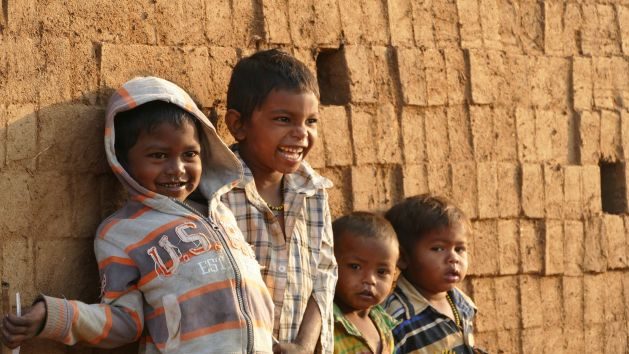
When we say that children aren’t learning, what we mean is that they are not fitting into our assessment of their learning outcomes | Picture courtesy: Nilesh Nimkar
THANE, MAHARASHTRA, India, Jun 6 2019 (IPS) – When we look at learning outcomes for children, we only look at standardised tests, ignoring any indigenous knowledge, language, or problem solving strategies they might have.
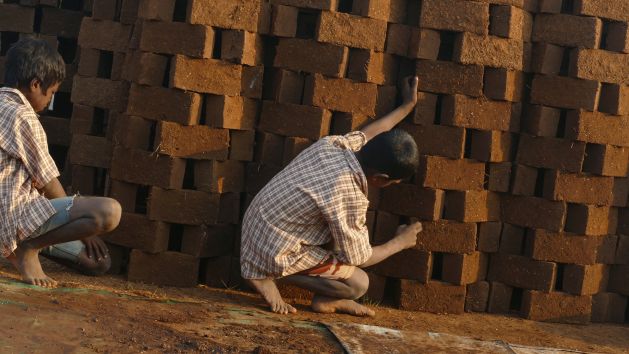
The brick kilns of Sonale were bustling with activity—children running around, indigenous technology being used, and lots of mathematics being done. I recently went there after a teacher from the nearby primary school approached our nonprofit, Quest, because the children living there were simply not learning. The concern was, if they didn’t even know their multiplication tables, how would they cope in classes V, VI, and VII?
So I went to see for myself. I asked these children, “To make the mortar for the bricks, how many pits have been dug?
“On one side 11; another side 12”
They also told me they would put three containers of raw material in each pit. So I asked them how many containers they would need in total, and after running off to count them, they came back with the right answers. They could also explain how they arrived at those numbers. What I found was that they were counting in threes. Not the way one recites the tables in the schools, but visualising it in their mind.
Clearly, these children knew how to multiply. That they failed to memorise their tables was beside the point. They had understood the concept and had demonstrated a strong meta-cognitive ability when they explained how they arrived at the answer
Clearly, these children knew how to multiply. That they failed to memorise their tables was beside the point. They had understood the concept and had demonstrated a strong meta-cognitive ability when they explained how they arrived at the answer. In my further conversations, I was amazed to see the kinds of calculations the children at the brick kilns did. For instance, 13 multiplied by 11 was done mentally because they were able to understand it within their own context (that of the brick kiln).
Standardised testing disadvantages marginalised children
This example illustrates one of the biggest challenges of our schools today—standardised assessment—which further disadvantages marginalised children. These children have a different type of cultural capital that schools and tests hardly recognise.
Western research in the field of math pedagogy points to the importance of children’s indigenous knowledge and strategies in solving problems and considers them to be the starting point for sound understanding of elementary mathematics. But what are those indigenous strategies in the Indian context? We still don’t know much about them. And our lack of knowledge results in us asking these children to run an unfair race.
Today, when we say that children from marginalised communities aren’t learning, what we mean is that they are not fitting into our assessment of their learning outcomes. By completely ignoring their indigenous knowledge, language, and problem-solving strategies, we have so far continued to focus on what they don’t know, and never paid attention to what they do know.
The process tells us more than just the outcomes
I do not deny the necessity of having some common indicators to understand the status of education in a given cluster, block, district, or state. But setting and chasing these indicators mindlessly could be dangerous.
Take for example, an encounter I had at an SSC exam centre in a rural school a few years ago. While I was visiting, I saw that the teachers were openly giving students answers to questions while they wrote their exams. When I asked why this was happening, a teacher said to me, “These children are weak from the beginning. It is almost impossible that they pass the exam on their own. If they fail, it will affect the result of our school and this would create a lot of trouble for us.”
This encounter is a classic example of what will happen if we neglect the process of learning and just focus on the numerical indicators of success. Our belief tends to be that if we can control learning outcomes, the quality of education will improve. But children can rote learn, or use unfair ways to pass their exams—we have no system that can check it at scale. What’s more, we are forgetting to track whether or not these children truly understand what they’ve been taught.
Ever since the ASER and other such reports have been published, we’ve been talking about how poor the learning outcomes are. But what have we really done to change things? We have been experimenting with examinations more than the actual process of learning, finding newer and newer ways to test the learning outcomes. But, if a pipe is choked, no matter what bowl you put under the opening, no water will drip into it. Similarly, no matter what exams, standard tests, and evaluation tool we use, only a little will change if we fail to address the core issues related to the process of learning.
“What I found was that they were counting in threes. Not the way one recites the tables in the schools, but visualising it in their mind” | Picture courtesy: Nilesh Nimkar
What needs to be done
1. Strengthen the process, invest in teachers
One of the positive outcomes of the Right to Education (RTE) Act is that it improved enrolment rates. But we know that it’s not enough to get children into schools. We need to alter our schools to meet children’s needs. If we want to set the process of education right, we have to strengthen its most impacting factor, the teacher.
Teacher education and ongoing teacher professional development are areas where we haven’t paid much attention. Instead of offering our teachers quick fixes to the challenges they face, we need to begin working with, and for our teachers.
One example of how to do this could be through a technology based distant mentoring system for teachers working across geographies. Quest, the nonprofit I run, has a system like this on a much smaller scale—here, teachers send audio recordings of their classroom activity to mentors (experienced teachers, teacher-educators, or researchers in the field of pedagogy), who then provide them with ongoing feedback to help them fine-tune their skills. This type of support system needs to be created on a larger scale.
2. Change the way we test
We need to alter the tools and parameters we use to assess success. We had a chance to do this when the idea of continuous comprehensive evaluations was introduced. However, the teachers and education community at large could not free themselves from the idea of examinations, and we lost a golden opportunity to bring our focus on to the process.
In a country as diverse as India, the assessment framework could be common for all. But the actual tests should be local and culturally appropriate. For example, I have seen assessment tests that show a picture of a well-maintained French garden or a city park, expecting a rural child to talk about it. In this situation it is obvious that the child will show poor oral expression.
Or yet another example is that of asking children to write words only from the ‘standard’ language—when in reality, Marathi spoken in different parts of Maharashtra is not the same. But normally the assessments are not sensitive to this regional variation, which means that children with a home language that is different than the standard variant of Marathi will always perform poorly.
The question we must ask ourselves is, do we want to make the education system more inclusive, or do we want to use it as a sieve to weed out the ‘weaker’ children? We need to design an overarching framework and build a bank of regionally, culturally appropriate testing items. Unless we do this our focus will always remain on what children don’t know.
Nilesh Nimkar has over 20 years’ experience in the field of early childhood education, elementary education, teacher education and curriculum development. He has initiated several innovative programs for teachers and children, specially in the rural and tribal areas. He has received the Maharashtra Foundation Award for ‘Outstanding social work in the field of education’.
Handpumps, participatory rural appraisals, wadi programmes, and so on, all came from an innovation or technology developed by civil society | Picture courtesy: Aga Khan Rural Support Programme (India)
AHMEDABAD, GUJARAT, India, Jun 4 2019 (IPS) – When we look at some of the things we take for granted in India today, there is a common thread to all of them. Every single one. They all originated from civil society.
People hear the word civil society and react differently; and it depends on where they come from. For the business leader, social and environmental concerns are impediments to business. “Environment ke liye poora project band hojata hai, what about growth, what about the economy?” (Entire projects have to be shut down for the sake of the environment).
I’ve also been in conversations with some government officers who say, “woh kaam chhota karte hain aur credit bahut le lete hain. Kaam toh hum karte hain paisa toh hamara hai.” (The nonprofits hardly do any work but take all the credit. We are the ones who do the work, the ones who put in the money).
But nothing is farther from the truth. When we look at rural India, and look at some of the things we take for granted today—be it women self-help groups (SHGs), ASHA workers, biogas plants, RTI applications, and so on—there is a common thread to all of them. Every single one. They all originated as innovations in civil society.
Our largest government programmes were born in civil society
1. National Rural Livelihoods Mission (NRLM) and Self Help Groups (SHGs)
When we look at rural India, and look at some of the things we take for granted today—be it women self-help groups (SHGs), ASHA workers, biogas plants, RTI applications, and so on—there is a common thread to all of them. Every single one. They all originated as innovations in civil society.
One of the largest programmes of the government—the National Rural Livelihood Mission (NRLM)—is based on women self help groups (SHGs). And the concept of an SHG was developed by Aloysius Fernandes and his team at MYRADA.
In the 1970s, MYRADA was working with large primary agriculture cooperative societies (PACS), all of whom seemed to be failing. In some of the geographies however, while the cooperatives had collapsed, there were some villages where small groups were saving and giving credit to each other.
Aloysius and the MYRADA team saw this, identified them as empowered groups that the banks could lend to, gave it form and structure, and took it to NABARD.
NABARD realised the value of what MYRADA was helping build, because they themselves were trying to reach out to the poor and their existing institutional portfolio was failing because the cooperatives weren’t functioning. They supported MYRADA and then pushed the banks to lend to these groups of poor women who saved regularly.
So, in a sense the SHG movement was started by MYRADA and to some extent, NABARD. The state was not in the picture at that time.
Then the first SERP programme came up in Andhra Pradesh. They used the base created by NABARD and MYRADA and they promoted the SHGs. And because the SERP programme worked, and because the World Bank was funding SERP, when the government created the NRLM, they used the same principles and structures.
Today the NRLM, which rides almost entirely on the SHG infrastructure, is the only large-scale institutional arrangement that the government has to reach out to poor. Every government uses it, regardless of what end of the political spectrum they occupy. It is pro-poor and still has elements of the market—the state can extend its entitlements directly to the people, while also enabling them to be self-reliant by promoting enterprises. But if there hadn’t been MYRADA, we probably wouldn’t have had NRLM today.
2. Mahatma Gandhi National Rural Employment Guarantee Act (MGNREGA)
India’s most talked about government programme MGNREGA came about because Jean Drèze and others in civil society drafted it, and advocated for it.
The idea of MGNREGA did borrow from an earlier employment guarantee programme that was started in Maharashtra by Mr Vitthal Sakharam Page—chair of the Maharashtra State Legislative Council, and a social activist—who wrote the first draft in 1965. But it was only when several civil society activists fought for it in the early 2000s, that it became something that the Central government took seriously and passed into national law.
3. Integrated Water Management Programme (IWMP)
The early work around watershed management was done in Sukhomajri in Haryana. A more integrated approach was later piloted at Ralegan Siddhi by Anna Hazare. This, and the Hiware Bazar model by Popatrao Pawar became models to emulate, and the IWMP guidelines that are in place today are a result of contributions from many nonprofits.
These are just few examples but the story repeats itself again and again regardless of the sector. Consider these two others examples; one old and one relatively recent:
ASHA workers: The concept of ASHA workers was born in Jamkhed. The Aroles—Dr Mabelle and Dr Raj—started a programme in 1970 which involved semi-literate women delivering home-based care to mothers and newborns. It was taken to scale by the government, and our country now has over six lakh ASHA workers.
108 Service: The 108 service that everyone lauds as a model of efficiency and scale was started as a service by EMRI—a nonprofit in Andhra Pradesh under the aegis of Satyam Foundation (EMRI was later taken over by the GVK Foundation). It was handed over to the Andhra Pradesh government, and later, other state governments implemented it. Today it runs across 15 states and two union territories.
The list continues—handpumps, participatory rural appraisals, wadi programmes, and so on. Essentially, almost any government programme worth its salt came from an innovation or technology developed by civil society. This is not to belittle the role of the state, which is by far the major development actor, but to emphasise the role of civil society in nation building.
Despite this, we are seeing a marginalisation of the civil society sector by markets and the government because we haven’t told our story well enough.
Civil society is too self-effacing
What is the philosophy of a civil society? We believe that we will develop solutions which over time the community will own and the state or market will support. When that happens, we believe our work is done.
In a way, it’s a very phoenix-like approach—you create and you disband. And you start all over again on some other problem. We don’t patent anything; we don’t take credit for anything.
And perhaps this is because we know that something as complex as social change requires the contribution of many people—communities, grassroots organisations, the state, funders, and so on. But we have gone to the other extreme. We don’t even acknowledge our role in the change; in fact, we undermine it.
When people ask us if we have successfully run a programme, we say “Nahi humne toh kuch kiya nahi hai, ye toh sab gaonwalon ne kiya hai” (No, we didn’t do anything, it was the villagers who did everything). And while it might be politically correct to say that we are only the catalysts, and the real work is done the community; it’s not always an accurate representation.
Civil society is more than the catalyst; we are innovators—technical innovators and idea innovators. We take really complex problems and come up with new ways to address them. We do effective work but refuse to take credit for it. And our refusal to take credit only feeds into the government’s view point—if the community is doing everything and civil society isn’t doing anything, then we will deal with the community directly.
People don’t understand our unique proposition
Because we have undermined ourselves, our unique proposition is not known. Our value to society is not only what we do or how we do it, but also at what cost we do what we do.
Many of us work at ridiculously low costs but we don’t document it, and we don’t measure it. So, some corporates, who want to work on social programmes, believe that they don’t need nonprofits. All they have to do is take the nonprofit’s staff and implement it on their own because it seems easy and cheap to do so.
The reality is different. Running a programme is complex. It takes years to build trust. And it requires humility, rigour, and persistence. It requires training, all-weather support, and hand-holding—all things that lead to an enabling ecosystem that a good nonprofit creates.
But some corporates don’t know this; they just want to take on the programmes because they believe they can do it better on their own rather than share space with nonprofits. It’s we who are at fault because we allowed this to happen.
The assumption is that nonprofits cannot scale
Scale is the new measure of ‘success’, where others find civil society wanting. Small, local and specialised civil society organisations are disappearing, and are not considered relevant in this new India which is in a hurry.
If one studies what has worked in the past, one realises that many, relatively small organisations have transformed the country. Consider MKSS, which started its work in a small village in Rajasthan, and even at its peak, worked largely in Rajasthan for the citizens’ right to information. That the RTI Act eventually became one of the most effective legislations by the state to hold itself accountable to its citizens, is a story of how impact is not necessarily a function of size.
We are constantly told by corporates and governments that we can’t scale. But then I reflect on what is it that a large corporate that has scaled typically does? They pick one slice of a human being’s life, for instance, the fact that people might like to drink cold sweet water in summer. It is one need—one would think a very unhealthy need but nevertheless a need. And then a multi-billion-dollar soft drink industry gets created around this need. You serve nothing; in fact, you take a poor man’s good water and convert it into this sweet water and charge him INR 20 for it. That is your net value addition to society. So that is all you know. To understand one very small slice of a human being’s need and address it.
Now compare that to what civil society is trying to do. We are trying to transform the conditions in which human beings live. This is dramatically different from creating a market for one small need of an individual.
It’s easy to scale a product that is uni-dimensional, serves a very specific micro-need, to which you can throw a ton of resources—money, talent, technology. But can you do it when it involves changing entrenched social norms across all aspects of a person’s life and livelihood?
The problem is while we in the sector might know how to do some of this, we don’t know how to articulate it and how to measure it.
And because we haven’t articulated it, we cannot argue for resources, for space, for anything really.
Even if the state hasn’t failed, we will always need civil society
Civil society is that critical third pillar of the samaj-sarkar-bazaar (society-government-market) triangle. Without it, no society can function. Even in most successful countries across the world there will always be people who are marginalised, and issues that are not on government or company radars.
There will always be a human problem which the market will never take up and the state will not realise either, because it is too buried, or too out there in the future. Even in its best form, the government is not designed to look at these things. And countries that have a majoritarian democracy will ignore those who are not a part of their majority. It’s a design problem.
So, who will look out for these people, who will help change entrenched social norms, who will build awareness of issues that matter?
Apoorva Oza is the chief executive officer of Aga Khan Rural Support Programme (India). He is also actively involved in founding and supporting nonprofits and nonprofit networks, as well as influencing government policy. A mechanical engineer with a diploma in rural management from the Institute of Rural Management, Anand, he has also completed courses from Cranford University, United Kingdom, and Cornell University, USA.