Government Indifferent to Invasion of Drug Traffickers in the Peruvian Amazon

Civil Society, Crime & Justice, Editors’ Choice, Headlines, Human Rights, Indigenous Rights, Latin America & the Caribbean, Sustainable Development Goals

Indigenous Rights

Members of the indigenous guard of the native community of Puerto Nuevo, of the Amazonian Kakataibo people, located in the central-eastern jungle of Peru. Credit: Courtesy of Marcelo Odicio

Members of the indigenous guard of the native community of Puerto Nuevo, of the Amazonian Kakataibo people, located in the central-eastern jungle of Peru. Credit: Courtesy of Marcelo Odicio

LIMA, Jul 26 2024 (IPS) – The invasion of lands inhabited by Amazon indigenous communities is growing in Peru, due to drug trafficking mafias that are expanding coca crops to produce and export cocaine, while deforestation and insecurity for the native populations and their advocates are increasing


“Drug trafficking is not a myth or something new in this area, and we are the ones who defend our right to live in peace in our land,” said Kakataibo indigenous leader Marcelo Odicio, from the municipality of Aguaytía, capital of the province of Padre Abad, in the Amazonian department of Ucayali.

“We are the ones who pay the consequences, we are visible to criminals, we are branded as informers, but I will continue to defend our rights. Along with the indigenous guard we will ensure that the autonomy of our territory is respected,” Marcelo Odicio.

Of the 33 million inhabitants of the South American country, around 800,000 belong to 51 Amazonian indigenous peoples. Overall, 96.4% of the indigenous population is Quechua and Aymara, six million of whom live in the Andean areas, while the Amazonian jungle peoples account for the remaining 3.6%.

The Peruvian government is constantly criticised for failing to meet the needs and demands of this population, who suffer multiple disadvantages in health, education, income generation and access to opportunities, as well as the growing impact of drug trafficking, illegal logging and mining.

A clear example of this is the situation of the Kakataibo people in two of their native communities, Puerto Nuevo and Sinchi Roca, in the border between the departments of Huánuco and Ucayali, in the central-eastern Peruvian jungle region.

For years they have been reporting and resisting the presence of invaders who cut down the forests for illegal purposes, while the government pays no heed and takes no action.

The most recent threat has led them to deploy their indigenous guard to defend themselves against new groups of outsiders who, through videos, have proclaimed their decision to occupy the territories over which the Kakataibo people have ancestral rights, which are backed by titles granted by the departmental authorities.

Six Kakataibo leaders who defended their lands and way of life were murdered in recent years. The latest was Mariano Isacama, whose body was found by the indigenous guard on Sunday 14 July after being missing for weeks.

In his interview with IPS, Odicio, president of the Native Federation of Kakataibo Communities (Fenacoka), lamented the authorities’ failure to find Isacama. The leader from the native community of Puerto Azul had been threatened by people linked to drug trafficking, suspects the federation.

Marcelo Odicio, president of the Native Federation of Kakataibo Communities, headquartered in the town of Aguaytía, in the department of Ucayal, in the Peruvian Amazon. Credit: Inforegión

Marcelo Odicio, president of the Native Federation of Kakataibo Communities, headquartered in the town of Aguaytía, in the department of Ucayal, in the Peruvian Amazon. Credit: Inforegión

During a press conference in Lima on 17 July, the Interethnic Association for the Development of the Peruvian Jungle (Aidesep), that brings together 109 federations representing 2,439 native communities, deplored the government’s indifference in the situation of the disappeared and murdered leader, which brings to 35 the number of Amazonian indigenous people murdered between 2023 and 2024.

Aidesep declared the territory of the Amazonian indigenous peoples under emergency and called for self-defence and protection mechanisms against what they called “unpunished violence unleashed by drug trafficking, mining and illegal logging under the protection of authorities complicit in neglect, inaction and corruption.”

Lack of vision for the Amazon

The province of Aguaytía, where the municipality of Padre de Abad is located and where the Kakataibo live, among other indigenous peoples, will account for 4.3% of the area under coca leaf cultivation by 2023, around 4,019 hectares, according to the latest report by the government’s National Commission for Development and Life without Drugs (Devida).

It is the sixth largest production area of this crop in the country.

The report highlights that Peru reduced illicit coca crops by just over 2% between 2022 and 2023, from 95,008 to 92,784 hectares, thus halting the trend of permanent expansion over the last seven years.

These figures are called into question by Ricardo Soberón, an expert on drug policy, security and Amazonia.

Ricardo Soberón, a renowned Peruvian expert on drug policy, Amazonia and security. Credit: Walter Hupiú / IPS

Ricardo Soberón, a renowned Peruvian expert on drug policy, Amazonia and security. Credit: Walter Hupiú / IPS

“The latest World Drug Report indicates that we have gone from 22 to 23 million cocaine users, and that the golden triangle in Burma, the triple border of Argentina-Paraguay-Brazil and the Amazonian trapezoid are privileged areas for production and export,” Soberón told IPS.

The latter holds “Putumayo and Yaguas, areas that according to Devida have reduced the 2,000 hectares under cultivation. I don’t believe it,” he said.

The United Nations Office on Drugs and Crime (UNODC), that commissioned the report, also lists Peru as the world’s second largest cocaine producer.

Soberón added another element that discredits the conclusions of the Devida report: the government’s behaviour.

“There is no air interdiction in the Amazonian trapezoid, the non-lethal interdiction agreement with the United States will be operational in 2025. On the other hand, there are complaints against the anti-drug police in Loreto, the department where Putumayo and Yaguas are located, for their links with Brazilian mafias,” he explained.

He believes there was an attempt to whitewash “a government that is completely isolated”, referring to the administration led since December 2022 by interim president Dina Boluarte, with minimal levels of approval and questioned over a series of democratic setbacks.

Soberón, director of Devida in 2011-2012 and 2021-2022, has constantly warned that the government, at different levels, has not incorporated the indigenous agenda in its policies against illegalities in their ancestral areas.

This, he said, despite the growing pressure on their peoples and lands from “the largest illegal extractive economies in the world: drug trafficking, logging and gold mining,” the main causes of deforestation, loss of biodiversity and territorial dispossession.

Soberón argued that, given the magnitude of cocaine trafficking in the world, major trafficking groups need coca crop reserves, and Peruvian territory is fit for it. He deplored the minimal strategic vision among political, economic, commercial and social players in the Amazon.

Based on previous research, he says that the Cauca-Nariño bridge in southern Colombia, Putumayo in Peru, and parts of Brazil, form the Amazonian trapezoid: a fluid transit area not only for cocaine, but also for arms, supplies and gold.

Hence the great flow of cocaine in the area, for trafficking and distribution to the United States and other markets, which makes the jungle-like indigenous territories of the Peruvian Amazon attractive for coca crops and cocaine laboratories.

Soberón stresses it is possible to reconcile anti-drug policy with the protection of the Amazon, for example by promoting the citizen social pacts that he himself developed as a pilot project during his term in office.

It is a matter, he said, of turning the social players, such as the indigenous peoples, into decision-makers. But this requires a clear political will, which is not seen in the current Devida administration.

Mariano Isacama (left), a Kakataibo indigenous leader who disappeared and was murdered after allegedly receiving threats from people linked to drug traffickers. Next to him, the president of the indigenous organisation Orau, Magno López. Credit: Courtesy of Marcelo Odicio

Mariano Isacama (left), a Kakataibo indigenous leader who disappeared and was murdered after allegedly receiving threats from people linked to drug traffickers. Next to him, the president of the indigenous organisation Orau, Magno López. Credit: Courtesy of Marcelo Odicio

“We will not stand idly by”

Odicio, the president of Fenacoka, knows that the increased presence of invaders in their territories is aimed at planting pasture and coca leaf, an activity that destroys their forests. They have even installed maceration ponds near the communities.

When invaders arrive, they cut down the trees, burn them, raise cattle, take possession of the land and then demand the right to title, he explained. “After the anti-forestry law, they feel strong and say they have a right to the land, when it is not the case,” he said.

He refers to the reform of the Forestry and Wildlife Act No. 29763, in force since December 2023, which further weakens the security of indigenous peoples over their land rights and opens the door to legal and illegal extractive activities.

The leader, who has a wife and two young children, knows that the role of defender exposes him. “We are the ones who pay the consequences, we are visible to criminals, we are branded as informers, but I will continue to defend our rights. Along with the indigenous guard we will ensure that the autonomy of our territory is respected,” he stressed.

In the native community of Puerto Nuevo there are 200 Kakataibo families, with 500 more in Sinchi Roca. They live from the sustainable use of their forest resources, who are at risk from illegal activities. “We just want to live in peace, but we will defend ourselves because we cannot stand idly by if they do not respect our autonomy”, he said.

  Source

Kanak Ambition for Independence Is Defiant Following Political Turmoil in New Caledonia

Asia-Pacific, Civil Society, Democracy, Editors’ Choice, Global Governance, Headlines, Human Rights, Indigenous Rights, Sustainable Development Goals, TerraViva United Nations

Indigenous Rights

Kanak Pro-Independence supporters display the Kanak flag during a rally in the streets of Noumea prior to New Caledonia's first referendum on Independence in 2018. Credit: Catherine Wilson/IPS

Kanak Pro-Independence supporters display the Kanak flag during a rally in the streets of Noumea prior to New Caledonia’s first referendum on Independence in 2018. Credit: Catherine Wilson/IPS

NOUMEA, New Caledonia , Jul 17 2024 (IPS) – It’s been 26 years since a peace agreement, the Noumea Accord, was signed following an outbreak of conflict in the 1980s between Kanak islanders and French armed forces in the French overseas territory of New Caledonia.


But the eruption of turbulent protests and unrest again two months ago has shown that the cleavage of indigenous political grievances with the French state remains deep in this group of islands located east of Australia in the southwest Pacific.

The centre of New Caledonia’s capital, Noumea, a popular holiday destination in the Pacific Islands, is usually abuzz with tourists patronizing sidewalk cafes. But many of the streets, now patrolled by French police, are deserted and eerily quiet.

The protests, which began in mid-May, escalated to armed clashes between activists and French security forces, resulting in ten deaths. And the destruction of homes, public buildings and looting of shops and businesses has had a devastating impact on the small island society. The cost of the damage is estimated to be more than USD 1 billion; at least 7,000 people have lost jobs and incomes, and the territory’s economy has suffered a major downturn.

Barricades were erected in the streets of Noumea when confrontations escalated between Pro-Independence activists and French police in May following the French Parliament's adoption of electoral reforms in New Caledonia. Credit: Catherine Wilson/IPS

Barricades were erected in the streets of Noumea when confrontations escalated between Pro-Independence activists and French police in May following the French Parliament’s adoption of electoral reforms in New Caledonia. Credit: Catherine Wilson/IPS

The unrest has revealed the gaping fracture between France’s determination to retain control of the territory and the indigenous Kanak islanders, who are riled at lack of progress toward their call for self-determination.

“We protested in the streets. We wanted to say to the French state, you must respect the Kanaks because France voted for the reforms without consent from us,” Jacques (his name has been changed), a Kanak activist in Noumea, told IPS.

He was speaking of the adoption of electoral changes in New Caledonia by the French Parliament, which would have opened the electoral roll to tens of thousands of recent migrant settlers, the majority from Europe.

About 41 percent of New Caledonia’s population is indigenous and many believe it would have led to the declining influence of their vote against rising numbers of Loyalists in future elections and referendums. The changing demographic balance between Kanaks and non-Kanaks is a longstanding grievance.

The uprising in the 1980s was driven by grievances about land dispossession, poverty, inequality, the absence of civil and political rights, and France’s policy of promoting migration from France to New Caledonia.

While French President Emmanuel Macron suspended the electoral reforms in mid-June, many Pro-Independence supporters are unappeased.

Jacques is among a group of Kanak activists who have set up a campaign site next to a main road on the outskirts of the capital. They are sitting around a table under a marquee, surrounded by flags and banners.

“We want our country to be decolonized, as it is written in the Noumea agreement. The French state is only interested in dominating the population here. If the French state stays here, we will have more violence,” Jacques claims.

The French government agreed in the 1998 Noumea Accord to grant New Caledonia more governing powers, recognition of Kanak culture and right to consultation, restrictions on the local electoral roll allowing only Kanaks and long-term residents to vote and the holding of referendums on its future political status.

But by 2021, three referendums had been held, all with majority outcomes, to remain part of France. There was a 43.33 percent vote for Independence in the first referendum in 2018, which increased to 46.74 percent in the second in 2020. But Kanaks, severely affected by the COVID-19 pandemic, boycotted the third referendum in 2021. The overwhelming Loyalist vote of 96.5 percent has never been accepted by Pro-Independence political parties, such as the Kanak and Socialist National Liberation Front (FLNKS).

“We firmly support the call by FLNKS for the UN to declare the result of the third referendum null and void due to the non-participation of the people of Kanaky. Voter turnout was below 50 percent of registered voters; hence, it cannot be taken as the legitimate wish of the silent majority,” the sub-regional inter-governmental organization, the Melanesian Spearhead Group, stated in 2021.

Kanak separatists’ determination to keep their aspirations alive, even though options for changing the political status quo through referendums have been exhausted, has led to an increasingly polarized political landscape. Some entrenched Loyalists believe that the French state should “take over the New Caledonian government because of all the political problems that we have,” Catherine Ris, President of the University of New Caledonia in Noumea, told IPS. And, “on the Pro-Independence side, we do not hear the moderate people anymore.”

The recent mobilization of the Field Action Coordinating Cell (CCAT) by the Pro-Independence Caledonian Union party was a sign of some Kanaks’ belief that their demands are not being met through the political process. The core group of activists were a major force behind the recent protests and the Cell’s leader, Christian Tein, is currently being held in a jail in France on charges related to the unrest. Similarly, the major presence of youths on the streets in May is evidence that a new generation has lost faith in the pace of social and political change.

“The younger people want the change now because in their lives they have experienced and seen a lot of hardship—the persecution of the Kanak people, the difficulties of getting a job,” Jacques emphasized. An estimated 45 percent of people in New Caledonia who don’t have a high school certificate are indigenous, and the Kanak unemployment rate is reported to be as high as 38 percent.

Yet the representation of Kanaks in the territory’s government and politics has steadily increased over the past two decades. The number of seats held by Pro-Independence politicians in New Caledonia’s 54 seat Congress rose from 18 to 25 between 2004 and 2014, while Loyalists witnessed a decrease from 36 to 29 seats, reports Australia’s Lowy Institute for International Policy.

In 2021, Louis Mapou, the first Kanak Pro-Independence President of the government, was elected. And, following the French national election this month, Emmanuel Tjibaou, a Kanak leader from the rural North Province, was voted in as one of New Caledonia’s two members of the National Assembly in Paris.

In the wider region, New Caledonia’s self-determination movement has the international support of other Pacific Island countries, especially those that have indigenous Melanesian populations, such as Papua New Guinea and Fiji, as well as Azerbaijan and Russia. And the French overseas territory has been on the United Nations’ Decolonization List since 1986.

Yet there are New Caledonians who are concerned about the viability of a New Caledonian state. The territory relies heavily on France’s fiscal support, which amounts to 20 percent of the local gross domestic product (GDP) and pays for public services, local economic development programs and civil service salaries.

“We have a good economy here,” Marcieux, a Frenchman who has lived in New Caledonia for 30 years, told IPS in Noumea. “It is easy to speak of independence, but, in reality, it is very difficult. You need a way to make independence.”

But, until the yawning political divisions laid bare by the events of May are addressed, it will be difficult for New Caledonia’s leaders to present a united will to President Macron and the French Parliament located more than 16,000 kilometres away.

However, Tjibaou, the new member of the French National Assembly, is the focus of hope that meaningful dialogue can emerge from the recent conflict. He told local media soon after his election this month that “we all have to offer a framework for discussions to resume between the three partners, which are France, the FLNKS and the Loyalists… we have to capitalize on this.”

IPS UN Bureau Report

  Source

How Climate-Smart Strategies Revitalized Tanzania’s Livestock Sector

Africa, Africa Climate Wire, Armed Conflicts, Civil Society, Climate Change, Climate Change Justice, Development & Aid, Editors’ Choice, Environment, Featured, Food and Agriculture, Food Security and Nutrition, Headlines, Human Rights, Indigenous Rights, Sustainable Development Goals, TerraViva United Nations

Climate Change Justice

In a quest for survival, farmers and pastoralists living in Oldonyo Sambu, Tanzania’s northern Maasai Steppe, used to fight over every drop of water. However, 12 villages have now adopted climate-smart bylaws after months of negotiations, putting an end to hostilities.

A pastoralist gazes into the horizon while taking a break from grazing cattle in Ikolongo Village. Credit: Kizito Makoye/IPS

A pastoralist gazes into the horizon while taking a break from grazing cattle in Ikolongo Village. Credit: Kizito Makoye/IPS

IRINGA, Tanzania , Jul 16 2024 (IPS) – As the sun sets, its golden hues piece through the dusty haze, creating a dazzling display when a herd of livestock lazily roams on the arid landscape as they return home from grazing.


Dressed in shiny red robes, the youthful Maasai pastoralists routinely whistle as they steer cattle, goats and sheep to maintain a unified path.

The quest for survival has forced these herders in Oldonyo Sambu, Tanzania’s northern Maasai Steppe, jostling for dwindling water and pastures as they try to sustain their herds.

Surprisingly, 670 kilometres (416 miles) away in Ikolongo village, south of Tanzania, the plight of water consumers has improved, thanks to a community-led initiative that brought farmers and pastoralists together  to resolve their water woes.

Sitting under a baobab tree, 47-year-old Leinot Leboo watches his cattle drink from a pond. This tranquil moment contrasts sharply with the situation in Oldonyo Sambu, where farmers often clash with herders as they jostle for water.

“I don’t recall any fight between pastoralists and farmers here.We get enough pastures and water for our livestock,” says Leboo.

Unlike in Oldonyo Sambu, local villagers here have created specific grazing lands and water points for livestock to prevent clashes with farmers. “We often bring our cattle here and let them graze and drink without causing any disturbances,” says Leboo.

According to Ignas Mashaka, Ikolongo village chairman, the residents have created a system where pastoralists pay a small fee to feed their herds on rice husks produced by farmers, especially in the dry season.

“This arrangement provides a steady source of feed, but it also give farmers extra income,” says Mashaka

Cows drink from a pond used exclusively by pastoralists in Ikolongo village, Tanzania. Credit: Kizito Makoye/IPS

Cows drink from a pond used exclusively by pastoralists in Ikolongo village, Tanzania. Credit: Kizito Makoye/IPS

Strict Rules

After months of negotiation between local residents and local district authorities, the villagers enacted strict by-laws, which have now been adopted and ratified by 12 surrounding villages.

“These rules have helped to ease tensions over water use,” says Mashaka.

Under the initiative, local residents joined forces to construct dams and reservoirs which have reduced water scarcity, providing a reliable supply for farmers and pastoralists.

“We used to fight over every drop of water,” says Musa Chacha, a farmer at Ikolongo village. “But now, there’s enough for everyone and there’s no reason to fight,”

By working together and managing resources sustainably, Ikolongo villagers have built a strong and resilient community.

Female farmers in Ikolongo village learn horticulture to grow vegetables as part of their strategy to cope with drought. Credit: Kizito Makoye/IPS

Female farmers in Ikolongo village learn horticulture to grow vegetables as part of their strategy to cope with drought. Credit: Kizito Makoye/IPS

The Bigger Picture

Despite having vast grazing lands, the east African country faces frequent conflicts over water and other resources due to climate change and weak land governance. Prolonged droughts often lead to clashes between farmers and pastoralists as they jostle for water and grazing space.

Tanzania’s livestock sector, a vital source of livelihood for millions, holds potential for growth in production and trade. With a cattle population of 36.6 million, the country ranks second in Africa, after Ethiopia. This accounts for 1.4% of the global cattle population and 11% of Africa’s. Beyond cattle, Tanzania also boasts large numbers of sheep, goats, chickens, and pigs, placing it among the continent’s top ten in overall livestock numbers.

However, the sector is plagued by many challenges due to climate risks and low investment, World Bank analysts say.

Transformative Initiative

As part of its broader efforts to improve the livestock sector, Tanzania has launched a new USD 546 million initiative to bolster productivity, increase resilience to climate change and improve the livestock industry. The initiative entails innovative strategies to curb extreme weather by constructing water reservoirs, introducing drought-resistant forage crops, and improving livestock breeds.

Challenges and Solutions

According to a recent World Bank report, “Harnessing the Opportunity for a Climate-Smart and Competitive Livestock Sector in Tanzania,” the pasture-based livestock sector in Tanzania faces serious challenges due to climate change and endemic livestock diseases, impacting animal health, productivity, and market access.

A herd of cattle grazes in a designated pastoralist area in Ikolongo village. Credit: Kizito Makoye/IPS

A herd of cattle grazes in a designated pastoralist area in Ikolongo village. Credit: Kizito Makoye/IPS

Pastoralist’s Perspective

Saidi Juma, a 55-year-old pastoralist from Kilolo village, has witnessed changes in weather patterns over the years. “When I was young, the rains were predictable, and the grass was plenty,” he says. “But in recent years, we have struggled to find pasture for our animals, and the rivers dry up too soon.”

One aspect of the scheme is adopting climate-smart innovations, such as better animal husbandry practices, drought-resistant fodder, and efficient water management systems.

The introduction of drought-resilient Brachiaria grass at Ikolongo village has maintained better livestock health during dry spells. “We planted these grass because they are resilient to drought and provide enough food for our livestock,” says Mashaka.

According to him, drought-resistant forage crops has ensured a steady supply of nutritious feed for livestock in  dry seasons.

Expert Insights

In an interview with IPS, Malongo Mlozi, Professor of Agricultural studies and extension at Sokoine University of Agriculture, hailed the government initiative to revamp the ailing livestock sector by improving water management techniques.

“Water is life; by ensuring a reliable water supply, we can significantly improve the resilience of our livestock farmers against climate change,” he says

According to Mlozi, pastoralists must be trained to acquire the necessary skills and knowledge to cope with the vagaries of the weather.

“When pastoralists understand the benefits of climate-smart practices, they are more likely to adopt them and see positive results,”

Mlozi says the government scheme is likely to improve food security.

“By increasing the productivity of our livestock sector, we can ensure a stable supply of meat, milk, and other livestock products,” says Mlozi

Leinot Leboo grazes his cattle in a bushy enclave in Ikolongo village. Credit: Kizito Makoye/IPS

Leinot Leboo grazes his cattle in a bushy enclave in Ikolongo village. Credit: Kizito Makoye/IPS

“This will help in addressing the nutritional needs of our population and reduce dependency on imports.”

Under the initiative, the government will construct water harvesting structures and introduce solar-powered boreholes to provide an eco-friendly solution.

“Access to water has always been a problem for farmers and pastoralists.The solar-powered boreholes will provide enough water.”

The scheme is also aiming to improve market access for livestock products by improving value chains so pastoralists can fetch better prices in livestock markets closer to their communities.

Tanzania’s livestock sector is changing with climate-smart practices and community-led efforts, setting an example for other regions. By focusing on sustainability and innovation, Tanzania is improving the lives of pastoralists and promoting peace and cooperation.

“We have come a long way from those tough times. Now, we look forward to a future where our children can grow up without the fear of conflict and scarcity.”

This feature is published with the support of Open Society Foundations.

IPS UN Bureau Report

  Source

New Caledonia: Time to Talk about Decolonisation

Asia-Pacific, Civil Society, Crime & Justice, Economy & Trade, Featured, Global, Headlines, Human Rights, Indigenous Rights, Inequality, Natural Resources, TerraViva United Nations

Opinion

Credit: Alain Pitton/NurPhoto via Getty Images

LONDON, Jun 20 2024 (IPS) – The violence that rocked New Caledonia last month has subsided. French President Emmanuel Macron has recently announced the suspension of changes to voting rights in the Pacific island nation, annexed by his country in 1853. His attempt to introduce these changes sparked weeks of violence.


Colonial legacies

Scattered around the world are 13 territories once part of the French Empire that haven’t achieved independence. Their status varies. Some, such as Guadeloupe and Martinique, have the same legal standing as French mainland regions. Others have more autonomy. New Caledonia is in a category of its own: since the 1998 Nouméa Accord, named after New Caledonia’s capital, France agreed to a gradual transfer of power. Currently, France determines New Caledonia’s defence, economic, electoral, foreign and migration policies.

The Accord came in response to a rising independence movement led by Kanak people, the country’s Indigenous inhabitants. Kanaks make up around 40 per cent of the population, with the rest being people of European descent and smaller groups of Asian, Oceanian and mixed heritage. Kanaks experienced severe discrimination under French colonial rule, and for a period were confined to reservations.

An independence movement formed after a fresh wave of Europeans arrived in the 1970s to work in the nickel-mining industry. New Caledonia is the world’s fourth-largest producer of nickel, a key ingredient in stainless steel and, increasingly, electric vehicle batteries. The nickel boom highlighted the divide in economic opportunities. Unrest lead to worsening violence and, eventually, the Nouméa Accord.

A downturn in the industry has deepened economic strife, exacerbating the poverty, inequality and unemployment many Kanaks experience. Today, around a third of Kanaks live in poverty compared to nine per cent of non-Kanaks.

Multiple referendums

The Accord created different electoral rolls for voting in mainland France and in New Caledonian elections and referendums, where the roll is frozen and only people who lived in the country in 1998 and their children can vote. These limitations were intended to give Kanak people a greater say in three independence referendums provided for in the Accord.

Referendums took place in 2018, 2020 and 2021, and the pro-independence camp lost every time. The 2020 vote was close, with around 47 per cent in favour of independence. But the December 2021 referendum was held amid a boycott by pro-independence parties, which called for a postponement due to the COVID-19 pandemic: an outbreak that began in September 2021 left 280 people dead, most of them Kanak. Independence campaigners complained the vote impinged on traditional Kanak mourning rituals, making it impossible to campaign.

Almost 97 per cent of those who voted rejected independence, but the boycott meant only around 44 per cent of eligible people voted, compared to past turnouts of over 80 per cent.

France viewed this referendum as marking the completion of the Nouméa Accord. Macron made clear he considered the issue settled and appointed anti-independence people to key positions. The independence movement insisted that the vote, imposed by France against its wishes, wasn’t valid and another should be held.

Since the Accord was agreed, the far right has risen to prominence in France, as seen in the recent European Parliament elections. French politics and its politicians have become more racist, with mainstream parties, including Macron’s, tacking rightwards in response to the growing popularity of the far-right National Rally party. The ripple effect in New Caledonia is growing polarisation. As French politicians have promoted a narrow understanding of national identity, New Caledonia’s anti-independence movement has become more emboldened.

China’s push for closer ties with Pacific countries has also raised Oceania’s strategic importance. The US government and its allies, including France, have responded by paying renewed attention to a long-neglected region. France may be less willing to tolerate independence than before, particularly given the growing demand for electric vehicles.

State of emergency

The immediate cause of the protests was the French government’s plan to extend the franchise to anyone who has lived in New Caledonia for more than 10 years. For the independence movement, this was a unilateral departure from the Nouméa Accord’s principles and a setback for prospects for decolonisation and self-determination. Tens of thousands took part in protests against the change, approved by the French National Assembly but pending final confirmation.

On 13 May, clashes between pro-independence protesters and security forces led to riots. Rioters burned down hundreds of buildings in Nouméa. Communities set up barricades and people formed defence groups. Eight people are reported to have died.

France declared a state of emergency and brought in around 3,000 troops to suppress the violence, a move many in civil society criticised as heavy-handed. French authorities also banned TikTok. It was the first time a European Union country has made such a move, potentially setting a dangerous precedent.

Dialogue needed

Macron, who paid a brief visit once violence had subsided, has said the electoral changes will be suspended to allow for dialogue. His decision to gamble on early elections in France in the wake of his European election defeat has bought him some time.

This time should be used to build bridges and address the evident fact that many Kanak people don’t feel listened to. This goes beyond the question of the franchise. There are deep and unaddressed problems of economic and social exclusion. Many of those involved in violence were young, unemployed Kanaks who feel life has little to offer.

As a consequence of recent developments, New Caledonia is now more divided than it’s been in decades. The question of independence hasn’t been settled. Many Kanak people feel betrayed. For them, before there can be any extension of the franchise, France must agree to complete the unfinished process of decolonisation.

Andrew Firmin is CIVICUS Editor-in-Chief, co-director and writer for CIVICUS Lens and co-author of the State of Civil Society Report.

  Source

Working to Keep Náhuat, the Language of the Pipil People, from Vanishing in El Salvador

Civil Society, Development & Aid, Editors’ Choice, Education, Featured, Headlines, Human Rights, Indigenous Rights, Latin America & the Caribbean, Population, Regional Categories

Indigenous Rights

Elena López (left), one of two teachers who teach Náhuat to children in Nahuizalco, in western El Salvador, leads one of the morning's learning practices, in which the children, walking in circles, sing songs in the language of their ancestors, the Pipil people. CREDIT: Edgardo Ayala / IPS

Elena López (left), one of two teachers who teach Náhuat to children in Nahuizalco, in western El Salvador, leads one of the morning’s learning practices, in which the children, walking in circles, sing songs in the language of their ancestors, the Pipil people. CREDIT: Edgardo Ayala / IPS

NAHUIZALCO, El Salvador , May 6 2024 (IPS) – A group of children participating in an immersion program in Náhuat, the language of the Pipil people and the only remaining pre-Hispanic language in El Salvador, are the last hope that the language will not die out.


“This effort aims to keep Náhuat alive and that is why we focus on the children, for them to continue and preserve this important part of our culture,” Elena López told IPS during a short snack break for the preschoolers she teaches.

“This effort aims to keep Náhuat alive and that is why we focus on the children, for them to continue and preserve this important part of our culture.” — Elena López

López is part of the Náhuat Cuna project, which since 2010 has sought to preserve and revive the endangered indigenous language through early immersion. She is one of two teachers who teach it to children between the ages of three and five at a preschool center in Nahuizalco, a municipality in the department of Sonsonate in western El Salvador.

At risk of disappearing

“When a language dies, the basis of indigenous cultures and territories becomes extinct with it,” says the report Revitalization of Indigenous Languages, according to which the 500 Amerindian languages still spoken in Latin America are all in a situation of greater or lesser threat or risk.

In Mesoamerica, which includes Mexico, Guatemala, Belize, Honduras, El Salvador, Nicaragua and Costa Rica, 75 indigenous languages are spoken, says the study by the Fund for the Development of the Indigenous Peoples of Latin America and the Caribbean (FILAC).

With the exception of Mexico, Guatemala is the most linguistically diverse in this group of countries, with 24 native languages. The most widely spoken is K’iche’, of Mayan origin, and the least is Xinca, of unknown origin.

Brazil is the most ethnically and linguistically diverse country in Latin America, with between 241 and 256 indigenous peoples and between 150 and 186 languages.

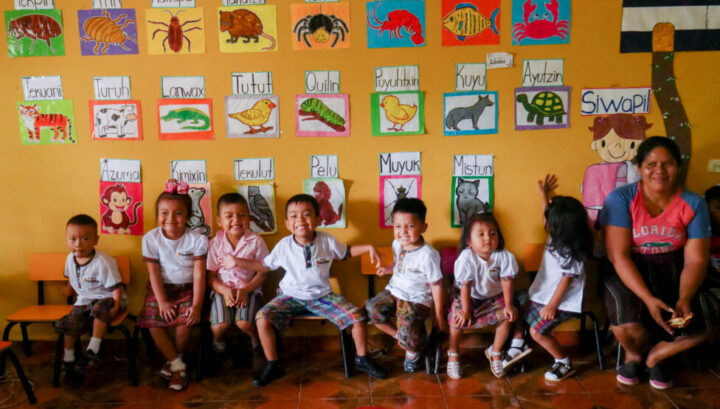
A picture of some of the children learning Náhuat in the town of Nahuizalco, in western El Salvador, through an early language immersion program, in an effort by Don Bosco University to keep the endangered language alive. Teacher Elsa Cortez sits next to them. CREDIT: Edgardo Ayala / IPS

A picture of some of the children learning Náhuat in the town of Nahuizalco, in western El Salvador, through an early language immersion program, in an effort by Don Bosco University to keep the endangered language alive. Teacher Elsa Cortez sits next to them. CREDIT: Edgardo Ayala / IPS

Around 25 percent of these languages are at risk of extinction unless something is urgently done, the report warns. It is estimated that Latin America is home to more than 50 million people who self-identify as indigenous.

“These languages are losing their usage value…families are increasingly interrupting the natural intergenerational transmission of the languages of their elders, and a slow but sure process of moving towards the hegemonic language is observed, with speakers making Spanish or Portuguese their predominant language of use,” the report states.

The causes of the danger of the disappearance of these Amerindian languages are varied, the report points out, such as the interruption of intergenerational transmission, when the language is no longer passed on from generation to generation.

And that is exactly what the Náhuat Cuna project aims to revert by focusing on young children, who can learn from Náhuat speakers who did receive the language from their parents and grandparents and speak it fluently.

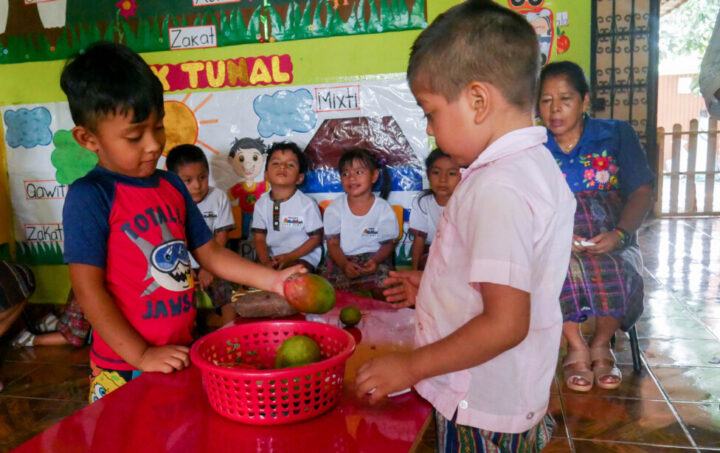
Two children pretend to purchase and sell fruits and vegetables speaking in Náhuat, as part of the teaching exercises at Náhuat Cuna in western El Salvador, a preschool for new generations of Salvadorans to learn the nearly extinct Amerindian language. CREDIT: Edgardo Ayala /IPS

Two boys pretend to purchase and sell fruits and vegetables speaking in Náhuat, as part of the teaching exercises at Náhuat Cuna in western El Salvador, a preschool for new generations of Salvadorans to learn the nearly extinct Amerindian language. CREDIT: Edgardo Ayala /IPS

López is one of these people. She belongs to the last generation of speakers who acquired it naturally, as a mother tongue, speaking it from a very young age with her parents and grandparents, in her native Santo Domingo de Guzmán, also in the department of Sonsonate.

“That’s how I was born and grew up, speaking it at home. And we never stopped speaking it, among my sisters and brothers, but not with people outside the house, because they discriminated against us, they treated us as Indians but in a derogatory way, but we never stopped speaking it,” said Lopez, 65.

Indeed, for reasons of racism and classism, indigenous populations have been marked by rejection and contempt not only from the political and economic elites, but also by the rest of the mestizo or mixed-race population, which resulted from the mixture of indigenous people with the Spaniards who started arriving in Latin America in the sixteenth century.

“They have always looked down on us, they have discriminated against us,” Elsa Cortez, 43, the other teacher at the Nahuizalco Náhuat Cuna, told IPS.

And she added: “I feel satisfied and proud, at my age it is a luxury to teach our little ones.”

Both López and Cortez said they were grateful that the project hired them as teachers, since they had no prior teaching experience, and in a context in which discrimination and social rejection, in addition to ageism, make it more difficult to find formal employment.

Before joining the project, Cortez worked full time making comales, which are circular clay griddles that are placed over a wood fire to cook corn tortillas. She also sold baked goods, and continues to bake bread on weekends.

López also worked making comales and preparing local dishes, which she sold in her neighborhood. Now she prefers to rest on the weekends.

All is not lost

When IPS visited the Náhuat Cuna preschool in Nahuizalco, the three-year-olds were performing an exercise: they stood in front of the rest of the class of about ten children and introduced themselves by saying their first name, last name and other basic greetings in Náhuat.

Later they identified, in Náhuat, pictures of animals and elements of nature, such as “mistun” (cat), “qawit” (tree) and “xutxit” (flower). The students started their first year in the center in February, and will spend two years there.

The five-year-olds are the most advanced. Together, the two groups totaled about twenty children.

Jorge Lemus  (blue shirt), director of El Salvador’s Náhuat/Pipil Language Revitalization Program and the driving force behind the Náhuat Cuna project, which teaches the language to children between the ages of three and five, is photographed with indigenous women of the Pipil people in Nahuizalco in western El Salvador. CREDIT: Don Bosco University

At the end of their time at the Cuna, they will go to regular school in Spanish, with the risk that they will forget what they have learned. However, to keep them connected to the language, the project offers Saturday courses where they begin to learn grammar and how to write the language.

There is a group of 15 teenagers, mostly girls, who started at the beginning of the project and speak the language fluently, and some even teach it online.

The initiative is promoted by the Don Bosco University of El Salvador, and supported by the municipalities where they operate, in Nahuizalco and Santo Domingo de Guzmán. The Santa Catarina Masahuat branch will also be reopened soon.

Santo Domingo de Guzmán is home to 99 percent of the country’s few Náhuat speakers, who number around 60 people, Jorge Lemus, director of El Salvador’s Náhuat/Pipil Language Revitalization Program and main promoter of the Náhuat Cuna project, told IPS.

“In three decades I have seen how Náhuat has been in decline, and how the people who speak it have been dying out,” stressed Lemus, who is also a professor and researcher of linguistics at the School of Languages and Education at Don Bosco University, run by the Salesian Catholic order.

According to the academic, the last three indigenous languages in El Salvador in the 20th century were Lenca, Cacaopera and Náhuat, but the first two disappeared by the middle of that century, and only the last one survives.

“The only one that has survived is Náhuat, but barely, as there are perhaps just 60 speakers of the language. When I started working on this there were about 200 and the number continues to shrink,” said Lemus.

The only way to keep the language alive, he said, is for a new generation to pick it up. But it will not be adults, who could learn it as a second language but will continue speaking Spanish; it must be a group of children who can learn it as native speakers.

The expert clarified that, although they come from the same linguistic trunk, the Náhuat spoken in El Salvador is not the same as the Nahuatl spoken in Mexico, and in fact the spelling is different.

In Mexico, Nahuatl has more than one million speakers in the Central Valley, he said.

In El Salvador, in 1932, the Pipil people stopped speaking their language in public for fear of being killed by the government forces of General Maximiliano Hernández, who that year brutally cracked down on an indigenous and peasant uprising demanding better living conditions.

At that time, society was dominated by aristocratic families dedicated to coffee cultivation, whose production system plunged a large part of Salvadorans, especially peasants and indigenous people, into poverty.

Lemus argued that for a language to make a decisive comeback and become a vehicle for everyday communication would require a titanic effort by the State, similar to the revival of the Basque language in Spain, Maori in New Zealand or even Israel’s resuscitation of Hebrew, which was already a dead language.

But that is not going to happen in El Salvador, he said.

“The most realistic thing we want to achieve is to keep the language from disappearing, and for the new generation of Náhuat-speaking people to grow and multiply. If we have 60 speakers now, in a few years we will hopefully still have 50 or 60 speakers, from this new generation, and they will keep it alive in the communities and continue speaking it,” he said.

For her part, López wants to continue working towards this goal in order to leave the country her legacy.

Speaking in Náhuat, the preschool teacher said: “I really like teaching this language because I don’t want it to die, I want the children to learn and speak it when I am dead.”

  Source

Harnessing Science-Policy Collaboration: The Vital Role of IPBES Stakeholders in Achieving Global Nature Targets

Biodiversity, Conferences, Editors’ Choice, Environment, Featured, Global, Headlines, Indigenous Rights, Natural Resources, Sustainability, TerraViva United Nations

Opinion

Dr. Anne Larigauderie, IPBES Executive Secretary

Dr. Anne Larigauderie, IPBES Executive Secretary

BONN, Germany, Apr 26 2024 (IPS) – In December 2022, the fifteenth meeting of the Conference of the Parties to the Convention on Biological Diversity (CBD) saw governments worldwide unite behind a set of ambitious targets aimed at addressing biodiversity loss and restoring natural ecosystems, through the Global Biodiversity Framework – known now as the Biodiversity Plan.


As the world gears up to meet these critical commitments for people and nature, success depends very directly on the concrete choices and actions of people from every region, across all disciplines and at every level of decision-making. In this collaborative effort, non-governmental stakeholders of the Intergovernmental Platform on Biodiversity and Ecosystem Services (IPBES) are vital actors, in addition to the 146 Governments who are members of IPBES.

But who are IPBES stakeholders? Any individual or organization that can benefit from or contribute to the science-policy work of IPBES is an IPBES stakeholder. They include individual scientists, knowledge-holders, experts and practitioners, as well as institutions, organizations, and groups operating within and beyond the fields of biodiversity and nature’s contributions to people.

There are two main self-organized groups of IPBES stakeholders: ONet and IIFBES. ONet provides a broad space for individuals and organizations to exchange knowledge, align actions and deepen engagement with the work of IPBES—with subgroups from the social sciences, young career researchers and many more. IIFBES is a network to bring together the expertise, perspectives and interests of Indigenous Peoples and local communities interested in IPBES’s work. Both of these ‘umbrella’ groups are instrumental in amplifying diverse voices, knowledge systems, and experience, to strengthen science-policy for biodiversity and nature’s contributions to people. This is important not only in support of IPBES, but also to the success of the Biodiversity Plan.

IPBES stakeholders contribute to the achievement of the Biodiversity Plan in three distinct ways. Firstly, they fortify the scientific foundations underpinning policies to protect biodiversity and nature’s contributions to people. Their expertise, channeled into the IPBES assessments, was instrumental in shaping the targets and indicators of the Biodiversity Plan. IPBES stakeholders will also continue to play a central role in ensuring that the actions to meet these targets are grounded in robust scientific knowledge and evidence.

Secondly, IPBES stakeholders are equipped with the resources and tools provided by IPBES: including Assessment Reports and their summaries for policymakers, to advocate for and effect change. These resources offer invaluable insights into national, regional, and global thematic issues. When considered by decision-makers, they become catalysts for evidence-based policies. Effective dissemination and uptake of these resources are paramount in translating global targets into tangible, on-the-ground initiatives that address local challenges. Consequently, stakeholders can make a substantial contribution by widely disseminating IPBES products and providing information for their effective use.

Thirdly, IPBES stakeholders have a tremendous opportunity to engage in the international forums where policy decisions are explored and made. Their active involvement and participation in decision-making bodies within these forums, coupled with their own extensive networks, foster the exchange of knowledge and resources. Collaborations forged in these settings bridge the gap between science and policy. Many IPBES stakeholders are active participants in the CBD processes, for instance, facilitating the exchange of information between these two bodies and thereby driving the Biodiversity Plan’s effective implementation.

Only through collective action and close collaboration between international institutions, policy actors, scientists, local and Indigenous communities, and other relevant stakeholders can we seamlessly translate science into policy and practice, ultimately achieving the goals of the Biodiversity Plan. This is why more individuals and organizations should seize the opportunity to become active IPBES stakeholders. Joining the IPBES community is not only a commitment to a sustainable future for people and nature but is also a positive response to the pressing global biodiversity crisis.

Dr. Anne Larigauderie is the Executive Secretary of IPBES (www.ipbes.net) – the Intergovernmental Science-Policy Platform on Biodiversity and Ecosystem Services, which provides objective scientific assessments about the state of knowledge regarding the planet’s biodiversity, ecosystems and the contributions they make to people, as well as options and actions to protect and sustainably use these vital natural assets.

IPS UN Bureau