Chilean Fisherwomen Seek Visibility and Escape from Vulnerability

Biodiversity, Civil Society, Editors’ Choice, Environment, Gender, Headlines, Inequality, Labour, Latin America & the Caribbean, Natural Resources, Sustainability, Sustainable Development Goals, TerraViva United Nations, Women & Economy

Women & Economy

Gatherer Cristina Poblete, from the town of Pichilemu, carries one of the sacks of freshly harvested seaweed. This coastal town in the O'Higgins region of central Chile is known worldwide for its large waves. Credit: Courtesy of Cristina Poblete

Gatherer Cristina Poblete, from the town of Pichilemu, carries one of the sacks of freshly harvested seaweed. This coastal town in the O’Higgins region of central Chile is known worldwide for its large waves. Credit: Courtesy of Cristina Poblete

PAREDONES, Chile, Aug 5 2024 (IPS) – The number of organisations that bring together fisherwomen who seek to be recognised as workers, make their harsh reality visible and escape the vulnerability in which they live is growing in Chile.


These women have always been present in the fishing sector, but have been ignored, classified as assistants, and relegated socially and economically.

There are 103,017 registered artisanal fisherpeople in Chile, and 26,438 of them are women who work as seaweed gatherers on the shore, known as algueras in Spanish, and related tasks.

According to statistics from the government’s National Fisheries Service  (Sernapesca), in 2023 there were 1,850 artisanal fisherpeople’s organisations in Chile, of which 81 were made up of women alone.

The fisheries sector in this long and narrow South American country of 19.5 million people exported 3.4 million tonnes of fish and seafood in 2021, bringing in USD 8.5 billion.

Chile is one of the 12 largest fishing countries in the world, being its industrial fishery the most economically relevant.

Meanwhile, artisanal fishing is carried out in 450 coves or inlets where groups of fisherpeople operate from the far north to the southernmost point of the country, stretching 4,000 kilometres in a straight line.

Seaweed harvesting, which is mainly carried out by women, lasts from December to April. In the remaining seven months, the algueras barely survive on their savings and must reinvent themselves in order to earn an income.

The invisible seawomen

Marcela Loyola, 55, is the vice-president of Agrupación de Mujeres de Mar (Seawomen Group) in the coastal town of Bucalemu, which belongs to the municipality of Paredones. It is 257 kilometres south of Santiago and part of the O’Higgins region, bordering the southern part of the capital’s metropolitan area.

The Agrupación brings together 22 algueras, as well as fish filleters, weavers who sew and place the hooks spaced out in the fishing nets, and shellfish shuckers, who extract their edible meat.

“The main problem is that we fisherwomen are invisible throughout the country. We have always been in the shadow of our husbands. There is a lack of recognition of women also from the authorities, in society and policies,” she told IPS in the Bucalemu cove.

“There are many trade unions, but their projects only reach men, never anything that serves women. And we don’t have health, welfare, nothing”, claims Loyola.

Together with Sernapesca, her group launched an activity to legalise workers in artisanal fishery.

“We held an application day and a lot of people came because they didn’t have a licence.  In Bucalemu alone, 60 people signed up. Some had fishing credentials, but no permit to collect cochayuyo (edible brown seaweed) or in other related activities,” she explained.

Bucalemu also hosted a National Meeting of Women of the Land and Sea on 31 May, attended by more than 100 delegates from different parts of Chile.

Gissela Olguín, 40, coordinator of the national Network of Seawomen in the O’Higgins region, told IPS that the meeting sought to defend seafood sovereignty.

“We are working to learn from seawomen about food sovereignty. From the right to land, water and seeds, we analysed how people of the sea are threatened today because the inequality of the rural model is now being repeated on the coast,” she said.

Marcela Loyola, vice-president of Agrupación de Mujeres de Mar in the coastal town of Bucalemu, at a local tourist lookout point. Credit: Orlando Milesi / IPS

Marcela Loyola, vice-president of Agrupación de Mujeres de Mar in the coastal town of Bucalemu, at a local tourist lookout point. Credit: Orlando Milesi / IPS

Women-only management area

Delfina Mansilla, 60, heads the Women’s Union of Algueras in the municipality of Pichilemu, also in O’Higgins, 206 kilometres south of Santiago. It brings together 25 members and is in charge of the La Puntilla management area, the only one given to women in central Chile.

The leader told IPS by telephone from her town that the management area has cochayuyo (Durvillaea antárctica) and huiro (Macrocystis integrifolia) seaweed, along with the bivalve molluscs called locos (Concholepas concholepas) as its main products.

The cochayuyo is extracted by going into the sea with a diving suit and using a knife to cut the stalk attached to the rocks so that the seaweed can grow back.  In the case of huiro, an iron barrette, called chuzo by the algueras and fishermen, must be used.

“Our main issue is that the men are bothered by our management area and come diving in. Some people don’t respect women and also go into an area that was given to us and that we have taken care of for years,” she said.

These women sell the locos to restaurants in Pichilemu, while the cochayuyo is traded “in green (the estimated extraction, not yet extracted)”, to middlemen in Bucalemu.

According to Olguín, there has been significant growth in women’s organising nationwide thanks to the Gender Equity Law, number 20820, passed in 2020.

“The labour of women have been invisible in the fishing sector, and even more so within the fisheries organisation because, although unions have women, they are in the minority,” she said.

The law, she explained, opened up the possibility for women to train and organise themselves.

In spite of this progress, male chauvinist mentality persists in the fishery.

“They believe women can’t be on the boats or they have smaller spaces for them in the cove. It is a behaviour of men who still think that women only help in the fishing industry, but don’t work in it,” she said.

María Godoy ties and prepares in her home in the coastal town of Bucalemu, in the Chilean municipality of Paredones, the packets of cochayuyo seaweed collected by her husband and daughter. Credit: Courtesy of Gisela Olguín

María Godoy ties and prepares in her home in the coastal town of Bucalemu, in the Chilean municipality of Paredones, the packets of cochayuyo seaweed collected by her husband and daughter. Credit: Courtesy of Gisela Olguín

Critical situation of the algueras

The leader describes the situation of women seaweed gatherers as bad.

“The women who work at sea live and sleep in little shacks with minimal conditions. They don’t have water or electricity and everyone has to make do as best they can.  The same goes for sanitation, they have to make makeshift toilets,” she said.

It is hard work because the timetable is set by the sea, she adds. The first low tides can be at 7:00 am or sometimes at noon in summer, with the sun over their heads.

“Conditions are always a bit extreme. Throwing seaweed out when cutting the cochayuyo is a job requiring much physical strength,” she explained.

Since the working season is short, the women prefer to stay in the shacks, improvised dwellings made of sticks and cloth that are erected on the sand or ground resembling tents.

“Here, women stop going to the sea only when their bodies prevent them from doing so. I know women over 70 who are still working on the shore because that’s how they subsist,” she added.

Another determining factor is the price of seaweed, which is set by buyers and ranges from 200 to 500 pesos per kilo (between 20 and 50 US cents).

The fisherwomen work long hours to extract more product. “It is a very vulnerable sector, with no social security or cultural recognition,” Olguín concluded Olguín.

Hortensia, Sonia, Cristina and Elizabeth, four seaweed workers from the Chilean municipality of Pichilemu, in front of the municipal building where they will meet the deputy mayor, Sergio Mella. The workers are seeking a concession and municipal premises to exhibit and sell their handicrafts, soaps and various products made from seaweed. The sale allows them to subsist during the southern winter, when seaweed extraction is banned. Credit: Orlando Milesi / IPS

Hortensia, Sonia, Cristina and Elizabeth, four seaweed workers from the Chilean municipality of Pichilemu, in front of the municipal building where they will meet the deputy mayor, Sergio Mella. The workers are seeking a concession and municipal premises to exhibit and sell their handicrafts, soaps and various products made from seaweed. The sale allows them to subsist during the southern winter, when seaweed extraction is banned. Credit: Orlando Milesi / IPS

The threat to seaweed

Alejandra González, a doctor in ecology and evolutionary biology at the University of Chile, told IPS that some species of brown and red macroalgae found along Chile’s coasts are raw material for the food, pharmacological and medical industries.

This commercial value and high demand leads to direct extraction, “causing a reduction in natural populations and fragmentation, with a slow recovery rate of only those that survive harvesting”, she explains.

“This scenario makes populations less able to cope with environmental change, leaving them vulnerable to events such as Enos (El Niño), heat waves, increased tidal surges, changes in seawater pH, many of them associated with climate change,” she said.

Among the greatest threats to macroalgae are habitat destruction due to coastal port constructions, pollution caused by urbanization, and invasive species associated with ship movements and migrations.

Other threats are overexploitation related to human population growth, climate change caused by increased carbon dioxide (CO2) and its side effects, such as higher temperatures, storm surges and chemical changes.

According to González, the greatest threat to seaweed is the combination of all these variables.

Chile has developed various strategies for the conservation and management of natural seaweed meadows, but these measures are inadequate, argues the specialist.

“In Chile’s north, the exploitation of brown macroalgae from natural meadows is greater, because drying is free on the beaches themselves, but it is also affected by El Niño current events. While in the south it is necessary to invest in sheds or drying systems, it is more efficient to cultivate them because there are tamer bays,” she said.

González also believes that measures to recover natural seaweed meadows are not efficient “either because of legal loopholes, difficulties in on-site monitoring and/or other additional environmental variables such as those associated with climate change.”

  Source

Solar Power and Biogas Empower Women Farmers in Brazil

Active Citizens, Biodiversity, Civil Society, Cooperatives, Development & Aid, Economy & Trade, Editors’ Choice, Energy, Environment, Featured, Food and Agriculture, Gender, Headlines, Integration and Development Brazilian-style, Latin America & the Caribbean, Projects, Regional Categories, TerraViva United Nations, Women & Climate Change, Women & Economy

Energy

Leide Aparecida Souza, president of the Association of Residents of the Genipapo Settlement in the rural area of Acreúna, a municipality in central-western Brazil, stands next to breads and pastries from the bakery where 14 rural women work. The women's empowerment and self-esteem have been boosted by the fact that they earn their own income, which is more stable than from farming, and provide an important service to their community. CREDIT: Marina Carolina / IPS

Leide Aparecida Souza, president of the Association of Residents of the Genipapo Settlement in the rural area of Acreúna, a municipality in central-western Brazil, stands next to breads and pastries from the bakery where 14 rural women work. The women’s empowerment and self-esteem have been boosted by the fact that they earn their own income, which is more stable than from farming, and provide an important service to their community. CREDIT: Marina Carolina / IPS

ACREÚNA/ORIZONA, Brazil , Apr 16 2024 (IPS) – A bakery, fruit pulp processing and water pumped from springs are empowering women farmers in Goiás, a central-eastern state of Brazil. New renewable energy sources are driving the process.


“We work in the shade and have a secure, stable income, not an unsteady one like in farming. We cannot control the price of milk, nor droughts or pests in the crops,” said Leide Aparecida Souza, who runs a bakery in the rural area of Acreúna, a municipality of 21,500 inhabitants in central Goiás.

“The Network is the link between the valorization of rural women, family farming and the energy transition. We chose family farmers because they are the ones who produce healthy food.” — Jessyane Ribeiro

The bakery supplies a variety of breads, including cheese buns and hot dog buns, as well as pastries, cakes and biscuits to some 3,000 students in the municipality’s school network, for the government’s school feeding program, which provides family farming with at least 30 percent of its purchases. Welfare institutions are also customers.

The bakery is an initiative of the women of the Genipapo Settlement, established in 1999 by 27 families, as part of the agrarian reform program implemented in Brazil after the 1964-1985 military dictatorship, which has so far settled 1.3 million families on land of their own.

Genipapo, the name chosen for the settlement, is a fruit of the Cerrado, the savannah that dominates a large central area of Brazil. Each settled family received 44 hectares of land and local production is concentrated on soybeans, cassava and its flour, corn, dairy cattle and poultry.

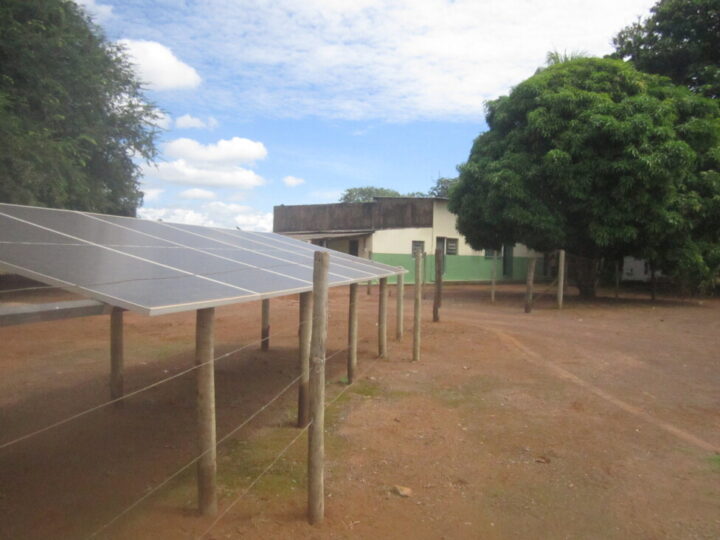
Six solar panels will reduce the costs of the women's bakery, installed on the former estate where 27 families were given land in Acreúna, in the Brazilian state of Goiás, as part of the country's ongoing agrarian reform program. CREDIT: Mario Osava / IPS

Six solar panels will reduce the costs of the women’s bakery, installed on the former estate where 27 families were given land in Acreúna, in the Brazilian state of Goiás, as part of the country’s ongoing agrarian reform program. CREDIT: Mario Osava / IPS

Bakery empowers rural women

The women of the Association of Residents of the Genipapo Settlement decided to create a bakery as a new source of income 16 years ago. They also gained self-esteem and autonomy by earning their own money. In general, agricultural and livestock income is controlled by the husbands.

Each of the women working at the bakery earns about 1,500 reais (300 dollars) a month, six percent more than the national minimum wage. “We started with 21 participants, now we have 14 available for work, because some moved or quit,” Souza said.

A year ago, the project obtained a solar energy system with six photovoltaic panels from the Women of the Earth Energy project, promoted by the Gepaaf Rural Consultancy, with support from the Socio-environmental Fund of the Caixa Econômica Federal, the regional bank focused on social questions, and the public Federal University of Goiás (UFG).

Gepaaf is the acronym for Management and Project Development in Family Farming Consultancy and its origin is a study group at the UFG. The company is headquartered in Inhumas, a city of 52,000 people, 180 km from Acreúna.

Due to difficulties with the inverter, a device needed to connect the generator to the electricity distribution network, the plant only began operating in March. Now they will see if the savings will suffice to cover the approximately 300 reais (60 dollars) that the bakery’s electricity costs.

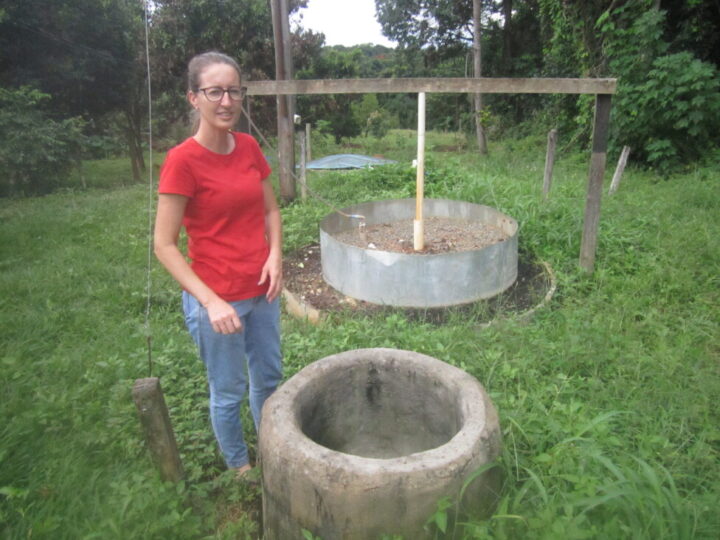
Iná de Cubas stands next to the biodigester that she got from the Women of the Earth Energy project in the municipality of Orizona, in the center-east of the Brazilian state of Goiás. The biogas generated benefits the productive activities of small farmers in rural settlements, as do solar plants on a family or community scale. Image: Mario Osava / IPS

Iná de Cubas stands next to the biodigester that she got from the Women of the Earth Energy project in the municipality of Orizona, in the center-east of the Brazilian state of Goiás. The biogas generated benefits the productive activities of small farmers in rural settlements, as do solar plants on a family or community scale. Image: Mario Osava / IPS

“It’s not that much money, but for us every penny counts,” Souza said. Electricity is cheap in their case because it is rural and nocturnal consumption. Bread production starts at 5:00 p.m. and ends at 3:00 or 4:00 a.m. from Monday to Thursday, according to Maristela Vieira de Sousa, the group’s secretary.

The industrial oven they use is low-consumption and wood-burning. There is another, gas-fired oven, which is only used in emergencies, “because it is expensive,” said de Sousa. Biogas is a possibility for the future, which would use the settlement’s abundant agricultural waste products.

Alternative energies make agribusiness viable

Iná de Cubas, another beneficiary of the Women of the Earth Energy project, has a biodigester that supplies her stove, in addition to eight solar panels. They generate the energy to produce fruit pulp that also supplies the schools of Orizona, a municipality of 16,000 inhabitants in central-eastern Goiás.

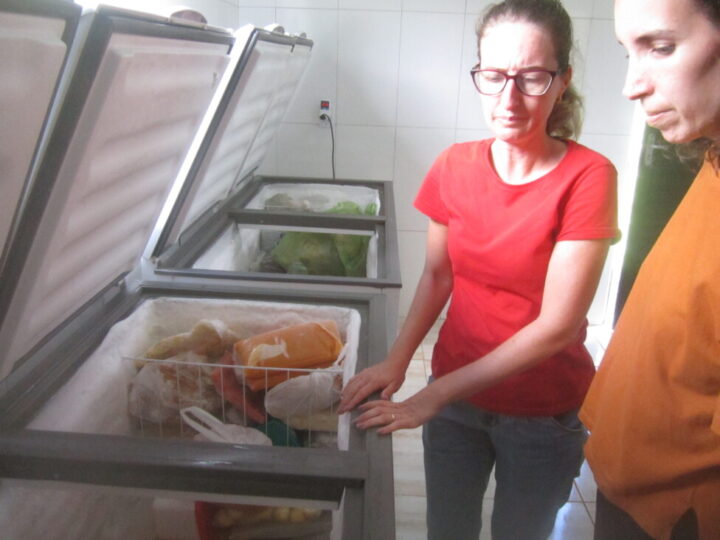
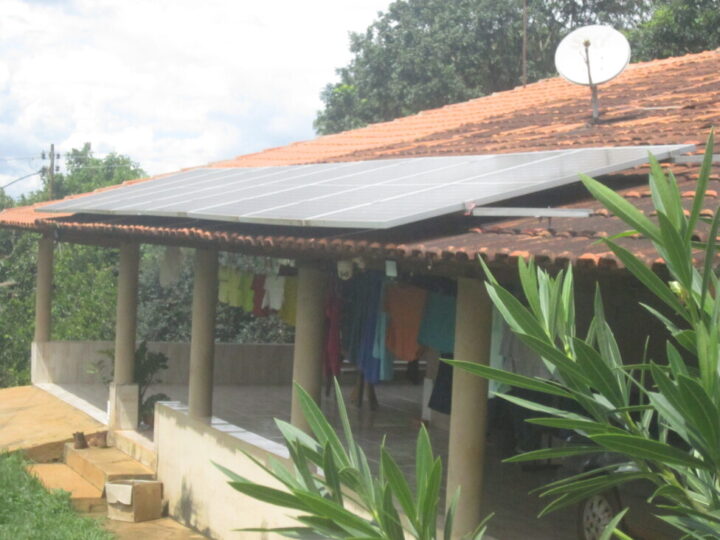
The solar plant, installed two years ago, made the business viable by eliminating the electricity bill, which was high because the two refrigerators needed to store fruit and pulp consume a lot of electricity.

The abundance of fruit residues provides the inputs for biogas production, an innovation in a region where manure is more commonly used.

The refrigerators in which Iná de Cubas keeps the fruit and fruit pulp that she prepares for sale to schools in Orizona in central Brazil consume a great deal of electricity. CREDIT: Mario Osava / IPS

The refrigerators in which Iná de Cubas keeps the fruit and fruit pulp that she prepares for sale to schools in Orizona in central Brazil consume a great deal of electricity. CREDIT: Mario Osava / IPS

“I only use an additional load of animal feces when I need more biogas,” said Cubas, who gets the manure from her neighbor’s cows, since she does not raise livestock.

On her five hectares of land, Cubas produces numerous species of fruit for her cottage industry.

In addition to typical Brazilian fruits, such as cajá or hog plum (Spondias mombin), pequi or souari nut (Caryocar brasiliense) and jabuticaba from the grapetree (Plinia cauliflora), she grows lemons, mangoes, oranges, guava and avocado, among others.

For the pulp, she also uses fruit from neighbors, mostly relatives. The distribution of her products is done through the Agroecological Association of the State of Goias (Aesagro), which groups 53 families from Orizona and surrounding areas.

Agroecology is the system used on her farm, where the family also grows rice, beans and garlic. The crops are irrigated with water pumped from nearby springs that were recovered by the diversion of a road and by fences to block access by cattle, which used to trample the banks.

“The overall aim is to strengthen family farming, the quality of life in the countryside, incomes, and care for the environment, and to offer healthy food, without poisonous chemicals, especially for schools,” explained Iná de Cubas.

Biodigesters made of steel and cement, solar energy for different purposes, including pumping water, rainwater collection and harvesting, are part of the “technologies” that the Women of the Earth Energy project is trying to disseminate, said Gessyane Ribeiro, Gepaaf’s administrator.

In the area where Iná de Cubas lives, the project installed five biodigesters and seven solar pumps for farming families, in addition to solar plants in schools, she said.

The eight solar panels on the roof of the Cubas family’s house, in the rural area of Orizona, make small agro-industrial processes viable, adding value to the wide diversity of native fruits from different Brazilian ecosystems, such as the Cerrado savannah and the Amazon rainforest, along with species imported throughout the country’s history. CREDIT: Mario Osava / IPS

Network of rural women

The Women of the Earth Energy Network, brought together by the project and coordinated by Ribeiro, operates in six areas defined by the government based on environmental, economic, social and cultural similarities. In all, it involves 42 organizations in 27 municipalities in Goiás.

The local councils choose the beneficiaries of the projects, all implemented with collective work and focused on women’s productive activities and the preservation of the Cerrado. All the beneficiaries commit themselves to contribute to a solidarity fund to finance new projects, explained agronomist Ribeiro.

“The Network is the link between the valorization of rural women, family farming and the energy transition,” she said. “We chose family farmers because they are the ones who produce healthy food.”

“We offer technological solutions that rely on the links between food, water and energy, to move towards an energy transition that can actually address climate change,” said sociologist Agnes Santos, a researcher and communicator for the Network.

Recovering and protecting springs is another of the Women’s Network’s activities.

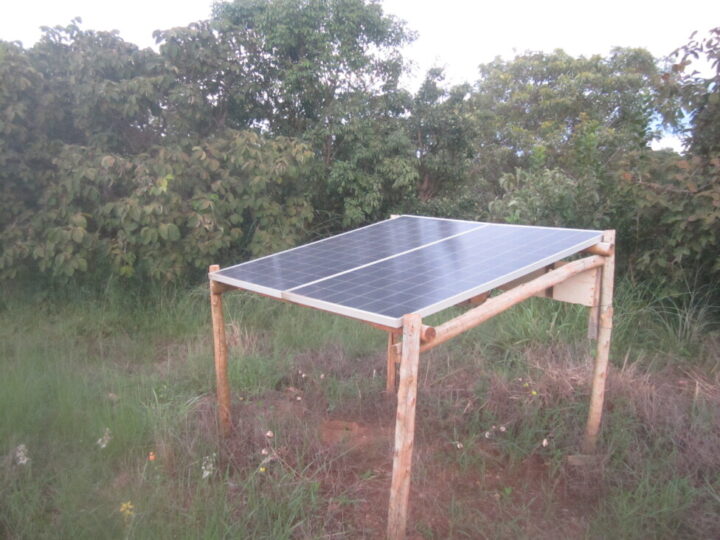
Two solar panels run a pump installed in a spring in the forest to pump the water needed by the 29 cows owned by Nubia Lacerda Matias' family in Orizona, in the state of Goiás, near Brasilia. Thus the cows stopped drinking water in the springs, which are now fenced off, vital to protect the water source for local families living downstream. CREDIT: Mario Osava / IPS

Two solar panels run a pump installed in a spring in the forest to pump the water needed by the 29 cows owned by Nubia Lacerda Matias’ family in Orizona, in the state of Goiás, near Brasilia. Thus the cows stopped drinking water in the springs, which are now fenced off, vital to protect the water source for local families living downstream. CREDIT: Mario Osava / IPS

Nubia Lacerda Matias celebrates the moment she was invited to join the movement. She won a solar pump, made up of two solar panels and pipes, which bring water to her cattle that used to damage the spring, now protected by a fence and a small forest.

“It’s important not only for my family, but for the people living downhill” where a stream flows, fed by various springs along the way, she said.

But the milk from the 29 cows and corn crops on her 9.4-hectare farm are not enough to support the family with two young children. Her husband, Wanderley dos Anjos, works as a school bus driver.

Iná de Cubas’ partner, Rosalino Lopes, also works as a technician for the Pastoral Land Commission, a Catholic organization dedicated to rural workers.

In his spare time, Lopes invents agricultural machines. He assembles and combines parts of motorcycles, tractors and other tools, in an effort to fill a gap in small agriculture, undervalued by the mechanical industry and scientific research in Brazil.

  Source

Unpaid Caregivers, a Symbol of Inequality in Chile

Civil Society, Development & Aid, Economy & Trade, Editors’ Choice, Featured, Headlines, Human Rights, Labour, Latin America & the Caribbean, Regional Categories, Sustainable Development Goals, TerraViva United Nations, Women & Economy

Women & Economy

On International Women's Day on Mar. 8, thousands of Chilean women of all ages took to Santiago's central Alameda avenue to demonstrate peacefully for several hours and turn the Chilean capital into a stage for protest and demands for their rights. Some of them were women caregivers accompanied by dependent women. CREDIT: Orlando Milesi / IPS - In Chile, like elsewhere in Latin America, unpaid caregivers—mostly women—bear the responsibility of caring for individuals with disabilities, the elderly, and children, often leaving them without access to paid work or personal time

On International Women’s Day on Mar. 8, thousands of Chilean women of all ages took to Santiago’s central Alameda avenue to demonstrate peacefully for several hours and turn the Chilean capital into a stage for protest and demands for their rights. Some of them were women caregivers accompanied by dependent women. CREDIT: Orlando Milesi / IPS

SANTIAGO , Mar 20 2024 (IPS) – In Chile, as in the rest of Latin America, the task of caring for people with disabilities, the elderly and children falls to women who, as a result, do not have access to paid jobs or time for themselves.


Unpaid domestic and care work is crucial to the economies of the region, accounting for around 20 percent of gross domestic product (GDP).

Measurements by the Economic Commission for Latin America and the Caribbean (ECLAC) found that in 16 Latin American countries, women spend between 22.1 and 42.8 hours per week on unpaid domestic and care work. Men only spend between 6.7 and 19.8 hours.

Ana Güezmes, director of ECLAC’s Division for Gender Affairs, told IPS that “in most countries women work longer total hours, but with a lower proportion of paid hours.”

“This work, which is fundamental for sustaining life and social well-being, is disproportionately assigned to women. This situation impacts women’s autonomy, economic opportunities, labor and political participation and their access to leisure activities and rest,” Güezmes said at ECLAC headquarters in Santiago.

The situation is far from changing as it is replicated in young women who devote up to 20 percent of their time to unpaid work.

Paloma Olivares, president for Santiago of the women's organization Yo Cuido, works in her office in the working-class municipality of Estación Central, in the northeast of the Chilean capital. CREDIT: Orlando Milesi / IPS

Paloma Olivares, president for Santiago of the women’s organization Yo Cuido, works in her office in the working-class municipality of Estación Central, in the northeast of the Chilean capital. CREDIT: Orlando Milesi / IPS

Women left on their own as caregivers

Paloma Olivares, 43, chairs the Yo Cuido Association in Santiago, Chile, which brings together 120 members, only two of them men.

“Women caregivers are denied the right to participate on equal terms in society because we are forced to choose between exercising our rights or doing caregiving work. And we cannot choose because it is a job we do for a loved one, for a family member.” — Paloma Olivares

“Women caregivers are denied the right to participate on equal terms in society because we are forced to choose between exercising our rights or doing caregiving work. And we cannot choose because it is a job we do for a loved one, for a family member,” she told IPS.

“We are left in a position of inequality, of absolute vulnerability because you have to devote your life to supporting someone else at the expense of your personal life,” she said.

Olivares stopped working to care for Pascale, her granddaughter, who was born with cerebral palsy and hydrocephalus.

Three days after her birth, a bacterium became lodged in her central nervous system. She was hospitalized for almost a year and became severely dependent.

At the time, she was given a seven percent chance of survival. Today she is eight years old, goes to school and lives an almost normal life thanks to the work of her caregivers.

She is now cared for by her mother Valentina, who had her at the age of 15. Paloma was able to return to paid work, but her daughter abandoned her studies to take care of Pascale.

“When you start being a caregiver, friendships end, because no one can keep up. Even the family drifts away. That’s why most caregiving families are single-parent, the woman is left alone to care because the man can’t keep up with the pace and the emotional and economic burden,” she said.

Olivares participated from Mar. 12 to 14 in a public hearing, digital and in person, on the right to care and its interrelation with other rights, in a collective request of several social organizations and the governments of Chile and other Latin American countries before the Inter-American Court of Human Rights (IACHR Court), based in San Jose, Costa Rica,

In the request for an opinion from the IACHR Court, “we asked the Court to take a stance on the right to care and how the rights of women in particular have been violated because there are no public policies in this regard. We want the Court to pronounce itself on the right to care and how the States should address it so that this right is guaranteed and so the rights of caregivers are no longer violated,” she explained.

It is expected that the Court’s pronouncement on the matter will come out in April and could establish minimum parameters regarding women caregivers for Chile and other Latin American countries.

Critical situation for women caregivers

Millaray Sáez, 59, told IPS by telephone from the southern Chilean city of Concepción that her son Mario Ignacio, 33, “is no longer the autonomous person he was. Since 2012 he has become a baby.”

She chairs the AML Bío Bío Corporación, an association of women in the Bío Bío region created in 2017 to address the question of female empowerment and today dedicated to the issue of caregivers.

“I have been a caregiver for 30 years for my son who has refractory epilepsy. He became prostrate in 2012 as a result of medical negligence,” said the international trade engineer who has become an expert in public policies on care with a gender perspective.

Sáez said “the situation of women caregivers is very bad, very precarious. There is a single cause, which is the work of caregiving, but the consequences are multidimensional…. from physical deterioration to the lack of legislation to protect against forms of violence, and ranging from the family to what society or the State adds.”

She also pointed to the economic consequences of dependent care.

She cited cases in which caregivers spend over 150 dollars a month on diapers alone for a person who needs them. And she pointed out that the government provides an economic aid stipend of just 33 dollars a month.

Teresa Valdés, head of the Gender and Equity Observatory of the Catholic University of Chile, praises the new registry of caregivers promoted by the Chilean government, but underlines the importance of municipal experiences and initiatives that promote homes and care centers to facilitate the lives of women caregivers. CREDIT: Orlando Milesi / IPS

Teresa Valdés, head of the Gender and Equity Observatory of the Catholic University of Chile, praises the new registry of caregivers promoted by the Chilean government, but underlines the importance of municipal experiences and initiatives that promote homes and care centers to facilitate the lives of women caregivers. CREDIT: Orlando Milesi / IPS

The magnitude of the problem

It is a pending task to determine the number of women caregivers in Chile.

The government of leftist President Gabriel Boric created a system for caregivers to register and receive a credential that gives them access to public services.

“The credential is the gateway to the Chile Cuida System. With it we seek to make them visible in services and institutions and to reward them for their work by saving them waiting time in daily procedures,” the Minister of Women and Gender Equity, Antonia Orellana, explained to IPS.

So far, there are 85,817 people registered, of whom 74,650 are women, or 87 percent of the total, and 11,167 are men, according to data provided to IPS on Mar. 14 by the Undersecretariat of Social Services of the Ministry of Social Development and Family.

But Chile has 19.5 million inhabitants, and “17.6 percent of the adult population has some degree of disability and, therefore, requires the daily care and support of other people in the home,” the minister said.

That means 3.4 million Chileans depend on a caregiver.

According to Orellana, facing the care scenario projected by the aging of the population will require the collaboration of everyone to “create and sustain an economic and productive system that generates decent work and formal employment, leaving no one behind.”

Other urgent demands by women

Sociologist Teresa Valdés, head of the Gender and Equity Observatory, told IPS that there are many social problems facing Chilean women today, “especially those related to access to health care, social security, unequal pay and access to different goods and services.”

Valdés regretted that the term “women caregivers” is used to refer to the role that women play and the tasks that are culturally assigned to them as a priority.

“We are all caregivers, all women work double shifts. The time-use survey shows that we work an additional 41 hours per week of so-called unpaid reproductive care work,” she said.

According to Valdés, the main advance in this problem is to include it in the debate because these are policies that require a lot of resources and extensive development, since they have to do with the structure of the labor market.

“Part of the proposal should be how to ‘de-genderize’, how care becomes a task of shared responsibility and not only that women have more time to take on the care tasks,” she said.

“When we call women caregivers, we are referring to the group most affected by the conditions of sexual division of labor and family reproduction,” she added.

The expert proposes progressively identifying ways to support women caregivers in order to provide them with available time and take care of their mental health.

She praised the programs promoted by some municipalities to free up time for these women to enjoy leisure and self-care.

“We have to move towards a cultural conception that we are all dependent. Today I depend on you, tomorrow you depend on me. Care is a social task in which I take care of you today so that you can take care of me tomorrow. And that is something that has to start from the earliest childhood,” she argued.

  Source

Nigerian Women Challenge ‘Colonialist’ Patriarchy

Africa, Civil Society, Featured, Gender, Gender Identity, Headlines, TerraViva United Nations, Women & Economy, Women in Politics

Women & Economy

Bukes Saliu, a forklift driver, is a Nigerian woman who challenging stereotypes. Credit: Promise Eze/IPS

Bukes Saliu, a forklift driver, is a Nigerian woman who challenging stereotypes. Credit: Promise Eze/IPS

LAGOS, Sep 28 2023 (IPS) – Bukes Saliu wakes up very early every workday to beat the gruesome Lagos traffic to head to a job quite unusual for a woman to engage in Nigeria. She is a forklift operator in one of the busy depots in the coastal city, a task traditionally meant for men in the West African country.


In a country where women are seen as second-class citizens and whose roles are expected to be confined to the kitchen, Saliu is not letting patriarchal norms put her in a box.

“People are always thrilled when I tell them what I do. Sometimes I get snide remarks from some men I work with, but I don’t allow that to get to me,” Saliu says.

In August 2022, her curiosity was piqued when she came across a post on WhatsApp from her friend featuring a woman confidently posed beside a forklift machine. That ignited her interest in the job. Soon after, she enrolled in training to become a skilled forklift operator.

“It was a change of career path for me. I used to be a project manager with a non-profit, but I left the job to be a forklift operator. The first day I started work, I was a bit afraid, but now I operate the machine like any other man would do. I believe that women should be allowed at the table because it brings different perspectives, ideas, and experiences,” she adds.

Patriarchy Lives in Nigeria

Discrimination against women has been a serious problem in Nigeria. Women still grapple with an array of challenges and are marginalized despite the Nigerian constitution providing for gender equality and nondiscrimination

Women face a heavier burden of violence, and different types of bias, which creates significant obstacles in their quest for gender equality. This is frequently caused by unfair laws, religious and cultural traditions, gender stereotypes, limited education opportunities, and the unequal impact of poverty on women.

Although the government has attempted to tackle these deep-rooted issues, the pace of progress remains sluggish. Women’s representation within politics and decision-making spheres remains poor. For example, out of a total of 15,307 candidates in the 2023 general elections, only 1,550 were women. Only three women were elected as senators as against nine in the last election, and only one woman emerged as a presidential candidate.

Women are often excluded from economic prospects. Within Nigeria’s populace exceeding 200 million, a mere 60.5 million people contribute to its labor force. Among this workforce, around 27.1 million women participate, a significant portion of whom find themselves involved in low-skilled employment. Nigeria’s position on the World Economic Forum’s Gender Gap Index is a lowly 123rd out of 156 nations.

Swimming Against the Tide

A limited number of women are challenging conventional gender norms for the purpose of livelihood, stepping into roles that are male dominated in Nigeria. However, this transition is often met with resistance and negative reactions.

In 2021, Iyeyemi Adediran gained widespread attention for her exceptional mastery of driving long-haul trucks for oil companies. However, despite her remarkable skill, the then 26-year-old shared that she faced derogatory remarks for daring to break gender norms associated with truck driving—an occupation traditionally considered male-dominated.

In 2015, Sandra Aguebor, Nigeria’s first female mechanic, gained widespread attention for her all-female garages across the country. However, she revealed that her mother initially did not support her ambitions, believing that fixing cars should only be done by men.

Faith Oyita, a shoemaker in Benue State, Nigeria, is not letting patriarchal norms stop her. Despite Aba, a growing men-led market in southeast Nigeria, dominating the shoemaking industry, Oyita has been determined to make a name for herself since 2015, even though she resides kilometers away. She says she has trained over 300 other people on how to make shoes.

“When I first started, I didn’t care about the challenges that came with shoemaking. I had a deep passion for it, and I wanted to beautify people’s legs. Even though it was a skill dominated by men, I was determined to do things differently. I knew that greatness doesn’t come from convenience. In the beginning, many people questioned why I chose shoemaking. Even the man who taught me was hesitant and doubted my potential. I was the only female among all his apprentices, and many assumed that I came because I wanted to date him. Despite all the negative remarks, I never gave up,” she tells IPS.

Patriarchy Came Through Colonialism

“A lot of what is happening today is not how we originally lived our lives as Nigerian women. Patriarchy actually entered our society during the colonial era. Before colonization, both men and women were able to do things without being restricted by gender. Historically, women were involved in trading goods and services, and they could even marry multiple wives for themselves.

“However, when the colonialists arrived, they distorted our culture and, using religion, promoted the idea that men held more power. We should strive to correct this narrative. It’s unfortunate that we have been socialized to believe that men should always be in leadership positions and that women should only be in a man’s home,” says Añuli Aniebo Ola-Olaniyi, Executive Director, HEIR Women Hub.

Speaking further, Ola-Olaniyi argues that women who want to break gender norms must have a change of mindset and be ready to face challenges.

“The country that colonized us has their women driving buses and flying planes. They have progressed from where they colonized us. But Nigeria has failed to empower its women. When a Nigerian woman does something that is traditionally seen as only for men, it is seen as a big accomplishment. However, she has always been capable of doing those things. It’s just that the opportunities were not available. I don’t even think it’s a switch in gender roles. I believe that women are simply starting to realize their potential,” she tells IPS.

IPS UN Bureau Report

  Source

Biodigesters Boost Family Farming in Brazil

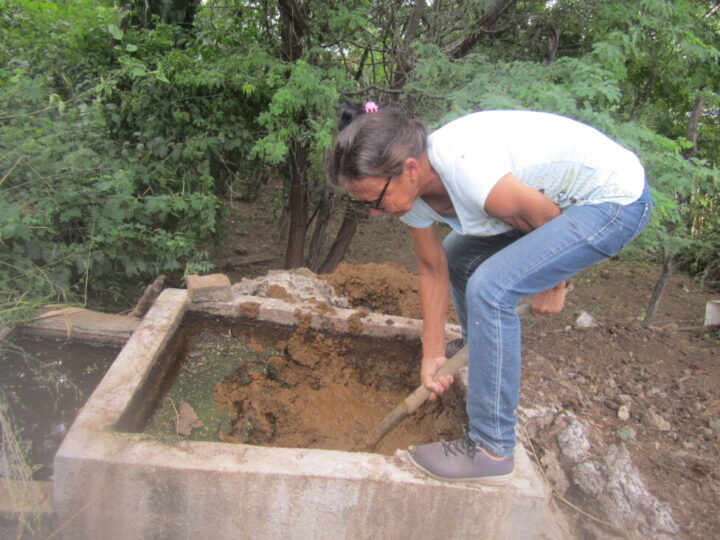
Lucineide Cordeiro loads manure from her two oxen and two calves into the "sertanejo" biodigester that produces biogas for cooking and biofertilizer for her varied crops on the one-hectare agroecological farm she manages on her own in the rural municipality of Afogados da Ingazeira, in the semiarid ecoregion of northeastern Brazil. CREDIT: Mario Osava / IPS

Lucineide Cordeiro loads manure from her two oxen and two calves into the “sertanejo” biodigester that produces biogas for cooking and biofertilizer for her varied crops on the one-hectare agroecological farm she manages on her own in the rural municipality of Afogados da Ingazeira, in the semiarid ecoregion of northeastern Brazil. CREDIT: Mario Osava / IPS

By Mario Osava
AFOGADOS DA INGAZEIRA, Brazil , Jun 24 2023 (IPS)

“The biodigester really gives a huge boost to those who have the courage to do things,” said Maria das Dores Alves da Silva, based on her own experience as a 63-year-old small farmer.


She did not hesitate to accept the offer of Diaconia, a social organization of Protestant churches in Brazil, to acquire the equipment to produce biogas on her farm in the rural area of Afogados da Ingazeira, a municipality of 38,000 people in the state of Pernambuco in the Northeast region of Brazil.”We seek to promote energy, food and water autonomy to maintain more resilient agroecosystems, to coexist with climate change, strengthening community self-management with a special focus on the lives of women.” — Ita Porto

At first she did not have the cattle whose manure she needed to produce biogas, that enables her to save on liquefied petroleum gas, which costs 95 reais (20 dollars) for a 13-kg cylinder – a significant cost for poor families.

She brought manure from a neighboring farm that gave it to her for free, in an hour-long trip with her wheelbarrow, until she was able to buy her first cow and then another with loans from the state-owned Banco del Nordeste.

“Now I have more than enough manure,” she said happily as she welcomed IPS to her four-hectare farm where she and her husband have lived alone since their two children became independent.

Das Dores, as she is known, is an example among the 163 families who have benefited from the “sertanejos biodigesters” distributed by Diaconia in the sertão of Pajeú, a semiarid micro-region of 17 municipalities and 13,350 square kilometers in the center-north of Pernambuco.

Farmer Maria das Dores Alves da Silva stands between the manure pit and the "sertanejo" biodigester designed by Diaconia, a social organization of Protestant churches in Brazil, which has already installed 713 biogas production plants in eight of Brazil's 26 states. CREDIT: Mario Osava / IPS

Farmer Maria das Dores Alves da Silva stands between the manure pit and the “sertanejo” biodigester designed by Diaconia, a social organization of Protestant churches in Brazil, which has already installed 713 biogas production plants in eight of Brazil’s 26 states. CREDIT: Mario Osava / IPS

Biofertilizer

In addition to using the biogas, she sells the manure after it has been subjected to anaerobic biodigestion that extracts the gases – the so-called digestate, a biofertilizer that she packages in one-kilo plastic bags, after drying and shredding it.

Every Saturday, she sells 30 bags at the agroecological market in the town of Afogados da Ingazeira, the municipal seat. At two reais (40 cents) a bag, she earns an extra income of 60 reais (12.50 dollars), on top of her sales of the various sweet cakes she bakes at home, at a cost reduced by the biogas, and of the seedlings she also produces.

The seedlings provided her with a new business opportunity. “The customers asked me if I didn’t also have fertilizer,” she said. The biodigester produces enough fertilizer to sell at the market and to fertilize the farm’s crops of beans, corn, fruit trees, flowers and different vegetables.

This diversity is common in family farming in Brazil’s semiarid Northeast, but even more so in the agroecological techniques that have expanded in this territory of one million square kilometers in the northeastern interior of the country, which has an arid biome highly vulnerable to climate change, subject to frequent droughts, and where there are areas in the process of desertification.

The Pajeú river basin is the micro-region chosen by Diaconia as a priority for its social and environmental actions.

On Lucineide Cordeiro's small farm, cotton, corn, sesame, sunflower, cassava and fruit trees are alternated in the fields, as recommended by agroecology, which is on the rise on family farms in Brazil's semiarid Northeast, which is threatened by longer and more severe droughts due to the climate crisis. CREDIT: Mario Osava / IPS

On Lucineide Cordeiro’s small farm, cotton, corn, sesame, sunflower, cassava and fruit trees are alternated in the fields, as recommended by agroecology, which is on the rise on family farms in Brazil’s semiarid Northeast, which is threatened by longer and more severe droughts due to the climate crisis. CREDIT: Mario Osava / IPS

Energy and food security

“We seek to promote energy, food and water autonomy to maintain more resilient agroecosystems, to coexist with climate change, strengthening community self-management with a special focus on the lives of women,” Ita Porto, Diaconia’s coordinator in the Pajeu ecoregion, told IPS.

“The production of biogas on a rural family scale fulfills the needs of energy for cooking, sanitary disposal and treatment of animal waste and reduction of deforestation, in addition to increasing food productivity, with organic fertilizer, while bolstering human health,” said the 48-year-old agronomist.

More than 713 units of the “sertanejo biodigester”, a model developed by Diaconia 15 years ago, have been installed in Brazil. In addition to the 163 in the sertão do Pajeú, there are 150 in the neighboring state of Rio Grande do Norte and another 400 distributed in six other Brazilian states, financed by the Caixa Econômica Federal, a government bank focused on social questions.

“Hopefully the government will make it a public policy, as it has already done with the rainwater harvesting tanks in the semarid Northeast,” said Porto.

More than 1.3 million rainwater harvesting tanks for drinking water have already been built, but some 350,000 are still needed to make them universal in rural areas, according to the Articulation of the Semi-Arid (Asa), a network of 3,000 social organizations that spearheaded the transformative program.

Maria Das Dores examines the biofertilizer that comes out of the biodigester, without the gases from the animal manure. She sells this by-product at the agroecological market in the town of Afogados da Ingazeira, the seat of the municipality where her four-hectare farm is located, which earns her an average extra income of 12.5 dollars a week. CREDIT: Mario Osava / IPS

The value of manure

“One cow is enough to produce the biogas consumed in our stove,” said Lucineide Cordeiro, on her one-hectare farm where she grows cotton, corn, sesame seeds and fruit, in an interconnected agroecological system, along with chickens, pigs and fish in a pond.

She also has two oxen and two calves, which she proudly showed to IPS during the visit to her farm.

“Pig manure produces biogas more quickly, but I don’t like the stench,” the 37-year-old farmer who is the director of Women’s Policies at the Afogados da Ingazeira Rural Workers Union told IPS.

The difference in the crops before and after fertilization by the biodigester by-product is remarkable, according to her and other farmers in the municipality.

She tends to her many crops on her own, although she is sometimes helped by friends, and has several pieces of equipment such as a brushcutter and a micro-tractor.

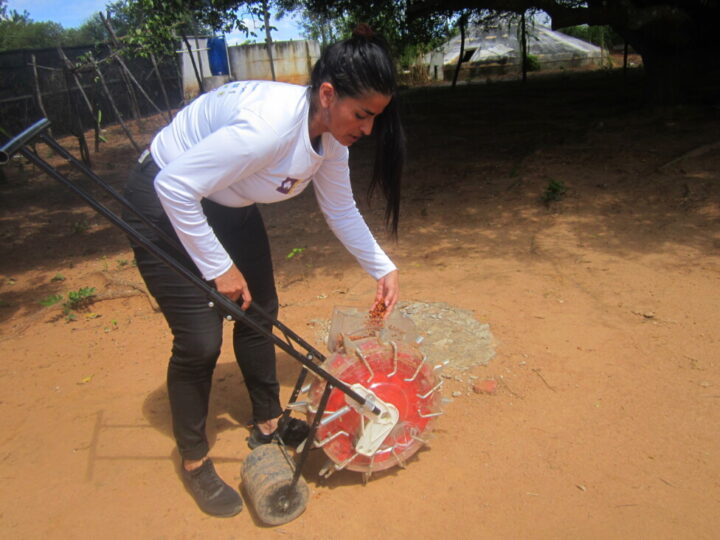
"It's the best invention," says Lucineide Cordeiro, as she shows IPS the seeder created by the Japanese for small-scale farming, which allows her to sow in half a day the land that used to take her two days to plant, on her one-hectare farm in Afogados da Ingazeira, in Brazil's semiarid Northeast. CREDIT: Mario Osava / IPS

“It’s the best invention,” says Lucineide Cordeiro, as she shows IPS the seeder created by the Japanese for small-scale farming, which allows her to sow in half a day the land that used to take her two days to plant, on her one-hectare farm in Afogados da Ingazeira, in Brazil’s semiarid Northeast. CREDIT: Mario Osava / IPS

“But the seeder is the best invention that changed my life, it was invented by the Japanese. Planting the seeds, which used to take me two days of work, I can now do in half a day,” Cordeiro said.

The seeder is a small machine pushed by the farmer, with a wheel filled with seeds that has 12 nozzles that can be opened or closed, according to the distance needed to sow each seed.

The emergence of appropriate equipment for family farming is recent, in a sector that has favored large farmers in Brazil.

Female protagonism clashes with male chauvinist violence

For the success of local family farming, the support of the Pajeú Agroecological Association (Asap), of which Cordeiro is a member and a “multiplier”, as the women farmers who are an example to others of good practices are called, is important.

In family farming the empowerment of women stands out, which in many cases was a response to sexist violence or oppression.

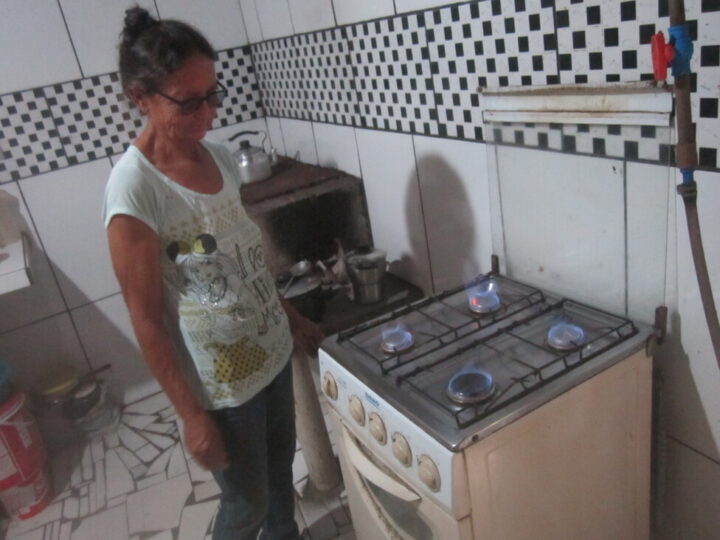
 Blue flames emerge from the burners of Maria Das Dores' biogas stove at her home in Afogados da Ingazeira, in Brazil's semiarid Northeast region. A single ox or cow produces enough manure to generate more biogas than a family requires for its domestic needs. CREDIT: Mario Osava / IPS

Blue flames emerge from the burners of Maria Das Dores’ biogas stove at her home in Afogados da Ingazeira, in Brazil’s semiarid Northeast region. A single ox or cow produces enough manure to generate more biogas than a family requires for its domestic needs. CREDIT: Mario Osava / IPS

“The first violence I suffered was from my father who did not let me study. I only studied up to fourth grade of primary school, in the rural school. To continue, I would have had to go to the city, which my father did not allow. I got married to escape my father’s oppression,” said Cordeiro, who also separated from her first husband because he was violent.

After living in a big city with the father of her two daughters, she separated and returned to the countryside in 2019. “I was reborn” by becoming a farmer, she said, faced with the challenge of taking on that activity against the idea, even from her family, that a woman on her own could not possibly manage the demands of agricultural production.

Organic cotton, promoted and acquired in the region by Vert, a French-Brazilian company that produces footwear and clothing with organic inputs, has once again expanded in the Brazilian Northeast, after the crop was almost extinct due to the boll weevil plague in the 1990s.

In the case of Das Dores, a small, energetic, active woman, she has a good relationship with her husband, but she runs her own business initiatives. Thanks to what she earns she was able to buy a small pickup truck, but it is driven by her husband, who has a job but helps her on the farm in his free time.

“He drives because he refuses to teach me how, so I can’t go out alone with the vehicle and drive around everywhere,” she joked.

Source

Indigenous Women in Mexico Take United Stance Against Inequality

Civil Society, Cooperatives, Development & Aid, Economy & Trade, Editors’ Choice, Featured, Food and Agriculture, Gender, Headlines, Human Rights, Indigenous Rights, Latin America & the Caribbean, Poverty & SDGs, Regional Categories, TerraViva United Nations, Women & Climate Change, Women & Economy

Women & Economy

Every other Tuesday, a working group of Mayan women meets to review the organization and progress of their food saving and production project in Uayma, in the state of Yucatán in southeastern Mexico. CREDIT: Courtesy of the Ko'ox Tani Foundation

Every other Tuesday, a working group of Mayan women meets to review the organization and progress of their food saving and production project in Uayma, in the state of Yucatán in southeastern Mexico. CREDIT: Courtesy of the Ko’ox Tani Foundation

UAYMA, Mexico , Apr 26 2022 (IPS) – Every other Tuesday at 5:00 p.m. sharp, a group of 26 Mexican women meet for an hour to discuss the progress of their work and immediate tasks. Anyone who arrives late must pay a fine of about 25 cents on the dollar.


The collective has organized in the municipality of Uayma (which means “Not here” in the Mayan language) to learn agroecological practices, as well as how to save money and produce food for family consumption and the sale of surpluses.

“We have to be responsible. With savings we can do a little more,” María Petul, a married Mayan indigenous mother of two and a member of the group “Lool beh” (“Flower of the road” in Mayan), told IPS in this municipality of just over 4,000 inhabitants, 1,470 kilometers southeast of Mexico City in the state of Yucatán, on the Yucatán peninsula.

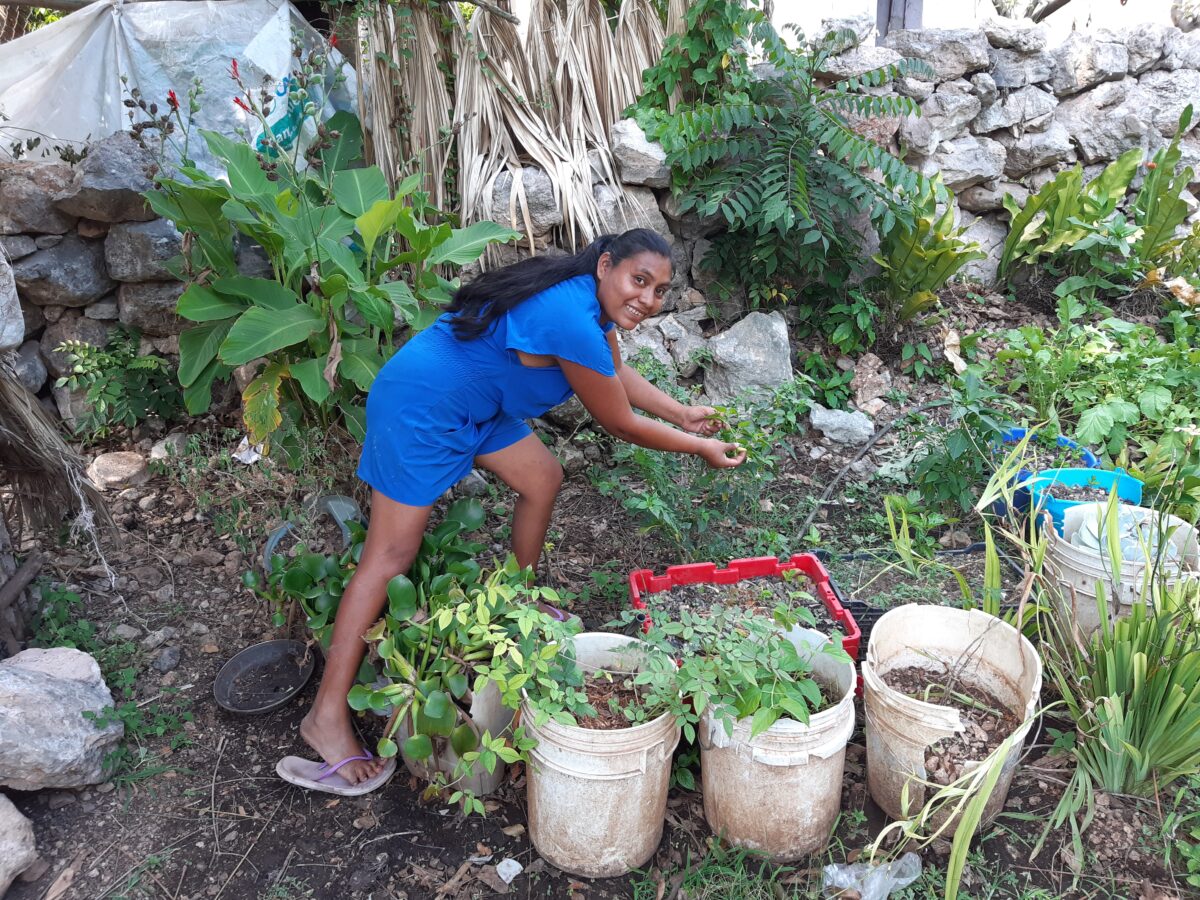
The home garden “gives me enough to eat and sell, it helps me out,” said Petul as she walked through her small garden where she grows habanero peppers (Capsicum chinense, traditional in the area), radishes and tomatoes, surrounded by a few trees, including a banana tree whose fruit will ripen in a few weeks and some chickens that roam around the earthen courtyard.

The face of Norma Tzuc, who is also married with two daughters, lights up with enthusiasm when she talks about the project. “I am very happy. We now have an income. It’s exciting to be able to help my family. Other groups already have experience and tell us about what they’ve been doing,” Tzuc told IPS.

The two women and the rest of their companions, whose mother tongue is Mayan, participate in the project “Women saving to address climate change”, run by the non-governmental Ko’ox Tani Foundation (“Let’s Go Ahead”, in Mayan), dedicated to community development and social inclusion, based in Merida, the state capital.

This phase of the project is endowed with some 100,000 dollars from the Commission for Environmental Cooperation (CEC), the non-binding environmental arm of the North American Free Trade Agreement (NAFTA), formed in 1994 by Canada, the United States and Mexico and replaced in 2020 by another trilateral agreement.

The initiative got off the ground in February and will last two years, with the aim of training some 250 people living in extreme poverty, mostly women, in six locations in the state of Yucatán.

The maximum savings for each woman in the group is about 12 dollars every two weeks and the minimum is 2.50 dollars, and they can withdraw the accumulated savings to invest in inputs or animals, or for emergencies, with the agreement of the group. Through the project, the women will receive seeds, agricultural inputs and poultry, so that they can install vegetable gardens and chicken coops on their land.

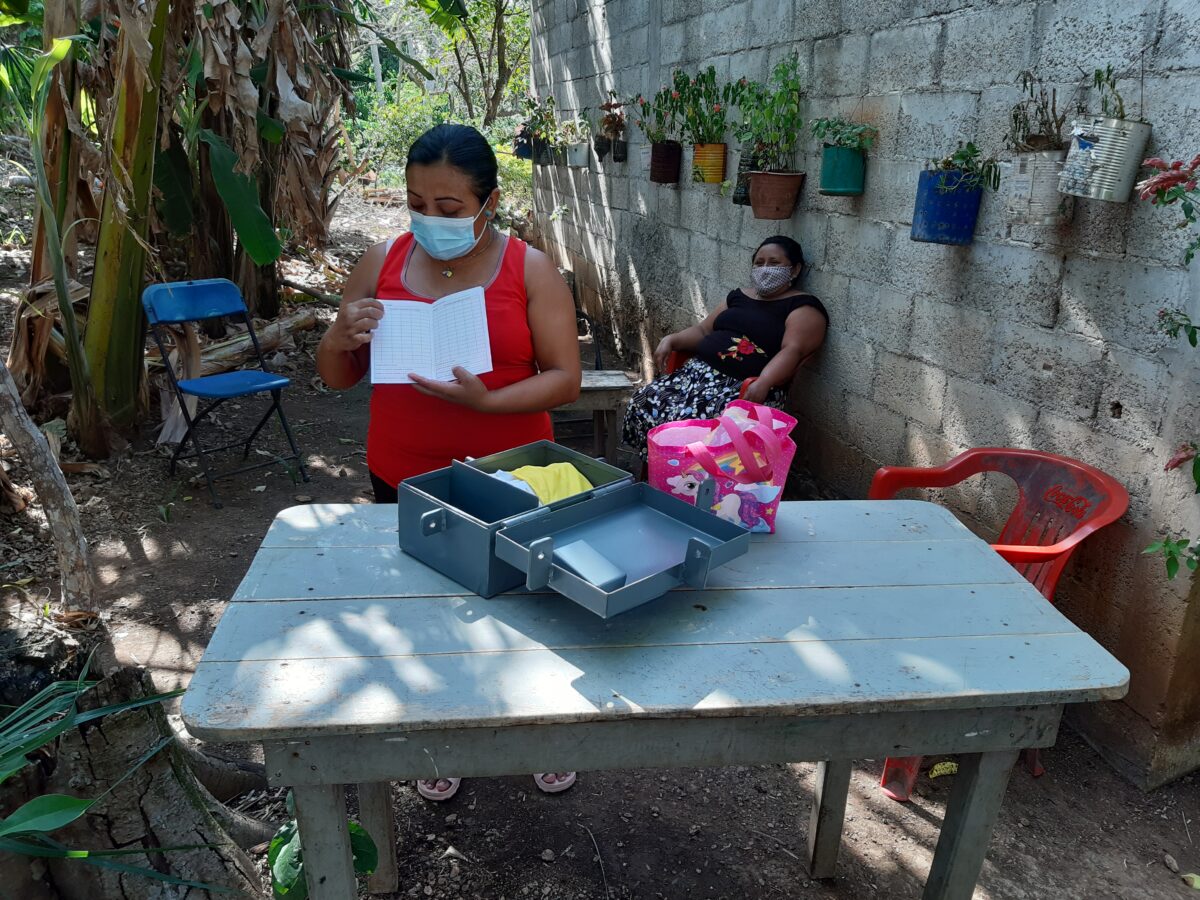
The women write down the quotas in a white notebook and deposit the savings in a gray box, kept in the house of the group’s president.

José Torre, project director of the Ko’ox Tani Foundation, explained that the main areas of entrepreneurship are: community development, food security, livelihoods and human development.

“What we have seen over time is that the savings meetings become a space for human development, in which they find support and solidarity from their peers, make friends and build trust,” he told IPS during a tour of the homes of some of the savings group participants in Uayma.

The basis for the new initiative in this locality is a similar program implemented between 2018 and 2021 in other Yucatecan municipalities, in which the organization worked with 1400 families.

María Petul, a Mayan indigenous woman, plants chili peppers, tomatoes, radishes and medicinal herbs in the vegetable garden in the courtyard of her home in Uayma, in the southeastern Mexican state of Yucatán. CREDIT: Emilio Godoy/IPS

María Petul, a Mayan indigenous woman, plants chili peppers, tomatoes, radishes and medicinal herbs in the vegetable garden in the courtyard of her home in Uayma, in the southeastern Mexican state of Yucatán. CREDIT: Emilio Godoy/IPS

Unequal oasis

Yucatan, a region home to 2.28 million people, suffers from a high degree of social backwardness, with 34 percent of the population living in moderate poverty, 33 percent suffering unmet needs, 5.5 percent experiencing income vulnerability and almost seven percent living in extreme poverty.

The COVID-19 pandemic that hit this Latin American country in February 2020 exacerbated these conditions in a state that depends on agriculture, tourism and services, similar to the other two states that make up the Yucatán Peninsula: Campeche and Quintana Roo.

Inequality is also a huge problem in the state, although the Gini Index dropped from 0.51 in 2014 to 0.45, according to a 2018 government report, based on data from 2016 (the latest year available). The Gini coefficient, where 1 indicates the maximum inequality and 0 the greatest equality, is used to calculate income inequality.

The situation of indigenous women is worse, as they face marginalization, discrimination, violence, land dispossession and lack of access to public services.

More than one million indigenous people live in the state.

Women participating in a project funded by the North American Commission for Environmental Cooperation record their savings in a white notebook and deposit them in a gray box. Mayan indigenous woman Norma Tzuc belongs to a group taking part in the initiative in Uayma, in the southeastern Mexican state of Yucatán. CREDIT: Emilio Godoy/IPS

Women participating in a project funded by the North American Commission for Environmental Cooperation record their savings in a white notebook and deposit them in a gray box. Mayan indigenous woman Norma Tzuc belongs to a group taking part in the initiative in Uayma, in the southeastern Mexican state of Yucatán. CREDIT: Emilio Godoy/IPS

Climate crisis, yet another vulnerability

Itza Castañeda, director of equity at the non-governmental World Resources Institute (WRI), highlights the persistence of structural inequalities in the peninsula that exacerbate the effects of the climate crisis.

“In the three states there is greater inequality between men and women. This stands in the way of women’s participation and decision-making. Furthermore, the existing evidence shows that there are groups in conditions of greater vulnerability to climate impacts,” she told IPS from the city of Tepoztlán, near Mexico City.

She added that “climate change accentuates existing inequalities, but a differentiated impact assessment is lacking.”

Official data indicate that there are almost 17 million indigenous people in Mexico, representing 13 percent of the total population, of which six million are women.

Of indigenous households, almost a quarter are headed by women, while 65 percent of indigenous girls and women aged 12 and over perform unpaid work compared to 35 percent of indigenous men – a sign of the inequality in the system of domestic and care work.

To add to their hardships, the Yucatan region is highly vulnerable to the effects of the climate crisis, such as droughts, devastating storms and rising sea levels. In June 2021, tropical storm Cristobal caused the flooding of Uayma, where three women’s groups are operating under the savings system.

For that reason, the project includes a risk management and hurricane early warning system.

The Mexican government is building a National Care System, but the involvement of indigenous women and the benefits for them are still unclear.

Petul looks excitedly at the crops planted on her land and dreams of a larger garden, with more plants and more chickens roaming around, and perhaps a pig to be fattened. She also thinks about the possibility of emulating women from previous groups who have set up small stores with their savings.

“They will lay eggs and we can eat them or sell them. With the savings we can also buy roosters, in the market chicks are expensive,” said Petul, brimming with hope, who in addition to taking care of her home and family sells vegetables.

Her neighbor Tzuc, who until now has been a homemaker, said that the women in her group have to take into account the effects of climate change. “It has been very hot, hotter than before, and there is drought. Fortunately, we have water, but we have to take care of it,” she said.

For his part, Torre underscored the results of the savings groups. The women “left extreme poverty behind. The pandemic hit hard, because there were families who had businesses and stopped selling. The organization gave them resilience,” he said.

In addition, a major achievement is that the households that have already completed the project continue to save, regularly attend meetings and have kept producing food.

  Source