South Korea’s men’s football team concluded another year of international fixtures with mixed emotions.
The national side recorded eight wins, three draws, and two losses, a record that superficially appears solid.
Closer examination, however, reveals persistent flaws that could challenge the team in the upcoming 2026 FIFA World Cup.
Under the guidance of coach Hong Myung-bo, South Korea, ranked 22nd in the world, managed victories over Bolivia and Ghana in the final matches of the year.
While the wins were welcome, fans expressed concern over the team’s struggle to dominate lower-ranked opponents convincingly.
The sentiment reflects a broader pattern throughout 2025, in which South Korea frequently underperformed relative to expectations.
The team began the year with 1-1 draws against Oman and Jordan, results that drew criticism from both supporters and the coaching staff.
Hong himself labeled the draw with Oman as “the worst performance” of the qualification phase.
Following those matches, South Korea rebounded with two consecutive victories to secure a World Cup berth in June.
In July, during the East Asian Football Federation E-1 Championship, the team defeated China and Hong Kong but fell short against Japan in the decisive match for the regional title.
A trip to the United States in September brought a strong 2-0 win over the host nation, though a subsequent 2-2 draw with Mexico tempered the optimism.
The victory over the U.S. highlighted South Korea’s defensive solidity and individual brilliance, with captain Son Heung-min contributing both a goal and an assist.
October brought a stark reminder of vulnerabilities, as the team suffered a humiliating 5-0 defeat to Brazil in front of more than 63,000 spectators.
The loss had immediate consequences for fan engagement, with attendance plummeting to just 22,000 for the following match against Paraguay.
Even the final home fixture against Ghana drew only 33,000 fans, a surprisingly low turnout considering the significance of the friendly as preparation for the World Cup.
Hong’s tenure has faced scrutiny for an overreliance on the individual talent of players such as Son and Lee Kang-in, with the team’s offensive strategies often predictable.
The absence of key midfielder Hwang In-beom in the November matches exposed further weaknesses, particularly in linking defense and attack.
Hong acknowledged that the midfield’s limited performance against Ghana hindered the team overall but expressed confidence that Hwang’s return would address many of these issues.
The heavy dependence on a single player underscores a deeper concern regarding the team’s adaptability and depth.
Lee Kang-in, emerging as a vocal leader, emphasized the importance of focusing internally rather than reacting to external criticism.
He highlighted the team’s commitment to mutual support and to improving play in ways that benefit the collective effort.
Veteran Hwang Hee-chan, reflecting on the past year, pointed to the team’s accumulation of victories over strong opponents as a positive takeaway.
He stressed that results matter and that the team had strengthened its confidence and cohesion through shared experiences in 2025.
Looking ahead, South Korea plans additional friendly matches in March 2026 to refine tactics and build momentum before the World Cup kicks off in June.
The team’s preparation remains a delicate balance between addressing weaknesses, maintaining morale, and harnessing the brilliance of its key players.
Share this:
Like this:
LikeLoading…
Discover more from The Maravi Post
Subscribe to get the latest posts sent to your email.
LILONGWE-(MaraviPost)-The government of Malawi has pledged to ensure that individuals found guilty of committing sexual abuse against children face severe punishment.
This commitment was made in response to the recent case involving a 12-year-old girl who was sexually assaulted by her father in Area 25, Lilongwe.
Officials emphasized that there should be no distinction between male and female offenders, underscoring the government’s stance on equality in justice.
Authorities expressed deep concern that such abusive behavior continues to affect the safety, wellbeing, and future prospects of vulnerable children across the country.
Memory Chisenga, head of the Child Advocacy Centre, spoke on the matter, affirming her agreement with the government’s position.
She highlighted that imposing long prison sentences on offenders is essential not only for justice but also as a deterrent to prevent others from engaging in similar crimes.
Chisenga stressed that ensuring perpetrators face significant consequences is a critical step in protecting children and promoting public confidence in the justice system.
The government and child protection agencies reiterated their commitment to safeguarding minors and preventing sexual abuse through strict enforcement of the law.
Share this:
Like this:
LikeLoading…
Discover more from The Maravi Post
Subscribe to get the latest posts sent to your email.
BLANTYRE-(MaraviPost )-The Blantyre Central Magistrate Court on Wednesday, November 19,2025 adjourned to Friday the case in which videographer and social media personality VJ Ken, real name Kenneth Makina, is answering charges of child abduction and engaging in a relationship with a minor.
Makina appeared before the court for the first time this morning following his arrest by Ndirande Police.
He is accused of unlawfully keeping a 15-year-old girl at his home.
The talented videograher pleaded not guilty to all charges.
His lawyer, Humphreys Makhalika, applied for bail, arguing that the accused was prepared to comply with all bail conditions the court might impose.
However, the court denied the application.
Senior Resident Magistrate Mercy Bonongwe ruled that bail could not be granted at this stage, citing concerns over possible interference with witnesses, who reside in the same community as the accused.
She added that the right to bail is not absolute, especially in matters involving serious allegations.
Makina is being charged with child abduction contrary to Section 264 of the Penal Code and engaging in a relationship with a minor contrary to Section 138.
Share this:
Like this:
LikeLoading…
Discover more from The Maravi Post
Subscribe to get the latest posts sent to your email.
LILONGWE-(MaraviPost)-Former Malawi Defence Force (MDF) Commander Paul Valentino Phiri is accused of illegally promoting former President Lazarus Chakwera’s ex- ADC (aide-de-camp) Raphael M’bobo from Colonel to Brigadier General during the transition of power period after September 16 Elections.
According to restricted promotion, appointments, relinquishment posting, transfer of officers and other ranks notice dated September 29, 2025, we have seen, Valentino Phiri single-handedly promoted M’bobo without approval of Malawi Defence Force council as required by the law.
M’bobo and wife
Phiri made the decision when MDF council was dissolved following regime power change from Chakwera to incumbent Arthur Peter Mutharika. Chakwera lost elections to Mutharika by 56.8%.
According to Defence Force Act 2024, the MDF council which is comprised of Defence Minister (Chairman of Defence Council), Secretary for Defence, Secretary to the President and Cabinet, Commander, Deputy Commander and Chief of Staff, makes recommendation for appointments, promotions, transfers for officers which Valentino Phiri violated.
The development however has attracted tension in the force while some officers are calling for M’bobo’s promotion reversal.
“Immediate, Chakwera lost September 16 elections, Valentino Phiri new that his job was over. Phiri instead accepting the reality of power change, he single-handedly and illegally promoted his tribesman M’bobo from Colonel to Brigadier General for a mark.
“Phiri’s appointment was illegal and unacceptable against Defence Force Act which only allows MDF council to make recommendations for such decision. We are therefore calling the reversal of M’bobo’s promotion with immediate effect,” demands angrily senior MDF office on condition anonymity.
He added, “Now that the Minister of Defence, Chief of Staff, Secretary to President and Cabinet, Defence Ministry Secretary are in place, the MDF council is in force to make decisions. We need order in the force not politically motivated promotions, appointments and promotions”.
When contacted if is aware of the tension within MDF, Defence Minister Chimwemwe Chipungu asked for more time to learn saying he has just been appointed for the position.
MDF is now headed by Major General Jaffu.
Share this:
Like this:
LikeLoading…
Discover more from The Maravi Post
Subscribe to get the latest posts sent to your email.
BLOEMFONTEIN-(MaraviPost)-Malawi’s 1–0 win over Lesotho in Bloemfontein carried the calm weight of a team slowly coming into its own.
It was not a match full of spectacle but one that hinted at a deeper shift in how the Flames approach high-pressure situations especially against a side they had not beaten since 2009.
From the opening whistle, Malawi displayed a sense of purpose that had been missing in earlier outings.
The early tempo, sharper and more controlled than the weekend draw, suggested a team determined to rewrite its narrative.
The breakthrough arrived in the 25th minute. Mayele Malango, positioned with precision, finished off a well-constructed move after receiving a neat pass from Lloyd Aaron.
The play itself began with an intelligent attacking contribution from Babatunde Adepoju, whose ability to hold up and release the ball under pressure created the opening. It was a goal rooted in structure, not improvisation.
While the goal offered Malawi the lead they needed, the performance that followed was equally telling.
The makeshift back-three forced by injuries performed with unexpected cohesion, closing spaces quickly and denying Lesotho clear opportunities.
After the match, Flames head coach Kalisto Pasuwa shed more light on the tactical decisions behind the victory.
He revealed that he intentionally avoided introducing players like Uchizi Vunga and Andrew Joseph, despite having them available.
Pasuwa explained that because the team was leading, he did not want to risk disrupting the rhythm or face criticism had the result slipped away after their introduction.
According to Pasuwa, even though he had already made five changes to his usual starting lineup, the priority was to secure the win.
He acknowledged that integrating fresh players while protecting a narrow lead can bring scrutiny, especially in a match that held symbolic importance for the team.
This kind of calculated decision-making marked a shift in how the technical panel manages games.
Instead of reacting impulsively, the Flames approached the second half with strategic composure slowing the tempo when needed, tightening defensive lines and maintaining discipline in midfield.
Share this:
Like this:
LikeLoading…
Discover more from The Maravi Post
Subscribe to get the latest posts sent to your email.
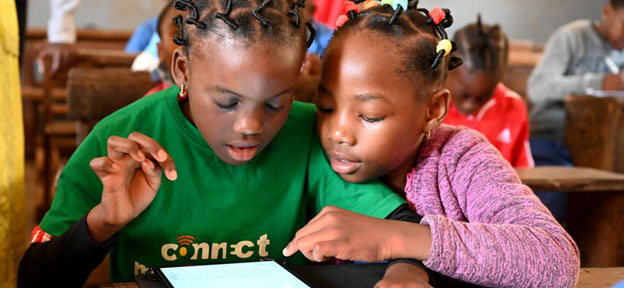
Artificial intelligence is reshaping how learners, teachers, and creators engage with education across the continent. A new wave of AI innovation transforming learning across countries on the African continent — from chat-based tutors to hybrid hubs and gamified farms. Credit: UNICEF
Through initiatives such as Digital Skills for Africa, Lumo Hubs, and Luma Learn, innovators are breaking barriers of access, cost, and language to build inclusive, localized learning systems.
UNITED NATIONS, Nov 19 2025 (IPS) – “Sometimes the best way to grasp a concept,” says Chris Folayan, co-founder and executive officer of Luma Learn, “is to learn it in your native language.”
Seventeen-year-old South African Simphiwe is one of more than 10,000 learners already using Luma Learn, an AI-powered tutor platform. For him, artificial intelligence isn’t an abstract idea: it is a personal tutor that is patient, consistent, and always online.
When on his phone, he’s not always chatting with a classmate or scrolling through social media. Many times, he’s studying physics with Luma Learn, that replies instantly, even in IsiZulu, his mother tongue.
Across several countries on the African continent, innovators like Folayan, Nthanda Manduwi, and Anie Akpe are reimagining what education can look like: localised, practical, and accessible to anyone with a phone or connection.
Together, they’re building a new learning ecosystem: one where AI isn’t replacing teachers but multiplying their reach.”
Nthanda Manduwi: Turning digital skills into interactive ecosystems
“I’ve always believed that technology can democratize opportunity,” says Nthanda Manduwi, founder of Digital Skills for Africa (DSA) and Q2 Corporation. “AI gives us a real chance to leapfrog the barriers that have slowed Africa’s progress, from infrastructure gaps to unequal access to training.”
Her journey began with Digital Skills for Africa, a platform designed to equip young people with practical tech competencies from AI and automation to no-code tools and digital marketing.
“Our courses like ‘Effective Use of AI’ or ‘AI and the Future of Digital Marketing’ were created to help learners not only understand AI but actually apply it,” she explains. “You leave with real, marketable skills you can use to build something or get hired.”
But scaling that vision revealed a challenge many edtech startups face. “We realised enthusiasm alone doesn’t pay the bills,” she says. “There was low willingness to pay for courses, even from institutions. So, we had to rethink how to make digital learning sustainable.”
That rethink led to Q2 Corporation, her new venture linking learning with livelihood. Under Q2’s umbrella sits Kwathu Farms—an innovative gamified agricultural simulator where users learn how to manage farms, predict supply chain issues, and test business models before investing real money.
“AI makes the learning immersive,” Ms. Manduwi explains. “Through simulations, learners can see how weather or market shocks affect yield, and how small decisions impact entire value chains. It turns agriculture into a classroom. And a business lab.”
Behind these simulations run Q2’s proprietary engines, NoxTrax and AgroTrax, which apply AI to real-time logistics and resource management. “It’s about showing that AI isn’t just for coders,” she says. “It’s for farmers, small businesses, anyone who wants to think and plan more intelligently.”
Ms. Manduwi’s mission remains rooted in access. “For Africa to truly benefit from AI, it can’t be an elite tool. It must live where people already are: on their phones, in their communities, in local languages.”
Anie Akpe: Creating spaces where AI meets human creativity
Where Ms. Manduwi builds ecosystems, Anie Akpe builds spaces. Through her work with African Women in Technology (AWIT)and Lumo Hubs, Ms. Akpe has spent over a decade helping innovators, especially women, turn curiosity into competence.
“With AWIT, I started by organising conferences across the continent,” she recalls. “We created safe spaces where women could connect with mentors and learn skills that weren’t taught in schools: digital literacy, entrepreneurship, coding, design.”
Soon, even male students began asking to participate. “That’s when I realized it wasn’t just about women in technology. It was about us (Africans) finding a place in a digital world that was changing fast.”
The next step came naturally. “When AI began to disrupt industries, I saw that we couldn’t just talk about skills. We had to create environments where people could use those skills,” she says. “That’s how Lumo Hubs was born.”
Each hub combines education, creativity, and entrepreneurship. “In one space, you might find a student learning AI-assisted graphic design, a seamstress using AI to plan production, and a young podcaster recording a show in a studio powered by the hub,” Ms. Akpe explains. “The model is hybrid, physical and digital, so even small towns can host a Lumo Hub.”
She is also deliberate about sustainability. “Community members pay; students pay less. It’s important that we don’t depend only on grants,” she says. “That balance keeps the hubs alive and the learning continuous.”
At the heart of Lumo Hubs lies mentorship. “You can’t separate technology from human guidance,” Akpe insists. “AI helps scale learning, but mentorship builds confidence.” Her approach remains rooted in empowerment. “AI can level the playing field if used right. A young person in Lagos or Uyo doesn’t have to wait for opportunity. They can create it.”
Chris Folayan: A tutor that never sleeps
For Chris Folayan, the idea behind Luma Learn came from a simple observation: “The continent doesn’t just have an access problem. It has a teaching gap too.”
According to UNESCO, Sub-Saharan Africa will need 15 million new teachers in the next five years to meet demand. “With classrooms that sometimes have over 100 students per teacher, no one can give every child the help they need,” Mr. Folayan says. “That’s where Luma Learn steps in.”
Luma Learn is an AI tutor that runs on WhatsApp, not a separate app.
“We chose WhatsApp for a reason,” he explains. “It’s already on most phones, it’s free to message, works on low bandwidth, and keeps data safe through encryption. That means a child in a rural area can learn without worrying about internet costs or app installations.”
The platform adapts to the learner’s grade level, curriculum, and preferred language. “Whether you need algebra in English or history in Swahili, Luma Learn can teach, quiz, and explain at your level,” he says. “It learns how you learn.”
Mr. Folayan shares two powerful testimonies. In Durban, a mother named Happyness wrote that her son, after years of illness, seizures, and missed schooling, caught up with the rest of the class with help from Luma Learn.
“Every time Vuyo wants to know something about school, we just ask Luma! What’s great is that Luma explains in our native language, IsiZulu.”
In another case, Simphiwe, a Grade 11 student from KwaZulu-Natal, sent over 1,200 messages to Luma. “Luma Learn wasn’t just another study resource,” he said. “It became the personal teaching assistant I desperately needed.”
Shared goals: One vision, many pathways
Three innovators. Three different models. One shared purpose: to make AI work for Africa’s learners, not the other way around. Across their stories, several threads stand out.
First, access—from WhatsApp tutors to open learning hubs to gamified ecosystems that teach real-world problem-solving.
Second, localisation—learning in local languages, within familiar tools, and around community realities.
Third, empowerment—every model links knowledge directly to opportunity.
From Ms. Manduwi’s gamified farms to Ms. Akpe’s creative hubs, to Mr. Folayan’s WhatsApp tutor, future classrooms are already here — decentralised, digital, and deeply human.
As Ms. Manduwi puts it, “We must stop treating AI as something imported. It’s a tool we can mold to fit our own systems.”
Ms. Akpe echoes that sentiment: “Africa doesn’t lack talent. It lacks platforms that meet learners where they are.”
And Mr. Folayan completes the picture: “No teacher wants their student left behind. With AI, we can make sure no one is.”
At the end of the day, a student in Durban learns physics through Luma. A young designer in Uyo experiments with AI tools at a Lumo Hub. A farmer in Lilongwe tests market scenarios on Kwathu Farms. Each represents a different face of the same revolution — a continent using intelligence, both human and artificial, to learn without limits.
As Ms. Akpe says: “The vision is simple: a generation that doesn’t just survive AI disruption but thrives because of it.” And as Ms. Manduwi concludes: “AI is not a threat to Africa. It’s our greatest chance to catch up. And lead.”
Anie Akpe and Chris Folayan were participants at the Global Africa Business Initiative (GABI): Unstoppable Africa2025, held in New York City on the margins of the UN General Assembly in September. The platform helps foster networking, exposure to potential business partners, and garner support for their initiatives.