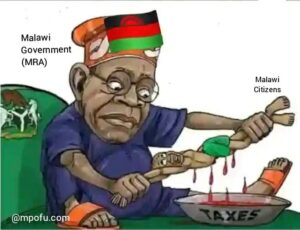

Malawi stands at a critical economic crossroads, grappling with the legacy of staggering debt and fiscal instability inherited from previous administrations, particularly the Malawi Congress Party (MCP).
The current Democratic Progressive Party (DPP) government, under the leadership of Professor Arthur Peter Mutharika, is facing tough but necessary decisions to restore fiscal discipline and chart a sustainable path forward.
The recent introduction of the Electronic Invoicing System (EIS), alongside proposals for new taxes such as the inheritance tax and adjustments to fuel prices, represents a strategic effort to mobilize domestic revenue, reduce dependency on external borrowing, and ultimately secure Malawi’s economic future.
Yet, these moves have been met with resistance and protests, particularly from small-scale traders, who understandably feel the pinch of rising costs and regulatory changes.
It is imperative for Malawians to view these measures in the broader context of national recovery and long-term prosperity.
For decades, Malawi’s economic challenges have been deepened by unsustainable borrowing practices, much of which occurred under MCP leadership. The current national debt, now in the trillions, is a heavy burden that threatens the country’s ability to fund critical services and infrastructure.
This debt crisis cannot be overstated: it was the reckless fiscal management and opaque dealings of many MCP officials that have left Malawi shackled by creditors.
Numerous former MCP ministers have been implicated in accumulating personal wealth through dubious means, often at the expense of the nation’s treasury.
Their legacy is one of mismanagement, corruption, and economic policies that prioritized short-term gains over sustainable development.
In stark contrast, the DPP government’s approach under Professor Mutharika is one of fiscal responsibility and transparency. The introduction of the Electronic Invoicing System is a testament to this commitment.
By replacing the outdated Electronic Fiscal Devices with a more robust and real-time tax invoicing system, the Malawi Revenue Authority (MRA) aims to curb tax evasion, broaden the tax base, and ensure that all businesses, regardless of size, contribute their fair share to national development.
While small-scale traders raise valid concerns about the immediate impact on their operations, it is important to recognize that the EIS will foster a more equitable business environment and improve government revenue collection, which in turn can support public services and infrastructure that benefit all Malawians.
Critics, particularly from the MCP, have attempted to frame these reforms as punitive or overly burdensome. However, this narrative ignores the stark reality that Malawi simply cannot afford to continue down the path of borrowing without accountability.
The DPP’s fiscal measures are not designed to stifle business but to create a sustainable economic ecosystem where government resources are available to support growth and development.
The resistance to these reforms is more reflective of the MCP’s historical reluctance to embrace transparency and fiscal discipline, rather than any genuine concern for the welfare of traders.
Moreover, the increase in fuel prices, while difficult for many households and businesses, is a reflection of global economic realities and the need for Malawi to align its domestic prices with international market trends.
Subsidizing fuel or delaying price adjustments would only deepen fiscal deficits and increase reliance on foreign loans, worsening the debt situation.
The DPP government’s decision to adjust fuel prices is therefore a necessary step to maintain macroeconomic stability.
Malawians must also be reminded of the dangers of returning to MCP rule. The party’s track record is marked by economic mismanagement, corruption scandals, and a failure to deliver meaningful development.
Their insatiable appetite for borrowing without accountability led to the current debt crisis, which the country is now struggling to overcome. Voting for MCP in the future would risk reversing the progress made under the DPP and plunging Malawi back into financial chaos.
The DPP’s governance under Professor Mutharika embodies a vision of disciplined management, structural reforms, and a commitment to fighting corruption.
It is also crucial to highlight that the DPP government is not acting in isolation.
The introduction of new taxes, such as the inheritance tax, is aligned with international best practices in revenue mobilization.
These policies aim to ensure that wealthier segments of society contribute fairly to national development, helping reduce inequality and broaden the tax base beyond the small-scale traders who often bear a disproportionate burden. This approach promotes social justice and fiscal sustainability.
The protests by traders, while understandable on a human level, must be balanced against the broader national interest.
The government has pledged to engage with stakeholders and provide feedback as it implements these reforms, demonstrating a willingness to listen and adapt where necessary. However, the ultimate goal must remain clear: to build a Malawi that is economically stable, self-reliant, and capable of investing in the future of its people.
The DPP government’s domestic revenue mobilization efforts are not only justified but essential.
The introduction of the Electronic Invoicing System, the adjustment of fuel prices, and the proposal of new taxes are all strategic moves designed to reduce Malawi’s dependency on unsustainable borrowing, improve transparency, and create a more equitable tax system.
These reforms are a direct response to the economic turmoil left by the MCP’s mismanagement and corruption.
Malawians should support these measures, recognizing that they are building blocks for a stronger, more prosperous nation.
The choice is clear: continue on the path of fiscal irresponsibility and debt under MCP leadership or embrace the disciplined, reform-oriented approach of the DPP government under Professor Arthur Peter Mutharika. The future of Malawi depends on this decision.