Namibia’s Onshore Drive: Emerging Opportunities Beyond the Deepwater Frontier

With onshore drilling results in hand and key production tests planned for 2026, Namibia’s frontier basins are moving into sharper focus – creating new openings for investors at this year’s Namibia International Energy Conference
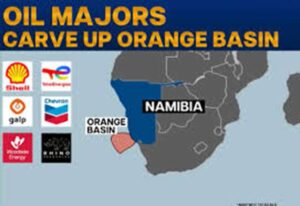
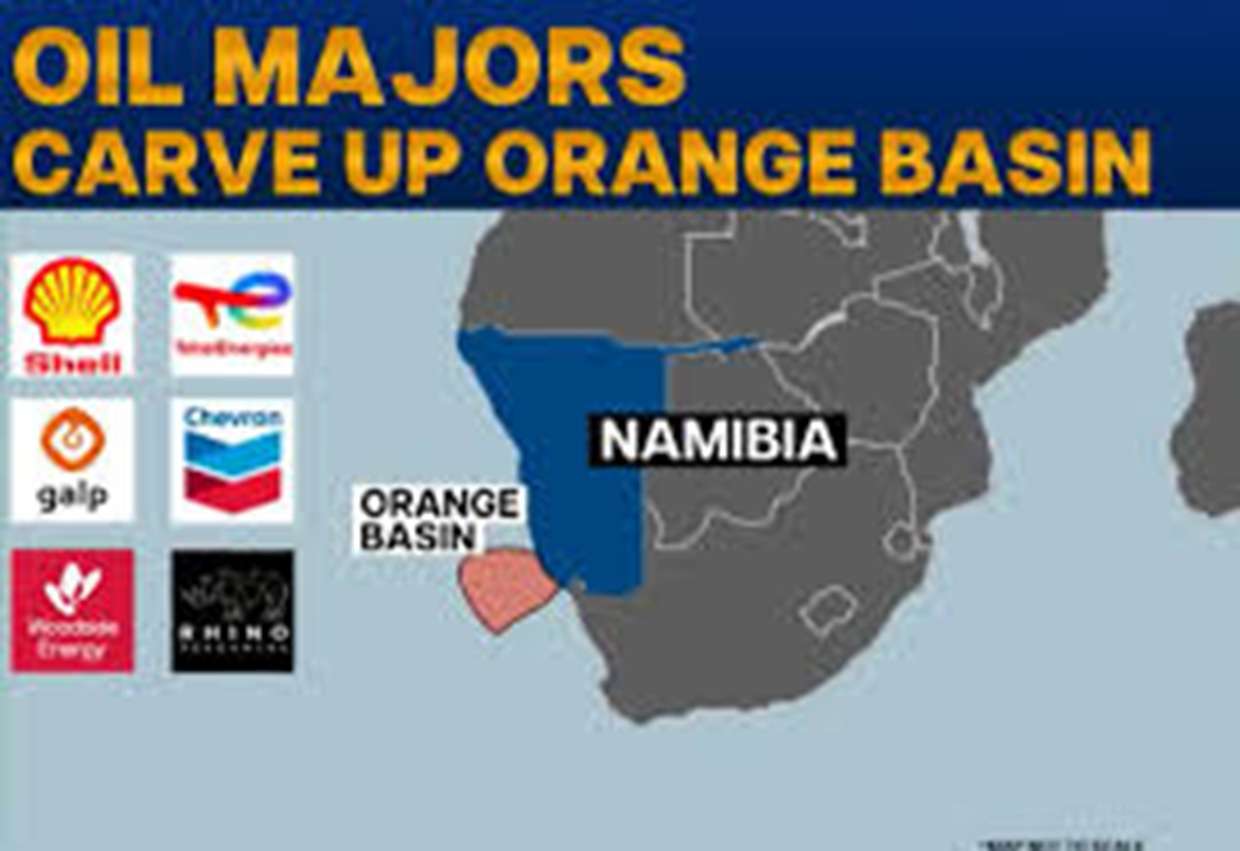
WINDHOEK, Namibia, February 12, 2026/ — Namibia’s upstream narrative has, until recently, been defined by deepwater success in the Orange Basin, where major offshore discoveries have transformed perceptions of the country’s hydrocarbon potential. Galp’s Mopane discovery, estimated to hold up to 10 billion barrels of oil equivalent, alongside TotalEnergies’ Venus find, has firmly positioned Namibia on the global exploration map and underpinned expectations of first offshore oil before the end of the decade. Alongside this offshore momentum, however, a parallel story is unfolding onshore, where frontier basins, lower entry costs and improving geological understanding are drawing increased attention from explorers and investors alike.
What Makes Onshore Namibia Attractive?

Onshore Namibia presents a compelling proposition, particularly in the current global investment climate. Compared with deepwater developments, onshore exploration offers significantly lower drilling and operating costs, shorter project timelines and greater flexibility during appraisal. These advantages help reduce risk while allowing companies to test frontier plays more efficiently – a key factor given that Namibia’s onshore basins remain underexplored by international standards.

The most advanced onshore exploration activity is currently taking place in the Kavango Basin, led by ReconAfrica. In December 2025, the company completed drilling at its Kavango West 1X well to a depth of approximately 4,200 meters. Data collected during drilling confirmed the presence of hydrocarbons across a substantial section of the well, including several zones that could potentially support future production. Additional hydrocarbon indications were identified at deeper levels, pointing to the possibility of multiple viable targets within the basin. While the well was not immediately placed into production, the results marked one of the most significant onshore milestones achieved in Namibia to date and confirmed the existence of a working petroleum system.

Building on these findings, ReconAfrica plans to return to Kavango West 1X in early 2026 to conduct a production test. The results of this program will be critical in determining whether the hydrocarbons identified can be produced at commercial rates and whether the Kavango Basin can progress from exploration concept to viable development. Beyond this initial well, the company controls a substantial onshore acreage position across Namibia and neighboring Angola, providing considerable scope for follow-up drilling and potential farm-in opportunities should results prove encouraging.

Further west, the Owambo Basin represents another onshore frontier attracting growing interest. Exploration efforts led by joint ventures involving Monitor Exploration, 88 Energy and Legend Oil Namibia have focused on gravity, magnetic and environmental surveys under Petroleum Exploration Licence 93. These studies have identified several structural leads, including large closures capable of supporting hydrocarbon trapping within a rift-related petroleum system. While seismic acquisition and interpretation are expected to continue through 2026, the basin is increasingly viewed as a medium-term opportunity that could complement progress in the Kavango Basin.

Exploration and Activity Outlook

Looking ahead, 2026 is shaping up to be a defining year for Namibia’s onshore ambitions. In addition to the planned Kavango West production test, operators are expected to expand geochemical sampling and subsurface studies across multiple lisence areas, both within Namibia and along its onshore extension into Angola. These programs are aimed at reducing exploration risk and supporting investment decisions at a time when African onshore oil and gas spending is forecast to rise, driven by demand for lower-cost, shorter-cycle developments.

As this onshore momentum builds, the Namibia International Energy Conference (NIEC) is emerging as a key forum for engagement between government, operators and investors shaping the country’s upstream future. Scheduled to take place in Windhoek from 14–16 April 2026 under the theme “The Road to First Oil and Beyond,” NIEC brings together policymakers, regulators, explorers, financiers and service providers at a critical point in Namibia’s development trajectory. While offshore projects continue to dominate global headlines, the conference provides onshore explorers with a platform to showcase progress, advance partnerships and engage investors seeking diversification beyond deepwater plays.

For onshore licence holders, NIEC creates tangible opportunities to progress farm-in discussions, secure technical and financial partners and align exploration timelines with national development priorities. As Namibia advances both offshore and onshore, NIEC ensures that policy, investment and technical planning move forward in step.

The African Energy Chamber serves as the strategic partner of NIEC 2026, working alongside government and industry to advance investment, local content and responsible energy development in Namibia.

Distributed by APO Group on behalf of African Energy Chamber.

SOURCE: African Energy Chamber

The Maravi Post

Education Ministry rolls out emergency school feeding program in Zomba

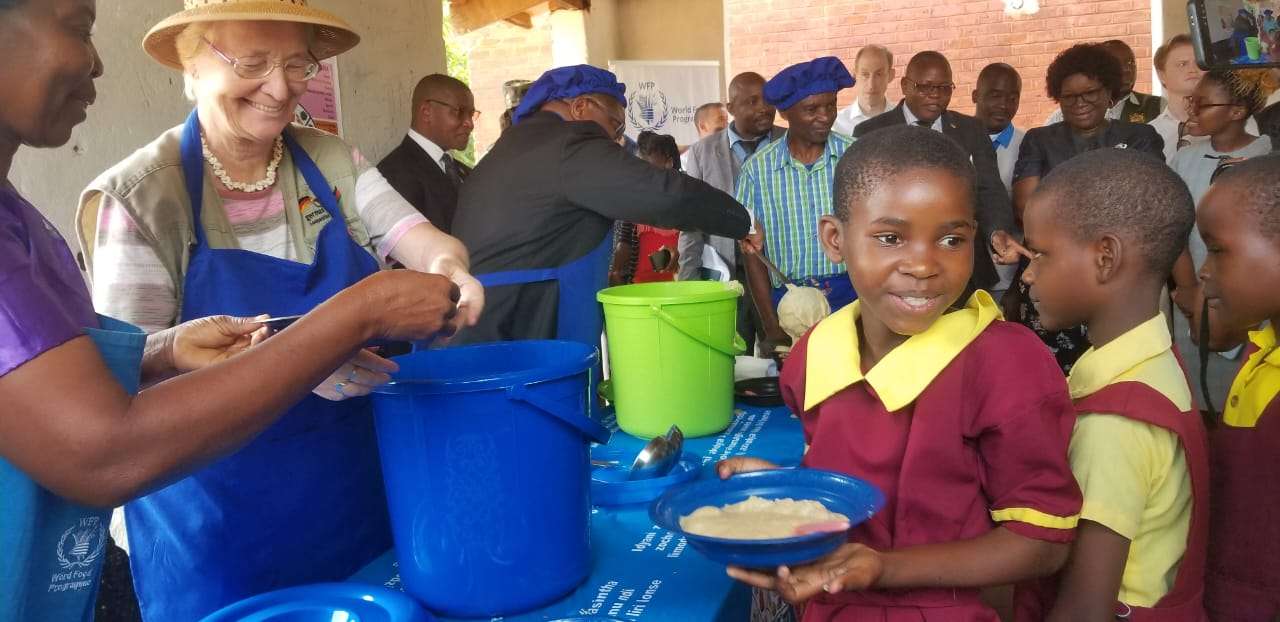
BLANTYRE-(MaraviPost)-The Ministry of Education, Science and Technology on Thursday, February 12, 2026, officially launched an emergency school feeding program, an initiative that will improve learners’ retention at Namadidi Primary School in Zomba.

The school feeding program aims to address the challenge of food insecurity and absenteeism among pupils in the district and other district that were hit with dry spells in 2025/2026, that led to food shortages and threatening the regular attendance of students.

The World Food Programme is overseeing the implementation of the program, which will benefit 338,000 pupils across 278 schools in the targeted districts, with financial support provided by Germany and Iceland.

Speaking at the launch, the Minister of Education, Science and Technology Bright Msaka expressed the government’s appreciation for the support received from Germany and Iceland and other key partners for the donations of school meals through World Food Program (WFP) saying that it will help to increase pupils’ attendance.

He highlighted that the government is greatly impressed with the donor’s commitment to helping children access school meals during this lean season.

However, the Minister reaffirmed the government’s commitment to continue providing meals throughout the year to help maintain high levels of school attendance and promote better learning outcomes by 2030.

On her part, United Nations Resident Coordinator for Malawi, Rebecca Adda Donto, emphasized the importance of coordination among the different donors involved in this effort.

She pointed out that this is an investing in resilient in the lives of pupils and communities who are benefiting from this program as parents are also receiving farm inputs.

She urged all partners to continue working together to maximize the impact of the school feeding program and ensure that resources are available to pupils as it takes $20 to feed a pupil for the whole year.

The Ambassador for Germany and Iceland to Malawi expressed their satisfaction with the positive impact in the school feeding program and the anticipatory sustainability of providing farm inputs to the communities as it will help to end hunger in the district.

The Maravi Post

Why Africa’s Energy Supply Gap is its Defining Commercial Opportunity

Africa’s energy deficit is often framed as a development crisis, but in 2026 it should also be seen as one of the continent’s most compelling structural investment opportunities

CAPE TOWN, South Africa, February 13, 2026/ — Nearly 600 million people across Africa still lack access to electricity, with electrification progress barely keeping pace with population growth and leaving the continent far from universal access targets. Achieving full access will require electricity-access investment to scale toward around $15 billion annually, according to the IEA, yet tracked financing commitments remain below $2.5 billion per year, underscoring a profound capital shortfall.
This mismatch – vast, guaranteed demand paired with chronic under-investment – is precisely what creates durable commercial opportunity. Energy demand across Africa is projected to rise sharply through 2030, driven by urbanization, industrialization, electrification and emerging high-consumption sectors such as data centers. Sub-Saharan Africa contains the majority of the global population without electricity, while the continent hosts 20% of the world’s population but receives only about 2% of global clean-energy investment.

In investment terms, this reflects demand certainty combined with supply scarcity – a dynamic that historically underpins strong long-term project economics. Reliable power fuels industrial growth, digital infrastructure and sustained revenue expansion, linking electrification directly to bankable demand. Closing the supply gap is therefore not just a social imperative, but a continent-wide revenue opportunity for investors.

This commercial logic is already reshaping global portfolio strategy. Major oil companies facing reserve pressure and slowing discoveries are increasingly turning toward frontier regions capable of delivering material new volumes, with Africa at the center of this shift. Industry analysis in 2026 suggests some producers could face production declines of hundreds of thousands of barrels per day within the next decade without major discoveries or acquisitions – intensifying the search for scalable new basins.

Developments progressing through 2025–2026 demonstrate how structural demand is translating into commercially viable assets. Mozambique’s $20 billion LNG project, advancing toward production later this decade, is anchored by tens of trillions of cubic feet of recoverable gas and supported by one of the largest financing packages ever assembled for an African energy development – demonstrating how global gas demand, domestic industrialization and long-term state revenue can align within a single project.

Meanwhile, analysis indicates that developing the continent’s gas resources could play a decisive role in closing the electricity access gap for hundreds of millions of people, while contributing only marginally to global emissions – strengthening the investment rationale even within a transition-constrained financing environment.

“Energy poverty is not just a challenge – it is Africa’s greatest investment opportunity. What we are witnessing today is a historic convergence of demand, resources and political will. The companies and investors that choose to partner with Africa now will not only generate long-term returns, but help power industries, create jobs and define the next era of global energy,” says NJ Ayuk, Executive Chairman of the African Energy Chamber.

This commercial reality will take center stage at African Energy Week 2026 in Cape Town, where policymakers, operators and financiers will focus on translating structural demand into bankable upstream, LNG, gas-to-power and renewable energy projects. Making energy poverty history will require unprecedented capital deployment – but the investment case is already clear. Vast resources, accelerating demand and a growing pipeline of projects position Africa’s energy gap as one of the defining commercial opportunities of the energy transition era.

Distributed by APO Group on behalf of African Energy Chamber.

SOURCE: African Energy Chamber
The Maravi Post

Mutharika’s straightforward-factual 2026/27 SONA shames Chakwera’s sugar-coated, empty-handed SONAs

By Manson Msukwa

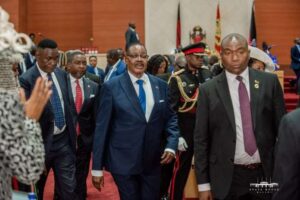
MZUZU-(MaraviPost)-In stark contrast to the backlash faced by former President Lazarus Chakwera’s ‘sugar-coated’ 2025 State of the Nation Address (SONA), President Arthur Peter Mutharika has garnered significant praise for his succinct delivery during the 2026 address on February 13, 2026, at Parliament in Lilongwe.

Political analysts and citizens alike commended the clarity and relevance of Mutharika’s speech to pressing issues in Malawi.

Silvester Ayuba James, a prominent legal practitioner and MCP-affiliated lawmaker for Nkhotakota Central Constituency, lauded Mutharika’s no-nonsense approach.

He stated, “APM’s SONA. No fake accent. No empty poetry. No useless foreplay. Just straight to business.”

James further contrasted this with Chakwera’s previous address, which he described as filled with “spells,” highlighting Mutharika’s clarity that cut through the noise like a knife through butter.

Adding to the praise, social commentator Joshua Chisa Mbele echoed these sentiments on Facebook.

He observes, “President Mutharika’s State of the Nation 2026. No unnecessary adjectives. No flowery and embroidered words. Straight to the point.”

Mbele rated the address at “100% Relevant,” emphasizing the President’s focus on real and urgent challenges, along with tangible outcomes.

Furthermore, within just five months in office, Mutharika has announced notable achievements, including the implementation of a free secondary school initiative.

He also revealed ambitious plans to construct Blantyre and Chikwawa District Hospitals in the upcoming 2026-27 financial year.

In addition to these projects, he highlighted plans to double national fuel storage capacity from 60 million litres to 120 million litres through the construction of new storage facilities in Blantyre, Lilongwe, and Mzuzu.

He further stated that maize is now selling for between MK38,000 and MK55,000 per 50kg bag, compared to around MK100,000 before his government took over.

These initiatives underscore his commitment to effectively addressing national needs and proving that actions speak louder than words.

In light of these accomplishments, it is worth noting that last year, MCP Member of Parliament for Rumphi-West, Jona Mkandawire, openly challenged Chakwera’s SONA, accusing him of presenting false information about developments in his constituency.

The Maravi Post

Inside Africa’s micro-grid boom: A new model for electricity access

CopyRight @2009 The Maravi Post , An Eltas EnterPrises INC Company Since @2005. Publishing and Software Consulting company

Contact us: contact@maravipost.com

The Maravi Post

Ukraine: Mass Russian drone strike hits Odesa port and energy sites

CopyRight @2009 The Maravi Post , An Eltas EnterPrises INC Company Since @2005. Publishing and Software Consulting company

Contact us: contact@maravipost.com

The Maravi Post