Civil Society, Development & Aid, Featured, Global, Global Governance, Headlines, IPS UN: Inside the Glasshouse, TerraViva United Nations
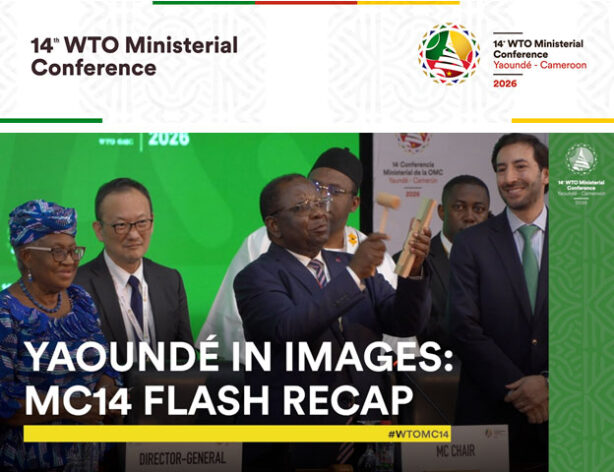
Credit: World Trade Organization (WTO)
– The WTO’s 14th Ministerial Conference (MC14), which took place from 26 to 30 March 2026 in Cameroon, was reported as a collapse resulting from the stand-off between Brazil and the United States on the extension of the e-commerce moratorium. This is one screen shot of a bigger unfolding story where the US is attempting to enforce its will on the organization, while some are resisting.
The Trump administration did not pull the US out of the WTO so that it can complete a project of remaking the organization into one that fits the US’s vision of a new international order serving its ‘national security interests’. Since the Trump administration came into office, they made clear that their approach to foreign relations will be based on brutal power and politics of coercion. The WTO 14th ministerial conference is one international forum where these politics manifested.
The US vision for remaking the organization, as reflected in its submissions under the ‘WTO reform’ negotiations, along with the statement of US Trade Representative in Yaoundé, embody an attack on the raison d’etre of the organization, which is multilateralism.
Multiple US administrations had maintained a fairly consistent approach to the WTO, undermining some of its key functions, such as through paralyzing the dispute settlement function, and pushing for a self-judging non-reviewable national security exception.
The latter could effectively become an opt-out mechanism for the US from its obligations under the WTO rules including the most-favoured-nation (MFN) principle, and secure an immunity from questioning for any US unilateral trade measures packaged as a security issue.
The Trump administration’s talk at the WTO did not hide behind diplomatic or legal jargon. The US submissions made it clear that they are out to dismantle the fundamental pillar that holds the multilateral trading system together – that of non-discrimination and the MFN principle.
They want to strip away the system from an effective ‘special and differential treatment’, a core part of the original bargain that made the WTO establishment possible and that reflected in trade law an acknowledgment that one-size-fits-all rules do not work given the varying levels of development among Members.
The US vision is to turn the WTO from a multilateral organization where each Member, big or small, have an equal voice, to a platform of deals among the big players where it can effectively control the setting of the agenda and focus the organization on US corporate interests.
This is effectively what the US attempted at MC14, where they focused attention on their proposal for a permanent moratorium on customs duties on electronic commerce transmissions.
In Yaoundé, the US Trade Representative Jamieson Greer suggested there “would be consequences,” if the US did not get this delivered. This was the US administration carrying forward the agenda of its tech corporate giants. Since 1998, the US had secured this moratorium against the growing concerns of developing countries that this practice costs them billions of dollars in forgone tariff revenue that is key for their development, industrialization and building of digital capacities.
Ironically, the Trump administration brought the multilateral trading system to its knees by its aggressive unjustified tariff policies and illegal bilateral tariff deals over the past year. In Yaoundé, the same administration denied the developing countries the legitimate use of tariff policy to advance developmental objectives and preserve digital sovereignty and policy space essential for developing their digital economy.
It is clear that the US’s fight at the WTO is not only against China. It seeks to erase any trajectory towards industrialization and competitive edge that any other developing country could potentially build under multilateralism.
With no decision on this issue nor on WTO reform, the LDC package, and the Moratorium on TRIPS non-violation complaints achieved in Yaoundé, the work will be brought back to Geneva. A question often posed in Geneva is how to keep the US engaged in the negotiations, which will become more prominent in light of what unfolded in Yaoundé.
When negotiations are overwhelmed by this question, the attention moves away from efforts to make the organization relevant for all its members, and a forum where negotiations could potentially lead to compromises and outcomes for members at different levels of development. Even decision makers in the WTO administrative body get geared towards ensuring the US stays on board. This adds to the distortions.
In this context, developing countries face the larger threats of fragmentation and distraction from their key concerns and interests. Yet, the costs of such fragmentation cannot be higher in the face of the unfolding project to remake the WTO.
Multiple US administrations showed WTO members how they can keep key negotiation agendas, like the dispute settlement reform, in limbo and block the functioning of the WTO appellate body against the will of the rest of the membership.
In this case, the US’s blocking is void of any justified principled position, but rather a brutal imposition of their will and narrow interests on the rest of the WTO membership.
In the face of the remake project of the WTO advanced by the US, and largely supported by the European Union, what Jane Kelsey calls “a coup underway at the WTO”, developing countries need to stand together despite the differences they might have on some negotiation portfolios where their national interests might dictate disparities in the negotiation positions.
In such an era, managing differences while leveraging the power of dialogue, cooperation and coalition building is crucial to maintain a voice and role in determining how the WTO will be functioning in the future.
A WTO focused on plurilaterals as a norm rather than exception will be a place where the voice of developing countries is eroded. Trade wars will potentially be imported into the WTO through simultaneous plurilateral counterinitiatives leading to further fragmentation of this trading regime. This will be a world where MFN is discarded, consensus decision-making undermined, and leverage points to advance issues of development and special and differential treatment eroded.
Developing countries should collectively assess the cost such a future hold for them and the WTO, its survival as a multilateral organization and its potential to deliver for Members at different levels of development.
IPS UN Bureau