LILONGWE-(MaraviPost)-The Malawi Police Service (MPS) have arrested a suspected ringleader of the panga-wielding gang that has been behind a series of violent attacks in Lilongwe and surrounding areas.
The three suspects arrested on November 2, 2025 have been identified as Bruno Munlo Makina (37), of Mponda Vge, T/A Msamala in Balaka; Erick Phakamisa (40), of Undi Vge, T/A Kaphuka in Dedza; and Hanif Banda (23), of Wimbe Vge, T/A Wimbe in Kasungu.
The suspects are believed to be former President Lazarus Chakwera’s Malawi Congress Party (MCP) zealots.
National Police Service Deputy publicist Alfred Chimthere told The Maravi Post on Sunday afternoon, November 2, 2025 that “Munlo Makina is believed to have been coordinating some of the gang’s criminal activities”.
The police publicist adds, “Banda and Phakamisa are also directly connected to various offences of attacks that have been under investigation.
“The arrests were made following sustained investigations and coordinated intelligence operations.”
Chinthere explains further, “This latest breakthrough brings the total number of suspects apprehended in the ongoing operation to fifteen (15).
“All suspects are currently in Police custody pending court appearance. The MPS reiterates its unwavering commitment to bringing all perpetrators of violent crime to justice”.
Share this:
Like this:
LikeLoading…
Discover more from The Maravi Post
Subscribe to get the latest posts sent to your email.
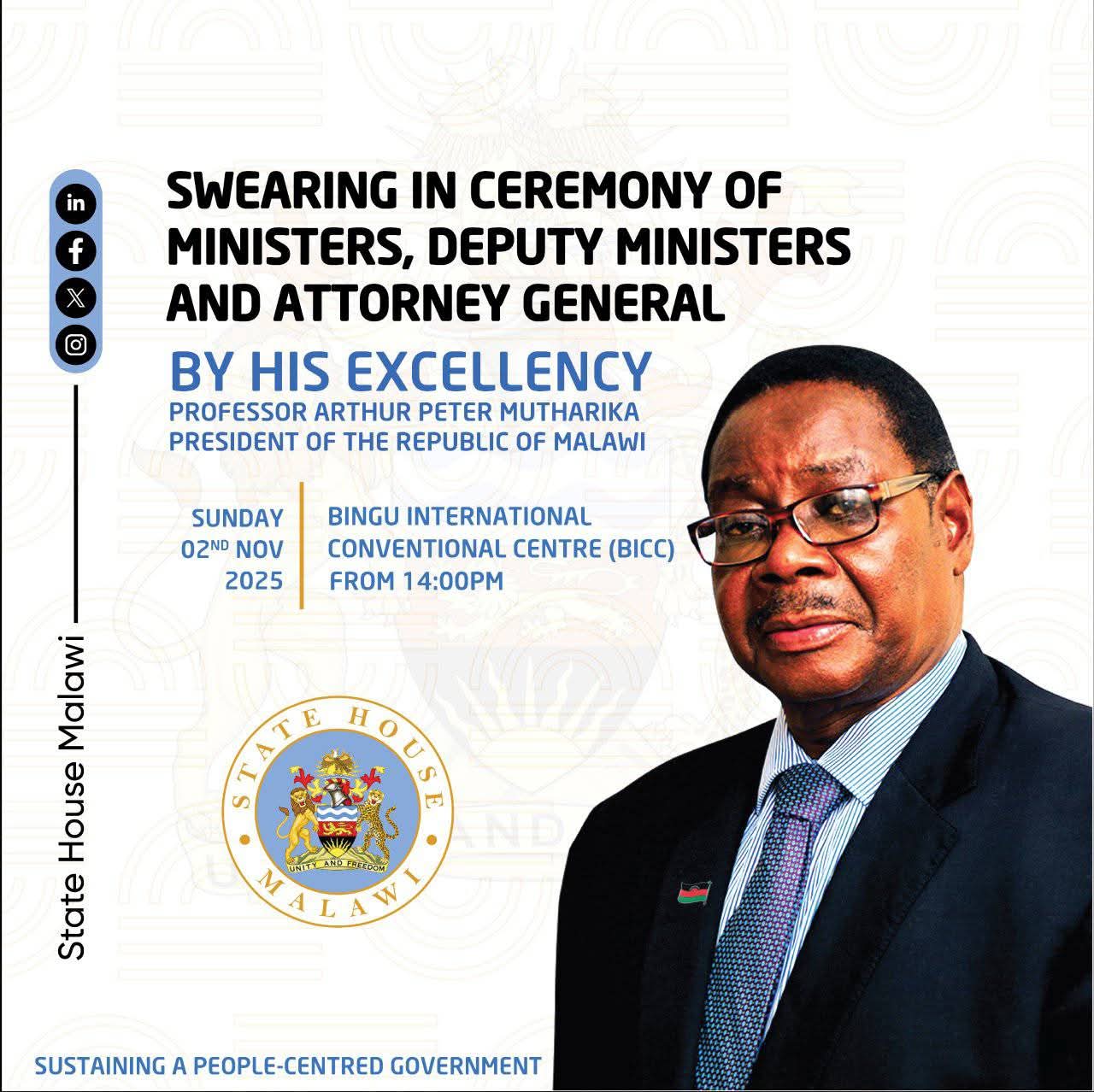
BLANTYRE-(MaraviPost)-In a last-minute change, the Office of the President and Cabinet has announced that the swearing-in ceremony for newly appointed cabinet ministers, deputy ministers, and the Attorney General has been set today Sunday.
The ceremony, initially scheduled for Saturday, at 2 o’clock, will now take place today at the same time.
According to Chief Secretary Dr. Justin Adack K. Saidi, the postponement would not impact the government’s transition process.
President Arthur Peter Mutharika’s administration has been working diligently to ensure a seamless transition, and the new cabinet is set to bring fresh perspectives to the table.
The newly appointed cabinet has garnered attention for its lean structure, with many sectors commending the President for making it the leanest cabinet ever.
The appointments have been praised for striking a balance between competence and representation, with a focus on meritocracy and national unity.
The cabinet’s composition reflects a mix of experienced professionals and new faces, all working towards delivering tangible results for the Malawian people.
Notable appointments include Joseph Mwanamvekha as Minister of Finance, Economic Planning, and Development, and George Chaponda as Minister of Foreign Affairs.
The postponement of the swearing-in ceremony is not expected to delay the government’s work, as the President and his team have been working tirelessly to ensure continuity and stability.
With the ceremony now set for Sunday, Malawians can expect a smooth transition and a renewed sense of purpose from their government.
As the nation awaits the swearing-in ceremony, there is a sense of optimism and hope for a brighter future.
The new cabinet is expected to drive meaningful reforms and work towards addressing the country’s pressing challenges.
With President Mutharika’s leadership, Malawians are confident that their government is in capable hands.
Share this:
Like this:
LikeLoading…
Discover more from The Maravi Post
Subscribe to get the latest posts sent to your email.
LILONGWE-(MaraviPost)-The Public Relations Society of Malawi (PRSM) on Saturday night honoured outstanding practitioners and institutions for their exceptional contributions to the growth and professionalism of public relations in the country.
The awards ceremony, held in Lilongwe, celebrated both individual and institutional achievements that have advanced effective communication and strengthened public trust across various sectors.
The Malawi Electoral Commission (MEC) was named Best Institution in Public Communication under the institutional category for its effective and transparent dissemination of information during this year’s General Elections.
MEC’s Director of Media and Public Relations, Sangwani Mwafulirwa, emerged as the PR Practitioner of the Year (Public Sector) and was also crowned the Overall PR Practitioner of the Year.
Speaking in an interview with journalists,Mwafulirwa expressed gratitude for the recognition, describing it as both an inspiration and a challenge to continue striving for excellence.
He attributed the success to proactive communication and strong stakeholder engagement during the elections period.
In other individual categories, Akossa Hiwa of National Bank of Malawi (NBM) was named PR Practitioner of the Year – Corporate, while Blessings Phumisa of UNDP received the Development Communications Award.
Among institutions, the European Union in Malawi won the Excellence in Development Communication award, and FDH Bank was recognised for Excellence in Corporate Communications.
The event concluded with veteran broadcaster Alaudin Osman, formerly of Capital FM, being honoured with the PRSM Honorary Fellow Award for his significant contributions to the development of the public relations profession in Malawi.
Share this:
Like this:
LikeLoading…
Discover more from The Maravi Post
Subscribe to get the latest posts sent to your email.
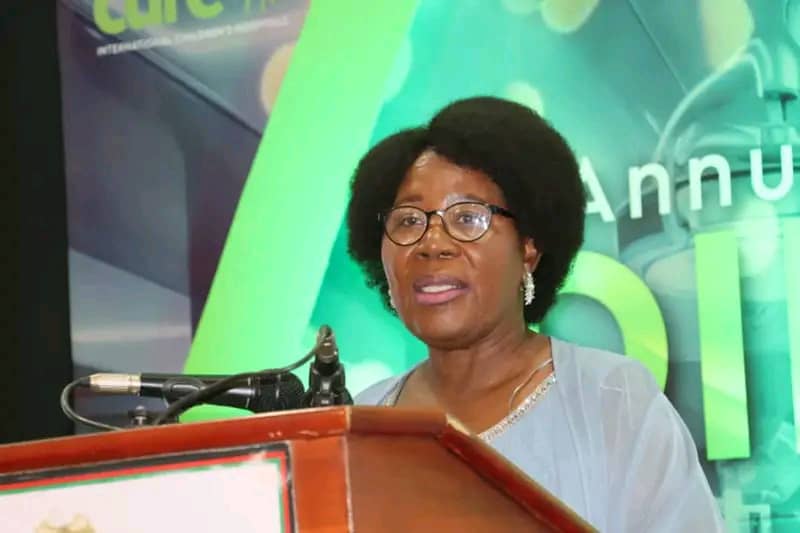
BLANTYRE-(MaraviPost)-Vice President Jane Ansah has urged Malawians and corporate institutions to unite in supporting Beit-Cure Children’s Hospital, which continues to provide free surgical care for children across the country.
Speaking on Saturday during a fundraising dinner held at Amaryllis Hotel in Blantyre, Ansah appealed to the public to contribute towards the hospital’s mission, stressing that every donation no matter the size can help transform a child’s life.
She commended Beit-Cure for its 23 years of dedicated service, during which the hospital has reached all 28 districts of Malawi, offering free and specialized medical care to children with disabilities.
To demonstrate her support, the Vice President personally donated MK2 million to the cause.
On his part,Beit-Cure Hospital Board Chairperson John McGrath described the event as ‘a night of compassion,’ emphasizing that each contribution, big or small, makes a lasting difference in the lives of children who need surgical care.
Representing First Capital Bank, Head of Marketing Twikale Chirwa reaffirmed the bank’s commitment to supporting the hospital, noting that the partnership has seen the bank contribute over MK70 million towards Beit-Cure’s operations over the years.
Held under the theme ‘Healing Journeys: Bridging the Gap of Hope,’ the event sought to raise K310 million to fund life-changing surgeries for more than 200,000 children across Malawi.
Share this:
Like this:
LikeLoading…
Discover more from The Maravi Post
Subscribe to get the latest posts sent to your email.
Across the globe, there is a shift in the size of families as birthrates decline. Communities, schools, and workforces are all shrinking at an alarming rate. Even in the wealthiest countries populations are aging and straining key social systems. How are smaller families changing the world and what does it mean for our future? Explore the full series at npr.org/populationshift.
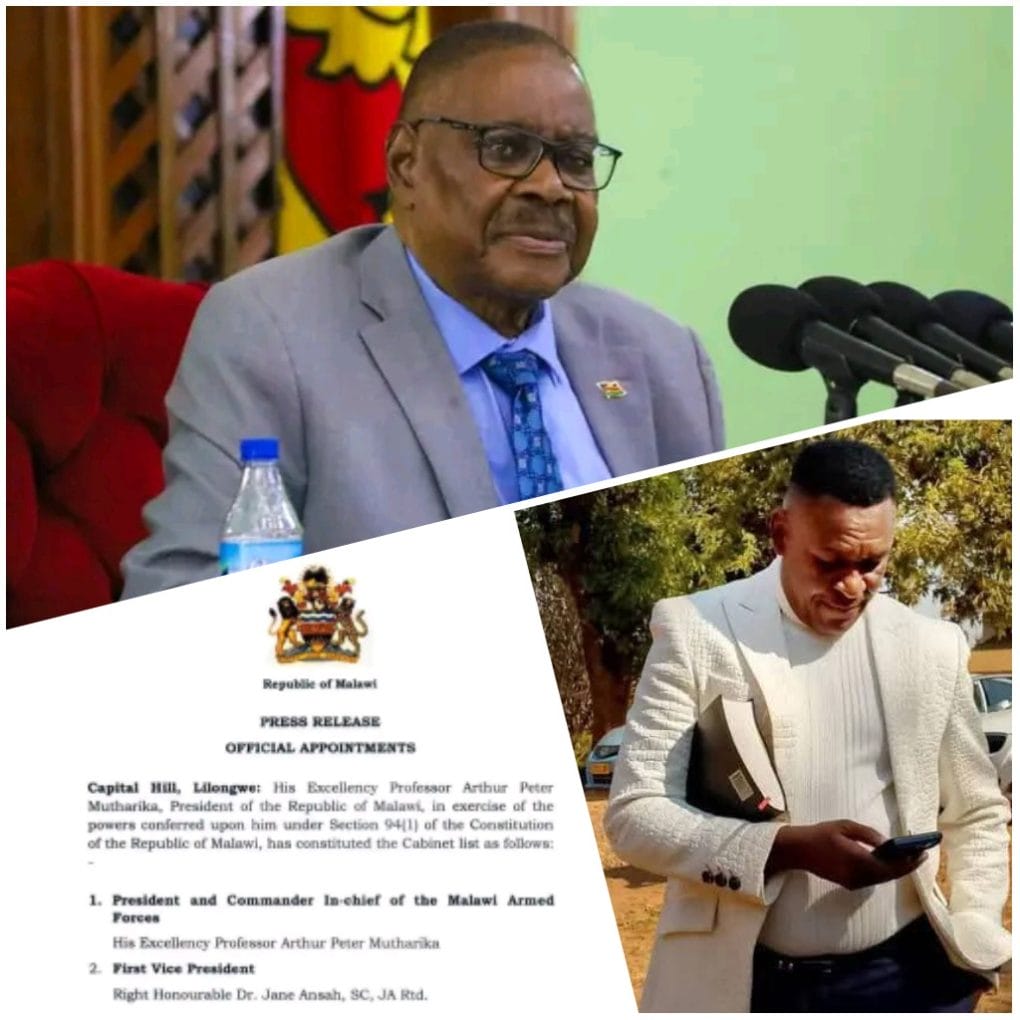
In the realm of governance and leadership, decisions made by those entrusted with the highest offices are often scrutinized with intense scrutiny and sometimes unwarranted bias. Recently, a wave of criticism has targeted President Arthur Peter Mutharika for appointing individuals facing corruption allegations, even if they have not yet been convicted.
This critique, while seemingly grounded in concern for integrity, overlooks crucial legal, constitutional, and democratic principles that underpin the presidency and the rule of law.
It is imperative to revisit these principles and understand that the President’s actions are not only within his constitutional rights but also rooted in the fundamental tenets of justice, fairness, and the presumption of innocence.
To begin with, the Malawi Constitution, which President Mutharika swore to uphold and defend, provides a clear framework for appointments and the exercise of executive powers.
Section 89 of the Constitution empowers the President to appoint individuals to various government positions, including ministers, judges, and other public officials, based on competence, experience, and suitability.
Crucially, the Constitution does not stipulate that appointees must be free of any criminal or corruption allegations prior to appointment. Instead, it emphasizes that appointments should be made based on merit and the capacity to serve the public interest effectively.
This constitutional provision guarantees the President the discretion to appoint qualified individuals, including those under investigation, provided that due process is followed and the appointments are made transparently.
Furthermore, the principle of presumption of innocence enshrined in international human rights law and embedded in Malawi’s legal framework is a cornerstone of justice.
It mandates that an individual is considered innocent until proven guilty in a court of law. Criticizing appointments based solely on allegations without conviction contravenes this fundamental principle.
Many reputable democracies worldwide, including the United States and the United Kingdom, routinely appoint individuals under investigation or even facing charges, trusting that legal processes will determine their guilt or innocence.
Such an approach underscores the importance of respecting legal procedures and avoiding prejudgment that could unjustly tarnish reputations and disrupt careers.
It is also essential to recognize that allegations of corruption are often politically motivated, especially in highly polarized environments.
Critics who condemn President Mutharika’s appointments on the basis of allegations may be driven more by envy or political rivalry than by genuine concern for ethical standards.
It would be naïve to ignore the possibility that some of these criticisms are rooted in jealousy, factionalism, or attempts to undermine legitimate governance efforts.
By politicizing accusations of corruption, critics risk undermining the very principles of justice and fairness that they purport to uphold.
It is important to remember that accusations do not equate to guilt, and in a democratic society, everyone deserves a fair opportunity to defend themselves.
The Malawi Law Society (MLS), which has expressed concern over these appointments, should exercise caution in issuing judgments that may not align with constitutional realities.
The MLS, as a professional body of legal practitioners, indeed bears the responsibility to uphold the rule of law and ethical standards. However, it must also be mindful of its role as a guardian of justice and constitutionalism, not as an arbiter of guilt.
The MLS’s position should be rooted in a thorough understanding of constitutional provisions and the legal rights of individuals, rather than purely moral or political considerations.
Criticizing the President for making appointments that are within his constitutional powers reflects a misunderstanding of the legal framework and undermines the independence of the executive branch.
It is also vital to appreciate that appointments are a nuanced process that involves balancing various interests, including national security, development priorities, and individual competence.
The President has a duty to assemble a team capable of addressing Malawi’s complex challenges, and this may include individuals currently under investigation, provided that due process is respected, and their rights are protected.
Such appointments do not necessarily imply guilt but demonstrate a commitment to inclusivity, diversity, and the recognition that people are innocent until proven guilty.
To deny talented and qualified individuals opportunities based solely on allegations would be a miscarriage of justice and a setback to Malawi’s democratic development.
Moreover, the claim that appointing individuals facing corruption charges damages governance or encourages unethical behavior overlooks the importance of due process and the presumption of innocence. It is essential to distinguish between the legal principle that one is innocent until proven guilty and the societal perception of guilt based on allegations.
The legal system in Malawi, like in many democracies, is designed to ensure fair trials and due process. Appointing individuals under investigation does not mean endorsing corruption but trusting that the judicial process will ascertain their guilt or innocence.
This approach respects the rule of law and allows for rehabilitation and reintegration of individuals who may ultimately be exonerated.
In addition, the argument that such appointments could lead to a culture of corruption ignores the mechanisms of accountability built into the legal and institutional framework of Malawi.
Parliament, the judiciary, civil society, and the media all play roles in monitoring public officials and holding them accountable. Appointments are only one aspect of governance, and their legality and ethics are subject to scrutiny and oversight.
If any appointed individual misuses their position, legal action can be taken, and appropriate sanctions enforced.
This system of checks and balances is vital for a healthy democracy and ensures that no one is above the law.
Critics must also consider the broader context of Malawi’s socio-political landscape.
Political appointments are often strategic, aimed at fostering national unity, inclusivity, and stability. Excluding qualified individuals due to allegations or suspicion could hinder progress and deepen divisions. The President’s role is to serve as a unifying figure who can bring together diverse segments of society, including those with complex backgrounds or histories.
Denying opportunities based solely on current allegations without proof contradicts the principles of fairness and justice that underpin democratic governance.
It is also worth highlighting that leadership involves making difficult decisions, often balancing competing interests and principles. President Mutharika’s appointments may be motivated by a desire to foster development, stability, and national progress.
Such decisions should not be hastily condemned based on unproven allegations or political bias. Instead, they should be evaluated within the framework of the law, the constitution, and the broader goals of national development.
The criticism directed at President Arthur Peter Mutharika for appointing individuals facing corruption allegations is unfounded and neglects fundamental constitutional and legal principles.
The President, as the chief custodian of Malawi’s constitution, has exercised his constitutional rights and responsibilities to appoint qualified individuals to serve the nation.
These actions are consistent with the rule of law, the presumption of innocence, and international best practices.
Criticisms rooted in envy, political rivalry, or a misunderstanding of legal principles should be rejected in favor of respecting Malawi’s constitutional democracy.
The Malawi Law Society and other critics must exercise restraint, uphold the rule of law, and recognize that justice is a process that must be fair, transparent, and free from prejudice.
Only through such an approach can Malawi continue to strengthen its democracy, uphold justice, and foster a society where law and fairness prevail over bias and political expediency.
Share this:
Like this:
LikeLoading…
Discover more from The Maravi Post
Subscribe to get the latest posts sent to your email.