Linking the Malawian Diaspora to the Development of Malawi”
Malawi
Malawi (/məˈlɔːwi,məˈlɑːwi/; Chichewa pronunciation:[maláβi]; Tumbuka: Malaŵi), officially the Republic of Malawi and formerly known as Nyasaland, is a landlocked country in Southeastern Africa. It is bordered by Zambia to the west, Tanzania to the north and northeast, and Mozambique to the east, south and southwest. Malawi spans over 118,484 km2 (45,747 sq mi) and has an estimated population of 19,431,566 (as of January 2021). Malawi’s capital and largest city is Lilongwe. Its second-largest is Blantyre, its third-largest is Mzuzu and its fourth-largest is its former capital, Zomba.
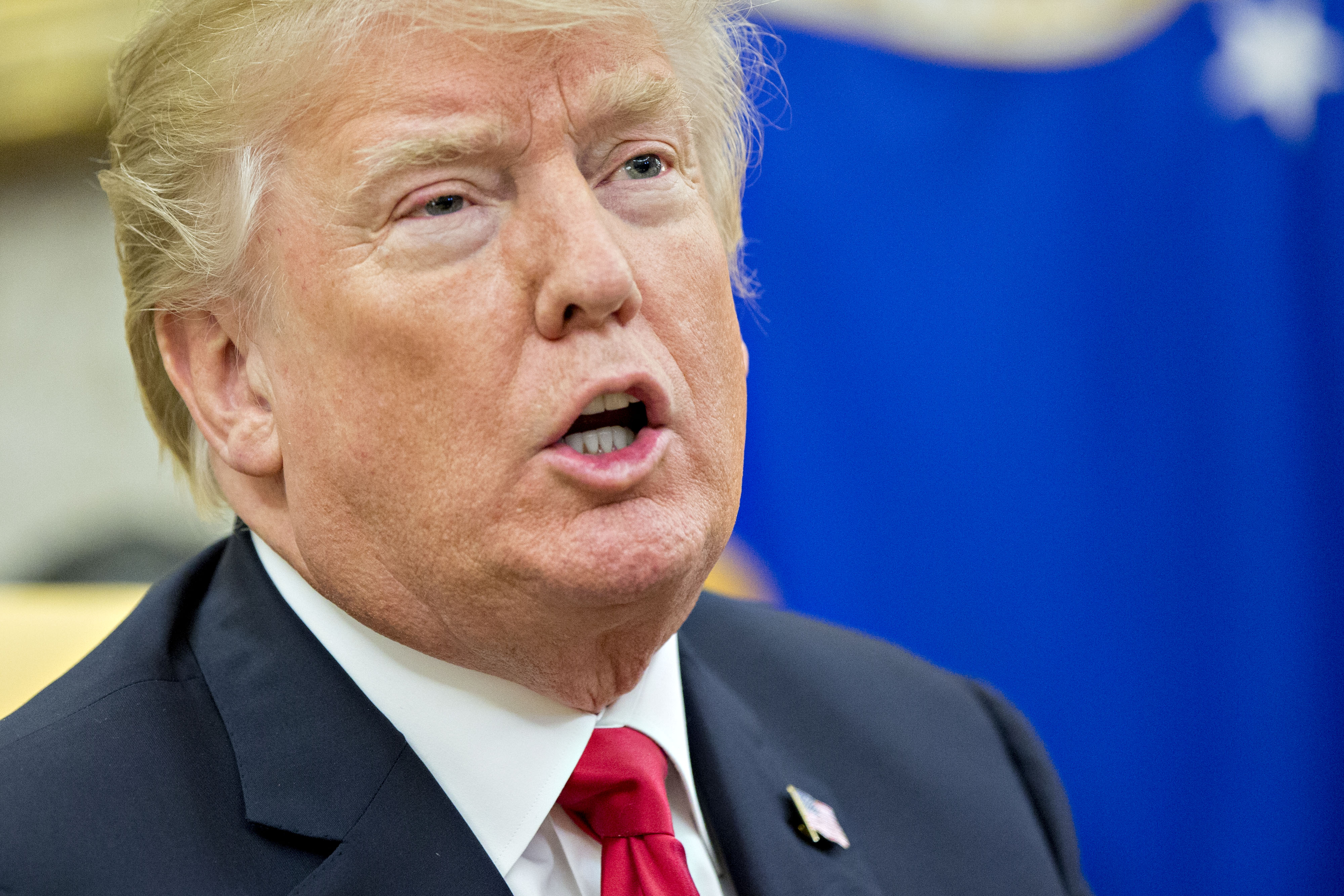
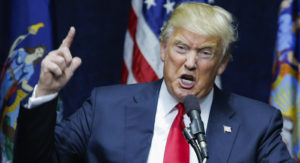
President of the United States of America Donald Trump on Tuesday denied any racist “strategy” behind a string of verbal attacks on African-Americans, but found himself being accused of hate by a heckler at a high-profile speech.
“I have no strategy. I have zero strategy,” Trump told reporters at the White House, when asked about his recent tirades against black and other non-white opponents, as well as the majority black city of Baltimore. “I’m not angry at anybody,” he said.
Earlier, Trump denounced the “horrors” of slavery in a speech in Jamestown, Virginia, celebrating the founding of the first local legislature there by English colonists 400 years ago.
In his speech, Trump noted that along with the first settlers came the first African slaves, making Jamestown a symbol not just of US democracy but of mass slavery.
“We remember every sacred soul who suffered the horrors of slavery,” Trump said, calling this the “barbaric trade in human lives.”
But black Virginia state lawmakers boycotted the event, saying it had been “tarnished” by Trump. “It is impossible to ignore the emblem of hate and disdain that the president represents,” the African-American lawmakers said in a statement, accusing Trump of using “racist and xenophobic rhetoric.”
And in a rare interruption of a presidential speech, a Virginia state lawmaker heckled Trump and held up a sign reading “Deport hate” and “Go back to your corrupted home.” Trump paused his speech while the man was led away but did not say anything. – ‘Least racist’ –
The president has shown little of that restraint over the last two weeks, with a barrage of racially loaded insults.
Trump has laid repeatedly into four non-white Democratic congresswomen, a respected African-American Democratic lawmaker from Baltimore, as well as veteran black civil rights activist Al Sharpton.
That pattern has prompted an outpouring of criticism that Trump is deliberately deepening racial divisions in a pitch to his white, working-class base ahead of his 2020 reelection bid.
At the White House, he told reporters: “I am the least racist person anywhere in the world.”
But he then claimed that Sharpton is a racist and he continued to lash out at Baltimore, suggesting on Tuesday that violent crime there is worse than in Honduras, a country with one of the world’s highest homicide rates outside a war zone.
Since Trump’s ‘Make America Great Again’ trope has become a racist mantra so too have merchandise bearing mottos like ‘Make Zimbabwe Rhodesia Again’ ‘Make Afrikaners Great Again’ and ‘Make Namibia German Again’
(Image by strategic-culture.org) DetailsDMCA
– Advertisement –
Although Donald Trump can barely place a single country in Africa, his few utterances on the continent have yielded what can only be described as a nostalgia for the 1960s. It was a decade that saw three white minority-ruled governments ruling in South Africa, Rhodesia, and the South African territory of South-West Africa. All three white-ruled entities practiced varying degrees of apartheid. This was accomplished through economic, social, and political means.
In January 2018, when Trump referred to African nations as “shithole countries,” he was relishing the time when apartheid South Africa, Rhodesia, and South-West Africa were considered a pro-US bloc in southern Africa. The links between southern Africa’s exiled black African liberation political parties and movements to Communist- and Marxist-ruled nations, in the minds of Trump and his equally right-wing father, Fred Trump, Sr., made South Africa, Rhodesia, and South-West Africa model nations in the eyes of the Trumps.
Trump’s sympathies for the apartheid countries were crystal clear when, on August 22, 2018, Trump tweeted: “I have asked Secretary of State Pompeo to closely study the South Africa land and farm seizures and expropriations and the large scale killing of farmers. ‘South African Government is now seizing land from white farmers.'”
– Advertisement –
The South African government was keenly aware that Trump was using a trope from the apartheid era. White South African prime ministers, including John Vorster and P. W. Botha were fond of warning their own constituencies, as well as the West, that if blacks achieved majority rule in South Africa, white farmers would be massacred and their land expropriated. These were fear tactics, pure and simple. Mr. Trump, caught in some sort of time warp, continues to believe the apartheid propaganda.
In response to Trump’s tweet, the government of South African President Cyril Ramaphosa hit back at Trump: “South Africa totally rejects this narrow perception which only seeks to divide our nation and reminds us of our colonial past.” It turns out that Trump got his idea that the South African government was seizing land from white farmers from the disreputable Fox News. As for the claim that white farmers were being killed, that bit of bogus information came from a far-right group called AfriForum, consisting of mainly Afrikaners in South Africa and abroad.
The AfriForum disinformation about white-owned farms and farmers in South Africa was picked up by Trump through Fox News’s Tucker Carlson. Carlson’s father, Dick Carlson, was President Ronald Reagan’s chief propagandist as the director of the US Information Agency (USIA), since closed down. During 1985 and 1986, Dick Carlson ensured that a steady stream of right-wing propaganda emanated from the Voice of America, the anti-Cuban Radio Marti, and other platforms. This included support for apartheid South Africa. Other top Republicans involved in pro-South African propaganda included disgraced Republican Party lobbyist Jack Abramoff and Republican activist Lewis Lehrman. In 1985, USIA and the Voice of America, at Carlson’s direction, highlighted an anti-Communist summit meeting held in Jamba, Angola. The summit, called the “Jamboree in Jamba,” was attended by Abramoff, the Angolan UNITA rebel leader Jonas Savimbi, Nicaraguan Contra leader Adolfo Calero, Laotian Hmong leader Pa Kao Her, and Afghan Mujaheddin leader Abdul Rahim Wardak. Also present was Reagan National Security Council official Marine Lieutenant Colonel Oliver North, as well as South African and Israeli representatives. The South African Defense Force provided the security for the summit. Based on the success of the Jamba summit, the Republican right-wing even had hopes of restoring a proto-colonialist administration in Mozambique, the former Portuguese colony. By attempting to create a RENAMO-led government in Mozambique, the right hoped many Portuguese exiles could return to Mozambique to hold key positions in government and commerce. This, of course, was the same thinking behind the right’s support for Savimbi’s UNITA forces in Angola, also a former Portuguese colony.
– Advertisement –
One of the US groups backing the apartheid South African government was the Committee on the Present Danger, a fervently anti-Communist group. Extinct since the end of the Cold War, the Committee recently enjoyed a resurgence in Washington under the auspices of Trump’s former chief strategist Steve Bannon, Texas Republican Senator Ted Cruz, and former US House of Representatives Speaker Newt Gingrich.
In the 1980s, it was clear that far-right elements in the Reagan administration were trying to shore up white-rule in South Africa, prevent total black rule in South-West Africa, and roll back rule by Robert Mugabe in Zimbabwe the former Rhodesia. The racist right-wing in the United States had hoped to prevent Mugabe from coming to power in June 1979 by backing the creation of a post-minority rule country called Zimbabwe Rhodesia. The use of the name Rhodesia was a concession to the white minority in the country, which, upon unilateral independence in 1965, was headed by Prime Minister Ian Smith. Smith was a hero to the far-right elements in the United States, including the Ku Klux Klan. Smith and his allies in South Africa decided the best way to maintain the status quo was to form an alliance with Rhodesian tribes opposed to Mugabe, including Ndebele leaders like Joshua Nkomo.
The first Prime Minister of Zimbabwe Rhodesia was Bishop Abel Muzorewa, who, like Mugabe, was a member of the northern Shona tribe. Muzorewa was an opponent of Mugabe as were other officials in the short-lived Zimbabwe Rhodesia, sometimes called “Rhobabwe.” Smith continued in the government as a minister without portfolio. White Rhodesians continued to serve as ministers of finance, justice, agriculture, and finance. When Britain re-established control over Zimbabwe Rhodesia and changed its name to Southern Rhodesia in December 1979 the writing was on the wall for the white-black coalition government. In 1980, Mugabe became prime minister of Zimbabwe. In the subsequent years, many white Rhodesians fled to South Africa, the United States, Canada, and Australia.
In 2015, Dylan Roof, the US white supremacist who massacred African Americans in a Charleston, South Carolina church, appeared on a website called “The Last Rhodesian” wearing a jacket emblazoned with the flags of Rhodesia and apartheid South Africa. Rhodesian expats have also been involved with several racist groups around the world, including Australia, Canada, Britain, and New Zealand. Donald Trump has rekindled hope among these stubborn nostalgists for white rule in southern Africa that what once seemed impossible is now quite thinkable: white-dominated governments in Harare, Pretoria, and Windhoek.
A similar situation was attempted by promoters of white rule in South-West Africa. In 1977, the Democratic Turnhalle Alliance formed a de facto government in Windhoek led by Dirk Mudge. Mudge, an Afrikaner, governed with the support of South Africa and representatives from various ethnic groups, including the Ovaherero, Coloureds (mixed race), Tswana, Damara, a few Ovambo, Caprivians, Nama, Kavango, San, and White Afrikaners and Germans, the latter concentrated on the coast around Swakopmund. The United Nations refused to recognize the Turnhalle government, opting for the exiled South West African People’s Organization (SWAPO) of Sam Nujoma, which was heavily supported by a majority of the Ovambo people. The attempt by whites and their allies to prevent Nujoma from becoming president of independent Namibia ultimately failed.
Thanks to social media, a de facto alliance of exiled white Rhodesians, South Africans, Nyasalanders (now Malawi), and Namibians, along with racists in Europe, North America, and Australia, see with Trump as president of the United States and the equally racist Jair Bolsonaro as president of Brazil an opportunity for them to set the calendar back to the 1960s. Just as minority white leaders like Smith, Vorster, Botha, and Mudge attempted to seek alliances of convenience with various African ethnic groups to maintain ascendancy the Ndebele, Zulu, Venda, Tswana, Damara, and Ndau, among others Trump, Steve Bannon, former Ku Klux Klan leader David Duke, and about a dozen hard right Republican members of the US Congress are hoping to restore de facto white rule in southern Africa.
– Advertisement –
Since Trump’s “Make America Great Again” trope has become a racist mantra, so, too, have merchandise bearing mottos like “Make Zimbabwe Rhodesia Again,” “Make Afrikaners Great Again,” and “Make Namibia German Again.” Some whites with roots in Malawi, where the second largest city is Blantyre named after the town of Blantyre in South Lanarkshire, Scotland would not mind it if they again enjoyed high positions of influence in the country formerly known as Nyasaland. Some of the descendants of the 75,000 whites who formerly lived in Northern Rhodesia, now Zambia, also pine for the days when whites ruled the country. Afrikaner nationalists also recall with fondness the desire of apartheid South African Prime Minister Hendrik Verwoerd wanting to turn Bechuanaland (now Botswana), Basutoland (now Lesotho), and Swaziland (now eSwatini) into South African ruled dominions.
Creation of a South Atlantic Treaty Organization (SATO) has long been a goal of neo-conservatives like John Bolton, Trump’s National Security Adviser, and Elliott Abrams, Trump’s “special envoy” for Venezuela. In March 2019, Trump, restarting this goal of the Reagan and Richard Nixon administrations, said during the visit of Bolsonaro to the White House, “I also intend to designate Brazil as a major non-NATO ally, or even possiblyif you start thinking about itmaybe a NATO ally.”
Pleased with the 1970s success of Operation Condor, an intelligence alliance of Latin American military dictatorships that targeted for assassination and arrest leftists in South America and beyond, Secretary of State Henry Kissinger foresaw a military alliance of the Condor partners of Argentina, Brazil, Chile, and Uruguay, along with apartheid South Africa and the United States, as firmly extending US military control over the south Atlantic region. Kissinger’s plan for a SATO continued under Reagan. One Reagan administration policy paper was titled “The Security of the South Atlantic: Is It a Case for ‘SATO’South Atlantic Treaty Organization?” Just as with Trump and Bolsonaro today, in 1984, Reagan and Brazilian President João Figueiredo, Brazil’s last military dictator, had talks on the formation of SATO.
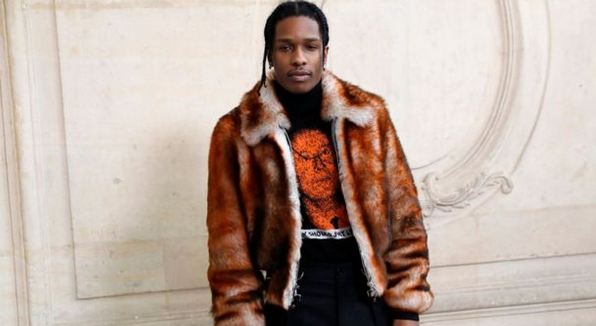
US President Donald Trump has demanded that Sweden “give ASAP Rocky his freedom” in a series of tweets.
The musician, real name Rakim Myers, has been charged with assault causing actual bodily harm in Stockholm. He will remain in custody until a trial takes place.
Trump
Mr Trump said on Twitter that Sweden had “let our African American community down”.
ASAP was arrested on 3 July following a fight that was captured on video.
Two other men who were with them at the time have also been charged with assault. The musician says that his group was being followed by a group of men and he acted in self-defence.
A$AP Rocky
Donald Trump said last week that he had spoken to Swedish prime minister Stefan Lofven about ASAP’s case.
However on Thursday the president wrote that he was “very disappointed” in Mr Lofven for being “unable to act” and urged him to “treat Americans fairly”.
Trump’s intervention in the case comes after rapper Kanye West approached him to convince Sweden release the rapper.
With Lil Nas X’s EP going straight to number on the American charts, it seems like country music revival is taking over 2019 and beyond, thanks to its unlikely fusion with trap music. It only makes sense that black people are reclaiming the genre, as country was actually partly created by black American artists and heavily influenced by gospel music.
On top of that, plenty of lesser known black artists and bands are making country, or country-infused, music. This is especially the case in Africa, where the genre has been around for a few decades and an increasing number of musicians are gaining momentum. By gaining popularity in Africa, country is coming back to its roots, as country guitar and the way of playing it was originally inspired by the banjo— an instrument that African slaves brought with them to America.
Country music has a strong appeal across the African continent for several reasons: the similarity with many African instruments and the recurring lyrics and themes about love, heartbreak and “the land.” At the heart of it, country music has an appeal to working class people all over the world who feel let down by the people that were supposed to help them.
Country music is played regularly on the radio in countries such as Kenya, Tanzania and Malawi but yet, the artists featured are overwhelmingly white and American. African country singers do not get the respect they deserve or are seen as anomalies. With the growing number of them making country music, here is a list of the ones you need to listen to right now.
Sir Elvis
[embedded content]
Elvis Othieno, also known as Sir Elvis, is a popular Kenyan musician who grew up with country-loving parents. Elvis is his real name (no, really) and he was born three months after the legendary singer died. Inspired by Gary Brooks and Hank Williams, he started making music while attending college. He wanted a unique name, while paying his dues, and picked his moniker to stir away from the obvious Elvis Presley reference. Sir Elvis has contributed largely to the popularity of country music in Kenya. Since Agriculture dominates the Kenyan economy, it’s no surprise that country music is especially popular in the nation’s farming areas.
Ogak Jay Oke
[embedded content]
Nigerian country singer Ogak Jay Oke, like most people on this list, was introduced early to country music through his religious upbringing and church ties. He’s pushing to make the genre more popular across Nigeria and is the president of the Country Music Club in his hometown of Port Harcourt. Inspired by Jim Reeves, Skeeter Davies and Don Williams, he released his first album, Another Day, in 2016. He recently released a new single “Here Comes the Bride,” an homage to his wife.
Jess Sah Bi & Peter One
[embedded content]
The Ivory Coast duo Jess Sah Bi & Peter One gained fame and recognition in Western Africa after the release of Our Garden Needs Its Flowers in 1985, an album that was influenced by country, disco and folk music. Their lyrics—sung in English, French and Gouro (a Mande language from Ivory Coast)—were pretty political, calling out inequality and social issues across African countries. One of the reasons behind their pan-African appeal was that they encouraged African people to stand together in unity and called for an end to apartheid. Their album was re-released in 2018 by Awesome Tapes From Africa, helping a new generation of music lovers to discover them.
Esther Konkara
[embedded content]
Christian country singer Esther Konkara hails from Kenya and is heavily inspired by Dolly Parton. Themes such as love, financial hardships, heartbreaks and the striking descriptions of small towns are what drew her to country music. It makes sense, since she grew up in a small rural village herself. Her album Turi Ahotani was released in 2015 and she recently shared her new single, “Rimwe Ria Kuigana.” She took part in Kenya’s first ever country music festival, The Boots And Hats Festival, in 2015 and is now performing across the country.
Emma Ogosi
[embedded content]
One of the pioneers of country music in Nigeria, the singer Emma Ogosi released a country-disco album entitled Nobody Knows in 1981. Inspired by the thriving disco scene at the time as well as multiple country influences, he came up with a record that’s both groundbreaking and intimate. Ogosi was once married to popular Nigerian reggae artist Evi-Edna Ogholi. He was also a band member of The Expensive and a former air officer. When Evi-Edna fled Nigeria to Paris, he stayed. Despite the fact that he hasn’t released an album in years, the mysterious man still sings and is the head of the Performing Musicians Association of Nigeria.
Poor Charley Akka
[embedded content]
Nigerian act Poor Charley Okaa released his album Don’t Cry in 1983—a funk, soul and country infused EP. Very little is known about the musician and his music is notoriously hard to find. However, his song “Be in Your Arms” is one of the most famous Nigerian country music tracks and was featured on the album Like Nashville In Naija, a compilation featuring many country or country-inspired musicians from the West African nation.
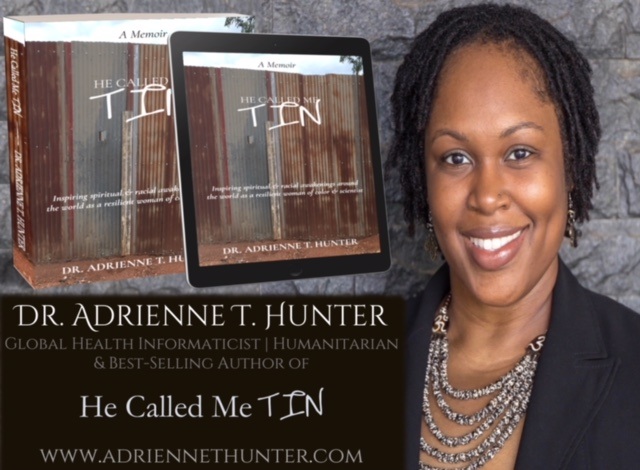
I am an African-American scientist (of Sierra Leonean descent) who currently lives in Rwanda where I am currently an expat abroad with my family. I wish to share that I have just published my first book (already a Best-Seller) – a story about my global experiences in 12+ selected countries as a woman of color and scientist, having dealt with racial and disability discrimination as a U.S. federal employee/former Diplomat, my struggles being disabled in Africa (I have multiple sclerosis with 27 brain lesions and several on my spine), overcoming an attempted suicide, and other lessons-learned from my life and career globally. My story also shares how I had to break free from my strict religious upbringing and find my own spiritual and cultural freedom. My work has taken me to Malawi and Liberia as well as other countries around the world.
I have been empowering women and girls around the globe for most of my life and would like to ask if there is any interest in my book or an interview. I wish for my African brothers and sisters to keep striving no matter any limitations that may come their way. I am humbled to be here in Africa and the hospitality shown has really positively impacted my health and spirit. I am always happy to share the beauty of the continent and that we can overcome any obstacles in life. I am also the CEO/Founder of Cultivatics, Inc. – a digital health consulting firm. Thank you for any consideration and opportunity to share with your audience via interview or print.
I remember the move when I donated my entire office and all of the furniture and equipment to the Obama campaign to launch the Minnesota Headquarters in 2007.
I proudly created and ran the “NFL Players for Obama” in 2008. I remember being able to recite the “Yes We Can” speech line by line. And I vividly remember watching eight years of focusing on countless core issues that had no real effect on blacks in America.
Yet I remained faithful and hopeful that the second term would bear more fruits for the poorest, sickest, and most uneducated segment of the U.S. population, our African Americans.
The Obama administration chose to pour food stamps on our most underserved with few effective programs to incentivize our impoverished to go to work. Obama ironically boasted about giving out more food stamps than any other president in U.S. history. You can’t make this up.
Obamacare was a noble effort, but the blatant lies told in order to pass it have been the catalyst which is leading to its demise today. Remember it was sold as a plan which would not increase your healthcare bill or limit your access.
I’m all for equal rights for gays and lesbians, but I think the large campaign donations hypnotized Obama to prioritize gay marriage over bringing quality education and criminal justice reform to the ancestors of our ailing former slave population. I’m sure both were important issues to him at some level, but in politics you have to prioritize as all presidents know they are on a short timeline.
The debate is still out there as to whether the Obama years brought the country farther from our Christian foundation.
I applaud President Obama for openly saying Jesus and quoting powerful scripture on many occasions. I was just a little bothered by his policies, which too often went against the word of God.
Obama stuck to his commitment to the LGBTQ community when he backed unprecedented legislation that expanded the sacred biblical “marriage” characterization to gay and transgender couples. I just think we could have given all Americans their deserved equal rights without challenging the biblical definition of marriage. Now homosexuality is on super speed in the black community where you see a surge in gay black males particularly in urban communities like Atlanta, LA, and throughout the south.
The CDC recently reported that 50% of black gay men will contract HIV, which is scary given the growing gay lifestyle promotion as a result of the Pride movement. Despite being only 12% of the population, blacks make up 43% of those infected with HIV in America. This epidemic can’t be ignored and we can’t deny the results of a culture that promotes sex and homosexuality as things that are publicly glorified.
The Trump administration wasted no time in enforcing other religious freedoms by reversing many of Obama policies which challenge Christian beliefs.
Under the Obama administration, HHS required employers pay for their employees’ contraception and abortion-inducing drugs, even if this violates the conscience of employers. The Obama administration exempted houses of worship, but religious-affiliated groups that objected still had to allow a third-party administrator to handle the contraception coverage. This has particularly hit the urban black community where fathers are too often missing and many youth are left to praise and idolize their favorite hip hop artist who too often promote behaviors not necessarily in line with “In God We Trust.”
As we witness liberals in America take a harder and harder stand that conservatism translates to racism, it’s so ironic to me that none of them have the courage to hold Obama accountable for long-standing racism displayed by his top two executives which he chose to accept.
His beloved VP Joe Biden was decimated in a recent 2020 Democratic Presidential debate by Senator Kamala Harris for his participation in busing during school segregation.
Not to mention, Biden was one of the authors and main advocates for the 1994 crime bill which decimated the black father by locking up young black men in droves for nonviolent crimes over the last 25 years.
Barack’s number three, Hillary Clinton, has an even sketchier past on race as she championed her husband to push the same evil crime bill that Joe Biden worked on. To make matters worst, Hillary and Bill worked together in Haiti during one of the most egregious misappropriations in modern history. As a result, the poorest black population in the Western Hemisphere fell deeper into extreme poverty despite an estimated $12 billion being pledged to the country, almost twice its annual GDP at the time.
Now I have to mention that the biggest eye sore of the Trump presidency was him appointing the lifelong racist Jess Sessions as Attorney General. Thank God he canned him as soon as he could, paving the way for the First Step Act.
First Step Act
I would have never imagined seeing Kim Kardashian and Kanye West in the White House discussing criminal justice policy.
Just like I would have never imagined seeing Alice Johnson given clemency and the long awaited Jack Johnson legacy receiving a presidential pardon.
These highly publicized cases were both denied by the Obama Administration over two consecutive terms as president. In less than two years in the Oval Office, President Trump continued his push for criminal justice reform by passing the First Step Act which targeted many shackled by the unfair and unjust sentencing laws which were instituted by the Bill Clinton 1994 Crime Bill.
It’s hard to imagine that President Trump, not Barack Obama, would pass the most comprehensive criminal justice reform bill in decades. Despite Barack Obama having Democratic control of all branches of government for his first two years, the priority just never seemed to be put on addressing the issues that were the most oppressive for underserved Blacks in America.
If you are wonder where you can find an influx of our black fathers, look no further than our jails and prisons. Though blacks make up a little over 12 percent of the U.S. population, blacks make up over 40 percent of those incarcerated. In a very short period of time, President Donald J. Trump took action against this injustice. As a result of the First Step Act, thousands of inmates across America have been released and had their sentences reduced.
Out of all of the beneficiaries of the First Step Act, 91% of the total inmates released have been Black Americans! Unfortunately you don’t see this headline on liberal media outlets as much as we should.
Funding for Historically Black Colleges and Universities
“Established by visionary leaders, America’s HBCUs have long played an integral role in our Nation’s history, providing Black Americans opportunities to learn and achieve their dreams.” –President Donald J. Trump
Historically Black Colleges and Universities (HBCU) have been at the backbone of educating blacks since the end of slavery.
During times when blacks were oppressed the most in America, brave African Americans risked their lives to establish institutions for blacks to receive a higher education. To my surprise, Trump appointed his Presidential Advisory Board on HBCU’s and signed an executive order to push funding in programs, passing HBCU legislation faster than any other President in American history. This included pushing to increase the annual budgets by 25% as well as supporting much needed work study programs for HBCU’s.
I have long called for “Reparations through Education” as a way to help bridge the gap caused by slavery.
In my opinion no black person in America who is an ancestor of the former slave population should have to pay for a state college or university in this country. It’s the least we can do.
Though this bill didn’t address the issue of reparations, it is a step in the right direction for the higher education of Blacks in America. And yes, the Trump Administration has done significantly more in his time as president for HBCU’s compared to the Obama Administration.
Jobs
Many forget that the primary focus of the Martin Luther King Jr. led civil rights marches where for “Jobs and Freedom.”
Since the end of slavery and throughout Jim Crow, blacks across America have fought for the right to earn a decent living. Nearly 50 years after MLK’s push for Jobs, President Trump started his campaign by touting himself as the greatest jobs president in history. Now he is actually producing some of the greatest jobs numbers ever recorded.
As a young Wall Street banker I paid very close attention to the monthly jobs numbers for African Americans. Now let’s give Trump credit where credit is due. African American unemployment has reached its lowest rate in modern history for both black men and women. This is actually the case for almost all ethnic groups in America.
The most impressive number of them all is the fact that almost 70% of working black women currently hold a white collar job, compared to just over 40% of black men.
The Tax plan and Jobs Act has help to stimulate this.
So clearly having a tax code that drops the corporate rate to 21% will have a huge impact on a growing number of African American families. Under the Obama tax code, these same entrepreneurs would pay nearly double this amount of taxes.
As many media outlets downplay the effects of the Trump Administration economic policies, the IRS tax filings won’t lie. And neither will the unemployment rate, which some skeptics say improved more under Obama verses President Trump. The key point that most who argue this choose to ignore is the fact that we are at full employment for first time in our nation’s history! It seems like it would be a little harder to lower unemployment when the economy already has reached a point where we’ve had more jobs than workers to fill them.
Welfare and Food Stamp
Food stamps and welfare have helped my immediate family in the past and still helps some of those closest to me.
This is a safety net for many Americans that helps make our nation as great as it is. But when you promote food stamp programs to healthy, able-bodied individuals as an alternative to work, there lies your problem.
While Obama was widely known as the “Food Stamp President,” his administration took unprecedented measures to make it simple for states to sign up their able-bodied residents for food stamps.
Immediately following the financial crises of 2008, our country was in desperate need of food stamps and other government assistance. But enrollment kept expanding even as the unemployment rate declined and the gross domestic product (GDP) started rising. In short, the economy returned to normal, but food stamp enrollment did not.
This took a toll on the black community and further incentivized many to depend on government assistance verses seeking employment.
President Trump fortunately took a new approach and has put his energy into helping able-bodied food stamp recipients to get back into the work force. This trend has worked well and the Trump Administration has seen nearly 5 million Americans come off of food stamps.
For example, once the city of Kansas City added a work requirement for food stamp recipients, it halved the average time people received assistance, from 14 to seven months. The share of those employed jumped from 18 percent to 36 percent, and wages increased from an average of $6,000 to $13,000. I’ll be the first to admit that welfare programs are never perfect and there will always be unfortunate cases where someone who really needs helps get left out. Black America deserves a safety net when needed, but we don’t deserve institutionalized oppression through promoting a dependency on government aid. We need jobs and freedom like MLK marched and died fighting for.
I’m sure that I’ll get a ton of backlash from many of my black peers and several of my liberal colleagues as well. It’s hard for a lot of people to look beyond their personal style preferences to embrace the amazingly effective Trump Administration policies.
It’s even more interesting to see so many people who will support a policy initiated by the political affiliation that they prefer, yet they lash out against the same policies when they’re pushed by the opposite political party. Just check your favorite politician’s perspectives on illegal immigration and criminal justice reform just a decade ago. Democrats have mastered this manipulation when it comes to winning the black vote, with most candidates not even needing to campaign to the black demographic. Democrats have been able to create a political correctness philosophy that has successfully lumped illegal immigration, minimum wage, LGBTQ rights and racism towards African Americans all into one blended issue. It’s comical really. The political party of slavery, Jim Crow, the 1994 Crime Bill, and welfare dumping has now branded themselves as the voice of social justice.
Well as a lifelong Democrat, I say enough is enough.
Jack Brewer possesses a unique combination of expertise in the fields of global economic development, sports, and finance through his roles as a successful entrepreneur, executive producer, news contributor, and humanitarian. Currently serving as the CEO and Portfolio Manager of The Brewer Group, Inc. as well as the Founder and Executive Director of The Jack Brewer Foundation (JBF Worldwide), active Shriner and Ambassador and National Spokesperson for the National Association of Police Athletic/ Activities Leagues, Inc. Other key roles include regular contributor to CNBC, Fox Business, and The American City Business Journals, Ambassador for Peace and Sport for the International Federation for Peace and Sustainable Development at the United Nations, Senior Advisor to former H.E. President Joyce Banda of the Republic of Malawi, and three time National Football League (NFL) Team Captain for the Minnesota Vikings, Philadelphia Eagles, and New York Giants. To read more of his reports — Click Here Now.