

Trusted News Since 1995
A service for global professionals · Saturday, July 13, 2019 · 490,607,478 Articles · 3+ Million Readers
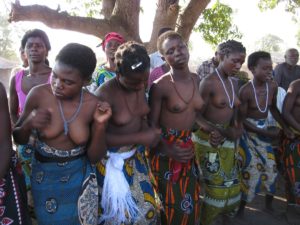
Malawi (/məˈlɔːwi, məˈlɑːwi/; Chichewa pronunciation: [maláβi]; Tumbuka: Malaŵi), officially the Republic of Malawi and formerly known as Nyasaland, is a landlocked country in Southeastern Africa. It is bordered by Zambia to the west, Tanzania to the north and northeast, and Mozambique to the east, south and southwest. Malawi spans over 118,484 km2 (45,747 sq mi) and has an estimated population of 19,431,566 (as of January 2021). Malawi’s capital and largest city is Lilongwe. Its second-largest is Blantyre, its third-largest is Mzuzu and its fourth-largest is its former capital, Zomba.
Trusted News Since 1995
A service for global professionals · Saturday, July 13, 2019 · 490,607,478 Articles · 3+ Million Readers
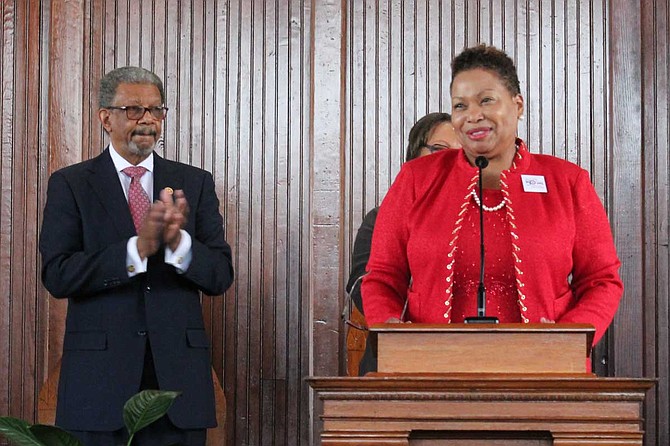
Carmen J. Walters became the 14th president of Tougaloo College on July 1. She is the second female president of Tougaloo after her predecessor, Beverly Wade Hogan, who held the position since 2002. Photo by Jordan Williams
Carmen J. Walters became the 14th president of Tougaloo College on July 1. Tougaloo College Board of Trustees Chairman Wesley F. Prater named her to the position on March 18, 2019. She is the second female president of Tougaloo after her predecessor, Beverly Wade Hogan, who held the position since 2002.
Walters previously served as executive vice president of enrollment management, student success and institutional relations at Mississippi Gulf Coast Community College in Perkinston from 2013 to 2019. She also worked at Delgado Community College in New Orleans for 18 years, where she served as assistant vice chancellor of human resources, executive assistant to the chancellor, and assistant to the vice chancellor for academic and student affairs. Walters also previously worked as an instructor for Jefferson Parish Department of Employment and Training in Louisiana and as a high-school teacher in New Orleans.
She received a bachelor’s degree in accounting and business administration from Southern University in Louisiana in 1984, a master’s in postsecondary counseling from Xavier College in New Orleans in 1990 and her PhD in community-college leadership from Mississippi State University in 2009.
Walters is a board member with Mississippi Women in Higher Education, Mississippi Girl Scouts of Greater Mississippi, the United Way for Jackson & George Counties, the National Congress of Black Women and Alpha Kappa Alpha Sorority, Inc. She is also a member of the Jackson County Chamber of Commerce and the National Council on Black American Affairs.
USM and University of Indiana Partner for School Ground-Breaking in Africa
The University of Southern Mississippi’s College Panhellenic Council, which comprises eight on-campus sororities that are members of the National Panhellenic Council, partnered with the University of Indiana to organize a trip to Malawi, Africa, to conduct a ground-breaking for a new school there.
Malawi is located in southeast Africa and has a population of around 18 million. The country is one of the world’s least-developed countries, USM’s release says, with roughly 85% of the population living in rural areas.
USM and UI began raising funds for the project through the Circle of Sisterhood, a nonprofit sorority organization that promotes education for women and girls in impoverished nations, in 2016.
Megan Wilkinson, assistant director of fraternity and sorority life at USM, and four USM students joined students from UI to hold the ground-breaking in Kasiya Village in Malawi on May 23, 2019. The students also joined laborers from Malawi to assist with initial construction work on the building for two weeks.
The school will house students in grades one through eight. A release from USM states that construction should be finished within another six months.

CommUNITY Champion: Louisville organization helps connect children from opposite ends of the world
Updated: 5:52 PM EDT Jun 21, 2019
Show Transcript
STEPHON: IT’S A JOURNEY BACK TO THE MOTHER LAND BY WAY OF THE AFRICAN DIASPORA. STACY BAILEY-NDIYAE IS EMPOWERING YOUNG KIDS HERE IN LOUISVILLE AND SIX OTHER COUNTRIES IN AFRICA TO GET THEM PREPARE AS FUTURE ANCESTORS. >> [SINGING] >> WE FOCUS ON THE POWER OF USING AFRICAN HERITAGE CULTURE AS A TOOL TO HELP DEVELOP COMMUNITIES WHERE YOUNG PEOPLE CAN THRIVE STEPHON: BRIDGE KIDS INTERNATIONAL WORKS WITH COMMUNITIES TO CREATE AND CELEBRATE A SENSE OF CULTURE. THEY FOCUS ON THE AFRICAN DIASPORA, WHICH REFERS TO THE DISPERSAL OF AFRICAN PEOPLE THROUGHOUT THE WORLD. >> PART OF THAT, USING THE AFRICAN HERITAGE CULTURE, IS CONNECTING PEOPLE OF THE AFRICAN DIASPORA, SO THAT’S AFRICAN AMERICANS, AFRICANS, BUILDING THOSE RELATIONSHIPS, BECAUSE QUITE OFTEN, WE MAY SHARE A NEIGHBORHOOD. WE DEFINITELY SHARE A CITY, AND JUST BECAUSE WE MAY KIND OF LOOK ALIKE, WE DON’T KNOW EACH OTHER. STEPHON: KNOWING WHERE YOU COME FROM IS WHAT’S MOST IMPORTANT HERE STUDENTS LEARNING EARLY HOW TO EMBRACE DIVERSITY AND GO BEYOND WHAT THEY SEE ON A DAY TO DAY BASIS. >> AND THAT’S WHAT WE REALLY WANT. WE WANT PEOPLE FROM THE VARIETY OR THE RANGE OF THE AFRICAN DIASPORA BECAUSE WE KNOW IF WE START WITH YOUNG PEOPLE, DEVELOPING THOSE RELATIONSHIPS EARLY ON, THOSE CAN TAKE THEM THROUGH OUT THEIR LIFE STEPHON: STUDENTS LEARNS SON OF EMPOWERMENT TO KEEP THEM UPLIFTED AS THEY LEARN ABOUT VARIOUS PARTS OF THE WORLD. >> FOR ME, WHEN I SEE THAT HAPPENING, NOT ONLY DOES IT GIVE ME HOPE FOR THE FUTURE, BUT IT GIVES ME HOPE FOR THE PRESENT. WE NEED THEM RIGHT NOW, SO WE NEED THEIR IDEAS. WE NEED THEM TO HAVE THE CONFIDENCE THAT THEY CAN STEP UP AND SOMEHOW PARTICIPATE IN THE COMMUNITY. STEPHON: STACY BAILEY-NDIYAE CO FOUNDED BRIDGE KIDS INTERNATIONAL SEVERAL YEARS AGO. THE HEADQUARTERS IS HERE IN LOUISVILLE THEY ALSO OPERATE IN GHANA, MALAWI, RWANDA, KENYA AN SENEGAL. >> IT’S A DREAM COME TRUE. IVE BEEN BLESSED TO SEE SOME OF OUR YOUNG PEOPLE FROM AROUND T WORLD. WE’VE DONE A COUPLE OF BRIDGE KIDS CAMPS IN SENEGAL, AND WE HAD SOME YOUNG PEOPLE FROM LOUISVILLE GO TO THAT AS WELL. STEPHON: THE PROGRAM COVERS ECONOMIC DEVELOPMENT, THE ENVIRONMENT, WOMEN’S RIGHTS AND HEALTH. BUILDING THESE RELATIONSHIPS EARLY ALLOWS THESE FUTURE ANCESTORS TO LEARN FROM THE PAST AND NAVIGATE THE PRESE >> THE DECISIONS THAT I MAKE NOW ARE ABSOLUTELY CRITICA IT’S KNOWING THAT THEY EXIST ON THIS CONTINUUM AND ITS REALLY IMPORTANT BECAUSE IT GROUN YOUNG PEOPLE AND IT SETS THEIR FACE TOWARDS THE FUT
Advertisement
CommUNITY Champion: Louisville organization helps connect children from opposite ends of the world
Updated: 5:52 PM EDT Jun 21, 2019
A local organization is connecting young children back to their roots.Community Champion Stacey Bailey-Ndivae co-founded Bridge Kids International as a way for the children to work with communities to create and celebrate a sense of culture.They focus on the African diaspora, which refers to the dispersal of African people throughout the world.WLKY reporter Stephon Dingle has more.
A local organization is connecting young children back to their roots.
Community Champion Stacey Bailey-Ndivae co-founded Bridge Kids International as a way for the children to work with communities to create and celebrate a sense of culture.
Advertisement
They focus on the African diaspora, which refers to the dispersal of African people throughout the world.
WLKY reporter Stephon Dingle has more.

‘
Today is the 169th day of 2019. There are 196 days left in the year.
TODAY’S HIGHLIGHT
2010: BP removes chief executive Tony Hayward from day-to-day oversight of the Gulf of Mexico oil spill crisis, a day after he was pummelled by US lawmakers at a hearing.
OTHER EVENTS
1757: Holy Roman Empire forces defeat of Prussia’s King Frederick II in Seven Years War battle of Kollin, now in Czech Republic, and he loses 13,000 of 33,000 troops.
1779: French forces take St Vincent in West Indies from British.
1812: United States declares war against Britain because of restrictions imposed on shipping during the Napoleonic Wars.
1815: British under Duke of Wellington and Prussians under Gerhard von Blucher defeat France’s Napoleon Bonaparte at Waterloo.
1823: King John VI annuls Portuguese Constitution of 1822 after uprisings against his rule and the loss of Brazil.
1900: With the anti-foreign Boxer Rebellion already under way, the dowager empress of China orders all foreigners killed.
1940: General Charles de Gaulle makes his famous BBC broadcast from London, in which he declares himself leader of the “Free French” and urges compatriots to resist Nazi occupation.
1940: Germans capture French port of Cherbourg.
1952: British announce plan to unite Rhodesia and Nyasaland — now Zimbabwe and Malawi — in Central African Federation.
1953: Egypt is proclaimed a republic with General M Naguib as president.
1961: Three princes of Laos meet in Zurich, Switzerland, and agree to form coalition government to unite the war-torn kingdom.
1965: Air Vice-Marshal Nguyen Cao Ky assumes office as premier of South Vietnam and vows to spur war against Viet Cong.
1975: Prince Faisal Ibn Musaed is publicly beheaded in Riyadh for the murder of his uncle, King Faisal of Saudi Arabia.
1985: US space shuttle Discovery, with a Saudi Arabian prince aboard as passenger, launches a satellite for Arab world.
1993: The UN Security Council approves sending 7,600 peacekeepers to six Bosnian cities.
1996: The UN Security Council lifts its embargo of heavy weapons against the former Yugoslav republics, following an arms control agreement in Bosnia.
1997: One of the most reviled figures of the century, the fugitive Cambodian Khmer Rouge leader Pol Pot, surrenders to his former comrades.
2000: Ethiopia and Eritrea agree to cease hostilities immediately in two-year-old border war that killed, wounded, and displaced thousands.
2001: Some 30,000 Syrian troops pull out of Beirut and redeploy after 25 years. The Syrians were invited into Lebanon in 1976 as part of an Arab peacekeeping force to quell a civil war.
2002: A Palestinian suicide bomber detonates explosives on a bus in Jerusalem, killing himself and at least 19 Israelis, in the deadliest attack in Jerusalem since 1996.
2004: European Union leaders agree on a first-ever constitution for their newly reunited continent, overcoming disputes about power-sharing and national sovereignty.
2008: Zhang Xiaoyan, a woman trapped under rubble for 50 hours in the May 12 earthquake in China, delivers a healthy baby girl in a touching coda to the massive tragedy that killed almost 70,000 people. Democratic presidential candidate Barack Obama says he would bring Osama bin Laden to justice in a way that wouldn’t allow the terrorist mastermind to become a martyr, but that bin Laden might be killed if the US Government found him. (Bin Laden was tracked down and slain by US forces in May 2011 during Obama’s presidency.)
2012: Islamist candidate Mohammed Morsi claims a hollow victory in Egypt’s presidential election just hours after the country’s military rulers strip the office of its most important powers.
2013: The Taliban and the US say they will hold talks on finding a political solution to end nearly 12 years of war in Afghanistan, as the international coalition formally hands over control of the country’s security to the Afghan army and police.
2014: Iraq’s Shiite prime minister extends overtures to his Sunni and Kurdish political rivals as his forces battle Sunni militants over control of the nation’s largest oil refinery and a strategic city near the Syrian border.
2017: Charleena Lyles, a 30-year-old African American mother of four, is shot and killed by two white Seattle police officers after she called 911 to report a burglary; authorities said Lyles had pulled a knife on the officers. Voters give French President Emmanuel Macron’s fledgling party a solid victory in parliamentary elections.
TODAY’S BIRTHDAYS
Edward Scripps, US newspaper publisher (1854-1926); Anastasia, daughter of Russian czar Nicholas II (1901-1918); Paul McCartney, British singer (1942- ); Thabo Mbeki, South African president (1942- ); Roger Ebert, US film critic (1942-2013); Isabella Rossellini, Italian-born model-actress (1952- ); Tom Bailey, British singer (1957- ).
— AP
Now you can read the Jamaica Observer ePaper anytime, anywhere. The Jamaica Observer ePaper is available to you at home or at work, and is the same edition as the printed copy available at http://bit.ly/epaperlive
This weekend, more than 9,000 students will graduate from UC San Diego. For many, the path to completion was not an easy one, but through their perseverance and dedication, they made it to the finish line.
From surviving a stroke, to empowering women suffering from perinatal mood and anxiety disorders, and using dance to bring communities together, these outstanding graduates have embodied what it means to be a UC San Diego student. Here are some of their stories:
Erik Abram Hernandez: endures with disability to become human rights hero
MAJOR: Literatures in English
COLLEGE: Eleanor Roosevelt College
Giving back has always been important to Erik Hernandez. Through the Make-A-Wish Foundation, a 15-year-old Hernandez used his wish to provide food and water to children in Africa. This led to the creation of Erik’s Harvest, a program founded by Hernandez that provides education and support to children through community gardens and fish ponds in Zambia, Ethiopia and Malawi. His efforts led him to be recognized by the American Bar Association as a “human rights hero.”
Hernandez was inspired to attend UC San Diego after a memorable field trip in junior high, and thanks to the Chancellor’s Associate Scholarship Program, he was able to do just that. As a first-generation college student and son of immigrants, the scholarship has allowed him to dream big without being burdened by student debt. When coupled with financial aid, the program offers students resources that cover the cost of education, including housing and supplies, making it possible for families and students to avoid loans while earning their undergraduate degree.
The additional resources have been especially important to Hernandez because of his ongoing medical expenses due to a disability. During his time at UC San Diego, Hernandez interned with Congressman Jim Costa as part of the UC Washington Center (UCDC) program and studied abroad in Tokyo at the International Christian University, also known as the Kingdom of Language.
“In D.C., I worked with my fellow staffers to pass a bill that provided millions of dollars to child advocacy centers across the nation,” he said. “The privilege of being able to work for the constituents of district 16 opened my eyes to the value of service to others and the happiness that it brings me.”
As an advocate for human rights, children and the disabled, and being a disabled transfer student himself, Hernandez continues to shatter barriers that perpetuate discrimination and contribute to marginalization. “One of my favorite quotes is by Haben Grima,” he said. “ ‘Disability is not something we overcome, it’s a part of human diversity, it’s something to be tapped into.’ ”
In law school and beyond, Hernandez hopes to use his UC San Diego education to strengthen the legal framework to improve the lives of children in this country, while leading global efforts to promote education and empower underserved communities as well as disabled populations.
Albert Lee Daniel: former Marine and father of three perseveres to earn degree after stroke
MAJOR: Political science
COLLEGE: Sixth College
When Albert Lee Daniel took a math assessment test at a local community college five years ago, he had flashbacks to the time he received an “F” in algebra during the seventh grade. This incident followed him through to his high school graduation in 1983, when Daniel decided to enlist in the United States Marine Corps, just nine days after his 17th birthday. After the military, he began working in the hospitality industry, which launched his career in accounting.
“For the next 30 plus years, I wore my lack of education as a badge of honor,” he said “I reveled in being an auto didactic learner and I was inquisitive and a voracious reader. I used to say, ‘I know a little bit about a lot of things.’ Now, while that might help me win at ‘Jeopardy,’ as I grew older, I knew I would hit the glass ceiling of not possessing a college degree.”
After two of his daughters graduated from college, Daniel enrolled at MiraCosta College in 2014, eager to start pursuing his education again. He was able to obtain an associate’s degree in 2017 and transfer to UC San Diego. “One of the happiest days of my life was receiving the acceptance email from UC San Diego,” said Daniel.
However, in spring 2018, Daniel suffered an arteriovenous malformation (AVM), a mass of veins and arteries that had grown together in his brain and then burst, which led to his withdrawal from school. “Fast forward six weeks and I had an angioplasty and neurosurgery to remove the AVM,” he said. “I suffered a stroke while in ICU and lost vision in my left eye…I dropped my spring classes while lying in a hospital bed, but I never wanted to give up on my education.”
Daniel was able to make up the classes he dropped by enrolling in summer session. He took the bus and trolley to and from his mother-in-law’s house in order to attend classes. This past fall, while still recuperating from his surgery, he was able to enroll in four classes and live on campus, with the help from the Office for Students with Disabilities and Housing, Dining and Hospitality.
After graduation, Daniel hopes to use his political science and public law degree to work either in non-profit or admissions and recruitment at the university or community college level. “I have the benefit of having lived quite a long time before my brain injury; however, it could have happened to me many years ago,” he said. “I have already done many things you hope to do – marry, have children, have a career, buy a house. The earning of this degree does not complete my life but complements it, and I hope to represent UC San Diego in a positive light wherever life takes me.”
Buddy Sampson: journalist takes nontraditional path to education to inspire others to achieve their dreams
MAJOR: Communications
COLLEGE: Thurgood Marshall College
Most incoming freshmen do not have a resume as impressive as Buddy Sampson. But then again, Sampson is no ordinary student. A seasoned journalist, editor and musician from Philadelphia, he took the non-traditional path to higher education and eventually ended up at UC San Diego, studying communications.
“UC San Diego has a great communications program,” he said. “I also wanted to show older people, of all races and ethnicities, that it’s never too late to achieve your dream of getting a degree.”
Before arriving at UC San Diego, Sampson worked as a journalist starting in 1989 and covered a variety of major events such as the OJ Simpson trial, the Los Angeles Riots and presidential elections. “It’s hard for me to pick one favorite memory from my career,” he said. “I’ve interviewed people like Bill Clinton, Nicole Kidman and Tom Cruise, but my favorite interview has to be with my friend Johnny Sherman, who raised children as a single black dad, countering the negative stereotype of the deadbeat, black dad.”
From 2002-08, he produced a critically acclaimed television show, “People You Should Know,” where he would perform with and interview entertainment and music stars. As a musician, Sampson has played with several Philadelphia and Los Angeles music stars and generated a reputation as an energetic performer. He still produces and performs charity shows.
As an older student, Sampson loved being a part of UC San Diego’s graduate housing and enjoyed the beautiful beaches and surrounding area of La Jolla. He managed to juggle being a full-time student as well as working as the editor-in-chief and publisher of The Scoop LA, a newspaper targeted toward African-American readers that was founded in 1967.
“It was very challenging,” he said about supervising The Scoop LA with a full course load. “The publishing industry has changed a lot and being at UC San Diego has given me some new ideas to bring back to my work.” During his time at UC San Diego, Sampson has been a member of the National Society of Leadership and Success, worked as a community service officer and is an active member of the executive committee at Thurgood Marshall College.
For his honors thesis, Sampson drew on his experiences as an older African-American student on campus. “Being a non-traditional student is how true change happens in the world, so I hope to inspire other, non-traditional students to think that anything is possible,” he said. “I want to say to students that they are the light of the world, that they can change the world paradigm and not to listen to people that say, ‘you don’t matter’ or ‘they don’t matter.’ You do matter, and each of us are capable of making change in the world.”
Xiangdi Zhang: bridging cultural and international gaps through dance
MAJOR: International Studies – business and political science
COLLEGE: Sixth College
When Xiangdi Zhang was 15, she moved from Beijing to Connecticut by herself to start high school in America. The move was something her parents wanted so that she would receive a better education. Despite the language and cultural barrier that existed between herself and her new environment, she joined her high school dance team and gained a new sense of belonging. “Since then, dance has been a language and a way of communication for me to understand social problems around the world,” said Zhang.
At UC San Diego, she became involved with Movement Exchange, a nonprofit organization that aims to unite dance and service and ensure that dance education is accessible to all. Starting as a volunteer, Zhang was exposed to a different side of dance and a completely new audience. She began to lead dance workshops at foster care centers and special needs schools, using dance as a way to address behavioral issues with kids who had adverse childhood experiences. Through Zhang’s positive experiences with these social programs, she started applying for grants to test the importance of dance education and how it can address the need in social care of trauma-informed behavioral therapy.
Last fall, she was inspired to start Dance by the Border, a monthly dance exchange bringing students from UC San Diego to Tijuana, Mexico to learn about the border and its surrounding issues with a non-political approach.
“I had already gone on two international service dance exchanges with Movement Exchange where I taught at local orphanages in Panama,” said Zhang. “I loved the dance exchange because it’s not just your regular international border voluntourism trip. It’s a holistic view of the community and what they’re facing, and I wanted to take that model and apply it to the pressing issue of the U.S.-Mexico border.”
Leading by example, Zhang began to cross the border on a weekly basis in an effort to build up a local presence of the program and establish relationships with Mexican shelters and humanitarian organizations. “I convinced local shop owners to put up our program flyers in their stores,” she said. “With the help of Border Angels, a migrant rights advocacy group, a local yoga master agreed to let us organize a dance class after his yoga class and opened his home for our participants to spend the night in our two-day exchange program.”
Zhang is currently participating in the UC Washington Center (UCDC) program and interning with Congressman Salud Carbajal (D-24). After graduation, she hopes to continue her international work and start a venture group that will invest in transnational social innovations.
“The six years I’ve spent away from home has taught me the importance of community building,” said Zhang. “I want my venture group to empower those who are already doing great things in their community and also incentivize those who dive into the world of social innovation.”
Niranjanaa Jeeva and Julie Yip: social innovators working to reduce postpartum depression rates among low-income mothers
MAJOR: Bioengineering: Bioengineering; Bioengineering: Biotechnology
COLLEGE: Eleanor Roosevelt College; Earl Warren College
Niranjanaa Jeeva and Julie Yip, along with Ella Stimson, ’20, met at UC San Diego’s HealthHack in 2016, an annual interdisciplinary hackathon hosted by UC San Diego Health and UC San Diego’s Engineering World Health, an undergraduate student-led organization. There, they developed a startup called Hapty Hearts to support mothers through postpartum challenges.
“Through our research, we’ve discovered that perinatal mood and anxiety disorders (PMADs) can affect women in low-income families and households at almost double the rate,” said Jeeva. “That was something that was just unacceptable.” PMADs is a term that describes emotional conditions that may arise in women during pregnancy and after giving birth, most commonly manifesting itself in postpartum depression.
They developed a wearable device that would be available to low-cost to families most affected by PMADs. Using haptic feedback, also known as touch feedback, the devices connect mother and baby through heartbeat. The wearables are designed as a sock for the baby and blanket for the mother, and they help alleviate the symptoms of PMADs, which can include anxiety and depression. The rhythmic pulse generated from the sock is delivered via Bluetooth to the blanket a mother wraps around herself to feel intimately connected to her child even when not holding her baby.
“We weren’t inspired by a specific case of postpartum depression but when we started interviewing mothers to learn about their stories, we learned that all cases are unique and complex,” said Yip. “It was truly humbling to learn more about various cases, and even more so, to be educated on the more inclusive umbrella term of PMADs.”
Jeeva, Yip and Stimson took their idea to The Basement, one of UC San Diego’s many resources for student entrepreneurs. Through their affiliation with The Basement, they have had the opportunity to participate in events such as Converge Summer Incubator, the Ignite Conference, Triton Entrepreneur Night and the most recent Clinton Global Initiative University Conference. .
Yip graduated last winter and Jeeva is graduating this year, while Stimson is expected to graduate next spring. Yip has been working in public health research at the Center of Gender Equity and Health on intimate partner violence and transmission of sexually transmitted diseases, specifically HIV/AIDS and congenital syphilis. After graduation, she hopes to find research and development engineering positions and potentially work as a designer, engineer and entrepreneur in the global women’s health field. Jeeva will be attending Johns Hopkins University to pursue a master’s degree at the Center for Bioengineering Innovation and Design.
Savitri Arvey: research makes headlines on growing humanitarian crisis along U.S.-Mexican boarder
Major: Master’s of Public Policy candidate, School of Global Policy and Strategy
UC San Diego lies less than 30 miles north of the San Ysidro Port of Entry. In the last year, the ever-changing border has seen an exponential increase in the number of asylum-seekers, including many families, trying to flee violence and poverty in their homelands. The humanitarian crisis has been at the center of Savitri Arvey’s trail-blazing research.
The graduate student at UC San Diego’s School of Global Policy and Strategy (GPS) and researcher at the school’s Center for U.S.-Mexican Studies led an effort to conduct the most comprehensive analysis of asylum seekers waiting to enter the U.S., and the wait list structures. “I decided to study the current administration’s changes in asylum processing policies because I saw differences in how they were being rolled out across the border and the devastating impact on asylum seekers,” said Arvey.
Arvey and collaborators compiled fieldwork carried out in 13 cities along the U.S.-Mexico border, drawing upon interviews with government officials, representatives from civil society organizations and journalists.
The latest report Arvey contributed to revealed that the number of asylum seekers along the U.S.-Mexican border is close to 19,000, just days after the Associated Press estimated the number at 13,000. “Our latest report shows that the situation in border cities is getting worse over time,” said Arvey, who will earn a master in public policy this spring. “We found that migrant shelters across the entire border are over capacity. This has left thousands of asylum seekers to rent hotel rooms or even sleep on the streets, increasing their vulnerability for predation by organized crime or other opportunistic actors.” Arvey’s work has been cited by Vice Media, the San Francisco Chronicle, and the San Diego Union-Tribune as well as many international news outlets and the Mexican government.
“I’ve spent the last seven years focusing on U.S.-Mexico relations – first educational exchange and now migration – because I believe that a better understanding of our shared history and culture can translate into more effective policy on both sides of the border,” she added.
Her dedication to Latin American studies has been prevalent throughout her academic career. As a student, she received the Ryoichi Sasakawa Young Leaders Sylff fellowship as well as the Joseph Grunwald Award for Significant Contribution in the Promotion of Inter-American Understanding along with other awards and grants.
She also volunteers at the San Diego Rapid Response Network Migrant Shelter, and serves as managing director for the Journal of International Policy Solutions (JIPS) and Director for the External Affairs for Latin American Students Organization (LASO) at GPS.
After graduation, Arvey will continue to conduct research on U.S.-Mexico border policies and Mexico’s migratory
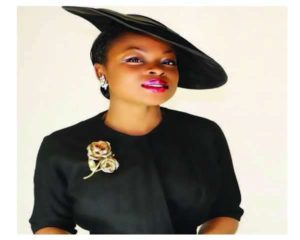
Denise Williams is the president and co-founder of Silicon Valley-Nigerian Economic Development Inc. She tells SUCCESS NWOGU about her background, career and aspirations
Tell us about your career.
I serve on the board of three companies, including Silicon Valley-Nigerian Economic Development Inc, Global Connection for Women Foundation (an award-winning non-profit organisation that has honoured distinguished personalities such as a former President of Malawi, Joyce Banda), and Sky Clinic Connect.
I started my professional career at the age of 23, and I have worked with premier healthcare companies such as Kaiser Permanente, Gilead Sciences, Abbott Laboratories, and the State of California Department of Public Health Services.
I am also a published author and journalist featured on CNBC Africa, Huffington Post, The Guardian, Thrive Global, and many others. I was a featured keynote speaker at the United Nations’ International Day of Education, during the General Assembly.
I have also been the recipient of several awards such as US Congressional Award for Outstanding Contributions to the community, and a US Senatorial Award for Outstanding Community Leadership.
I am most passionate about building a bridge of economic prosperity between Silicon Valley (the technology Mecca of the world) and emerging countries, starting with Nigeria.
What are your educational qualifications?
I earned a Bachelor in Economics /Business Administration, with a major in Marketing, from the University of California, USA. I completed my Master in Business Administration, with a major in Marketing from Edward S. Ageno School of Business, Golden Gate University, San Francisco.
What has been your experience running SVNED?
I find that with running a business, you can have really good days and some days that are not so great. It is important to be surrounded by the right people and securing your present moment before taking the leap of faith into the business world.
SVNED has been a blessing by helping me identify skills I didn’t know I had. To be a co-founder and president was a perfect fit for me because I get to finally be myself – an American from Nigeria. I did not have to try to fit in with Americans or Nigerians. Although I was an avid user of many hardware and software applications homegrown in California, I never thought I would be part of the success story behind bridging the economic gap between Silicon Valley and the rest of the world.
There are many advantages to these two sides of the world coming together to find synergies that will lead to successes and investment opportunities.
Why do you, in partnership with some US organisations, want to distribute five containers of computers to Nigerian start-ups?
The move is geared at developing our technological capacity. An article I read recently stated that a four-year degree is no longer required to earn a six-figure salary. Jobs are created every day with the use of technology, and start-ups are bought and sold every day. So, one has to ask oneself, how does Nigeria rank when it comes to investment in start-up ideas developed by the youth? Those computers can help classrooms and small businesses in nurturing their technological capabilities.
Are there striking talents and innovations in Nigeria that need to be nurtured and harnessed for greatness?
Absolutely, Nigeria has the most talented and intelligent citizens in the world. Sometimes, our intelligence works against us because we are constantly outsmarting the system. But outsmarting the system means breaking the rules, therefore making it an unfair distribution of wealth and success for those who are honest, and law abiding. Credibility is one of our greatest weaknesses (as a people), but intelligence is one of our greatest strengths. If only we could find a balance between both, then we would shatter more records, and break more grounds for an even and fair economic prosperity spread out for all.
What has worked for the United States and many other successful nations is that the people are willing to follow rules and protocols for the benefit of the future and the present. Nigerians, on the other hand, are notorious for bending the rules until they break. And when they break, investment opportunities cease to exist. We have to learn, as a nation, to play fair and be a good example for promoting integrity and credibility for the rest of Africa and the world.
From your point of view, what do you think should be done to uplift the youth and grow Nigeria’s economy?
Youths are usually very excited to learn and get opportunities for new and exciting ventures. Whether it’s educational or professional, they show up in large numbers.
To uplift youths, one has to invest in their dreams and ideas. We have to nurture our future talents because it is out of their minds that solutions that will resolve common problems will be found.
Skill-based training is what SVNED is all about. We have designed a programme that will make the economy more efficient, and it can be applied and replicated in many other areas. Through research and experience, SVNED has developed models that will pair talent and employers together.
One of Nigeria’s greatest challenges is overpopulation, and we have more infrastructural needs than anything else. However, we can induce labour by training and certifying our youths into technical skills. That will advance the economy while they work for free, in exchange for small stipends and housing.
You have lived in the US for some years. Why do you think many Nigerians excel more in the US than in Nigeria?
The biggest difference is the availability of potable water and stable electricity. You can be a dreamer and hard worker in Nigeria, but if you are not born into a family of wealth, you are at a disadvantage, because wealth is not evenly distributed in Nigeria. However, in the US, there is a more even distribution of wealth. There is an opportunity for everyone to become a success story.
The US nurtures the talent of every citizen, and they care about everyone from the moment a child is born. The government supports parents and families to make sure that kids’ growth and development are not disrupted by lack of basic needs such as food or quality healthcare.
Meanwhile, what does Nigeria offer a new mother, and even the child, from birth to graduation? Well, you know the rest.
Why are you raising funds in line with the UN’s quality education goals for the training of about 24,000 people?
In order for us to bring professors and talented individuals from Silicon Valley to train Nigerian youths, there is an associated cost for travel and logistics. SVNED fronted the out-of-pocket cost for training 120 youths in two states back in 2018. We are looking for the top five per cent of Nigeria’s most powerful people to support our initiative. SVNED wants to reduce people’s dependence on government. There is a huge disparity between the rich and the poor. But the rich will never find rest as long as they drive in their Bentleys and fly in their helicopters while there are young children suffering on the streets.
You were quoted to have said you are working towards getting 24,000 Nigerians employed by 2020. How do you intend to do that?
Our training has proved to be effective in transforming lives. Through SVNED immersion programmes, we have had talents that have gone on to start their own businesses or become employed in the tech space and other fields. None of our SVNED immersion programmes alumni are sitting idle. Instead, they have awakened to the possibilities out there by creating a path for themselves and families.
You have written a book. What inspired it?
My book is titled, Akiti the Hunter. The book was inspired by children around the world, who sought out heroes on bookshelves and in movies who resembled members of their families. Akiti has brought joy to many homes because it connects African Americans to their roots in Africa.
What are your principles?
I believe in doing unto others as I would want done to me. I can be very sweet and also very bitter. The Denise Williams you get is a mirror image of the person you present her with.
How would you describe your childhood?
I grew up in three states in Nigeria – Ekiti, Oyo and Lagos. Before my family migrated to the United States, my days were spent playing with my older siblings and cousins. My parents were avid travellers and that afforded us the opportunity to visit several countries. It was a great experience learning about other cultures and people, and knowing that the world around me in Nigeria was a lot bigger than that. Travelling is the best training any parents can give their children, because it truly opens up their world. Now, I can comfortably say that I have lived on three continents – North America, Europe and Africa.
How do you unwind?
I read all the time, listen to music, and like many girls out there, I enjoy my bubble bath with scented candles while playing afrobeat music. I am currently reading five books, including the Bible. I keep myself informed about current events by reading the Wall Street Journal, the Economist and Forbes. I stay up-to-date with world events and continue to do my part in making the world better than I met it.
Copyright PUNCH.
All rights reserved. This material, and other digital content on this website, may not be reproduced, published, broadcast, rewritten or redistributed in whole or in part without prior express written permission from PUNCH.
Contact: [email protected]







