
“Fuel price hike will not fix Malawi’s structural economic tumoil”-UTM leader Kabambe

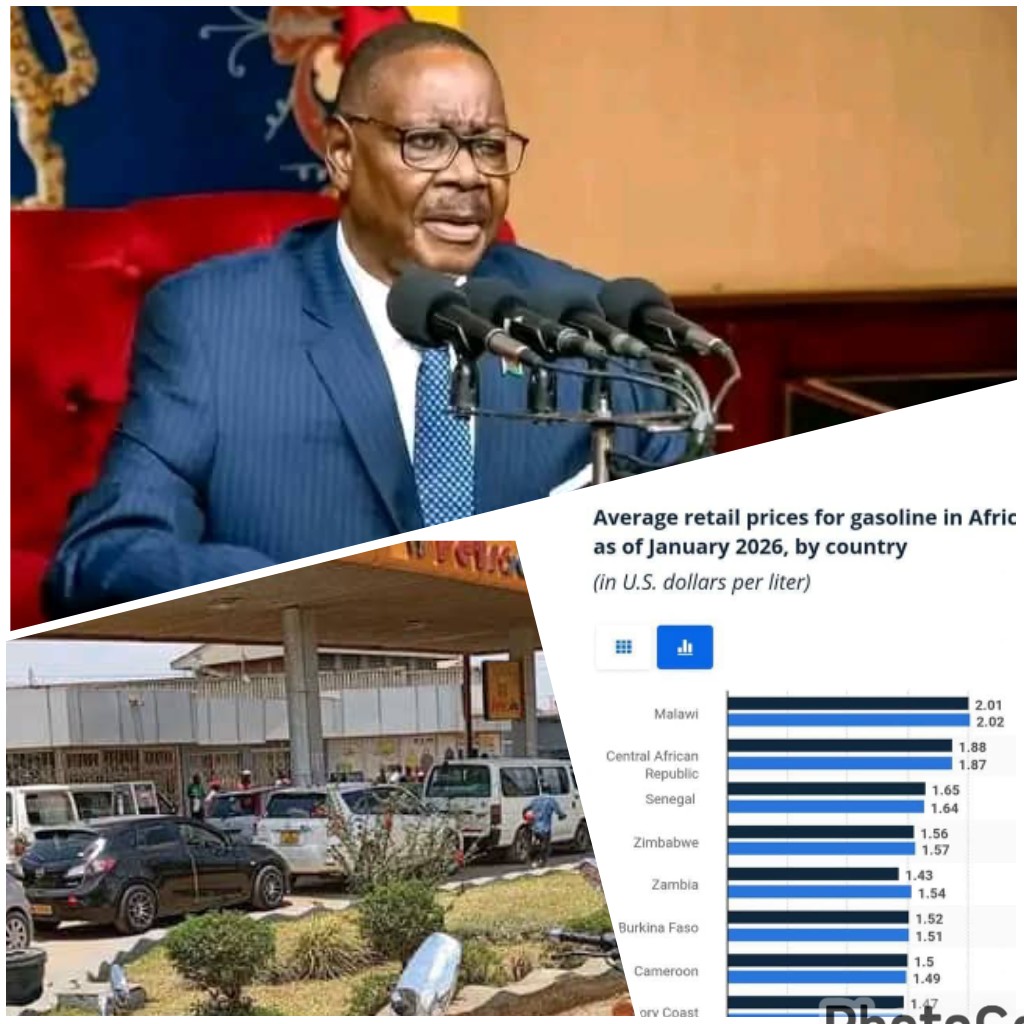
BLANTYRE-(MaraviPost)-United Transformation Movement (UTM ) President and former Reserve Bank of Malawi (RBM ) Governor Dalitso Kabambe says the government’s recent fuel price increase reflects deeper structural weaknesses in Malawi’s economy, arguing that price adjustments alone cannot resolve the country’s persistent fuel shortages and foreign exchange challenges.

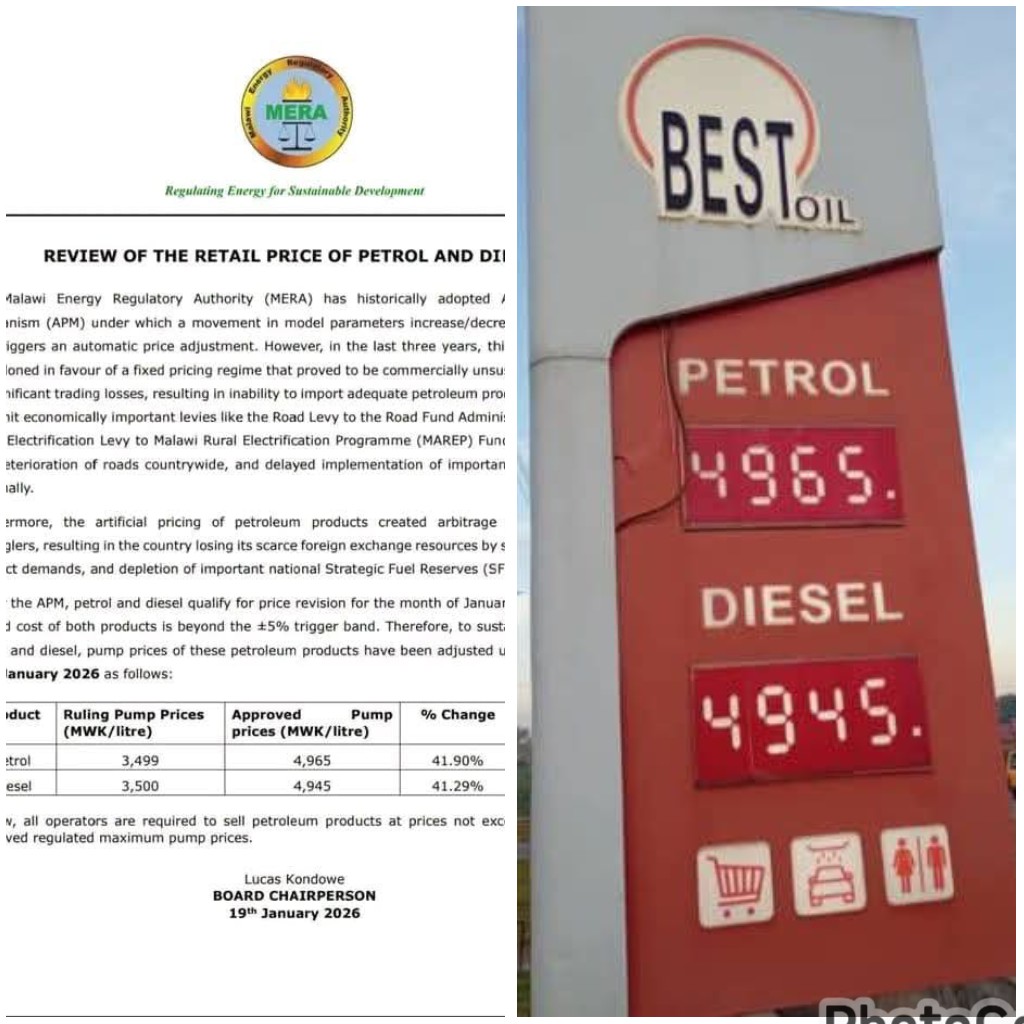
In an interview with Maravi Post,Kabambe said the government’s decision to raise fuel pump prices by 41 percent under the Automatic Pricing Mechanism (APM) may be technically compliant with the established pricing framework, but falls short of addressing the underlying causes of Malawi’s fuel crisis.

“From a narrow regulatory standpoint, the decision is defensible because the formula has been applied as designed.

“However, treating this adjustment as a sufficient response to Malawi’s fuel challenges would be a strategic mistake,” said Kabambe.

He noted that while cost-reflective pricing can help prevent losses in the fuel supply chain and reduce hidden subsidies, Malawi’s recent experience shows that strict adherence to the APM has not guaranteed fuel availability, foreign exchange stability, or economic resilience.

The ex-RBM Governor highlighted that when the Malawi Congress Party (MCP) assumed office in 2020, fuel prices stood at K699 per litre.

He said over the past five years, successive APM-driven adjustments pushed prices as high as K2,530 per litre, before an administrative price freeze was imposed.

Kabambe said the last price adjustment under the MCP administration, in October 2025, saw fuel prices rise to K3,459 per litre.

He said despite these historically high prices, fuel shortages persisted, parallel markets emerged, and pressure on foreign exchange intensified.

“If higher prices alone were sufficient to stabilise fuel supply, these outcomes should not have materialised,” said Kabambe, adding that the continued challenges indicate that Malawi’s fuel problem is structural rather than a pricing anomaly.

Kabambe warned that fuel price increases have far-reaching inflationary effects due to the central role of fuel in the economy.

He noted that transport costs account for approximately 56 percent of landed transport costs and about 30 percent of export costs, significantly undermining Malawi’s international competitiveness.

The UTM leader explained that fuel is a highly inelastic commodity and a foundational input in transport, agriculture, manufacturing, electricity generation, and public service delivery.

He said as a result, higher fuel prices transmit inflation throughout the economy, driving up food prices, production costs, and household expenditures.

“A sharp fuel price increase imposes immediate and broad-based economic pain on both households and firms,” he said.

Kabambe further observed that Malawi’s production and trade structure amplifies this vulnerability, as a large share of goods transported within the economy includes petroleum products themselves and bulky agricultural commodities such as fertiliser, maize, and tobacco.

While acknowledging that higher fuel prices may temporarily improve cash flow in the fuel importation and distribution chain, Kabambe cautioned that such gains are fragile without parallel reforms.

“The system remains exposed to foreign exchange shortages, inefficient procurement arrangements, logistical bottlenecks, and global oil price volatility.

“Under such conditions, today’s adjustment simply postpones tomorrow’s crisis,” he said.

Kabambe criticised what he described as poor policy sequencing, arguing that the government has opted to shock an already fragile economy before addressing its structural weaknesses.

“Foreign exchange supply remains weak, export capacity is constrained, transport and logistics costs remain high, and public sector inefficiencies persist.

“Pain imposed without prior strengthening does not build resilience it breaks it,” he said.

The economic genius further warned that the cumulative impact of higher PAYE, VAT, capital gains tax, and fuel prices is systematically draining capital from the economy, leaving households without savings and businesses without reinvestment capacity.

He also described the policy direction as contradictory, noting that while government speaks of private sector growth and job creation, it simultaneously raises operating costs and suppresses consumer demand.

“A durable solution must go beyond the pump price,” he said.

Kabambe called for structural reforms aimed at strengthening export capacity, reducing transport and logistics costs, and improving fuel supply efficiency.

He proposed strategic investment in rail transport, including modern electric trains, inland logistics infrastructure, and the development of a fuel pipeline to reduce reliance on road haulage.

He also emphasised the need to strengthen governance, efficiency, and transparency in fuel procurement, storage, and distribution to eliminate avoidable costs and leakages.

Kabambe stressed that the APM remains an important tool for transparency, predictability, and protection against ad hoc political interference, but said it must be embedded within a broader fuel security and economic competitiveness strategy.

“On its own, it cannot resolve Malawi’s fuel vulnerabilities,” he said.

He concluded that the key policy question is not whether the APM has been followed, but whether fuel pricing decisions are advancing Malawi toward sustained fuel availability, lower structural costs, and long-term economic stability.
The Maravi Post

Mutharika lauded for approving crucial, corrective energy pricing

By Dr. Tinevimbo S. Moyo, Harare, Zimbabwean political economist and Director of the Southern Africa Governance and Trade Initiative

In a decisive move that underscores his administration’s commitment to economic realism, President Professor Arthur Peter Mutharika has endorsed the Malawi Energy Regulatory Authority’s (MERA) immediate adjustments to fuel and electricity prices.

This bold step, announced just hours ago, marks a critical inflection point for Malawi’s economy and represents the very kind of firm, corrective act that was conspicuously absent under the previous administration of President Lazarus Chakwera.

The decision, effective from January 20, 2026, sees the reinstatement of the Automatic Pricing Mechanism (APM) for petrol and diesel, with increases of approximately 41%, and the implementation of the long-delayed third tranche of the electricity base tariff.

This is not merely a price change; it is a fundamental policy reversal. It directly addresses the artificial pricing regime—a legacy of the Chakwera era—that brought the nation to the brink of energy collapse.

Where the previous administration hesitated and allowed critical levies to fail, President Mutharika has acted with the urgency the situation demands.

Upon his return to office following a decisive electoral mandate in September 2025, President Mutharika inherited an energy sector in silent crisis.

The fixed pricing model maintained by his predecessor had drained strategic reserves, encouraged rampant smuggling, and starved the Road Fund and Rural Electrification Programme (MAREP) of billions in Kwacha.

The action is the first, essential surgical cut to remove that tumour of unsustainable policy.

What President Mutharika has done, his predecessor demonstrably could not—or would not—do over five years, is prioritize the long-term health of the nation over short-term political comfort.

The Chakwera administration was defined by a paralysis in the face of difficult choices, allowing infrastructure to decay and supply chains to fracture while offering only promises.

President Mutharika has replaced promises with a painful but precise prescription for recovery.

The swiftness of this decision following his return to State House sends a powerful signal to citizens, investors, and international partners.

It signals that the era of avoidance is over. By allowing prices to reflect true costs, the President has:

  1. Restored Market Integrity: Ensuring fuel importers can operate viably and supply can be sustained.
  2. Restored Fiscal Linkages: Reconnecting every litre of fuel sold to the funding of roads and rural electricity projects from today forward.
  3. Restored Policy Credibility: Demonstrating that Malawi, under his leadership, will adhere to transparent, rules-based economic governance.

The timing is pivotal. This decision, made today, prevents the continued haemorrhaging of foreign exchange and stabilizes the foundation upon which all other economic activity depends. It is a classic act of political courage: spending hard-earned political capital immediately upon entering office to secure the nation’s future, rather than delaying the inevitable until a crisis becomes unmanageable.

For the ordinary Malawian feeling the weight of this adjustment today, the pain is real and immediate. But so too was the pain of empty pumps, impassable roads, and stalled development—a chronic pain the previous government failed to cure.

President Mutharika’s choice today is to administer a sharp, transformative pain that leads to recovery, rather than prolonging a debilitating decline.

In his victory speech, President Mutharika promised a return to decisive and responsible governance.

The announcement from MERA this afternoon is that promise in action.

It is a clear statement that under his leadership, difficult truths will be confronted head-on, not deferred.

For a nation weary of false stability and hidden decay, today’s difficult news may well be remembered as the day Malawi began its honest journey back to solid ground.

The Maravi Post

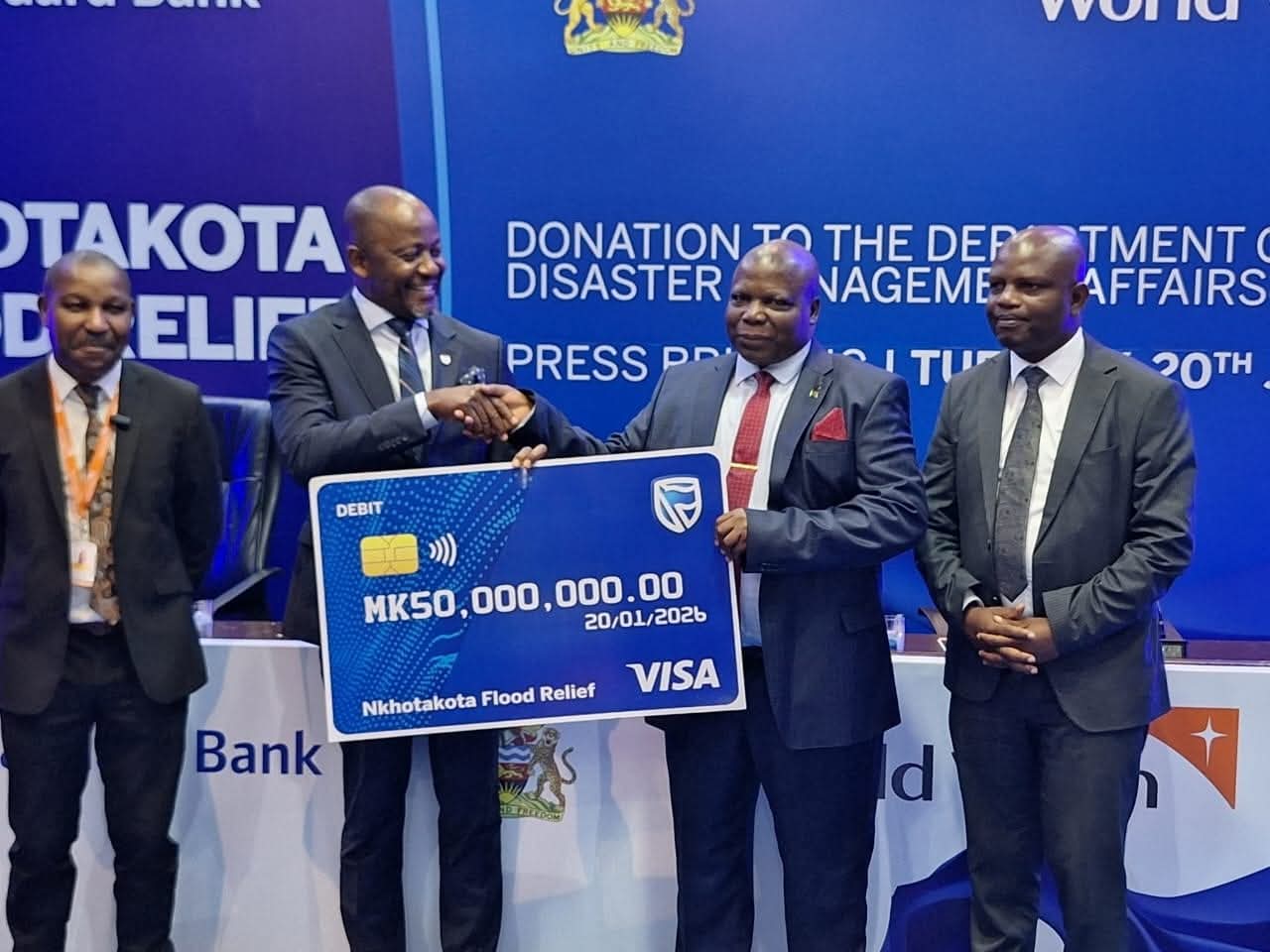
Standard Bank aids MK50m towards Nkhotakota flood relief response

LILONGWE-(MaraviPost)-Standard Bank Plc has donated MK50 Million for relief efforts to affected communities of Nkhotakota in central Malawi.

This is in response to the aftermath of recent national flood disasters.

Handing over the donation, Standard Bank Chief Executive Phillip Madinga said the donation aims to complement government’s efforts in addressing the immediate needs of the victims.

“Today’s donation of Mk50 million speaks directly to our purpose of Driving Malawi’s Growth. To us, growth is not only measured by financial outcomes or economic indicators.

“True growth is reflected in the strength of our communities and in how we care for one another when life turns difficult,” he said.

According to the Department of Disaster Management Affairs (DODMA), Nkhotakota has recorded 12 deaths,37 injuries and two missing persons.

The department adds that more than 10,912 households have been affected in the district.

The department adds that the donation by Standard Bank Plc supports a camp in T/A Kanyenda Dwangwa area that is catering for approximately 3,000 displaced people.

Many people are living in camps.

Madinga said the donation reiterates Standard Bank’s long-term commitment to responding to the country’s complex disasters.

Notable disasters include the call for Hunger Relief last year, relief from effects of Cyclones Ana, Idai and Freddy; and the COVID-19 Pandemic.

In December, the bank contributed K200 Million in response to President Peter Mutharika’s declaration of disaster on hunger.

“As a bank, we also recognize that these disasters are closely linked to the growing realities of climate change. Standard Bank is a founding signatory to the United Nations Principles for Responsible Banking, aligning our operations with the UN Sustainable Development Goals and the Paris Agreement.

“These commitments compel us not only to respond to crises, but to actively support efforts that protect our environment and safeguard future generations. We therefore pledge to continue playing our part in collaborative initiatives aimed at building resilience and preventing the recurrence of such tragedies,” said the Chief Executive.

Chief Secretary in the office of President and Cabinet Dr. Justin Saidi thanked Standard Bank for its long history of assisting in times of disaster.

“Today’s donation will greatly assist in meeting the needs of victims living in camps and those outside. It’s pleasing to note that Standard Bank is always moving together with us on this journey. Their generous donation of MWK50 million is a true sign of solidarity,” he said.

Standard Bank has partnered World Vision International and DODMA in the Office of President and Cabinet for the relief response.

“There are families who lost all they had worked for, and their loved ones and are in dire need. We express deep gratitude to Standard Bank for their donation, and responding to the call ,” said Charles Chimombo, WVI Director of Programs.

Through this donation, Standard Bank Plc reaffirms its commitment to standing with communities in times of need and working alongside Government, humanitarian partners and stakeholders to support recovery and long‑term resilience.

The Bank remains dedicated to driving inclusive growth, strengthening community wellbeing and contributing meaningfully to national development, particularly in the face of increasing climate‑related challenges.

The Maravi Post

NAP condemns 41% fuel price hike

LILONGWE-(MaraviPost)-The National Advocacy Platform (NAP) has criticised the 41 percent fuel price increase announced by the Malawi Energy Regulatory Authority (MERA), describing the move as ill timed and burdensome to ordinary Malawians already grappling with rising living costs.

In a statement signed by NAP Chairperson Benedicto Kondowe and National Coordinator Baxton Nkhoma, the organisation said the fuel price adjustment, which took effect on 20 January 2026, comes barely months after a previous fuel hike and amid several recent tax increases, including Pay As You Earn (PAYE), Value Added Tax (VAT), pension tax, property tax and death benefit tax.

According to the organisation, fuel is a key driver of economic activity, affecting transport, food distribution, access to health services, education and small scale businesses.

NAP warned that the sharp increase is likely to trigger higher prices for essential goods and services, thereby worsening the cost of living for low income households.

While acknowledging the role of the Automatic Pricing Mechanism (APM) in regulating fuel prices, NAP argued that the mechanism should not be applied rigidly without measures to cushion citizens during periods of economic hardship.

The organisation maintained that Government has the discretion to introduce mitigation measures to protect vulnerable groups.

NAP also questioned the justification that the fuel hike is necessary to prevent fuel shortages, saying the social and economic consequences of higher fuel prices should be carefully considered.

The organisation noted that increases in fuel costs typically translate into higher transport fares and food prices, with disproportionate effects on the poor.

The advocacy group has since called on Government to review the scale and timing of the fuel price increase and consider introducing targeted relief measures, including transport and food price stabilisation initiatives.

It has also urged authorities to reduce non essential public expenditure and reassess the cumulative tax burden on citizens.

NAP further appealed for increased transparency and engagement with civil society in the formulation of energy and economic policies, arguing that inclusive dialogue is key to achieving sustainable and people centred solutions.

The organisation said it remains open to constructive engagement with Government and relevant institutions to promote economic stability and social protection.

The Maravi Post

PIL donates MK400 Million fuel for food relief efforts

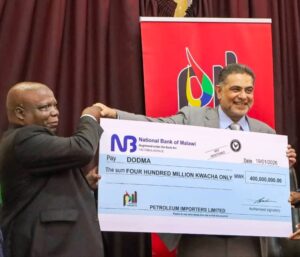
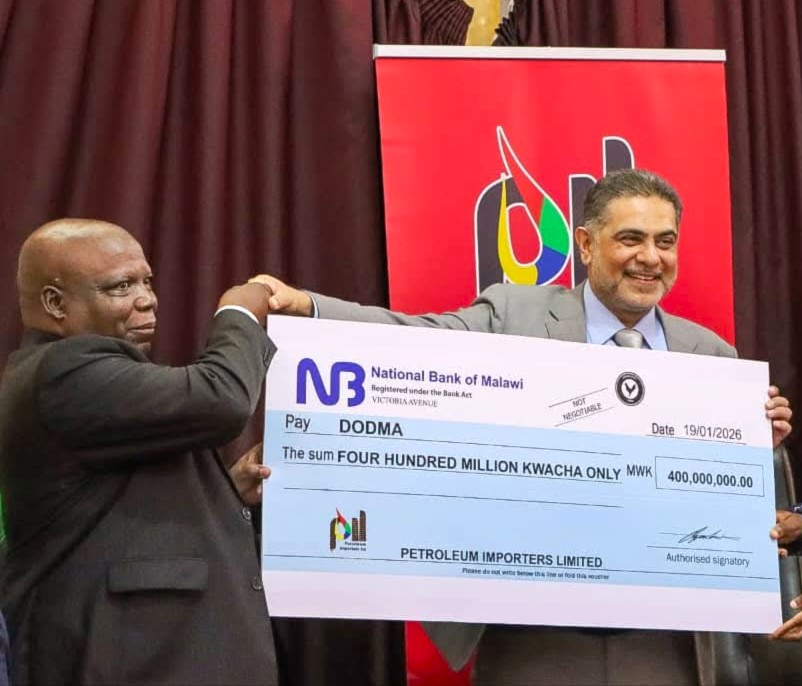
BLANTYRE-(MaraviPost)-Petroleum Importers Limited (PIL), has stepped in to support government efforts to address food insecurity by donating fuel worth K400 millionto the Office of the President and Cabinet (OPC) for the Lean Season Food ResponseProgramme.

The donation is intended to support the transportation and distribution of relief food to hunger-affected households across the country.

The support comes at a time when government, through the Department of Disaster Management Affairs (DoDMA), continues to implement the National Lean Season Food Insecurity Response Plan, which focuses on addressing immediate, life-saving needs while also replenishing national food stocks.

Speaking during the handover ceremony, PIL Vice Chairperson Zubeir Bhana said the fuel contribution was made in response to the government’s declaration of a state of disaster in several districts following severe food shortages experienced last year.

“We wish to affirm our solidarity with the people of Malawi. This country is our home, and when it is in distress, we have a responsibility to act,” said Bhana.

He said the fuel will enhance the government’s ability to reach vulnerable populations, including communities in hard-to-reach areas, ensuring the timely delivery of humanitarian assistance.

“This fuel will enable the transportation of essential food supplies to affected communities. It is our contribution to keeping relief efforts moving and hope alive,” he explained.

He urged fellow private sector players, development partners, and well-wishers to partner with the government in responding to the emergency.

Receiving the donation, Chief Secretary to the President and Cabinet , Dr Justin Saidi, commended PIL for the timely support, saying the private sector has demonstrated strong commitment to complementing government efforts in responding to hunger.

“ We thank Petroleum Importers Limited for the generous and timely contribution towards the food insecurity response programme. This donation will greatly facilitate the efficient movement and distribution of humanitarian food to food-insecure households across the country,” said Saidi.

He added that the support from a local private sector player is a strong demonstration of togetherness, solidarity, and shared responsibility in achieving national aspirations such as food security and poverty reduction, as outlined in Malawi 2063.

The Response Plan requires an estimated MK209.4 billionto address all needs across the prioritized clusters out of which MK138 billionhas been mobilized from government and partners, with the remaining MK71 billion stillto be mobilized.

PIL is a consortium of four oil marketing companies namely Puma Energy, TotalEnergies, Vivo Energy and Petroda

The Maravi Post

FDH Bank gives MK50 million food aid through BEAM Trust 

LILONGWE-(MaraviPost)-FDH Bank plc has given maize flour worth K50 million to the Beautify Malawi Trust (BEAM) to help address the food shortages facing families affected by the recent floods across the country.

The donation was handed over to the First Lady of Malawi and BEAM Matron, Gertrude Mutharika, during a ceremony held at Kamuzu Palace in Lilongwe on Monday.

The consignment comprises 2,820 bags of maize flour, including 1,420 bags of five kilogrammes each and 1,400 bags of 10 kilogrammes each.

The maize flour will be distributed to flood-affected households through BEAM’s humanitarian response programme.

Speaking at the handover ceremony, FDH Managing Director, Noel Mkulichi said the Bank was moved to act following the First Lady’s call for support to assist Malawians who have been severely affected by the floods.

“The heavy and persistent rains have caused widespread destruction, leaving many families without homes and food. As a responsible corporate citizen, FDH felt compelled to come forward and contribute towards easing the suffering of the affected communities,” said Mkulichi.

He said FDH Bank views its role as extending beyond financial services to national development and the welfare of Malawians.

“We believe that our responsibility goes far beyond banking. We are partners in national development and the wellbeing of our people. When communities suffer, we all feel the impact, and when they recover, the whole nation becomes stronger,” he said.

In her remarks, Mutharika commended FDH Bank for demonstrating compassion and urgency in assisting flood-affected families.

“I am grateful to FDH Bank for responding so promptly. This contribution will make a real difference to families who are struggling to put food on the table after losing so much to the floods,” she said

Mutharika added that BEAM is mobilising resources to deliver immediate relief as affected communities work to recover.

“Our goal is to ensure that no family is left without support in this period of hardship. With partners like FDH Bank, we are able to extend help to more people and restore a sense of dignity to those in need,” she said.

The Maravi Post