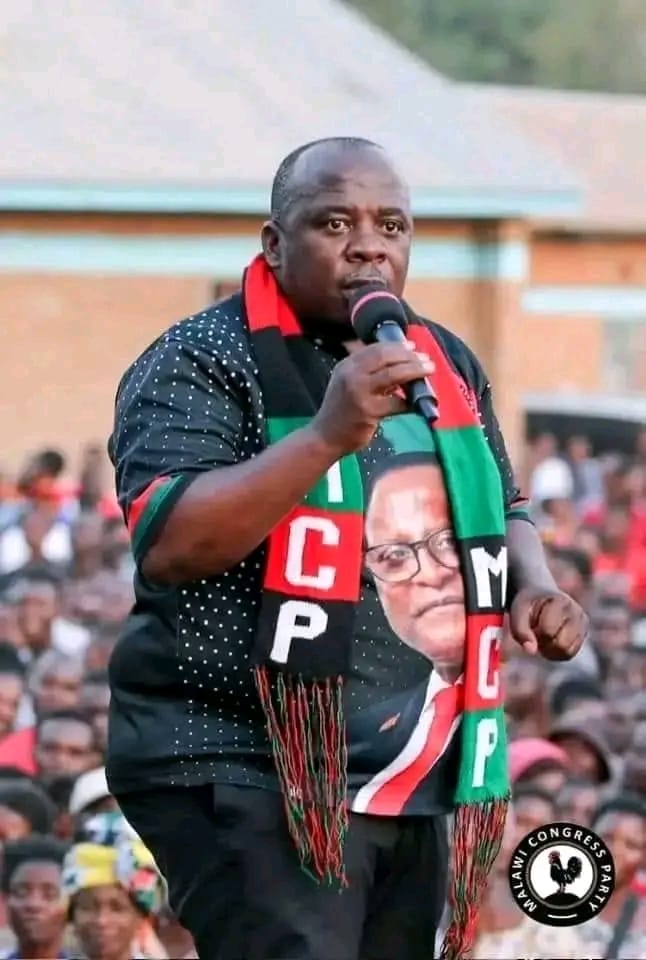
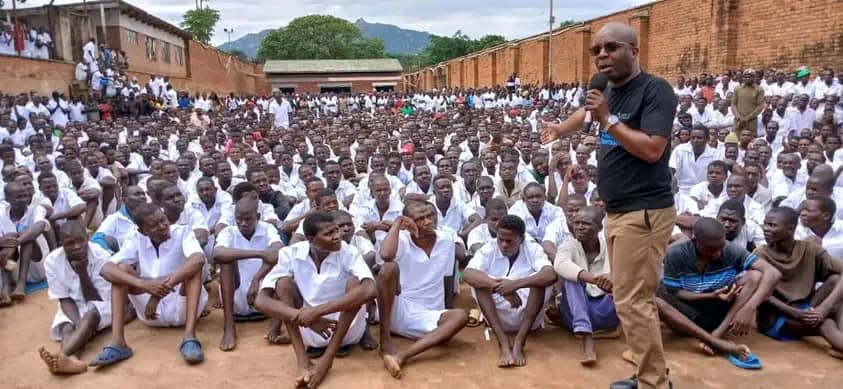
LILONGWE-(MaraviPost)-Malawi Police in Lilongwe have charged Malawi Congress Party (MCP) Secretary General Richard Chimwendo Banda with attempted Murder.
This comes after the former Minister of Local Government Banda surrendered himself to police headquarters in Lilongwe.
His decision to turn himself in follows growing speculation surrounding ongoing investigations that have recently drawn attention to several high-profile political figures.
Sources indicated that Chimwendo Banda arrived at Area 30 earlier today, accompanied by a small team of close associates, before formally presenting himself to to the police.
The development has sparked heightened public interest, with many Malawians awaiting further updates as the situation unfolds.
More to come…..
Share this:
Like this:
LikeLoading…
Discover more from The Maravi Post
Subscribe to get the latest posts sent to your email.
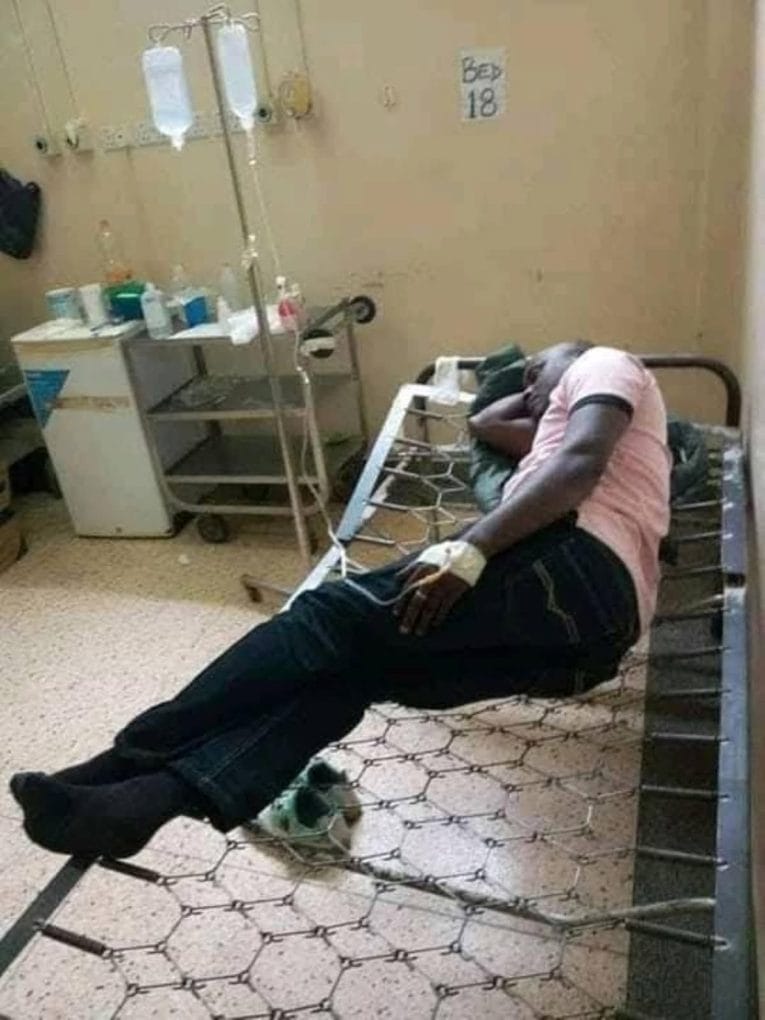
LILONGWE-(MaraviPost)-The Malawi Police in Lilongwe at Area 23 have arrested 34-year-old Bernadetta Awali for allegedly pouring boiling water on her husband, Yamikani Jonasi, following a domestic dispute over hiring a maid.
According to police, the couple, who have been married for seven years, had been arguing after Jonasi insisted that they engage domestic help.
The suspect is said to have raised concerns that Bernadetta was struggling to balance household responsibilities with her business commitments.
However, Awali reportedly rejected the idea, fearing that her husband might become involved with the maid—an insecurity she linked to their own relationship history.
Awali previously worked as a maid, and Jonasi left his former wife to be with her, a situation that authorities say contributed to her distrust.
The disagreement escalated on the day of the incident, with Awali allegedly assaulting her husband by pulling his private parts before scalding him with boiling water.
Jonasi sustained serious injuries and is currently receiving treatment at Kamuzu Central Hospital, where medical officials describe his condition as extremely painful but stable.
Police have confirmed that Awali is in custody and will be charged once investigations are complete.
Share this:
Like this:
LikeLoading…
Discover more from The Maravi Post
Subscribe to get the latest posts sent to your email.
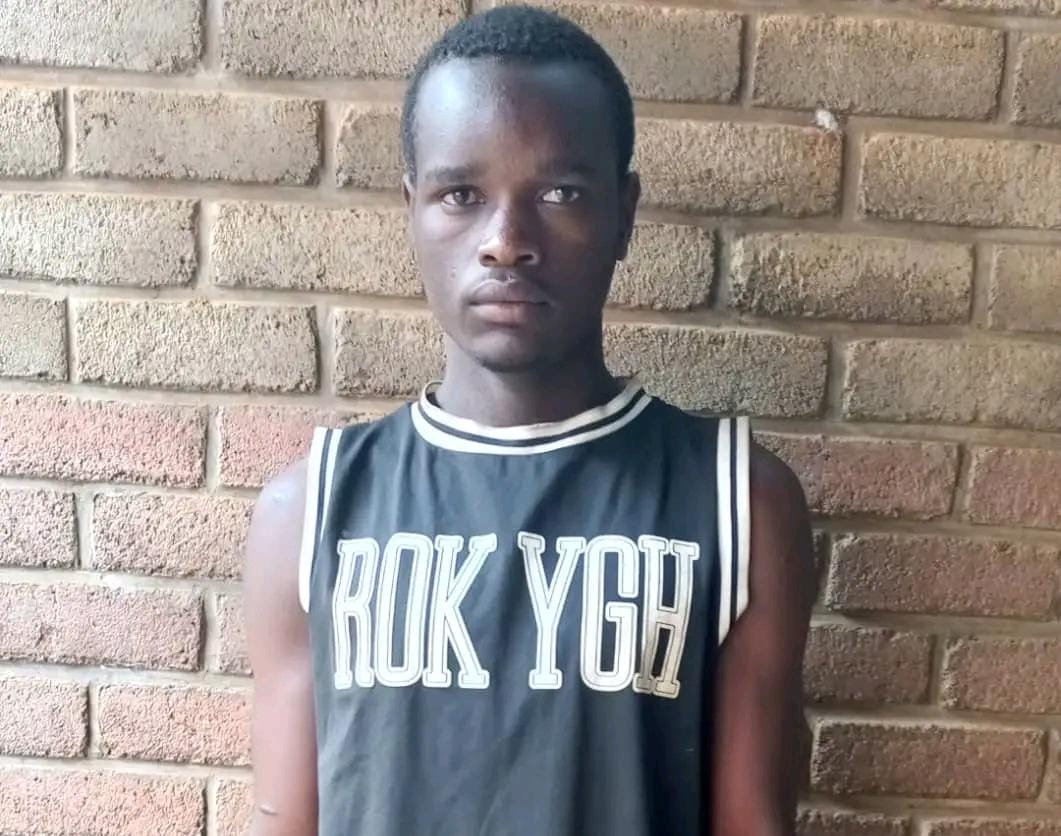
LILONGWE-(MaraviPost)-Lilongwe police have arrested Limbanazo Chikalipo, 20, for allegedly killing Peter Mzungu, 50, an accountant at Partners in Hope hospital.
According to Lilongwe Police spokesperson Hastings Chigalu, police also recovered a Lenovo laptop, its laptop bag, and other items that were stolen at the time Mzungu was attacked.
Chigalu says following the incident on 27 November,2025, police launched an investigation that led them to Blessings Chitukula, 19, and Medson Nackyon, 35.
He says the two suspects were found in possession of items stolen on the day Mzungu was attacked.
“When questioned by police about the source of the items, they admitted to purchasing them from Chikalipo,”says Chagalu.
He adds that after Chikalipo was arrested, he confessed to stealing the items from Mzungu after assaulting him with a metal object to the head.
Mzungu passed away on 1 December,2025 while receiving treatment at the same Partners in Hope hospital.
Share this:
Like this:
LikeLoading…
Discover more from The Maravi Post
Subscribe to get the latest posts sent to your email.
LILONGWE-(MaraviPost)-Lilongwe police have arrested Limbanazo Chikalipo, 20, for allegedly killing Peter Mzungu, 50, an accountant at Partners in Hope hospital.
According to Lilongwe Police spokesperson Hastings Chigalu, police also recovered a Lenovo laptop, its laptop bag, and other items that were stolen at the time Mzungu was attacked.
Chigalu says following the incident on 27 November,2025, police launched an investigation that led them to Blessings Chitukula, 19, and Medson Nackyon, 35.
He says the two suspects were found in possession of items stolen on the day Mzungu was attacked.
“When questioned by police about the source of the items, they admitted to purchasing them from Chikalipo,”says Chagalu.
He adds that after Chikalipo was arrested, he confessed to stealing the items from Mzungu after assaulting him with a metal object to the head.
Mzungu passed away on 1 December,2025 while receiving treatment at the same Partners in Hope hospital.
Share this:
Like this:
LikeLoading…
Discover more from The Maravi Post
Subscribe to get the latest posts sent to your email.
BLANTYT-(MaraviPost)-Deputy Commissioner of Prisons and Officer-in-Charge for Blantyre Prison, Owen Maharawipha Levi, has revealed that the prison has exhausted its budget allocation and is now struggling to meet the basic needs of its 2,674 inmates.
Levi made the disclosure during Human Rights Day commemorations organised by the Centre for Human Rights Education, Advice and Assistance (CHREAA).
He said the government allocated K924 million for the 2024–2025 national budget, an amount which translates to just K350 per inmate per day.
According to Levi, the allocation is far below what is required to provide adequate food, medical supplies and other essentials for prisoners.
Reacting to the revelation, CHREAA Executive Director Victor Mhango condemned the government’s funding levels, stating that “K350 per day is not enough, and it can’t even buy a loaf of bread.”
Mhango added that he hopes the new Prison Act—set to replace the outdated 1956 legislation—will bring meaningful reforms once operational guidelines are finalised.
Justice Sylvester Kalembera, who also attended the event, acknowledged ongoing progress in the justice sector but stressed the need for stronger coordination to tackle systemic challenges affecting correctional facilities.
Director of Criminal Litigation at the Office of the Director of Public Prosecutions, Josephine Gwaza, said her office is aware of delays in concluding cases and has taken note of contributing factors.
Programme Coordinator for Irish Rule of Law International (IRLI), Lindiwe Sibande, said the commemoration—held under the theme “Human Rights, Our Everyday Essentials”—served as a reminder to incarcerated individuals that they are not forgotten.
Share this:
Like this:
LikeLoading…
Discover more from The Maravi Post
Subscribe to get the latest posts sent to your email.
GENEVA, Dec 11 2025 (IPS) – Human rights are underfunded, undermined and under attack. And yet. Powerful. Undeterred. Mobilizing.
This year no doubt has been a difficult one. And one full of dangerous contradictions. Funding for human rights has been slashed, while anti-rights movements are increasingly well-funded.
Profits for the arms industry are soaring, while funding for humanitarian aid and grassroots civil society plummets. Those defending rights and justice are attacked, sanctioned and hauled before courts, even as those ordering the commission of atrocity crimes continue to enjoy impunity.
Diversity, equity and inclusion policies that were adopted to address historical and structural injustices are being vilified as unjust. The prognosis would be incredibly dire if these were the only trends. But the pushback on human rights is facing pushback from a groundswell of human rights activism.
In Nepal, Serbia, Madagascar, Kenya, Bangladesh, Ecuador, Paraguay, the Philippines, Indonesia, Tanzania, Morocco, Peru and beyond, mostly young people have taken to the streets and to social media against inequalities, against corruption or repression, in favour of freedom of expression, and for their everyday essential rights.
People across the world have also been protesting against war and injustice, and demanding climate action, in places far from home, expressing solidarity and pressuring their governments to take action.
I urge governments around the world to harness the energy of these social movements into opportunities for broader transformational reforms rather than rushing to suppress them or label them as extremist threats to national security. They are, in fact, the exact opposite of threats to national security.
On the challenges I had set out earlier, here is some data:
Funding: Our resources have been slashed, along with funding for human rights organisations – including at the grassroots level – around the world. We are in survival mode.
My Office has had about USD 90 million less than we needed this year, which means around 300 jobs have been lost, and essential work has had to be cut, including on Colombia, the Democratic Republic of the Congo, Myanmar, Tunisia and other countries at a time when the needs are rising.
Special Rapporteur country visits and investigative missions by fact-finding bodies have also been reduced, sometimes drastically. Crucial dialogues with States on their compliance with UN human rights treaties have had to be postponed – last year there were 145 State party reviews, we are down to 103 this year.
We see that all this has extensive ripple effects on international and national efforts to protect human rights.
Meanwhile, anti-rights and anti-gender movements are increasingly coordinated and well-funded, operating across borders. According to the European Parliamentary Forum for Sexual and Reproductive Rights, for example, almost USD 1.2 billion was mobilized by anti-rights groups in Europe between 2019 and 2023.
There is significant money flowing into the anti-rights agenda from funders based in Europe, Russia and the United States of America. Such massive funding, coupled with media capture and disinformation strategies have made the anti-rights agenda a powerful cross-regional force.
Another distressing dataset is that from the Stockholm International Peace Research Institute (SIPRI). It says that arms and military services revenues for the 100 largest arms companies reached a record USD 679 billion in 2024. SIPRI has said demand was boosted by wars in Ukraine and Gaza, by global and regional geopolitical tensions, and ever-higher military expenditure.
There have been efforts this year to secure ceasefires and peace deals, which are certainly welcome. However, for peace to be sustainable, human rights must play a central role. There From prevention to negotiating to monitoring to accountability, recovery and peacebuilding.
And we need to do a reality check.
As we have seen in Gaza and in the eastern Democratic Republic of the Congo, agreements have yet to translate into effective protection of civilians on the ground.
Gaza remains a place of unimaginable suffering, loss and fear. While the bloodshed has reduced, it has not stopped. Attacks by Israel continue, including on individuals approaching the so-called “yellow line”, residential buildings, and IDP tents and shelters as well as other civilian objects.
Access to essential services and goods remain severely inadequate. In the West Bank, we are seeing unprecedent levels of attacks by Israeli forces and settlers against Palestinians, forcing them from their land. This is a time to intensify pressure and advocacy – not to sink into complacency – for Palestinians across the occupied territory.
Clashes between the DRC armed forces and the Rwandan-backed M23 armed group continue, alongside serious human rights violations and abuses. Civilians, again, are bearing the brunt. Overnight, you’ll have seen, there have been reports of thousands fleeing the densely populated South Kivu city of Uvira amid escalating clashes between the M23 and DRC armed forces, backed by Wazalendo militia.
This comes just days after the DRC and Rwanda reaffirmed their commitment to implement the June 2025 Washington Peace Agreement. Over the years, we have documented outrageous violations against civilians in Uvira, including rape and sexual and gender-based violence. The risk of a broader regional confrontation appears to be increasing.
In Sudan, the brutal conflict between the army and the Rapid Support Forces continues unabated. From Darfur and the Kordofans to Khartoum and Omdurman and beyond, no Sudanese civilian has been left untouched by the cruel and senseless violence. I am extremely that we might see a repeat of the atrocities committed in El Fasher in Kordofan.
In Ukraine, civilian harm has risen sharply. Civilian casualties so far this year are 24 per cent higher than the same period last year, largely due to Russia’s increased use of powerful long-range weapons in large numbers and its continuing efforts across broad front to capture further Ukrainian territory by armed force.
Large-scale attacks on Ukraine’s energy system have caused emergency outages and prolonged daily electricity cuts, disruptions to water and heating services in many areas. Urgent steps need to be taken to alleviate suffering, including the return of transferred children, the exchange of all prisoners of war, and the unconditional release of civilian detainees held by Russian authorities.
For any sustainable peace to be negotiated, it is important that confidence-building measures are taken, grounded in human rights, including steps to alleviate civilian suffering, promote accountability and preserve a basis for future dialogue. And, importantly, women need to be a part of this process.
It is imperative that peace deals and ceasefires are secured and implemented in good faith. And with full respect for international law, which can never be set aside for political convenience.
It is also critical to counter the demonization of and hatemongering rhetoric against migrants and refugees. In various countries, worryingly, we are seeing violent pushbacks, large-scale raids, arrest and returns without due process, criminalization of migrants and refugees and those who support them, as well as the outsourcing of responsibilities under international law.
I urge States to embark on an evidence-based policy debate on migration and refugee issues, anchored in international human rights and refugee law.
In the course of many electoral campaigns this year, we have also seen a pattern of democratic backsliding, restrictive civic space and electoral violence.
Myanmar’s upcoming military-imposed “election”, is accompanied by new waves of acute insecurity and violence, continued arrests and detentions of opponents, voter coercion, the use of extensive electronic surveillance tools and systemic discrimination. I fear this process will only further deepen insecurity, fear and polarization throughout the country.
There is, unfortunately, never a shortage of human rights challenges to face, issues to resolve, and values to defend. What is heartening is that there are so many of us, around the world, attached to the same universal human rights values – no matter the noise, the gaslighting, and the persistent injustices.
I am energized by the social movements – particularly those led by young people. They are writing the latest chapters in the time-honoured struggle for our collective humanity and dignity. Journalists, activists, and human rights defenders have been at the forefront of the global movement for freedom, equality and justice.
Such perseverance has achieved landmark victories for the rights of women, migrants, people discriminated against on the basis of descent, minorities, our environment, and so much more.