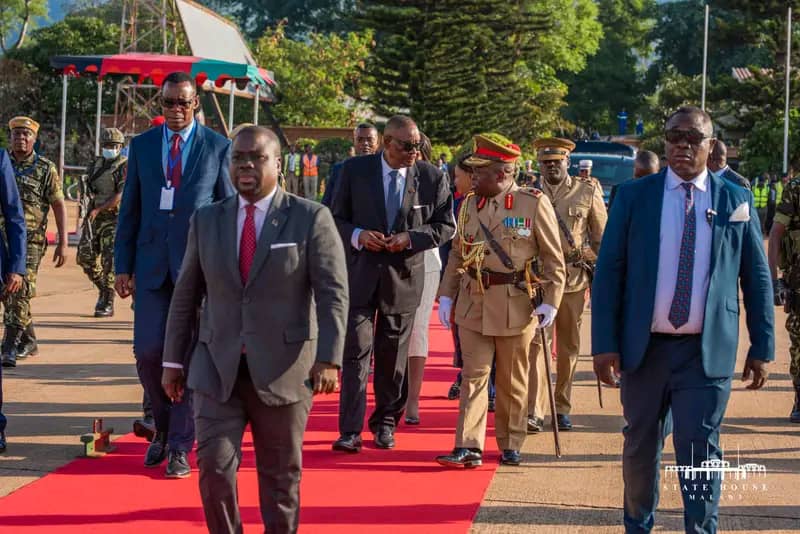
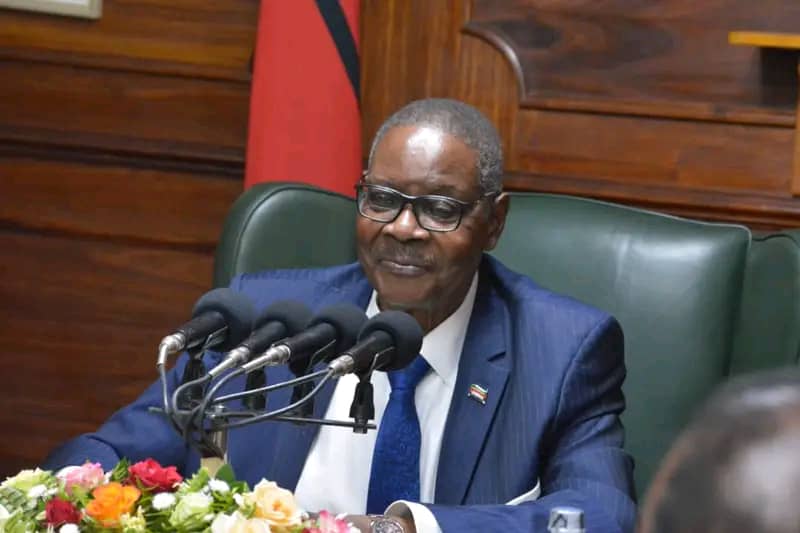
Upon the declaration of Peter Mutharika (APM) as the victor of the 2025 presidential race, there were doubts among certain Malawians regarding his abilities due to his advanced age.
Some individuals even went as far as recalling the widespread corruption that occurred during the period of APM’s reign from 2014 to 2020.
Critics were also elated when there was a significant increase in prices of goods and services, as well as a shortage of fuel, shortly after APM took office.
However, in under 100 days of APM’s leadership, a number of Malawians, including staunch supporters of the opposition party, are beginning to acknowledge and value APM’s accomplishments and efforts.
For starters, it is no secret that the price of maize has been reduced by 6% in November, thereby improving food affordability for many families.
It is positive to hear that Vice President Jane Ansah is personally overseeing the distribution of food to families who are struggling with food insecurity. This demonstrates a rapid and compassionate reaction to their urgent needs.
Currently, the fertilizer subsidy, which is now set at K10,000 per bag, has been reduced and the distribution of this subsidy has begun. This will potentially increase agricultural production.
Furthermore , there has been an improvement in the availability of fuel, addressing a critical issue for transportation and daily activities.
Recently, the Minister of Education, Bright Msaka, has confirmed the abolishment of school fees, student ID processing fees, and the school development fund. This will reduce the financial strain on families and encourage more students to pursue education.
A large number of Malawians are pleased with the recent announcement by the Speaker of Parliament that there will be no allowances given to MPs who are absent. This decision is expected to encourage responsibility and improve attendance in parliamentary proceedings.
In conclusion, the aforementioned aspects demonstrate the APM administration’s emphasis on providing economic relief, ensuring food security, increasing educational opportunities, and enforcing responsible governance.
Malawians therefore expect that this pace of progress will continue to their benefit.
Share this:
Like this:
LikeLoading…
Discover more from The Maravi Post
Subscribe to get the latest posts sent to your email.
LILONGWE-(MaraviPost)-One of the country’s governance commentators Robert Mkwezalamba has expressed deep concern over the government’s handling of the case involving former Secretary to the President and Cabinet, Colleen Zamba, after she was not taken to court as expected on Thursday.
Mkwezalamba said the development raises serious questions about whether President Peter Mutharika’s Democratic Progressive Party (DPP-led administration is fully committed to upholding the rule of law.
He argued that the failure to present Zamba in court suggests that the State is not ready to prosecute the matter, which could weaken public trust in the justice system.
According to him, if authorities were indeed prepared, they would have allowed Zamba to appear before court on Thursday, December 4, 2025.
Mkwezalamba observes that delaying the process only gives the impression that government is buying time to organise its case, a practice he warned could lead to costly consequences should the matter collapse due to inadequate investigations.
He further questioned why Zamba has been denied bail when she has not even been presented before a magistrate.
Mkwezalamba said it is surprising that someone who was due in court today remains in custody without being taken before a judge.
“What is shocking is that the State is blocking bail while, at the same time, failing to take her to court. This raises doubt about whether the government is properly prepared. In matters like this, delays end up costing taxpayers through compensation when cases fall apart,” he said.
Mkwezalamba added that if the State felt Zamba was a flight risk, it should have completed its investigations before effecting her arrest.
He said historically, new administrations often target officials from previous regimes, a trend he believes the government should avoid if the justice system is to be respected.
He argued that the DPP has had more than four years to investigate the matter thoroughly before arresting Zamba and that rushing to detain her without completing inquiries only fuels suspicion of political motivation.
Mkwezalamba also questioned the absence of the judge assigned to the matter, who is reportedly travelling to Salima tomorrow.
He said it is unclear why Zamba was not taken to court today, given that the presiding judge will be unavailable until next week.
He warned that if the hearing resumes on Monday, there is a strong likelihood that bail will be granted, which could weaken the State’s position. He insisted that justice must not only be done but must be seen to be done.
Mkwezalamba dismissed fears that Zamba could have fled the country before her arrest, arguing that tracking a former top government official is relatively easy due to the nature of her previous role.
He also raised concern that the incident is taking place during the 16 Days of Activism against Gender-Based Violence, saying it is unfortunate that a high-profile woman is entangled in a case that appears poorly handled.
Mkwezalamba concluded by urging the DPP government to conduct its operations professionally, lawfully and transparently. He stressed that Malawians expect a justice system that is fair, prepared and free from political interference.
Share this:
Like this:
LikeLoading…
Discover more from The Maravi Post
Subscribe to get the latest posts sent to your email.
In an era when the quality of education stands as a cornerstone for national development, the Democratic Progressive Party (DPP) under the leadership of President Peter Mutharika has demonstrated commendable foresight by deploying seasoned professionals from parastatals into Malawi’s public universities.
This bold and strategic move signals a profound commitment to enhancing the academic and practical experience of students, ensuring that education is not only theoretical but also deeply rooted in real-world expertise.
This initiative, which has seen experts in diverse fields such as water engineering, energy, accounting, public finance, human resources, and governance taking on lecturer roles at institutions like the University of Malawi, Mzuzu University (MZUNI), Malawi University of Business and Applied Sciences (MUBAS), and the Malawi School of Government (MSG), deserves high praise.
It is a testament to the DPP government’s thoughtful approach to education reform, one that recognizes the intrinsic value of bridging academia with industry.
The importance of this secondment strategy cannot be overstated.
Malawi’s public universities have historically faced challenges in aligning their curricula with the dynamic demands of the job market.
By integrating professionals such as Water Engineer Mwakwenda, Energy Engineer Dr. Chitawo, and Public Finance Expert Silli Mbewe CA into the academic fold, the government is ensuring that students are exposed to the latest developments, practical insights, and applied knowledge in their respective fields.
This not only enriches the learning environment but also enhances students’ readiness to contribute effectively to Malawi’s socio-economic development upon graduation.
President Peter Mutharika’s administration deserves applause for recognizing that the future of the nation depends heavily on the quality of tertiary education.
It is a forward-thinking approach that addresses the gap between theoretical teaching and practical application.
The presence of experts like Accountant Francis Munthali CA and HR specialist Dr. Chimbamba in universities means that students are benefiting from mentorship by individuals who have already navigated the complexities of their professions.
This mentorship is invaluable in cultivating a generation of graduates who are confident, competent, and competitive.
Furthermore, the deployment of governance and development expert Dr. Henry Kamata to these institutions is a particularly strategic move.
Governance remains a critical issue in Malawi’s public sector and broader development agenda.
By bringing such expertise into the classroom, the government is fostering a culture of good governance and ethical leadership among future public servants and private sector leaders alike.
This influence is likely to ripple through Malawi’s institutions for years to come, contributing to a more transparent, accountable, and efficient governance framework.
This initiative also reflects the DPP government’s sensitivity to the need for sustainable development.
Malawi’s challenges in water management, energy supply, and public finance are significant barriers to progress.
By involving experts who understand these sectors intricately, the government is not only improving education but also indirectly bolstering the country’s capacity to address these critical issues through a well-prepared workforce.
It is essential to emphasize that this approach should not be viewed as a temporary fix but rather as a foundational strategy for long-term educational and national development.
The continuity of such programs will ensure that Malawi keeps pace with global trends in education and economic development.
It will also build a resilient knowledge economy where talented individuals are nurtured, and national resources are optimally utilized.
The DPP government under Peter Mutharika is setting a benchmark not only for Malawi but for the broader Southern African region.
In a time when many countries struggle to connect academic institutions with industry needs, this initiative is a shining example of what can be achieved through thoughtful policy and leadership.
It encourages other governments to consider similar collaborations that leverage the expertise within parastatals and other professional sectors to enrich education.
The deployment of experienced professionals to Malawi’s public universities is a masterstroke by the DPP government.
It highlights a genuine commitment to uplifting tertiary education and preparing Malawian youth for meaningful contributions to society.
This visionary policy deserves sustained support and expansion, ensuring that the nation’s educational institutions continue to produce graduates who are not only knowledgeable but also equipped with the practical skills necessary for Malawi’s development.
Applause is due to President Peter Mutharika and the entire DPP leadership for this transformative step—may this initiative continue to thrive and inspire future governments.
Share this:
Like this:
LikeLoading…
Discover more from The Maravi Post
Subscribe to get the latest posts sent to your email.
LILONGWE-(MaraviPost)-International Monetary Fund (IMF) Director for Africa Abebe Selassie has assured President Peter Mutharika’s Democratic Progressive Party (DPP) led-government that the organisation will support Malawi in bailing out on numerous crises including forex.
Selassie told the news conference after meeting Mutharika at Mtunthama State Lodge in the Capital Lilongwe that IMF will embrace Malawi’s local grown policies that advance economic recovery.
IMF Director for Africa Abebe Selassie
He assured Mutharika’s Government that IMF will not impose economic policies but rather able to understand on workable strategies to help local people in improving livelihoods.
He was responding to Mutharika’s appeal that Malawi needs immediate resources to secure critical imports as the country faces a delayed farming season and recurring fuel queues.
The Malawi leader called for urgent support from the International Monetary Fund (IMF) to help Malawi confront what he described as an “extremely difficult” economic crisis marked by shortages of food, fertilizer, fuel and foreign exchange.
IMF Director for Africa Abebe Selassie with his team meeting Malawi leader Peter Mutharika
“Help us with forex to address food, fuel, fertilizer purchase for good of our people’s welfare.
“You help other countries with huge finances. But, we are just asking for a little, the rest will square ourselves,” Mutharika appealed to IMF’s Africa Chief Selassie.
Echoing the same, Finance Minister, Joseph Mwanamvekha said the Malawi government simply wants the IMF program back.
Mwanamvekha expressed optimism that IMF will support Malawi’s economic recovery strategies.
The Minister disclosed that IMF will meet donors pool in Malawi for support.
The meeting provided an opportunity for Selassie to appreciate President Mutharika’s vision for the country, particularly how his administration plans to address the current economic challenges Malawi is facing.
The discussions also focused on identifying areas in which the IMF can provide support to complement government efforts.
The IMF Director, Selassie told the press after the meeting that his visit to Malawi and the meeting with Mutharika, signifies the commitment that the Bretton institution has to assist Malawi with the crises.
Share this:
Like this:
LikeLoading…
Discover more from The Maravi Post
Subscribe to get the latest posts sent to your email.
LILONGWE-(MaraviPost)-President Peter Mutharika’s Democratic Progressive Party (DPP)-lead Government has tightened rules on international travel for senior public officers, directing all officials at Grade C — including heads of statutory bodies and state-owned enterprises — to fly economy class.
The directive is contained in an addendum issued on Thursday, November 20, 2025 by Chief Secretary Justin Saidi.
The addendum aims at strengthening the expenditure controls already in place for the 2025/26 financial year.
The circular has made it clear that no exemptions will be allowed.
“Travel bookings and related expenditure must comply with existing procurement and financial procedures and be supported by original documentation for audit purposes,” reads the communication in part.
Saidi however warned, “Any breach, according to the notice, will be treated as non-compliance and may attract administrative action”.
The development comes barely weeks after Saidi also made announcement in which government froze recruitment and promotions, halted the purchase of new vehicles and high-value assets, cut fuel entitlements for ministers and senior officials by 30 percent, and tightened controls on foreign travel, including limits on delegation sizes and removal of government top-ups for donor-funded trips — all aimed at managing pressure on the national budget.
The measures, according to Saidi take effect immediately and will apply throughout the financial year.
Many social and economic governance experts have lauded Mutharika for living within the means amid Malawi’s economic challenges including shortages of forex, high inflation and among others.
Share this:
Like this:
LikeLoading…
Discover more from The Maravi Post
Subscribe to get the latest posts sent to your email.
LILONGWE-(MaraviPost)-As of November 20, 2025, most of Malawi’s parastatal boards remain vacant, more than six weeks after the government dissolved all previous boards.
The Office of the President and Cabinet (OPC) announced the dissolution of all boards of parastatal organisations and state-owned enterprises (SOEs) on October 7, 2025, with immediate effect.
When contacted on the appointments delay, President Peter Mutharika’s Press Secretary Cathy Maulidi referred The Maravi Post to Chief Secretary arguing that, “The State House is the last slot to comment as it starts from Chief Secretary”.
Chief Secretary to Malawi government Justin Saidi acknowledged the delay.
Saidi however cited complications in the appointment process as the reason for the delay in filling the vacancies.
He therefore assured that the reconstitution of boards is underway, though no comprehensive list of new appointees has been released to date.
The absence of functioning boards has created a governance vacuum, raising concerns among experts about potential risks and the concentration of power in the hands of SOE executives.
During this period, all matters requiring the attention of boards are being directed to the OPC through the Department of Statutory Corporations.
The Department has also suspended all ongoing and planned recruitments and major procurements across all parastatals to prevent irregularities during the transitional period.
Since the dissolution, the only notable appointment announced has been that of Felix Tambulasi as Commissioner General of the Malawi Revenue Authority (MRA).
However, Tambulasi’s appointment is an executive position and does not address the vacancies at board level.
Governance experts warn that prolonged vacancies could hinder decision-making, delay critical projects, and increase administrative bottlenecks within state-owned enterprises.
Some observers have urged the government to expedite the appointment process to restore proper oversight and accountability in parastatals.
The government maintains that once the process is complete, new boards will be equipped to provide effective governance and ensure transparency in operations.
As the appointment process continues, stakeholders remain keenly monitoring developments to gauge how soon Malawi’s parastatals will regain functional leadership.
Share this:
Like this:
LikeLoading…
Discover more from The Maravi Post
Subscribe to get the latest posts sent to your email.