A group of military officers in Guinea-Bissau has seized control of the country, arresting President Umaro Sissoco Embaló and suspending the electoral process.
The move comes amid reports of gunfire in the capital, Bissau, and follows a disputed presidential election held on Sunday.
According to eyewitnesses, gunshots were heard near the presidential palace and the National Electoral Commission headquarters, prompting hundreds of people to flee the area.
General Denis N’Canha, head of the military household at the presidential palace, later appeared on state TV, announcing the formation of the “High Military Command for the Restoration of Order” and instructing the population to remain calm.
Embaló, who was elected in December 2019, had claimed victory in the presidential election, as had his closest rival, Fernando Dias.
The official results were expected to be announced on Thursday, but the military’s takeover has thrown the country’s future into uncertainty.
The arrested president confirmed his detention to Jeune Afrique magazine, stating that he was taken into custody without violence.
Other high-ranking officials, including the Chief of Defence Forces, General Biague Na Ntan, and Interior Minister Botché Candé, were also reportedly arrested.
Guinea-Bissau, a small West African nation with a population of under two million, has a history of instability, having experienced nine coups or attempted coups since 1980.
Embaló has previously survived multiple coup attempts, but critics accuse him of fabricating crises to crack down on dissent.
The international community has responded with concern, with the African Union and the Economic Community of West African States (ECOWAS) calling for respect for the electoral process and the release of detained officials.
The situation remains fluid, with the military’s intentions and the future of Guinea-Bissau’s government unclear.
Share this:
Like this:
LikeLoading…
Discover more from The Maravi Post
Subscribe to get the latest posts sent to your email.
LUSAKA-(MaraviPost)-The First Lady of Zambia, Mutinta Hichilema, touched down at Chipata Airport earlier today.
Her visit marks the beginning of a humanitarian outreach programme aimed at supporting key health and community institutions in the region.
According to officials, her primary engagement will be the donation of assorted essential items to Chipata Central Hospital.
The consignment includes medical supplies, hygiene products, and other necessities intended to improve patient care and ease pressure on the facility.
Hospital authorities say the support will significantly boost their capacity to respond to the growing needs of patients in the district.
The First Lady is also expected to meet healthcare workers to appreciate their challenges and encourage them in their service.
Beyond the hospital visit, she will participate in a series of community-focused activities planned throughout the day.
These engagements are designed to promote social welfare, highlight ongoing development initiatives, and strengthen government–community relations.
Residents lined up around the airport and along the main road to welcome her, reflecting the excitement surrounding her visit.
Local leaders have praised the First Lady’s continued commitment to improving public health and supporting vulnerable groups.
The visit forms part of her broader agenda to champion healthcare access, women’s empowerment, and community development across Zambia.
Her team has indicated that similar donation programmes will be rolled out in other districts in the coming months.
The First Lady’s presence in Chipata has already generated positive conversation among locals who view the gesture as timely and impactful.
As activities unfold, many expect her outreach to bring renewed attention to the needs of the health sector in Eastern Province.
Her visit is ultimately seen as a reaffirmation of the government’s dedication to improving the welfare of Zambians through meaningful, people-centred initiatives.
Share this:
Like this:
LikeLoading…
Discover more from The Maravi Post
Subscribe to get the latest posts sent to your email.
WASHINGTON DC-(MaraviPost)-During the traditional Thanksgiving turkey pardon ceremony at the White House on Tuesday, former President Donald Trump targeted his political opponents.
Trump’s remarks took aim at several prominent Democrats, including House Speaker Nancy Pelosi, President Joe Biden, and Illinois Governor JB Pritzker.
The former president used the occasion to criticize their policies and leadership in a series of pointed comments.
Observers noted that Trump’s attacks were unusually direct and combative for a ceremonial event that is typically light-hearted and symbolic.
The turkey pardon, a longstanding White House tradition, involves sparing one or more turkeys from being slaughtered for Thanksgiving.
Despite the festive setting, Trump’s speech turned political, highlighting the ongoing tension between him and the Democratic Party.
Political analysts suggest that such remarks are likely intended to energize his base ahead of upcoming election cycles.
Democratic leaders have not yet formally responded to the former president’s comments from the ceremony.
The event drew media attention both for the traditional turkey pardon and for the unusually aggressive political rhetoric.
Trump’s appearance underscores his continued prominence in American political discourse and his readiness to publicly challenge Democratic figures.
The White House ceremony, typically a light-hearted celebration, was overshadowed by partisan attacks and pointed commentary.
As the holiday season continues, political observers anticipate that Trump’s rhetoric may influence public debate and media coverage in the weeks to come.
Share this:
Like this:
LikeLoading…
Discover more from The Maravi Post
Subscribe to get the latest posts sent to your email.
HARARE-(MaraviPost)-The Premier Soccer League (PSL) of Zimbabwe has agreed in principle to expand the top-flight league following a proposal by the Zimbabwe Football Association (ZIFA) aimed at increasing the number of participating teams and restructuring the country’s football system.
The development was announced in a statement signed by PSL Communications and Media Liaison Officer, Kudzai Bare,the PSL confirmed that it had convened an Extraordinary General Meeting to discuss ZIFA’s proposal.
ZIFA recommended that the league expand from 18 to 20 teams starting from the 2026 season, alongside the establishment of a National First Division League.
According to the PSL, the meeting resolved to suspend relegation for the 2025 season.
This decision will allow the league to accommodate newly promoted teams, resulting in a temporary expansion to 22 teams for the 2026 campaign.
The transitional measure is meant to ensure a smooth shift into the new structure.
The PSL further indicated that after the conclusion of the 2026 season, the league will revert to the proposed 20-team format beginning in 2027.
This marks a significant milestone in the long-term restructuring of Zimbabwe’s football leagues.
In addition to the expansion, the PSL has proposed a phased approach to implementing the National First Division League.
The body expressed optimism that the new division could become fully operational within the next three years, representing a major step toward strengthening the country’s football development pathways.
Bare reiterated the league’s commitment to working closely with national football authorities to ensure the success of the reforms.
The changes are expected to reshape the competitive landscape of Zimbabwean football, offering more opportunities for clubs while aligning the domestic league structure with broader development goals.
Share this:
Like this:
LikeLoading…
Discover more from The Maravi Post
Subscribe to get the latest posts sent to your email.
LUSAKA-(MaraviPost)-Netball Zambia has announced the withdrawal of both the Women’s and Men’s National Netball Teams from the 2025 Africa Netball Cup, a major continental tournament set to run from December 8–14 in Lilongwe, Malawi.
In a press statement issued in Lusaka on Monday, the Association described the move as a painful but unavoidable decision prompted by its failure to raise the MK1.2 million required for the teams’ travel, accommodation and participation expenses.
Despite weeks of outreach and discussions with potential sponsors, Netball Zambia said all efforts to secure funding had been unsuccessful.
Netball Zambia Secretary General, Pritchard Ngoma, expressed deep regret over the development, noting that the Association had exhausted all possible avenues.
“It is with great disappointment that we announce the withdrawal of our Men’s and Women’s National Teams from the 2025 Africa Netball Cup. We have done everything within our means to mobilise resources but we can no longer hold on in the hope of a last-minute sponsor at this advanced stage, as doing so risks exposing the Association to penalties,” Ngoma said.
He further thanked players, fans and the wider netball community for their unwavering commitment to the sport.
“We appreciate the athletes’ dedication and the support from the netball community nationwide. We remain hopeful that Zambia will bounce back stronger and compete at next year’s tournament,” he added.
The announcement comes as a particular blow to the Women’s National Team, which made history by lifting their first-ever Africa Netball Cup title in 2023.
Netball Zambia acknowledged that the withdrawal would be especially disappointing for the reigning champions and their supporters.
However, the Association assured the nation that it remains focused on rebuilding and strengthening its systems to ensure better preparation and sustainable funding for future competitions.
Netball Zambia also extended its gratitude to all stakeholders, partners and fans for their continued support as it works to secure long-term solutions for the national teams.
Share this:
Like this:
LikeLoading…
Discover more from The Maravi Post
Subscribe to get the latest posts sent to your email.
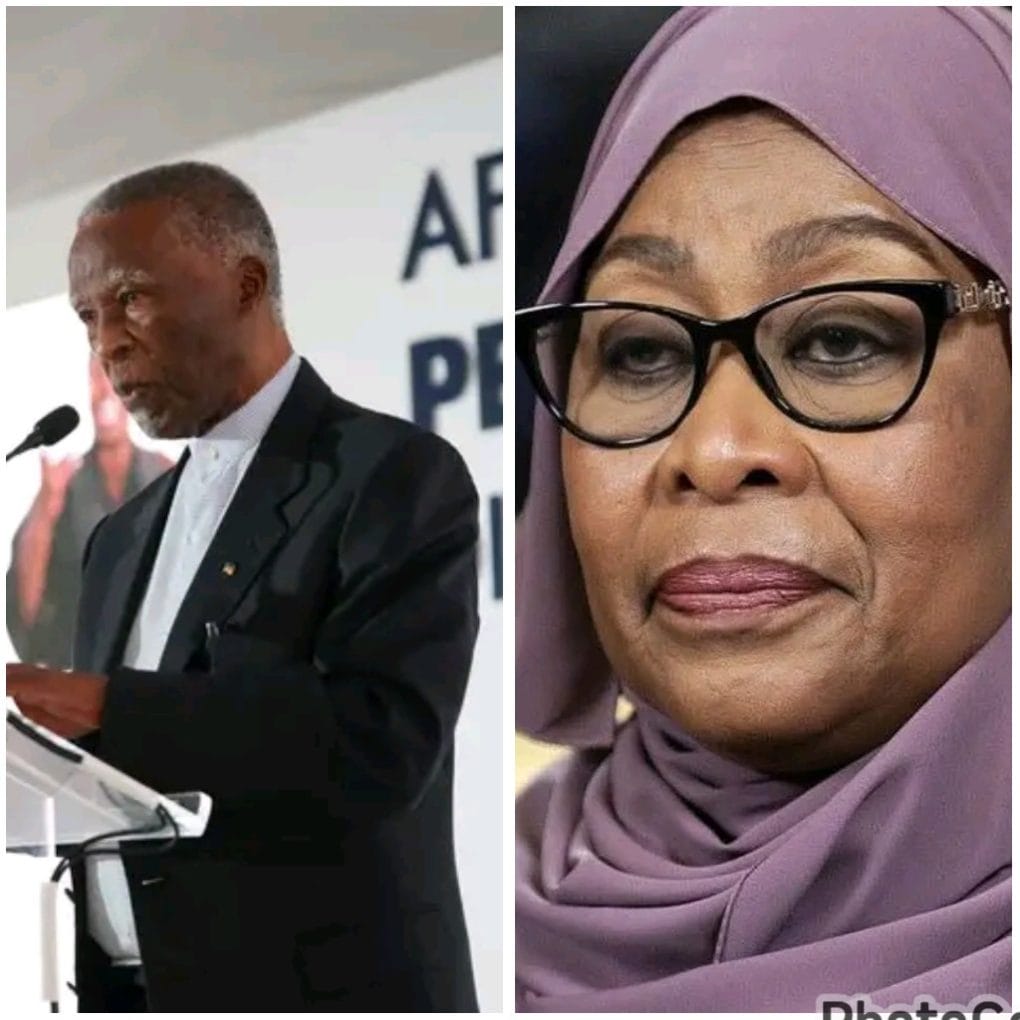
PRETORIA-(MaraviPost)-In a statement that has sent ripples across East African political circles, the Thabo Mbeki Foundation, representing South Africa’s former President Thabo Mbeki, has publicly declared that Tanzania currently lacks a legitimate government.
The foundation contends that the administration led by President Samia Suluhu Hassan was “imposed upon the people through a combination of force and fraudulent means,” raising urgent questions about governance and democracy in the East African nation.
The pronouncement comes amidst ongoing regional concerns about political transparency and democratic processes in several African countries.
Thabo Mbeki, a respected elder statesman known for his diplomatic approach to conflict resolution and governance issues, has through his foundation urged Tanzanians to reflect critically on the trajectory their country is taking.
The foundation’s statement calls for a collective examination of what has gone wrong and what corrective measures are necessary to restore Tanzania on a path that respects the will of its people.
Tanzania, under the leadership of President Samia Suluhu Hassan, who assumed office in March 2021 following the sudden death of her predecessor John Magufuli, has experienced significant political shifts. President Hassan’s administration has been marked by efforts to open the political space, improve relations with international partners, and stimulate economic reforms.
However, the foundation’s assertion challenges the legitimacy of the current government’s ascent and tenure, suggesting that these changes may have been engineered through undemocratic practices.
The foundation’s statement reflects deep concerns about the electoral processes and political freedoms in Tanzania. Over recent years, international observers and local opposition groups have reported incidents of political repression, restrictions on media freedoms, and limitations on civil society activities.
These factors have contributed to a climate of suspicion and distrust among segments of the Tanzanian population and the wider international community.
Thabo Mbeki’s foundation emphasized the need for open dialogue and inclusive participation to address the critical questions facing Tanzania. “What went wrong, and what must be done to put the beloved country back on course?” the foundation asked, implying that the current situation threatens the social contract between the government and the people.
Such a call for introspection and reform is significant given Mbeki’s reputation for advocating peaceful solutions and democratic governance across the continent.
The implications of the foundation’s statement are profound for Tanzania’s political landscape. It signals a potential shift in regional perspectives about the legitimacy of governments and the respect for democratic norms.
Neighboring countries and regional blocs such as the East African Community (EAC) may find themselves pressured to engage more critically with governance issues in Tanzania.
President Samia Suluhu Hassan, Tanzania’s first female president, has faced numerous challenges since taking office.
She inherited a nation grappling with economic difficulties, international isolation due to the previous administration’s policies, and internal political tensions. Her administration has attempted several reforms, including re-engaging with international financial institutions and promoting a more open political dialogue.
However, the allegations from the Mbeki Foundation suggest that these efforts may not fully address underlying governance concerns.
Political analysts note that the foundation’s critique may stem from wider regional anxieties about governance and legitimacy in Africa.
The continent has witnessed a complex interplay of democratic transitions, electoral disputes, and governance challenges in recent decades.
South Africa, under Mbeki’s presidency, played a significant role in promoting peace and democratic governance in Africa, which adds weight to the foundation’s pronouncement.
Locally, Tanzanian political actors have responded with mixed reactions.
Supporters of President Hassan’s government have dismissed the foundation’s statement as interference in Tanzania’s internal affairs, emphasizing the legitimacy conferred by the constitutional processes following President Magufuli’s death.
Opposition parties and civil society activists, however, have expressed cautious optimism that such international attention could foster greater accountability and political reform.
The broader African community is watching closely how Tanzania will respond to these criticisms.
The country’s stability and democratic health are vital not only for its citizens but also for the region’s economic integration and security.
East Africa’s development agenda heavily depends on political stability and good governance, making Tanzania’s situation a matter of regional interest.
The statement from the Thabo Mbeki Foundation brings to the forefront critical questions about governance legitimacy in Tanzania under President Samia Suluhu Hassan.
It challenges the narrative of a smooth political transition and calls for a collective reckoning with the country’s current political trajectory.
As Tanzania navigates these challenges, the eyes of the continent remain firmly fixed on how its leaders and people will respond to restore trust, uphold democratic principles, and ensure a future that reflects the will of its citizens.
The call for dialogue and reform echoes beyond Tanzania’s borders, resonating with broader struggles for democracy and good governance across Africa.
Share this:
Like this:
LikeLoading…
Discover more from The Maravi Post
Subscribe to get the latest posts sent to your email.