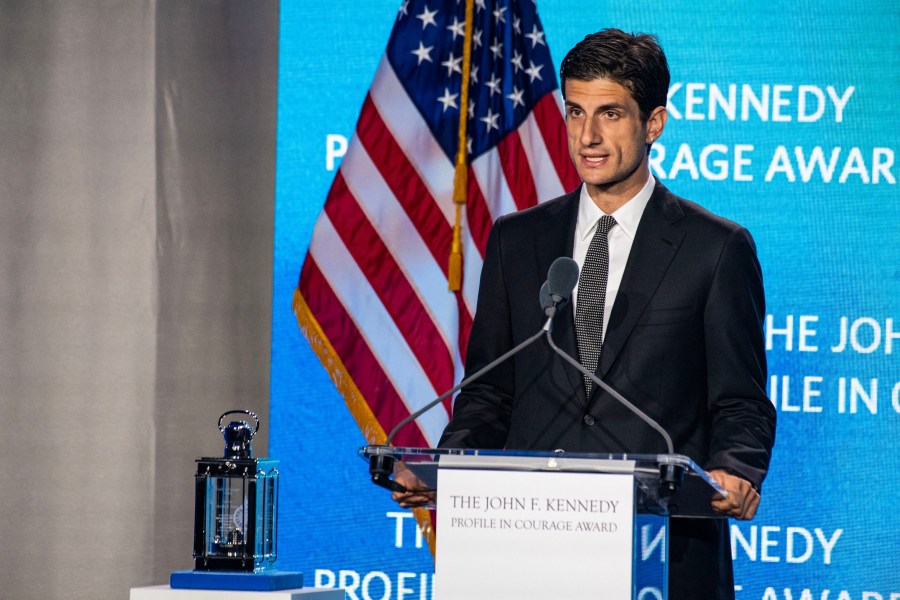
Tatiana Schlossberg Family Guide: Meet Her Husband, Their 2 Kids and More

Environmental journalist Tatiana Schlossberg revealed her terminal cancer diagnosis in November 2025.

Tatiana — who is the granddaughter of late president John F. Kennedy and former first lady Jacqueline Kennedy Onassis — confirmed in an essay published by The New Yorker that she was battling acute myeloid leukemia and was given a year to live by doctors.

She learned that she has a “rare mutation called Inversion 3” that could not be “cured by a standard course” of treatment shortly after welcoming her daughter, Josephine, in May 2024. (Tatiana and her husband, George Moran, also share a son, Edwin Garrett Moran, who was born in 2022.)

“I did not — could not — believe that they were talking about me. I had swum a mile in the pool the day before, nine months pregnant. I wasn’t sick. I didn’t feel sick. I was actually one of the healthiest people I knew,” Tatiana wrote in The New Yorker. “I had a son whom I loved more than anything and a newborn I needed to take care of.”

News broke in December 2025 that Tatiana died. She was 35.

Jack Schlossberg Trolls Cousin-in-Law Cheryl Hines: ‘Never Met’

Keep scrolling for more information on Tatiana and her family.

George Moran

Tatiana Schlossberg met her future husband, George Moran, while they were both undergraduates at Yale University. Moran became a doctor at Columbia University’s Vagelos College of Physicians and Surgeons, while Schlossberg worked for The New York Times, Vanity Fair and The Washington Post as an environmental reporter.

The New York Times reported in September 2017 that the couple had tied the knot at the Kennedy family home in Martha’s Vineyard in a ceremony officiated by former Massachusetts governor Deval Patrick.

Tatiana’s younger brother, Jack Schlossberg, announced on NBC’s Today in 2022 that his sister and her husband had welcomed their first baby, a son named Edwin Moran.

“I can’t get away from them,” Jack said of his sister and his newborn nephew. “I love them.”

Tatiana and George welcomed their youngest child, a daughter, in 2024. They have chosen to keep her name private.

Following her terminal cancer diagnosis, Tatiana credited George for his immense support following her cancer diagnosis.

“George did everything for me that he possibly could. He talked to all the doctors and insurance people that I didn’t want to talk to; he slept on the floor of the hospital; he didn’t get mad when I was raging on steroids and yelled at him that I did not like Schweppes ginger ale, only Canada Dry. He would go home to put our kids to bed and come back to bring me dinner,” she recalled in the New Yorker.

Tatiana added, “I know that not everyone can be married to a doctor, but, if you can, it’s a very good idea. He is perfect, and I feel so cheated and so sad that I don’t get to keep living the wonderful life I had with this kind, funny, handsome genius I managed to find.”

Edwin Moran

Tatiana’s younger brother, Jack, announced that he’d become an uncle during a 2022 interview on NBC’s Today.

“[Tatiana’s son’s] name is Edwin but I like to call him Jack,” the Kennedy heir teased.

In her New Yorker essay, Tatiana recalled that Edwin’s visits to the hospital were rare bright spots as she received cancer treatment.

“My son came to visit almost every day. … The nurses brought me warm blankets and let me sit on the floor of the skyway with my son, even though I wasn’t supposed to leave my room,” she recalled.

Tatiana reflected on a bonding experience with her son as her hair began to fall out during treatment.

“My hair started to fall out and I wore scarves to cover my head, remembering, vainly, each time I tied one on, how great my hair used to be; when my son came to visit, he wore them, too,” she said.

Josephine

Tatiana and George welcomed their daughter, Josephine, in May 2024. After giving birth, Tatiana spent five weeks at Columbia-Presbyterian Hospital and was transferred to Memorial Sloan Kettering to undergo a bone-marrow transplant. She later underwent chemotherapy at home.

She wrote in her New Yorker essay that one of her biggest fears after receiving a terminal diagnosis was that her newborn daughter wouldn’t remember her.

“My son might have a few memories, but he’ll probably start confusing them with pictures he sees or stories he hears,” she wrote. “I didn’t ever really get to take care of my daughter — I couldn’t change her diaper or give her a bath or feed her, all because of the risk of infection after my transplants. I was gone for almost half of her first year of life. I don’t know who, really, she thinks I am, and whether she will feel or remember, when I am gone, that I am her mother.”

When the family announced Tatiana’s death in December 2025, it was revealed that her daughter’s name is Josephine.

John F. Kennedy and Jackie Kennedy

Tatiana is the granddaughter of late President John F. Kennedy and former first lady Jackie Kennedy. The Kennedys shared daughter Caroline Kennedy and son John F. Kennedy Jr. (They also lost two children, daughter Arabella and son Patrick.)

President Kennedy was killed at age 46 in a fatal shooting on November 22, 1963, in Dallas, Texas. Jackie later married Greek-Argentine magnate Aristotle Onassis, who died at age 69 in 1975. Jackie succumbed to Non-Hodgkin’s lymphoma at age 64 in May 1994.

Caroline Kennedy

John and Jackie Kennedy welcomed daughter Caroline Kennedy in November 1957. She was only 5 years old when her father was assassinated in 1963.

As an adult, Caroline worked at New York City’s Metropolitan Museum of Art, where she met her future husband, Edwin Schlossberg. They tied the knot at Our Lady of Victory Church in Centerville, Massachusetts in 1986 and later welcomed three children: Rose, Tatiana and Jack.

Caroline eventually followed in her family’s footsteps by entering politics as an ambassador to Australia and Japan during Joe Biden and Barack Obama’s presidential administrations.
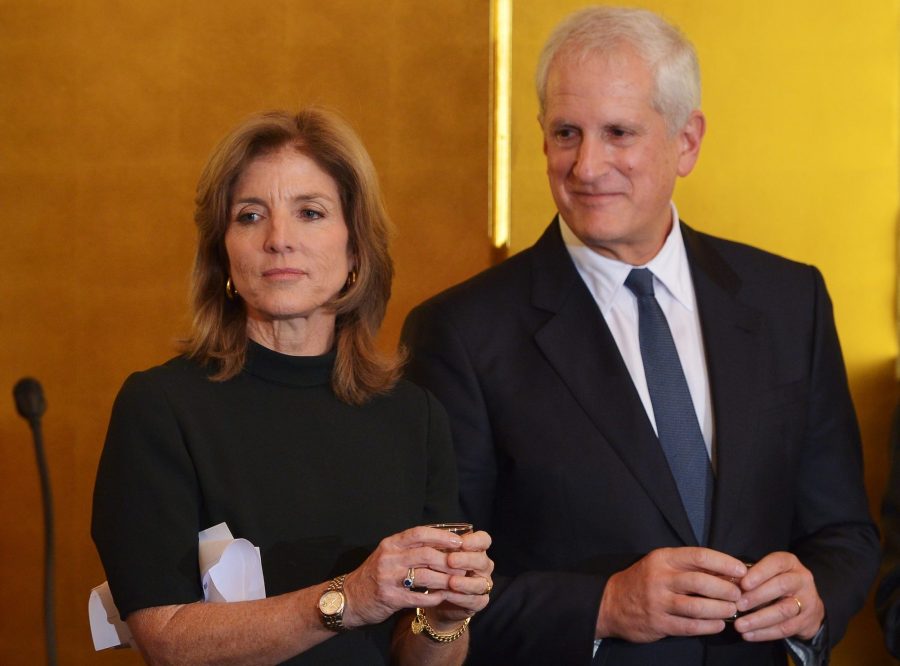
GettyImages-187802245 Tatiana Schlossberg Family Guide caroline kennedy edwin
Caroline Kennedy and Edwin Schlossberg in November 2013. MANDEL NGAN/AFP via Getty Images

Tatiana credited her parents and siblings with helping to raise her two children while she underwent grueling cancer treatment.

“My parents and my brother and sister, too, have been raising my children and sitting in my various hospital rooms almost every day for the last year and a half. They have held my hand unflinchingly while I have suffered, trying not to show their pain and sadness in order to protect me from it,” she wrote in her New Yorker essay. “This has been a great gift, even though I feel their pain every day. For my whole life, I have tried to be good, to be a good student and a good sister and a good daughter, and to protect my mother and never make her upset or angry. Now I have added a new tragedy to her life, to our family’s life, and there’s nothing I can do to stop it.”

Edwin Schlossberg

Caroline’s husband Edwin Schlossberg is an artist and designer. He founded the firm ESI Design and has written several books about design philosophy.

Edwin was appointed to the Commission of Fine Arts by President Obama in 2011, after receiving the prestigious National Arts Club Medal of Honor in 2004.

Rose Kennedy Schlossberg

Caroline and Edwin’s eldest daughter, Rose Schlossberg, arrived in June 1988 and was named after her maternal great-grandmother, Rose Fitzgerald Kennedy.

She attended Harvard University, where she once gave Lindsay Lohan and her then-girlfriend Samantha Ronson a campus tour, according to the Boston Herald. She later received her master’s degree in interactive telecommunications from New York University.

Rose has worked as a production assistant on the TV show Brick City and the 2012 documentary Hard Times: Lost on Long Island. She co-wrote and produced the Peabody Award-winning documentary series The Kalief Browder Story in 2017 and helped open a permanent exhibit for her late grandfather, John F. Kennedy, at the Kennedy Center in 2022.

She married restaurateur Rory McAuliffe in California in 2022.

John ‘Jack’ Bouvier Kennedy Schlossberg

Caroline and Edwin’s youngest child, son Jack Schlossberg, was born in January 1993.

As an adult, he became popular on social media for his shirtless selfies and pop culture clapbacks — including criticizing American Horror Story creator Ryan Murphy’s planned series about Jack’s late uncle John F. Kennedy Jr. and his wife Carolyn Bessette Kennedy. (The couple were killed in a 1999 plane crash, along with Carolyn’s sister Lauren Bessette.)

In November 2025, Jack announced plans to run for Congress in New York’s 12th congressional district in the 2026 midterm elections.
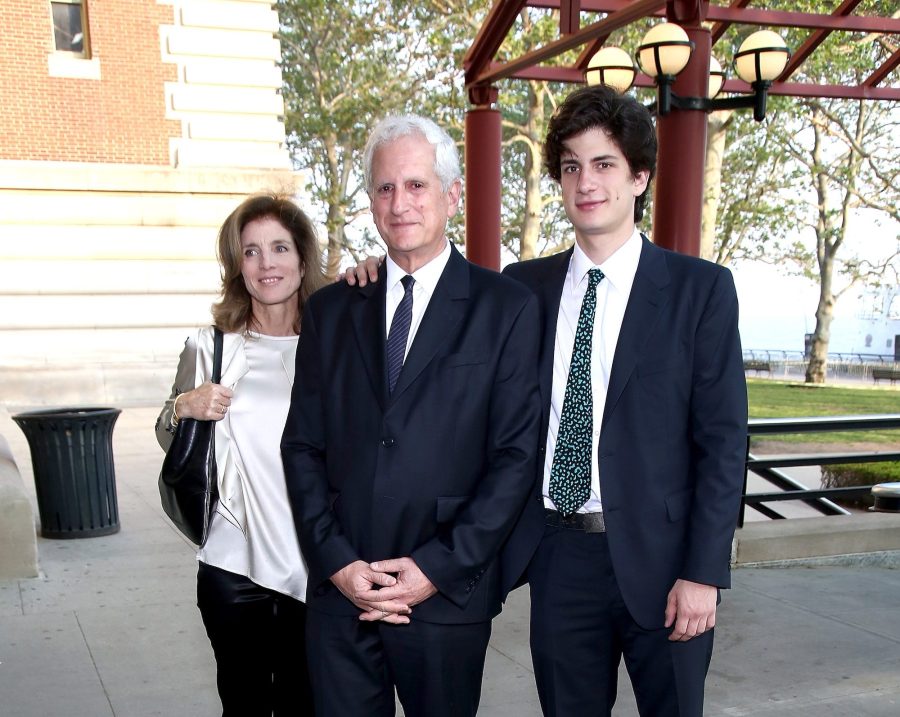
GettyImages-474021184 Tatiana Schlossberg Family Guide caroline kennedy edwin jack
Caroline Kennedy, Edwin Schlossberg and Jack Schlossberg in May 2015. Paul Zimmerman/Getty Images

“I’m not running because I have all the answers to our problems. I’m running because the people of New York 12 do. I want to listen to your struggles, hear your stories, amplify your voice, go to Washington and execute on your behalf,” he wrote via Instagram.

Jack continued, “There is nowhere I’d rather be than in the arena fighting for my hometown. Over the next eight months, during the course of this campaign, I hope to meet as many of you as I can. If you see me on the street, please say hello. If I knock on your door, I hope we can have a conversation. Because politics should be personal.”

Robert F. Kennedy Jr.

Like most of her family, Tatiana has had a strained relationship with her cousin Robert F. Kennedy Jr. since he endorsed Donald Trump in the 2024 presidential election. RFK Jr. was later appointed by Trump to lead the Department of Health and Human Services, which drew concern over his history of vaccine skepticism.

Tatiana wrote about her rift with her cousin in her New Yorker essay, revealing that his confirmation to the HHS role added stress during her illness. She pointed out that her husband George’s job at Columbia University was potentially in danger because the school was “one of the Trump Administration’s first targets in its crusade against alleged antisemitism on campuses.”

Cheryl Hines Responds to People Who Think She Should Leave RFK Jr.

“If George changed jobs, we didn’t know if we’d be able to get insurance, now that I had a preëxisting condition,” she wrote. “Bobby is a known skeptic of vaccines, and I was especially concerned that I wouldn’t be able to get mine again, leaving me to spend the rest of my life immunocompromised, along with millions of cancer survivors, small children, and the elderly.”

Tatiana unequivocally distanced herself from RFK’s statement that “there’s no vaccine that is safe and effective” during a 2023 appearance on the “Lex Fridman Podcast.”

“Bobby probably doesn’t remember the millions of people who were paralyzed or killed by polio before the vaccine was available,” she added. “My dad, who grew up in New York City in the nineteen-forties and fifties, does remember. Recently, I asked him what it was like when he got the vaccine. He said that it felt like freedom.”


Discover more from The Maravi Post

Subscribe to get the latest posts sent to your email.

The Maravi Post

JFK’s Niece Vows to Use ‘Pickax’ to Remove Trump’s Name From Kennedy Center

The Kennedy Center in Washington, D.C. is one step closer to being called the Trump-Kennedy Center.

On December 18, 2025, the White House confirmed the board of the Kennedy Center voted to rename the building that is in honor of President John F. Kennedy.

“I have just been informed that the highly respected Board of the Kennedy Center, some of the most successful people from all parts of the world, have just voted unanimously to rename the Kennedy Center to the Trump-Kennedy Center, because of the unbelievable work President Trump has done over the last year in saving the building,” White House press secretary Karoline Leavitt wrote via X at the time. “Not only from the standpoint of its reconstruction, but also financially, and its reputation. Congratulations to President Donald J. Trump, and likewise, congratulations to President Kennedy, because this will be a truly great team long into the future! The building will no doubt attain new levels of success and grandeur.”

Soon after the news broke, several Kennedy family members spoke out against the board’s decision.

Celebrities Call Out President Trump’s Comments About Rob Reiner’s Death

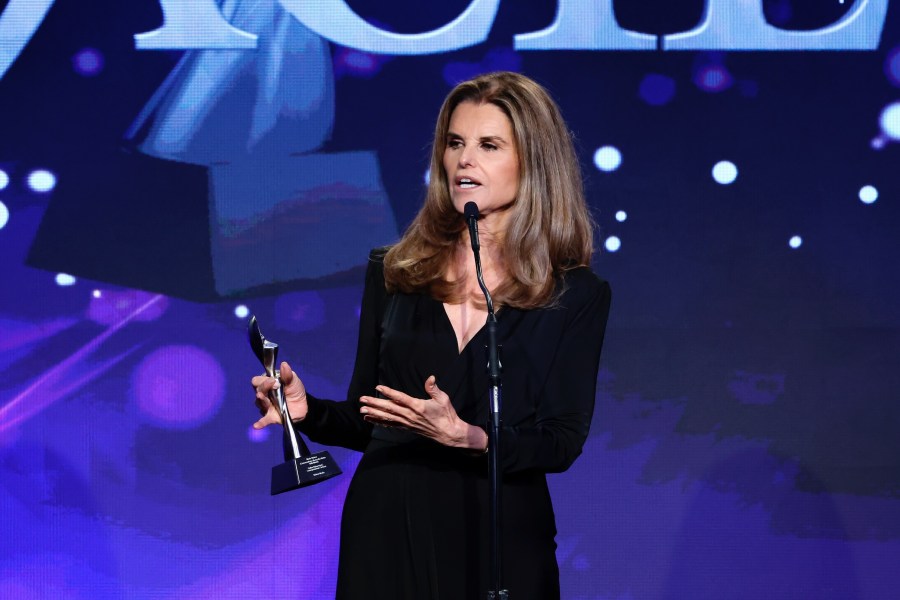
Maria Shriver questioned why Trump has been so interested in having his name be part of the cultural center.

“Next thing perhaps he will want to rename JFK Airport, rename the Lincoln Memorial, the Trump Lincoln Memorial. The Trump Jefferson Memorial. The Trump Smithsonian. The list goes on,” she wrote via Instagram. “Can we not see what is happening here? C’mon, my fellow Americans! Wake up! This is not dignified. This is not funny. This is way beneath the stature of the job. It’s downright weird. It’s obsessive in a weird way. Just when you think someone can’t stoop any lower, down they go…”

According to NBC News, Trump told reporters at the White House that he was “surprised” and “honored” by the board’s vote.

Keep reading to see how other Kennedy family members reacted to the news:

Jack Schlossberg 

John F Kennedys Family Speaks Out After Kennedy Center Is Renamed in Honor of Donald Trump
Jack Schlossberg Joseph Prezioso / AFP

JFK’s only grandson vowed to fight back against the Kennedy Center’s new name.

“SEND ME TO CONGRESS TO SMOKE THESE FOOLS — MAKE YOUR VOICE HEARD LOUD AND CLEAR,” Schlossberg, who is running for New York’s 12th Congressional District, said via Instagram on December 18, 2025. “I won’t back down or be drowned out.”

Joe Kennedy III 

After seeing Leavitt’s announcement about the Kennedy Center, JFK’s nephew decided to speak out on social media.

“The Kennedy Center is a living memorial to a fallen president and named for President Kennedy by federal law,” he wrote via X on December 18, 2025. “It can no sooner be renamed than can someone rename the Lincoln Memorial, no matter what anyone says.”

Maria Shriver

John F Kennedys Family Speaks Out After Kennedy Center Is Renamed in Honor of Donald Trump
Maria Shriver Emma McIntyre/Getty Images for Alliance for Women in Media Foundation

The journalist and niece of JFK expressed her disappointment at the Kennedy Center being renamed to the Trump-Kennedy Center.

“The Kennedy Center was named after my uncle, President John F Kennedy. It was named in his honor. He was a man who was interested in the arts, interested in culture, interested in education, language, history,” she wrote via Instagram on December 18, 2025. “He brought the arts into the White House, and he and my Aunt Jackie [Kennedy Onassis] amplified the arts, celebrated the arts, stood up for the arts and artists.”

Shriver continued, “It is beyond comprehension that this sitting president has sought to rename this great memorial dedicated to President Kennedy. It is beyond wild that he would think adding his name in front of President Kennedy’s name is acceptable. It is not.”

After workers installed Trump’s name to the Kennedy Center building, Shriver spoke out again.

“This will always be the John F. Kennedy Center for the Performing Arts,” she wrote via Instagram later that month. “A great man would have said to his hand picked board, ‘Thank you, but the building already has its name. Let it stand. Let it be. I don’t need that.’ But then again…”

Kerry Kennedy

“President Trump and his administration have spent the past year repressing free expression, targeting artists, journalists, and comedians and erasing the history of Americans whose contributions made our nation better and more just,” JFK’s niece Kerry wrote via X on December 18, 2025. “President Kennedy proudly stood for justice, peace, equality, dignity, diversity, and compassion for those who suffer. President Trump stands in opposition to these values, and his name should not be placed alongside President Kennedy’s.”

One day later, Kerry reacted to Trump’s name being installed on the building.

“Three years and one month from today, I’m going to grab a pickax and pull those letters off that building, but I’m going to need help holding the ladder,” she wrote via X. “Are you in? Applying for my carpenter’s card today, so it’ll be a union job!!!”

Donald Trump Attacks Jimmy Kimmel Again While Hosting Kennedy Center Honors

Tim Shriver

“Perhaps the board isn’t aware that the Kennedy Center is 𝗧𝗛𝗘 memorial to the president of the United States, John F. Kennedy.  Would they rename the Lincoln memorial? The Jefferson? That would be an insult to great presidents. This too is an insult to a great president,” JFK’s nephew Tim wrote via X in December 2025. “ Notwithstanding their short-sighted action, it is and will remain the John F. Kennedy Center for the Performing Arts.”


Discover more from The Maravi Post

Subscribe to get the latest posts sent to your email.

The Maravi Post

Tiffany Haddish Confirms She’s Still Ready to Carry Jason Lee’s Child

Tiffany Haddish is not shutting down the idea of having a baby anytime soon.

Haddish, 45, exclusively spoke with Us Weekly on Tuesday, October 28, at the 2025 PAC NYC ICONS of CULTURE Gala at the Perelman Performing Arts Center in New York. The comedian and actress told Us about the baby “agreement” she has with her “gay homeboy” Jason Lee.

“We have this whole agreement [that] when he wants to have a baby or whatever, I’m going to carry the baby,” Haddish told Us. “I’ve always been saying to him, let’s have a baby. Let’s have a baby.”

Haddish and Lee, 47, sent the internet into a frenzy back in August when the two shared a photo on Instagram of them posing with an infant. The post, which now has over 246,000 likes and 4,000 comments, was captioned: “Cats out the bag ❤️.” Many fans and fellow celebrities were left wondering what this meant for the duo.

Who Is Jason Lee? Meet the Podcaster Friends With Tiffany Haddish

Haddish was married to William Stewart from 2008 until she filed for divorce in 2011. The divorce was finalized two years later. Haddish dated rapper Common from 2020 to 2021 after they met on the set of action-comedy The Kitchen, in which they starred alongside Elisabeth Moss, Domhnall Gleeson, Margo Martindale and more.

Haddish told The Washington Post in 2023 that Common, 53, was her “healthiest” relationship, despite him breaking up with her over the phone.

“[It was] the healthiest, the funnest [sic] relationship I’ve ever had,” Haddish shared in the interview with The Post. “It’s where I felt safest out of all the relationships I’ve ever had.”

In May 2024 Haddish spoke about her dating preferences on Dax Shepard’s “Armchair Expert” podcast.

“I don’t think I’ll ever f*** a movie star. Ever,” Haddish said. “I fed an entertainer. I don’t think I’ll ever do that again. I think I’ll f one again, but never in a relationship.”

Haddish told Us that a future partner needs to have a “good credit score,” and also be an “excellent communicator.”

Tiffany Haddish’s Ups and Downs Through the Years

“They need to have an EIN [Employer Identification Number]. I need to know that they know how to handle multiple personalities at one time,” Haddish said. “So that’s why I need them to have an EIN with employees and know how to motivate people to move forward to do great things. Cause that’s what I’m going to need.”

Haddish also provided recent insight on what else she’s looking for in future relationships in the trailer for her new Peacock series, Tiffany Haddish Goes Off. In the unscripted series, which is set to premiere on Thursday, November 13, Haddish and three of her childhood friends travel throughout Africa on the ultimate girls trip.

In the trailer, one of Haddish’s friends asks her, “What would you want your man to call you?” To which Haddish responds: “Empress of the universe.”

Inspired by the 2017 film Girls Trip, which starred Haddish alongside, Regina Hall, Queen Latifah and Jada Pinkett Smith, the six-episode docuseries seems to include heartwarming moments between Haddish and her girlfriends, Selena Martin, Shermona Long and Sparkle Clark, as well as a tease to a potential wedding ceremony with Haddish upfront and center.

Reporting by Andrew Nodell.


Discover more from The Maravi Post

Subscribe to get the latest posts sent to your email.

The Maravi Post

Man, Sea, Algae: HOMO SARGASSUM’s Stirring Critique of Human Culpability in the Caribbean

Active Citizens, Arts, Biodiversity, Climate Change, Editors’ Choice, Environment, Global, Headlines, Latin America & the Caribbean, Natural Resources, TerraViva United Nations

Arts

“Plastic Ocean” by Alejandro Duràn, one of the artworks previously on display in the UN lobby. Credit: Jennifer Levine/IPS

“Plastic Ocean” by Alejandro Duràn, one of the artworks previously on display in the UN lobby. Credit: Jennifer Levine/IPS

UNITED NATIONS, Jul 14 2025 (IPS) – The United Nations’ HOMO SARGASSUM exhibition served as a public immersion into the marine world and called upon viewers to take action in the face of the climate crisis, specifically regarding invasive species and water pollution.


For the past month, an art exhibition entitled HOMO SARGASSUM took up residence in the New York headquarters lobby in connection to World Ocean Month and the 2025 UN Ocean Conference. Organized by the Tout-Monde Art Foundation. In its final week on display, visitors walked through the various projected films, sculptures and photographs. The exhibit closed on July 11.

The work is described as an immersive multisensorial art and science exhibition intended to bring together various experts in science, scholarship and creativity from the Caribbean to share their perspectives on the prevalent environmental and social issue. The exhibit is primarily an introspective study of sargassum, a type of seaweed or algae commonly found on the coast of the Americas and in the Caribbean.

Sargassum, which has proliferated significantly in recent years due to pollution and chemical fertilizer, releases toxic gases that harm nearby residents in water and on land. Animals struggle to survive, and humans experience respiratory failures and burns. This algae has inspired fear since Christopher Columbus recorded his crew’s sighting of the plant. Sargassum has also become a symbol recently for climate change in the Caribbean as well as the coexisting nature of marine and human life.

Co-curator and executive and artistic director of the Tout-Monde Art Foundation Vanessa Selk described the exhibit as a journey rather than a singular experience. She said, “Much like sargassum migrating through the Atlantic Ocean, we encounter natural and human-made challenges such as pandemics, pollutants and hurricanes. This narrative of the global ecological crisis, reflected in silent floating algae, warns us to change our existing paradigms and consider ourselves as one with our environment.”

Billy Gerard Frank, one of the featured artists in HOMO SARGASSUM, echoes this sentiment.

Frank created a mixed-media piece entitled “Poetics of Relation and Entanglement” with a painting featuring Columbus’ archival notes and sargassum pigment, as well as a film he shot on the island of Carriacou. The film centered on a large metal tank surrounded by sargassum, which had washed on shore and rusted onto the massive object. He specifically shot the film around the sargassum and the tank, an eyesore for the locals who used the beach and a barrier to boats trying to leave. Growing up in Grenada, Frank recalls sargassum as a mild inconvenience but explained how it has become more prevalent due to climate change.

However, only in recent years has conversation around sargassum shifted towards the impact of climate change and geographical inequities, like, as Frank noted, how smaller islands that produce significantly lower levels of pollution are the worst affected by climate change through natural disasters.

He referenced the recent Hurricane Beryl, a Category 5 storm that “completely devastated” islands like Carriacou. His inclusion of Columbus’ notes brings a decolonial perspective: the threats Caribbean islands face from mounting climate change are exacerbated by their history of occupation, mostly from European colonial powers. In a global organization like the UN where historical, geographical and environmental context is key to making any decision, such an interdisciplinary perspective is key.

From countless gifts from member states to various donations, the UN has been an artistic hub since its inception. As both a tourist attraction and space of work for international diplomats, the UN is a particularly ripe space for more radical, political art—notably Guernica, a tapestry based on a Picasso painting portraying the Spanish Civil War—due to its broad audience.

Speaking to IPS, Frank shared how influential art has been in political, social and intellectual movements, saying, “historically…creators, writers, and artists have been able to forge ahead and create new spaces…it gives us some hope that our work and the calling are even more important.”

Frank also told IPS how important it was for him to have the work featured at the UN.

“Because the UN is also a site of consternation right now, specifically with everything that’s happening globally. And in fact, that’s the space where this type of work should be, where there should be more conversation, and a space in which it could create a critical dialogue amongst people who work there, but also the public facing that too.”

IPS UN Bureau Report

  Source

Solar-Powered Spinning Machines Help Indian Women Save Time and Earn More

Arts, Asia-Pacific, Civil Society, Development & Aid, Economy & Trade, Editors’ Choice, Energy, Featured, Gender, Headlines, Labour, Sustainable Development Goals, TerraViva United Nations, Trade & Investment, Women & Economy

Development & Aid

In India’s Meghalaya, silkworm rearing and weaving are common in rural areas. Ri-Bhoi district of Meghalaya is among the regions where eri culture is deeply rooted in tradition; several women there are using solar-powered spinning machines to make yarn.

Jacinta Maslai using her solar-powered spinning machine at her home in Warsawsaw village in Ri Bhoi district. Credit: Sanskrita Bharadwaj/IPS

Jacinta Maslai using her solar-powered spinning machine at her home in Warsawsaw village in Ri Bhoi district. Credit: Sanskrita Bharadwaj/IPS

WARMAWSAW, Meghalaya, India, Apr 3 2025 (IPS) – As light enters through the small window of a modestly constructed tin-roofed house, Philim Makri sits on a chair deftly spinning cocoons of eri silk with the help of a solar-powered spinning machine in Warmawsaw village in Ri Bhoi district of Meghalaya in northeast India.


Makri belongs to the indigenous Khasi tribe of Meghalaya and is one of the several women from the region who has benefitted from solar-powered spinning machines.

In India’s northeastern states like Assam and Meghalaya, silkworm rearing and weaving are common among several rural and tribal communities. Ri-Bhoi district of Meghalaya, where Makri is from, is among the regions where eri culture is deeply rooted in tradition and is often passed on from one generation to the other.

The process of spinning and weaving eri is mainly carried out by women. Before switching to the solar-powered spinning machines in 2018, Makri used a traditional hand-held ‘takli’ or spindle. She would open the empty eri cocoons, draft the fibers by hand, and spin them onto the spindle to create yarn. This process was extremely laborious, 60-year-old Makri said. It would leave her feeling tired with constant pain in her hand, back, neck, and eyes.

Process of spinning eri yarn

Eri derives its name from castor leaves—locally known as ‘Rynda’ in the Khasi language. Castor leaves are the primary food source for the eri silkworms. As the production process is considered to be non-violent, eco-friendly, and sustainable, eri silk has earned itself the title of ‘peace silk.’

Thirty-eight-year-old Jacinta Maslai from Patharkhmah village in Ri Bhoi district, who has been spinning eri cocoons into yarn for years, explained how an eri moth lays hundreds of eggs and after 10 days or so, these eggs hatch, producing silkworms, which are then reared indoors and fed castor leaves until they mature over a period of 30 days.

When the silkworm matures to its full size, they are placed on cocoonage—devices that help silkworms spin their cocoons. The moth evolves, breaking out from the open end of the cocoon to start a new life cycle. Thus, in this process, no moths are killed. The empty cocoons are boiled to remove the gums left behind by the worms; they are then rinsed and left out in the sun to dry.

According to Maslai, the best season to carry out this process is from May till October. “When the weather is too cold or too hot, the worms don’t grow properly because they eat less. If they don’t eat well, they don’t make the cocoon well enough,” Maslai said.

Switching to solar-powered spinning machines

Women artisans have for years used their traditional spindles or ‘taklis,’ to spin eri cocoons into yarn. However, many of them, like Maslai and Makri, have now switched to the solar-powered spinning machines, which they claim have made their lives “easier.”

Since Maslai started using the solar-powered machines, she says she can weave up to 500 grams in a week. “Sometimes even a kilo is possible in a week but many of us have children and farms to look after so we can manage up to 500 grams in a week,” Maslai said, adding that before they wouldn’t get a kilo even if they spun for an entire month with the ‘takli.’

“The machines help a lot—with our hands, we couldn’t do much.”

In the nearby Patharkhmah market, Maslai sells one kilo of yarm for Rs 2500.

Makri, who is considered an expert at spinning eri yarn, said she has sold 1 kg of yarn for up to Rs 3000. “The lowest quality of one kilo of eri yarn is about Rs 1200-1500. The quality also differs in terms of the smoothness of the yarn sometimes,” Makri said.

The machines have also made our lives better because their villages are usually without electricity for an entire day, Maslai said. In the mornings they usually go out for farming; evenings are the time when they find adequate time to spin.

“The machines provide backup solar batteries so we can work at night. It is helpful during the rainy season too when it’s too cloudy for the solar panels to be used as a direct energy source,” Maslai said, adding, “I spin a lot in the evenings after cooking dinner. That’s when my kids are asleep.”

The machines have been distributed by MOSONiE Socio Economic Foundation, a not-for-profit led entirely by a group of women based in Pillangkata of Ri Bhoi district in Meghalaya.

“Our vision is to increase the productivity of eri silk spinners by providing solar-powered spinning machines to them. We also want to provide them financial options to afford a spinning machine by connecting them with rural banks. The idea is to give them training to use these machines and promote entrepreneurship among the women artisans,” said Salome Savitri, one of the co-founders of MOSONiE.

Many women in rural areas, Savitri said, cannot afford to buy the machines or do not have the money to pay direct cash; this is where she said MOSONiE steps in and bridges the gap between Meghalaya Rural Bank (MRB) and the women artisans. For instance, Maslai took a loan from MRB to buy the spinning machine, which she paid off after a year.

Maslai recalls how, with training from MOSONiE, it took her about three days to make the switch from a handheld spindle to the machine. “We use the machine now and no longer use the traditional method,” Maslai said.

Makri, who is one of the more experienced ones, also teaches others from her village to use the solar-powered spinning machines. Individually, people give her Rs 50-100 per day for the training they receive from her. She has won awards for her work from India’s ministry of textiles, central silk board, and the national handloom awards.

Upasna Jain, chief of staff at Resham Sutra, a Delhi-based social enterprise that has been manufacturing the solar-powered spinning machines, said not-for-profit organizations like MOSONiE, which is an on-ground partner of Resham Sutra in Meghalaya, help them establish rural experience centers. “We have our on-ground partners, who enable us to mobilize, create awareness, outreach, and demonstrations. In the rural experience centers, we have machines for spinning but we also have machines for quality certification. The on-ground partners impart 3 to 5 days of training, and we also have community champions because even after training, a lot of handholding is required,” Jain explained.

Out of 28 states, currently, Resham Sutra has managed to reach 16 states of India. “We work with eri, mulberry, tussar, and muga silk,” Jain said. Started in 2015, the Resham Sutra initiative has more than 25,000 installations across India.

“Our founder, Kunal Vaid, was an exporter of silk and home linen, and he would source his silk fabric from Jharkhand, where he saw the traditional thigh reeling process to make tussar yarn…he being a mechanical engineer who specialized in industrial design, out of a hobby innovated a spinning wheel, which has now become a full-time business enterprise.”

Jain added, “He also transitioned from being an exporter to a full-time social entrepreneur.” Apart from the spinning wheels, Resham Sutra also manufactures solar looms.

Through the use of solar, Jain said, their aim is to also take the silk industry towards carbon neutrality. She said, “As our machines are solar-powered, we save a lot of carbon dioxide, our machines run on low voltage and they are energy efficient. So, wherever there is ample sunlight, these machines are a great solution, especially in remote villages where electricity can be erratic.”

While both Makri and Maslai like using their machines, they said that an extra space to expand their spinning avenues would help them greatly. Makri wants to build another room where she can keep both her spinning machines and teach others too. Maslai, who lives in a two-room house, said there is barely any space for her to teach anyone else but she still tries to pass on the craft to young girls as well as boys who are interested in learning. “When I am teaching, they look after my kids as a token of goodwill.”

IPS UN Bureau Report,

  Source

The Giant Plastic Tap: How art fights plastic pollution

Aid, Arts, Civil Society, Climate Action, Climate Change, Development & Aid, Economy & Trade, Editors’ Choice, Environment, Featured, Headlines, Sustainable Development Goals, TerraViva United Nations

Arts

The Giant Plastic Tap installation by Canadian artist Benjamin Von Wong.

The Giant Plastic Tap installation by Canadian artist Benjamin Von Wong.

NEW DELHI, Mar 28 2025 (IPS) – “The size of the faucet highlights the magnitude of the problem. It makes the problem impossible to ignore. We’re used to throwing things ‘away’—but when we’re confronted with what happens when ‘away’ is not an option, I think it creates an emotional wake-up call,” says Benjamin Von Wong.


The 39-year-old Canadian artist and activist is referring to his inspiration behind The Giant Plastic Tap installation, which created a buzz in the art world, highlighting the problem of plastic pollution.

Wong, known for his environmental art installations and hyper-realist art style, created the Giant Plastic Tap that features an oversized faucet seemingly floating in mid-air while spewing plastic waste, serving as a striking metaphor for the world’s urgent need to address plastic production at its source.

He explains, “I wanted to bring the phrase ‘Turn off the plastic tap’ to life in a tangible way. I adapted the concept of the ‘floating fountain’ but distorted it with plastic—to emphasize the urgency of tackling the problem at its source by reducing plastic production, rather than relying solely on downstream solutions like recycling and beach cleanups.”

Reportedly, the global effects of plastic pollution are becoming more evident, highlighting the urgent need for collective action. Scientific studies and policy changes are essential but it is also crucial to acknowledge the influence of art in raising awareness and inspiring people to act.

Art has a unique power to evoke emotions, ignite conversations, and build a deep connection between individuals and the environment.

In the fight against plastic pollution, one art installation has become a powerful symbol of change, with Wong playing an important role.

Plastic pollution is one of the biggest crises of this generation.

The latest study, by charity EA Earth Action and released last year, revealed that more than a third of plastic waste will be improperly handled at the end of its lifecycle. This equates to 68.6 million tonnes of plastic, translating to an average of 28kg of plastic waste per person worldwide. In 2024, approximately 220 million tonnes of plastic waste were generated, marking a 7.11 percent increase since 2021.

Canadian artist Benjamin Von Wong.

Canadian artist Benjamin Von Wong.

Art installed so far

Von Wong, who shifted from mining engineering to environmental activism through art, has created four large-scale faucet installations, showcased at venues including Art Basel, the United Nations Environment Assembly 5.2 in Nairobi (2022), and the United Nations Ocean Conference.

“We’ve installed them in over a dozen locations—but even more exciting is that hundreds of cardboard replicas have been made worldwide,” Wong says.

Wong reflects, “I’m not sure how you measure the impact of art, but I think the fact that this installation has become a symbol for the importance of a global plastic treaty is probably the biggest achievement.”

The Giant Plastic Tap has been featured at previous INC (Intergovernmental Negotiating Committee for the plastic treaty) sessions. However, its absence was notably felt during the INC-5 conference in Busan, South Korea.

Wong says, “I did my best to have the tap installation placed in Busan, but it wasn’t allowed. Instead, the ‘beached whale’ was placed on the lawns of BEXCO, the exhibition center that hosted the event last year.” He adds, “Despite reaching out over six months in advance to the operations team, the delegation, and securing local partners with independent funding, we were met with silence.”

Interestingly, INC-5 failed to reach a consensus on the global plastic treaty due to disagreements over national interests, industry influence, financial and technical support, and enforcement mechanisms.

Despite current challenges in global plastic treaty negotiations, including the presence of fossil fuel lobbyists and the constraints of consensus-based decision-making, Artist Wong remains optimistic about the future. “I’m certain we will find a way forward,” he asserts, pointing to the numerous dedicated individuals and organizations working to advance the treaty.

Meanwhile, after the Intergovernmental Negotiating Committee decided to postpone the fifth session, the second part of the fifth session (INC-5.2) is scheduled to take place from 5 to 14 August 2025 at the Palais des Nations in Geneva, Switzerland.

Involving locals

Wong involved the local communities to complete the installation at UNEA 5.2 in Nairobi. The project collaborated with the Human Needs Project to collect three tons of plastic from the Kibera slums. The initiative employed over 80 local women to clean and organize the plastic, ensuring their voices were heard by world leaders. “We also fundraised to support the creation of a more local waste management system,” he adds.

The installation has achieved significant success in its mission to influence public perception. Viewers consistently grasp the fundamental message about the need to stop plastic pollution, and the installation’s visual impact helps transform an intellectual discussion into an emotional experience. Its symbolism has become particularly significant in the context of the global plastic treaty discussions.

Lastly, can art play a pivotal role in driving real-world change? To this Wong draws a compelling parallel: “What is the value of a monument like the Statue of Liberty? How would you measure it?”

The success of The Giant Plastic Tap suggests that art remains a powerful catalyst for environmental awareness and social change, particularly when it transforms complex global issues into visceral, emotional experiences that resonate across cultural and linguistic barriers.

IPS UN Bureau Report

  Source