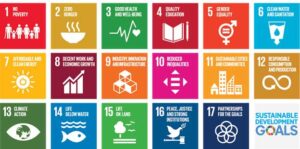
NEW YORK, Jul 12 2024 (IPS) – Each year the international community comes together at the UN’s headquarters in New York to take stock of progress on sustainable development. This year’s High-Level Political Forum (HLPF) is being held between 8 and 18 July. Representatives from 36 countries, as per the UN HLPF website, will showcase their achievements on commitments outlined in the 2030 Agenda for Sustainable Development, presenting their Voluntary National Reviews (VNRs).
This year’s HLPF convenes amid sobering times, underscored by findings from the recent UN Sustainable Development Goals (SDGs) 2024 report. The report highlights growing inequalities, an escalating climate crisis, accelerating biodiversity loss and disappointing progress towards gender equality. These challenges are compounded by conflicts in Gaza, Sudan, Ukraine and beyond, resulting in close to 120 million people being forcibly displaced worldwide. Alarmingly, only 17 per cent of SDG targets are on track, with around half making minimal or moderate progress, and progress on over a third having stalled or regressed.
Among the SDGs being reviewed this year is SDG 16, which includes commitments on responsive, inclusive, participatory and representative decision making, access to information and fundamental freedoms. These hard-won commitments recognise the importance of transparency, accountability and participation in achieving the SDGs. They were agreed only after persistent advocacy by civil society activists. For civil society, it’s crucial that these commitments are realised if the transformative promise of the SDGs is to be achieved, in particular because they enable civil society to work with governments to help deliver the goals.
One major reason for uneven progress on the SDGs is the restriction of civic space in many countries around the world. According to the CIVICUS Monitor – a participatory research collaboration – globally only two per cent of people live in open civic space conditions, where civil society is free to exist and act. Of the 36 countries slated to present VNRs this year, only three – Austria, Palau, and Samoa – have open civic space.
Civic space encompasses the right of people to organise, mobilise and speak out to shape the political, social, and economic structures that impact their lives. Where civic space isn’t open, communities have significantly restricted and limited agency to pursue progress – the kind the SDGs envisage. People who expose corruption, advocate for accountability and stand up for the rights of excluded groups are attacked.
In many countries around the world, civil society organisations and activists are being threatened. One-way states are doing this is by misusing anti-terror laws, cybersecurity laws and health emergency laws against them. States such as Cambodia, Egypt, India, Israel, Russia and Venezuela, among others, are subjecting civil society organisations to a complex maze of regressive laws and practices to deny them raising funds from domestic and international sources. This undermines civil society’s ability to push for innovative policies, deliver services to the people who need them most and act as a watchdog over the use of public resources.
Meaningful civil society participation at all levels is crucial for realising the SDGs. However, even within UN platforms like the HLPF, there remains no official way of integrating civil society voices into VNR processes, leading civil society organisations to produce parallel ‘shadow reports’ on the forum’s margins. This current format undermines the potential for meaningful engagement from civil society, leads to duplication of efforts, mismatches data and hinders accountability of states.
If the SDGs are to be achieved, it’s paramount to create a conducive environment where civil society can thrive and participate meaningfully in decision-making and accountability processes, without fear of reprisals. That’s why many civil society organisations have banded together under the Unmute Civil Society initiative to advocate for practical solutions to overcome the challenge of international-level participation. The UN must demonstrate leadership by making more space for civil society at the HLPF.
Jesselina Rana is CIVICUS UN Advisor at UN Hub in New York City.
The 60th session of the Subsidiary Bodies of the United Nations Framework Convention on Climate Change (SB 60, UNFCCC), took place in Bonn June 3-13, with the issue of climate finance high on the agenda. Credit: UN Climate Change Lucia Vasquez Tumi
BONN, Germany, Jun 28 2024 (IPS) – Despite the evident and increasing urgency of the climate crisis, the June intersessional meeting of the UNFCCC closed with little to show for two full weeks of negotiation.
With COP29 being cited as ‘the Finance COP’, much of the focus across various agenda items was on ever contested questions of who owes what to whom. Crucially, the meeting was supposed to advance negotiations on a New Collective Quantified Goal (NCQG) on climate finance for the post 2025 period, due to be agreed in Baku.
However, despite ‘quantified’ being in the very name of the goal, developed countries refused to be drawn on the critical matter of how much is owed and needed.
The 2020 goal of $100bn per year (stretched to 2025) remains unfilled, with the vast majority of what the Global North claims to have contributed in the form of loans, or money redirected from other overseas budgets.
Likewise, despite the long fought battle which secured a new loss and damage finance mechanism at COP27, that pot too remains as good as empty, with current pledges equating to less than 0.2% of the climate change related losses faced by Global South countries each year.
Climate finance is key. Intimately related to the core UNFCCC principles of equity and Common but Differentiated Responsibility (CBDR), it is central to unlocking the stalemate that has plagued negotiations since they began.
But instead of concrete finance commitments and delivery, carbon markets are increasingly being spun as climate finance, with some increasingly desperate nations on the frontlines of the climate crisis grasping wishfully at the idea that a 5% share of proceeds from markets under the Paris Agreement will plug the longstanding gap on adaptation funding, and others preparing to sell off their rich ecosystems as some form or other of carbon credits.
As the practical limitations, to say nothing of the social and environmental harms, of novel land based Carbon Dioxide Removal (CDR) schemes are increasingly exposed at a scale to impact the climate, Bioenergy Carbon Capture and Storage (BECCS), one of the most widely touted CDR technologies, would require twice the entire global land area currently under cultivation, oceans are being sized up as the next frontier for such exploitation.
Oceans cover over 70% of the Earth’s surface, and are already our greatest ally in the fight against climate change. Alarmingly, however, highly speculative and risky theories about engineering them at will to sequester and store ever more carbon are increasingly being incorporated into the climate policy landscape.
We see this in the opaque language that invites parties to scale up ‘ocean-based mitigation action’ that found its way into the Global Stocktake decision text last year in Dubai, and more clearly in the explicit inclusion of dangerous ocean CDR methods in the ongoing wrangling over Article 6 guidelines, which in various iterations identify ocean fertilisation, ocean alkalinity enhancement and algae cultivation / biomass sinking for potential inclusion.
The problem for those who would financialise and plunder the oceans under the guise of climate mitigation is that there are of course other UN Conventions of equal importance to the UNFCCC that have for good reason imposed restrictive regulations on these activities.
Crucially, a commercial factor is a key element under both regimes in restricting outdoor experiments – which of course is inherent in any ocean-based CDR envisaged under carbon markets, voluntary or otherwise.
The fact is, however, that none of the marine geoengineering approaches increasingly referred to as CDR do anything to tackle the root causes of climate change, and none have been able to demonstrate that they can effectively capture or store carbon with any permanence.
They are an extremely dangerous distraction from the real action we know is needed to rapidly bring down greenhouse gasses, starting with an urgent and just phase out of fossil fuels. Furthermore they are likely to cause great harm to the delicate equilibrium of the oceans – already severely stressed by over-exploitation, pollution and global heating – with potentially grave consequences for ocean biodiversity, food chains, fisheries, and even the oceans’ natural capacity to sequester carbon.
Ultimately however, as a broad spectrum of civil society organisations made clear in several interventions at the Ocean and Climate Dialogue, and in a statement endorsed by over 100 organisations as of last month, Paris Agreement carbon markets, which are so very clearly legitimising these highly speculative and risky approaches, cannot ignore international agreements restricting them and must uphold the precautionary principle.
As we head to COP29 in Baku and as IPCC kicks off its work on the 7th Assessment Cycle later this year, the voices of civil society across the globe, Indigenous Peoples, coastal communities and fisherfolk must be heard as they reiterate the risk of undermining the vital role oceans play in sustaining life on earth. It is unquestionably clear that our oceans cannot be for sale.
Mary Church is Geoengineering Campaign Manager, Center for International Environmental Law (CIEL) and member of Hands-Off Mother Earth! (HOME) Alliance.
A banner demanding an end to harmful subsidies is on display on the last day of the SBI meeting in Nairobi. Credit: Stella Paul/IPS
NAIROBI, Jun 3 2024 (IPS) – Regions struggling to revise and update their National Biodiversity Plans aligning them with the Global Biodiversity Framework adopted at COP15, will now be given the technical and scientific support to develop and submit their plans on time.
This was one of the key decisions of the 4th meeting of the Subsidiary Body on Implementation (SBI)—the crucial pre-COP meetings of the United Nations Convention on Biodiversity (UNCBD)—to review the status and challenges of implementing the Global Biodiversity Framework (GBF), which started on May 22 and ended in Nairobi late in the evening of May 29, 2024.
More than 1000 participants from 143 countries gathered for the nine-day meeting, which UNCBD referred to as one of the “largest SBI meetings ever,” to discuss a variety of issues pertaining to the timely implementation of the GBF. As the meeting ended, the participants came up with a list of recommendations that will be presented for nations to consider at the next Biodiversity COP (COP16), scheduled to be held in October in Cali, Colombia.
In December 2022, at the COP15, parties agreed to revise and update their national biodiversity plans (NBSAP), aligning the targets with the global biodiversity framework that was adopted at the COP. These updated plans are to be submitted to UNCBD by or before the next COP, scheduled to be held in October.
However, as earlier reported by IPS, despite being just five months away from the next COP, only 11 countries have submitted their NBSAPs, while the majority of the countries have not, citing various reasons, including a lack of capacity and resources.
The top agenda item of the SBI has been reviewing these reasons and recommending steps that can help countries close this gap and complete the task of submitting their plans on time.
David Cooper, acting Executive Director of UN Biodiversity and Chirra Achalendar Reddy, chair of SBI-4, address the press conference. Credit: Stella Paul/IPS
Capacity Building
After the nine-day discussions, delegates at the SBI decided that it would be necessary to provide all countries with specific technical and scientific support that can help them develop their NBSAPs and submit them on time. To provide this support, SBI decided that a network of technical and scientific support centers would be set up at regional and sub-regional level.
According to Chirra Achalender Reddy, Secretary, National Biodiversity Authority, India, and the chair of the SBI-4 meeting, the recommendation to set up these support centers was one of the key decisions made at the meeting.
“I thank the parties for their commitment to implementation of the Convention, as demonstrated by their engagement during the negotiations this week. While we have many issues to resolve at COP16, the foundation is laid for our discussions in Cali, Colombia, later this year,” said Reddy.
Elaborating further on the decision, David Cooper, Acting Executive Director of the UNCBD, said that 18 regional organizations have been selected worldwide as the support centers. “They will foster and facilitate technical and scientific cooperation as countries harness science, technology and innovation to help halt and reverse biodiversity loss by 2030.”
Cooper also expressed hope that, in the future, these 18 organizations could create more such support centers, expanding the network from regional and sub-regional to national level.
“These subregional support centers will also promote technology transfer among countries, including through joint research programs and joint technology development ventures, acting as “one-stop service centers” offering wide-ranging resources to help meet Biodiversity Plan targets. The centers are expected to help expand, scale up, and accelerate efforts such as the existing Bio-Bridge initiative,” Cooper added.
Resource Mobilization
In the Global Biodiversity Framework, the financial ambitions set out include investing USD 200 billion a year from both public and private sources until 2030. In addition, the goal also includes saving another USD 500 billion by ending subsidies that are harmful to biodiversity yet are still practiced by countries. This will bring the total available finance for biodiversity conservation to USD 700 billion per year until 2030, the deadline to achieve all GBF targets.
At the SBI, there was an intense discussion on resource mobilization. Several countries complained that, despite being signatories to the GBF, they had not been able to access any resources meant for biodiversity conservation, especially the Global Biodiversity Framework Fund (GBFF), which was launched last year and is managed by the Global Environment Facility.
Delegates from Syria, who spearheaded this discussion, revealed that their country had not been able to receive any money and suggested that the final document prepared by the CBD Secretariat reflect this. Syria’s voice was amplified by Russia, which said that Syria’s inability to access resources should be interpreted as a denial of resources.
Almost all the governments also discussed their own parameters for national biodiversity finance plans, the role of multilateral development banks, existing UN initiatives, and private finance.
An important discussion that took place was about setting up a new Global Biodiversity Fund, separate from the current Global Biodiversity Framework Fund (GBFF).
Women4Biodiversity, a group of women-led NGOs and gender champions, launched a training module on how to mainstream gender at the Global Biodiversity Framework meeting. Credit: Stella Paul/IPS
Gender and Indigenous Peoples
One of the most interesting developments that took place on the sidelines of the SBI meeting was the launch of a training module by Women4Biodiversity, a group that advocates for gender mainstreaming across all 23 targets of the GBF and participates in the meetings as an observer.
Titled “Training Module on Advancing Women’s Rights and Gender Equality in the Implementation of the Kunming Montreal-Global Biodiversity Framework,” the document was prepared in collaboration with World Wildlife Fund (WWF).
Speaking to the press about the training module, Alejandra Duarte, Policy Associate at Women4Biodiversity, said the main objective of the publication was to serve as a source of information for decision-makers, negotiators, indigenous peoples and local communities, women, youth, civil society, businesses, and the whole of society who are engaged in the planning, monitoring, and implementation of the Biodiversity Plan.
Mrinalini Rai, Director of Women4Biodiversity, also explained that the module was created to be understood by all and customized as per the context, community, or country.
Supporting Rai’s comments, Cristina Eghenter, senior global governance policy expert at WWF, said, “I hope that the module will help understand the gaps and what needs to be done for women to be a part of the Biodiversity Plan.”
Rodah Rotino, an indigenous community leader and President of the Pastoral Communities Empowerment Programme (PACEP), a Kenya-based women-led NGO, highlighted the contribution of indigenous women to biodiversity conservation across the world, including Africa.
“In my community, we have started a seed bank that preserves indigenous tree seeds. We plant indigenous plants that help preserve and conserve the local biodiversity and help community members benefit from their many uses, as they have done for centuries,” Rotino said, citing the example of her own community in West Pokot County, where women have started several initiatives. “We even promote the use of our traditional food systems, including the use of traditional indigenous crops, fruits, and vegetables, and we are seeing that after using these, our people, especially women and children, have many health improvements and quick recovery from some ailments. In short, we are going ahead with using our indigenous knowledge without even waiting for the formal implementation of the GBF.”
What’s Next
In Cali, Colombia, the CBD secretariat will present the decisions of the SBI-4 and the SBSTTA to the nations for their consideration and adoption.
However, just before the COP begins, yet another SBI meeting (SBI-5) will be held in Cali. The sole focus of that meeting will be to review the latest status of the national biodiversity plans and the plans that will be submitted between now and the COP.
“Right now, countries are in various stages of developing their NBSAPs and by October, we expect most of them to complete and make the submissions. The SBI-5 will review the plans and the status then,” Cooper explained.
Panelists at SDG Media Zone at SIDS4, Antigua and Barbuda. Credit: Alison Kentish/IPS
ANTIGUA & BARBUDA, May 29 2024 (IPS) – As leaders of Small Island Developing States (SIDS) meet for the 4th International Conference on SIDS in Antigua this week, top United Nations and World Bank officials are calling for urgent action to help SIDS tackle their unique challenges and plan for the next decade.
Selwin Hart, UN Special Adviser to the Secretary-General and Assistant Secretary-General of the Climate Action Team, had a frank assessment for a United Nations SDG Media Zone event on the sidelines of the conference, known as SIDS4.
“The international community has failed to deliver on its commitments to these small nations, but it’s not too late to make amends,” he said.
Hart says the world has the ‘tools, solutions, technologies, and finance’ to support SIDS, but change lies in the political will of the countries with the greatest responsibility and capacity, particularly G20 nations, which account for almost 80 percent of global greenhouse gas emissions.
“A mere USD 3 billion of the USD 100 billion goal has been mobilized annually for the small island developing state and you compare that to the USD 36 billion in profit that Exxon Mobil made last year. It represents a tenth of the climate finance that SIDS are attracting and mobilizing. We need to correct these injustices and that has to be at the root of the global response to the demands and needs of small island developing states.”
Nature-Based Solutions for Nations on the Frontlines of Climate Change “Both natural and man-made disasters hit SIDS first,” the World Bank’s Global Director of Environment, Natural Resources, and Blue Economy, Valerie Hickey, told the Media Zone. She said that for this reason, the international lending body describes SIDS as “where tomorrow happens today,” a nod to small islands’ role as ‘innovation incubators,’ who must adapt to climate change through the creative and sustainable use of natural capital, biodiversity, and nature-based solutions.
She says nature capital also shifts the narrative, focusing less on the vulnerabilities of SIDS and more on their ingenuity.
“We don’t talk enough about the fact that small islands are where natural capital is the engine of jobs and GDP,” she said. “It is fisheries. It is nature-based tourism. These are critically important for most of the small islands and ultimately deliver not just jobs and GDP but are going to be the only technology for adaptation that is available and affordable, and affordability matters for small islands.”
“The data is too fragmented. It’s sitting on people’s laptops. It’s sitting on people’s shelves. Nobody knows what’s out there and that’s true for the private sector and the public sector,” she said.
“In the Caribbean, where there is excess capital sitting in retail banks, USD 50 billion of that can be used to invest in nature-based solutions judiciously, to work on the kind of longer-term infrastructure that would be fit for purpose both for disaster recovery and long-term growth—it’s not happening for lack of data.”
As part of SIDS4, the world’s small island developing states appear to be tackling this decades-long data problem head-on. At the event’s opening session, Antigua and Barbuda’s Prime Minister Gaston Browne said a much-promoted Centre of Excellence will be established at this conference and that this Global Data Hub for Innovative Technologies and Investment for SIDS will use data for decision-making, ensuring that SIDS’ ten-year Antigua and Barbuda Agenda (ABAS) is led by ‘accuracy and timeliness.’
Reducing Disaster Risk and Early Warning Systems for All
A discussion on SIDS is not complete without acknowledging the disproportionate impact of disasters on the island nations. Assistant Secretary-General and Special Representative of the Secretary-General for Disaster Risk Reduction, Kamal Kishore, says mortality rates and economic losses from disasters are significantly higher in SIDS than the global average.
“If you look at mortality from disasters, the number of deaths normalized by the population of the countries, the mortality rate in SIDS is twice that of the rest of the world. If you look at economic losses as a proportion of GDP, globally it is under one percent; in SIDS, in a single event, countries have lost 30 percent of their GDP. SIDS have lost up to two-thirds of their GDP in a single event.”
Kishore says the ambition to reduce disaster losses must match the scale of the problem. He says early warning systems are a must and have to be seen by all not as generosity but responsibility.
“It is not acceptable that anybody on planet Earth should not have access to advanced cyclone or hurricane warnings. We have the technical wherewithal to generate forecasts and warnings. We have technologies to disseminate it. We know what communities need to do and what local governments need to do in order to respond to those warnings. Why is it not happening?”
The Early Warning for All initiative was launched by UN Secretary General Antonio Guterres in 2022. Kishore says 30 countries have been identified in the initial stage and a third of those countries are SIDS. Gap analyses have already been conducted and a road map has been prepared for strengthening early warning systems. The organization needs money to make it happen.
“The world needs to show some generosity and pick up the bill. It’s not in billions. It’s in millions and it will pay for itself in a single event. You invest in early warning in a country and one major event happens in the next five years, you’ve recovered your investment. The evidence is there that it makes financial sense, but we need to mobilize resources to close that gap.”
The Road Ahead
Thirty years since the first International Conference on Small Island Developing States (SIDS), the three leaders agree that there is hope, but that hope is hinged on action—an approach to development in SIDS that involves financial investment, comprehensive data collection and management and nature-based adaptation measures.
“It’s not too late,” says Selwin Hart. “What we need now is the political will to make things right for small island developing states.”
The once-in-a-decade SIDS Conference opened in Antigua and Barbuda today, with a clear message: the world already knows the challenges that SIDS face—now it’s time for action.
King Charles III of Britain addresses the opening ceremony of the Fourth International Conference on Small Island Developing States, May 27, 2024. Credit: Alison Kentish/IPS
ANTIGUA, May 27 2024 (IPS) – “This year has been the hottest in history in practically every corner of the globe, foretelling severe impacts on our ecosystems and starkly underscoring the urgency of our predicament. We are gathered here not merely to reiterate our challenges, but to demand and enact solutions,” declared Antigua and Barbuda Prime Minister Gaston Brown at the opening of the Fourth International Conference on Small Island Developing States on May 27.
The world’s 39 small island developing states are meeting on the Caribbean island this week. It is a pivotal, once-a-decade meeting for small states that contribute little to global warming, but are disproportionately impacted by climate change. The Caribbean leader reminded the world that SIDS are being forced to survive crises that they did not create.
“The scales of equity and justice are unevenly balanced against us. The large-scale polluters whose CO2 emissions have fuelled these catastrophic climate changes bear a responsibility—an obligation of compensation to aid in our quest to build resilience,” he said.
“The Global North must honor its commitments, including the pivotal pledge of one hundred billion dollars in climate financing to assist with adaptation and mitigation as well as the effective capitalization and operationalization of the loss and damage fund. These are imperative investments in humanity, in justice, and in the equitable future of humanity.”
Urgent Support Needed from the International Community
United Nations Secretary General Antonio Guterres told the gathering that the previous ten years have presented significant challenges to SIDS and hindered development. These include extreme weather events and the COVID-19 pandemic. He says SIDS, islands that are “exceptionally beautiful, exceptionally resilient, but exceptionally vulnerable,” need urgent support from the international community, led by the nations that are both responsible for the challenges they face and have the capacity to deal with them.
“The idea that an entire island state could become collateral damage for profiteering by the fossil fuel industry, or competition between major economies, is simply obscene,” the Secretary General said, adding, “Small Island Developing States have every right and reason to insist that developed economies fulfill their pledge to double adaptation financing by 2025. And we must hold them to this commitment as a bare minimum. Many SIDS desperately need adaptation measures to protect agriculture, fisheries, water resources and infrastructure from extreme climate impacts you did virtually nothing to create.”
Antigua and Barbuda Agenda for SIDS (ABAS)
The theme for SIDS4 is Charting the Course Toward Resilient Prosperity and the small islands have been praised for collective action in the face of crippling crises. Their voices were crucial to the establishment of the United Nations Framework Convention on Climate Change and the landmark 2015 Paris Agreement.
Out of this conference will come the Antigua and Barbuda Agenda for SIDS (ABAS). President of the UN General Assembly, Dennis Francis, says that programme of action will guide SIDS on a path to resilience and prosperity for the next decade.
“ The next ten years will be critical in making sustained concrete progress on the SIDS agenda – and we must make full use of this opportunity to supercharge our efforts around sustainability,” he said.
The SIDS4 conference grounds in Antigua and Barbuda will be a flurry of activity over the next four days. Apart from plenaries, there are over 170 side events hosted by youth, civil society organizations, non-governmental organizations, and universities, covering a range of issues from renewable energy to climate financing.
They have been reminded by Prime Minister Gaston Browne that this is a crucial juncture in the history of small island developing states, where “actions, or failure to act, will dictate the fate of SIDS and the legacy left for future generations.”
MONTEVIDEO, Uruguay, May 21 2024 (IPS) – Regional experts called it Panama’s most important election since the 1989 US invasion that deposed de facto president General Manuel Noriega. Panamanians went to the polls amid high inflation and unemployment, with a stagnating economy. Endemic corruption was also high on their long list of concerns, along with access to water, education and a collapsing social security system.
The winner, conservative lawyer José Raúl Mulino, was a stand-in for former president Ricardo Martinelli, disqualified from running due to a money laundering conviction. Martinelli remains popular regardless and managed to transfer his popularity to his less charismatic substitute. For those who backed Mulino, nostalgia for the economic stability and growth that marked Martinelli’s pro-business administration seemed to outweigh his proven record of corruption.
On the face of it, the election results seemed to demonstrate the primacy of economic considerations in voters’ minds, with hopes for growth trumping corruption fatigue. But that’s not the whole story.
Free, fair and uncertain
On 5 May, Panamanians went to the polls to elect a president and vice-president, 71 National Assembly members, 20 Central American Parliament deputies and local representatives.
The elections were undoubtedly clean and transparent, with integrity guaranteed by the participation of civil society in the National Scrutiny Board. Results were announced quickly and all losing candidates accepted them. But the pre-voting context was far less straightforward. Until the very last minute the now president-elect wasn’t sure he’d be allowed to run.
Mulino served as security minister in Martinelli’s government between 2009 and 2014. Ten years later, largely unknown to the electorate, he entered the race as Martinelli’s running mate for Achieving Goals (Realizando Metas, RM), a party Martinelli founded in 2021.
In July 2023, Martinelli was convicted of money laundering and sentenced to 10 years in prison, making him ineligible to run. He appealed, but the Electoral Tribunal didn’t make a final decision on his disqualification until March. To avoid jail, he sought asylum in the Nicaraguan embassy in Panama City. Mulino took his place, but his presidential candidacy was also challenged. For two months, he became the centre of attention as the Electoral Tribunal and Supreme Court debated whether he could ran. The positive court ruling came on 3 May, just two days before voting. Mulino also received a lot of help from Martinelli, who campaigned for him online while holed up in the Nicaraguan embassy.
A fragmented vote
Eight candidates contested the presidency, a five-year position with no possibility of a second consecutive term. With no runoff, a fragmented vote was likely to produce a winner with far less than half the vote. Mulino’s winning total of 34.2 per cent wasn’t unusual: two previous presidents received similarly low shares, including the outgoing centre-left president, Laurentino Cortizo of the Democratic Revolutionary Party (Partido Revolucionario Democrático, PRD).
Mulino’s closest competitor, on 24.6 per cent, was Ricardo Lombana, a centre-right anti-corruption outsider. In third place was Martin Torrijos, another former president and Martinelli’s immediate predecessor, now distanced from his original party, the PRD, and running on the ticket of the Christian democratic People’s Party (Partido Popular, PP). Fourth was Rómulo Roux, of the centre-right Democratic Change (Cambio Democrático, CD), the party Martinelli founded and used as a vehicle for the presidency, but which he abandoned in 2020 amid leadership disputes.
The parties that once dominated the political landscape fared badly. The Panameñista Party didn’t even have a presidential candidate; instead, its leader joined Roux as his running mate. The PRD, which led three of the last six governments, fell below six per cent.
Independents on the rise
In 1998, Martinelli’s CD was the first to challenge the dominance of traditional parties. Later changes to the electoral law allowed independent candidates to stand. Their growing prominence reflects widespread dissatisfaction with traditional parties and the political class.
In the 5 May congressional elections, independent candidates won more seats than any political party – 20, up from just five. Mulino’s new RM party took 14 seats. The PRD lost a whopping 22, retaining only 13. The new composition of the National Assembly speaks of a thirst for renewal that doesn’t match the choice for corruption and impunity the presidential results might suggest.
Spotlight on the economy
For the three decades before the pandemic, the Panamanian economy grew by around six per cent a year, helped by income from the Panama Canal and construction and mining booms. But then challenges started piling up. The economy slowed down. Jobs disappeared. Inflation rose.
Activity in the Panama Canal has been severely affected by the impacts of climate change, with a drop in water levels. Drought has also reduced access to drinking water in some regions. Meanwhile an unprecedented rise in the numbers of migrants travelling through the Darién Gap, the treacherous stretch of jungle at the border with Colombia, has stretched the resources of the humanitarian assistance system.
Mulino campaigned on promises to improve the economy by attracting investment, developing infrastructure and creating jobs. He pledged to improve access to safe water and promised to ‘shut down’ the Darién Gap.
Mulino’s voters may have accepted the bargain he appeared to offer – prosperity in exchange for impunity – but many more people voted against him than for. He was able to win because the vote against was so fragmented. The number of independents who entered Congress is just one of many indicators of widespread dissatisfaction with politicians like him.
Mulino will have to deliver on his promises to attract investment and create jobs. He’ll need to reduce inequalities and deal with growing insecurity, the situation in the Darién Gap and a pensions system on the brink of insolvency. Last but not least, he’ll need to strengthen institutions and tackle corruption – which begs the question of what he’ll do about Martinelli.
The challenges are many and great, and Mulino won’t have anything close to a legislative majority. The National Assembly is so fragmented that a high-level deal with one or two parties won’t be enough. Mulino seemed to recognise this on election night when he called for national unity and said he was open to dialogue and consensus. This was a first step in the direction he should keep following.