Disaster Risk Resilience: Key to Protecting Vulnerable Communities

Active Citizens, Aid, Asia-Pacific, Climate Change, Economy & Trade, Education, Environment, Featured, Food & Agriculture, Headlines, Health, Human Rights, Labour, Poverty & SDGs, TerraViva United Nations, Water & Sanitation

Opinion

Armida Salsiah Alisjahbana is Under-Secretary-General of the United Nations and Executive Secretary of the United Nations Economic and Social Commission for Asia and the Pacific (ESCAP).

BANGKOK, Thailand, Aug 28 2019 (IPS) – The past five years have been the hottest on record in Asia and the Pacific. Unprecedented heatwaves have swept across our region, cascading into slow onset disasters such as drought. Yet heat is only part of the picture. Tropical cyclones have struck new, unprepared parts of our region and devastatingly frequent floods have ensued. In Iran, these affected 10 million people this year and displaced 500,000 of which half were children. Bangladesh is experiencing its fourth wave of flooding in 2019. Last year, the state of Kerala in India faced the worst floods in a century.


Armida Salsiah Alisjahbana

This is the new climate reality in Asia and the Pacific. The scale of forecast economic losses for the region is sobering. Including slow-onset disasters, average annualised losses until 2030 are set to quadruple to about $675 billion compared to previous estimates. This represents 2.4 percent of the region’s GDP. Economic losses of such magnitude will undermine both economic growth and our region’s efforts to reduce poverty and inequality, keeping children out of schools and adults of work. Basic health services will be undermined, crops destroyed and food security jeopardised. If we do not act now, Asia-Pacific’s poorest communities will be among the worst affected.

Four areas of Asia and the Pacific are particularly impacted, hotspots which combine vulnerability to climate change, poverty and disaster risk. In transboundary river basins in South and South-East Asia such as the Ganges-Brahmaputra-Meghna river basin, floods alternate with prolonged droughts. In South-East Asia and East and North-East Asia earthquakes, tsunamis and landslides threaten poor populations in the Pacific Ring of Fire. Intensifying sand and dust storms are blighting East, Central and South-west Asia. Vulnerable populations in Pacific Small Islands Developing States are five times more at risk of disasters than a person in South and South-East Asia. Many countries’ sustainable development prospects are now directly dependent on their exposure to natural disasters and their ability to build resilience.

Yet this vicious cycle between poverty, inequalities and disasters is not inevitable. It can be broken if an integrated approach is taken to investing in social and disaster resilience policies. As disasters disproportionately affect the poor, building resilience must include investment in social protection as the most effective means of reducing poverty. Conditional cash transfer systems can be particularly effective as was shown in the aftermath of Typhoon Haiyan in the Philippines. Increasing pre-arranged risk finance and climate risk insurance is also crucial. While investments needed are significant, in most countries these are equivalent to less than half the costs forecast to result from natural disasters.

The use of technological innovations to protect the region from natural disasters must go hand in hand with these investments. Big data reveal patterns and associations between complex disaster risks and predict extreme weather and slow onset disasters to improve the readiness of our economies and our societies. In countries affected by typhoons, big data applications can make early warning systems stronger and can contribute to saving lives and reducing damage. China and India are leading the way in using technology to warn people of impending disasters, make their infrastructure more resilient and deliver targeted assistance to affected farmers and citizens.

Asia and the Pacific can learn from this best practice and multilateral cooperation is the way to give scale to our region’s disaster resilience effort. With this ambition in mind, representatives from countries across the region are meeting in Bangkok this week at the United Nations Economic and Social Commission for Asia and the Pacific (ESCAP) to explore regional responses to natural disasters. Their focus will include strengthening Asia-Pacific’s Disaster Resilience Network and capitalising on innovative technology applications for the benefit of the broader region. This is our opportunity to replicate successes, accelerate drought mitigation strategies and develop a regional sand and dust storm alert system. I hope the region can seize it to protect vulnerable communities from disaster risk in every corner of Asia and the Pacific.
  Source

Chilean Schools Recycle Greywater to Combat Drought

Active Citizens, Civil Society, Climate Change, Combating Desertification and Drought, Development & Aid, Editors’ Choice, Education, Environment, Featured, Headlines, Integration and Development Brazilian-style, Latin America & the Caribbean, Population, Poverty & SDGs, Projects, Regional Categories, Special Report, Water & Sanitation

Water & Sanitation

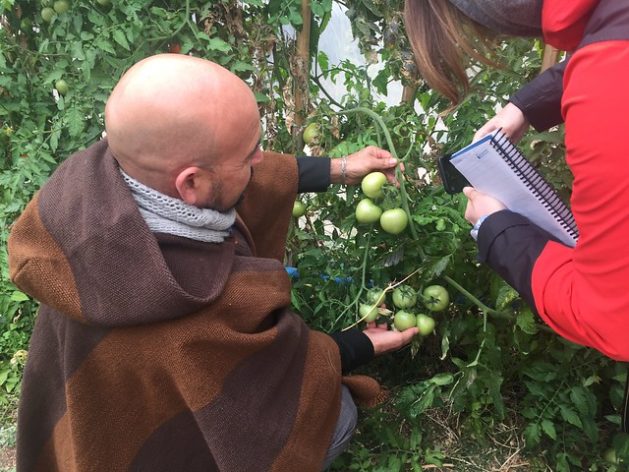
The principal of the Samo Alto rural school, Omar Santander, shows organic tomatoes in the greenhouse built by teachers, students and their families, who raise the crops irrigated with rainwater or recycled water in Coquimbo, a region of northern Chile where rainfall is scarce. Credit: Orlando Milesi/IPS

The principal of the Samo Alto rural school, Omar Santander, shows organic tomatoes in the greenhouse built by teachers, students and their families, who raise the crops irrigated with rainwater or recycled water in Coquimbo, a region of northern Chile where rainfall is scarce. Credit: Orlando Milesi/IPS

OVALLE, Chile, Jul 4 2019 (IPS) – Children from the neighboring municipalities of Ovalle and Río Hurtado in northern Chile are harvesting rain and recycling greywater in their schools to irrigate fruit trees and vegetable gardens, in an initiative aimed at combating the shortage of water in this semi-arid region.


And other youngsters who are completing their education at a local polytechnic high school built a filter that will optimise the reuse and harvesting of water.

“The care of water has to start with the children,” Alejandra Rodríguez, who has a son who attends the school in Samo Alto, a rural village on the slopes of the Andes Mountains in Río Hurtado, a small municipality of about 4,000 inhabitants in the Coquimbo region, told IPS.

“My son brought me a tomato he harvested, to use the seeds. For them, the harvest is the prize. He planted his garden next to the house and it was very exciting,” said Maritza Vega, a teacher at the school, which has 77 students ranging in age from four to 15.

The principal of the school, Omar Santander, told IPS during a tour of rural schools in the area involved in the project that “the Hurtado River (which gives the municipality its name) was traditionally generous, but today it only has enough water for us to alternate the crops that are irrigated, every few days. People fight over watering rights.”

The Samo Alto school collects rainwater and recycles water after different uses. “The water is then sent to a double filter,” he explained, pointing out that they have a pond that holds 5,000 liters.

The monthly water bill is much lower, but Santander believes that the most important thing “is the awareness it has generated in the children.”

“There used to be water here, and the adults’ habits come from back then. The students help raise awareness in their families. We want the environmental dimension to be a tool for life,” he said.

For Admalén Flores, a 13-year-old student, “the tomatoes you harvest are tastier and better,” while Alexandra Honores, also 13, said “my grandfather now reuses water.”

El Guindo primary school, located 10 kilometers from the city of Ovalle, the municipal seat, in a town known as a hotspot for drug sales, performed poorly in tests until three years ago.

At that time, the principal, Patricio Bórquez, and the science teacher, Gisela Jaime, launched a process of greywater recovery. They also planted trees and native species of plants to adapt to the dry environment of the municipality of 111,000 inhabitants, located about 400 kilometers north of Santiago.

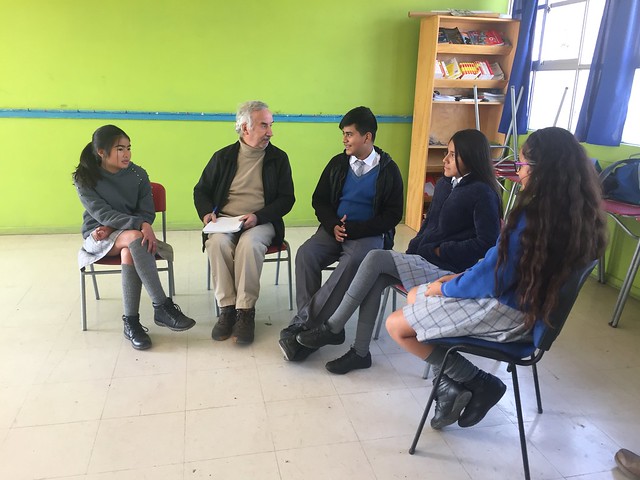
Four students, ages 13 and 14, talk to IPS about how the water reuse project has made them aware of the importance of taking care of water in the semi-arid territory where they live, in a classroom at the rural school of El Guindo, in the municipality of Ovalle, Chile. Credit: Orlando Milesi/IPS

Four students, ages 13 and 14, talk to IPS about how the water reuse project has made them aware of the importance of taking care of water in the semi-arid territory where they live, in a classroom at the rural school of El Guindo, in the municipality of Ovalle, Chile. Credit: Orlando Milesi/IPS

“The project was born because there was no vegetation,” said the teacher. Today they recover 8,000 litres of water a month. “Teaching care for the environment provides a life skill,” said Bórquez.

“Our school had the stigma of being in a place rife with drug addiction. Today in Ovalle we are known as the school with the most programs. We placed third in science,” she said.

Jaime described the experience as “gratifying” because it has offered “tools to grow and create awareness among children and the entire community about the importance of caring for water and other resources.”

Geographer Nicolás Schneider, founder of the “Un Alto en el Desierto” Foundation, told IPS that his non-governmental organisation estimates that one million litres of greywater have been recovered after eight years of work with rural schools in Ovalle.

In this arid municipality with variable rainfall, “only 37.6 mm of rainwater fell in 2018 – well below the normal average for the 1981-2010 period of 105.9 mm,” Catalina Cortés, an expert with Chile’s meteorology institute, told IPS from Santiago.

Schneider describes the water situation as critical in the Coquimbo region, which is on the southern border of the Atacama Desert and where 90 percent of the territory is eroded and degraded.

“Due to climate change, it is raining less and less and when it does, the rainfall is very concentrated. Both the lack of rain and the concentration of rainfall cause serious damage to the local population,” she said.

Innovative recycling filter

With guidance from their teachers, students at the Ovalle polytechnic high school built a filtration system devised by Eduardo Leiva, a professor of chemistry and pharmacy at the Catholic University. The filter seeks to raise the technical standard with which greywater is purified.

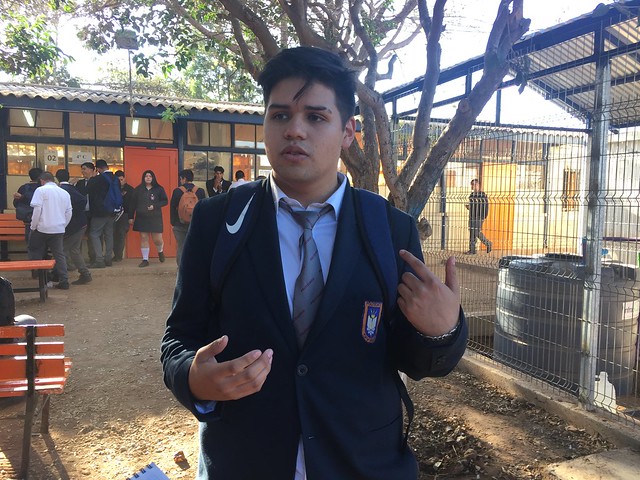
Duan Urqueta, 17, a fourth-year electronics student at the Ovalle polytechnic high school, describes the award-winning greywater filter he helped to build. Initially, units will be installed in eight rural schools in this municipality in northern Chile. Credit: Orlando Milesi/IPS

Duan Urqueta, 17, a fourth-year electronics student at the Ovalle polytechnic high school, describes the award-winning greywater filter he helped to build. Initially, units will be installed in eight rural schools in this municipality in northern Chile. Credit: Orlando Milesi/IPS

The prototype recycles the greywater from the bathrooms used by the 1,200 students at the polytechnic high school. This water is used to irrigate three areas with 48 different species of trees. Similar filters will be installed in eight rural schools in Ovalle.

The quality of the recovered water will improve due to the filter built thanks to a project by the Innovation Fund for Competitiveness of the regional government of Coquimbo, with the participation of the Catholic University, the “Un Alto en el Desierto” Foundation, and the Ovalle polytechnic high school.

The prototype was built by 18 students and eight teachers of mechanics, industrial assembly, electronics, electricity and technical drawing, and includes two 1,000-litre ponds.

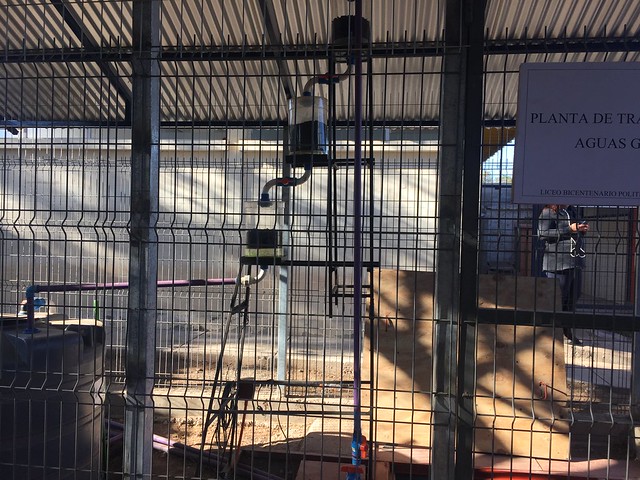
The primary pond holds water piped from the bathroom sinks by gravity which is then pumped to a filter consisting of three columns measuring 0.35 meters high and 0.40 meters in diameter.

“The filter material in each column…can be activated charcoal, sand or gravel,” said Hernán Toro, the head teacher of industrial assembly.

Toro told IPS that “the prototype has a column with zeolite and two columns of activated charcoal. The columns are mounted on a metal structure 2.60 meters high.”

View of the water cleaning filter designed at the Ovalle polytechnic high school and built by a group of teachers and students with funding from the government of the region of Coquimbo, in northern Chile. Each unit costs 2,170 dollars and it will promote water recycling in the schools in the semi-arid municipality. Credit: Orlando Milesi/IPS

View of the water cleaning filter designed at the Ovalle polytechnic high school and built by a group of teachers and students with funding from the government of the region of Coquimbo, in northern Chile. Each unit costs 2,170 dollars and it will promote water recycling in the schools in the semi-arid municipality. Credit: Orlando Milesi/IPS

The water is pumped from the pond to the filter’s highest column, passes through the filter material and by gravity runs sequentially through the other columns. Finally, the water is piped into the secondary pond and by means of another electric pump it reaches the irrigation system.

Duan Urqueta, a 17-year-old electronics student, told IPS that they took soil and water samples in seven towns in Ovalle and “we used the worst water to test the filter that is made here at the high school with recyclable materials.”

In 2018, “we won first place with the filter at the Science Fair in La Serena, the capital of the region of Coquimbo,” he said proudly.

Pablo Cortés, a 17-year-old student of industrial assembly, said the project “changed me as a person.”

Toro said the experience “has been enriching and has had a strong social impact. We are sowing the seeds of ecological awareness in the students.”

“It’s a programme that offers learning, service, and assistance to the community. Everyone learns. We have seen people moved to the point of tears in their local communities,” the teacher said.

Now they are going to include solar panels in the project, which will cut energy costs, while they already have an automation system to discharge water, which legally can only be stored for a short time.

Eight schools, including the ones in Samo Alto and El Guindo, are waiting for the new filters, which cost 2,170 dollars per unit.

Schneider believes, however, that at the macro level “water recycling is insufficient” to combat the lack of water in this semi-arid zone. And he goes further, saying “there is an absence of instruments for territorial planning or management of watersheds.”

“Under the current water regulatory framework, the export agribusiness, mainly of fruit, has taken over the valleys, concentrating water use…and the government turns a blind eye,” he complained.


Indigenous Rights Approach a Solution to Climate Change Crisis

Biodiversity, Civil Society, Climate Change, Conferences, Development & Aid, Environment, Featured, Global, Headlines, Human Rights, Indigenous Rights, Sustainability, TerraViva United Nations

Indigenous Rights

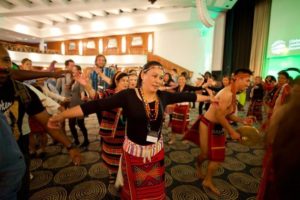
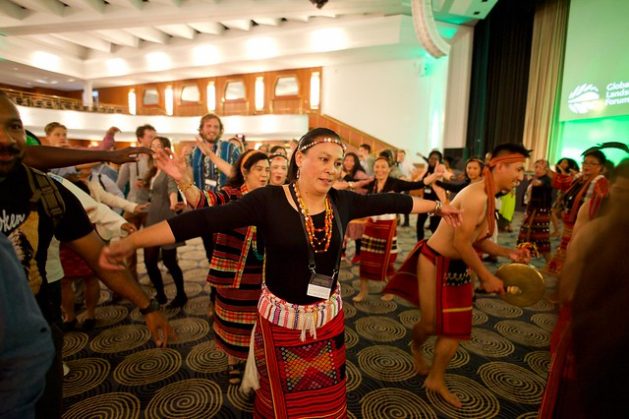
The Global Landscapes Forum (GLF) was held in Bonn, Germany and focused on how to give land rights the visibility needed to showcase that a rights approach, particularly when it comes to indigenous people, is a solution to the climate change crisis. Courtesy: Pilar Valbuena/GLF

Jun 29 2019 (IPS) – The Global Landscapes Forum (GLF) was held in Bonn, Germany to rally behind a new approach to achieving a future that is more inclusive and sustainable than the present – through the establishment of secure and proper rights for all.


On Jun. 22 and 23, experts, political leaders, NGOs and indigenous peoples and communities gathered to deliberate on a methodology that emphasises rights for indigenous peoples and local communities in the management and perseveration of landscapes. The forum took place alongside the  United Nations Framework Convention on Climate Change Bonn Climate Change Conference.

The forum focused giving land rights the visibility needed to showcase that a rights approach is a solution to the climate change crisis, and to develop a ‘gold standard’ for rights.

Indigenous peoples, local communities, women and youth, are believed to be the world’s most important environmental stewards but they are also among the most threatened and criminalised groups with little access to rights.

“We’re defending the world, for every single one of us,” said Geovaldis Gonzalez Jimenez, an indigenous peasant leader from Montes de María, Colombia.

But industries such as fossil fuels, large-scale agriculture, mining and others are not only endangering landscapes but also the lives of the people therein.

Already this year, said Gonzalez, his region witnessed 135 murders, adding that the day before the start of the GLF a local leader was killed in front of a 9-year-old boy.

According to the United Nations, the land belonging to the 350 million indigenous peoples across the globe is one of the most powerful shields against climate change as it holds 80 percent of the world’s biodiversity and sequesters nearly 300 billion metric tons of carbon

It is for this reason that amid the urgency to meet Sustainable Development Goals (SDGs) under pressure from the climate threat, dialogues about the global future have begun to wake up to the fact that indigenous peoples’ relationships with the natural world are not only crucial to preserve for their own sakes, but for everyone’s.

The drafting of the document of rights was led by Indigenous Peoples Major Group (IPMG) for Sustainable Development and the Rights and Resources Initiative in the months leading up to the GLF.

Wider discussions and workshops over the two days served as a consultation on the draft (which is expected to be finalised by the end of the year) as a concrete guide for organisations, institutions, governments and the private sector on how to apply different principles of rights. This includes the rights to free, prior and informed consent; gender equality; respect to cultural heritage; and education.

U.N. Special Rapporteur on the Rights of Indigenous Peoples Vicky Tauli-Corpuz said lands managed by indigenous peoples with secure rights have lower deforestation rates, higher biodiversity levels and higher carbon storage than lands in government-protected areas.

But Diel Mochire Mwenge, who leads the Initiative Programme for the Development of the Pygme in the Democratic Republic of Congo (DRC), one of the largest indigenous forest communities in Central Africa, said he has witnessed more than one million people being evicted from the national parkland where they have long lived. He explained that they had not been given benefits from the ecotourism industries brought in to replace them and were left struggling to find new income sources.

“Our identity is being threatened, and we need to avoid being completely eradicated,” said Mwenge.

In Jharkhand, India, activist Gladson Dungdung, whose parents were murdered in 1990 for attending a court case over a local land dispute, said an amendment to India’s Forest Rights Act currently being reviewed by the Supreme Court could see 7.5 million indigenous peoples evicted from their native forest landscapes. The act can impact a further 90 million people who depend on these forests’ resources for their survival, he said.

The amendment, Dungdung said, would also give absolute power to the national forest guard; if a guard were to see someone using the forest for hunting or timber collection, they could legally shoot the person on-sight.

“Indigenous peoples are right on the frontline of the very real and dangerous fight for the world’s forests,” said actor and indigenous rights activist Alec Baldwin in a video address.

“Granted that indigenous peoples are the superheroes of the environmental movement,” Jennifer Morris, president of Conservation International wondered why they are not heard until they become victims. “Why do we not hear about these leaders until they’ve become martyrs for this cause?”

The examples of intimidation, criminalisation, eviction and hardship shared throughout the first day clearly showcased what indigenous peoples and local communities go through to preserve the forests or ‘lungs of the earth’.

The rights approach, according to conveners of the GLF, aims to strengthen respect, recognition and protection of the rights of indigenous peoples and local communities as stewards and bearers of solutions to landscape restoration, conservation, and sustainable use. It also aims to end persecution of land and environment defenders; build partnerships to enhance engagement and support for rights-based approaches to sustainable landscapes across scales and sectors; and, scale up efforts to legally recognise and secure collective land and resource rights across landscapes.

“By implementing a gold standard, we can both uphold and protect human rights and develop conservation, restoration and sustainable development initiatives that embrace the key role Indigenous peoples and local communities are already playing to protect our planet,” said Joan Carling, co-convener of IPMG.

IPMG recognises that indigenous and local communities are bearers of rights and solutions to common challenges.

“This will enable the partnership that we need to pave the way for a more sustainable, equitable and just future,” added Carling.

And the Center for International Forestry Research (CIFOR) Director General, Robert Nasi, said when rights of local communities and indigenous peoples are recognised, there are significant benefits for the fight against climate change and environmental degradation.

“Whoever controls the rights over these landscapes has a very important part to play in fighting climate change,” he said.

In the climate and development arenas, the most current alarm being sounded is for rights–securing the land rights and freedoms of indigenous peoples, local communities and the marginalised members therein.

How can these custodians of a quarter of the world’s terrestrial surface be expected to care for their traditional lands if the lands don’t, in fact, belong to them? Or, worse, if they’re criminalised and endangered for doing so?

The basic principles of a ‘gold standard’ already exist, such as free, prior and informed consent, according to Alain Frechette of the Rights and Resources Initiative (RRI). What has been lacking, he said, is the application of principles that could be boosted by high-level statements that could “spur a race to the top”.


There’s No Continent, No Country Not Impacted by Land Degradation

Biodiversity, Climate Change, Combating Desertification and Drought, Conferences, Editors’ Choice, Featured, Global, Headlines, Regional Categories, Sustainability, TerraViva United Nations

Combating Desertification and Drought

On all continents you have the issue of land degradation, and it requires governments, land users and all different communities in a country to be part of the solution. Credit: Albert Oppong-Ansah /IPS

ANKARA, Jun 17 2019 (IPS) – The coming decades will be crucial in shaping and implementing a transformative land agenda, according to a scientist at the United Nations Convention to Combat Desertification (UNCCD) framework for Land Degradation Neutrality (LDN).


UNCCD-Science Policy Interface co-chair Dr. Mariam Akhtar-Schuster, who spoke with IPS ahead of the start of activities to mark World Day to Combat Desertification (WDCD) on Monday, Jun. 17, said this was one of the key messages emerging for policy- and other decision-makers.

This comes after the dire warnings in recent publications on desertification, land degradation and drought of the Global Land OutlookIntergovernmental Science-Policy Platform on Biodiversity and Ecosystem Services (IPBES) Assessment Report on Land Degradation and Restoration, World Atlas of Desertification, and IPBES Global Assessment on Biodiversity and Ecosystem Services.

“The main message is: things are not improving. The issue of desertification is becoming clearer to different communities, but we now have to start implementing the knowledge that we already have to combat desertification,” Akhtar-Schuster told IPS.

“It’s not only technology that we have to implement, it is the policy level that has to develop a governance structure which supports sustainable land management practices.”

IPBES Science and Policy for People and Nature found that the biosphere and atmosphere, upon which humanity as a whole depends, have been deeply reconfigured by people.

The report shows that 75 percent of the land area is very significantly altered, 66 percent of the ocean area is experiencing increasing cumulative impacts, and 85 percent of the wetland area has been lost.

“There are of course areas which are harder hit; these are areas which are experiencing extreme drought which makes it even more difficult to sustainably use land resources,” Akhtar-Schuster said.

“On all continents you have the issue of land degradation, so there’s no continent, there’s no country which can just lean back and say this is not our issue. Everybody has to do something.”

Akhtar-Schuster said there is sufficient knowledge out there which already can support evidence-based implementation of technology so that at least land degradation does not continue.

While the information is available, Akhtar-Schuster said it requires governments, land users and all different communities in a country to be part of the solution.

“There is no top-down approach. You need the people on the ground, you need the people who generate knowledge and you need the policy makers to implement that knowledge. You need everybody,” the UNCCD-SPI co-chair said.

“Nobody in a community, in a social environment, can say this has nothing to do with me. We are all consumers of products which are generated from land. So, we in our daily lives – the way we eat, the way we dress ourselves – whatever we do has something to do with land, and we can take decisions which are more friendly to land than what we’re doing at the moment.”

UNCCD-Science Policy Interface co-chair Dr. Mariam Akhtar-Schuster says things are not improving and that the issue of desertification is becoming clearer to different communities. Credit: Desmond Brown/IPS

UNCCD Lead Scientist Dr. Barron Joseph Orr said it’s important to note that while the four major assessments were all done for different reasons, using different methodologies, they are all converging on very similar messages.

He said while in the past land degradation was seen as a problem in a place where there is overgrazing or poor management practices on agricultural lands, the reality is, that’s not influencing the change in land.

“What’s very different from the past is the rate of land transformation. The pace of that change is considerable, both in terms of conversion to farm land and conversion to built-up areas,” Orr told IPS.

“We’ve got a situation where 75 percent of the land surface of the earth has been transformed, and the demand for food is only going to go up between now and 2050 with the population growth expected to increase one to two billion people.”

That’s a significant jump. Our demand for energy that’s drawn from land, bio energy, or the need for land for solar and wind energy is only going to increase but these studies are making it clear that we are not optimising our use,” Orr added.

Like Akhtar-Schuster, Orr said it’s now public knowledge what tools are necessary to sustainably manage agricultural land, and to restore or rehabilitate land that has been degraded.

“We need better incentives for our farmers and ranchers to do the right thing on the landscape, we have to have stronger safeguards for tenures so that future generations can continue that stewardship of the land,” he added.

The international community adopted the Convention to Combat Desertification in Paris on Jun. 17, 1994.

On the occasion of the 25th anniversary of the Convention and the World Day to Combat Desertification in 2019 (#2019WDCD), UNCCD will look back and celebrate the 25 years of progress made by countries on sustainable land management.

At the same time, they will look at the broad picture of the next 25 years where they will achieve land degradation neutrality.

The anniversary campaign runs under the slogan “Let’s grow the future together,” with the global observance of WDCD and the 25th anniversary of the Convention on Jun. 17, hosted by the government of Turkey.


Global Governance and Information

Civil Society, Civilisations Find Alliances, Climate Change, Development & Aid, Education, Environment, Featured, Global, Global Governance, Headlines, Human Rights, Natural Resources, Peace, Poverty & SDGs, TerraViva United Nations

Opinion

Ambassador Walther Lichem* of Austria is President Inter Press Service (IPS).

VIENNA, Apr 16 2019 (IPS) – The past seventy years since the end of the second world war have been marked by profound changes in our international system. Relations between states have become more horizontally structured interactions with a rising significance of the common good articulated and pursued by newly-created international programmes and organisations.


Ambassador Walther Lichem

The international agenda increasingly consists of items addressing internationally and globally-shared challenges of dependencies and interdependencies.

The traditional security and peace focus has been broadened into areas of concern which require contributions and activities not only by states but by international organisations and programmes who jointly with non-state actors such as academic institutions and associations, civil society organisations, the private sector including those who joined the Global Compact, have contributed to a new pattern of leadership in the processes of defining our global goals and in the implementation of the related programmes of action.

Another characterizing element in our Global Agenda related-approach is the inter-sectoral interdependence reflected in the international community’s agenda marked by “AND” – “climate change and international security”, “human rights and societal cohesion” etc.

These agenda—and interrelated-ness—require, however, also institutional integration cutting across the institutional development marked by sectoral segregation. There is a rising need for each agenda sector to be fully up-to-date regarding the entire pattern of global challenges and the related plans of action, using this level of information for the development of institutional integration.

There is also a rising need for information flows between governmental/ intergovernmental and non-governmental organizations (NGOs).

The new global agenda benefits from the work and conclusions of academic institutions and programmes, a relationship which regrettably has not yet been fully recognized by the international system.

Many of our important global agenda items based their policy approach on research and academic discourse – e.g. the issue of environmental protection, the concept of sustainability, the process of climate change, the societal development needs and human rights etc.

Another dimension of the pluralisation of global governance affectedness and responsibility is the role of each and every citizen on the globe to know and understand these challenges and assume a rising responsibility in addressing them.

Certain agenda areas, such as environmental protection, the sustainable development and use of our natural resource systems, human rights and human security have given the citizen an almost central role in the achievement of the declared objectives.

Today, every citizen can contribute to the recognition of the dignity of the other and the related human rights. The impact of citizen-focused human rights programmes is visible in human rights cities in all regions of the world. The citizen creating conditions of societal cohesion also essentially contributes to peace and security.

Private sector decisions can make important contributions to both the natural resources related and societal cohesion-related challenges. Academic institutions must adjust their programmes of research and of university education to the global agenda-related challenges.

The cultural sector provides important inputs into the development of values and related behavioural patterns related to the challenges of pluri-identity societies and the integration of otherness.

All these new patterns of responsibility and contributions to achievements for our Global Agenda, however, do require qualified information. It must be recognized that complex academic or policy-process related studies and reports are not accessible to the general citizenship including those in positions of responsibility at local and national levels.

Even governmental institutions and the international diplomatic community cannot internalize all the documents which are to serve as a basis for multilateral negotiations.

The development of this new participatory system of global governance with intergovernmental institutions and processes, national governments and local authorities has led to the recognition of an urgent need for qualified patterns of information which translate challenges, achievements and failures to the political responsibilities at local, national and also international levels, to governmental, inter-governmental and non-governmental institutions who have increasingly shaped our Global Agenda and articulated the rising need for societal understanding and information.

Media are the classical providers of such information combining data with assessments and the vision of our common future. Yet, as analysis of the current situation underlines, there is an urgent need to strengthen qualified information systems which would provide not only governmental, intergovernmental and non-governmental institutions and the citizens but also the media with pertinent and needed information.

There is no way into a future of shared global responsibility without a qualified and also ethically committed system of information related to our processes of global change.

There is a need to recognize that such highly pertinent information related to our common future requires recognition and support from the global society as a contribution to our shared global public space.

This implies that support is to be provided from governmental, intergovernmental and non-governmental institutions. A respective policy discourse with participation from these institutions is to be envisaged in order to prevent the decay or elimination of qualified programmes like Inter Press Service.

*Walther Lichem, retired Austrian Ambassador with studies in law and oriental archaeology (Univ. of Graz, Austria) and political science (Univ. of North Carolina, Chapel Hill; Institute for Advanced Studies, Vienna) started his professional career in 1966 at the United Nations Secretariat in New York in the field of international water resources with development cooperation missions to Ethiopia (1971), Argentina (1971-74) and to the Senegal River Development Organisation (1980). He was also Rapporteur on international river basins at the International Conference on Water Law (Caracas, 1976) and at the IVth World Water Conference (Buenos Aires, 1982).
Ambassador Lichem undertook major assignments in the UN system at the Human Rights Summit in Vienna in 1992 and as Ambassador to Chile and to Canada, as a member of the UN Committee on the Peaceful Uses of Outer Space and as an adviser to the 16 countries sharing the Guinea Current in West and Central Africa on the creation of a regional organisation.


Innovative Sustainable Business: A Three Trillion-Dollar Opportunity that UN Environment Wants People to Develop

Africa, Climate Change, Conferences, Economy & Trade, Editors’ Choice, Environment, Featured, Global, Green Economy, Headlines, IPS UN: Inside the Glasshouse, Natural Resources, Regional Categories, Sustainability, TerraViva United Nations, Trade & Investment

Environment

Achenyo Idachaba-Obaro, the founder of Mitimeth, a social enterprise that has trained hundreds of women on how to make popular handicrafts from water hyacinth. Credit: Isaiah Esipisu/IPS

NAIROBI, Mar 12 2019 (IPS) – In the East African region, communities around the continent’s largest water body, Lake Victoria, regard the water hyacinth as a great menace that clogs the lake and hampers their fishing activities. But in Lagos, Nigeria, some groups of women have learned how to convert the invasive weed into a resource, providing them with the raw material needed to make handicrafts.


“Our biggest challenge right now is the market where these women can sell their finished products from the water hyacinth,” said Achenyo Idachaba-Obaro, the founder of Mitimeth, a social enterprise that has trained hundreds of women on how to make popular handicrafts from water hyacinth.

Dressed in a blouse partly made of fabric from water hyacinth and buttons made from a coconut shell at the ongoing United Nations Environment Assembly (UNEA) in Nairobi, Kenya, Idachaba-Obaro showcased several products made from the aquatic weed ranging from boutique dresses, unique multipurpose baskets, vases, stationery, wall decor, and dining ware, among others.

“All these items are a product of handcrafts by women whom we have trained, and they are now able to generate extra income from a weed that is seen as a menace to many other people worldwide,” she told IPS.

So far, over 350 women, comprising mostly of widows but who also include students and teachers, from riparian rural communities have been trained on how to make finished products from water hyacinth, and they all sell them locally.

“Whenever we have a ready market, we always call on them to make water hyacinth ropes for us, which is the first stage of developing any water hyacinth fabric,” said Idachaba-Obaro.

In the past few months for example, a team of 70 women were able to make ropes which earned them 1.4 million Naira (3,880 dollars). “It has become a big business in Nigeria where everybody wants to be involved,” she said.

Her exhibition was one of the 42 technologies and innovative solutions from around the world that formed the 2019 Sustainable Innovation Expo at the UNEA conference in Nairobi, which is being held Mar. 8-15.
To move such innovations forward through research and to later upscale them, Joyce Msuya, the U.N. Environment Acting Executive Director and Assistant Secretary-General of the U.N. urged countries to provide enabling environments for both innovators and researchers.

“Innovation will be the heartbeat of the transformation we want and this cannot happen by itself. Policies and incentives to spur innovation and sustainable consumption and production must be backed by efforts to build implementation capacity,” she told the more than 4,000 delegates from 170 countries during the official opening of the assembly in Nairobi.

According to Siim Kisler, the Minister of Environment in Estonia and the UNEA President, there is need to find innovative solutions for environmental challenges through different approaches to sustainable consumption and production, inspiring nations, private sector players and individuals.

The Expo is the U.N. Environment Assembly’s solution-based platform for engaging innovators using exhibitions that reveal the latest technologies, panel discussions, and networking opportunities.

Other innovative techniques showcased at the expo include ‘Timbeter’ a digital (mobile app) timber measurement solution that uses a smart phone for accurate log detection.

“With this app on your smart phone, you only need to point the phone camera to say a lorry full of timber, and it will accurately give you the total number of logs on the truck, and circumference measurement of each of the logs,” Anna-Greta Tsahkna the Co-founder of the Estonian-based Timbeter told IPS.

So far, the technology has been embraced in Thailand, Brazil, South Africa, Russia and Chile where companies are using it to share measurements with contractors and clients. They use it to count logs, the log diameter and density in less than 3 minutes. It is an important tool in eradicating illegal logging.

Apart from another exhibition by a Canadian company that uses shipping containers to create affordable and sustainable housing, Brazilian experts from a company called Votorantim were showcasing a technique where they extract DNA from different forest species to analyse their chemical makeup.

“This makes it easy for users to know which type of trees, plants, grass or anything within the biodiversity they should target based on what they want to extract for medicines, cosmetics, perfumes among others,” said Frineia Rezente, the Executive Manager of Votorantim, said.

According to a statement by U.N. Environment, innovative sustainable business represents a trillion-dollar opportunity that can bring value to people and the environment.