Fiji: Deeper Democracy or Continuing Danger?

Credit: Pita Simpson/Getty Images

By Andrew Firmin
LONDON, Apr 28 2023 (IPS)

It’s been a time of significant change in Fiji following the country’s December 2022 election. A close vote was followed by the formation of a new coalition government. Frank Bainimarama was out as prime minister after 16 years, replaced by Sitiveni Rabuka.


Rabuka was hardly a new face, having been prime minister in the 1990s, and both Bainimarama and Rabuka had previously led military coups. For Fiji’s civil society, the question was whether this political shift would bring improvements in civic and democratic freedoms. Bainimarama’s government had shown itself increasingly intolerant of dissent.

People who criticised the government were subjected to harassment and arrest. In July 2021, nine opposition politicians were arrested, questioned and accused of inciting unrest. In 2020, opposition party offices were raided by police in response to social media posts critical of the government.

The outgoing government used the Public Order Act to restrict protests, including by opposition parties. The Fiji Trade Union Congress was repeatedly denied permission to march and its leader charged with public order offences. Police often used excessive force against protests, with impunity. There was, in short, much room for improvement.

Positive steps on media freedom

The most encouraging move so far is the repeal of the Media Industry Development Act. This law, passed under the Bainimarama government, established a highly interventionist government-controlled media regulator. Journalists could be jailed for two years and media outlets slapped with heavy fines if their reporting was judged to go against the national or public interest – vague terms open to broad interpretation. This encouraged self-censorship.

The law was one of the main reasons Fiji was the lowest-ranking Pacific Island nation on Reporters Without Borders’ World Press Freedom Index. Media freedom constraints came from the top, with the government favouring state-aligned media, including by withholding advertising from more critical outlets.

Now the media and civil society will be looking for the government to go further. A sedition law that can bring extensive jail sentences remains in need of reform. And beyond this, the government needs to actively support the development of independent Fijian media, including through the fairer distribution of ad spending.

The new government has also moved to rebuild relationships with trade unions. In February it confirmed it would re-establish an effective tripartite forum that brings together government, trade unions and employers; its predecessor was accused of not taking this seriously. The new government has said it will bring to an end the harassment, intimidation and arrest of union leaders. Unions will work to hold the government to these promises.

A fall from grace

These changes have come against a backdrop of continuing political polarisation. It’s been quite the journey for Bainimarama since losing power. In February he was suspended from parliament. This came after he used his first speech as leader of the opposition to deliver a stinging critique of Fiji’s president, Ratu Wiliame Katonivere.

In his speech, Bainimarama appealed to the military to ‘not forsake their constitutional role’. This seemed a coded plea for military intervention: the 2013 constitution, introduced by Bainimarama, gives the military the power to intervene to ensure the ‘safety and security of the country’. When he was still prime minister, as post-electoral negotiations were taking place, Bainimarama had ordered the military onto the streets.

Bainimarama’s response to his suspension was to resign from parliament. But he made clear his intent to stay politically active and remains party leader.

Last month Bainimarama was charged with abuse of office while prime minister. He was granted bail after pleading not guilty. He’s alleged to have intervened to stop a police investigation into alleged corruption at the University of the South Pacific. Police Commissioner Sitiveni Tukaituraga Qiliho, currently suspended, is also charged with abuse of office for the same case and has also pleaded not guilty.

Dangers ahead

The obvious danger is that Bainimarama, no longer confined by parliamentary niceties, could seek to stir unrest through sensationalism and disinformation, which could offer a pretext for his supporters in the military to intervene. The spectre of military rule is never far away in Fiji. There have been four coups since independence in 1970. Rabuka led two in 1987 and then Bainimarama headed coups in 2000 and 2006. In this context, it’s ominous that in January the head of the army expressed concern about ‘sweeping changes’ being introduced by the new government.

On all occasions the pretext for coups has been ethnic unrest, with Fiji’s population broadly divided between Indigenous Fijians and people of Asian heritage. Civil society and the international community will need to stay alert to any attempts to foster division and mobilise one population group against the other.

At the same time the new government needs to beware of fuelling narratives that it’s being vindictive towards Bainimarama and his party. There’s a need to ensure that diverse points of view can be aired – including from the new opposition. As a former coup leader, Rabuka needs to keep proving his commitment to democracy.

What happens next in Fiji is of concern not just for Fijians but for the region, since the country is a major hub and host of key regional institutions. China and the USA, along with Australia, are trying to build closer relations with Fiji as they compete for influence among Pacific Island nations. So whether Fiji becomes more democratic and opens up civic space matters.

In these early days of the new government there can be no room for complacency. Fiji’s civil society must be supported and enabled as a vital democratic force. And it must keep on engaging constructively to ensure that government promises are followed by deeds that advance rights.

Andrew Firmin is CIVICUS Editor-in-Chief, co-director and writer for CIVICUS Lens and co-author of the State of Civil Society Report.


!function(d,s,id){var js,fjs=d.getElementsByTagName(s)[0],p=/^http:/.test(d.location)?’http’:’https’;if(!d.getElementById(id)){js=d.createElement(s);js.id=id;js.src=p+’://platform.twitter.com/widgets.js’;fjs.parentNode.insertBefore(js,fjs);}}(document, ‘script’, ‘twitter-wjs’);  

Source

“Defending Human Rights Is a Crime in Some Countries and a Deadly Activity in Others”

An activist in Colombia, the deadliest country in the world for human rights defenders in 2022, accounting for 186 killings – or 46% – of the global total registered last year. Credit: Sebastian Barros

By Bibbi Abruzzini and Clarisse Sih, Forus
BRUSSELS, Apr 27 2023 (IPS)

In today’s world, human rights defenders face immense challenges, with threats, attacks, and repression being rampant in many countries. According to the latest report by Front Line Defenders, killings of rights defenders increased in 2022, with a total of 401 deaths across 26 different countries. Despite the adoption of the UN Declaration on Human Rights Defenders 25 years ago, the threats faced by defenders persist globally.


One striking example of the dire situation is in Bolivia, where violations of freedoms of expression, association, peaceful assembly, and the right to defend rights have been recorded by the Observatory of Rights Defenders of UNITAS, with the Permanent Assembly of Human Rights of Bolivia (APDHB) being a longstanding victim of attacks and delegitimization. A total of 725 violations of the freedoms of expression, association and peaceful assembly, democratic institutions and the right to defend rights have been recorded by the Observatory of Rights Defenders.

Gladys Sandova, a human rights and environmental defender in the Tariquía Flora and Fauna National Reserve in Bolivia, reveals how the state often aligns with oil businesses instead of protecting communities. “Tariquía is the lung of Tarija,” Gladys explains, yet this vital source of water for southern Bolivia and home to over 3,000 people, is at risk due to the state-owned Yacimientos Petrolíferos Fiscales Bolivianos (YPFB) seeking to revive oil exploration in the reserve.

“Oil companies are here, we are going to lose our natural richness, they are going to affect the lives of families, and contaminate our water and our air,” says Gladys, reflecting the urgent need to defend human rights and the environment.

Her story is similar to that of several other human rights defenders across the globe : they are victims of hostilities, interference, threats, and harassment. The campaign, ReImagina La Defensa de Derechos, by UNITAS collects the testimonies of human rights defenders and indigenous leaders across Bolivia raising awareness about the challenges they face.

Stories from human rights defenders from across the globe are also featured in the #AlternativeNarratives campaign, which seeks to amplify the voices of civil society organizations and grassroots movements that work towards social justice, human rights, and sustainable development. The campaign encourages the use of storytelling, multimedia tools, and creative expression to highlight alternative perspectives, challenge stereotypes, and advocate for positive chang while fostering a more inclusive and equitable narrative space that reflects the diversity of human experiences and promotes solidarity, empathy, and mutual understanding.

Human rights defenders, including women defenders, continue to mobilize against repressive regimes and occupying forces in countries like Afghanistan, the DRC, El Salvador, Iran, Myanmar, Sudan, and Ukraine. Mary Lawlor, UN Special Rapporteur on the situation of human rights defenders, highlights the underreporting of human rights violations against defenders, particularly women, and outlines “disturbing trends” in relation to civic space worldwide.

Repongac, representing over 1,200 NGOs in Central Africa, states that “human rights in Central Africa are no longer guaranteed,” with civil society actors, journalists, and defenders facing repression, prosecution, and arrests. Recent campaigns organized by Repongac in Central Africa and Repaoc in West Africa, supported by Forus and the French Development Agency, brought together diverse stakeholders, including human rights defenders, political parties, parliamentarians, journalists, and security personnel, to initiate a dialogue and protect civic space amnd fundametnal freedoms in the region.

To support activists and defenders globally, the Danish Institute for Human Rights has launched a monitoring tool that assesses whether an enabling environment for human rights defenders exists across five critical areas. Developed in collaboration with 24 institutions and organizations, including the United Nations and civil society networks, the tool not only tracks the number of killings of human rights defenders but also analyzes the presence of appropriate legislation and practices to protect defenders.

As Carol Rask, a representative of the Danish Institute for Human Rights, explains, defending human rights is a crime in some countries and a deadly activity in others. It is a call to action for change, urging individuals, organizations, and governments to prioritize and protect the crucial work of human rights defenders worldwide.

Griselda Sillerico, human rights defender in Bolivia for over 30 years, quotes Ana María Romero and says “human rights are seeds that we continue to plant and that over the years we harvest.” Griselda Sillerico’s quote echoes the enduring spirit of human rights advocacy, where the work of human rights defenders like her is a constant effort to sow the seeds of justice, equality, and dignity for all. Despite the challenges and setbacks, human rights defenders across the world continue to plant these seeds, often at great personal risk, with the hope of reaping a future where human rights are universally respected and protected.

IPS UN Bureau


!function(d,s,id){var js,fjs=d.getElementsByTagName(s)[0],p=/^http:/.test(d.location)?’http’:’https’;if(!d.getElementById(id)){js=d.createElement(s);js.id=id;js.src=p+’://platform.twitter.com/widgets.js’;fjs.parentNode.insertBefore(js,fjs);}}(document, ‘script’, ‘twitter-wjs’);  

Source

Global Solidarity Needed to Address Taliban’s Attacks on Women’s Rights

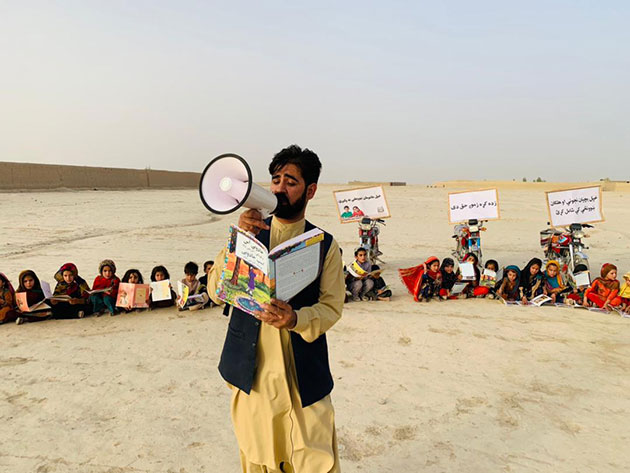
Matiullah Wesa worked with community and tribal leaders in remote areas in Afghanistan to advocate for education and bring learning closer to communities.

By David Kode
JOHANNESBURG, Apr 19 2023 (IPS)

Matiullah Wesa’s crime was to try to ensure young people got an education in Afghanistan. His recent forceful abduction by the Taliban offers the latest stark reminder that global solidarity and coherent action from the international community are needed to prevent the complete loss of the rights of women and girls in Afghanistan.


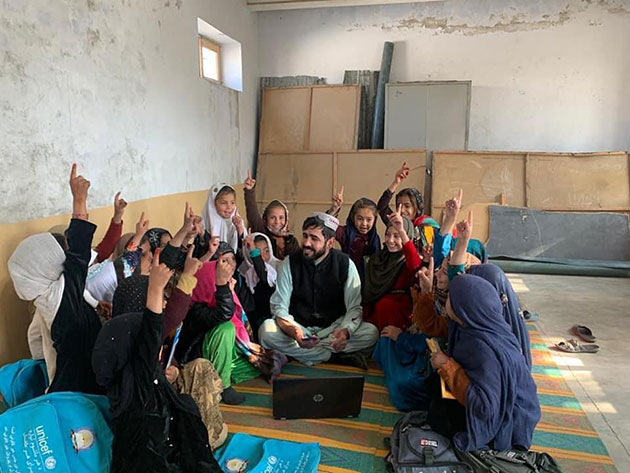
Matiullah has been at the forefront of advocating for access to education as a co-founder and leader of Pen Path. For more than a decade, Pen Path has worked with community and tribal leaders in remote areas in Afghanistan to advocate for education and bring learning closer to communities. It works to enlighten communities about the importance of education, particularly girl’s and women’s education, organises book donations, runs mobile libraries in remote areas and reopens schools closed by years of conflict and insecurity. Pen Path has reopened over 100 schools, distributed more than 1.5 million items of stationery and provided education facilities for 110,000 children – 66,000 of them girls. This is what Matiullah is being punished for.

The abduction of Matiullah and many others advocating for the rights of education point to a concerted effort by the Taliban to try to restrict women’s and girls’ access to education and silence those advocating for education and an inclusive society.

There are sadly many other instances. In November 2022 around 60 Taliban members stormed a press conference organised to announce the formation of Afghan Women Movement for Equality. They arrested conference participants and deleted all images from their phones.

Immediately after taking power in August 2021, the Taliban instructed women to stay at home and avoid travelling. In December 2022, the Ministry of Higher Education announced it had suspended university education for women until further notice. Taliban officials argued that female students did not wear proper clothing on campus and announced it was enforcing gender segregation in schools. These decisions have been accompanied by others that force thousands of female workers to stay at home and prevent women and girls entering public spaces such as parks.

In December 2022 the Taliban banned women from working for international and national civil society organisations. This was a move that could only be counter-productive, since women play a vital role in providing essential services that people need. Banning women from working for civil society organisations affects millions in dire need of humanitarian assistance and services to women and children, as well as further increasing unemployment. The Taliban urged organisations to suspend female staff under the pretence that workers did not adhere to the regime’s strict dress code.

Most recently, women have been banned from working for United Nations agencies that are operating in Afghanistan. The United Nations may have to pull out.

It has taken just months for the Taliban to reverse the gains made over the years before their return that saw Afghan women claim visibility in public life and work such roles as broadcasters, doctors and judges.

Women in Afghanistan are fighting but can’t succeed alone

These restrictions on women’s rights should be seen in the context of the closing of civic space and attacks on other fundamental rights. As a result, Afghanistan’s civic space rating was recently downgraded to closed, the worst category, by the CIVICUS Monitor, a research partnership that tracks civic space conditions in 197 countries.

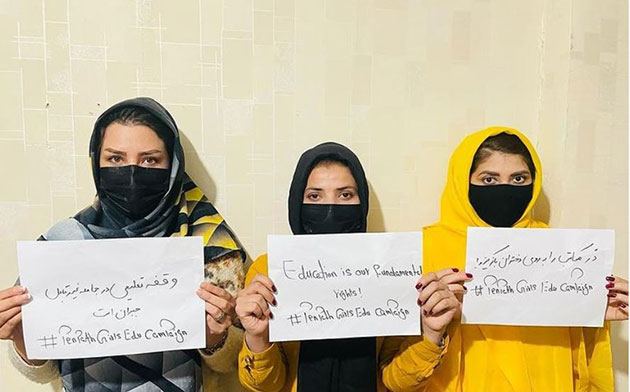
Despite the ongoing restrictions against women, the brave women of Afghanistan refuse to back down. They continue to organise what protests they can against restrictions and women human rights defenders continue to advocate for the rights of all women and girls to access education and participate in decision-making processes.

When women protest against restrictions, they risk harassment, physical and psychological torture and detentions. Some have been forcefully abducted from their homes. In January 2022, Taliban gunmen raided the homes of women human rights defenders Parwana Ibrahimkhel and Tamana Zaryab and abducted them.

No society can reach its real potential without the participation of women. The international community must double its efforts to support women and girls in Afghanistan. States should respond proactively to the United Nations 2023 appeal for Afghanistan. Aid should however be made conditional on guarantees to uphold the fundamental rights of women and girls. The international community should accompany aid with a strategy to build a more inclusive and open society.

Not to do so would be to abandon the likes of Matiullah Wesa, the many others like him penalised for standing up for education and rights, and the women of girls of Afghanistan being forced into silence.

David Kode is the Advocacy and Campaigns Lead at CIVICUS, the global civil society alliance.


!function(d,s,id){var js,fjs=d.getElementsByTagName(s)[0],p=/^http:/.test(d.location)?’http’:’https’;if(!d.getElementById(id)){js=d.createElement(s);js.id=id;js.src=p+’://platform.twitter.com/widgets.js’;fjs.parentNode.insertBefore(js,fjs);}}(document, ‘script’, ‘twitter-wjs’);  

Source

Belarus: A Prison State in Europe

By Andrew Firmin
LONDON, Mar 15 2023 (IPS)

Last October, Ales Bialiatski was awarded the Nobel Peace Prize. He was one of three winners, alongside two human rights organisations: Memorial, in Russia, and the Center for Civil Liberties in Ukraine. The Nobel Committee recognised the three’s ‘outstanding effort to document war crimes, human rights abuses and the abuse of power’.


But Bialiatski couldn’t travel to Oslo to collect his award. He’d been detained in July 2021 and held in jail since. This month he was found guilty on trumped-up charges of financing political protests and smuggling, and handed a 10-year sentence. His three co-defendants were also given long jail terms. There are many others besides them who’ve been thrown in prison, among them other staff and associates of Viasna, the human rights centre Bialiatski heads.

Crackdown follows stolen election

The origins of the current crackdown lie in the 2020 presidential election. Dictator Alexander Lukashenko has held power since 1994, but in 2020 for once a credible challenger slipped through the net to stand against him. Sviatlana Tsikhanouskaya ran against Lukashenko after her husband, democracy activist Sergei Tikhanovsky, was arrested and prevented from doing so. Her independent, female-fronted campaign caught the public’s imagination, offering the promise of change and uniting many voters.

Lukashenko’s response to this rare threat was to arrest several members of Tsikhanouskaya’s campaign staff, along with multiple opposition candidates and journalists, introduce additional protest restrictions and restrict the internet. When all of that didn’t deter many from voting against him, he blatantly rigged the results.

This bare-faced act of fraud triggered a wave of protests on a scale never seen under Lukashenko. At the peak in August 2020, hundreds of thousands took to the streets. It took a long time for systematic state violence and detentions to wear the protests down.

Everything Lukashenko has done since is to suppress the democracy movement. Hundreds of civil society organisations have been forcibly liquidated or shut themselves down in the face of harassment and threats. Independent media outlets have been labelled as extremist, subjected to raids and effectively banned.

Jails are crammed with inmates: currently it’s estimated Belarus has 1,445 political prisoners, many serving long sentences after trials at biased courts.

Lukashenko’s only ally

Lukashenko’s repression is enabled by an alliance with an even bigger pariah: Vladimir Putin. When the European Union and democratic states applied sanctions in response to Lukashenko’s crackdown, Putin provided a loan that was crucial in helping him ride out the storm.

This marked a break in a long strategy of Lukashenko carefully balancing between Russia and the west. The effect was to bind the two rogue leaders together. That’s continued during Russia’s war on Ukraine. When the invasion started, some of the Russian troops that entered Ukraine did so from Belarus, where they’d been staging so-called military drills in the days before. Belarus-based Russian missile launchers have also been deployed.

Just days after the start of Russia’s invasion, Lukashenko pushed through constitutional changes, sanctioned through a rubber-stamp referendum. Among the changes, the ban on Belarus hosting nuclear weapons was removed.

Last December Putin travelled to Belarus for talks on military cooperation. The two armies took part in expanded military training exercises in January. Following the constitutional changes, Putin promised to supply Belarus with nuclear-capable missiles; Belarus announced these were fully operational last December.

Belarussian soldiers haven’t however been directly involved in combat so far. Putin would like them to be, if only because his forces have sustained much higher-than-expected losses and measures to fill gaps, such as the partial mobilisation of reservists last September, are domestically unpopular. Lukashenko has struck a balance between belligerent talk and moderate action, insisting Belarus will only join the war if Ukraine attacks it.

That may be because Belarus’s enabling of Russia’s aggression has made people only more dissatisfied with Lukashenko. Many Belarussians want no involvement in someone else’s war. Several protests took place in Belarus at the start of the invasion, leading to predictable repression similar to that seen in Russia, with numerous arrests.

Crucially, Belarus’s security forces stuck by Lukashenko at the peak of protests; if they’d defected, the story could have been different. Full involvement in the war would likely see even Lukashenko loyalists turn against him, including in the military. Soldiers might refuse to fight. It would be a dangerous step to take. As Russia’s war drags on, Lukashenko could find himself walking an increasingly difficult tightrope.

Two countries, one struggle

It’s perhaps with this in mind that Lukashenko’s latest repressive move has been to extend the death penalty. State officials and military personnel can now be executed for high treason. This gives Lukashenko a gruesome new tool to punish and deter defections.

As well as worrying about their safety, Belarus’s activists – in exile or in jail – face the challenge of ensuring the cause of Belarussian democracy isn’t lost in the fog of war. They need continuing solidarity and support to make the world understand that their struggle against oppression is part of the same campaign for liberty being waged by Ukrainians, and that any path to peace in the region must also mean democracy in Belarus.

Andrew Firmin is CIVICUS Editor-in-Chief, co-director and writer for CIVICUS Lens and co-author of the State of Civil Society Report.


!function(d,s,id){var js,fjs=d.getElementsByTagName(s)[0],p=/^http:/.test(d.location)?’http’:’https’;if(!d.getElementById(id)){js=d.createElement(s);js.id=id;js.src=p+’://platform.twitter.com/widgets.js’;fjs.parentNode.insertBefore(js,fjs);}}(document, ‘script’, ‘twitter-wjs’);  

Source

Nicaragua: An Opportunity for Democratic Solidarity

By Inés M. Pousadela
MONTEVIDEO, Uruguay, Feb 22 2023 (IPS)

On 9 February, Nicaragua’s dictator, Daniel Ortega, unexpectedly ordered the release of 222 political prisoners, including several former presidential candidates, opposition party leaders, journalists, priests, diplomats, businesspeople and former government supporters branded as enemies for expressing mild public criticism.


Also released were several members and leaders of civil society organisations (CSOs) and social movements, including student activists and environmental, peasant and Indigenous rights defenders. Some had been arrested on trumped-up charges for taking part in mass protests in 2018 and stuck in prison for more than four years.

But the Ortega regime didn’t simply let them go – it put them on a charter flight to the USA and before their plane had even landed permanently stripped them of their Nicaraguan nationality and their civil and political rights. The government made clear it wasn’t recognising their innocence; it was only commuting their sentences.

The rise of a police state

Ever since being re-elected in a blatantly fraudulent election in November 2021, Ortega has sought to make up for his lack of democratic legitimacy by establishing a police state. The regime effectively outlawed all civil society and independent media, closing more than 3,000 CSOs and 55 media outlets. It subverted the judicial system to falsely accuse, convict and imprison hundreds of critics and intimidate everyone else into compliance.

Political prisoners have been treated with purposeful cruelty, as though they’re enemy hostages – kept in isolation, either in the dark or under permanent bright lighting, given insufficient food and refused medical care, subjected to constant interrogations, denied legal counsel and allowed only irregular visits by family members, if at all. Psychological torture has been a constant, and many have been also subjected to physical torture.

The release of some prisoners hasn’t signalled any improvement in conditions or move towards democracy, as made clear by the treatment experienced by one political prisoner, Catholic bishop Rolando Álvarez, who refused to board the plane to the USA.

In retaliation for his refusal to leave the country, his trial date was brought forward and held immediately, in the absence of any procedural safeguards. It predictably resulted in a 26-year sentence. Álvarez was immediately sent to prison, where he remains alongside dozens of others.

Stripped of citizenship

The constitutional amendment stripping the 222 released political prisoners of their citizenship states that ‘traitors to the homeland shall lose the status of Nicaraguan nationals’ – even though the constitution establishes that no national can be deprived of their nationality.

It was an illegal act on top of another illegal act. No one can be deported from their own country: what the regime called a deportation was a banishment, something against both domestic law and international human rights standards.

On 15 February, the regime doubled down: it stripped 94 more people of their nationality. Those newly declared stateless included prominent political dissidents, civil society activists, journalists and the writers Gioconda Belli and Sergio Ramírez, both of whom had held government positions in the 1980s. Most of the 94 were already living in exile. They were declared ‘fugitives from justice’.

Mixed reactions

By rendering 326 people stateless, the Nicaraguan dictatorship fuelled instant international solidarity. On 10 February, the Spanish government offered the 222 just-released prisoners Spanish citizenship – an offer many are bound to accept. On 17 February, more than 500 writers around the world rallied around Belli and Ramírez and denounced the closure of civic space in Nicaragua.

In Argentina, the Roundtable on Human Rights, Democracy and Society sent an open letter to President Alberto Fernández to request he offer Argentinian nationality to all Nicaraguans stripped of theirs.

But Argentina, alongside most of Latin America, has looked the other way. Its silence suggests that democratic consensus across the region is more fragile and superficial than might be hoped, with willingness to condemn rights violations depending on the ideological leanings of those who carry them out.

Currently all the region’s big democracies – Argentina, Brazil, Chile, Colombia and Mexico – have governments that define themselves as left-wing. But only one of their presidents, Chile’s Gabriel Boric, has consistently criticised Nicaragua’s authoritarian turn. In response to the latest developments he tweeted a personal message of solidarity with those affected, calling Ortega a dictator. The rest have either issued mild official statements or simply remained silent.

Now what?

The Nicaraguan government insisted that releasing the prisoners was its own decision. The fact it was accompanied by further violations of released prisoners’ rights was meant as a demonstration of power.

But the move looks like it was made in the expectation of receiving something in return. The Nicaraguan government has long demanded that US sanctions be lifted; at a time when one of its closest ideological allies, Russia, is unable to provide any significant support, Nicaragua needs the USA more than ever. But the US government has always said the release of political prisoners must be the first step towards negotiations.

Given this, the unilateral surrender of people it considers dangerous conspirators to the state it proclaims is its worst enemy doesn’t seem much like a show of force. And if it isn’t, then it’s a valuable advocacy opportunity. The international community must push for the restoration of civic space and the return of free, fair and competitive elections. The first step should be to support the hundreds who’ve been expelled from their own country, as the future builders of democracy in Nicaragua.

Inés M. Pousadela is CIVICUS Senior Research Specialist, co-director and writer for CIVICUS Lens and co-author of the State of Civil Society Report.



!function(d,s,id){var js,fjs=d.getElementsByTagName(s)[0],p=/^http:/.test(d.location)?’http’:’https’;if(!d.getElementById(id)){js=d.createElement(s);js.id=id;js.src=p+’://platform.twitter.com/widgets.js’;fjs.parentNode.insertBefore(js,fjs);}}(document, ‘script’, ‘twitter-wjs’);  

Source

Venezuela: The End of Civil Society as We Know It?

Civil Society, Crime & Justice, Featured, Gender Violence, Headlines, Human Rights, Latin America & the Caribbean, TerraViva United Nations

Opinion

MONTEVIDEO, Uruguay, Feb 16 2023 (IPS) – In late January, the UN High Commissioner for Human Rights, Volker Türk, finished an official visit to Venezuela. He said he’d found a fragmented society in great need of bridging its divides and encouraged the government to take the lead in listening to civil society concerns and responding to victims of rights violations.


But Venezuelan civil society had hoped for more. Two days before his arrival, the National Assembly, Venezuela’s congress, had approved the first reading of a law aimed at further restricting and criminalising civil society work. International civil society urged the High Commissioner to call for the bill to be shelved. Many found the UN’s response disappointing.

Another turn of the screw

The bill imposes further restrictions on civil society organisations (CSOs). If it becomes law, CSOs will have to hand over lists of members, staff, assets and donors. They’ll be obliged to provide detailed data about their activities, funding sources and use of financial resources – the kind of information that has already been used to persecute and criminalise CSOs and activists. Similar legislation has been used in Nicaragua to shut down hundreds of CSOs and arrest opposition leaders, journalists and human rights defenders.

The law will ban CSOs from conducting ‘political activities’, an expression that lacks clear definition. It could easily be interpreted as prohibiting human rights work and scrutiny of the government. There’s every chance the law will be used against human rights organisations that cooperate with international human rights mechanisms. This would endanger civil society’s efforts to document the human rights situation, which produces vital inputs for the UN’s human rights system and the International Criminal Court, which has an ongoing case against Venezuela.

The law-making process has been shrouded in secrecy: the draft bill wasn’t made publicly available and wasn’t discussed at the National Assembly before being approved. The initiative was immediately denounced as a tool to control, restrict and potentially shut down CSOs and criminally prosecute their leaders and staff. If implemented, it could mean the end of civil society as we know it in Venezuela.

The UN and Venezuela

The previous High Commissioner, Michelle Bachelet, visited Venezuela in September 2019. She was criticised for taking a cautious approach. Moreover, most of the commitments in the agreement the government signed with her were never fulfilled.

Following that visit, the UN Human Rights Council established the Independent International Fact-Finding Mission on the Bolivarian Republic of Venezuela (FFMV), tasked with investigating alleged human rights violations. In September 2022, the FFMV issued a report detailing the involvement of Venezuela’s intelligence agencies in repressing dissent, including by committing human rights violations such as torture and sexual violence.

But intimidation only grew as Türk’s visit approached, with some protest leaders put under surveillance, followed and detained.

Venezuelan CSOs called for a more energetic approach, but Türk followed his predecessor’s footsteps. His visit was characterised by secrecy and brevity, particularly in terms of the time dedicated to engaging with civil society.

Bachelet’s agreement with the government had included the presence of a two-person UN team to monitor the human rights situation and provide assistance and advice. This has now been extended for two years, but the details haven’t been made public.

Civil society activists have continued to work closely with the UN field office and wouldn’t want to risk its presence in the country, so to some extent they understand Türk’s caution in dealing with the Venezuelan government. But they also view his visit as a missed opportunity.

Türk’s statement to the media at the end of his visit was very much focused on the political and economic crises and healing divisions in society, with human rights ‘challenges’ occupying third place on his list of major concerns.

Alerta Venezuela, a Colombia-based human rights group, recognised the references Türk made to ‘new issues’ – such as the need for Venezuela to sign the Escazú Agreement on environmental rights and decriminalise abortion – alongside ongoing human rights violations such as extrajudicial executions, arbitrary arrests and torture. But it criticised crucial omissions and the UN’s apparent willingness to take government data at face value.

On the anti-NGO bill, the High Commissioner said he’d asked the government to take into account his comments but didn’t provide any information about their content, so it isn’t clear whether he advocated for amendments to a law that can only remain deeply flawed or for it to be shelved – which is what civil society wanted him to do.

The Venezuelan government has all along paid only lip service to cooperation with the UN and hasn’t kept its promises. Repression is only going to intensify in the run-up to the presidential election scheduled for 2024. Any strategy that involves trusting the government and hoping it will change its position seems doomed to failure.

High-level human rights advocacy needed

More energetic criticism came from the independent and less politically constrained FFMV, which expressed ‘deep concerns’ about the potential implications of the draft NGO law for civic and democratic space.

That is the stance civil society would like the High Commissioner for Human Rights to have taken. They want the office holder to be a human rights champion standing independent of states and unafraid of causing a stir.

Türk is only five months into his four-year term. Civil society will keep doing its best to engage, in the hope that the UN High Commissioner for Human Rights can become the human rights advocate the world – and Venezuela – need.

Inés M. Pousadela is CIVICUS Senior Research Specialist, co-director and writer for CIVICUS Lens and co-author of the State of Civil Society Report.
  Source