Climate Change Exacerbated Flash Floods in Bangladesh

Asia-Pacific, Civil Society, Climate Change, Education, Environment, Food and Agriculture, Headlines, Health, TerraViva United Nations, Water & Sanitation

Bangladesh Feni Flood August 2024. People wading through the flood waters, in search of shelter in Feni. Credit: UNICEF/Sultan Mahmud Mukut

UNITED NATIONS, Sep 6 2024 (IPS) – Since late August, severe flash floods and monsoons plaguing Bangladesh have affected nearly 6 million people. Bangladeshi officials have declared the floods to be the country’s worst climate disaster in recent memory. These recent floods follow the wake of Cyclone Remal, which devastated Bangladesh and West Bengal earlier this year.


Floods have caused widespread destruction in Bangladesh, with the Feni, Cumilla, Laxipur, Chattogram, and Noakhali districts among those hit hardest. The United Nations Children’s Fund (UNICEF) has stated that 71 people have been reported dead. The floods have decimated villages, with thousands of homes having been destroyed or submerged underwater, causing widespread internal displacement.

“So far, a reported 500,000 people have been displaced in more than 3,400 evacuation shelters”, Stéphane Dujarric, Spokesman for the UN Secretary-General, said during a press briefing held on September 4 at the headquarters in New York.

“We, along with our humanitarian partners, are mobilized and supporting the government-led flood response,” Dujarric said. “We are also helping with local efforts to help the most vulnerable people and communities impacted by these floods.”

Displacement shelters in Bangladesh have become overcrowded due to the sheer amount of civilians that were displaced from their communities. According to an August 30 report from the United Nations Inter-Cluster Coordination Group (ICCG), this has heightened protection concerns for affected women and girls.

Floods have also damaged critical infrastructure in Bangladesh, greatly impeding relief efforts by humanitarian organizations. Farah Kabir, Country Director of ActionAid Bangladesh stated “The disruption of roads and communication has further escalated their plight, making it difficult for them to reach safety and essential resources. The UN reports that certain areas are entirely inaccessible to aid workers due to the extent of the high water levels.

According to the ICCG report, in Noakhali, approximately 50 percent of the flood-affected areas are considered “unreachable” by local authorities and aid personnel. The floods have also caused significant power outages, aggravating these challenges in accessibility.

This has taken a significant toll on nationwide education. Floods have ravaged educational facilities across the nation and have made countless roads and passages inaccessible, making schooling for children extremely difficult. According to Dujarric, over 7000 schools are now closed due to flooding, which has impacted 1.7 million children and young people.

Water sanitation systems have been severely compromised with the swelling of dirty water filling the streets. Without access to emergency medical supplies, the risk of contracting waterborne diseases has risen significantly.

Kabir added, “The collapse of the sanitation system in many areas has heightened the public health crisis”.

Last week, In one instance last week, Bangladesh’s Directorate of General Health Services (Dte. GHS) reported that over a period of 24 hours since the flooding began, 5000 people had been hospitalized, reporting cases of diarrhea, skin infections and snake bites. UNICEF is currently on the frontlines of this disaster, distributing 3.6 million water purification tablets to prevent the spread of illnesses.

Additionally, the livelihoods of millions have been impacted by the floods. Agriculture, specifically, has been hit the hardest. According to Bangladesh’s agriculture ministry, the floods have resulted in a loss of 282 million US dollars due to crop damage, impacting over 1.3 million farmers. This is significantly detrimental as the agricultural sector employs roughly 42 percent of Bangladesh’s workforce.

Dujarric added that the floods have caused 156 million US dollars worth of losses in livestock and fisheries. This has devastated Bangladesh’s economy as well as greatly exacerbated levels of food insecurity nationwide.

“With supplies disrupted, thousands of families are still stranded in shelters without any food,” said Simone Parchment, the World Food Programme (WFP) Representative in Bangladesh, in a press release issued on August 30. “Our focus is on delivering emergency assistance to the people who have been displaced and lack the means to cook for themselves.”

Hundreds of thousands of people are facing risks of starvation and malnutrition as aid workers scramble to distribute dry food to shelters. WFP is currently in the process of delivering fortified biscuits to 60,000 families in areas that have been hit the hardest.

The UN’s Acting Relief Emergency Coordinator, Joyce Msuya, has allocated 4 million dollars from the UN’s Central Emergency Response Fund (CERF). In addition, UNICEF is on the frontlines of this disaster, providing over 338,000 people with live-saving supplies. However, current efforts are not enough to mitigate this disaster. UNICEF has requested over 35 million dollars from donors in order to provide all families affected with medical assistance.

It is also imperative to tackle the climate crisis, as Bangladesh is one of the world’s most climate-sensitive nations. A 2015 report by the World Bank Institute stated that approximately 3.5 million people in Bangladesh are affected by annual river flooding, an issue that is only worsened by the climate crisis.

Deputy Representative of UNICEF Bangladesh Emma Brigham remarked that the devastation caused by the floods in the eastern regions of Bangladesh are “a tragic reminder of the relentless impact of extreme weather events and the climate crisis”, particularly for children. “Far too many children have lost loved ones, their homes, schools, and now are completely destitute,” she said.

IPS UN Bureau Report

  Source

Small Farmers Feeling Climate Change Heat Find Little Support From the State

Asia-Pacific, Civil Society, Climate Change, Development & Aid, Economy & Trade, Editors’ Choice, Environment, Featured, Food and Agriculture, Food Security and Nutrition, Food Sustainability, Headlines, Health, Natural Resources, Sustainable Development Goals, TerraViva United Nations

Food and Agriculture

The extreme heat adversely affected the milk production of the over 800,000 cattle in Karachi. Credit: Zofeen Ebrahim/IPS

The extreme heat adversely affected the milk production of the over 800,000 cattle in Karachi. Credit: Zofeen Ebrahim/IPS

KARACHI, Pakistan, Aug 9 2024 (IPS) – The over 20 million residents of Pakistan’s port city of Karachi, in Sindh province in particular, have been experiencing brutal heat since May. But they are not the only ones bearing the brunt of high temperatures and humidity.


Up to 15,000 cattle died due to scorching heat mixed with high humidity which Shakir Umar Gujjar, president of the Cattle and Dairy Farmers Association, Pakistan, said was “no joke”.

Mubashir Abbas, owner of 170 heads, lost eight cows and five buffaloes to the “extreme heat” in the last week of June, which translates to a loss of Rs 5.5 million (USD 19,800) for him.

“Three more are running high fever and I will have to sell them to cut my losses,” he told IPS over phone from Bhains Colony, in Karachi’s Landhi district. “I will fetch no more than Rs 40,000 (USD 143) a piece, when the market rate for each healthy one is valued between Rs 1.5 and 2 million (USD 5,300–7,000),” he estimated. Every now and then, in the last 23 years, he would lose a few to disease, but he had never “seen a healthy animal dying from heat.”

Livestock, the largest sub-sector in agriculture, contributed 60.84 percent to agriculture and 14.63 percent to the country’s GDP during 2023-2024, according to the Pakistan Economic Survey. More than eight million rural families are engaged in livestock production, accounting for 35-40 percent of their total income.

About 15,000 cattle died due scorching heat mixed with high humidity in Sindh province, Pakistan. Credit: Zofeen Ebrahim/IPS

About 15,000 cattle died due scorching heat mixed with high humidity in Sindh province, Pakistan. Credit: Zofeen Ebrahim/IPS

“From June 23 to 30, Karachi experienced a heatwave with temperatures ranging between 40 and 42 °C. The ‘feel-like’ temperature went up to 54 °C due to high humidity,” said Dr. Sardar Sarfaraz, chief meteorologist at the Pakistan Meteorological Department.

Dr. Nazeer Hussain Kalhoro, director general at the government’s Sindh Institute of Animal Health in the Livestock and Fisheries Department in Karachi, attributed extreme heat to the death of livestock, especially exotic and crossed breeds.

The temperature was still lower than the deadly 2015 heatwave temperature of 44.8 °C that claimed over 2,000 human lives when the feel-like heat index exceeded 60 °C, said Sarfaraz. “A much bigger number of animals died then, and many young animals had to be slaughtered,” said Gujjar.

The heat had adversely affected the milk production of the over 800,000 cattle in Karachi, said Gujjar. “When an animal is in stress and discomfort, due to extreme heat, its intake of regular amount of fodder decreases, which can result in decrease in milk production,” said Kalhoro.

“I was getting between 1,400 and 1,480 kg in a day; it is not more than 960 kg now. I lose 0.11 million rupees (USD 400) daily,” said Abbas.

Communication Gap

The lack of engagement with the farmer by the government was the reason. Gujjar said the communication gap between the ministry of national food security and research at the federal level and the livestock departments at the provincial departments meant the uneducated farmer was on his own.

“The biggest tragedy is that our farmer is not educated and also unaware of how to prepare or protect the animal from the vagaries of climate,” said Gujjar, adding: “They do their own traditional treatment of their animals, which results in even more avoidable deaths.”

Similar is the plight of small farmers who remain in the eye of the climate storm. “They are continuously in a reactive mode,” said Mahmood Nawaz Shah, president of a farmers’ group, the Sindh Abadgar Board, with “government policies not conducive to them”.

Giving examples, Shah said the minimum price of cotton was fixed and notified at Rs 8,500/kg (UAD 30) but growers received Rs 5,200/kg (USD 18); a 50-kilo bag of urea increased from Rs 1,700 to Rs 4,600 (USD 6 to 16) in just three years; and the artificial shortage for the same last year meant the farmer had to pay Rs 5,500 for the same bag from the black market.

“We had recommended to the government to develop a climate endowment fund and compensate small farmers by involving insurance companies as soon as extreme events lead to crop and livestock losses,” said Shah.

Both the farmers, Gujjar and Shah, have hit the nail on the head on why Pakistan, one of the most vulnerable to climate crises, is unable to manage it effectively. The disconnect and lack of coordination between different federal and their related provincial government bodies is found across the spectrum and is highlighted in the 2024 Climate Change Performance Index (CCPI) as a major reason that hampered policy implementation, placing Pakistan on the 30th position among 63 countries and the EU, which collectively account for over 90 percent of global greenhouse gas (GHG) emissions. “Improved cooperation between different levels of government would be a step in the right direction,” it concluded.

Similarly, the 2024 Environmental Performance Index that assesses the progress of effectiveness of 180 countries in mitigating climate change, relying on historical greenhouse gas emissions data, put Pakistan three rungs down at 179th rank this year from the 176th position it held in 2022.

Indifference and Apathy

Both the CCPI and the EPI are a clear giveaway of government’s nonchalance. The latter index has especially pointed to areas like air pollution, wastewater treatment, protected areas management and climate mitigation.

“The country is slipping on most environmental indicators,” agreed former climate change minister, Malik Amin Aslam, pointing to the weak air pollution control measures, non-adherence to the electric vehicles transition and failure to promote renewables.  From being a country championing the global green cause in 2022 to now “ignominiously slipping down the environmental performance ladder” should certainly raise alarm bells for our current green policy makers, warned Aslam.

The 2022 floods, which should have acted as a wake-up call for the government, he said, failed to move the government towards preparedness and improving the health of the environment.

Maha Qasim, CEO of Zero-Point Partners, an environmental management and consulting firm, said: “No significant effort had been made in building climate-resilient infrastructure like roads, drainage systems and flood management facilities like levees or reservoirs.

The EPI has pointed towards Pakistan’s use of coal as a driver.

Putting things in perspective, Qasim said that in 2021, only around 14% of Pakistan’s energy mix was based on coal, while it figured 45 percent and 63 percent in India’s and Estonia’s energy mix. But in the last two years, Pakistan’s overall GHG emissions as well as CO2 have declined, due to “Pakistan’s overall performance capita emissions from fossil fuels and industry have declined due to stagnant economic growth,” she said.

Thus, Pakistan is well within its carbon budget and has met its Nationally Determined Contribution commitments to the UNFCCC.

The updated NDCs of 2021 have pledged to reduce emissions by 50%, shifting to renewable energy by 60 percent and 30 percent to electric vehicles by 2030, and a complete ban on importing coal.

Poor transport fuel regulations, old and inefficient vehicles on the road, mass cutting down of trees to make way for rapid urbanization, burning of agricultural residue and poor solid waste management have also been mentioned for Pakistan’s poor score.

Aslam, however, said the index failed to “register or recognize” Pakistan’s efforts on reforestation—the Billion Tree Tsunami Afforestation Project in Khyber Pakhtunkhwa province, followed by 10 Billion Tree Tsunami Programme across the country. “The EPI ranking can certainly enhance its acceptability and credibility by improving these areas,” he said.

Weak Governance

Sobia Kapadia, a humanitarian aid practitioner, added factors like “weak governance, turning to fire-fighting and ad-hoc measures” whenever a climate crisis arises, thereby destroying the symbiosis.

“Heat, rain and floods are all connected to the core issue of human-induced development; but blaming heat and humidity on climate change is like blaming the naughtiest child,” said Kapadia, citing resorts being constructed in the mountains by cutting trees.

In yet another recent report that gives insights to investors and helps governments in setting carbon market-friendly policies, Pakistan comes 39th out of 40 countries.

Khalid Waleed, an energy economics expert at the Sustainable Development Policy Institute (SDPI), was quoted by media saying “for the first time in budget history, the government has tagged projects worth Rs53 billion under climate change adaptation and Rs225 billion under climate change mitigation,” referring to the budget presented earlier this month. However, he added that the budget was not climate change project-specific but had been tagged for their climate benefits.

Zia ul Islam finds the budget allocation “rather tricky” to understand as it not only indicates development projects from the Ministry of Planning Development & Special Initiatives, but foreign-funded projects and projects under various ministries and provinces.

Environmental and public policy analyst Dawar Butt, comparing the country’s miniscule environmental spending to India and Bangladesh, said climate did not seem to be a priority. He further added that the climate change allocation has been “cut down by one billion rupees from what finally got approved in this year’s budget.”

Handling Climate Change on Piecemeal Basis

But it is not just how the government is handling climate change. Referring to a climate risk awareness survey conducted by GIZ Pakistan, Qasim highlighted that while many organizations are beginning to acknowledge the impact of climate change on their business models, their approach towards dealing with it was “incomplete and fragmented with a focus on climate mitigation” to meet external requirements of clients or regulators rather than on long-term business sustainability.

Due to the funding fatigue, Zia ul Islam suggested the “begging attitude” may be replaced by capacity building of concerned authorities, bringing in necessary improvements in the legal instruments and effective implementation.”

Good News

If Pakistan can somehow link smooth governance with climate finance and showcase to the world that it can fund its own climate solutions, it will give local and international companies the confidence to invest in the country. This year’s Financing Climate Action  report by Transparency International states Pakistan has a huge potential to “dollarize climate adaptive and mitigative projects” provided climate governance is improved.

Flood insurance initiatives for farmers, for example, said Qasim, at very low markup rates, have the potential to be “scaled up across the country to increase flood resilience.”

IPS UN Bureau Report

  Source

How Climate-Smart Strategies Revitalized Tanzania’s Livestock Sector

Africa, Africa Climate Wire, Armed Conflicts, Civil Society, Climate Change, Climate Change Justice, Development & Aid, Editors’ Choice, Environment, Featured, Food and Agriculture, Food Security and Nutrition, Headlines, Human Rights, Indigenous Rights, Sustainable Development Goals, TerraViva United Nations

Climate Change Justice

In a quest for survival, farmers and pastoralists living in Oldonyo Sambu, Tanzania’s northern Maasai Steppe, used to fight over every drop of water. However, 12 villages have now adopted climate-smart bylaws after months of negotiations, putting an end to hostilities.

A pastoralist gazes into the horizon while taking a break from grazing cattle in Ikolongo Village. Credit: Kizito Makoye/IPS

A pastoralist gazes into the horizon while taking a break from grazing cattle in Ikolongo Village. Credit: Kizito Makoye/IPS

IRINGA, Tanzania , Jul 16 2024 (IPS) – As the sun sets, its golden hues piece through the dusty haze, creating a dazzling display when a herd of livestock lazily roams on the arid landscape as they return home from grazing.


Dressed in shiny red robes, the youthful Maasai pastoralists routinely whistle as they steer cattle, goats and sheep to maintain a unified path.

The quest for survival has forced these herders in Oldonyo Sambu, Tanzania’s northern Maasai Steppe, jostling for dwindling water and pastures as they try to sustain their herds.

Surprisingly, 670 kilometres (416 miles) away in Ikolongo village, south of Tanzania, the plight of water consumers has improved, thanks to a community-led initiative that brought farmers and pastoralists together  to resolve their water woes.

Sitting under a baobab tree, 47-year-old Leinot Leboo watches his cattle drink from a pond. This tranquil moment contrasts sharply with the situation in Oldonyo Sambu, where farmers often clash with herders as they jostle for water.

“I don’t recall any fight between pastoralists and farmers here.We get enough pastures and water for our livestock,” says Leboo.

Unlike in Oldonyo Sambu, local villagers here have created specific grazing lands and water points for livestock to prevent clashes with farmers. “We often bring our cattle here and let them graze and drink without causing any disturbances,” says Leboo.

According to Ignas Mashaka, Ikolongo village chairman, the residents have created a system where pastoralists pay a small fee to feed their herds on rice husks produced by farmers, especially in the dry season.

“This arrangement provides a steady source of feed, but it also give farmers extra income,” says Mashaka

Cows drink from a pond used exclusively by pastoralists in Ikolongo village, Tanzania. Credit: Kizito Makoye/IPS

Cows drink from a pond used exclusively by pastoralists in Ikolongo village, Tanzania. Credit: Kizito Makoye/IPS

Strict Rules

After months of negotiation between local residents and local district authorities, the villagers enacted strict by-laws, which have now been adopted and ratified by 12 surrounding villages.

“These rules have helped to ease tensions over water use,” says Mashaka.

Under the initiative, local residents joined forces to construct dams and reservoirs which have reduced water scarcity, providing a reliable supply for farmers and pastoralists.

“We used to fight over every drop of water,” says Musa Chacha, a farmer at Ikolongo village. “But now, there’s enough for everyone and there’s no reason to fight,”

By working together and managing resources sustainably, Ikolongo villagers have built a strong and resilient community.

Female farmers in Ikolongo village learn horticulture to grow vegetables as part of their strategy to cope with drought. Credit: Kizito Makoye/IPS

Female farmers in Ikolongo village learn horticulture to grow vegetables as part of their strategy to cope with drought. Credit: Kizito Makoye/IPS

The Bigger Picture

Despite having vast grazing lands, the east African country faces frequent conflicts over water and other resources due to climate change and weak land governance. Prolonged droughts often lead to clashes between farmers and pastoralists as they jostle for water and grazing space.

Tanzania’s livestock sector, a vital source of livelihood for millions, holds potential for growth in production and trade. With a cattle population of 36.6 million, the country ranks second in Africa, after Ethiopia. This accounts for 1.4% of the global cattle population and 11% of Africa’s. Beyond cattle, Tanzania also boasts large numbers of sheep, goats, chickens, and pigs, placing it among the continent’s top ten in overall livestock numbers.

However, the sector is plagued by many challenges due to climate risks and low investment, World Bank analysts say.

Transformative Initiative

As part of its broader efforts to improve the livestock sector, Tanzania has launched a new USD 546 million initiative to bolster productivity, increase resilience to climate change and improve the livestock industry. The initiative entails innovative strategies to curb extreme weather by constructing water reservoirs, introducing drought-resistant forage crops, and improving livestock breeds.

Challenges and Solutions

According to a recent World Bank report, “Harnessing the Opportunity for a Climate-Smart and Competitive Livestock Sector in Tanzania,” the pasture-based livestock sector in Tanzania faces serious challenges due to climate change and endemic livestock diseases, impacting animal health, productivity, and market access.

A herd of cattle grazes in a designated pastoralist area in Ikolongo village. Credit: Kizito Makoye/IPS

A herd of cattle grazes in a designated pastoralist area in Ikolongo village. Credit: Kizito Makoye/IPS

Pastoralist’s Perspective

Saidi Juma, a 55-year-old pastoralist from Kilolo village, has witnessed changes in weather patterns over the years. “When I was young, the rains were predictable, and the grass was plenty,” he says. “But in recent years, we have struggled to find pasture for our animals, and the rivers dry up too soon.”

One aspect of the scheme is adopting climate-smart innovations, such as better animal husbandry practices, drought-resistant fodder, and efficient water management systems.

The introduction of drought-resilient Brachiaria grass at Ikolongo village has maintained better livestock health during dry spells. “We planted these grass because they are resilient to drought and provide enough food for our livestock,” says Mashaka.

According to him, drought-resistant forage crops has ensured a steady supply of nutritious feed for livestock in  dry seasons.

Expert Insights

In an interview with IPS, Malongo Mlozi, Professor of Agricultural studies and extension at Sokoine University of Agriculture, hailed the government initiative to revamp the ailing livestock sector by improving water management techniques.

“Water is life; by ensuring a reliable water supply, we can significantly improve the resilience of our livestock farmers against climate change,” he says

According to Mlozi, pastoralists must be trained to acquire the necessary skills and knowledge to cope with the vagaries of the weather.

“When pastoralists understand the benefits of climate-smart practices, they are more likely to adopt them and see positive results,”

Mlozi says the government scheme is likely to improve food security.

“By increasing the productivity of our livestock sector, we can ensure a stable supply of meat, milk, and other livestock products,” says Mlozi

Leinot Leboo grazes his cattle in a bushy enclave in Ikolongo village. Credit: Kizito Makoye/IPS

Leinot Leboo grazes his cattle in a bushy enclave in Ikolongo village. Credit: Kizito Makoye/IPS

“This will help in addressing the nutritional needs of our population and reduce dependency on imports.”

Under the initiative, the government will construct water harvesting structures and introduce solar-powered boreholes to provide an eco-friendly solution.

“Access to water has always been a problem for farmers and pastoralists.The solar-powered boreholes will provide enough water.”

The scheme is also aiming to improve market access for livestock products by improving value chains so pastoralists can fetch better prices in livestock markets closer to their communities.

Tanzania’s livestock sector is changing with climate-smart practices and community-led efforts, setting an example for other regions. By focusing on sustainability and innovation, Tanzania is improving the lives of pastoralists and promoting peace and cooperation.

“We have come a long way from those tough times. Now, we look forward to a future where our children can grow up without the fear of conflict and scarcity.”

This feature is published with the support of Open Society Foundations.

IPS UN Bureau Report
  Source

How Vote Reflects Farmers’ View on India’s BJP’s Agrarian Policy Amid Climate Change

Active Citizens, Asia-Pacific, Civil Society, Climate Change, Climate Change Justice, Food and Agriculture, Headlines, Humanitarian Emergencies, Sustainable Development Goals, TerraViva United Nations | Analysis

Democracy

Political parties often play lip service to climate change, but farmers in India, faced with unpopular policies and uncertainty in their livelihoods due to climate change, ensured their views were heard during the recent general elections.

Farmers in Kashmir sow rice crops. Farmers voted against the ruling BJP because of its unpopular policies and lack of support, as uncertain weather conditions impact their livelihoods. Credit: Umer Asif/IPS

Farmers in Kashmir sow rice crops. Farmers voted against the ruling BJP because of its unpopular policies and lack of support, as uncertain weather conditions impact their livelihoods. Credit: Umer Asif/IPS

SRINAGAR, Jul 15 2024 (IPS) – On June 4, Ram Das, a 65-year-old farmer from India’s northern state of Haryana, was anxiously waiting for the results of the country’s general elections. It was early morning when he left his home and, along with his fellow villagers, congregated near a tea stall that had a transistor set playing the election results.


By 11 in the morning, Das had already sipped three cups of tea and smoked a few cigarettes. His anxiety was plummeting as the results hinted at a decreasing number of seats for India’s ruling Bharatiya Janata Party (BJP). He, along with the entire hamlet, had voted against the Narendra Modi government. “The farmers are not happy at all. We wanted to teach this government a lesson, and that is what we did,” Das told Inter Press Service. 

Despite securing a third term in government, the BJP’s overall election performance was described as a “shock” to Prime Minister Narendra Modi by several media sources. The party fell short of its goal of winning 400 out of 543 seats, managing to secure only 240 seats compared to 303 in the last elections that were held in the year 2019. Opposition parties saw significant success in states with large farming populations, such as Uttar Pradesh, Haryana, Maharashtra, Punjab, and West Bengal. Consequently, the BJP had to rely on the 28 cumulative seats from its allies to form the government.

An infographic of the number of seats won by India's ruling Bharatiya Janata Party (BJP) in the 2019 and 2024 elections for Rajasthan, Uttar Pradesh, Haryana, and Punjab have the largest farming populations. The blue bars represent the 2019 elections, and the red bars represent the 2024 elections. The numbers on top of the bars indicate the number of seats won by the BJP out of the total seats available in each state. Credit: Umar Manzoor Shah/IPS

An infographic of the number of seats won by India’s ruling Bharatiya Janata Party (BJP) in the 2019 and 2024 elections for Rajasthan, Uttar Pradesh, Haryana, and Punjab have the largest farming populations. The blue bars represent the 2019 elections, and the red bars represent the 2024 elections. The numbers on top of the bars indicate the number of seats won by the BJP out of the total seats available in each state. Credit: Umar Manzoor Shah/IPS

What went wrong and where?

When Narendra Modi first took office in 2014, he promised to reform the agriculture sector and double farmers’ incomes. However, government data from 2022 shows that farmers still live in squalid conditions, earning just Rs 28 ($0.34) per day.

Government data reveals that between 2018 and 2022, a staggering 53,478 farmers took their own lives, overwhelmed by mounting debt, inadequate compensation for their produce, and unpredictable weather conditions. This means 36 farmers were killing themselves every day during this period. “The numbers could be much higher than what is being projected in the government data. This could be the tip of an ice-berg. Many farmer suicides go unreported and never find place in government files,” says Abinav Sinha, a civil society activist based in Indian state of Uttar Pradesh.

In 2020, Modi’s government enacted three controversial agricultural laws without consulting farmers’ groups. This move sparked a massive year-long protest, as farmers feared the laws would lead to increased corporatization of agriculture and the elimination of state-backed protections, such as the minimum support price and the procurement of farm produce by state agencies.

The government ultimately repealed the controversial agricultural laws, but not before enforcing a severe crackdown on the protests. Authorities arrested farmers, barricaded highways to prevent them from reaching New Delhi, and deployed shotguns, pellets, and drones to disperse tear gas on unarmed protesters. As per the various farmers’ associations, over 570 farmers were killed during the protest.

In February of this year, farmers once again took to the streets, this time demanding legal guarantees for a minimum support price (MSP) for crops, among other issues. However, negotiations with government officials failed to yield any conclusive results.

This was the reason that the farmers associations across the country galvanized their efforts into political action and unanimously resolved to vote against the ruling Bharatiya Janata Party (BJP).

June 4: The D-Day

Farmers like Das from Haryana were one amongst the thousands of other farmers who didn’t allow the BJP candidates to even enter their villages for the campaigning. “They were ruthless for us when we sought the rollback of the draconian farm laws. How on earth should we vote for them? We will not even allow them to campaign here,” Das said.

On June 4, this year, election results were announced, and the country was shocked to find the states with a considerable amount of agrarian population voting against the BJP.

In Rajasthan, where the BJP had secured a victory in the state government last December, it won 14 out of 25 seats in the recent elections, a significant drop from winning all 25 seats in 2019.

In Uttar Pradesh, a state where 65 percent of the population relies on agriculture, the BJP managed to win just 33 out of 80 seats, a sharp decline from the 62 seats it secured in 2019 and 71 in 2014.

In Haryana, known as India’s breadbasket, the BJP’s count dropped to five seats out of the 10 available, compared to winning all 10 seats in 2019. The opposition Congress claimed the remaining five seats.

In Punjab, a leading producer of rice and wheat, the BJP failed to win any seats, drawing a blank in the state.

Government Cannot Ignore Climate Change Now

Pranav Shankar, a climate change activist based in New Delhi, told IPS that the general elections in India this year have shown a considerable trend that cannot be ignored, downplayed or undermined. “The farmers have spoken out.  This is the reality. To date, the government has ignored the importance of the farming community. From now on, the government has to remain assiduous towards the farmers’ needs and take measures to tackle climate change that is wreaking havoc in the country and putting the farmers in distress,” Shankar said.

He added that more than 33 electoral officers were killed due to heat stroke during the national elections in India this year. “No one talked about them. Even the government itself seems to have forgotten about those poor souls. This is all very unprecedented,” Shankar said.

Note: This feature is published with the support of Open Society Foundations.

IPS UN Bureau Report
  Source

UAE Complicit in Sudan Slaughter

Armed Conflicts, Civil Society, Crime & Justice, Featured, Food and Agriculture, Headlines, Human Rights, Middle East & North Africa, Migration & Refugees, TerraViva United Nations

Opinion

Credit: Mark Kerrison/In Pictures via Getty Images

LONDON, Jul 11 2024 (IPS) – Sudan is the scene of unimaginable suffering. As war between army and militia continues, civilians are paying the highest price. Both sides are killing non-combatants and committing gross human rights crimes.


The country stands on the brink of famine. It’s experiencing its worst recorded levels of food insecurity and over 750,000 are at risk of starvation.

Around 11 million people have been forced to flee their homes, armed forces have stolen and destroyed food supplies, crops and livestock, and many people are no longer able to earn a living or farm. UN human rights experts accuse both sides of using denial of food as a weapon, including by blocking humanitarian deliveries and looting depots.

Many of the worst-affected areas are in Darfur, where the Rapid Support Forces (RSF) militia has gained territory and is currently besieging El Fasher. The RSF grew out of the militias that committed genocide in Darfur two decades ago, and they’re again accused of genocide, carrying out ethnically motivated mass killings. Meanwhile, the army it’s fighting, the Sudanese Armed Forces (SAF), has blocked the main humanitarian access point on the border with Chad.

Proxy war

The conflict broke out in April 2023, sparked by a power struggle between two men: Abdel Fattah al-Burhan, SAF commander-in-chief and leader of the ruling junta, and Mohamed Hamdan Dagalo, known as Hemeti, RSF head. The two worked together in the 2021 coup that ousted a civilian government. A plan to incorporate the RSF into the SAF was the flashpoint of their battle for leadership and, crucially, control of resources.

But beyond the two warring egos, bigger forces are at play. Several other states are taking sides in the conflict, enabling it to continue. Much of the foreign involvement is opaque and subject to official denials. Egypt and Iran are among states providing military support to the SAF. Meanwhile, forces from the eastern part of divided Libya have allegedly helped supply the RSF, and the Chadian government is accused of cooperating with it.

Another distant war is echoing in Sudan. Russia, which has extensive goldmining interests in the country, initially seemed to be siding with the RSF, particularly through its mercenary fighters. In response, Ukrainian troops reportedly carried out attacks on Russian mercenaries and RSF forces. More recently, however, Russia may be tilting towards the SAF, possibly eyeing the development of a Red Sea naval base. Russia recently abstained on a UN Security Council resolution calling on the RSF to end its siege of El Fasher, which it could have vetoed.

But the biggest player is the United Arab Emirates (UAE), the Gulf petrostate that’s increasingly asserting itself in many African countries. In countries undergoing conflict, it takes sides. In Ethiopia, when federal troops fought separatist groups from Tigray, the UAE supported the government. In Libya, it’s backed the eastern forces fighting those in the west.

In Sudan, it’s firmly on the RSF’s side. It’s supplying weapons to the RSF, including reportedly through shipments disguised as humanitarian aid and supplies routed through other African counties where it has a presence. Key RSF backroom operations are being run from UAE locations. Wounded RSF fighters are reportedly being treated in Abu Dhabi. Without the UAE’s support, it’s highly unlikely the RSF would be able to sustain its war effort on its current scale. The UAE denies it all, but a UN expert panel found the allegations credible.

The UAE has extensive economic interests at stake. It receives more Sudanese gold than any other country, some of which makes its way to Russia. It has large agricultural investments and a major Red Sea port plan.

There are political interests too. The UAE doesn’t want countries it has a stake in to democratise. It supports several anti-democratic African governments, including in Algeria, Egypt and Tunisia. It likely sees backing the RSF as the best way to ensure the democratic transition once promised by the 2019 revolution remains thwarted.

A Middle East power struggle is playing out in Sudan. The UAE has long taken a similar stance to Saudi Arabia’s, but increasingly shows an appetite to contest Saudi supremacy. The two ended up diverging over their involvement in the conflict in Yemen. Its Sudan policy is another way the UAE can demonstrate its independence.

The UAE’s role also accounts for Iran’s pro-SAF position, while Saudi Arabia is trying to distinguish itself from both by brokering peace talks, known as the Jeddah process, which so far have come to little.

The UAE also has powerful friends in the west, not least the UK and the USA, and it’s using them to limit international scrutiny. The British government, which currently leads on Sudan at the UN Security Council, was reported to have pressured African states not to criticise the UAE over its support for the RSF.

Time for action

The people of Sudan deserve better than to be pawns in a proxy war waged by distant states.

But people in the UAE have no way to pressure their government if they’re upset about the blood on its hands. Civic space in the UAE is closed and those who speak out are routinely criminalised.

This means it falls on others to mobilise. States helping perpetuate the conflict should come under greater pressure from other states, the international community and international civil society.

The first and most urgent demand must be for unfettered humanitarian access. Even then, an immediate ceasefire is needed. There must the follow a process of genuine dialogue to build peace and plan for transition, which must involve Sudanese civil society in its diverse forms.

The international community must step up its efforts. The UN’s fact-finding mission, established last October following civil society advocacy, has been severely hampered by funding shortfalls, as has the humanitarian response plan. States must adequately resource the UN response.

States, the international community and civil society must also throw the spotlight on the UAE. There must be consequences. When the RSF eventually faces justice, those who enabled it must also be held to account – and the UAE’s rulers should be first in line.

Andrew Firmin is CIVICUS Editor-in-Chief, co-director and writer for CIVICUS Lens and co-author of the State of Civil Society Report.

  Source

Rainy Chiloé, in Southern Chile, Faces Drinking Water Crisis

Biodiversity, Civil Society, Conservation, Development & Aid, Economy & Trade, Editors’ Choice, Energy, Environment, Featured, Food and Agriculture, Headlines, Integration and Development Brazilian-style, Latin America & the Caribbean, Natural Resources, Projects, Regional Categories, TerraViva United Nations, Water & Sanitation

Water & Sanitation

Residents of the municipality of Castro, in Chiloé, an archipelago in southern Chile, demonstrate in the streets of their city, in front of the Gamboa Bridge, expressing their fear of threats to the water supply that they attribute to the lack of protection of peatlands, which are key to supplying water for the island's rivers. CREDIT: Courtesy of Chiloé en defensa del Agua

Residents of the municipality of Castro, in Chiloé, an archipelago in southern Chile, demonstrate in the streets of their city, in front of the Gamboa Bridge, expressing their fear of threats to the water supply that they attribute to the lack of protection of peatlands, which are key to supplying water for the island’s rivers. CREDIT: Courtesy of Chiloé en defensa del Agua

SANTIAGO, May 2 2024 (IPS) – The drinking water supply in the southern island of Chiloé, one of Chile’s rainiest areas, is threatened by damage to its peatlands, affected by sales of peat and by a series of electricity projects, especially wind farms.


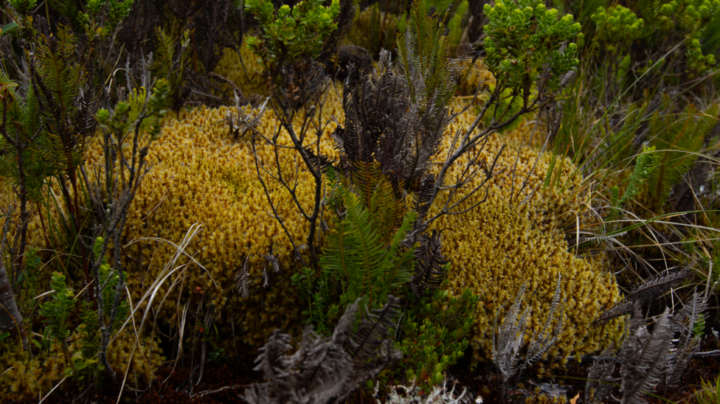
The peat bog (Moss sphagnum magellanicum) known as “pompon” in Chile absorbs and retains a great deal of water, releasing it drop by drop when there is no rain. In southern Chile there are about 3.1 million hectares of peatlands.

“We condemn the fact that the extraction of peat is permitted in Chiloé when there is no scientifically proven way for peat to be reproduced or planted…. there is no evidence of how it can regenerate.” ¨– Daniela Gumucio

Peat is a mixture of plant debris or dead organic matter, in varying degrees of decomposition, neither mineral nor fossilized, that has accumulated under waterlogged conditions.

The pompon is the main source of water for the short rivers in Chiloé, an archipelago of 9181 square kilometers and 168,000 inhabitants, located 1200 kilometers south of Santiago. The local population makes a living from agriculture, livestock, forestry, fishing and tourism, in that order.

“We don’t have glaciers, or thaws. Our water system is totally different from that of the entire continent and the rest of Chile. Since we don’t have glaciers or snow, our rivers function on the basis of rain and peat bogs that retain water and in times of scarcity release it,” Daniela Gumucio told IPS by telephone.

The 36-year-old history and geography teacher said that the Chiloé community is concerned about the supply of drinking water for consumption and for small family subsistence farming.

Gumucio is a leader of the National Association of Rural and Indigenous Women (Anamuri) and chairs the Environmental Committee of Chonchi, the municipality where she lives in the center of the island.

This long narrow South American country, which stretches between the Andes Mountains and the Pacific Ocean, has 19.5 million inhabitants and is facing one of the worst droughts in its history.

It’s strange to talk about water scarcity in Chiloé because it has a rainy climate. In 2011 more than 3000 millimeters of water fell there, but since 2015 rainfall began to decline.

In 2015 rainfall totaled 2483 millimeters, but by 2023 the amount had dropped to 1598 and so far this year only 316, according to data from the Quellón station reported to IPS by the Chilean Meteorological Directorate.

The forecast for April, May, and June 2024 is that below-normal rainfall will continue.

A water emergency was declared in the region in January and the residents of nine municipalities are supplied by water trucks.

To supply water to the inhabitants of the 10 municipalities of Chiloé, the State spent 1.12 million dollars to hire water trucks between 2019 and 2024. In Ancud alone, one of the municipalities, the expenditure was 345,000 dollars in that period.

A close-up shot of a peat bog in a watershed on the island of Chiloé, which has the ability to absorb water 10 times its weight. Because of this property, those who extract it today, without any oversight, dry it, crush it and pack it in sacks to sell it to traders who export it or sell it in local gardening shops. CREDIT: Courtesy of Gaspar Espinoza

A close-up shot of a peat bog in a watershed on the island of Chiloé, which has the ability to absorb water 10 times its weight. Because of this property, those who extract it today, without any oversight, dry it, crush it and pack it in sacks to sell it to traders who export it or sell it in local gardening shops. CREDIT: Courtesy of Gaspar Espinoza

Alert among social activists

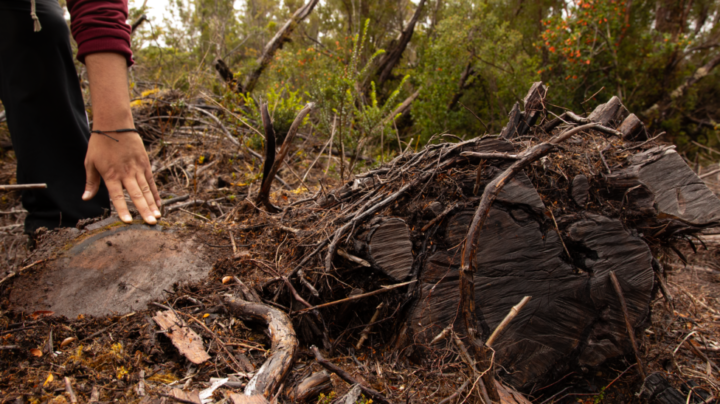
The concern among the people of Chiloé over their water supply comes from the major boost for wind energy projects installed on the peat bogs and new legislation that prohibits the extraction of peat, but opens the doors to its use by those who present sustainable management plans.

Several energy projects are located in the Piuchén mountain range, in the west of Chiloé, where peat bogs are abundant.

“They want to extend a high voltage line from Castro to Chonchi. And there are two very large wind farm projects. But to install the turbines they have to dynamite the peat bog. This is a direct attack on our water resource and on our ways of obtaining water,” Gumucio said.

In 2020, the French company Engie bought three wind farms in Chiloé for 77 million dollars: San Pedro 1 and San Pedro 2, with a total of 31 wind turbines that will produce 101 megawatts (MW), and a third wind farm that will produce an additional 151 MW.

In addition, 18 kilometers of lines will be installed to carry energy to a substation in Gamboa Alto, in the municipality of Castro, and from there to the national power grid.

Another 92 turbines are included in the Tabla Ruca project, between the municipalities of Chonchi and Quellón.

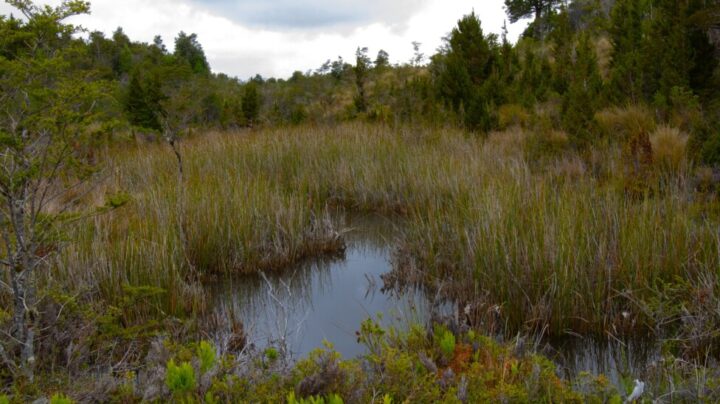
Peat bogs accumulate and retain rainwater in the wetlands of Chiloé and release it drop by drop to river beds in times of drought. CREDIT: Courtesy of Gaspar Espinoza

Peat bogs accumulate and retain rainwater in the wetlands of Chiloé and release it drop by drop to river beds in times of drought. CREDIT: Courtesy of Gaspar Espinoza

Engie describes its initiatives as part of the transition to a world with zero net greenhouse gas emissions, thanks to the production of clean or green energy.

Leaders of 14 social and community organizations expressed their concerns in meetings with regional authorities, but to no avail. Now they have informed their communities and called on the region’s authorities to protect their main water source.

Local residents marched in protest on Mar. 22 in Ancud and demonstrated on Apr. 22 in Puente Gamboa, in Castro, the main municipality of the archipelago.

Thanks to peatlands, the rivers of Chiloé do not dry up. The peat bogs accumulate rainwater on the surface, horizontally, and begin to release it slowly when rainfall is scarce.

For the same reason, peat is dup up and sold for gardening. In 2019 Chile exported 4600 tons of peat.

The wind energy projects are set up in areas of raised peat bogs, known as ombrotophic, located at the origin of the hydrographic basins.

“We have had a good response in the municipal council of Chonchi, where the mayor and councilors publicly expressed their opposition to approving these projects,” said Gumucio.

Dozens of trees have been felled in Chiloé to install wind turbines and make way for high-voltage towers that will transmit green energy to Chile's national power grid, without benefiting the inhabitants of the Chiloé archipelago. CREDIT: Courtesy of Gaspar Espinoza

Dozens of trees have been felled in Chiloé to install wind turbines and make way for high-voltage towers that will transmit green energy to Chile’s national power grid, without benefiting the inhabitants of the Chiloé archipelago. CREDIT: Courtesy of Gaspar Espinoza

The other threat to peatlands

The second threat to the Chiloé peat bogs comes from Law 21.660 on environmental protection of peatlands, published in Chile’s Official Gazette on Apr. 10.

This law prohibits the extraction of peat in the entire territory, but also establishes rules to authorize its use if sustainable management plans are presented and approved by the Agricultural and Livestock Service, depending on a favorable report from the new Biodiversity and Protected Areas Service.

The peatland management plan aims to avoid the permanent alteration of its structure and functions.

Those requesting permits must prove that they have the necessary skills to monitor the regeneration process of the vegetation layer and comply with the harvesting methodology outlined for sustainable use.

But local residents doubt the government’s oversight and enforcement capacity

Dozens of trees have been felled in Chiloé to install wind turbines and make way for high-voltage towers that will transmit green energy to Chile's national power grid, without benefiting the inhabitants of the Chiloé archipelago. CREDIT: Courtesy of Gaspar Espinoza

Dozens of trees have been felled in Chiloé to install wind turbines and make way for high-voltage towers that will transmit green energy to Chile’s national power grid, without benefiting the inhabitants of the Chiloé archipelago. CREDIT: Courtesy of Gaspar Espinoza

“We condemn the fact that the extraction of peat is permitted in Chiloé when there is no scientifically proven way for peat to be reproduced or planted…. there is no evidence of how it can regenerate,” said Gumucio.

The activist does not believe that sustainable management is viable and complained that the government did not accept a petition for the law to not be applied in Chiloé.

“We have a different water system and if this law is to be implemented, it should be on the mainland where there are other sources of water,” she said.

But according to Gumucio, everything seems to be aligned to deepen the water crisis in Chiloé.

“The logging of the forest, the extraction of peat, and the installation of energy projects all contribute to the drying up of our aquifers and basins. And in that sense, there is tremendous neglect by the State, which is not looking after our welfare and our right to have water,” she argued.

Peatland is part of the vegetation of the island of Chiloé, but is threatened by unsupervised exploitation, which the authorities hope to curb with a recently approved law, whose regulations are to be ready within the next two years. CREDIT: Courtesy of Gaspar Espinoza

Peatland is part of the vegetation of the island of Chiloé, but is threatened by unsupervised exploitation, which the authorities hope to curb with a recently approved law, whose regulations are to be ready within the next two years. CREDIT: Courtesy of Gaspar Espinoza

Scientists express their view

Six scientists from various Chilean universities issued a public statement asserting that the new law is a step in the right direction to protect Chile’s peatlands.

In their statement, scientists Carolina León, Jorge Pérez Quezada, Roy Mackenzie, María Paz Martínez, Pablo Marquet and Verónica Delgado emphasize that the new law “will require the presentation of a sustainable management plan” to exploit peat that is currently extracted without any controls.

They add that management plans must now be approved by the competent authorities and that those who extract peat will be asked to “ensure that the structure and functions of the peatlands are not permanently modified.”

They also say that the regulations of the law, which are to be issued within two years, “must establish the form of peat harvesting and post-harvest monitoring of the peat bog to protect the regeneration of the plant, something that has not been taken into consideration until now.”

They point out that the new law will improve oversight because it allows monitoring of intermediaries and exporters who could be fined if they do not comply with the legislation.

“While it is true that there is concern among certain communities and environmental groups, we believe that these concerns can be taken into account during the discussion of the regulations,” they say.

The scientists reiterate, however, that “peatlands are key ecosystems for mitigating the national and planetary climate and biodiversity crisis” and admit that “significant challenges remain to protect them, although this is a big step in the right direction.”

  Source