‘It’s Time UN Turned Ideas to ‘UNMute’ Civil Society into Action’

Activists, CSOs and faith-based leaders this week pondered how you get a seat at the table when they couldn't even get access to the UN building.

Activists, CSOs and faith-based leaders this week pondered how you get a seat at the table when they couldn’t even get access to the UN building.

By Abigail Van Neely
NEW YORK , Jul 21 2023 (IPS)

How do you get a seat at the table when you can’t even access the building? This question loomed as activists, faith-based leaders, and NGO representatives gathered at the NY Ford Foundation. They discussed how to amplify the voice of civil society organizations at the UN Headquarters across the street.


“How to UNMute” was hosted on July 20, 2023, as a side event during the ongoing 2023 High-Level Political Forum (HLPF). The event kicked off the creation of a manual to break down barriers to civil society engagement as the first step towards turning ideas into action.

Maithili Pai, the UN advocate for the International Service for Human Rights, illustrated the divide between the UN’s verbal commitments and its actual practices. Sometimes, Pai said, civil society representatives could not enter UN meeting rooms or waited years for UN accreditation. According to Pai, some representatives even faced retaliation for trying to interact with UN bodies.

“We understand very well that civil society is under attack and that there are people pushing you back,” Costa Rica’s Ambassador to the UN, Maritza Chan, told the audience.

Chan stressed that meeting the UN’s 17 sustainable development goals (SDGs) required empowering civil society organizations that provide critical insight.

“We need civil society in the room at all times, providing advice, supporting states, and also calling us when we are not doing things right,” Chan said.

Recommendations for the manual on ‘unmuting’ civil society were developed at a recent workshop. They include better-resourced UN NGO support offices, increased financing for participation in UN events, and more supportive visa processes, especially for delegates from the global south who have been historically excluded. Advocates also called for more systematic flows of information, methods of participation, and pathways into the UN.

Arelys Bellorini, the senior UN representative from World Vision, said she has to go to friendly missions to facilitate youth access to the UN.

Nelya Rakhimova, a sustainable development specialist, said she was asked to pay $1,500 to be at the UN.

Carmen Capriles, an environmental policy expert at the United Nations Environment Program, said she could not attend meetings on climate change because they were closed.

The Ambassador to the UN from Denmark, Martin Bille Hermann, pushed these advocates to present specific action items. “You’re not giving me easy avenues to deliver,” Hermann said. “Develop a toolbox that would allow us to continue to live in an old house.”

“We cannot expect different results by doing the same things,” Chan added.

This is not the first time these issues have been raised.

On the 75th anniversary of the UN in 2020, the General Assembly committed to making the UN more inclusive to respond to common challenges. The following year, a set of steps to strengthen the meaningful participation of stakeholders across the UN was presented to the secretary general by a group of civil society organizations and the permanent missions of Denmark and Costa Rica. The recommendations were endorsed by 52 member states and 327 civil society organizations.

The 2021 letter focused on the use of technology to make UN meetings more accessible. It cited an evaluation survey that found 50 percent of participants during the virtual 2020 HLPF joined for the first time. Most of these new participants represented civil societies in developing countries.

One suggestion for bridging digital divides and incorporating a more diverse range of participants was to host hybrid events and offer internet connection at UN country-based offices. However, Rakhimova pointed out that some events still do not have hybrid options.

The 2021 letter also called for a civil society envoy to the UN and an official civil society day. Neither recommendation has been formally implemented yet.

Mandeep Tiwana, chief officer of CIVICUS, a global alliance of civil society organizations with a strong presence in the global south, addressed inequalities in who influences international decision-making. Tiwana expressed concern that wealthy members of the private sector can “come in through the backdoor.” Meanwhile, activists already facing restrictions on their work wait outside.

“The time to open the doors to the UN virtually, online, and in person has come,” Chan said.
IPS UN Bureau Report


!function(d,s,id){var js,fjs=d.getElementsByTagName(s)[0],p=/^http:/.test(d.location)?’http’:’https’;if(!d.getElementById(id)){js=d.createElement(s);js.id=id;js.src=p+’://platform.twitter.com/widgets.js’;fjs.parentNode.insertBefore(js,fjs);}}(document, ‘script’, ‘twitter-wjs’);  

Source

Financing Biggest Hurdle to Providing Children with Quality Education in Crisis Situations – ECW

ECW’s Yasmine Sherif and Graham Lang walk with UNHCR partners through Borota, where thousands of new refugees, most of them women, and children, have arrived after fleeing the conflict in Sudan. Credit: ECW

ECW’s Yasmine Sherif and Graham Lang walk with UNHCR partners through Borota, where thousands of new refugees, most of them women, and children, have arrived after fleeing the conflict in Sudan. Credit: ECW

By Naureen Hossain
UNITED NATIONS, Jul 20 2023 (IPS)

If you want lasting peace, the best investment you can make is in education, said Education Cannot Wait’s Executive Director Yasmine Sherif in an exclusive interview with IPS.


“(This will) make children and adolescents literate, learn critical thinking, address trauma and psycho-social challenges from being victims of a conflict or crisis, develop their potential, and become financially independent,” Sherif said, adding that these were critical skills to participate in good governance of their countries in the future.

She was speaking to IPS ahead of her participation in the ECOSOC High-Level Political Forum side event “Ensuring Education Continuity: The Roles of Education in Emergencies, Protracted Crises and Building Peace” at the UN Headquarters in New York.

Education is the answer to breaking the vicious circle of violence, conflict, and crisis – while this often is associated with war and conflict, the same applies to climate change.

“If the next generation that is today suffering from climate-induced disasters are not educated, do not understand or have an awareness of how to treat mother earth, and do not have the knowledge or skills to mitigate or prevent risks in the future, the negative impact of climate-induced disasters will only escalate.”

Unfortunately, conflicts and climate risks increasingly combine to multiply vulnerability, she said – and instead of declining, the number of children who need urgent support is increasing.

“Today, 224 million crisis-affected children do not receive a quality, continuous education. More than half of these children – 127 million – may have access to something that resembles a classroom, but they are not learning anything. They are not achieving the minimum proficiencies outlined in the Sustainable Development Goals (SDG4).”

Sherif stressed the crucial linkage between education and protection for children in crisis-affected countries and explained how protection is a core component of the holistic package of education ECW is supporting together with its partners.

“On the legal side, we advocate for the respect of the international humanitarian law, national human rights law, and the National Refugee Law, and for an end to impunity for those who violate these,” said Sherif. “We also call for additional countries to adopt the Safe Schools Declaration, and actively support its implementation at the national level.”

To prevent violence around and in schools, practical measures are included to ensure the children are safe.

“It’s important to ensure safe transport to and from the school. And that would, of course, bring a sense of safety to the parents, who may not be willing to send the girls to school because of that. You ensure the infrastructure of the school provides protection. You may need wards around the school so that nobody can walk into the school and abduct a girl.”

ECW funding also includes protections to prevent sexual and psychological violence.

“All the funding that we invest requires giving protection a priority. And that is essential wherever you operate or invest funding in a country of affected by armed conflict; you need to ensure protection is prioritized.”

Sherif said that in countries like Afghanistan, where the Taliban have banned girls from attending secondary school and upwards, ECW works with local partners to support non-formal education.

“There is a lot of work at the community level, with local authorities allowing ECW’s investments in civil society and UN agencies to continue to operate. So community-based schooling is pretty much (being) run now, where we are investing at the community level,” she said, and while it may not be ideal, it does work.

Likewise, non-formal learning centers have been set up in Cox’s Bazar, where the Rohingya refugees live after fleeing violence, discrimination, and persecution in Myanmar.

“Our aim is for every child to be able to access national education systems, but sometimes it is not possible politically or physically due to the dangers of the conflict. So we also support our partners to establish non-formal learning centers until another more sustainable solution can be found.”

During the Covid-19 pandemic, ECW’s partners were innovative in ensuring education continued – with remote learning programmes such as radio and TV-based education, where IT connections were available through phones and WhatsApp with learning kits and tools.

“Home-based, going from door-to-door, that was how it was done during COVID. There was some creativity and innovation. It is possible. It is not ideal, but it is possible.”

Sherif said ECW had developed a proven model to bring quality education to every child – even in the most challenging crisis-affected contexts of war and conflicts – but that the biggest hindrance is the financing.

“If we had the financing, we could reach the 224 million (children) immediately. So financing is the big hindrance today. While peace is the number one (solution), if peace is not possible, education cannot wait.”

“If financing for education is provided in crisis and climate disasters, ECW can reach 20 million children and adolescents in the coming four years. And that requires about another USD700 million for Education Cannot Wait between today and 2026. Just USD 700 million is a small amount when you consider the return on investment you get when you invest in human potential.”

IPS UN Bureau Report


!function(d,s,id){var js,fjs=d.getElementsByTagName(s)[0],p=/^http:/.test(d.location)?’http’:’https’;if(!d.getElementById(id)){js=d.createElement(s);js.id=id;js.src=p+’://platform.twitter.com/widgets.js’;fjs.parentNode.insertBefore(js,fjs);}}(document, ‘script’, ‘twitter-wjs’);  

Source

Mandela Day Reminder to Stand Witness to Human Rights Defenders

Nelson Mandela, then Deputy President of the African National Congress of South Africa, raises his fist in the air while addressing the Special Committee Against Apartheid in the General Assembly Hall, June 22, 1990. Global alliance CIVICUS commemorated Mandela Day with a reminder that many rights defenders are jailed and intimidated. Credit: UN Photo/Pernaca Sudhakaran

Nelson Mandela, then Deputy President of the African National Congress of South Africa, raises his fist in the air while addressing the Special Committee Against Apartheid in the General Assembly Hall, June 22, 1990. Global alliance CIVICUS commemorated Mandela Day with a reminder that many rights defenders are jailed and intimidated. Credit: UN Photo/Pernaca Sudhakaran

By Joyce Chimbi
NAIROBI , Jul 18 2023 (IPS)

As human rights increasingly deteriorate, rights defenders are being violently suppressed. Abducted, detained, tortured, and humiliated, many now live one day at a time. They have been told, in no uncertain times, that anything could happen. They are now asking the global community to stand as a witness.


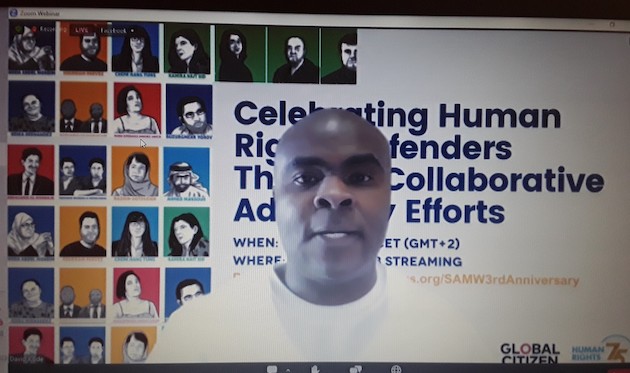
“Like Nelson Mandela was, hundreds of human rights defenders around the world are in prison for their human rights activities. Just like him, they are unjustly treated, fictitious charges levelled against them and handed the most serious sentences that are often used against criminals. One of our priorities is to work with human rights defenders to advocate for their release,” says David Kode from CIVICUS, a global alliance of civil society with a presence in 188 countries around the world.

Inspired by the life story of the late iconic South African President Nelson Mandela, the Stand As My Witness Campaign was launched on Nelson Mandela Day in 2020 by CIVICUS, its members and partners.

In commemoration of the third anniversary of the Stand As My Witness campaign, CIVICUS and its partners, including human rights defenders, hosted a public event titled, ‘Celebrating Human Rights Defenders through Collaborative Advocacy Efforts’, to celebrate the brave contributions of human rights defenders and raise awareness about those who are still in detention.

David Kobe said that CIVICUS had profiled at least 25 human rights defenders since the Stand As My Witness Campaign started three years ago. Credit: Joyce Chimbi/IPS

David Kobe said that CIVICUS had profiled at least 25 human rights defenders since the Stand As My Witness Campaign started three years ago. Credit: Joyce Chimbi/IPS

“Over the last three years, we have profiled more than 25 human rights defenders collectively because some human rights defenders are profiled as individuals and others, such as those in Burundi, are profiled as a group because they were arrested as a group. More than 18 human rights defenders have been released over the last three years. As we celebrate, we must recognize that the journey has just started, it is quite long, and the battle is far from over,” Kode said.

The event brought together families and colleagues of detained human rights defenders, previously detained human rights defenders, representatives from the Office of the High Commissioner for Human Rights (OHCHR) and other human rights mechanisms and civil society organisations.

Lysa John, the Secretary General of CIVICUS, spoke about how special Mandela Day is, for it is the one day of the year when the spirit of solidarity is celebrated in his memory. It is also a day to look back at what has been achieved and how much more could be achieved in solidarity.

She further addressed issues of civic space restrictions, closure of civic space and how these restrictions impact societies and individuals. John stressed that the event was held in the context of the 25th anniversary of the adoption of the UN Declaration on Human Rights Defenders and the 75th anniversary of the UNDHR or Human Rights 75 to promote their objectives.

“One-third of the population of the world live in contexts which are closed. Where attacks on people who speak out or exercise their civic freedoms are attacked or arrested without any accountability. More and more people in the world, in fact, the largest section of the world, estimated at 44 percent live in countries where civic space and civic freedoms are restricted. In this regard, civic society is more than ever reinventing itself, and there is increased support for them,” she said.

Birgit Kainz from OHCHR spoke about the importance of bringing to life the UN Declaration on Human Rights Defenders for its adoption was a consensus that human dignity is at the core of everything.

She spoke about the need to be deliberate in the defence of civic space as it enables people to shape their future and that of their children. Kainz said that protection and security are two sides of the same coin and urged participants to network and connect to improve civic space and to also play a complementary role. Further emphasizing the need to maintain data, especially about who is in detention and where in line with SDGs.

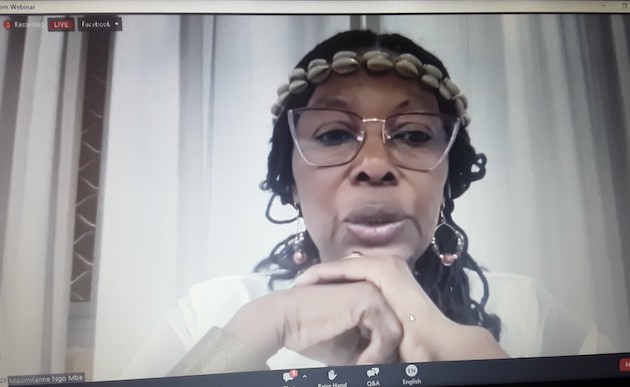
Maximilienne Ngo Mbe from Cameroon is one of the most prolific human rights defenders in Africa. She spoke about the need to create safe spaces for women rights defenders. Photo Joyce Chimbi.jpg

Maximilienne Ngo Mbe from Cameroon is one of the most prolific human rights defenders in Africa. She spoke about the need to create safe spaces for women rights defenders. Credit: Joyce Chimbi/IPS

Maximilienne Ngo Mbe spoke about the life and times of human rights defenders today. She is one of the most prolific human rights defenders in Africa and continues to receive a lot of restrictions for her fearless human rights activities that often have her fleeing from Cameroon to other countries for safety.

“We need a network for women rights defenders because of the special challenges they face as girls, wives, mothers and vulnerable people. Women are engaging less and less because of these challenges and the multiple roles they play in society,” she said.

The event was an opportunity for released human rights defenders such as Maria Esperanza Sanchez from Nicaragua to speak about resilience in the face of brutal regimes. She spoke about how armed men often came to her house to threaten and intimidate her. Of her arrest, humiliation and torture in 2020, being sentenced to 10 years in prison and her eventual release.

It was also an opportunity to speak on behalf of those who cannot. They include Khurram Parvez, a prolific human rights defender in India. At the time of his arrest for human rights activities, he was leading two critical organizations at the national and regional levels.

Parvez is being charged as a terrorist. His story aligns with that of Kenia Hernandez, a 32-year-old indigenous Amuzga woman, mother of two, lawyer and an advocate for human rights who is currently detained in a maximum-security prison in Mexico and has been sentenced to 21 years. Her story is illustrative of the high-risk female rights defenders and people from marginalized groups face.

Ruben Hasbun from Global Citizen spoke about how to effectively advocate for the release of human rights defenders, sharing lessons from Stand As My Witness campaigners.  The event further opened up space to address the role of the private sector.

Christopher Davis from Body Shop, a brand that continues to be at the forefront of supporting human rights and rights defenders, fighting social and environmental injustice.

At the end of the session, participants were invited to sign a petition to have the United Arab Emirates immediately and unconditionally release all those detained solely for the exercise of their human rights and end all abuse and harassment of detained critics, human rights defenders, political opposition members, and their families.

IPS UN Bureau Report


!function(d,s,id){var js,fjs=d.getElementsByTagName(s)[0],p=/^http:/.test(d.location)?’http’:’https’;if(!d.getElementById(id)){js=d.createElement(s);js.id=id;js.src=p+’://platform.twitter.com/widgets.js’;fjs.parentNode.insertBefore(js,fjs);}}(document, ‘script’, ‘twitter-wjs’);  

IPS – UN Bureau, IPS UN Bureau Report, CIVICUS

Source

The Common Good, or Transactional Religion?

An Interfaith Moment of Prayer for Peace at UN Headquarters. Credit: UN Photo/Eskinder Debebe

 
UN Secretary-General António Guterres said the gathering was taking place at a unique moment: on the last Friday of Ramadan, as Christians celebrate Easter, Jews mark the end of Passover, and Sikhs enjoy the festival of Vaisakhi. “Even the calendar is sending a message of unity,” he remarked. “Today, at this blessed moment of renewal across faiths, let us lift our hearts and voices for peace – our guiding star and our most precious goal.” April 2023

By Azza Karam
NEW YORK, Jun 28 2023 (IPS)

For the last 30 odd years, I have maintained that religions matter. I noted the reasons for why they matter, and always listed how they matter —as social service providers, as first responders in humanitarian crisis; as mediators in tensions and conflicts, as upholders of common good and the values of humanity; as protectors of children and of the most vulnerable; and even as political actors.


All to name but a few. I still feel amused when some of those I trained among the UN staff and the faith-based NGO community, quote something I said, in public – albeit without even being aware they are quoting (I am trying to be kind here) – such as: “we should not be talking about whether religions matter, but how they matter”.

In 2007, while at UNDP, I was told, more than once, “we do not do religion”. By the time I left the UN in 2020, after building two bodies – an Interagency Task Force on Religion and its Multi Faith Advisory Council – it was clear that almost all UN entities were competing to ‘do religion’. In fact, some UN entities are competing for religious funding.

While I have not lost that faith in faith itself, over the last years, I have grown increasingly incredulous of those who would speak in the name of ‘religion’. It is hard not to feel distinctly bemused, when versions of ‘if religious actors/leaders are not at the [policy] table, they will be on the menu]’, are being told in one gathering after another.

Often by the same kinds of speakers, among the same kinds of audiences, albeit meeting more and more frequently – and often more lavishly — in different cities around the world.

The reason for bemusement, is not disillusion with the unparalleled roles that various religious institutions and communities of faith play. Far from it. These roles are, in short, vast. In fact, they are as impossible to quantify, as they are implausible to assume full comprehension of.

After all, how do you accurately measure the pulse of our individual spiritualities – let alone our collective sense thereof? Religious leaders, religious institutions, faith-based and faith-inspired NGOs (FBOs) – let alone faith communities – are massive in number, and permeate all the world’s edifices, peoples and even languages. Faiths, and expressions of religiosity, are likely as numerous as the hairs on an average head (not counting those who may be lacking vigour in that department).

No, the reason for bemusement is disillusionment with the trend of commercialisation of religion, the business of ‘doing religion’. The emerging marketplace of “religion and [fill in the blanks – and anything is possible]” is reminiscent of not too many decades ago, when so many academics, consultants, think tanks, NGOs, worked on the business of democracy and/or good governance and/or human rights. Then, as now, projects, programmes, initiatives, meetings, and more meetings, were hosted.

A global emerging elite of ‘experts’ in the above (or variations thereof) permeated the four and five-star hotel meeting rooms, gave business to caterers and conference centres as they traipsed the ‘conference circuits’ from north to south, populated proposals to governments, philanthropists and various donor entities.

They defined the missions of for-profit consultancies claiming to enable the strategic capabilities, to inform the media presences, to refine the narratives, to provide the leadership coaching, to jointly express the common values, to uphold the good in public service… And so on.

We are not living in better democracies now, in spite of all that business. Will we have more faithful societies? Will people pray more, for one another and serve more selflessly now that ‘religion’ is in? Somehow, I doubt it.

By the time we realised the extent of the commercialisation of democracy and human rights, the commercial nature had corrupted much of the sagacity – and the necessary courage – there was. Even autocrats bought into the business of doing democracy and human rights, and used the narratives to enhance their respective agendas.

Few democratic actors worked together, and even fewer collaborated to serve – and save – the whole of humanity. As with any business venture, the motive of profit – and power – of some, dominated.

And rather than a consolidated civil society effort holding decision makers accountable for the sake of the most vulnerable, and collectively and successfully eliminating the tools of harm, we are living in the era where money, weapons – including nuclear ones – control over resources, and war (including war on this earth), dominate.

Today, some of the most authoritarian and self-serving regimes, and some of the most power-seeking individuals, and their retinues, are vested in the business of ‘religion’. And why not? It is among the most lucrative domains of financial, political and social influence.

Decades of study, however, point to some simple questions to ask, to distinguish the transactional nature of ‘religious affairs’ claiming to be for the good of all, from those actually serving the common good.

The questions include the following:

How many of those engaged in the work of religion (whether as religious or secular actors) actually give of or share, their varied resources, to/with one another (including those from other/different religions, entities, age groups, countries, races, etc.)?

How many different religious organisations plan and deliver, jointly, the same set of services to the same set of needs, in the same neighborhoods or in the same countries?

How many ‘religious actors’ actually partner with ‘secular’ civil society organisations to hold institutions of political and financial power equally accountable – if need be, at cost to their own welfare. In other words, how many stand on principle, irrespective of the cost?

And, my personal favourite: what are these religious actors’ respective positions on women’s rights, on gender equality and/or on women’s leadership?

The more diplomatic way to frame that is also one of the most powerful litmus tests: which human rights do these actors working on/with/for religion, value more? You see, those who are engaged in transactional practices wearing a religious garb, will invariably prioritise some rights, or some privileges, over others.

The answer to this question therefore, will indicate the difference between a coalition of religious fundamentalists (including secular power seekers and some religious and political leaders), and a multilateral alliance dedicated to serving the common good – for each and all, barring none, especially in the most challenging of times.

Azza Karam is a Professor of Religion and Development at the Vrij Universiteit of Amsterdam and served as a member of the UN Secretary General’s High Level Advisory Board on Effective Multilateralism.

IPS UN Bureau


!function(d,s,id){var js,fjs=d.getElementsByTagName(s)[0],p=/^http:/.test(d.location)?’http’:’https’;if(!d.getElementById(id)){js=d.createElement(s);js.id=id;js.src=p+’://platform.twitter.com/widgets.js’;fjs.parentNode.insertBefore(js,fjs);}}(document, ‘script’, ‘twitter-wjs’);  

Source

Forus Civil Society Network Urges that Respect for Human Rights, Climate Justice and Accountability should be at the core of the New Global Financing Pact

Indigenous activist protesting in Colombia. Credit: Sebastian Barros

By Marianne Buenaventura
PARIS, Jun 23 2023 (IPS)

As the Summit for a New Global Financing Pact unfolds in Paris on 22-23 June, Forus, a global network representing over 22,000 civil society organisations across Africa, Latin America, Asia, Europe and the Pacific, calls for the respect of human rights and for meaningful inclusion of civil society in shaping financial systems and structures.


The summit, co-hosted by India, could help find common ground on finance that drives progress at key events later in 2023 and in 2024 – the G20 summit in New Delhi, the COP28 climate talks in Dubai, and the Finance in Common summit with public development banks in Cartagena.

As part of the summit, Sarah Strack, Forus Director, is amplifying civil society’s voices at the high-level Finance in Common event in the presence of French President Emmanuel Macron and other leaders, to discuss and leverage the role of Public Development Banks in financing the SDGs, scaling up sustainable finance, and supporting inclusion. Forus has been engaging in the Finance in Common initiative since its inception in 2020 with the aim to ensure that a people-based approach to development is pursued.

“If we want to have a chance to tackle the most pressing challenges and the multiple crises of our time in a way that really puts first the interests and needs of people, then a shift of mindset and a new financial framework are absolutely necessary. It is essential that civil society plays a central role in shaping this new paradigm at every stage. Let us not forget the wealth of knowledge and leadership present at the local level. By actively engaging and collaborating with communities, we can genuinely measure our progress and honor the commitments we have made to those most in need,” says Sarah Strack.

Harsh Jaitli, CEO of the Voluntary Action Network India (VANI), is representing Forus as an official respondent in the Summit Roundtable “Power Our Planet: Act today. Save tomorrow”, co-hosted by Global Citizen and CISCO. The event seeks to rally for immediate action on economic, social, and climate justice, engaging both public and private sectors to catalyze renewable energy investment in climate-vulnerable countries to reduce energy poverty and accelerate the low-carbon transition.

Harsh Jaitli of VANI states that the New Global Financial Pact will require improved partnerships and the building of trust.

“Double standards have negatively impacted our collective capacity to deliver on effective development and climate related programmes. In some countries, multinational corporations respect human rights, fiscal and climate regulations, but in other countries decisions are made to violate them. Not only does this send the wrong message that some countries and populations are more important than others, but also jeopardizes our collective efforts to affect change. Multinational corporations should commit to respecting human rights, fiscal and climate regulations in all countries and in a consistent manner. When no strong regulations exist, this is the opportunity for multinationals to be proactive and to apply strong rules, which are coherent with their policies,”says Harsh Jaitli.

Julien Comlan Agbessi, Coordinator of the Regional Coalition of West Africa (REPAOC) emphasizes the importance of multi-stakeholder cooperation. Agbessi explains that cooperation between the private sector and the civil society organisations is possible, since the private sector could leverage hugely on the experience and outreach of civil society. “Many poverty alleviation programs and projects with significant funding implemented over the past decades have failed to deliver for communities. Transformative investments in low-income countries and climate impacted countries require putting the needs of people first,” says Julien Comlan Agbessi.

Lina Paola Lara Negrette, Coordinator of the Confederación Colombiana de ONG (Ccong), states that the New Global Financial Pact must incorporate stronger and more meaningful engagement with civil society.

“Civil society has an important role to play in ensuring the accountability and transparency of both government and private sector actors. Civil society can work closely with governments and the private sector to ensure the delivery of social and environmental needs in all investments, which includes respect of human rights”.

Olivier Bruyeron, President of the French platform of CSOs Coordination SUD, equally emphasizes the importance of partnerships with the public and private sector, “CSOs hold valuable knowledge and expertise on international solidarity needed to construct sustainable global solutions and to link them with local development” adds Olivier Bruyeron.

Marianne Buenaventura is project coordinator at Forus.

IPS UN Bureau


!function(d,s,id){var js,fjs=d.getElementsByTagName(s)[0],p=/^http:/.test(d.location)?’http’:’https’;if(!d.getElementById(id)){js=d.createElement(s);js.id=id;js.src=p+’://platform.twitter.com/widgets.js’;fjs.parentNode.insertBefore(js,fjs);}}(document, ‘script’, ‘twitter-wjs’);  
Source

Global Community Celebrates Medical Innovations and Milestones Since Defining Leprosy Discovery 150 Years Ago

Yohei Sasakawa, WHO’s Goodwill Ambassador for Leprosy Elimination, speaks at the two-day Bergen International Conference on Hansen’s Disease. The conference coincided with the 150th anniversary of the discovery of Mycobacterium leprae by Norwegian doctor Gerhard Armauer Hansen. Credit: Thor Brødreskift/Sasakawa Leprosy (Hansen’s Disease) Initiative

Yohei Sasakawa, WHO’s Goodwill Ambassador for Leprosy Elimination, speaks at the two-day Bergen International Conference on Hansen’s Disease. The conference coincided with the 150th anniversary of the discovery of Mycobacterium leprae by Norwegian doctor Gerhard Armauer Hansen. Credit: Thor Brødreskift/Sasakawa Leprosy (Hansen’s Disease) Initiative

By Joyce Chimbi
NAIROBI, Jun 22 2023 (IPS)

The 1873 discovery of Mycobacterium leprae, the causative agent of leprosy by Norwegian doctor Gerhard Armauer Hansen, remains one of the greatest paradigm shifts in medical history, a true revolution.


“Before the great discovery, even in the days when communication and transportation technologies were not as developed as today, leprosy was detested by the entire world. Leprosy was believed to be a divine punishment or a hereditary disease; once affected, patients were segregated to remote areas and islands for life,” says Yohei Sasakawa, WHO’s Goodwill Ambassador for Leprosy Elimination.

Sasakawa, who also serves as chairperson of The Nippon Foundation, spoke during a two-day conference in Bergen, Norway, to commemorate the 1873 discovery. In attendance were over 200 people, including medical, human rights, and historical preservation experts, researchers, NGOs, and organizations of persons affected by the disease.

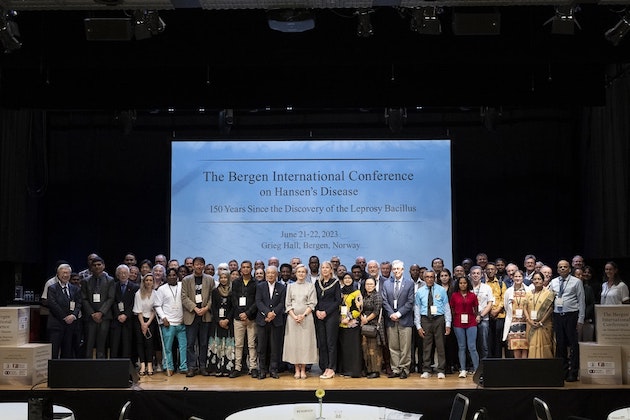
The Bergen International Conference on Hansen’s Disease, held on June 21 and 22, 2023, was organized by the Sasakawa Leprosy (Hansen’s Disease) Initiative and the University of Bergen. It focused on medical efforts against leprosy, human rights, and dignity issues and preserving the history of leprosy for the lessons it can teach future generations. All three are pillars of the Sasakawa Leprosy (Hansen’s Disease) Initiative’s activities for a world free of leprosy and the discrimination it causes, in line with the UN’s Resolution on Elimination of discrimination against persons affected by leprosy and their family members.

In his speech to delegates, Sasakawa acknowledged the extraordinary advances made by medical professionals since Dr Hansen’s discovery that leprosy was neither a curse nor a punishment from God but a chronic disease caused by a bacillus.

With the 1873 discovery, leprosy went from being a mythological divine disease shrouded in mystery to something one could observe and explain—although it would take more than half a century before a cure was found.

Delegates at the Bergen International Conference on Hansen’s Disease held on June 21 and 22, 2023. The conference was organized by Sasakawa Leprosy (Hansen’s Disease) Initiative and the University of Bergen. Credit: Thor Brødreskift/Sasakawa Leprosy (Hansen’s Disease) Initiative

Delegates at the Bergen International Conference on Hansen’s Disease held on June 21 and 22, 2023. The conference was organized by the Sasakawa Leprosy (Hansen’s Disease) Initiative and the University of Bergen. Credit: Thor Brødreskift/Sasakawa Leprosy (Hansen’s Disease) Initiative

Margareth Hagen, Rector, University of Bergen, said there was a clear shift in the scientific discourse about leprosy before and after the discovery.

Sasakawa said the journey towards a cure started with a single anti-leprosy drug to more effective drug regimens and, ultimately, a recommendation from WHO’s medical team that leprosy patients receive drug regimens consisting of multiple drugs.

“A single anti-leprosy drug tended to increase drug resistance. Since the development of multi-drug therapy, with early detection and treatment, leprosy has become totally curable. About 60 million patients have been cured over the last 40 years,” he said.

Abbi Patrix, the great-grandson of Dr Hansen, now responsible for his great grandfather’s history, spoke about the man behind the science in a session titled, ‘My grandfather, my mother, the documents and me.’

Patrix, a European performance storyteller, talked about the day his mother, the only direct descendant of Dr Hansen at the time, learned that leprosy was named Hansen’s disease after her grandfather.

She was moved and wondered why? His mother was informed that Dr Hansen’s discovery had put a name to a disease that had confounded scientists and society alike and that labeling it ‘Hansen’s disease’ meant freedom for those afflicted because a cure could now be found.

The conference venue was, therefore, a recognition of his renowned great-grandfather because he was born in Bergen, and this was the site for his landmark 1873 discovery at only 32 years of age.

WHO Director-General Dr Tedros Adhanom Ghebreyesus told the audience: “WHO was born halfway between 1873 and today, 75 years ago. Much progress has been made since the two major milestones in the fight against leprosy. But much remains to be done toward our shared goals of zero disease, zero disability, and zero discrimination. Cases of leprosy have decreased significantly in recent decades, but more effort is needed to recover from the health system disruptions of the COVID-19 pandemic and move further ahead.”

Ghebreyesus said the WHO was committed to supporting countries in their bid to eliminate leprosy in line with the roadmap for neglected tropical disease for 2021 to 2030.

“So far, 49 countries have eliminated at least one neglected tropical disease, including Human African trypanosomiasis, rabies, and trachoma. With your support and those of our global partners, we can achieve that goal for leprosy too.”

Other dignitaries who spoke at the conference include United Nations High Commissioner for Human Rights Volker Türk, who said the conference celebrated medical innovations over the last 150 years.

“But when leprosy was eliminated as a global public health problem in 2000, it did not mean that the disease disappeared. Over 250,000 people suffer from leprosy every year, 15,000 of them are children. The actual figures are likely far higher,” he emphasized.

“Around three to four million people who have already been cured still bear varying degrees of impairment. The burden of leprosy is heaviest in countries with the greatest inequality, poverty, and marginalization.”

Türk further said that to better the lives of people affected by leprosy, “We need to address the physical symptoms, but we also need social and behavioral measures to address stigma and discrimination. We need comprehensive strategies with access to quality care, education, and social protection,” and told participants that “together we can make a real difference in ending leprosy, which causes immense preventable and unjustifiable suffering for thousands of people.”

Against this backdrop, Sasakawa stressed that further action is needed to combat stigma and discrimination, pointing out that as many as 130 discriminatory laws against leprosy are still in place in more than 20 countries.

“When respect for human rights is a must, it is unacceptable to leave such a large-scale and serious human rights violation unaddressed,” he said.

As the curtain fell on the Bergen conference of a remarkable journey to end leprosy over the last 150 years, Dr Takahiro Nanri, executive director of Sasakawa Health Foundation, noted that this was the third international conference that the foundation has helped to organize since launching its “Don’t Forget Leprosy” campaign in 2021 to help to ensure that the disease and those affected by it are not overlooked amid the coronavirus pandemic.

“Our purpose in organizing these conferences is to make the world aware that there are still many people who have Hansen’s disease and its consequences; to build momentum for collaboration toward the realization of a leprosy-free world; and to provide a setting for both formal and informal exchanges that can be a catalyst for innovative solutions that we as a foundation are ready to support,” he said.

IPS UN Bureau Report


!function(d,s,id){var js,fjs=d.getElementsByTagName(s)[0],p=/^http:/.test(d.location)?’http’:’https’;if(!d.getElementById(id)){js=d.createElement(s);js.id=id;js.src=p+’://platform.twitter.com/widgets.js’;fjs.parentNode.insertBefore(js,fjs);}}(document, ‘script’, ‘twitter-wjs’);  
Source