‘Aid Organizations Must Include the Youth Voice’ August 12, 2022—International Youth Day

Armed Conflicts, Civil Society, Education, Education Cannot Wait. Future of Education is here, Global, Headlines, Health, Humanitarian Emergencies, TerraViva United Nations, Youth Thought Leaders

Opinion

NEW YORK, Aug 12 2022 (IPS) – Today marks International Youth Day, a global celebration of the transformative power of young people. Introduced by the United Nations General Assembly in 1999, the event was inaugurated not only to observe the power of the youth voice, but to serve as a promise from those in power to activate the power of youth across the development sector.


Yasmine Sherif

Since then, the United Nations appointed a Youth Envoy, dedicated to the diffusion of the day’s promise, and many aid organizations have followed suit by including the voices of young people in social media campaigns, high-level events, and stakeholder forums.

In 2021, Education Cannot Wait (ECW), the United Nations global fund for education in emergencies and protracted crises, took a further, concrete step to democratically include youth in its governance structure and decision-making processes. Scores of youth-led NGOs applied to join a newly created youth constituency, and after only a few weeks, the sub-group had become one of the largest, most active, and most diverse constituencies within the fund.

On the Executive Committee and High-Level Steering Group of ECW, young people were represented for the first time alongside government ministers, heads of UN agencies and civil society organizations, and private sector leaders — a refreshing example of intergenerational collaboration at the highest levels of humanitarian aid.

Another significant step in the race for youth inclusion occurred when ECW partnered with Plan International to support a group of youth activists through the ‘Youth for Education in Emergencies Project,’ a campaign by youth panelists aiming to demonstrate the value of youth participation.

As ECW builds momentum towards its High-Level Financing Conference in February 2023 with the #222MillionDreams Campaign, we call on strategic partners to include the youth voice as we come together to mobilize funding resources for the 222 Million crisis-impacted children and adolescents worldwide that require urgent educational support.

Fortunately, there is no shortage of exceptional young people ready to lead the charge. The Global Student Forum, for example, has brought together more than one hundred national student unions, composed of millions of youth activists, and successfully lobbied governments around the world with its democratic force.

H.D. Wright

The success of Nobel Laureate Kailash Satyarthi’s 100 Million Campaign, a global, youth-led effort to end child exploitation, further illustrates the immense value of grassroots organizing. And at a local level, youth-led NGOs have brought change to their communities in ways equally substantial.

Aid organizations and professionals have changed the lives of countless young people around the world. By including them, aid organizations can tap into their extraordinary resilience and strength, and actually learn from them. Using their reach on social media, young people excel at spreading awareness and engagement around the world. Just as unknown singers become famous because of the young people who promote them, previously unknown issues have reached national prominence overnight and created substantive change.

With regard to fundraising, each young person is surrounded by a community, offering a network ready to lend a hand. In terms of policy, young people affected by crises can identify their needs with an ease unmatched by any humanitarian policy professional, for they are experts in their own lives, challenges and opportunities. Young people are intelligent and capable of shaping their own futures. They have an idealism and a courage that the world so desperately needs today. Their unflinching optimism, powerful energy, and uncompromising commitment to change will ensure that those futures are not only safe, but better than the present they inherited.

ECW can attest to the enlightening and inspiring vitality of young people. Since its creation, the youth constituency has worked energetically on behalf of this breakthrough global fund, providing valuable input and guidance on multi-year programs and first emergency responses in Bangladesh, Burkina Faso, Burundi, Haiti, Iraq and Mali. When schools shut down due to the pandemic, the youth constituency persisted, working together to inform aid programmes dispersed across crisis-affected countries.

The youth constituency even responded in real time to developing crises, including the earthquake in Haiti, the deteriorating crisis in Afghanistan, and most recently, the war in Ukraine. Their contributions played a role in meaningful projects: since its inception in 2016, ECW’s programs have reached over 5 million children and adolescents, providing them with quality support, including educational materials, school meals, mental health programs, and other basic necessities.

On this day, it is important to observe the power of young people, and the impactful work that aid organizations have conducted across the sector. Yet celebration and transformation must go hand in hand, ensuring that next year, when International Youth Day returns, we are one step closer to fulfilling its original promise to unleash the power of the youth.

Yasmine Sherif is the Director of Education Cannot Wait. H.D. Wright is Youth Representative at Education Cannot Wait

IPS UN Bureau

  Source

The Politics of the Hangman’s Noose: Judge, Jury & Executioner

Civil Society, Crime & Justice, Featured, Global, Global Governance, Headlines, Human Rights, IPS UN: Inside the Glasshouse, TerraViva United Nations

Young people take part in a pro-democracy demonstration in Myanmar. Credit: Unsplash/Pyae Sone Htun

UNITED NATIONS, Aug 3 2022 (IPS) – A spike in state-sanctioned executions worldwide – including in Iran, Singapore, Saudi Arabia, and more recently Myanmar – has triggered strong condemnations from the United Nations and several civil rights and human rights organizations.


As Covid-19 restrictions that had previously delayed judicial processes were steadily lifted in many parts of the world, says Amnesty International (AI), judges last year handed down at least 2,052 death sentences in 56 countries—a close to 40% increase over 2020—with big spikes seen in several countries including Bangladesh (at least 181, from at least 113), India (144, from 77) and Pakistan (at least 129, from at least 49).

Other countries enforcing the death penalty, according to AI, include Egypt, Iraq, Somalia, South Sudan, Belarus, Japan, the United Arab Emirates, the Democratic Republic of Congo (DRC), China, North Korea, Viet Nam and Yemen.

In military regimes, such as Myanmar, the armed forces play a triple role: judge, jury and hangman.

Dr Simon Adams, President of the Center for Victims of Torture, the world’s biggest organization that works with torture survivors and advocates for an end to torture worldwide, told IPS the recent execution of four pro-democracy activists by Myanmar’s military junta represents a sickening return to the “politics of the hangman’s noose”.

Arbitrary detention and torture have also been committed on an industrial scale, he said.

The military regime has detained over 14,000 people and sentenced more than 100 to death since the (February 2021) coup. While many governments around the world have condemned the recent hangings, it is going to take more than words to end atrocities in Myanmar, he pointed out.

“People are crying out for targeted sanctions on the Generals, for an arms embargo, and for Myanmar’s torturers and executioners to be held accountable under international law”, said Dr Adams, who also helped initiate the case at the International Court of Justice (ICJ) in The Hague, where The Gambia is trying to hold Myanmar accountable for the genocide against the Rohingya.

The London-based Amnesty International (AI) said last May that 2021 “saw a worrying rise in executions and death sentences as some of the world’s most prolific executioners returned to business as usual and courts were unshackled from Covid-19 restrictions.”

Iran accounted for the biggest portion of this rise, executing at least 314 people (up from at least 246 in 2020), its highest execution total since 2017.

This was due in part to a marked increase in drug-related executions—a flagrant violation of international law which prohibits use of the death penalty for crimes other than those involving intentional killing, said AI.

Antony J. Blinken, US Secretary of State, said last week the United States condemns in the strongest terms the Burma military regime’s executions of pro-democracy activists and elected leaders Ko Jimmy, Phyo Zeya Thaw, Hla Myo Aung, and Aung Thura Zaw for the exercise of their fundamental freedoms.

“These reprehensible acts of violence further exemplify the regime’s complete disregard for human rights and the rule of law.’

Since the February 2021 coup, he pointed out, the regime has perpetuated violence against its own people, killing more than 2,100, displacing more than 700,000, and detaining thousands of innocent people, including members of civil society and journalists.

The regime’s sham trials and these executions are blatant attempts to extinguish democracy; these actions will never suppress the spirit of the brave people of Burma, (Myanmar), he added.

“The United States joins the people of Burma in their pursuit of freedom and democracy and calls on the regime to respect the democratic aspirations of the people who have shown they do not want to live one more day under the tyranny of military rule,” Blinken declared.

Condemning the execution of the four democracy activists by the military regime in Myanmar, UN High Commissioner for Human Rights Michelle Bachelet said last week: “I am dismayed that despite appeals from across the world, the military conducted these executions with no regard for human rights. This cruel and regressive step is an extension of the military’s ongoing repressive campaign against its own people.”

“These executions – the first in Myanmar in decades – are cruel violations of the rights to life, liberty and security of a person, and fair trial guarantees. For the military to widen its killing will only deepen its entanglement in the crisis it has itself created,” she warned.

The High Commissioner also called for the immediate release of all political prisoners and others arbitrarily detained, and urged the country to reinstate its de-facto moratorium on the use of the death penalty, as a step towards eventual abolition.

Meanwhile, in a statement released August 2, Liz Throssell, a Spokesperson for the UN Human Rights Office in Geneva said : “We deplore the hanging today of two men in Singapore and are deeply troubled by the planned execution of two others on 5 August.

The two, a Malaysian and a Singaporean, were hanged at Changi Prison this morning after they were convicted in May 2015 of drug trafficking and their appeals subsequently rejected.

Two other men, Abdul Rahim bin Shapiee and his co-accused Ong Seow Ping, are currently expected to be executed on Friday after Bin Shapiee’s family was notified of his fate on 29 July.

They were both convicted in 2018 of possession of drugs for the purpose of trafficking and their sentences upheld on appeal. In the past, co-accused persons have almost always been executed on the same day.

“We urge the Singapore authorities to halt all scheduled executions, including those of Abdul Rahim bin Shapiee and Ong Seow Ping. We also call on the Government of Singapore to end the use of mandatory death sentences for drug offences, commute all death sentences to a sentence of imprisonment and immediately put in place a moratorium on all executions, with a view to abolishing the death penalty”, the statement said.

“The death penalty is inconsistent with the right to life and the right to be free from torture or cruel, inhuman or degrading treatment or punishment and there is growing consensus for its universal abolition. More than 170 States have so far abolished or introduced a moratorium on the death penalty either in law or in practice,” she noted.

Agnes Callamard, AI Secretary-General, said that “China, North Korea and Viet Nam continued to shroud their use of the death penalty behind layers of secrecy, but, as ever, the little we saw is cause for great alarm.”

The known number of women executed also rose from nine to 14, while the Iranian authorities continued their abhorrent assault on children’s rights by executing three people who were under the age of 18 at the time of the crime, contrary to their obligations under international law.

Meanwhile, Saudi Arabia more than doubled its number of executions, a grim trend that continued in 2022 with the execution of 81 people in a single day in March, according to AI

As well as the rise in executions seen in Saudi Arabia (65, from 27 in 2020), significant increases on 2020 were seen in Somalia (at least 21, from at least 11) South Sudan (at least 9, from at least 2) and Yemen (at least 14, from at least 5). Belarus (at least 1), Japan (3) and UAE (at least 1) also carried out executions, having not done so in 2020.

Significant increases in death sentences compared to 2020 were recorded in the Democratic Republic of the Congo (at least 81, from at least 20), Egypt (at least 356, from at least 264), Iraq (at least 91, from at least 27), Myanmar (at least 86, from at least 1), Viet Nam (at least 119 from at least 54), and Yemen (at least 298, from at least 269), AI said.

In several countries in 2021, AI said, the death penalty was deployed as an instrument of state repression against minorities and protestors, with governments showing an utter disregard for safeguards and restrictions on the death penalty established under international human rights law and standards.

IPS UN Bureau Report

  Source

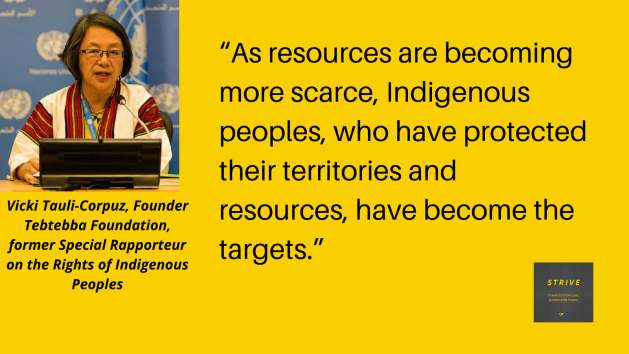
Indigenous Peoples Must Continue To Challenge Human Rights Violations: PODCAST

Civil Society, Global, Headlines, Human Rights, Indigenous Rights, Multimedia, Podcast, TerraViva United Nations

Indigenous Rights

KATHMANDU, Jul 7 2022 (IPS) – Today we are starting a new series focused on human rights. For people working to create a more sustainable and just world – as we are – a human rights based approach makes sense as it starts from the premise that only by recognizing and protecting the dignity inherent in all people can we attain those goals.


Today’s guest, Victoria Tauli-Corpuz, has immense experience in human rights. She is the founder and executive director of Tebtebba Foundation, which works to improve the lives of Indigenous peoples in the Philippines, her home country, and beyond. She was the Chairperson of the United Nations Permanent Forum on Indigenous Peoples from 2005 To 2010, and UN Special Rapporteur on the Rights of Indigenous Peoples from 2014 to 2020.

We cover a lot of ground in this episode — from Vicky’s analysis of her time as special rapporteur to recent rhetoric around ‘building back better’, the circular economy and other touted economic reforms, versus the reality on the ground. Indigenous communities are facing growing pressure from both states and the private sector to extract the natural resources that they are trying to protect. This dichotomy between the words and deeds of these powerful actors must be continually exposed and challenged by Indigenous peoples, says Vicky.

Asked whether governments of poorer countries are doing enough to protect human rights, without hesitating Vicky answers no. But she also points out that these countries are themselves pressured by international agreements, brokered largely by rich countries, that leave them with few options but to exploit natural resources.

She also tells me about an exciting project — the Committee on the Elimination of Discrimination against Women, a body of 23 global experts, is creating a General Recommendation on Indigenous women and girls. Among other things, it recognize the individual and collective rights of Indigenous women, the latter including respect for their rights to land, languages and other culture. Vicki says it is the first time that a UN treaty body is developing a recommendation focussed on Indigenous women.

Resources

Tebtebba Foundation

UN Permanent Forum on Indigenous Peoples

UN Special Rapporteur on the Rights of Indigneous Peoples

IPS Coverage About Indigenous Peoples Rights

The dichotomy between the words and deeds of powerful actors must be continually exposed and challenged by Indigenous peoples, says today’s guest, Victoria Tauli-Corpuz

  Source

The World Is Melting Down and the Cause is Corruption- The G20 Needs to Take Action

Civil Society, Economy & Trade, Global, Headlines

Opinion

The G20 needs to strengthen regulatory authorities across its membership and expand sanctions for violating Anti-Money Laundering requirements.

WASHINGTON DC, Jul 1 2022 (IPS) – The G20 is meeting again next week in Indonesia for the second time this year- at a moment when the world is facing the most difficult economic, political and social challenges for decades.


At their core, these problems are driven by corruption- from the “weaponization” of graft by Russia in Ukraine to the lack of regulation of the enablers of corruption in G20 countries such as the UK. This malfeasance costs lives and livelihoods- and is directly responsible for everything from energy black-outs to food and fuel shortages.

Critical decisions are being made by the G20 about the ways that governments can collectively manage what is now considered a significant transnational threat to peace and prosperity. But despite the earnest anti-corruption commitments made by G20 countries annually, follow-up and delivery on these commitments is a challenge.

Despite the earnest anti-corruption commitments made by G20 countries annually, follow-up and delivery on these commitments is a challenge

Civil society has to make its voice heard on these issues now, before it is too late. The Civil-20 (C20)– which we Co-Chair- engages the G20 on behalf of civil society. Over the past several months we have collectively gathered ideas from civil society around the world related to five central corruption challenges on which the G20 must take action immediately: Anti-Money Laundering (AML) and asset recovery; beneficial ownership transparency; countering corruption in the energy transition; open contracting; and the transparency and integrity of corporations.

This is what the C20 members are telling the G20 it needs to do now. First, effective anti-money laundering efforts are key to detecting illicit financial flows from corrupt activities in countries like Russia.

The G20 needs to strengthen regulatory authorities across its membership and expand sanctions for violating AML requirements, in particular for large financial institutions and what are called Designated Non-Financial Businesses and Professions (DNFBPs) that facilitate illicit financial flows (such as lawyers or accountants).

Similarly, when assets are returned they need to be aligned to GFAR principles, including through the engagement of civil society and community groups to support the transparency of this process.

Second, the G20 has committed to lead by example on beneficial ownership transparency (the real ownership of companies) and has the opportunity to strengthen this commitment by strengthening G20 High-Level Principles on Beneficial Ownership Transparency in line with improved global standards, including those recommended by the Financial Action Task Force (FATF).

One challenge is integrating data and G20 member countries should also implement the Beneficial Ownership Data Standard to share and analyze data more easily- which would dramatically improve the ability of citizens to understand who owns companies that might be involved in corruption.

Third, there is massive amounts of corruption as the world transitions to clean energy, but corruption risks in the renewables sector are not unique- they follow many of the same patterns we have seen in infrastructure and the extractives industries, for example. As more and more countries transition towards renewable energy, it is important to prioritize resource governance in ways that align with existing agreed-upon high-level principles and best practices.

The G20 must regulate lobbying activities around clean energy- including through lobbying registries; enforce a strong and credible sanctions regime, including public databases of companies banned from tenders; and support independent civil society monitoring of large-scale energy projects through integrity pacts and other similar vehicles that help to ensure transparent procurement.

Fourth, government contracting is rife with collusion, nepotism and graft. The G20 must open up contracting processes and strengthen open data infrastructure by sharing information across the whole cycle of procurement for projects- from planning to contracting to awards and implementation.

Governments must also publish high-quality open data that is readily machine-readable so it can be used across multiple systems. This does not mean starting from scratch- there are standards for this, like the Open Contracting Data Standard (OCDS) and the Open Contracting for Infrastructure Data Standard (OC4IDS). It is a question of commitment.

Finally, not all G20 member countries are party to the OECD Anti-Bribery Convention and private sector bribery is not criminalized in every G20 member country as per the UNCAC provisions. This means companies can legally offer bribes to win contracts, and this has to be outlawed immediately.

The EU Directive for Corporate Responsibility Due Diligence includes requirements that the G20 should adopt immediately- for instance to identify the actual or potential adverse human rights impacts of corruption; to prevent or mitigate the potential impacts of bribery; and improve public communication around due diligence processes.

G20 members should also regulate the “revolving doors” through which government and business people can engage in favoritism; and invest in better partnerships between entities working on these issues such as regulators, law enforcement agencies and civil society.

This might all seem quite technical- but the negative impacts of corruption are not felt in government meeting rooms, but in the everyday lives of citizens. The G20 has for too long made excuses for the lack of action on this topic, and we are now seeing the devastating effects. Unless action is taken now, it will be too late.

These ideas were gathered through a consultative process as part of the C20 Anti-Corruption Working Group (ACWG), and represent the inputs of many civil society organizations.

Blair Glencorse is Executive Director of Accountability Lab and is Co-Chair of the C20 ACWG.

Sanjeeta Pant is the Global Programs and Learning Manager at the Lab. Follow the Lab on Twitter @accountlab.

  Source

Global Biodiversity Agenda: Nairobi Just Added More to Montreal’s Plate

Biodiversity, Climate Action, Climate Change, Conferences, Conservation, Environment, Featured, Global, Headlines, TerraViva United Nations

Biodiversity

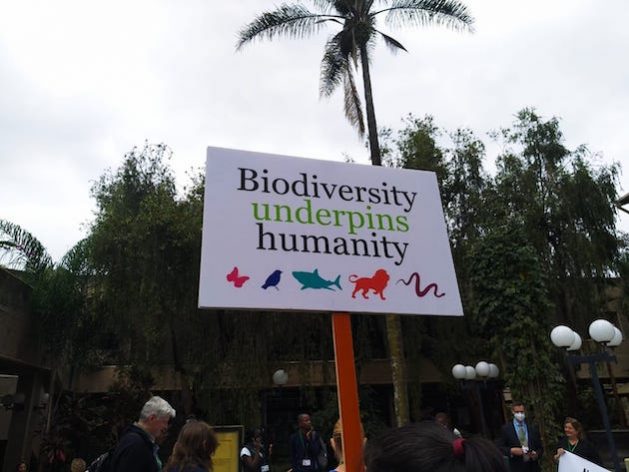
A placard on display at activists' demonstration outside the 4th meeting of the CBD Working Group at the UNEP headquarter in Nairobi. Credit: Stella Paul/IPS

A placard on display at activists’ demonstration outside the 4th meeting of the CBD Working Group at the UNEP headquarter in Nairobi. Credit: Stella Paul/IPS

Nairobi, Jun 27 2022 (IPS) – As the last working group meeting of the Post 2020 Global Biodiversity Agenda concluded here on Sunday, the delegates’ job at COP15 Montreal just got tougher as delegates couldn’t finalize the text of the agenda. Texts involving finance, cost and benefit-sharing, and digital sequencing – described by many as ‘most contentious parts of the draft agenda barely made any progress as negotiators failed to reach any consensus.


Nairobi – the Unattempted ‘Final Push’

The week-long 4th meeting of the Working Group of the Biodiversity Convention took place from June 21-26, three months after the 3rd meeting of the group was held in Geneva, Switzerland. The meeting, attended by a total of 1634 participants, including 950 country representatives, had the job cut out for them: Read the draft Post 2020 Global Biodiversity Framework (GBF) and its 21 targets, discuss, and clean up the text – target by target, sentence by sentence, at least up to 80%.

But, on Saturday – a day before the meeting was to wrap up, David Ainsworth – head of Communications at CBD, hinted that the progress was far slower than expected. Ainsworth mentioned that the total cleaning progress made was just about 8%.

To put it in a clearer context, said Ainsworth, only two targets now had a clean text – Target 19.2 (strengthening capacity-building and development, access to and transfer of technology) and target 12 (urban biodiversity). This means that in Montreal, they could be placed on the table right away for the parties to decide on, instead of debating the language. All the other targets, the work progress has been from around 50% to none, said Ainsworth.

An entire day later, on Sunday evening local time, co-chairs of the WG4 Francis Ogwal and Basile Van Havre confirmed that those were indeed the only two targets with ‘clean’ texts. In other words, no real work had been done in the past 24 hours.

On June 21, at the opening session of the meeting, Elizabeth Maruma Mrema, Executive Secretary of the Convention on Biological Diversity, described the Nairobi meeting as an opportunity for a ‘final push’ to finalize the GBF. On Sunday, she called on the parties to “vigorously engage with the text, to listen to each other and seek consensus, and to prepare the final text for adoption at COP 15”.

Answering a question from IPS News, Mrema also confirmed that there would be a 5th meeting of the Working Group before the Montreal COP, indicating the work done in the Nairobi meeting wasn’t enough to produce a draft that was ready to be discussed for adoption.

The final push, it appeared, had not even been attempted.

Bottlenecks and Stalemate

According to several observers, instead of cleaning up 80% of the texts over the past six days, negotiators had left 80% of the text in brackets, which signals disagreement among parties. Not only did countries fail to progress, but in some cases, new disagreements threatened to move the process in the opposite direction. The most fundamental issues were not even addressed this week, including how much funding would be committed to conserving biodiversity and what percentage figures the world should strive to protect, conserve, and restore to address the extinction crisis.

True to the traditions of the UN, the CBD wouldn’t be critical of any party. However, on Sunday evening, Francis Ogwal indicated that rich nations had been dragging their feet on meeting the commitment of donating to global biodiversity conservation. Without naming anyone, Ogwal reminded the negotiators that the more time they took, the tougher they would get the decision.

At present, said Ogwal, 700 billion was needed to stop and recover global biodiversity. “If you keep giving less and less, the problems magnify. Ten years down the line, this will not be enough,” he said.

The civil society was more vocal in criticizing the delegates for losing yet another opportunity.

According to Brian O’Donnell, Director of the Campaign for Nature, the negotiations were faltering, with some key issues being at a stalemate. It is, therefore, up to heads of state and other political and United Nations leaders to act with urgency. “But time is now running out, and countries need to step up, show the leadership that this moment requires, and act urgently to find compromise and solutions,” O’Donnell said in a statement.

The Next Steps

The CBD Secretariat mentioned a string of activities that would follow the Nairobi meeting to speed up the process of building a consensus among the delegates. The activities include bilateral meetings with some countries, regional meetings with others, and a Working Group 5 meeting which will be a pre-COP event before COP15.

Finally, the CBD is taking a glass-half-filled approach toward the GBF, which is reflected in the words of Mrema: “These efforts (Nairobi meeting) are considerable and have produced a text that, with additional work, will be the basis for reaching the 2050 vision of the Convention: A life in harmony with nature,” she says.

The upcoming UN Biodiversity Conference will be held from 5 to December 17 in Montreal, Canada, under the presidency of the Government of China. With the bulk of the work left incomplete, the cold December weather of Montreal is undoubtedly all set to be heated with intense debates and negotiations.
IPS UN Bureau Report


Call to Freedom for Millions of Children Trapped in Child Labour as Global Conference to Comes to Africa

Child Labour, Conferences, Education, Featured, Global, Headlines, Humanitarian Emergencies, Labour, Poverty & SDGs, TerraViva United Nations

Labour

A child beneficiary holding a drawing portraying domestic violence, at the Centre for Youth Empowerment and Civic Education, Lilongwe, Malawi which partnered with the ILO/IPEC to support the national action plan aimed at combating child labour. Credit: Marcel Crozet/ILO

A child beneficiary holding a drawing portraying domestic violence, at the Centre for Youth Empowerment and Civic Education, Lilongwe, Malawi which partnered with the ILO/IPEC to support the national action plan aimed at combating child labour. Credit: Marcel Crozet/ILO

Nairobi, May 13 2022 (IPS) – Children washing clothes in rivers, begging on the streets, hawking, walking for kilometres in search of water and firewood, their tiny hands competing with older, experienced hands to pick coffee or tea, or as child soldiers are familiar sights in Africa and Asia.


Child rights experts at Kailash Satyarthi Children’s Foundation reiterate that tolerance and normalisation of working children, many of whom work in hazardous conditions and circumstances, and apathy has stalled progress towards the elimination of child labour.

Further warnings include more children in labour across the sub-Saharan Africa region than the rest of the world combined. The continent now falls far behind the collective commitment to end all forms of child labour by 2025.

The International Labour Organization estimates more than 160 million children are in child labour globally.

How to achieve the Sustainable Development Target 8.7 and the International Programme on the Elimination of Child Labour that focuses on its elimination by 2025 will be the subject of the 5th Global Conference on the Elimination of Child Labour to be held in Durban, South Africa, from May 15 to 20, 2022.

South Africa’s President Cyril Ramaphosa is expected to open the conference. He will share the stage with the Southern African Development Community (SADC) chairperson and President of the Republic of Malawi Lazarus McCarthy Chakwera, ILO Director-General Guy Ryder, and Argentina President Alberto Ángel Fernández Pérez (virtual).

“There are multiple drivers of child labour in Africa, and many of them are interconnected,” Minoru Ogasawara, Chief Technical Advisor for the Accelerating action for the elimination of child labour in supply chains in Africa (ACCEL Africa) at the International Labour Organization (ILO) tells IPS.

He speaks of the high prevalence of children working in agriculture, closely linked to poverty and family survival strategies.

Rapid population growth, Ogasawara says, has placed significant pressure on public budgets to maintain or increase the level of services required to fight child labour, such as education and social protection.

“Hence the call to substantially increase funding through official development assistance (ODA), national budgets and contributions from the private sector targeting child labour and its root causes,” he observes.

UNICEF says approximately 12 percent of children aged 5 to 14 years are involved in child labour – at the cost of their childhood, education, and future.

Of the 160 million child labourers worldwide, more than half are in sub-Saharan Africa, and 53 million are not in school – amounting to 28 % aged five to 11 and another 35 % aged 12 to 14, according to the most recent child labour global estimates by UNICEF and ILO.

Against this grim backdrop, keynote speakers Nobel Peace Laureates Kailash Satyarthi and Leymah Gbowee and former Prime Minister of Sweden Stefan Löfven will address the conference, which is expected to put into perspective how and why children still suffer some of the worst, most severe forms of child labour such as bonded labour, domestic servitude, child soldiers, drug trafficking and commercial sexual exploitation.

Satyarthi has been at the forefront of mobilising global support to this effect.

“I am working in collaboration with a number of other Nobel Laureates and world leaders. We are demanding the setting up of an international social protection mechanism. During the pandemic, we calculated that $53 billion annually could ensure social protection for all children in all low-income countries, as well as pregnant women too,” Satyarthi emphasises.

“Increased social protection, access to free quality education, health care, decent job opportunities for adults, and basic services together create an enabling environment that reduces household vulnerability to child labour,” Ogasawara stresses.

He points to an urgent need to introduce and or rapidly expand social security and other social protection measures suitable for the informal economy, such as cash transfers, school feeding, subsidies for direct education costs, and health care coverage.

The need for a school-to-work transition and to “target children from poor households, increase access to education while reducing the need to combine school with work among children below the minimum working age” should be highlighted.

In the absence of these social protection safety nets, the  International Labour Organization says it is estimated that an additional 9 million children are at risk of child labour by the end of this year and a possible further increase of 46 million child labourers.

In this context, the fifth global conference presents an opportunity to assess progress made towards achieving the goals of SDG Target 8.7, discuss good practices implemented by different actors around the world and identify gaps and urgent measures needed to accelerate the elimination of both child labour and forced labour.

The timing is crucial, says the ILO, as there are only three years left to achieve the goal of the elimination of all child labour by 2025 and only eight years towards the elimination of forced labour by 2030, as established by the Sustainable Development Goal (SDG) Target 8.7.

The conference will also see the active participation of young survivor-advocates from India and Africa. They will share their first-person accounts and lived experiences in sync with the core theme of the discussion.

The conference will also take place within the context of the COVID-19 pandemic, amid fears and concerns that ending child labour became less significant on the international agenda as the world coped with the impact of the pandemic. This could reverse the many gains accrued in the fight against child labour, forced labour and child trafficking.

This is the first of a series of stories which IPS will be publishing during the 5th Global Conference on the Elimination of Child Labour from May 15 to 20, 2022.

IPS UN Bureau Report