Amidst a Horrendous 2023, Civil Society is Fighting Back Society

Armed Conflicts, Biodiversity, Civil Society, Climate Change, Climate Change Justice, COP28, Economy & Trade, Education, Environment, Featured, Global, Green Economy, Headlines, Health, Human Rights, TerraViva United Nations

Opinion

TORONTO, Canada, Dec 22 2023 (IPS) – The year 2023 has brought so much tragedy, with incomprehensible loss of lives, whether from wars or devastating ‘natural’ disasters, while our planet has seen yet more records broken as our climate catastrophe worsens.

And so as the clock ticks towards the (mostly western) New Year, readers are traditionally subjected by media outlets like ours to the ‘yearender’ – usually a roundup of main events over the previous 12 months, one horror often overshadowed by the next.


Farhana Haque Rahman

So forgive us if for 2023 IPS takes a somewhat different approach, highlighting how humanity can do better, and how the big depressing picture should not obscure the myriad small but positive steps being taken out there.

COP28, the global climate conference held this month in Dubai, could neatly fit the ‘big depressing’ category. Hosted by a petrostate with nearly 100,000 people registered to attend, many of them lobbyists for fossil fuels and other polluters, it would be natural to address its outcomes with scepticism.

However, while Yamide Dagnet, Director for Climate Justice at the Open Society Foundations, described COP28 as “imperfect”, she said it also marked “an important and unprecedented step forward in our ‘course correction’ for a just transition towards resilient and greener economies.”

UN climate chief Simon Stiell acknowledged shortcomings in the compromise resolutions on fossil fuels and the level of funding for the Loss and Damages Fund. But the outcome, he said, was also the “beginning of the end” for the fossil fuel era.

Imperfect as it was and still based on old structures, COP28 hinted at the possible: a planetary approach to governance where common interests spanning climate, biodiversity and the whole health of Earth outweigh and supersede the current dominant global system of rule by nation states.

As we have tragically witnessed in 2023, the existing system – as vividly reflected in the repetitive stalemate among the five veto-bearing members of the UN Security Council – is failing to find resolution to the major conflicts of this year, Russia-Ukraine and Israel-Gaza. Not to mention older and half-forgotten conflicts in places like Myanmar (18.6 million people in need of humanitarian aid) and in eastern Democratic Republic of Congo (seven million displaced).

The unrestrained destruction of Gaza and the disproportionate killings of over 17,000, (now the death toll is “at least 20,000 people” according to Palestinian officials) mostly civilians– in retaliation for 1,200 killings by Hamas and 120 hostages in captivity– have left the Palestinians in a state of deep isolation and weighed down by a feeling of being deserted by the world at large.

The United Nations and the international community have remained helpless– with UN resolutions having no impact– while American pleas for restrained aerial bombings continue to be ignored by the Israelis in an act of defiance, wrote IPS senior journalist Thalif Deen.

The hegemony of the nation-state system is surely not going to disappear soon but – without wanting to sound too idealistic — its foundations are being chipped away by civil society where interdependence prevails over the divide and rule of the existing order. And so for a few examples encountered in our reporting:

CIVICUS Lens, standing for social justice and rooted in the global south, offers analysis of major events from a civil society perspective, such as its report on the security crisis gripping Haiti casting doubt over the viability of an international plan to dispatch a Kenya-led police contingent.

Education Cannot Wait, a global fund for education in emergencies and protracted crises, lobbied at COP28 for a $150 million appeal to support school-aged children facing climate shocks, such as the devastating drought in Somalia and Ethiopia, and floods in Pakistan where many of the 26,000 schools hit in 2022 remain closed.

Leprosy, an ancient but curable disease, had been pegged back in terms of new case numbers but the onset of the COVID-19 pandemic in 2020 made it harder for patients to get treatment and for new cases to be reported. Groups such as the Sasakawa Health Foundation are redoubling efforts to promote early detection and treatment.

With 80 percent of the world’s poorest living closer to the epicenters of climate-induced disasters, civil society is hammering at the doors of global institutions to address the challenges of adaptation and mitigation.

Lobbying on the sidelines of COP28 in Dubai was activist Joshua Amponsem, co-director of the Youth Climate Justice Fund who questioned why weather-resilient housing was not yet a reality in Mozambique’s coastal regions despite the increasing ferocity of tropical cyclones.

“My key message is really simple. The clock is ticking for food security in Africa,” Dr Simeon Ehui told IPS as the newly appointed Director General of the International Institute of Tropical Agriculture which works with partners across sub-Saharan Africa to tackle hunger, poverty and natural resource degradation.

Dr Alvaro Lario, President of the International Fund for Agricultural Development (IFAD), which has received record-breaking pledges in support of its largest ever replenishment, warns that under current trends 575 million people will still be living in extreme poverty in 2030.

“Hunger remains a political issue, mostly caused by poverty, inequality, conflict, corruption and overall lack of access to food and resources. In a world of plenty, which produces enough food to feed everyone, how can there be hundreds of millions going hungry?” he asked.

Empowering communities in a bid to protect and rejuvenate the ecosystems of Pacific communities is the aim of the Unlocking Blue Pacific Prosperity conservation effort launched at COP28 by Palau’s President Surangel Whipps who noted that the world was not on track to meet any of the 17 sustainable development goals or climate goals by 2030.

A scientist with a life-long career studying coral reefs, David Obura was appointed this year as the new chair of IPBES, the Intergovernmental Science-Policy Platform on Biodiversity and Ecosystem Services (IPBES).

We really have reached planetary limits and I think interest in oceans is rising because we have very dramatically reached the limits of land,” says Dr Obura, “What the world needs to understand is how strongly nature and natural systems, even when highly altered such as agricultural systems, support people and economies very tangibly. It’s the same with the ocean.”

An ocean-first approach to the fight against climate change is also the pillar of a Dalhousie University research program, Transforming Climate Action, launched last May and funded by the Canadian government. Traditional knowledges of Indigenous People will be a focus.

As Max Roser, an economist making academic research accessible to all, reminds us: for more people to devote their energy to making progress tackling large global problems, we should ensure that more people know that it is possible.

Focusing on the efforts of civil society and projecting hope amidst all the heartbreak of 2023 might come across as futile and wasted, but in its coverage IPS will continue to highlight efforts and successes, big and small, that deserve to be celebrated.

Farhana Haque Rahman is the Executive Director of IPS Inter Press Service Noram and Senior Vice President of IPS; she served as the elected Director General of IPS from 2015 to 2019. A journalist and communications expert who lived and worked in Africa, Asia, Europe and North America, she is a former senior official of the United Nations Food and Agriculture Organization FAO and the International Fund for Agricultural Development IFAD.

IPS UN Bureau

  Source

Good for Girls and Good for the Planet: Eco-Friendly Sanitary Towels

Africa, Climate Change, Conservation, Environment, Featured, Green Economy, Headlines, Health, Innovation, Sustainable Development Goals, TerraViva United Nations

Women’s Health

Stephany Musombi and engineers preparing the banana stems for processing at KIRDI. Credit: Wilson Odhiambo/IPS

Stephany Musombi and engineers preparing the banana stems for processing at KIRDI. Credit: Wilson Odhiambo/IPS

NAIROBI, Nov 16 2023 (IPS) – ’Going Green’ seems to Dr Jacquline Kisato’s favorite catchphrase as she passionately explains her eco-friendly sanitary towel, a product she expects will help empower women and young girls while also putting money into farmers’ pockets.


Kisato is a lecturer at the Kenyatta University (KU), Fashion Design and Marketing, currently working on a project to develop affordable and eco-friendly sanitary towels while also finding a solution for sustainable packaging materials.

Kisato’s venture started out to help communities get a source of employment through the commercialization of banana stems – products that were considered useless by farmers and would usually be left to rot away on farms.

After the Kenyan government enforced a ban on the use of plastic bags in 2018, there was a need to find immediate alternatives.

Plastic bags were a necessity for grocers and fast-food vendors, an item that made it easy for customers to carry their goods home. Despite their advantage, however, their negative impact on the environment could no longer be overlooked.

‘’I started looking at this project from an entrepreneurship point of view on how I could commercialize banana stem fibers. The government had just banned single-use plastic bags, and market vendors needed alternatives to serve their customers,’’ Kisato told IPS.

‘’Poorly disposed sanitary towels also formed part of the pollution problem since they were composed of plastic,’’ she added.

According to Kisato, however, her need to empower women and young girls through affordable sanitary towels was something that she always had in mind after noticing the struggles that school-going girls went through.

‘’While walking along the hallways one day, a student on campus stopped me and asked if I could help her with a packet of sanitary pads. This incident shocked me as for a long time, I had assumed ‘period poverty’ was only experienced amongst high school children,’’ Kisato said.

Kisato and her research team interviewed 400 high school girls from Gatundi, Kibera, and Kawangware, where they found out that more than 50 percent of the girls in these low-income areas could hardly afford sanitary pads even when at home.

This did not sit well with the don as she felt something needed to be done about it.

It was while researching alternatives to plastic bags that she realized that she could solve two problems at the same time.

Kisato, therefore, applied for the National Research Fund (NRF) in 2018 with the aim of developing eco-friendly plastic bags and sanitary towels. Her wish came through when NRF granted Kenyatta University Ksh.9 million (about US $ 61,623) in 2020, with her taking the lead as the principal investigator in the project.

Her team is made up of scholars from different departments and institutions and also includes Ph.D. and master’s students, with each one of them playing a major role in seeing the project through.

‘’I lead a team of engineers from the Kenya Industrial Research and Development Institute (KIRDI), whose task is to reverse engineer machines that can extract fiber from banana stems and use them to create eco-friendly packaging and sanitary towels,’’ she explained. “I also have researchers from Moi University whose work was to turn the extracted fiber into soft materials for use.”

Kisato’s aim was to produce quality sanitary towels that could compete with what was already in the market while still being eco-friendly, a fact that led her to seek the expertise of Edwin Madivoli, a chemistry lecturer at the Jomo Kenyatta University of Agriculture and Technology (JKUAT).

According to Kisato, the towels on the market have a component in them called hydrogel, which enables them to retain fluids for longer, and were also lined with plastic sheets to prevent any leakage. Our intention is to replicate the same but use bioplastic materials, which can degrade as opposed to the normal plastic that is being used.

From her research, Kisato also discovered that Africans, on average, wore sanitary towels for longer as compared to women and girls from developed countries and were thus at risk of getting bacterial infections. This was due to limited access and affordability in Africa.

‘’The recommended period for one to have on a sanitary pad is about three hours, which means that it should be changed at least three times a day to avoid any risk of infections. This is, however, not the case for many girls in Africa due to poverty,’’ Kisato explained to IPS.

‘’We thought adding anti-microbial properties to our product would therefore make it as good or even better than what was in the market,’’ said Kisato.

The research team also found out that there were a lot of myths surrounding menstrual flow among young girls, a fact that led to a lot of stigmatization, which made it difficult for them to understand how to use sanitary towels properly.

Some of the notable ideas that girls told each other concerning menstrual flow included:

  1. It is a curse from God
  2. Girls who had periods were considered dirty and impure
  3. Their faces would become pale from losing blood

‘’These are beliefs that need to be done away with by encouraging parents and the government to speak about monthly periods with young girls openly,’’ Kisato said.

For the second phase of the project, Madivoli’s chemistry expertise came in handy, and the Research Scholarship and Innovation Fund (RSIF) was happy to add an additional Ksh.9 million (about USD 59,000) for Kisato to continue what she had started.

‘’My role is to ensure our sanitary pads are of the same quality as what is in the market while at the same time maintaining an eco-friendly nature, which is the main agenda of this whole project,’’ Madivoli told IPS.

‘’I am tasked with the development of hydrogels, production of bioplastics, and finding a way to incorporate anti-microbial properties into our products to protect the users from possible infections,’’ he said.

JKUAT received funding of Ksh.800,000 (about US $ 5477) from the Kenya National Innovation Agency (KENIA) to further help Madivoli with this research.

“As they are left to dry up on the farms, banana stems are known to produce large amounts of methane, which is a harmful greenhouse gas that contributes to the climate change problems that we are trying to tackle, added Madivoli. ‘”Having an alternative use for the stems therefore limits the greenhouse effect in the atmosphere.’’

Madivoli said that most banana farmers usually do not know what to do with the stems once they have done their harvest, and this project gives them a way to earn some extra income as they expect to buy the stems from them at Ksh.35 per stem.

“This project will not only be environmentally friendly but will also create jobs for the people who go to cut the stems from the farms while also finding use for the biomass that the farmers thought was useless,’’ he concluded.

Once it is up and running, they expect to source banana stems from counties such as Kisii, Muranga, Embu, Meru, and parts of western Kenya.

Stephany Musombi is one of Kisato’s students specializing in textiles whose task in the project is to come up with quality packaging materials.

‘’Apart from the banana fiber, I am also experimenting with other biomass such as pineapple and seaweed,’’ Musombi told IPS. If I can find a way to make this work, the project will open up a market for seaweed and pineapple biomass.

Kisato’s project could not have picked a better time there is an international joint push for green solutions to help mitigate climate change. On September 4, 2023, Kenya also played host to the climate summit that attracted leaders from across Africa.

Kenya’s president, William Ruto, drove himself in a tiny electric car to the Kenyatta International Convention Centre (KICC), where he challenged the African leaders and innovators to find sustainable solutions to their daily activities that can help them reduce the carbon print in the continent and globally.

‘’Africa can power all energy needs with renewable resources. The continent has enough potential to be entirely self-sufficient using wind, solar, geothermal, sustainable biomass, and hydropower energy. Africa can be a green industrial hub that helps other regions achieve their net zero strategies by 2050,’’ Ruto said at the summit.

Kisato expects her product to hit the market later this year, where she plans to make it more affordable for all. Her intention is to team up with startups or established companies that deal with toiletries.

‘’The cheapest sanitary packet in the market costs Ksh.140. We expect ours to go as low as Ksh.100, Kisato,’’ concluded.

Kenyatta University’s Vice Chancellor, Paul Wainaina, lauded the project, stating that it will enable the country to meet its industrial needs while conserving the environment.

IPS UN Bureau Report

  Source

Treated Wastewater Is a Growing Source of Irrigation in Chile’s Arid North

Active Citizens, Civil Society, Climate Action, Climate Change, Combating Desertification and Drought, Development & Aid, Economy & Trade, Editors’ Choice, Environment, Featured, Food and Agriculture, Green Economy, Headlines, Integration and Development Brazilian-style, Latin America & the Caribbean, Projects, Regional Categories, Sustainable Development Goals, Water & Sanitation

Water & Sanitation

Alfalfa farmer Dionisio Antiquera stands in front of one of the wastewater treatment ponds at the modernized plant in Cerrillos de Tamaya, a rural community in the Coquimbo region of northern Chile. The thousands of liters captured from the sewers are converted into clear liquid ready for reuse in local small-scale agriculture. CREDIT : Orlando Milesi / IPS

Alfalfa farmer Dionisio Antiquera stands in front of one of the wastewater treatment ponds at the modernized plant in Cerrillos de Tamaya, a rural community in the Coquimbo region of northern Chile. The thousands of liters captured from the sewers are converted into clear liquid ready for reuse in local small-scale agriculture. CREDIT : Orlando Milesi / IPS

COQUIMBO, Chile , Sep 18 2023 (IPS) – The reuse of treated wastewater in vulnerable rural areas of Chile’s arid north is emerging as a new resource for the inhabitants of this long, narrow South American country.


The Coquimbo region, just south of the Atacama Desert, one of the driest in the world, is suffering from a severe drought that has lasted 15 years.

According to data from the Meteorological Directorate, a regional station located in the Andes Mountains measured 30.3 millimeters (mm) of rain per square meter this year as of Sept. 10, compared to 213 mm in all of 2022.

“Rural localities today are already reusing wastewater or gray water. This is going to happen, with or without us, with or without a law. The need for water is so great that the communities are accepting the use of treated wastewater.” — Gerardo Díaz

At another station, in the coastal area, during the same period in 2023, rainfall stood at 10.5 mm compared to the usual level of 83.2 mm.

Faced with this persistent level of drought, vulnerable rural localities in Coquimbo, mostly dedicated to small-scale agriculture, are emerging as a new example of solutions that can be replicated in the country to alleviate water shortages.

The aim is to not waste the water that runs down the drains but to accumulate it in tanks, treat it and then use it to irrigate everything from alfalfa fields to native plants and trees in parks and streets in the localities involved. It is a response to drought and the expansion of the desert.

“We were able to implement five wastewater treatment projects and reuse 9.5 liters per second, which is, according to a comparative value, the consumption of 2,700 people for a year or the water used to irrigate 60 hectares of olive trees,” said Gerardo Díaz, sustainability manager of the non-governmental Fundación Chile.

These five projects, promoted by the Fundación Chile as part of its Water Scenarios 2030 initiative, are financed by the regional government of Coquimbo, which contributed the equivalent of 312,000 dollars. Of this total, 73 percent is dedicated to enabling reuse systems, for which plants in need of upgrading but not reconstruction have been selected.

The common objective of these projects, which together benefit some 6,500 people, is the reuse of wastewater for productive purposes, the replacement of drinking water or the recharge of aquifers.

Díaz told IPS that the amount of reuse obtained is significant because previously this water was discharged into a stream, canal or river where it was perhaps captured downstream.

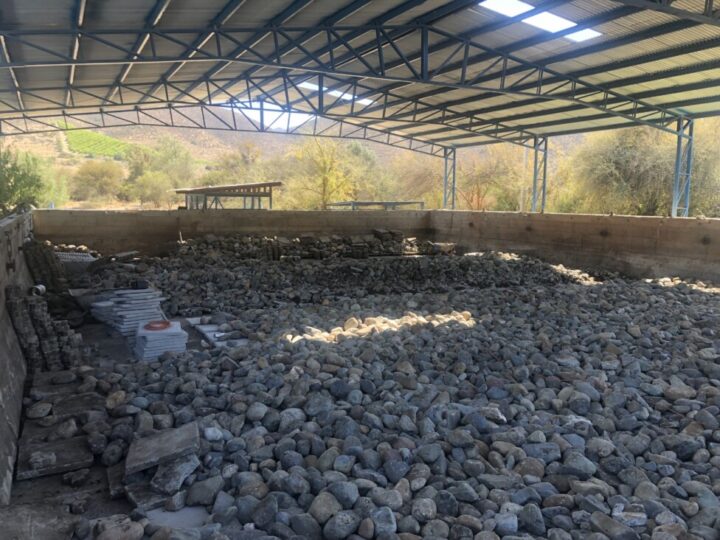
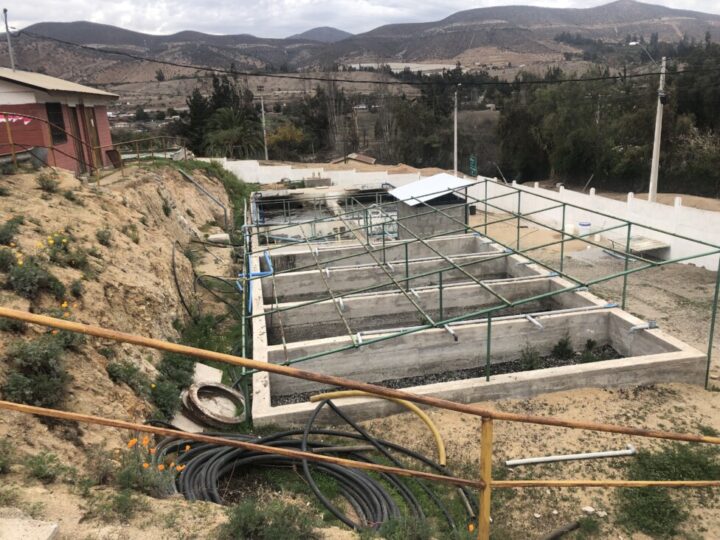
The Huatulame treatment plant in the rural municipality of Monte Patria in northern Chile is being completely repaired with the support of the local municipality. Waterproof plastic sheeting and boulders have been installed, and in the final stage sawdust and earthworms will be incorporated before receiving wastewater from local households for reuse. CREDIT: Orlando Milesi / IPS

The Huatulame treatment plant in the rural municipality of Monte Patria in northern Chile is being completely repaired with the support of the local municipality. Waterproof plastic sheeting and rocks have been installed, and in the final stage sawdust and earthworms will be incorporated before receiving wastewater from local households for reuse. CREDIT: Orlando Milesi / IPS

A successful pilot experience

In Coquimbo, which has a regional population of some 780,000 people, there are 71 water treatment plants, most of which use activated sludge and almost all of which are linked to the Rural Drinking Water Program (APR) of the state Hydraulic Works Directorate.

Activated sludge systems are biological wastewater treatment processes using microorganisms, which are very sensitive in their operation and maintenance and rural sectors do not have the capacity to maintain them.

“Most of these treatment plants are not operating or are operating inefficiently,” Diaz acknowledged.

But one of the plants, once reconditioned, has served as a model for others since 2018. Its creation allowed Dionisio Antiquera, a 52-year-old agricultural technician, to save his alfalfa crop.

“We have had a water deficit for years. This recycled water really helps us grow our crops on our eight hectares of land,” he said in the middle of his alfalfa field in Cerrillos de Tamaya, one of the Coquimbo municipalities that IPS toured for several days to observe five wastewater reuse projects.

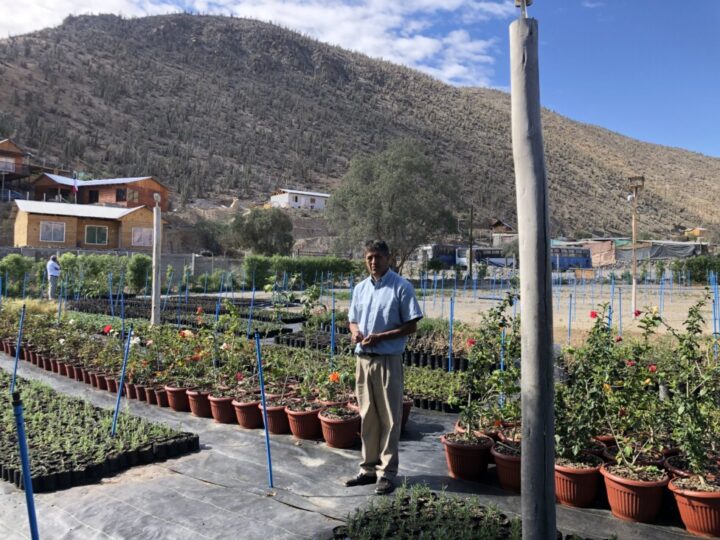
Raúl Ángel Flores stands in his nursery, where the plants and trees are irrigated with recycled water from the Punta Azul project in the town of Villa Puclaro, in Chile's Coquimbo region. All profits from the town's wastewater treatment are reinvested in its maintenance. CREDIT: Orlando Milesi / IPS

Raúl Ángel Flores stands in his nursery, where the plants and trees are irrigated with recycled water from the Punta Azul project in the town of Villa Puclaro, in Chile’s Coquimbo region. All profits from the town’s wastewater treatment are reinvested in its maintenance. CREDIT: Orlando Milesi / IPS

He explained that using just reused water he was able to produce six normal alfalfa harvests per year with a yield per hectare of 100 25-kg bales.

“That’s 4500 to 4800 bales in the annual production season,” he said proudly.

These bales are easily sold in the region because they are cheaper than those of other farmers.

The water he uses comes from an APR plant that has 1065 users, 650 of whom provide water, including Antiquera.

On one side of his alfalfa field is a plant that accumulates the sludge that is dehydrated in pools and drying courts, and on the other side, the water is chlorinated and runs into another pond in its natural state.

“This water works well for alfalfa. It is hard water that has about 1400 parts per million of salt. Then it goes through a reverse osmosis process that removes the salt and the water is suitable for human consumption,” the farmer explained.

In Chile, treated wastewater is not considered fresh water or water that can be used directly by people, and its reuse is only indirect.

Antiquera sold half a hectare to the government to install the plant and in exchange uses the water obtained and contributes 20 percent to the local APR.

He recently extended his alfalfa field to another seven hectares, thanks to his success with treated water.

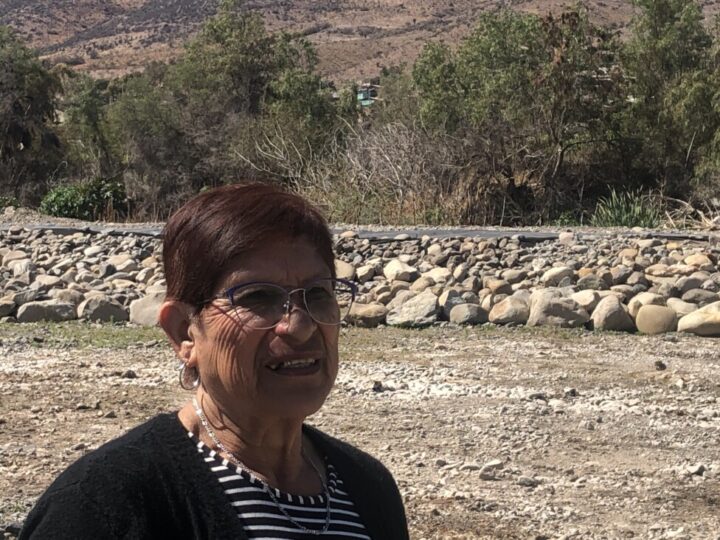
Deysy Cortés, president of a rural drinking water system in Huatulame, stands in front of the dry riverbed of the town of the same name. Today there is no water in the river, where local residents swam and summer vacationers camped on its banks 15 years ago. CREDIT: Orlando Milesi / IPSDeysy Cortés, president of a rural drinking water system in Huatulame, stands in front of the dry riverbed of the town of the same name. Today there is no water in the river, where local residents swam and summer vacationers camped on its banks 15 years ago. CREDIT: Orlando Milesi / IPS

Deysy Cortés, president of a rural drinking water system in Huatulame, stands in front of the dry riverbed of the town of the same name. Today there is no water in the river, where local residents swam and summer vacationers camped on its banks 15 years ago. CREDIT: Orlando Milesi / IPS

Flowers and trees also benefit

In Villa Puclaro, in the Coquimbo municipality of Vicuña, Raúl Ángel Flores, 55, has an ornamental plant nursery.

“I’ve done really well. My nursery has grown with just reuse water….. I have more than 40,000 ornamental, fruit, native and cactus plants. I deliver to retailers in Vicuña and Coquimbo,” a port city in the region, he told IPS.

The nursery is 850 square meters in size, and has an accumulation pond and pumps to pump the water. He has now rented a 2,500-meter plot of land to expand it.

Flores explained to IPS that he manages the nursery together with his wife, Carolina Cáceres, and despite the fact that they have two daughters and a senior citizen in their care, “we make a living just selling the plants…I even hired an assistant,” he added.

In the southern hemisphere summer he uses between 4,000 and 5,000 liters of water a day for irrigation.

“I have water to spare. Here it could be reused for anything,” he said.

Joining the project made it possible for Flores to make efficient use of water with a business model that in this case incorporates a fee for the water to the plant management, which is equivalent to 62 cents per cubic meter used.

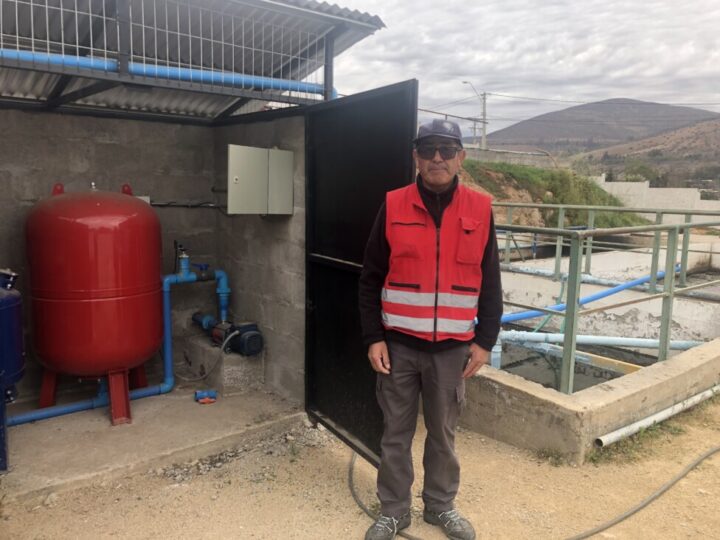
 Arnoldo Olivares operates the water treatment and recycling plant in Plan de Hornos, northern Chile. The plant's infrastructure and operation have been upgraded, and it can now deliver water to rural residents to irrigate trees and plants, instead of using potable water. CREDIT: Orlando Milesi / IPS

Arnoldo Olivares operates the water treatment and recycling plant in Plan de Hornos, northern Chile. The plant’s infrastructure and operation have been upgraded, and it can now deliver water to rural residents to irrigate trees and plants, instead of using potable water. CREDIT: Orlando Milesi / IPS

Eliminating odors, and creating new gardens

In the community of Huatulame, in the municipality of Monte Patria, Fundación Chile built an artificial surface wetland to put an end to the bad odors caused by effluents from a deficient waste-eater earthworm vermifilter treatment plant.

“This wetland has brought us peace because the odors have been eliminated. For the past year people have been able to walk along the banks of the old riverbed,” Deysy Cortés, 72, president of the APR, told IPS.

The municipality of Monte Patria is financing the repair of the plant with the equivalent of 100,000 dollars.

“The sprinklers will be changed, the filtering system will be replaced, and sawdust and worms will be added. It will be up and running in a couple of months,” explained agronomist Jorge Núñez, a consultant for Fundación Chile.

As in other renovated plants, safe infiltration of wastewater is ensured while the project simultaneously promotes the protection of nearby wells to provide water to the villagers.

The Huatulame treatment plant in the rural municipality of Monte Patria in northern Chile is being completely repaired with the support of the local municipality. Waterproof plastic sheeting and boulders have been installed, and in the final stage sawdust and earthworms will be incorporated before receiving wastewater from local households for reuse. CREDIT: Orlando Milesi / IPS

The Huatulame treatment plant in the rural municipality of Monte Patria in northern Chile is being completely repaired with the support of the local municipality. Waterproof plastic sheeting and boulders have been installed, and in the final stage sawdust and earthworms will be incorporated before receiving wastewater from local households for reuse. CREDIT: Orlando Milesi / IPS

Cortés warned of serious difficulties if no more rain falls in the rest of 2023, despite the relief provided by the plant for irrigation.

“I foresee a very difficult future if it doesn’t rain. We will go back to what we experienced in 2019 when in every house there were bottles filled with water and a little jug to bathe once a week,” she said.

During a recent crisis, the local APR paid 2500 dollars to bring in water from four 20,000-liter tanker trucks.

In Plan de Hornos, a town in the municipality of Illapel, irrigation technology was installed using reused water instead of drinking water to create a green space for the community to enjoy.

The project included water taps in people’s homes for residents to water trees and flowers.

Arnoldo Olivares, 59, is in charge of the plant, which has 160 members.

“I run both systems,” he told IPS. “I pour drinking water into the pond. After passing through the houses, the water goes into the drainage system, where there is a procedure to reclaim and treat it.”

“This water was lost before, and now we reuse it to irrigate the saplings. We used to work manually, now it is automated. It’s a tremendous change, we’re really happy,” he said.

Antiquera the alfalfa farmer is happy with his success in Cerrillos de Tamaya, but warns that in his area 150 to 160 mm of rainfall per year is normal and so far only 25 mm have fallen in 2023.

“The water crisis forces us to find alternatives and to be 100 percent efficient. Not a drop of water can be wasted. They have forecast very high temperatures for the upcoming (southern hemisphere) summer, which means that plants will require more water in order to thrive,” he said.

Díaz, the sustainability manager of Fundación Chile, said the Coquimbo projects are fully replicable in other water-stressed areas of Chile if a collaborative model is used.

He noted that “in Chile there is no law for the reuse of treated wastewater. There is only a gray water law that was passed years ago, but there are no regulations to implement it.”

He explained, however, that due to the drought, “rural localities today are already reusing wastewater or gray water. This is going to happen, with or without us, with or without a law. The need for water is so great that the communities are accepting the use of treated wastewater.”

The governor of Coquimbo, Krist Naranjo, argued that “a broader vision is needed to value water resources that are essential for life, especially in the context of global climate change.”

“We’re working on different initiatives with different executors, but the essential thing is to value the reuse of graywater recycling,” she told IPS from La Serena, the regional capital.

  Source

Civil Society Organizations Unite to Urge Public Development Banks to Change the Way Development Is Done

Biodiversity, Civil Society, Climate Change, Development & Aid, Economy & Trade, Energy, Environment, Green Economy, Headlines, Human Rights, Latin America & the Caribbean, TerraViva United Nations

Opinion

CARTAGENA, Colombia, Sep 4 2023 (IPS) – In the midst of a complex web of crises, spanning climate change, biodiversity depletion, constraints on civic space and mounting debt burdens, civil society organizations and human rights defenders from over 50 countries have united their voices to call for immediate and impactful action from Public Development Banks (PDBs).


The global coalition’s message is clear: when it comes to financing for development, principles of rights, justice, sustainability, transparency, accountability and dignity for all cannot remain mere slogans. They must form the core of all projects undertaken by all Public Development Banks.

The Finance in Common Summit has become a pivotal platform for Public Development Banks from around the world. The fact that this year’s summit is taking place in Cartagena, Colombia, the deadliest country in the world in 2022 for human rights, envrionmental and indigenous activists, development banks must acknowledge and integrate the protection of human rights into their projects.

“Development banks are advocating to play an even bigger role in the global economy. But are they truly fit for this purpose? Unfortunately, the stories of communities around the world show us that development banks are failing to address the root causes of the very problems they claim to solve. We need to hold them accountable for this,” says Ivahanna Larrosa, Regional Coordinator for Latin America at the Coalition for Human Rights in Development.

“When PDB projects cause harm to people and the environment, PDBs must remedy these harms. All PDBs should implement an effective accountability mechanism to address concerns with projects and should commit to preventing and fully remediating any harm to communities,” adds Stephanie Amoako, Senior Policy Associate at Accountability Counsel.

The ongoing crises demand a transformation in the quality of financing and a power shift to include the voices of communities. The existing financial architecture not only impedes governments’ ability to safeguard both their citizens and the environment but also contributes to the escalating issue of chronic indebtedness. Policy-based lending and conditionalities enforced by International Financial Institutions have steered countries toward privatization of essential services, reduced social spending and preferential treatment for the private sector. This burdens the population with higher taxes, inflation, and weakened social safety nets.

“The same multinational companies that have polluted and violated human rights in Latin America are now obtaining financing from development banks for energy transition projects. Another example is the development of the green hydrogen industry in Chile, which carries a very high environmental and social risk,” says Maia Seeger, director of the Chilean civil society organization Sustentarse.

Addressing these issues requires a comprehensive and sustainable transformation of the financial architecture as well as holistic reforms and synergies with civil society and communities. Environmental and neo-colonial debts need to be a thing of the past and equitable reforms the thing of the present.

Global civil society, in response to these challenges, demands bold and decisive actions in a collective declaration signed by over 100 organisations. The demands are the result of a 4-year process in which a coalition of civil society organisations has come together to call on all PDBs at the Finance in Common Summit to embrace tangible actions that genuinely prioritize and protect people.

Just last month we have seen that change is possible when communities are involved, as the people of Ecuador voted to ban oil drilling in one of the most biodiverse places on the planet, the Yasuní National Park in the Amazon rainforest.

“The global financial system needs not just a rethink but a surgical operation, and that requires bold action. Governments and institutions such as the Public Development Banks must cancel the debt of the countries that require it and put in place concrete and immediate measures to put an end to public financing of fossil fuels, to have financing based on subsidies so as not to fall into the debt trap once again. It is time for the rich countries, the biggest polluters and creditors, to offer real solutions to the multiple crises we are currently experiencing,” says Gaïa Febvre, International Policy Coordinator at Réseau Action climat France.

“Public and Multilateral Development Banks must divest from funding false climate solutions and projects that harm forests, biodiversity and communities. Instead, they should redirect finance to support gender just, rights based and ecosystems approaches that contribute to transformative changes leading to real solutions that address climate change, loss of biodiversity and create sustainable livelihoods for Indigenous Peoples, women in all their diversities and local communities. Public funds must support community governed agroecological practices, small scale farming and traditional animal rearing practices instead of large scale agri-business which perpetuates highly polluting and emitting industrial agriculture and unsustainable livestock production, the root cause for deforestation and food insecurity,” adds Souparna Lahiri, Senior Climate and Biodiversity Policy Advisor at the Global Forest Coalition (GFC).

The call to action emphasizes that achieving the Sustainable Development Goals (SDGs), effective climate action aligned with the Paris Agreement and successful implementation of the Kunming-Montreal Global Biodiversity Framework require Public Development Banks to pivot from a top-down profit-driven approach to one that prioritizes community-led involvement and human rights-based approaches.

“It is important that civil society participation be strengthened at the Finance in Common Summit (FICS). In previous years, civil society has been sidelined. Clearly, there is still some room for improvement for civil society participation to become truly meaningful. The lack of civil society representative on the opening panel this year is just one example of that. PDBs should promote and support an enabling environment for civil society and systematically incorporate civic space, human rights and gender analysis. This year, we are working towards ensuring that civil society voices, including those from communities are heard at the FICS. In collaboration with the FICS Secretariat, Forus seeks to establish a formal mechanism between civil society and PDBs and to ensure that civil society is recognised as an official engagement group,” says Marianne Buenaventura Goldman, Project Coordinator, Finance for Development at the global civil society network Forus.

IPS UN Bureau

  Source

Biodiversity Credits: Solution or Empty Promise for Latin America?

Biodiversity, Civil Society, Climate Action, Climate Change, Climate Change Finance, Conservation, Development & Aid, Economy & Trade, Editors’ Choice, Environment, Green Economy, Headlines, Latin America & the Caribbean, Natural Resources, Regional Categories, Sustainable Development Goals, TerraViva United Nations

Climate Change Finance

In the Bosque de Niebla, located in the department of Antioquia in northwestern Colombia, biodiversity bonds have emerged to push for protection of the ecosystem from threats such as deforestation and rising temperatures. But these instruments are still very green in Latin America. CREDIT: Courtesy of Terraso - Unlike offsets for environmental damage due to infrastructure projects, biodiversity credits are an economic instrument that can be used to finance actions that result in measurable positive outcomes through the issuance and sale of biodiversity units

In the Bosque de Niebla, located in the department of Antioquia in northwestern Colombia, biodiversity bonds have emerged to push for protection of the ecosystem from threats such as deforestation and rising temperatures. But these instruments are still very green in Latin America. CREDIT: Courtesy of Terraso

MEXICO CITY, Aug 28 2023 (IPS) – Located in northwestern Colombia, the Bosque de Niebla is home to 154 species of plants, 120 bird species, 21 species of mammals, 16 water springs and five hectares of wetlands.


Forming part of the Cuchilla Jardín-Támesis Integrated Management District in the department of Antioquia, the ecosystem provides water and climate regulation to the entire northwestern region of the country.

“Not all ecosystem services are the same, it has to be a very judicious system. And there have to be local regulations, from green taxonomies (classification of activities) to regulations. Therein lies the dilemma of where the sector has to go.” — Lía González

For this reason, an innovative financing scheme, biodiversity bonds, seeks to strengthen the protection of this area for 30 years, in the face of threats such as deforestation, drought and rising temperatures due to the climate crisis.

Private Colombian investor Terraso and Spanish carbon offset seller ClimateTrade, a climate solutions company that utilizes blockchain technology to facilitate large-scale decarbonization efforts through innovation, created voluntary biodiversity bonds for the Bosque de Niebla in May 2022.

The aim is to care for 340 hectares registered as a habitat bank by the Ministry of Environment and Sustainable Development of Colombia, one of the 10 most biologically diverse countries in the world.

Habitat banks are areas where conservation initiatives are aggregated and ecosystem preservation, enhancement or restoration actions are implemented to generate quantifiable biodiversity gains.

Each biodiversity credit represents 10 square meters of threatened, conserved or restored land. Technical, financial and legal guarantees will sustain the project for at least 30 years. Each bond, worth 30 dollars, corresponds to 30 years of conservation and/or restoration.

But the scheme raises concerns about the commercialization of wildlife and the pursuit of profit over ecological benefits.

Patricia Balvanera, an academic at the Institute for Research on Ecosystems and Sustainability of the public National Autonomous University of Mexico, said the financial market approach does not address the full spectrum of environmental, cultural and social issues, which can cloud the vision of the integral importance of nature.

“Other non-integrated values have to do with social, ethical principles that have developed around nature. We have bought ourselves an image as a factory of resources at the service of people and we have discarded the role of nature and society through a relationship of care and reciprocity,” she told IPS from the northern Mexican city of San Luis Potosí.

The expert is co-author of the study “Diverse values of nature for sustainability”, published on Aug. 9, which addresses a more holistic view of care.

Unlike offsets for environmental damage due to infrastructure projects, biodiversity credits are an economic instrument that can be used to finance actions that result in measurable positive outcomes through the issuance and sale of biodiversity units.

The buyers of biodiversity bonds gain in reputational aspects, by promoting the restoration and protection of ecosystems, and obtain funds by reselling the bonds, as it is a voluntary market.

These are different from carbon credits, where companies and individuals can buy the reduced emissions credits in what is known as the voluntary carbon market, to offset their polluting emissions: each one represents the elimination of one metric ton of carbon from the atmosphere.

For the carbon dioxide equivalent trapped and stored in ecosystems such as forests, project owners can issue certificates for sale in national and international markets to national and international corporations and individuals who want to reduce their polluting emissions.

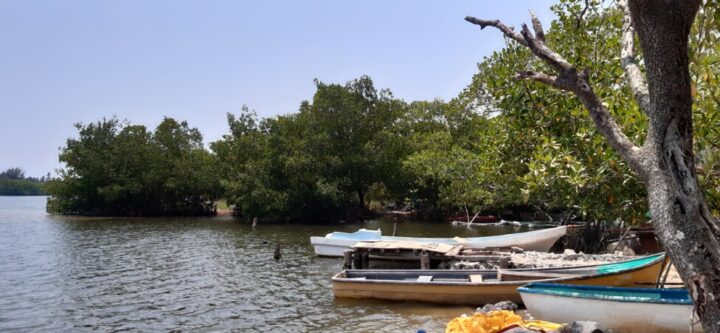
Mangroves, such as these in the municipality of Paraíso in the southeastern Mexican state of Tabasco, are candidates for biodiversity bonds because of the services they provide and the need to protect them, like other ecosystems. But these credits still need international standards, verification and monitoring guidelines, as well as tangible results. CREDIT: Emilio Godoy / IPS - Unlike offsets for environmental damage due to infrastructure projects, biodiversity credits are an economic instrument that can be used to finance actions that result in measurable positive outcomes through the issuance and sale of biodiversity units

Mangroves, such as these in the municipality of Paraíso in the southeastern Mexican state of Tabasco, are candidates for biodiversity bonds because of the services they provide and the need to protect them, like other ecosystems. But these credits still need international standards, verification and monitoring guidelines, as well as tangible results. CREDIT: Emilio Godoy / IPS

On hold

In Honduras, a project similar to the Colombian one is advancing in Cusuco National Park, in the northwestern department of Cortés.

In the 22,200-hectare forest, decreed in 1987, the international alliance of environmental organizations rePlanet seeks the conservation of 1,883 hectares in 25 years in the face of threats such as deforestation and the risk to 24 species.

The project could issue bonds this year.

Lía González, director for Latin America of the Belgian social impact investment firm Incofin, said the instrument involves several challenges, such as monetization, assigning value to the blocks of land, the creation of standards for measurement, verification, monitoring and issuance, as well as the involvement of the communities.

“Not all ecosystem services are the same, it has to be a very judicious system. And there have to be local regulations, from green taxonomies (classification of activities) to regulations. Therein lies the dilemma of where the sector has to go,” she told IPS from Bogotá.

The executive stressed that the scheme should avoid the carbon credits model and learn from its mistakes, such as inaccurate calculation of carbon sequestration and violations of community rights.

In 2022, Incofin’s portfolio covered 111 clients in 14 Latin American countries for a total of 400 million dollars in segments such as sustainable agriculture and microfinance. In Colombia, it supported eight clients and totaled 44.3 million dollars.

The company focuses on medium-term investments, so that beneficiaries have an additional source of income within the area being protected or restored.

So far, so-called green bonds have fallen short in financing for the conservation of natural wealth and sustainable land use, according to a 2020 report by the Luxembourg Green Exchange and the Global Landscapes Forum, entitled: “How can Green Bonds catalyse investments in biodiversity and sustainable land-use projects?”

Colombia and Honduras are the countries that have moved forward with these instruments, because they have regulations and several financial instruments related to biodiversity, although bonds are still a rarity.

In this regard, the Organisation for Economic Co-operation and Development (OECD), which groups the world’s 38 most developed economies, noted in its 2021 report “Tracking Economic Instruments and Finance for Biodiversity” that, despite the progress made, the substantial potential depends on increasing the use and ambition of biodiversity-relevant economic instruments.

In its Sixth National Biodiversity Report 2020, Honduras recognized the need to improve the monetary and non-monetary valuation of environmental services.

Financing schemes are essential to the development of the United Nations Decade on Ecosystem Restoration 2021-2030, adopted by the U.N. General Assembly in 2019, which seeks to prevent, halt and reverse the degradation of terrestrial and marine ecosystems, to eradicate poverty, combat climate change and prevent the mass extinction of species.

Moving towards a take-off?

In order for it to be successful, the mechanism requires integrity of the projects and the inclusion of all stakeholders, according to the World Economic Forum, dedicated to multinational business lobbying.

The Colombian Bosque de Niebla initiative has already placed 62,063 credits and has 61,773 available.

The investor Terraso has seven other habitat banks in various areas of Colombia that could generate more bonds.

Balvanera warned of perverse incentives that could undermine protection.

“If we think about financial schemes, the link should not only be transactional. There must be involvement of different stakeholders who collectively identify the mechanism that promotes conservation, respects the vision of care and maintains the livelihoods of the inhabitants of these areas,” she said.

The academic argued that “this generates a circular system that connects forest protection, water care, food production and sustainable consumption.”

For her part, González was open to analyzing these investments.

“Water could be a viable focus for climate resilience and its impact on the region’s climate. We are interested in learning about monetization and that additional sources of income can benefit protection processes, so that it is complementary to what we do,” she said.

Last December, the 15th Conference of the Parties (COP15) to the Convention on Biological Diversity (CBD) adopted the Kunming-Montreal Global Biodiversity Framework, which includes cumulative biodiversity funding of at least 200 billion dollars by 2030 from public and private sources.

One of its goals is to encourage innovative schemes such as payment for environmental services, green bonds, offsets, biodiversity credits and benefit-sharing mechanisms that include environmental and social safeguards.

To meet these objectives, the 196 States Parties to the CBD created the Global Biodiversity Framework Fund, which is managed by the Global Environment Facility and whose governing council was approved in June in Brazil.

In addition, the agreement includes the complete or partial restoration of at least 30 percent of degraded terrestrial and marine ecosystems by 2030, as well as the reduction of the loss of areas of high biological importance to almost zero.

  Source

‘Passion Seeds’ Fertilize Brazil’s Semiarid Northeast

Ligoria Felipe dos Santos poses for a photo on her agroecological farm that mixes corn, squash, fruits, vegetables and medicinal herbs. She is part of the women's movement that is trying to prevent the installation of wind farms in the Borborema mountain range, in the northeastern Brazilian state of Paraíba. CREDIT: Mario Osava / IPS

Ligoria Felipe dos Santos poses for a photo on her agroecological farm that mixes corn, squash, fruits, vegetables and medicinal herbs. She is part of the women’s movement that is trying to prevent the installation of wind farms in the Borborema mountain range, in the northeastern Brazilian state of Paraíba. CREDIT: Mario Osava / IPS

By Mario Osava
ESPERANÇA, Brazil , Jul 14 2023 (IPS)

Zé Pequeno cried when he learned that the heirloom seeds he had inherited from his father were contaminated by the transgenic corn his neighbor had brought from the south. Fortunately, he was able to salvage the native seeds because he had shared them with other neighbors.


Euzébio Cavalcanti recalls this story from one of his colleagues to highlight the importance of “passion seeds” for family farming in Brazil’s semiarid low-rainfall ecoregion which extends over 1.1 million square kilometers, twice the size of France, in the northeastern interior of the country.”These are seeds adapted to the semiarid climate. They can withstand long droughts, without irrigation.” Euzébio Cavalcanti

Saving heirloom seeds is a peasant tradition, but two decades ago the Brazilian Semiarid Articulation (ASA), a network of 3,000 social organizations that emerged in the 1990s, named those who practice it as individual and community guardians of seeds. By September 2021, it had registered 859 banks of native seeds in the region.

Cavalcanti, a 56-year-old farmer with multiple skills such as poet, musician and radio broadcaster, coordinates the network of these banks in the Polo de Borborema, a joint action area of 14 rural workers’ unions and 150 community organizations in central-eastern Paraíba, one of the nine states of the Brazilian Northeast.

“These are seeds adapted to the semiarid climate. They can withstand long droughts, without irrigation, that is why they are so important,” he explained. They also preserve the genetic heritage of many local crop species and family history; they have sentimental value.

“Don’t plant transgenics, don’t erase my history”, is a slogan of the movement that promotes agroecological practices and is opposed to the expansion of genetically modified organisms in local agriculture. “Corn free of transgenics and agrotoxins (agrochemicals)” is the goal of their campaign.

In Paraíba, the name “passion seeds” has been adopted, instead of native or heirloom seeds, since 2003, when the state government announced that it would provide seeds from a specialized company to family farmers.

“If the government offers these seeds, I don’t want them. I have family seeds and I have passion for them,” reacted a farmer in a meeting with the authorities.

“‘Passion seeds’ spread throughout Paraíba. In other states they’re called ‘seeds of resistance’,” Cavalcanti said.

Agroecology is one of the banners of the Polo de Borborema, as it is for ASA in the entire semiarid ecosystem that covers most of the Northeast region and a northern strip of the southeastern state of Minas Gerais.

"Passion seeds," as heirloom seeds are known locally, ensure better harvests on semiarid lands, free of transgenics or "agricultural poisons," according to Euzébio Cavalcanti, a small farmer, poet and musician who helped lead the struggle for agrarian reform and cares for the seeds in the highlands of Borborema, in northeastern Brazil. CREDIT: Mario Osava / IPS

“Passion seeds,” as heirloom seeds are known locally, ensure better harvests on semiarid lands, free of transgenics or “agricultural poisons,” according to Euzébio Cavalcanti, a small farmer, poet and musician who helped lead the struggle for agrarian reform and cares for the seeds in the highlands of Borborema, in northeastern Brazil. CREDIT: Mario Osava / IPS

Learning to coexist with semiarid conditions

This approach arose from a change in the development strategy adopted on the part of local society, especially ASA, since the 1990s. “Coexisting with semiarid conditions” replaced the traditional, failed focus on “fighting the drought”.

Large dams and reservoirs, which only benefit large landowners and do not help the majority of small farmers, gave way to more than 1.2 million tanks for collecting rainwater from household or school rooftops and various ways of storing water for crops and livestock.

It is a process of decolonization of agriculture, education and science, which prioritizes knowledge of the climate and the regional biome, the Caatinga, characterized by low, twisted, drought-resilient vegetation. It also includes the abandonment of monoculture, with the implementation of traditional local horticultural and family farming techniques.

The Northeast, home to 26.9 percent of the national population, or 54.6 million inhabitants according to the 2022 demographic census, concentrates 47.2 percent of the country’s family farmers, according to the 2017 agricultural census. There are 1.84 million small farms worked mainly by family labor.

Brazil’s semiarid region is one of the rainiest in the world for this type of climate, with 200 to 800 millimeters of rain per year on average, although there are drier areas in the process of desertification.

A stand at the ecological market in the municipality of Esperança, in northeastern Brazil, is a link between urban consumers and family farmers opposed to agrochemicals, monoculture and transgenic products. CREDIT: Mario Osava / IPS

A stand at the ecological market in the municipality of Esperança, in northeastern Brazil, is a link between urban consumers and family farmers opposed to agrochemicals, monoculture and transgenic products. CREDIT: Mario Osava / IPS

Borborema, the name of a high plateau that obstructs the humidity coming from the sea, making the territory to its west drier, is the scene of various peasant struggles, such as the mobilization for agrarian reform since the 1980s and for small-scale agriculture “without poisons” or agrochemicals, of which the “seeds of passion” are a symbol.

Cavalcanti is a living memory of local history, also as a founder of the local Landless Workers Movement (MST) and an activist in the occupations of unproductive land to create rural settlements, on one of which he gained his own small farm where he grows beans, corn and, vegetables and has two rainwater collection tanks.

Women help drive the expansion of agroecology

Women have played a key role in the drive towards agroecology. The March for Women’s Lives and Agroecology is an annual demonstration that since 2010 has defended family farming and the right to a healthy life.

This year, on Mar. 16, 5,000 women gathered in Montadas, a municipality of 5,800 inhabitants, to block the creation of wind farms that have already caused damage to the health of small farmers by being installed near their homes.

Borborema is “a territory of resistance,” say the women. About 15 years ago, they succeeded in abolishing the cultivation of tobacco.

The president of the Union of Rural Workers of the municipality of Esperança, Alexandre Lira (C) and other leaders pose in front of a poster declaring the union's current goals: "Agroecological Borborema is no place for a wind farm," he says about this area in Brazil's semiarid Northeast region. CREDIT: Mario Osava / IPS

The president of the Union of Rural Workers of the municipality of Esperança, Alexandre Lira (C) and other leaders pose in front of a poster declaring the union’s current goals: “Agroecological Borborema is no place for a wind farm,” he says about this area in Brazil’s semiarid Northeast region. CREDIT: Mario Osava / IPS

When the citrus blackfly arrived, the government tried to combat it with pesticides, but “we resisted; we used natural products and solved the problem for our oranges and lemons,” said Ligoria Felipe dos Santos, a 54-year-old mother of three.

“That is agroecology, which is strengthened in the face of threats. Farmers are aware, they resort to alternative defenses, they know that it is imbalance that leads to pests,” she told IPS.

“Agroecology is a good banner for union activity,” said Lexandre Lira, 42, president of the Rural Workers Union of Esperança, a municipality of 31,000 people in the center of the Polo de Borborema.

It is also a factor in keeping farmers’ children on the farms, because it awakens the interest of young people in agriculture, said Edson Johny da Silva, 27, the union’s youth coordinator.

Maria das Graças Vicente and Givaldo Firmino dos Santos stand next to the machine they use for making pulp from native fruits little known outside Brazil, such as the umbu (Brazil plum), cajá (hog plum), acerola (Amazon or Barbados cherry), along with cashews, mangos, and guava. CREDIT: Mario Osava / IPS

Maria das Graças Vicente and Givaldo Firmino dos Santos stand next to the machine they use for making pulp from native fruits little known outside Brazil, such as the umbu (Brazil plum), cajá (hog plum), acerola (Amazon or Barbados cherry), along with cashews, mangos, and guava. CREDIT: Mario Osava / IPS

Pulp, added value

Maria das Graças Vicente, known as Nina, 51, along with her husband Givaldo Firmino dos Santos, 52, is an example of agroecological productivity. On 1.25 hectares of land they produce citrus fruits, passion fruit, acerola (Amazon or Barbados cherry), mango and other fruits, as well as sugar cane, corn, beans and other vegetables.

Grafted fruit tree seedlings are another of the products they use to expand their income, as IPS was shown during a visit to their farm.

Using their own harvest and fruit they buy from neighbors, they make pulp in a small shed separate from their home, with a small machine purchased with the support of the Advisory and Services to Projects in Alternative Agriculture (AS-PTA), a non-governmental organization that supports farmers in Borborema and other parts of Brazil.

“Luckily we have a microclimate in the valley, where it rains more than in the surrounding areas. Everything grows here,” Santos told IPS.

But the couple created three reservoirs to collect rainwater and withstand droughts: a 16,000-liter water tank for household use, another that collects water on the paved ground for irrigation, and a small lagoon dug in the lower part of the farm.

But in 2016 the lagoon dried up, because of the “great drought” that lasted from 2012 to 2017, Vicente said.

The fruit pulp factory has grown in recent years and now has seven small freezers to store fruit and pulp for sale to the town’s stores and restaurants. The couple decided to purchase a cold room with the capacity of 30 freezers.

“I work in the mornings on the land, in the afternoons I make pulp and my husband is in charge of the sales,” she said.

Hiring workers from outside the family to reduce the workload costs too much and “we try to save as much as possible on everything, to sell the pulp at a fair price,” Santos said.

Source