Rising Temperatures, Rising Inequalities: How a New Insurance Protects India’s Poorest Women

Asia-Pacific, Civil Society, Climate Action, Climate Change, Climate Change Finance, Climate Change Justice, Economy & Trade, Editors’ Choice, Environment, Featured, Gender, Headlines, Sustainable Development Goals, TerraViva United Nations, Women & Economy, Women’s Health

Climate Change Justice

For streetside sellers of artificial jewelry and for recyclers toiling under the increasingly torrid temperatures caused by climate change, innovative insurance means not all is lost when their wares are ruined or it is too hot to work. But is this a panacea or an opportunity for the authorities to ignore their responsibilities to the poorest workers of India?

Street vendor Deviben Dhaundhaliya waits by her iron-frame mobile ‘shop’ to be shifted to the marketplace for evening-time sales in Ahmedabad city in Gujarat state. Credit: Manipadma Jena/IPS

Street vendor Deviben Dhaundhaliya waits by her iron-frame mobile ‘shop’ to be shifted to the marketplace for evening-time sales in Ahmedabad city in Gujarat state. Credit: Manipadma Jena/IPS

BHUBANESWAR/AHMEDABAD, India, Jun 26 2025 (IPS) – As Deviben Dhaundhaliya, 45, a streetside seller of artificial jewelry, waits for her husband Devabhai to arrive and help her shift their iron-frame mobile ‘shop’ to the Bhadra Fort open-air marketplace in Ahmedabad city, she tells of how “as heat increased, my wares started melting under the direct exposure to the sun, or they got discolored.”


It was not the first time Deviben’s wares got heat-damaged. It has been happening most years ever since Gujarat’s Ahmedabad city in May 2010 experienced an unprecedented week-long deadly heat wave spiking to 46.8°C. Deviben says she feels an unrelenting anxiety deep within her as summer approaches.

“For over a decade our income plummets, sickness stalks us through the hottest months.”

However, succour has arrived in India in the form of a newer kind of income protection insurance against extreme heat. A parametric microinsurance has informal sector self-employed women like Deviben covered, building their resilience to growing extreme heat in India.

Parametric insurance depends on one or a few predetermined indexes or parameters, and if these are triggered, a pre-agreed payout happens quickly, which is its attraction. The payout is regardless of the quantum of loss. This creates a much lower risk and time-effort for daily-wage-dependent insurance participants. Whereas traditional indemnity-based insurances necessitate a loss-assessing survey, taking months for compensation payout.

Parametric insurance beneficiaries often pay a small premium, which is subsidized in these initial stages, but group insurers like SEWA visualize beneficiaries realizing benefits and eventually paying.

“Livelihoods and incomes decrease by 30-50 percent due to decreased work efficiency, reduced work hours, increased raw material expenses, spoilage of goods, loss of customers, and reduced workdays due to heat-related illnesses,” according to Sahil Hebbar, Senior Coordinator in charge of the parametric micro-insurance pilot at Self-Employed Women’s Association (SEWA).

WMO chart: The 1991-2024 warming average trend has almost doubled from that of 1961-1990.

WMO chart: The 1991-2024 warming average trend has almost doubled from that of 1961-1990.

The World Meteorological Organization’s (WMO) just-released State of the Climate in Asia 2024 finds that in 2024, Asia’s average temperature was about 1.04°C above the 1991–2020 average, ranking as the warmest or second warmest year on record, depending on the (final) dataset.

WMO warns that the region is warming nearly twice as fast as the global average, driving more extreme weather and posing serious threats to lives, ecosystems, and economies. The 1991-2024 warming average trend has almost doubled from that of 1961-1990.

Extreme heat is one of the deadliest climate risks, responsible for almost half a million deaths per year globally, said Swiss RE one of the world’s leading providers of reinsurance. It partnered with SEWA’s group insurance in 2024.

Beyond the impacts on worker health and well-being, extreme heat can also cause a myriad of economic impacts. Globally, 675 billion hours are lost every year because of excessive heat and humidity, amounting to roughly 1.7% of global GDP, according to Swiss RE.

Women in informal employment face climate heat and exclusion

Waste recycler Hansaben Ahir checks a discarded tarpaulin sheet in Ahmedabad city, Gujarat state. Credit: Manipadma Jena/IPS

Waste recycler Hansaben Ahir checks a discarded tarpaulin sheet in Ahmedabad city, Gujarat state. Credit: Manipadma Jena/IPS

Around 90 percent of women workers participate in the informal employment sector in India. If they are unable to go out to work due to extreme heat conditions, they lose their daily wages. Overall, developing nations are the most exposed to the frequency of climate shocks and chronic onset of mainly extreme heat and floods. Women workers are the most impacted.

A workers’ union, SEWA members total 2.9 million informal sector women workers. Salt-pan workers, recyclers from ship-breaking yards, construction site workers, street vendors, farmers, street waste recyclers, head loaders and home-based workers are included as beneficiaries. These women survive from one day to another on daily wages averaging 150-450 rupees (USD 1.74 –  USD 5.22).

Deviben sells bangles, neck pieces and eardrops of brightly colored fiber material inset in crudely worked metal and gaudy wristwatches with Tissot or CK emblazoned on their dials.

“Because we all streetside sellers sit directly exposed to the sun, dehydration is common. Sometimes my head reels like a carnival merry-go-round; I can barely stand. I go under a tree shade but for only a short while, fearing I’d lose customers,” Deviben said.

When it is really bad, she buys a packet of Oral Dehydration Solution but cannot always afford the 20 rupees (US 0.23 cents) cost.

Hansaben Ahir, 49, a waste collector and recycler, has been a SEWA member for 15 years. She said dehydration, a resultant urinary tract infection, and sudden heat cramps in her legs are so painful, she just has to sit herself down, even if on a road. Last summer she also developed hypertension, mainly stressing over a rising-cost home loan and plummeting income.

“Late-March till the end of June almost every year, my daily earnings fall to 250 rupees (USD 2.90), just half of my normal income, because customer footfall drops drastically,” Deviben, the street vendor, said.

Out-of-pocket medical expenses for the entire family take a chunk from their meager savings. “The insurance payout helps us meet medical expenses,” she said.

Where traditional insurance hesitates, parametric climate insurance can spread its reach

Home-based worker Dipikaben with her teenage friends in Odni Chawl slum, gluing stones and beads on a fabric length in Ahmedabad city in Gujarat. Credit: Manipadma Jena/IPS

Home-based worker Dipikaben with her teenage friends in Odni Chawl slum, gluing stones and beads on a fabric length in Ahmedabad city in Gujarat. Credit: Manipadma Jena/IPS

While SEWA’s 2023 parametric heat insurance pilot was a non-starter, nevertheless, “It was a pilot, and we learned a lot of lessons,” Sahil Hebbar told IPS earlier when the parametric insurance failed to trigger any payout although 2023 was the second warmest on record in the country since 1901 according to the India Meteorological Department.

The single parameter that was considered for the 6-week pilot was satellite-determined maximum daytime temperature. Only when a consecutive 3-day average temperature topped 45-46 degrees Celsius would the women have seen a payout.

Hebbar said there is a difference between satellite-recorded temperature and that on the ground where SEWA women worked. Wet-bulb effect, that dangerous effect of heat combined with humidity that inhibits sweating to cool off the body, should be another parameter. So should high nighttime temperature, which is more harmful for health than daytime heat. Hebbar is also a consulting physician with SEWA.

The challenge, in this case of extreme temperatures, was that the perception of heat and its tolerance can be relative, with significant degrees of variation depending on the location (even within the same Indian province). Somehow local climate variations need to be reflected in the final design of the solution, according to Swiss RE which designed SEWA’s 2024 parametric insurance.

That year, with modifications to design, mainly using locale-by-locale historic temperature data, the parametric insurance was scaled up to 50,000 members across 22 districts in three provinces—Gujarat, Rajasthan, and Maharashtra—up from the pilot’s 21,000 members across just 5 districts in Gujarat alone.

From getting zero payout in 2023 because of the unrealistically high trigger of 45-46 degrees Celsius, in 2024, the insurance was triggered in 17 out of the 22 districts, and 46,339 SEWA members received payouts ranging from 151-1651 rupees (USD 1.75-USD 19).

In 2023 the climate adaptation equipment that the insurance beneficiaries got for the USD 3 premium they paid were umbrellas and cooler water flasks for urban workers, while rural workers got tarpaulin and solar lanterns. In the summer of 2024, these were replaced by a cash assistance layer that triggered in all 22 districts, and members received cash assistance of 400 rupees (USD 4.64).

The two-layered combination of insurance payouts and a direct cash assistance programme helps reduce marginalized women workers’ burden of income losses from climate events.

Similarly, another Gujarat women-centric non-profit, Mahila Housing Trust (MHT), has also, in 2024 introduced parametric heat insurance as a financial safety net for urban poor communities vulnerable to extreme heat.

However, parametric insurance is now also bailing out extreme monsoon victims, and this time not non-profits but a provincial government itself, the first in India, has disaster-insured the entire State of Nagaland in India’s northeast.

Nagaland’s annual rainfall averages between 70 and 100 inches, concentrated over May to September. However, torrential rainfall squeezed into just a few days can cause havoc, triggering landslides and home and crop damage in the mountainous topography.

The pre-agreed payouts here are based on high, medium, or low flood risk zones. The parametric monsoon coverage by the Nagaland State Disaster Management Authority (NSDMA) is provided under the Disaster Risk Transfer Parametric Insurance Solution (DRTPS). It saw its first successful payout in May this year for damages during the monsoons of 2024.

However, the new insurance may not be the panacea it’s being visualized to be. A section of policy experts and climate activists questions the long-term sustainability of parametric insurance.

Such mechanisms nudge governments to abdicate responsibility, providing social safeguards

“In the face of escalating climate impacts, the notion that insurance can serve as a panacea is not only misguided but dangerous. As climate impacts grow more severe, large areas of our planet are becoming impossible to insure. This means that the safety net of insurance is disappearing, even in the most developed parts of the world. Moreover, the structure of parametric insurance, which disburses funds based on predetermined triggers rather than actual losses, starkly fails those in dire need, often leaving them with a fraction of what is required to rebuild their lives,” climate activist Harjeet Singh told IPS.

“Such mechanisms not only deepen existing inequalities but also perilously nudge governments towards abdicating their duty to provide essential social safeguards. These very protections are vital for communities to rebuild their livelihoods and homes after disasters,” Singh, a lead campaigner for the United Nations’s Loss and Damage movement, added.

“We must pivot towards social protection mechanisms, such as unconditional cash transfers post-disaster, subsidized food grains, guaranteed wage employment for the able-bodied, and financial support for reconstructing homes, livelihoods, and ecosystem restoration. These not only assist in immediate recovery but also strike at the heart of vulnerability, fostering a resilient recovery from the climate-induced devastation,” he said.

“This is not merely a matter of policy preference but a fundamental human right for communities on the front line of the climate crisis. Robust social protection is required for genuine resilience and a fairer, more equitable response to the climate emergency,” he asserted.

Note: This feature is published with the support of Open Society Foundations.

PS UN Bureau Report

  Source

UN Ocean Decade vs. Coastal Reality: ‘They Took Our Sea,’ Say Vizhinjam Fishworkers

Asia-Pacific, Biodiversity, Civil Society, Economy & Trade, Editors’ Choice, Environment, Featured, Headlines, Human Rights, Ocean Health, Sustainable Development Goals, TerraViva United Nations, Trade & Investment

Ocean Health

Vizhinjam Port—Inaugurated by Prime Minister Narendra Modi on 2 May 2025, as India’s first deep-water container transshipment hub—has been criticized for displacing fishers and disrupting the sensitive ocean biodiversity. Credit: Aishwarya Bajpai/IPS

Vizhinjam Port—Inaugurated by Prime Minister Narendra Modi on 2 May 2025, as India’s first deep-water container transshipment hub—has been criticized for displacing fishers and disrupting the sensitive ocean biodiversity. Credit: Aishwarya Bajpai/IPS

THIRUVANANTHAPURAM, India, Jun 8 2025 (IPS) – As the UN Ocean Conference (UNOC) approaches, bringing renewed attention to SDG 14 (Life Below Water) and the rights of ocean-dependent communities, India’s Vizhinjam coast highlights the environmental injustice and human cost of unchecked coastal development.

Kerala’s traditional fishworkers—communities historically rooted to the sea—are now facing irreversible disruption due to the controversial Vizhinjam Port project.

Despite repeated rejections by multiple expert appraisal committees over severe environmental concerns, the Vizhinjam Port—Inaugurated by Prime Minister Narendra Modi on 2 May 2025, as India’s first deep-water container transshipment hub—was approved under questionable circumstances.

Experts have raised serious concerns about the compromised Environmental Impact Assessment (EIA) process for the Vizhinjam Port, calling it a “cut-copy-paste” job lifted from unrelated projects. The port’s viability studies were manipulated to overlook ecological threats and suppress dissenting community voices.

According to Vijayan M.J., Director of the Participatory Action Research Coalition—India, “The first viability study by Ernst & Young clearly said the port was not feasible—environmentally or economically. So did the second. But both were dismissed, and a third study was commissioned with the clear expectation that it would declare the project viable. They didn’t even put the E&Y logo on the final report—just the names of the two researchers. That tells you something.”

Breaking the Coast: Ecological Damage and Fisher Exclusion

In spite of these warnings, the Vizhinjam Port project moved forward in a coastal region already burdened by extensive human intervention. As of 2022, Kerala’s 590-kilometer coastline hosted a major port at Kochi and intermediate ports in Thiruvananthapuram, Alappuzha, Kozhikode, and Thalassery. The shoreline was further segmented by 25 fishing harbors, multiple breakwaters, and 106 groynes. Nearly 310 kilometers of this coastline had already been transformed into artificial stretches.

These cumulative constructions had already disrupted the natural rhythms of the coast, causing severe erosion in some areas and sediment build-up in others—ultimately leading to the loss of accessible beaches. To mitigate these impacts, the state installed additional seawalls and groynes, which only further interfered with the marine ecosystem and traditional fishing practices.

For Kerala’s fishworkers, this pattern of exclusion and ecological damage is not new.

The situation intensified with the onset of Vizhinjam Port’s construction, when hundreds of local fishers were abruptly informed that they could no longer fish near their home shores due to the imposition of shipping lanes and designated no-fishing zones.

This pattern of exclusion deepened when the state government handed over large portions of the Thiruvananthapuram coast, including Vizhinjam, to the Adani Group.

Amid rising protests in places like Perumathura and Muthalappozhi—where heavy siltation and repeated fisher deaths had triggered alarm—the government assured that Adani’s involvement would provide solutions, including constructing embankments and regularly dredging the estuary to keep it navigable. However, these promises quickly fell apart.

As Vipin Das, a fishworker from Kerala, recalls, “Adani took over the entire beach and built an office complex. Now, even stepping onto the shore requires his office’s permission.”

According to local accounts, the company’s first move was to dismantle the southern embankment to allow barge access to the port. This action disrupted natural sediment flows and caused a severe blockage of the estuary. “When floodwaters began threatening nearby homes, a JCB was rushed in to reopen the embankment—but it was already too late,” Vipin adds. “Adani’s entry didn’t solve anything—it only worsened the crisis and destroyed our coastline.”

From Biodiversity Hotspot to Danger Zone

Once a biodiversity hotspot, Vizhinjam’s marine ecosystem boasted 12 reef systems and one of the world’s 20 rare ‘wedge banks’—a critical oceanic zone near Kanyakumari where hundreds of fish species fed and reproduced. Fishers remember it as a “harbor of procreation,” teeming with over 200 varieties of fish and more than 60 aquatic species.

However, intense dredging, altered wave patterns, and ongoing port operations have severely damaged this fragile marine ecosystem. In 2020, Kerala recorded a 15 percent decline in fish catch, and the numbers have continued to fall in the years since—threatening both biodiversity and the livelihoods that depend on it.

The state’s response has been displacement disguised as compensation, offering ₹10 lakh (USD 12,000) as a one-time payment to those willing to leave their homes instead of addressing systemic erosion and disaster risks, said Vijayan.

The situation further took a catastrophic turn on May 24, 2025, when a massive shipwreck occurred off the Vizhinjam coast.

While authorities framed it as an isolated incident, environmentalists and coastal communities argue it was a disaster waiting to happen—fueled by years of unregulated dredging and reckless port expansion.

“The sea is poisoned; people are saying not to eat fish,” shared Vipin. “But it’s not just rumors—there are chemicals, plastics, and fuel. And we, who had nothing to do with this, are the first to suffer.”

With livelihoods already battered by monsoon storms and port restrictions, fishers now face public panic, polluted waters, and a poisoned food chain. “This isn’t just an accident—it’s a man-made disaster,” Vipin added. “The state must act swiftly to hold the company accountable and compensate the coastal communities who are paying the highest price.”

However, earlier this year Vizhinjam International Seaport Ltd. told the Business and Human Rights Resource Centre that  “Environment Clearance accorded to Vizhinjam Port has stood the test of legal scrutiny, having gone through litigation before the National Green Tribunal, New Delhi.”

It continued, “The Port operations and fishing/ancillary activities coexist all over the world and both activities are continuing as per the rules and regulations prevailing in the democratic country of India. It may also be noted that Vizhinjam port construction has been carried out with best practices, including stakeholder engagement, taking the community into confidence.”

IPS UN Bureau Report

  Source

Lawyer-Turned-Activist Bhuwan Ribhu Honored for Leading a Campaign to End Child Marriage

Active Citizens, Asia-Pacific, Child Labour, Civil Society, Crime & Justice, Editors’ Choice, Education, Featured, Gender, Gender Violence, Headlines, Human Rights, Human Trafficking, Humanitarian Emergencies, Latin America & the Caribbean, Sustainable Development Goals, TerraViva United Nations, Women’s Health, Youth

Human Rights

Dominican Republic’s Minister of Labor Eddy Olivares Ortega and Javier Cremades, President of the World Jurist Association, hand the Medal of Honor award to Just Rights for Children founder Bhuwan Ribhu.

Dominican Republic’s Minister of Labor Eddy Olivares Ortega and Javier Cremades, President of the World Jurist Association, hand the Medal of Honor award to Just Rights for Children founder Bhuwan Ribhu.

NEW DELHI, May 6 2025 (IPS) – Bhuwan Ribhu didn’t plan to become a child rights activist. But when he saw how many children in India were being trafficked, abused, and forced into marriage, he knew he couldn’t stay silent.


“It all started with failure,” Ribhu says. “We tried to help, but we weren’t stopping the problem. That’s when I realized—no one group can do this alone. Calling the problem for what it truly is—a criminal justice issue rather than a social justice issue—I knew the solution needed holistic scale.”

Today, Bhuwan Ribhu leads Just Rights for Children—one of the world’s largest networks dedicated to protecting children. In recognition of his relentless efforts to combat child marriage and trafficking, he has just been awarded the prestigious Medal of Honor by the World Jurist Association. The award was presented at the recently concluded World Law Congress in the Dominican Republic.

But for Ribhu, the honor isn’t about recognition. “This is a reminder that the world is watching—and that children are counting on us,” he tells IPS in his first interview after receiving the award.

Looking Back: One Meeting Changed Everything

For Ribhu, a lawyer by profession, it has been a long, arduous, and illustrious journey to getting justice for children. But this long journey began during a meeting of small nonprofits in eastern India’s Jharkhand state, where someone spoke up: “Girls from my village are being taken far away, to Kashmir, and sold into marriage.”

That moment hit Ribhu hard.

“That’s when it struck me—one person or one group can’t solve a problem that crosses state borders,” he says. He then started building a nationwide network.

And just like that, the Child Marriage-Free India (CMFI) campaign was born. Dozens of organizations joined, and the number grew steadily until it reached 262.

So far, more than 260 million people have joined in the campaign, with the Indian government launching Bal Vivah Mukt Bharat—a national mission towards ending child marriage in India.

Across villages, towns, and cities, people are speaking up for a child marriage-free India.

“What used to feel impossible is now within reach,” Ribhu says.

Taking the Fight to Courtrooms

Ribhu is a trained lawyer, and for him, the law is a powerful weapon.

Since 2005, he’s fought—and won—dozens of important cases in Indian courts. These have helped define child trafficking in Indian law; make it mandatory for police to act when children go missing; criminalize child labor; set up support systems for abuse survivors; and remove harmful child sexual abuse content from the internet.

One big success came when the courts accepted that if a child is missing, police should assume they might have been trafficked. This changed everything. Reported missing cases dropped from 117,480 to  67,638 a year.

“That’s what justice in action looks like,” said Ribhu.

Taking Along Religious Leaders

One of the most powerful moves of CMFI was reaching out to religious leaders.

The reason was simple: whatever the religion is, it is the religious leader who conducts a marriage.

“If religious leaders refuse to marry children, the practice will stop,” says Ribhu.

The movement began visiting thousands of villages. They met Hindu priests, Muslim clerics, Christian pastors, and others. They asked them to take a simple pledge: “I will not marry a child, and I will report child marriage if I see it.”

The results have been astonishing: on festivals like Akshaya Tritiya—considered auspicious for weddings—many child marriages used to happen until recently. But temples now refuse to perform them.

“Faith can be a big force for justice,” Ribhu says. “And religious texts support education and protection for children.”

Going Global with a Universal Goal

But the campaign is no longer just India’s story. In January of this year, Nepal, inspired by the campaign, launched its own Child Marriage-Free Nepal initiative with the support of Prime Minister K. P. Sharma Oli. All the seven provinces of the country have joined it, vowing to take steps to stop child marriage

The campaign has also spread to 39 other countries, including Kenya and the Democratic Republic of Congo, where calls for a global child protection legal network are gaining momentum.

“The legal systems of different countries and regions may differ, but justice should be the same everywhere,” says Ribhu, who has also authored two books—Just Rights and When Children Have Children—where he has laid out a legal, institutional, and moral framework to end child exploitation called PICKET. “It’s not just about shouting for change. It’s about building systems that protect children every day,” Ribhu says.

Sacrifices and Hope

Ribhu gave up a promising career in law practice. Many people didn’t understand why.

“People said I was wasting my time,” he remembers. “But one day my son said, ‘Even if you save just one child, it’s worth it.’ That meant everything to me.”

A believer in the idea of Gandhian trusteeship—the belief that we should use our talents and privileges to serve others, especially those who need help the most.

“I may not be the one to fight child marriage in Iraq or Congo. But someone will. And we’ll stand beside them.”

A Powerful Award and a Bigger Mission

The World Jurist Association Medal isn’t just a trophy. For Ribhu, it’s a platform. “It tells the world: This is possible. Change is happening. Let’s join in.”

He also hopes that the award will help his team connect with new partners and expand their work to new regions.

“In 2024 alone, over 2.6 lakhs Child Marriages were prevented and stopped and over 56,000 children were rescued from trafficking and exploitation in India. These numbers show that change is not just a dream—it’s real,” he says.

By 2030, Ribhu hopes to see the number of child marriages in India falling below 5 percent.

But there’s more to do. In some countries, like Iraq, girls can still be married as young as 10, and in the United States, 35 states still allow child marriage under certain conditions.

“Justice can’t be occasional,” Ribhu says. “It must be a part of the system everywhere. We must make sure justice isn’t just a word—it’s a way of life.”

IPS UN Bureau Report

  Source

Kashmir Reels After Pahalgam Attack, Fear Long Term Impacts on Livelihoods

Armed Conflicts, Asia-Pacific, Civil Society, Economy & Trade, Editors’ Choice, Featured, Headlines, Human Rights, TerraViva United Nations, Trade & Investment

Asia-Pacific

India's Home Minister Amit Shah interacting with the families of those injured in the terror attack. Credit: Supplied

India’s Home Minister Amit Shah interacting with the families of those injured in the terror attack. Credit: Supplied

SRINAGAR, Apr 25 2025 (IPS) – Abdul Majeed Mir strolls leisurely among the purple crocus flower rows in Pampore’s saffron fields as the morning mist hovers low over them. His family has been growing this valuable spice, called “red gold,” for many generations, but now his hands go through the harvest mechanically. There is a noticeable lack of the typical commotion of tourists haggling over saffron packets.


Mir rubs a pinch of the fragrant stigma between his fingers and sighs, “This should be our best season in years.

“Who will buy it now, even though the yield is great? Most tourists left within hours of the attack.” His gaze moves over the deserted roadside stands where merchants would typically vie for customers’ attention.

While the Pahalgam terror attack on April 22 lasted less than 30 minutes, its effects will be felt for years to come. Twenty-six people were killed and numerous others were injured when four gunmen opened fire at one of Kashmir’s most visited tourist spots. Local employees like Adil Shah, a 32-old pony-wala who was the only provider for his elderly parents, as well as honeymooners and vacationing families, were among the victims.

The attack ratcheted up tensions between India and Pakistan, with New Delhi’s response being to revoke visas, close a border crossing and suspend the Indus Water Treaty. The region has been in dispute between the two countries and China since, and in 2019 India revoked the self-governing special status for Jammu and Kashmir. Islamabad closed its airspace to India and warned that interference in the water supply will be considered an act of war.

Locals in Kashmir protesting against the terror attack. This is for the first time that any such attack on tourists has taken place in the region's recent history. Credit: Supplied

Locals in Kashmir protesting against the Pahalgam terror attack. This is the first attack on tourists in the region’s recent history. Credit: Supplied

The exodus started as word got out about the massacre. Dal Lake houseboats filled up in a matter of hours. As houseboat owner Tariq Ahmed remembers, “Guests were packing one minute and photographing the sunset the next. All twelve of my boats were empty by midnight.

His voice cracks as he adds, “They didn’t even wait for breakfast. Just left in whatever transport they could find.”

The statistics present a bleak picture. Within 48 hours, 90 percent of scheduled tourist reservations were cancelled. More than 2,000 tour packages were cancelled. The immediate losses are estimated by the hospitality industry to be more than fifteen million dollars. However, there are innumerable human tragedies playing out in slow motion behind these figures.

Arif Khan, owner of a souvenir shop in Srinagar’s Lal Chowk market, puts unsold walnut wood carvings back in their boxes. Wiping dust from an elaborately carved jewelry box, he explains, “April to September is when we earn our entire year’s income.”

“I’ll have to pull my kids out of school if tourists don’t come back.” As he puts another unsold item back on the shelf, his hands shake.

Tourism is just one aspect of the crisis. Shopian apple grower Ghulam Mohi-ud-din Khan strolls through his orchard. He looks at a young flower on one of his apple trees and remarks, “Nearly a third of our direct sales come from tourists.

“They purchase boxes to take home after visiting the orchards. Without them…” he ponders as he gazes down the endless rows of trees that symbolize his family’s livelihood.

Indian army cordoning the tourist spot where the attack happened that claimed lives of more than 27 civilians. Credit: Supplied

Indian army cordoning off the tourist spot where the attack happened that claimed the lives of more than 27 civilians. Credit: Supplied

The timing of the attack couldn’t have been worse for the farmers of Kashmir. This was meant to be a recovery season following years of droughts and erratic weather patterns brought on by climate change. Pampore has the highest saffron yield in recent memory. There were lots of apple blossoms in Shopian. Farmers now have to deal with the possibility of their harvests rotting in warehouses as the tourism industry collapses.

Master carpet weaver Mohammad Yusuf works alone in his quiet workshop in downtown Srinagar’s handicraft district. Usually, a dozen craftspeople would be working, and the sound of looms would fill the air. Only Yusuf is left today. He runs his fingers across a partially completed carpet and says, “I had to let everyone go.

“No orders if there are no tourists. Since my showroom hasn’t seen any customers in three days, how can I pay wages?”

The psychological toll is equally devastating. In Pahalgam, where the attack occurred, hotelier Imtiyaz Ahmad sits in his empty lobby.

“We had just finished renovations,” he says, staring at the vacant reception desk. “New furniture, new linen, everything ready for peak season.” His investment of nearly USD 50,000 now seems like a cruel joke. “The banks won’t care that there was an attack. The loans still need to be paid.”

Mass Exodus of tourists being witnessed from Kashmir. A view of jam-packed Kashmir airport. Credit: Supplied

Mass Exodus of tourists being witnessed from Kashmir. A view of jam-packed Kashmir airport. Credit: Supplied

For pony-walas and shikara operators, the situation is even more dire. These daily wage workers have no savings to fall back on. “I used to earn eight hundred rupees a day [10 USD] taking tourists on rides,” says pony-wala Bashir Ahmad. “Now I’m lucky if I make fifty rupees carrying firewood.”

He gestures to his two ponies standing listlessly in the shade. “How do I feed them? How do I feed my family?”

The human cost extends beyond economics.  The image of a young bride sitting beside her husband’s lifeless body has become seared into the national consciousness. Their honeymoon, meant to be the beginning of a life together, ended in a hail of bullets. Similar stories echo across India as families mourn loved ones who went to Kashmir seeking beauty and found only tragedy.

Yet amid the despair, there are glimmers of hope and humanity. Local residents opened their homes to stranded tourists, offering food and shelter free of charge. Doctors tirelessly worked around the clock to treat the wounded. “This is not who we are,” says college student Aisha Malik, who helped coordinate relief efforts. “We want the world to know the real Kashmir—the one of hospitality and peace.”

As the sun sets over Dal Lake, the silence is deafening. Where there should be laughter and the splash of oars, there is only stillness. The houseboats sit empty. The shikaras remain tied to their docks. The souvenir shops have turned off their lights.

Abdul Majeed Mir walks home through his saffron fields, the day’s harvest in his basket.

“We survived the worst of the conflict in the 1990s,” he says. “We’ll survive this too.”

But the uncertainty in his eyes betrays his words. For Kashmir’s tourism-dependent economy and for the thousands of families who rely on it, the coming months will be a test of resilience unlike any they’ve faced before.

“The terrorists may have only pulled their triggers for minutes, but the echoes of those gunshots will reverberate through Kashmir’s valleys for years to come. In the empty hotels, the silent markets, and the untrodden paths of what was once a paradise for travelers, the true cost of violence becomes painfully clear. It’s measured not just in lives lost, but in dreams deferred, livelihoods destroyed, and a people’s faith in the future shaken to its core,” Showkat Ahmad Malik, a fruit grower from Kashmir’s Anantnag, told Inter Press Service.

Tourism accounts for 6.98 percent of the state’s GDP and is  considered a key sector of Kashmir’s economy; 80 percent of Kashmir’s population, which is 12.5 million, is directly or indirectly dependent on it.

IPS UN Bureau Report

  Source

Solar-Powered Spinning Machines Help Indian Women Save Time and Earn More

Arts, Asia-Pacific, Civil Society, Development & Aid, Economy & Trade, Editors’ Choice, Energy, Featured, Gender, Headlines, Labour, Sustainable Development Goals, TerraViva United Nations, Trade & Investment, Women & Economy

Development & Aid

In India’s Meghalaya, silkworm rearing and weaving are common in rural areas. Ri-Bhoi district of Meghalaya is among the regions where eri culture is deeply rooted in tradition; several women there are using solar-powered spinning machines to make yarn.

Jacinta Maslai using her solar-powered spinning machine at her home in Warsawsaw village in Ri Bhoi district. Credit: Sanskrita Bharadwaj/IPS

Jacinta Maslai using her solar-powered spinning machine at her home in Warsawsaw village in Ri Bhoi district. Credit: Sanskrita Bharadwaj/IPS

WARMAWSAW, Meghalaya, India, Apr 3 2025 (IPS) – As light enters through the small window of a modestly constructed tin-roofed house, Philim Makri sits on a chair deftly spinning cocoons of eri silk with the help of a solar-powered spinning machine in Warmawsaw village in Ri Bhoi district of Meghalaya in northeast India.


Makri belongs to the indigenous Khasi tribe of Meghalaya and is one of the several women from the region who has benefitted from solar-powered spinning machines.

In India’s northeastern states like Assam and Meghalaya, silkworm rearing and weaving are common among several rural and tribal communities. Ri-Bhoi district of Meghalaya, where Makri is from, is among the regions where eri culture is deeply rooted in tradition and is often passed on from one generation to the other.

The process of spinning and weaving eri is mainly carried out by women. Before switching to the solar-powered spinning machines in 2018, Makri used a traditional hand-held ‘takli’ or spindle. She would open the empty eri cocoons, draft the fibers by hand, and spin them onto the spindle to create yarn. This process was extremely laborious, 60-year-old Makri said. It would leave her feeling tired with constant pain in her hand, back, neck, and eyes.

Process of spinning eri yarn

Eri derives its name from castor leaves—locally known as ‘Rynda’ in the Khasi language. Castor leaves are the primary food source for the eri silkworms. As the production process is considered to be non-violent, eco-friendly, and sustainable, eri silk has earned itself the title of ‘peace silk.’

Thirty-eight-year-old Jacinta Maslai from Patharkhmah village in Ri Bhoi district, who has been spinning eri cocoons into yarn for years, explained how an eri moth lays hundreds of eggs and after 10 days or so, these eggs hatch, producing silkworms, which are then reared indoors and fed castor leaves until they mature over a period of 30 days.

When the silkworm matures to its full size, they are placed on cocoonage—devices that help silkworms spin their cocoons. The moth evolves, breaking out from the open end of the cocoon to start a new life cycle. Thus, in this process, no moths are killed. The empty cocoons are boiled to remove the gums left behind by the worms; they are then rinsed and left out in the sun to dry.

According to Maslai, the best season to carry out this process is from May till October. “When the weather is too cold or too hot, the worms don’t grow properly because they eat less. If they don’t eat well, they don’t make the cocoon well enough,” Maslai said.

Switching to solar-powered spinning machines

Women artisans have for years used their traditional spindles or ‘taklis,’ to spin eri cocoons into yarn. However, many of them, like Maslai and Makri, have now switched to the solar-powered spinning machines, which they claim have made their lives “easier.”

Since Maslai started using the solar-powered machines, she says she can weave up to 500 grams in a week. “Sometimes even a kilo is possible in a week but many of us have children and farms to look after so we can manage up to 500 grams in a week,” Maslai said, adding that before they wouldn’t get a kilo even if they spun for an entire month with the ‘takli.’

“The machines help a lot—with our hands, we couldn’t do much.”

In the nearby Patharkhmah market, Maslai sells one kilo of yarm for Rs 2500.

Makri, who is considered an expert at spinning eri yarn, said she has sold 1 kg of yarn for up to Rs 3000. “The lowest quality of one kilo of eri yarn is about Rs 1200-1500. The quality also differs in terms of the smoothness of the yarn sometimes,” Makri said.

The machines have also made our lives better because their villages are usually without electricity for an entire day, Maslai said. In the mornings they usually go out for farming; evenings are the time when they find adequate time to spin.

“The machines provide backup solar batteries so we can work at night. It is helpful during the rainy season too when it’s too cloudy for the solar panels to be used as a direct energy source,” Maslai said, adding, “I spin a lot in the evenings after cooking dinner. That’s when my kids are asleep.”

The machines have been distributed by MOSONiE Socio Economic Foundation, a not-for-profit led entirely by a group of women based in Pillangkata of Ri Bhoi district in Meghalaya.

“Our vision is to increase the productivity of eri silk spinners by providing solar-powered spinning machines to them. We also want to provide them financial options to afford a spinning machine by connecting them with rural banks. The idea is to give them training to use these machines and promote entrepreneurship among the women artisans,” said Salome Savitri, one of the co-founders of MOSONiE.

Many women in rural areas, Savitri said, cannot afford to buy the machines or do not have the money to pay direct cash; this is where she said MOSONiE steps in and bridges the gap between Meghalaya Rural Bank (MRB) and the women artisans. For instance, Maslai took a loan from MRB to buy the spinning machine, which she paid off after a year.

Maslai recalls how, with training from MOSONiE, it took her about three days to make the switch from a handheld spindle to the machine. “We use the machine now and no longer use the traditional method,” Maslai said.

Makri, who is one of the more experienced ones, also teaches others from her village to use the solar-powered spinning machines. Individually, people give her Rs 50-100 per day for the training they receive from her. She has won awards for her work from India’s ministry of textiles, central silk board, and the national handloom awards.

Upasna Jain, chief of staff at Resham Sutra, a Delhi-based social enterprise that has been manufacturing the solar-powered spinning machines, said not-for-profit organizations like MOSONiE, which is an on-ground partner of Resham Sutra in Meghalaya, help them establish rural experience centers. “We have our on-ground partners, who enable us to mobilize, create awareness, outreach, and demonstrations. In the rural experience centers, we have machines for spinning but we also have machines for quality certification. The on-ground partners impart 3 to 5 days of training, and we also have community champions because even after training, a lot of handholding is required,” Jain explained.

Out of 28 states, currently, Resham Sutra has managed to reach 16 states of India. “We work with eri, mulberry, tussar, and muga silk,” Jain said. Started in 2015, the Resham Sutra initiative has more than 25,000 installations across India.

“Our founder, Kunal Vaid, was an exporter of silk and home linen, and he would source his silk fabric from Jharkhand, where he saw the traditional thigh reeling process to make tussar yarn…he being a mechanical engineer who specialized in industrial design, out of a hobby innovated a spinning wheel, which has now become a full-time business enterprise.”

Jain added, “He also transitioned from being an exporter to a full-time social entrepreneur.” Apart from the spinning wheels, Resham Sutra also manufactures solar looms.

Through the use of solar, Jain said, their aim is to also take the silk industry towards carbon neutrality. She said, “As our machines are solar-powered, we save a lot of carbon dioxide, our machines run on low voltage and they are energy efficient. So, wherever there is ample sunlight, these machines are a great solution, especially in remote villages where electricity can be erratic.”

While both Makri and Maslai like using their machines, they said that an extra space to expand their spinning avenues would help them greatly. Makri wants to build another room where she can keep both her spinning machines and teach others too. Maslai, who lives in a two-room house, said there is barely any space for her to teach anyone else but she still tries to pass on the craft to young girls as well as boys who are interested in learning. “When I am teaching, they look after my kids as a token of goodwill.”

IPS UN Bureau Report,

  Source

How Rare Rhino, Tiger Conservation Has Locked Out Indigenous Communities

Biodiversity, Civil Society, Conservation, Environment, Food and Agriculture, Headlines, Natural Resources, TerraViva United Nations
Conservation

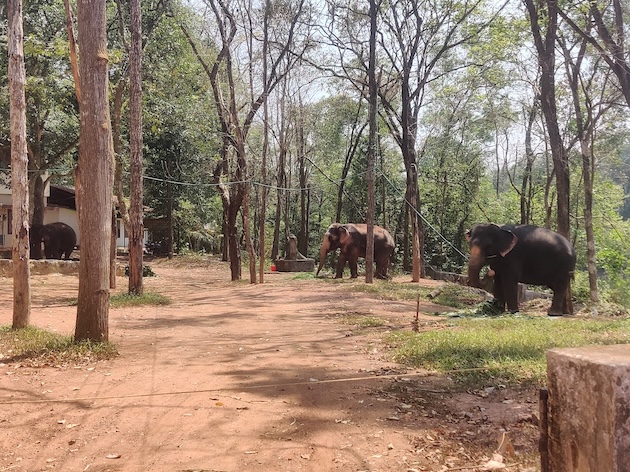
A scene after the Press Conference by Greater Kaziranga Land and Human Rights protection committee with people holding the Press Conference banner. Credit: Pranab Doyle

Members of the Greater Kaziranga Land and Human
Rights protection committee. Credit: Pranab Doyle

NEW DELHI, Mar 21 2025 (IPS) – While a local community prides itself on caring for a sensitive biodiverse region, and despite centuries-long stewardship of the Kaziranga, a UNESCO World Heritage Site, the authorities rebuff—sometimes aggressively—their attempts to remain involved.


Now the broader community, living close to tiger conservancies, has the threat of a wholesale eviction to contend with too.

“We take pride in the fact that the communities around Kaziranga have sacrificed so much to preserve this special biodiverse region. It is one of the areas where communities have sacrificed to protect one-horned rhinoceroses, tigers, and elephants and share a symbiotic relationship with them,” Pranab Doyle, convenor of Greater Kaziranga Land and Human Rights Committee and founder of All Kaziranga Affected Communities’ Rights Committee, says.

“But the forest department or the modern conservation industry is very antithetical to the way communities look at shared spaces.”

Kaziranga, a national park and a tiger project in Assam, India, is famous for the conservation of the Indian one-horned rhinoceros.

According to an article published in 2019, 102 one-horned rhinoceroses were killed in various parks in India between 2008 and 2018. There are also statistics for the number of poachers killed (40) and arrested (194). A more recent article says that in 2022 no rhinos were killed in the park. Rhinos in Asia and Africa are often poached for their horns, which are used in traditional medicine in some Asian countries.

Despite the success in combating poaching, the community faces conflict due to the wildlife authorities’ strong-arm tactics.

The community says there was a time when wildlife sanctuaries were used for grazing animals, as playgrounds, and for food baskets, and the community shared their crops with the animals living there.

However, because of the power vested in the forestry department, only wildlife or the department’s agenda is given consideration, the community says.

“This has led to a very militarized process in Kaziranga where multiple lines of military establishments are set in the name of protecting wildlife. There are special task forces, forest battalions, commando task forces, and the use of modern techniques of vigilance and armory in the name of poaching,” Doyle says.

Consequently, authorities often resort to victimizing people.

In 2010, a special power was given to the Indian Forest Service, where they were given immunity from prosecution when confronting poachers.

“In the year 2010, the Government conferred the power to use arms by forest officials and immunity to forest staff in the use of firearms under Section 197 (2) of the CrPC, 1973,” according to a press statement released in 2017.

Doyle disputes the official statistics and claims that since 2010, more than 100 people have died because of this law. He says that although there should be executive magistrate inquiries into it legally, there have been none.

According to the Oxpeckers Investigative Environmental Journalism website, investigations have included probes into poaching syndicates.

The strong-arm tactics used by the authorities result in a tense relationship.

“We have been constantly fighting against it, and as a result, the forest department treats us as their enemies. Instead of looking at us as people whose rights have been violated and giving us the opportunity to dialogue, they are treating us as criminals and have put multiple cases on us,” Doyle says. “We cannot go fishing in our own lakes, cultivate our own lands, and collect some basic minor forest products, which are traditionally a part of our culture, thereby annihilating everything that is our identity.”

According to the community, the authorities often cancel public meetings despite prior commitments and retaliate with legal action when pressured through mass agitation.

What is more concerning is the eviction of indigenous communities from around tiger protection reserves by the National Tiger Conservation Authority (NTCA).

Doyle claims that they want to evict 64,000 families from 54 tiger reserves in the country. Since 1972, the Indian government has evicted 56,247 families from 751 villages across 50 tiger reserves, according to the National Tiger Conservation Authority (NTCA) data from 2019. The move has led to petitions and protests.

He says the law doesn’t give them the authority to pass an order of this magnitude.

“We as communities who live with tigers, elephants, and rhinos and have been living there for generations, strongly demand this order be revoked. It should be immediately taken into cognizance by all the bodies that claim to protect Indigenous rights and make the forest department accountable for it.”

Dr. Ashok Dhawale, President, of the All India Kisan Sabha and Polit Bureau Member of the Communist Party of India (Marxist), says the exclusionary forest conservation measures that began during British colonization continued after independence.

“The (colonialist) government took control of the forests, seizing them from our tribal people. Although the forests had always belonged to the tribes, who protected them for generations, independence brought little change.

People expected that the forest lands would be returned to the tribal communities, but what was enacted was the Forest Conservation Act of 1980.

This law focused on conserving forests, not on protecting the rights of the people who had safeguarded them for centuries.

“To address this historical injustice—explicitly acknowledged in the act’s preamble—the Forest Rights Act was passed by Parliament in 2006 after immense struggles across the country. This landmark legislation sought to ensure that Adivasis (tribals) were granted ownership of the lands they have tilled and nurtured for generations.”

But since then, India has introduced laws and amendments that undermine the rights of tribal and forest communities.  The Jan Vishwas—People’s Promise, (Amendment of Provisions) Act, 2023, aims to decriminalize and rationalize offenses to promote trust-based governance and facilitate ease of living and doing business. However, it also significantly enhances the powers of forest officers, raising concerns about its impact on the rights and livelihoods of these vulnerable communities.

Another major amendment, the Forest Conservation Act (FCA), 1980, now known as Van Sanrakshan Evam Samvardhan Adhiniyam, enforced from December 1, 2023, has emphasized national security in the guise of implementing projects of national importance leading to heavy militarization in the respective areas, Dhawale says.

Madhuri Krishnaswami from Jagrit Adivasi Dalit Sangathan (Awakened Tribal Dalit Community), Madhya Pradesh, says that all these legislative changes are designed to undermine the Forest Rights Act 2006.

Krishnaswami says that capital-driven business expansion harms the climate, yet ecologically sensitive communities are unfairly burdened with the blame.

Doyle adds that the relationship of indigenous communities with the land is deeply rooted.

“The survival and health of the land and environment depend on people acting as stewards to care for them—a fact proven throughout history. Instead of empowering communities to preserve and improve their environment, the state is evicting them under the pretext of climate degradation. This approach must be entirely rethought and redesigned to prioritize and support the very people who hold the solutions to combating climate change.”

IPS UN Bureau Report

  Source