Togo’s Young Generation Challenges Six Decades of Dynastic Rule

Active Citizens, Africa, Civil Society, Crime & Justice, Democracy, Energy, Featured, Headlines, Human Rights, Labour, Press Freedom, TerraViva United Nations
Opinion

Credit: Pascal.Van, licensed under CC BY-SA 2.0

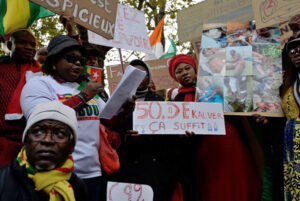
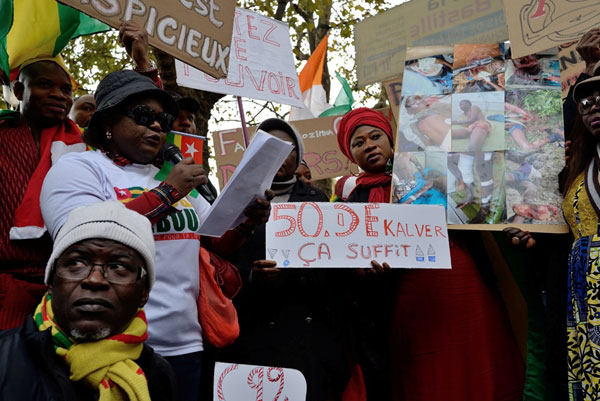
MONTEVIDEO, Uruguay, Sep 2 2025 (IPS) – In late June, thousands flooded the streets of Lomé, Togo’s capital, presenting the ruling dynasty with its biggest challenge in decades.

The catalyst was constitutional manoeuvring by President Faure Gnassingbé to maintain his grip on power. In March 2024, his government pushed through constitutional amendments that transformed Togo from a presidential to a parliamentary system. This created a new position, the President of the Council of Ministers – effectively Togo’s chief executive – elected by parliament rather than by popular vote, and with no term limits. Gnassingbé assumed this new role in May, making it abundantly clear the changes were only about keeping him in power indefinitely.


This constitutional manoeuvre was the latest episode in a 58-year family saga that began when Faure’s father, Gnassingbé Eyadéma, seized power in a 1967 coup. For 25 years, the elder Gnassingbé ruled over a one-party state, staging ritual elections that reached absurd heights in 1986 when he claimed re-election with close to 100 per cent of votes on an implausible 99 per cent turnout. Even after nominal multiparty democracy arrived in 1992, elections remained charades with predetermined outcomes, as opposition parties faced systematic obstacles that made fair competition impossible.

When Eyadéma died in 2005, the military simply appointed his son Faure as successor, despite the constitution mandating immediate elections. International pressure forced a hastily organised vote, but this followed the familiar script of violence, fraud and repression. The pattern repeated in 2010, 2015 and 2020, with each election offering a veneer of legitimacy for continued authoritarian rule – and eliciting successive waves of protest that were either violently repressed or pre-emptively suppressed.
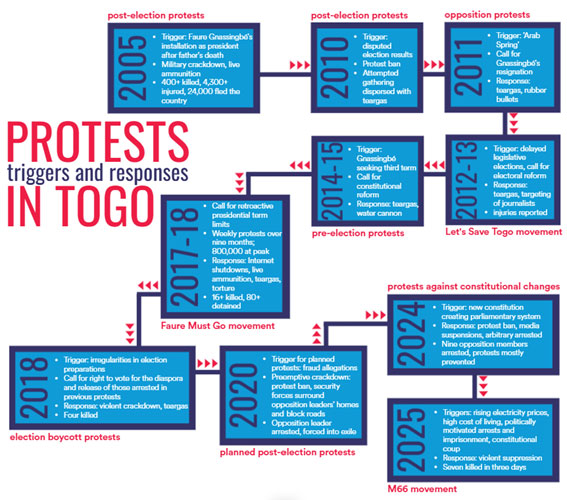
Now, two decades after Faure took power, this latest constitutional gambit has triggered the most significant challenge to his rule. The constitutional changes designed to keep him in power have instead galvanised opposition, creating a focal point for decades of accumulated grievances.

The current protests differ from their predecessors by being overwhelmingly led by young people who’ve never known any other leaders than the Gnassingbés. Raised on promises of multiparty democracy, they’ve witnessed systematic electoral fraud to perpetuate a government wholly unresponsive to their needs. They connect their daily struggles with unemployment, power outages and crumbling infrastructure with the long-term denial of their democratic freedoms.

The arrest in May of a popular rapper and TikToker, Aamron – for posting a video calling for street protests to coincide with Gnassingbé’s birthday on 6 June – galvanised discontent, turning simmering frustration into organised resistance. Aamron’s detention sparked the formation of the 6 June Movement (M66), led by young artists, bloggers, diaspora-based activists and civil society figures who rely heavily on social media to coordinate protests, bypassing state-controlled channels.

The government’s response, however, has followed a familiar path of authoritarian crackdown. In late June, security forces killed at least seven people, including 15-year-old Jacques Koami Koutoglo, and they’ve also used teargas, beatings and mass arrests against protesters. The regime has detained journalists, forced deletion of protest footage and imposed internet shutdowns during protests. It has suspended international media outlets including France 24 and RFI for their protest coverage. it has even issued international arrest warrants for M66 leaders based abroad, accusing them of terrorism and subversion.

Protests have continued despite repression. The leadership of young people, less intimidated by the security apparatus and better connected through social media, has allowed for the diversification of opposition tactics, with activists shifting between street protests, legal challenges and international advocacy as circumstances dictate. The diaspora is also playing a role, with Togolese communities abroad organising solidarity protests and advocating with international organisations for sanctions against the Gnassingbé regime.

Significant obstacles however remain. Gnassingbé controls all levers of power, including security forces, the electoral commission and the Constitutional Court. For a democratic transition to result, international pressure would need to intensify, including the imposition of targeted sanctions on regime officials and their economic interests. Regional bodies, particularly the Economic Community of West African States, would need to act, including by threatening to suspend Togo until democratic reforms are implemented.

Whether these protests trigger democratic change or become yet another chapter in the history of repressed dissent will ultimately depend on the ability of pro-democracy forces to sustain pressure and whether the international community finally decides to act. Gnassingbé’s constitutional manoeuvre may prove to be his final act, not because it succeeded in keeping him in power, but because it awakened a new generation. Togo’s young people have discovered the power of collective action—and that could prove decisive.

Inés M. Pousadela is CIVICUS Senior Research Specialist, co-director and writer for CIVICUS Lens and co-author of the State of Civil Society Report.

For interviews or more information, please contact research@civicus.org

  Source

Conflict, Climate Change Push Migrants in Yemen to Return to Their Home Countries

Aid, Civil Society, Development & Aid, Editors’ Choice, Featured, Gender, Gender Violence, Human Rights, Humanitarian Emergencies, IPS UN: Inside the Glasshouse, Labour, Middle East & North Africa, Migration & Refugees, Sustainable Development Goals

Humanitarian Emergencies

People in Yemen impacted by war and climate shocks receive aid from the IOM. Photo credit: Majed Mohammed/IOM Yemen

People in Yemen impacted by war and climate shocks receive aid from the IOM. Photo credit: Majed Mohammed/IOM Yemen

UNITED NATIONS, Jul 13 2025 (IPS) – Yemen’s humanitarian crisis, driven by conflict, economic collapse and climate shocks, leaves migrants desperate to return to their home countries.


In March 2025, the Global Data Institute Displacement Tracking Matrix recorded that 1,234 non-Yemeni migrants left the country.

Once a critical transit and destination point, Yemen is unable to support incoming asylum seekers. Yemenis are struggling to survive amidst a decade-long conflict and worsening climate change impacts. Over 4.8 million people are internally displaced, and 20 million rely on aid.

Most migrants come from Ethiopia and Somalia, searching for safety or work in the Gulf countries. However, many become stranded in Yemen due to the harsh conditions and abuse.

The International Organization for Migration (IOM) found that in 2024, around 60,900 migrants arrived in Yemen with no means to survive. Subsequently, they are exposed to severe protection risks, including physical and sexual violence, exploitation, abduction, detention, and debt bondage.

“With limited humanitarian resources and few service providers on the ground, migrants often suffer from hunger, untreated medical conditions, and lack of shelter. Many are stranded without access to even the most basic services,” said the IOM to IPS.

“Meanwhile, public hostility toward migrants has increased, as they are increasingly viewed as competing with vulnerable Yemeni populations for scarce assistance. The ongoing conflict in Yemen further compounds these vulnerabilities, with migrants caught in airstrikes, exposed to explosive ordnance, and lacking access to safety.”

Women and girls are the most vulnerable group of migrants traveling through Yemen. They are disproportionately threatened with gender-based and sexual abuse.

“I’ve been beaten, detained, and exploited in Yemen,” said a 24-year-old Ethiopian woman to IOM. “Most nights, I went hungry. After everything that happened to me, I am happy to go back to my home and family.”

Severe climate impacts also make it increasingly difficult for both migrants and Yemenis to access food and water. Around 17.1 million Yemenis are struggling with food insecurity, and climate-related issues are only exacerbating this crisis.

The June 2025 Migration, Environment, and Climate Change (MECC) Country Report on Yemen by the IOM says that Yemen is the 12th most water-scarce country in the world. This significantly influences food insecurity, as rising temperatures caused by climate change create unpredictable rainfall.

In some areas, severe droughts are turning fertile farmland into arid deserts, forcing farmers to plant new crops or move in search of better conditions. Meanwhile, in other communities, heavy rain is sparking extreme flooding. Impacted areas are decimated by soil erosion and disease from contaminated water.

“Areas that used to experience heavy rainfall have now suffered from drought, and farmers have to adapt to this drought by either planting drought-resistant crops, changing their livelihoods, or migrating to another location. And some areas used to suffer from drought but now experience heavy rainfall, where the intensity of rainfall has led to the emergence of new diseases brought by floods,” said an official in the General Authority for Environmental Protection responsible for planning and information to the IOM.

Together, brutal conflict and a lack of access to vital necessities significantly limit migrants’ ability to return to their home countries. The IOM reported that in 2020, around 18,200 people risked their lives traveling by sea. Overcrowded vessels traversing rough waters often capsize, killing dozens on board.

For others, their journey back home leads them through heavily war-inflicted areas. Without proper assistance, migrants are left to navigate through dangerous frontlines, risking death from armed violence and landmines.

However, programs like the IOM’s Voluntary Humanitarian Return (VHR) aim to facilitate migrants’ safe return home. VHR is one of the only solutions for stranded migrants to voluntarily return in a safe and dignified manner.

So far, the IOM has helped 66 migrants safely return this year. This is a significant drop compared to the 5,200 individuals returned in 2024.

“IOM provides lifesaving protection and health service through Migrant Response Points (MRPs) in Aden, Sanaa and Marib and Community-based Care centers in Aden and Sanaa, as well as through mobile teams along the migratory routes funded by ECHO and UK FCDO,” said the IOM to IPS. “Since 2015, IOM has been facilitating Voluntary Humanitarian Return (VHR) as the only viable solution for stranded migrants who wish to return home voluntarily, safely, and with dignity.”

The IOM is backed by numerous groups such as the European Union, the King Salman Humanitarian Aid and Relief Centre (KSrelief), the US State Department’s Bureau of Population, Refugees and Migration, and the governments of Germany, France, Norway, and Finland. Unfortunately, despite widespread support for the program, more donations are urgently needed. The IOM is struggling to help migrants due to significant funding cuts.

“As migration flows continue to surge, the demand for safe and dignified return options for migrants has reached critical levels,” said Matt Huber, IOM’s former Chief of Mission in Yemen. “Without immediate funding support, the continuity of this vital programme is at risk, leaving thousands of vulnerable migrants stranded in precarious conditions with many experiencing serious protection violations.”

IPS UN Bureau Report

  Source

Bangladesh’s Democratic Promise Hangs in the Balance

Active Citizens, Asia-Pacific, Civil Society, Crime & Justice, Democracy, Economy & Trade, Featured, Headlines, Human Rights, Inequality, Labour, Press Freedom, TerraViva United Nations

Opinion

Credit: Abdul Goni/Reuters via Gallo Images

MONTEVIDEO, Uruguay, Jul 7 2025 (IPS) – When Bangladesh’s streets erupted in protest in mid-2024, few could have predicted how swiftly Sheikh Hasina’s regime would crumble. The ousting of the prime minister last August, after years of mounting authoritarianism and growing discontent, was heralded as a historic opportunity for democratic renewal. Almost a year on, the question remains whether Bangladesh is genuinely evolving towards democracy, or if one form of repression is replacing another.


The interim government, led by Nobel laureate Muhammad Yunus, confronts enormous challenges in delivering meaningful change. While it has taken significant steps – releasing political prisoners, initiating constitutional reforms, signing international human rights treaties and pursuing accountability for past violations – persistent abuses, political exclusion and economic instability continue to cast long shadows over the transition. The coming months will prove decisive in determining whether Bangladesh can truly break from its authoritarian past.

From electoral fraud to revolution

The roots of Bangladesh’s current upheaval trace back to the deeply flawed general election of 7 January 2024. The vote, which saw Hasina’s Awami League (AL) secure a fourth consecutive term, was widely dismissed as a foregone conclusion. The main opposition Bangladesh Nationalist Party boycotted the election in protest at the government’s refusal to reinstate a neutral caretaker system.

The government unleashed an intense crackdown ahead of the vote. It imprisoned thousands of opposition activists and weaponised the criminal justice system to silence dissent, leading to deaths in police custody and enforced disappearances. This repression extended to civil society, with human rights activists and journalists facing harassment, arbitrary detention and violence. The government sponsored fake opposition candidates to create an illusion of competition, resulting in plummeting voter turnout and a crisis of legitimacy.

When opposition rallies occurred, they were met with overwhelming force. On 28 October 2023, police responded to a major opposition protest in Dhaka with rubber bullets, teargas and stun grenades, resulting in at least 16 deaths, with thousands injured and detained.

The situation deteriorated further after the election. In June 2024, the reinstatement of a controversial quota system for public sector jobs triggered mass student-led protests that would ultimately topple Hasina’s government. These protests rapidly evolved into a broader revolt against entrenched corruption, economic inequality and political impunity.

The government’s response was systematically brutal. According to a United Nations fact-finding report, between July and August security forces killed as many as 1,400 people, including many children, often shooting protesters at point-blank range. They denied the injured medical care and intimidated hospital staff. The scale of violence eventually led the military to refuse further involvement, forcing Hasina to resign and flee Bangladesh.

Reform efforts amid political discord

The interim government identified three core priorities: institutional reforms, trials of perpetrators of political violence and elections. Its initial months brought significant progress. The government released detained protesters and human rights defenders, signed the International Convention for the Protection of All Persons from Enforced Disappearances and established a commission of inquiry into enforced disappearances.

This commission documented around 1,700 complaints and found evidence of systematic use of enforced disappearances to target political opponents and activists, with direct complicity by Hasina and senior officials. In October, the Bangladesh International Crimes Tribunal issued arrest warrants for Hasina and 44 others for massacres during the 2024 protests, although the tribunal has a troubled history and retains the death penalty, contrary to international norms.

The Constitution Reform Commission has proposed expanding fundamental rights, with a bicameral parliament and term limits for top offices. However, the process has been undermined by the exclusion of major political players – most notably the AL – and minority groups.

Political tensions escalated as the interim government faced mounting pressure to set a general election date. Opposition parties accused it of deliberate stalling. The army chief publicly demanded elections by the end of 2025, while student groups sought postponement until reforms and justice were secured. After initial uncertainty, the government announced the election would occur in April 2026.

The most dramatic escalation came in May, when the interim government banned all AL activities under the Anti-Terrorism Act following renewed protests. The Election Commission subsequently suspended the AL’s registration, effectively barring it from future elections and fundamentally altering Bangladesh’s political landscape.

Economic challenges compound these political difficulties. Bangladesh remains fragile after devastating floods in 2024, while the banking sector faces stress from surging non-performing loans. Inflation continues outpacing wage growth and economic austerity measures agreed with the International Monetary Fund have sparked fresh protests.

Authoritarian patterns persist

Despite promises of change, old patterns of repression prove stubborn. Human rights groups document ongoing security forces abuses, including arbitrary arrests of opposition supporters and journalists, denial of due process and continued lack of accountability for past crimes. In the first two months of 2025 alone, over 1,000 police cases were filed against tens of thousands of people, mainly AL members or perceived supporters. A February crackdown on Hasina’s supporters led to over 1,300 arrests.

Press freedom remains severely threatened. In November, the interim government revoked the accreditation of 167 journalists. Around 140 journalists viewed as aligned with the previous regime have faced charges, with 25 accused of crimes against humanity, forcing many into hiding. Attacks on media outlets continue, including vandalism of newspaper offices.

The draft Cyber Protection Ordinance, intended to replace the repressive Cyber Security Act, has drawn criticism for retaining vague provisions criminalising defamation and ‘hurting religious sentiments’ while granting authorities sweeping powers for warrantless searches. Rights groups warn this law could stifle dissent in the run-up to elections.

Uncertain path forward

Bangladesh’s journey demonstrates that democratic transitions are inherently difficult, nonlinear and deeply contested processes. Democracy isn’t a guaranteed outcome, but the chances improve when political leaders are genuinely committed to reform and inclusive dialogue, and political players, civil society and the public practise sustained vigilance.

While the interim government has achieved steps unthinkable under the previous regime, the persistence of arbitrary arrests, attacks on journalists and the exclusion of key political players suggests authoritarianism’s shadow still looms large.

The upcoming general election will provide a crucial test of whether Bangladesh can finally turn the page on authoritarianism. The answer lies in whether Bangladeshis across government, civil society and beyond are able to build something genuinely new. The stakes are high in a country where many have already sacrificed much for the promise of democratic freedom.

Inés M. Pousadela is CIVICUS Senior Research Specialist, co-director and writer for CIVICUS Lens and co-author of the State of Civil Society Report.

For interviews or more information, please contact research@civicus.org

  Source

Increased Demand for Cobalt Fuels Ongoing Humanitarian Crisis in the Democratic Republic of the Congo

Africa, Armed Conflicts, Child Labour, Civil Society, Development & Aid, Editors’ Choice, Featured, Human Rights, Humanitarian Emergencies, Inequality, Labour, Migration & Refugees, Natural Resources, Population, Sustainable Development Goals, TerraViva United Nations, Trade & Investment, Youth

Labour

Internally Displaced Persons (IDP) Living in Camp Roe in the Democratic Republic of Congo Credit: UN Photo/Eskinder Debebe

Internally Displaced Persons (IDP) Living in Camp Roe in the Democratic Republic of Congo Credit: UN Photo/Eskinder Debebe

UNITED NATIONS, Jun 26 2025 (IPS) – The demand for cobalt and other minerals is fueling a decades-long humanitarian crisis in the Democratic Republic of the Congo (DRC). In pursuit of money to support their families, Congolese laborers face abuse and life-threatening conditions working in unregulated mines.


Used in a variety of products ranging from vitamins to phone and car batteries, minerals are a necessity, making daily tasks run smoothly. The DRC is currently known as the world’s largest producer of cobalt, accounting for nearly 75 percent of global cobalt production. With such high demands for the mineral, unsafe and poorly regulated mining operations are widespread across the DRC.

The exploitation of workers is largely seen in informal, artisanal, small-scale mines, which account for 15 to 30 percent of the DRC’s cobalt production. Unlike large industrial mines with access to powerful machines, artisanal mine workers typically excavate by hand. They face toxic fumes, dust inhalation, and the risk of landslides and mines collapsing daily.

Aside from unpaid forced labor, artisanal small-scale mines can be a surprisingly good source of income for populations with limited education and qualifications. The International Peace Information Service (IPIS) reports that miners can make around 2.7 to 3.3 USD per day. In comparison, about 73 percent of the population in the DRC makes 1.90 USD or less per day. However, even with slightly higher incomes than most, miners still struggle to make ends meet.

Adult workers are not the only group facing labor abuse. Due to minimal regulations and governing by labor inspectors, artisanal mines commonly use child labor. The U.S. Department of Labor’s Bureau of International Labor Affairs reports that children between the ages of 5 and 17 years old are forced to work in mineral mines across the DRC.

“They are unremunerated and exploited, and the work is often fatal as the children are required to crawl into small holes dug into the earth,” said Hervé Diakiese Kyungu, a Congolese civil rights attorney.

Kyungu testified at a congressional hearing in Washington, D.C., on July 14, 2022. The hearing was on the use of child labor in China-backed cobalt mines in the DRC. Kyungu also said that in many cases, children are forced into this work without any protection.

Children go into the mines “…using only their hands or rudimentary tools without protective equipment to extract cobalt and other minerals,” said Kyungu.

Despite the deadly humanitarian issue at hand, the solution to creating a more sustainable and safe work environment for miners is not simple. The DRC has a deep history of using forced labor for profit. Starting in the 1880s, Belgium’s King Leopold relied on forced labor by hundreds of ethnic communities across the Congo River Basin to cultivate and trade rubber, ivory and minerals.

While forced and unsafe conditions kill thousands each year, simply shutting down artisanal mining operations is not the solution. Mining can be a significant source of income for many Congolese living in poverty.

Armed groups also control many artisanal mining operations. These groups use profits acquired from mineral trading to fund weapons and fighters. It is estimated that for the past 20 years, the DRC has experienced violence from around 120 armed groups and security forces.

“The world’s economies, new technologies and climate change are all increasing demand for the rare minerals in the eastern Congo—and the world is letting criminal organisms steal and sell these minerals by brutalizing my people,” said Pétronille Vaweka during the 2023 U.S. Institute of Peace (USIP) award ceremony.

Vaweka is a Congolese grandmother who has mediated peace accords in local wars.

“Africans and Americans can both gain by ending this criminality, which has been ignored too long,” said Vaweka.

One way to mitigate the crisis is through stricter laws and regulations. Many humanitarian organizations, such as the United Nations (UN) and the International Labour Organization (ILO), strongly advocate for such change.

The UN has deployed a consistent stream of peacekeepers in the DRC since the country’s independence in 1960. Notable groups such as the UN Operation in the Congo (ONUC) and the UN Organization Mission in the DRC (MONUC) were established to ensure order and peace. MONUC later expanded in 2010 to the UN Organization Stabilization Mission in the DRC (MONUSCO).

Alongside peace missions, the UN has made multiple initiatives to combat illegal mineral trading. They also created the United Nations Children’s Fund (UNICEF), which is dedicated to helping children in humanitarian crises.

The ILO has seen success through its long-standing project called the Global Accelerator Lab (GALAB). Its goal is to increase good practices and find new solutions to end child labor and forced labor worldwide. Their goal markers include innovation, strengthening workers’ voices, social protection and due diligence with transparency in supply chains.

One group they have set up to coordinate child protection is the Child Labour Monitoring and Remediation System (CLMRS). In 2024, the ILO reported that the program had registered over 6,200 children engaged in mining in the Haut-Katanga and Lualaba provinces.

Additionally, GALAB is working on training more labor and mining inspectors to monitor conditions and practices.

While continued support by various aid groups has significantly helped the ongoing situation in the DRC, more action is needed.

“This will require a partnership of Africans and Americans and those from other developed countries. But we have seen this kind of exploitation and war halted in Sierra Leone and Liberia—and the Africans played the leading role, with support from the international community,” Vaweka said. “We need an awakening of the world now to do the same in Congo. It will require the United Nations, the African Union, our neighboring countries. But the call to world action that can make it possible still depends on America as a leader.”

IPS UN Bureau Report

  Source

The 2025 World Social Summit Must Not Be a Missed Opportunity

Civil Society, Climate Change, Conferences, Development & Aid, Economy & Trade, Gender, Global, Headlines, Human Rights, Inequality, Labour, Poverty & SDGs, TerraViva United Nations

Opinion

GENEVA / NEW YORK, May 29 2025 (IPS) – Rumors circulating at UN Headquarters suggest there is little appetite for ambition at the Second World Summit for Social Development, set to take place in Doha on 4-6 November 2025. Diplomats and insiders whisper of “summit fatigue” after a packed calendar of global gatherings—the 2023 SDG Summit, the 2024 Summit of the Future, and the upcoming June 2025 Fourth International Conference on Financing for Development. Compounding this fatigue is the chilling rise of anti-rights rhetoric and political resistance from some governments, casting a shadow over multilateral efforts. For some, just getting any multilateral agreement is good enough. As a result, the Zero Draft of the Social Summit Political Declaration lacks the ambition required to confront the multiple social crises our world faces.


Isabel Ortiz

Many have raised the alarm: we need more than vague recommitments—we need a strong plan to bring people back to the center of the policy agenda. The stakes could not be higher. The world has changed dramatically since the historic 1995 first Social Summit in Copenhagen. Then, world leaders recognized the need for human-centered development. Today, the urgency has grown exponentially in our fractured and volatile world. People face multiple overlapping crises — a post pandemic poly-crisis, a cost-of-living crisis pushing millions into poverty, corporate welfare prioritized over people’s welfare, a rapid erosion of democracy leading to staggering disparities, an escalating climate emergency, a prolonged jobs crisis that is poised to dramatically worsen by the use of artificial intelligence (AI). Trust in governments and multilateral institutions is eroding, social discontent and protests are multiplying, and inequalities—within and between countries—have reached grotesque levels. A timid declaration would be a betrayal of the people who look to the United Nations as a beacon of fairness and human dignity.

The Summit is a once-in-a-generation opportunity for governments and the UN to remedy the grievous social malaise and lead a global recommitment to social justice and equity. For this, the Social Summit Declaration must offer more than aspirational language; it must define binding action with explicit commitments to build societies that work for everyone and bring prosperity for all, in areas such as:

    • Reducing income and wealth inequalities, which deeply erode social cohesion, democratic governance, and sustainable development;

    Odile Frank

    • Making gender justice a pillar of the Declaration: a Social Summit that fails to prioritize gender equality will fail half of the world population and fail in its mission to deliver on human rights, dignity, and sustainable development;
    • Delivering universal, quality public services by committing to publicly funded and delivered systems, with a clear focus on protecting public sector workers and eliminating barriers to quality services, in the context of robust public investment, grounded in fairer financing, reversing austerity cuts and aid cuts;
    • Ringfencing social development from budget cuts, privatization and blended finance, reversing the harmful impacts of austerity cuts, privatization/PPPs and commodification of public services, particularly their negative impact on affordability, accessibility, quality and equity of public services;
    • Addressing rising income precarity by investing in decent work with labor rights/standards and universal social protection systems and floors;
    • Regulating and taxing technology equitably. While AI is generating unprecedented private wealth, it is estimated that 40% of jobs could be lost to AI by 2030, with administrative roles (predominantly held by women) facing nearly triple the risk of displacement; governments need to redress the negative social impacts of IA such as job displacement and wealth concentration, providing adequate social protection measures for those affected by job losses and taxation of AI-driven profits to redistribute benefits back to societies;

    Gabriele Koehler

    • Promoting a care economy supportive of women that prioritizes well-being over GDP growth;
    • Moving beyond GDP growth, recognizing the limitations of growth-centric paradigms and committing to policies that promote ecological sustainability and equitable development;
    • Systematically assessing the social impacts and distributional effects of economic policies, including disaggregated data by, at least, gender and income group; if analysis reveals that the majority of people are not the primary beneficiaries or that social outcomes and human rights are undermined, policies must be revised to ensure equitable development;
    • Ensuring fair and sustainable resource mobilization, committing to progressive taxation, eliminating/reducing illegitimate debt, fighting illicit financial flows, collecting adequate social security contributions from corporations, and other feasible financing options;
    • Pushing back against anti-rights and anti-gender movements, reaffirming global commitments to human rights and democracy.

Us make this summit the moment we choose dignity and social justice over apathy and mediocrity. We know we must strive for more ambitious commitments. The 2025 World Social Summit must not be a missed opportunity.

Isabel Ortiz, Director, Global Social Justice, was Director at the International Labor Organization (ILO) and UNICEF, and a senior official at the UN and the Asian Development Bank.

Odile Frank, Executive Secretary, Global Social Justice, was Director, Social Integration at the UN and senior official at the OECD, ILO and the World Health Organization (WHO).

Gabriele Koehler, Board Member of Global Social Justice and of Women Engage for a Common Future (WECF), was a senior official at UN-ESCAP, UNCTAD, UNDP and UNICEF.

IPS UN Bureau


‘The International Response Should Follow the Principle of ‘Nothing about Us, Without Us’’

Armed Conflicts, Civil Society, Crime & Justice, Europe, Featured, Gender, Gender Violence, Global, Headlines, Health, Human Rights, Labour, Migration & Refugees, Press Freedom, TerraViva United Nations

May 1 2025 (IPS) – CIVICUS speaks with Ukrainian gender rights activist Maryna Rudenko about the gendered impacts of the war in Ukraine and the importance of including women in peacebuilding efforts.

Russia’s full-scale invasion of Ukraine has profoundly impacted on women and girls. Many have been displaced and are struggling with poverty and unemployment. Those who’ve stayed endure daily missile attacks, damaged infrastructure, lack of basic services and sexual violence from Russian forces if they live in occupied territories. Women activists, caregivers and journalists are particularly vulnerable. The international community must increase support to ensure justice for victims and women’s inclusion in peace efforts.


Maryna Rudenko

What have been the impacts of the war in Ukraine, particularly on women and girls?

The war began in 2014 when Russia annexed Crimea, with Indigenous women, particularly Crimean Tatars, immediately and severely affected. They risked losing their property and livelihoods, and to continue working they were forced to change their citizenship. Pro-Ukraine activists had to flee and those who stayed faced arrest. This placed a heavier burden on many women who were left in charge of their families.

At the same time in 2014, Russia began supporting separatist movements in eastern Ukraine, leading to the occupation of territories such as Donetsk and Luhansk and the displacement of over a million people. When Russia launched its full-scale invasion in 2022, many lost their homes again. Nearly seven million fled to European countries. This population loss poses a significant demographic challenge to Ukraine’s post-war development.

Since 2015, conflict-related sexual violence has been a major issue. Around 342 cases have been documented. The International Criminal Court recognised that conflict-related sexual violence has been committed in the temporarily occupied territories since 2014.

Ukraine also experienced the largest campaign of child abduction in recent history: Russia took close to 20,000 Ukrainian children from occupied territories and sent then to ‘camps’ in Crimea or Russia, where the authorities changed their names and nationalities and gave them to Russian families. Ukrainian children were forced to change their national identity. This is evidence of genocidal approach in Russia’s war activities.

The war has also devastated infrastructure and the economy. In my town, 30 km from Kyiv, the heating station was hit by 11 ballistic missiles, leaving us without electricity or water for a long time. It was very scary to stay at the apartment with my daughter and know that Russian ballistic missiles were flying over our house. Roughly 40 per cent of the economy was destroyed in 2022 alone, causing job losses at a time when the government spends over half its budget on the military. Civilians, including a record 70,000 women, have taken up arms.

Beyond the immediate human cost, the war is causing serious environmental damage, with weapons and missile debris polluting soil and water beyond national borders. Russia’s occupation of Zaporizhzhia, the largest nuclear power plant in Europe, poses a very real risk of a nuclear disaster for Ukraine and Europe as a whole.

How have Ukrainian women’s organisations responded?

Starting in 2014, we focused on advocacy, championing United Nations (UN) Security Council Resolution 1,325, which reaffirms the role of women in conflict prevention and resolution. The government adopted its National Action Plan on the implementation of the resolution in 2016. We formed local coalitions to implement this agenda, leading to reforms such as opening military roles to women, establishing policies to prevent sexual harassment, integrating gender equality in the training curriculum and gender mainstreaming as part of police reform.

Following the full-scale invasion, Ukrainian women’s civil society organisations (CSOs) shifted to providing immediate humanitarian relief, as survival became the top priority. Women’s CSOs began helping people, particularly those with disabilities, relocate to western Ukraine and providing direct aid to those who remained. As schools, hospitals and shelters for survivors of domestic violence were destroyed, women’s CSOs tried to fill the gap, providing food, hygiene packages and cash and improvising school lessons in metro tunnels.

People stood up and helped. In Kharkiv, which is located 30 km from the boarder with Russia, the local government created underground schools. It’s unbelievable that this happened in the 21st century and because of the aggression of a permanent member of the UN Security Council. Our children, women and men can’t sleep normally because every night there are missile and drone attacks.

In the second half of 2022, women’s CSOs and the government tried to refocus on long-term development. One of the first initiatives was to amend the National Action Plan on Women, Peace and Security to better address conflict-related sexual violence in both occupied and liberated areas. This was a much-needed response given the many reported cases of killing, rape and torture. This involved training law enforcement officers, prosecutors and other officials on how to document these crimes and properly communicate with survivors, who often blame themselves due to stigma surrounding the violence.

We have also reported Russia’s violations of the Geneva Conventions, particularly those concerning women, to UN human rights bodies.

Women’s groups are pushing for more donor support for psychological services to address trauma and helping plan for long-term recovery, aiming to rebuild damaged infrastructure and improve services to meet the needs of excluded groups. Some donors, like the Ukrainian Women’s Fund, have agreed to support the costs of mental recovery for women activists to help them restore their strength and support others.

How should women’s voices be integrated into recovery and peacebuilding efforts?

Women must have a real seat at the negotiation table. Genuine participation means not just counting the number of women involved but ensuring their voices are heard and their needs addressed. Unfortunately, the gender impacts of the war remain a secondary concern.

We have outlined at least 10 key areas where the gender impacts of the war should be discussed and prioritised in negotiations. However, it looks like these are being largely ignored in the current high-level negotiations between Russia and the USA. We heard that President Volodymyr Zelenskyy highlighted the importance of returning Ukrainian children when he met with Donald Trump. It’s highly important for the mothers and fathers of these children and for all Ukrainians.

Women’s CSOs are working to ensure all survivors can access justice and fair reparations, and that nobody forgets and excuses the war crimes committed. We urgently need accountability; peace cannot be achieved at the expense of truth. This is particularly important because the Council of Europe’s Register of Damage for Ukraine only accepts testimonies of war crimes that happened after the 2022 invasion, leaving out many survivors from crimes committed since 2014. We are working to amend this rule.

The international response should follow the principle of ‘nothing about us, without us’. International partners should collaborate directly with women-led CSOs, using trauma-informed approaches. For women affected by combat, loss or abduction, recovery must start with psychological support, and civil society can play a vital role in this process.

The effective implementation of Resolution 1,325 also requires reconstruction funds that incorporate a gender perspective throughout. Ukrainian women’s CSOs prepared a statement to highlight the importance of analysing the war’s impact on the implementation of the UN’s Beijing Platform for Action on gender equality and we used this as common message during the recent meeting of the UN Commission on the Status of Women.

Additionally, we believe it’s time to consider the successes and failures in implementation of Resolution 1,325 and its sister resolutions, because it’s 25 years since its adoption and the world is not safer.

We appreciate any platforms where we can speak about the experience of Ukraine and call for action to support Ukraine to help make a just and sustain peace in Europe and the world.

GET IN TOUCH
LinkedIn

SEE ALSO
Ukraine: ‘Civil society remains resilient and responsive, but financial constraints now hamper its efforts’ CIVICUS Lens | Interview with Mykhailo Savva 25.Feb.2025
Russia: Further tightening of restrictions on ‘undesirable’ organisations CIVICUS Monitor 30.Jul.2024
Russia and Ukraine: a tale of two civil societies CIVICUS Lens 24.Feb.2024

  Source



