Rohingya Refugees Must Not Be Forgotten

Asia-Pacific, Civil Society, Crime & Justice, Education, Education Cannot Wait. Future of Education is here, Food Security and Nutrition, Gender Violence, Health, Human Rights, Migration & Refugees, Sustainable Development Goals

Education Cannot Wait Executive Director Yasmine Sherif Statement on the 7-Year Anniversary of the Rohingya Crisis

A Rohingya refugee, Jannat is back in school and dreams of being a doctor. Credit: Save The Children Bangladesh/Rubina Hoque Alee

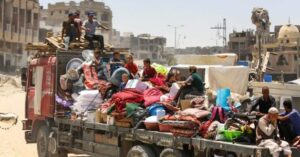
NEW YORK, Aug 26 2024 – Seven years ago, a brutal campaign of violence, rape and terror against the Rohingya people ignited in Myanmar’s Rakhine State. Villages were burned to the ground, families were murdered, massive human rights violations were reported, and around 700,000 people – half of them children – fled their homes to seek refuge in Bangladesh.


Today, Bangladesh’s Cox’s Bazar hosts the largest refugee camp in the world with close to a million children, women and men living in makeshift settlements. The crisis is an abomination for humanity. And while the Government of Bangladesh and other strategic partners are supporting the response, the resources are severely strained and access to essential services is scarce.

As the global fund for education in emergencies and protracted crises within the United Nations, Education Cannot Wait (ECW), along with its strategic donor partners, government, UN agencies and civil society, has supported holistic education opportunities for both Rohingya and host community children in Bangladesh since November 2017. The more than US$50 million in funding, delivered through a consortium of partners – including government counterparts, PLAN International, Save the Children, UNESCO, UNHCR, UNICEF and other local partners – has reached over 325,000 girls and boys with quality education. Over the years, the programmes have provided learning materials for close to 190,000 children, financial support to over 1,700 teachers, and rehabilitated over 1,400 classrooms and temporary learning spaces.

In response to the COVID-19 pandemic, fires in the refugee camp and other pressing emergencies, the programming in Bangladesh was quickly adapted, and over 100,000 girls and boys were able to take part in remote education programmes during the height of the pandemic.

For refugee girls like Jannat, these investments mean nutritious school meals, integrated learning opportunities, catch-up classes, and security and solace in a world gone mad.

We must not forget Jannat and the hundreds of thousands of Rohingya girls like her that only yearn to learn in safety and freedom. Our investment in their education is an investment in peace, enlightenment and security across the region. Above all, it is an investment in the Rohingya people’s rights and other persecuted groups that face human rights abuses and attacks the world over.

Despite strong support from donors – as shown in this powerful joint statement by Japan, Norway, Sweden, Switzerland and the United States following their visit to the refugee camps in Cox’s Bazar in May of this year – the Rohingya crisis is fast-becoming a forgotten crisis.

The Rohingya Humanitarian Crisis Joint Response Plan 2024 calls for a total of US$852 million in funding, including US$68 million for education. To date, only US$287 million has been mobilized toward the plan. More concerning still, only 12.8% has been mobilized towards the education response, according to OCHA’s Financial Tracking Service. What we need to realize is that our investments in education are investments in health, food security and skills development. Taken together with other actions, it forms a cornerstone upon which all the other Sustainable Development Goals can be achieved.

As we commemorate seven years of persecution and attack, we must demand that perpetrators are held accountable for human rights violations, we must establish conditions conducive for a safe return of the Rohingya to their native lands, and we must enforce the rule of law and expect humanity for the people whose lives have been ripped apart by this brutal crisis.

Join ECW and our partners in urgently mobilizing additional resources to provide Rohingya girls and boys – and other children caught in emergencies and protracted crises worldwide – with the promise of a quality education. They deserve no less.

IPS UN Bureau
  Source

HLPF 2024: Protecting Civic Space Critical for SDGs Success

Armed Conflicts, Biodiversity, Civil Society, Climate Change, Featured, Gender, Global, Headlines, Human Rights, Inequality, Migration & Refugees, Sustainable Development Goals, TerraViva United Nations

Opinion

NEW YORK, Jul 12 2024 (IPS) – Each year the international community comes together at the UN’s headquarters in New York to take stock of progress on sustainable development. This year’s High-Level Political Forum (HLPF) is being held between 8 and 18 July. Representatives from 36 countries, as per the UN HLPF website, will showcase their achievements on commitments outlined in the 2030 Agenda for Sustainable Development, presenting their Voluntary National Reviews (VNRs).


This year’s HLPF convenes amid sobering times, underscored by findings from the recent UN Sustainable Development Goals (SDGs) 2024 report. The report highlights growing inequalities, an escalating climate crisis, accelerating biodiversity loss and disappointing progress towards gender equality. These challenges are compounded by conflicts in Gaza, Sudan, Ukraine and beyond, resulting in close to 120 million people being forcibly displaced worldwide. Alarmingly, only 17 per cent of SDG targets are on track, with around half making minimal or moderate progress, and progress on over a third having stalled or regressed.

Among the SDGs being reviewed this year is SDG 16, which includes commitments on responsive, inclusive, participatory and representative decision making, access to information and fundamental freedoms. These hard-won commitments recognise the importance of transparency, accountability and participation in achieving the SDGs. They were agreed only after persistent advocacy by civil society activists. For civil society, it’s crucial that these commitments are realised if the transformative promise of the SDGs is to be achieved, in particular because they enable civil society to work with governments to help deliver the goals.

One major reason for uneven progress on the SDGs is the restriction of civic space in many countries around the world. According to the CIVICUS Monitor – a participatory research collaboration – globally only two per cent of people live in open civic space conditions, where civil society is free to exist and act. Of the 36 countries slated to present VNRs this year, only three – Austria, Palau, and Samoa – have open civic space.

Civic space encompasses the right of people to organise, mobilise and speak out to shape the political, social, and economic structures that impact their lives. Where civic space isn’t open, communities have significantly restricted and limited agency to pursue progress – the kind the SDGs envisage. People who expose corruption, advocate for accountability and stand up for the rights of excluded groups are attacked.

In many countries around the world, civil society organisations and activists are being threatened. One-way states are doing this is by misusing anti-terror laws, cybersecurity laws and health emergency laws against them. States such as Cambodia, Egypt, India, Israel, Russia and Venezuela, among others, are subjecting civil society organisations to a complex maze of regressive laws and practices to deny them raising funds from domestic and international sources. This undermines civil society’s ability to push for innovative policies, deliver services to the people who need them most and act as a watchdog over the use of public resources.

Meaningful civil society participation at all levels is crucial for realising the SDGs. However, even within UN platforms like the HLPF, there remains no official way of integrating civil society voices into VNR processes, leading civil society organisations to produce parallel ‘shadow reports’ on the forum’s margins. This current format undermines the potential for meaningful engagement from civil society, leads to duplication of efforts, mismatches data and hinders accountability of states.

If the SDGs are to be achieved, it’s paramount to create a conducive environment where civil society can thrive and participate meaningfully in decision-making and accountability processes, without fear of reprisals. That’s why many civil society organisations have banded together under the Unmute Civil Society initiative to advocate for practical solutions to overcome the challenge of international-level participation. The UN must demonstrate leadership by making more space for civil society at the HLPF.

Jesselina Rana is CIVICUS UN Advisor at UN Hub in New York City.

  Source

Overwhelmed Healthcare Systems in Gaza Struggle Through Evacuation Orders

Aid, Armed Conflicts, Civil Society, Development & Aid, Editors’ Choice, Featured, Headlines, Health, Human Rights, Humanitarian Emergencies, Middle East & North Africa, Migration & Refugees, Sustainable Development Goals, TerraViva United Nations

Humanitarian Emergencies

Displaced families in Gaza are on the move after the latest Israeli evacuation orders. Around nine in 10 Gazans have been displaced at least once since the war began. Photo: UNRWA

Displaced families in Gaza are on the move after the latest Israeli evacuation orders. Around nine in 10 Gazans have been displaced at least once since the war began. Photo: UNRWA

UNITED NATIONS, Jul 12 2024 (IPS) – For nine months, over 2 million people in the Gaza Strip have been forcibly displaced in the wake of the armed conflict between Israel and Hamas. The ongoing fighting and displacement have put significant strain on humanitarian organizations on the ground to address even basic health needs.

The United Nations and other humanitarian organizations have stressed that the healthcare system in Gaza has collapsed or has suffered undue pressure as a result of the fighting. Out of 36 hospitals in the area, 13 remain open, operating with partial functionality.


This includes Nasser Hospital, which now stands as the last hospital providing comprehensive healthcare services. It has been overwhelmed with patients in the wake of evacuation orders issued on July 1 by Israeli authorities for the east and south of Khan Younis. Patients and medical personnel working in the Gaza European Hospital, located in Khan Younis, evacuated ahead of time.

Although an official from the Israeli defense force stated that patients and medical personnel were exempt from the evacuation order, this was not conveyed to the humanitarian groups on the ground. 

Andrea de Domenico, UN-OCHA’s Head of Office in the Occupied Palestinian Territory, told reporters in a virtual press briefing on July 3 that OCHA was not informed. He stated that it was likely that those who evacuated acted based on past experiences where hospitals were specifically targeted for raids or military bombardment, and so they took preemptive measures to evacuate before the Israeli military moved in on Khan Younis.

Evacuation orders have devastating implications for the fragile health infrastructure by disrupting the functionality of health facilities within and adjacent to evacuation zones, as one spokesperson from the World Health Organization (WHO) told IPS. They impede access for both healthcare providers and patients, and they compromise the efficacy and security of humanitarian operations. In addition, this only increases the burden on other hospitals that are now charged with receiving patients from evacuated areas.

As one of the remaining hospitals providing comprehensive care, Nasser Hospital has been operating beyond capacity with limited supplies, amidst destruction in the surrounding area, which WHO staff on the ground have said is ‘indescribable’. The area surrounding the hospital is laden with heavy layers of debris, destroyed buildings, and no stretch of an intact road. Its pediatric ward has now hosted more than 120 patients since July 5, despite its 56-bed capacity.

OCHA and the World Health at Nasser Medical Complex in Gaza earlier this year. UN and other humanitarian agencies have been struggling to ensure health care continues. Credit: OCHA

OCHA and the World Health at Nasser Medical Complex in Gaza earlier this year. UN and other humanitarian agencies have been struggling to ensure health care continues. Credit: OCHA

It is also operating with dwindling medical supplies and holds responsibility for sterilizing equipment for the surrounding field hospitals, according to Doctors Without Borders (DWB). Despite the critical need for supplies, DWB trucks and convoys carrying these supplies have been unable to enter Gaza since April. As recently as July 3, trucks were denied entry due to ongoing fighting in the South.

“Overall, it’s a comprehensive issue—from shortages of beds and supplies to the lack of surgeons. With yet another hospital closed, patients’ lives are even more at risk,” said medical team leader Javid Abdelmoneim, working in Nasser Hospital.

The issue of life-saving aid being restricted from entering Gaza has continued to persist and impact operations for humanitarian organizations on the ground, including the UN. As the WHO spokesperson told IPS, their trucks were unable to pass through last week as the Karem Shalom crossing remains closed.

Fuel has been identified as critical to the functionality of health facilities and aid operations, and yet shortages are rampant. A WHO spokesperson stated that hospitals have been forced to work with limited supplies of fuel, electricity and solar systems, and this has only hindered groups from properly functioning.

Power blackouts in newborn/ICU and kidney dialysis units place their patients at critical risk. The lack of fuel also impacts the water and sanitation sectors, which require at least seventy-thousand liters of fuel a day, and yet in the last few weeks, they have only received less than ten percent of what is needed.

Only 500,000 liters of fuel have been brought in during the first week of July, and 2 million liters were brought in in the month of June, which humanitarian organizations note is a fraction of the fuel needed to sustain humanitarian, medical, and WASH operations—at least 400,000 liters per day.

Trash and sewage buildup and a lack of clean water, among other factors, have all led to the spread of water-borne diseases and upper respiratory infections. According to the WHO, since mid-October 2023, they have reported cases of diarrhea, lice and scabies, skin rashes, impetigo and chicken pox.

“While a healthy body can more easily fight off diseases, a wasted and weakened body will struggle and become more susceptible,” one WHO spokesperson told IPS.

Meanwhile, acute food insecurity has ravaged Gaza. Since the start of the war, food insecurity has been a major concern for humanitarian actors in the region and globally.

The Integrated Phase Classification (IPC)’s special brief acute food insecurity projected that 96 percent of Gaza’s population, or 2.15 million people, would be experiencing extreme levels of food insecurity between June 16 and September 30, which includes over 495,000 people who face catastrophic food insecurity. More than half of the households reported that often, they did not have any food in the household, and more than 20 percent go full days and nights without eating. The violence and repeated displacement have challenged people’s ability to cope or to access humanitarian assistance.

This is further exacerbated when humanitarian workers are also forced to relocate for their own safety and move their operations. Domenico stated that the constant movement also means that warehouses containing fuel and supplies are abandoned as a result. In the case of UN agencies such as OCHA and its partners, humanitarian operations may be considered a parameter of activity that is (or should be) protected from military activity. Their presence is likely to signal to people that it may be safe to be there or that their basic needs will be met.

So far, 34 people have died from malnutrition and dehydration, according to the Ministry of Health. Of those deaths, WHO notes that 28 of them are children. A group of independent experts has warned that famine has spread throughout the Gaza Strip, noting recent cases of children who have died due to hunger and malnutrition, one of whom was as young as six months old.

“With the death of these children from starvation despite medical treatment in central Gaza, there is no doubt that famine has spread from northern Gaza into central and southern Gaza,” the experts said in a shared statement.

The IPC special brief notes that only a cessation of the armed conflict and sustained, uninterrupted humanitarian intervention could reduce the risk of famine. Humanitarian organizations have struggled to maintain their operations while hostilities have persisted in the Gaza Strip, endangering and displacing more than a million civilians multiple times over, along with humanitarian workers who have risked their lives to continue providing what little life-saving aid can cross the border. Military violence has continued despite international condemnation and repeated demands for a ceasefire.

Organizations such as WHO and Doctors Without Borders have coordinated with health partners and agencies on the ground, namely UNRWA, to provide primary care, support vaccination campaigns, and deploy emergency medical teams. As the WHO notes, however, these efforts can only support the health system; they cannot replace it.

IPS UN Bureau Report

Note: This feature was published with the support of the Riana Group.

  Source

UAE Complicit in Sudan Slaughter

Armed Conflicts, Civil Society, Crime & Justice, Featured, Food and Agriculture, Headlines, Human Rights, Middle East & North Africa, Migration & Refugees, TerraViva United Nations

Opinion

Credit: Mark Kerrison/In Pictures via Getty Images

LONDON, Jul 11 2024 (IPS) – Sudan is the scene of unimaginable suffering. As war between army and militia continues, civilians are paying the highest price. Both sides are killing non-combatants and committing gross human rights crimes.


The country stands on the brink of famine. It’s experiencing its worst recorded levels of food insecurity and over 750,000 are at risk of starvation.

Around 11 million people have been forced to flee their homes, armed forces have stolen and destroyed food supplies, crops and livestock, and many people are no longer able to earn a living or farm. UN human rights experts accuse both sides of using denial of food as a weapon, including by blocking humanitarian deliveries and looting depots.

Many of the worst-affected areas are in Darfur, where the Rapid Support Forces (RSF) militia has gained territory and is currently besieging El Fasher. The RSF grew out of the militias that committed genocide in Darfur two decades ago, and they’re again accused of genocide, carrying out ethnically motivated mass killings. Meanwhile, the army it’s fighting, the Sudanese Armed Forces (SAF), has blocked the main humanitarian access point on the border with Chad.

Proxy war

The conflict broke out in April 2023, sparked by a power struggle between two men: Abdel Fattah al-Burhan, SAF commander-in-chief and leader of the ruling junta, and Mohamed Hamdan Dagalo, known as Hemeti, RSF head. The two worked together in the 2021 coup that ousted a civilian government. A plan to incorporate the RSF into the SAF was the flashpoint of their battle for leadership and, crucially, control of resources.

But beyond the two warring egos, bigger forces are at play. Several other states are taking sides in the conflict, enabling it to continue. Much of the foreign involvement is opaque and subject to official denials. Egypt and Iran are among states providing military support to the SAF. Meanwhile, forces from the eastern part of divided Libya have allegedly helped supply the RSF, and the Chadian government is accused of cooperating with it.

Another distant war is echoing in Sudan. Russia, which has extensive goldmining interests in the country, initially seemed to be siding with the RSF, particularly through its mercenary fighters. In response, Ukrainian troops reportedly carried out attacks on Russian mercenaries and RSF forces. More recently, however, Russia may be tilting towards the SAF, possibly eyeing the development of a Red Sea naval base. Russia recently abstained on a UN Security Council resolution calling on the RSF to end its siege of El Fasher, which it could have vetoed.

But the biggest player is the United Arab Emirates (UAE), the Gulf petrostate that’s increasingly asserting itself in many African countries. In countries undergoing conflict, it takes sides. In Ethiopia, when federal troops fought separatist groups from Tigray, the UAE supported the government. In Libya, it’s backed the eastern forces fighting those in the west.

In Sudan, it’s firmly on the RSF’s side. It’s supplying weapons to the RSF, including reportedly through shipments disguised as humanitarian aid and supplies routed through other African counties where it has a presence. Key RSF backroom operations are being run from UAE locations. Wounded RSF fighters are reportedly being treated in Abu Dhabi. Without the UAE’s support, it’s highly unlikely the RSF would be able to sustain its war effort on its current scale. The UAE denies it all, but a UN expert panel found the allegations credible.

The UAE has extensive economic interests at stake. It receives more Sudanese gold than any other country, some of which makes its way to Russia. It has large agricultural investments and a major Red Sea port plan.

There are political interests too. The UAE doesn’t want countries it has a stake in to democratise. It supports several anti-democratic African governments, including in Algeria, Egypt and Tunisia. It likely sees backing the RSF as the best way to ensure the democratic transition once promised by the 2019 revolution remains thwarted.

A Middle East power struggle is playing out in Sudan. The UAE has long taken a similar stance to Saudi Arabia’s, but increasingly shows an appetite to contest Saudi supremacy. The two ended up diverging over their involvement in the conflict in Yemen. Its Sudan policy is another way the UAE can demonstrate its independence.

The UAE’s role also accounts for Iran’s pro-SAF position, while Saudi Arabia is trying to distinguish itself from both by brokering peace talks, known as the Jeddah process, which so far have come to little.

The UAE also has powerful friends in the west, not least the UK and the USA, and it’s using them to limit international scrutiny. The British government, which currently leads on Sudan at the UN Security Council, was reported to have pressured African states not to criticise the UAE over its support for the RSF.

Time for action

The people of Sudan deserve better than to be pawns in a proxy war waged by distant states.

But people in the UAE have no way to pressure their government if they’re upset about the blood on its hands. Civic space in the UAE is closed and those who speak out are routinely criminalised.

This means it falls on others to mobilise. States helping perpetuate the conflict should come under greater pressure from other states, the international community and international civil society.

The first and most urgent demand must be for unfettered humanitarian access. Even then, an immediate ceasefire is needed. There must the follow a process of genuine dialogue to build peace and plan for transition, which must involve Sudanese civil society in its diverse forms.

The international community must step up its efforts. The UN’s fact-finding mission, established last October following civil society advocacy, has been severely hampered by funding shortfalls, as has the humanitarian response plan. States must adequately resource the UN response.

States, the international community and civil society must also throw the spotlight on the UAE. There must be consequences. When the RSF eventually faces justice, those who enabled it must also be held to account – and the UAE’s rulers should be first in line.

Andrew Firmin is CIVICUS Editor-in-Chief, co-director and writer for CIVICUS Lens and co-author of the State of Civil Society Report.

  Source

Myanmar: International Action Urgently Needed

Armed Conflicts, Asia-Pacific, Civil Society, Crime & Justice, Featured, Headlines, Human Rights, Migration & Refugees, TerraViva United Nations

Opinion

Crerdit: STR/AFP via Getty Images

LONDON, Jul 3 2024 (IPS) – Myanmar’s army, at war with pro-democracy forces and ethnic militias, must know it’s nowhere near victory. It recently came close to losing control of Myawaddy, one of the country’s biggest cities, at a key location on the border with Thailand. Many areas are outside its control.


The army surely expected an easier ride when it ousted the elected government in a coup on 1 February 2021. It had ruled Myanmar for decades before democracy returned in 2015. But many democracy supporters took up arms, and in several parts of the country they’ve allied with militia groups from Myanmar’s ethnic minorities, with a long history of resisting military oppression.

Setbacks and violence

Army morale has collapsed. Thousands of soldiers are reported to have surrendered, including complete battalions – some out of moral objections to the junta’s violence and others because they saw defeat as inevitable. There have also been many defections, with defectors reporting they’d been ordered to kill unarmed civilians. Forces fighting the junta’s troops are encouraging defectors to join their ranks.

In response to reversals, in February the junta announced it would introduce compulsory conscription for young people, demanding up to five years of military service. An estimated 60,000 men are expected to be called up in the first round. The announcement prompted many young people to flee the country if they could, and if not, seek refuge in parts of Myanmar free from military control.

There have also been reports of army squads kidnapping people and forcing them to serve. Given minimal training, they’re cannon fodder and human shields. Rohingya people – an officially stateless Muslim minority – are among those reportedly being forcibly enlisted. They’re being pressed into service by the same military that committed genocide against them.

People who manage to cross into Thailand face hostility from Thai authorities and risk being returned against their will. Even after leaving Myanmar, refugees face the danger of transnational repression, as government intelligence agents reportedly operate in neighbouring countries and the authorities are freezing bank accounts, seizing assets and cancelling passports.

Conscription isn’t just about giving the junta more personnel to compensate for its losses – it’s also part of a sustained campaign of terror intended to subdue civilians and suppress activism. Neighbourhoods are being burned to the ground and hundreds have died in the flames. The air force is targeting unarmed towns and villages. The junta enjoys total impunity for these and many other vile acts.

The authorities hold thousands of political prisoners on fabricated charges and subject them to systematic torture. The UN independent fact-finding mission reports that at least 1,703 people have died in custody since the coup, likely an underestimate. Many have been convicted in secret military trials and some sentenced to death.

There’s also a growing humanitarian crisis, with many hospitals destroyed, acute food shortages in Rakhine state, where many Rohingya people live, and an estimated three million displaced. Voluntary groups are doing their best to help communities, but the situation is made much worse by the military obstructing access for aid workers.

International neglect

In March, UN human rights chief Volker Türk described the situation in Myanmar as ‘a never-ending nightmare’. It’s up to the international community to exert the pressure needed to end it.

It’s by no means certain the military will be defeated. Adversity could lead to infighting and the rise of even more vicious leaders. One thing that could make a decisive difference is disruption of the supply chain, particularly the jet fuel that enables lethal airstrikes on civilians. In April, the UN Human Rights Council passed a resolution calling on states to stop supplying the military with jet fuel. States should implement it.

Repressive states such as China, India and Russia have been happy enough to keep supplying the junta with weapons. But democratic states must take the lead and apply more concerted pressure. Some, including Australia, the UK and USA, have imposed new sanctions on junta members this year, but these have been slow in coming and fall short of the approach the Human Rights Council resolution demands.

But the worst response has come from the Association of Southeast Asian Nations (ASEAN). Ignoring reality and civil society’s proposals, ASEAN has stuck to a plan it developed in April 2021 that simply hasn’t worked. The junta takes advantage of ASEAN’s weakness. It announced compulsory conscription shortly after a visit by ASEAN’s Special Envoy for Myanmar.

ASEAN’s neglect has allowed human rights violations and, increasingly, transnational organised crime to flourish. The junta is involved in crimes such as drug trafficking, illegal gambling and online fraud. It uses the proceeds of these, often carried out with the help of Chinese gangs, to finance its war on its people. As a result, Myanmar now ranks number one on the Global Organized Crime Index. This is a regional problem, affecting people in Myanmar’s neighbouring countries as well.

ASEAN members also have an obligation to accept refugees from Myanmar, including those fleeing conscription. They should commit to protecting them and not forcing them back, particularly when they’re democracy and human rights activists whose lives would be at risk.

Forced conscription must be the tipping point for international action. This must include international justice, since there’s none in Myanmar. The junta has ignored an order from the International Court of Justice to protect Rohingya people and prevent actions that could violate the Genocide Convention, following a case brought by the government of The Gambia alleging genocide against the Rohingya. The UN Security Council should now use its power to refer Myanmar to the International Criminal Court so prosecutions of military leaders can begin.

China and Russia, which have so far refused to back calls for action, should end their block on Security Council action, in the interests of human rights and to prevent growing regional instability.

Andrew Firmin is CIVICUS Editor-in-Chief, co-director and writer for CIVICUS Lens and co-author of the State of Civil Society Report.

  Source

Panama’s Elections: Has Impunity Prevailed?

Civil Society, Climate Change, Crime & Justice, Economy & Trade, Education, Featured, Headlines, Labour, Latin America & the Caribbean, Migration & Refugees, TerraViva United Nations

Opinion

Credit: Johan Ordoñez/AFP via Getty Images

MONTEVIDEO, Uruguay, May 21 2024 (IPS) – Regional experts called it Panama’s most important election since the 1989 US invasion that deposed de facto president General Manuel Noriega. Panamanians went to the polls amid high inflation and unemployment, with a stagnating economy. Endemic corruption was also high on their long list of concerns, along with access to water, education and a collapsing social security system.


The winner, conservative lawyer José Raúl Mulino, was a stand-in for former president Ricardo Martinelli, disqualified from running due to a money laundering conviction. Martinelli remains popular regardless and managed to transfer his popularity to his less charismatic substitute. For those who backed Mulino, nostalgia for the economic stability and growth that marked Martinelli’s pro-business administration seemed to outweigh his proven record of corruption.

On the face of it, the election results seemed to demonstrate the primacy of economic considerations in voters’ minds, with hopes for growth trumping corruption fatigue. But that’s not the whole story.

Free, fair and uncertain

On 5 May, Panamanians went to the polls to elect a president and vice-president, 71 National Assembly members, 20 Central American Parliament deputies and local representatives.

The elections were undoubtedly clean and transparent, with integrity guaranteed by the participation of civil society in the National Scrutiny Board. Results were announced quickly and all losing candidates accepted them. But the pre-voting context was far less straightforward. Until the very last minute the now president-elect wasn’t sure he’d be allowed to run.

Mulino served as security minister in Martinelli’s government between 2009 and 2014. Ten years later, largely unknown to the electorate, he entered the race as Martinelli’s running mate for Achieving Goals (Realizando Metas, RM), a party Martinelli founded in 2021.

In July 2023, Martinelli was convicted of money laundering and sentenced to 10 years in prison, making him ineligible to run. He appealed, but the Electoral Tribunal didn’t make a final decision on his disqualification until March. To avoid jail, he sought asylum in the Nicaraguan embassy in Panama City. Mulino took his place, but his presidential candidacy was also challenged. For two months, he became the centre of attention as the Electoral Tribunal and Supreme Court debated whether he could ran. The positive court ruling came on 3 May, just two days before voting. Mulino also received a lot of help from Martinelli, who campaigned for him online while holed up in the Nicaraguan embassy.

A fragmented vote

Eight candidates contested the presidency, a five-year position with no possibility of a second consecutive term. With no runoff, a fragmented vote was likely to produce a winner with far less than half the vote. Mulino’s winning total of 34.2 per cent wasn’t unusual: two previous presidents received similarly low shares, including the outgoing centre-left president, Laurentino Cortizo of the Democratic Revolutionary Party (Partido Revolucionario Democrático, PRD).

Mulino’s closest competitor, on 24.6 per cent, was Ricardo Lombana, a centre-right anti-corruption outsider. In third place was Martin Torrijos, another former president and Martinelli’s immediate predecessor, now distanced from his original party, the PRD, and running on the ticket of the Christian democratic People’s Party (Partido Popular, PP). Fourth was Rómulo Roux, of the centre-right Democratic Change (Cambio Democrático, CD), the party Martinelli founded and used as a vehicle for the presidency, but which he abandoned in 2020 amid leadership disputes.

The parties that once dominated the political landscape fared badly. The Panameñista Party didn’t even have a presidential candidate; instead, its leader joined Roux as his running mate. The PRD, which led three of the last six governments, fell below six per cent.

Independents on the rise

In 1998, Martinelli’s CD was the first to challenge the dominance of traditional parties. Later changes to the electoral law allowed independent candidates to stand. Their growing prominence reflects widespread dissatisfaction with traditional parties and the political class.

In the 5 May congressional elections, independent candidates won more seats than any political party – 20, up from just five. Mulino’s new RM party took 14 seats. The PRD lost a whopping 22, retaining only 13. The new composition of the National Assembly speaks of a thirst for renewal that doesn’t match the choice for corruption and impunity the presidential results might suggest.

Spotlight on the economy

For the three decades before the pandemic, the Panamanian economy grew by around six per cent a year, helped by income from the Panama Canal and construction and mining booms. But then challenges started piling up. The economy slowed down. Jobs disappeared. Inflation rose.

Activity in the Panama Canal has been severely affected by the impacts of climate change, with a drop in water levels. Drought has also reduced access to drinking water in some regions. Meanwhile an unprecedented rise in the numbers of migrants travelling through the Darién Gap, the treacherous stretch of jungle at the border with Colombia, has stretched the resources of the humanitarian assistance system.

Mulino campaigned on promises to improve the economy by attracting investment, developing infrastructure and creating jobs. He pledged to improve access to safe water and promised to ‘shut down’ the Darién Gap.

Mulino’s voters may have accepted the bargain he appeared to offer – prosperity in exchange for impunity – but many more people voted against him than for. He was able to win because the vote against was so fragmented. The number of independents who entered Congress is just one of many indicators of widespread dissatisfaction with politicians like him.

Mulino will have to deliver on his promises to attract investment and create jobs. He’ll need to reduce inequalities and deal with growing insecurity, the situation in the Darién Gap and a pensions system on the brink of insolvency. Last but not least, he’ll need to strengthen institutions and tackle corruption – which begs the question of what he’ll do about Martinelli.

The challenges are many and great, and Mulino won’t have anything close to a legislative majority. The National Assembly is so fragmented that a high-level deal with one or two parties won’t be enough. Mulino seemed to recognise this on election night when he called for national unity and said he was open to dialogue and consensus. This was a first step in the direction he should keep following.

Inés M. Pousadela is CIVICUS Senior Research Specialist, co-director and writer for CIVICUS Lens and co-author of the State of Civil Society Report.

  Source