Graduation Must Be a Springboard, Not a Stumbling Block

Climate Change Finance, Conferences, Development & Aid, Economy & Trade, Environment, Financial Crisis, Global, Headlines, Sustainability, Sustainable Development Goals, TerraViva United Nations, Trade & Investment
Opinion

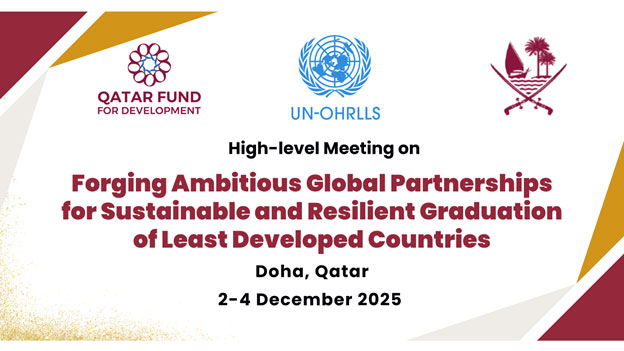
UNITED NATIONS, Dec 1 2025 (IPS) – As we gather in Doha for the High-Level Meeting on “Forging Ambitious Global Partnerships for Sustainable and Resilient Graduation of Least Developed Countries,” the stakes could not be higher. A record number of fourteen countries-equally divided between Asia and Africa are now on graduation track. Graduation from the Least Developed Country (LDC) category is a landmark national achievement—a recognition of hard-won gains in income, human development, and resilience. Yet, for too many countries, this milestone comes with new vulnerabilities that risk undermining the very gains that enabled graduation.


Since the establishment of the LDC category in 1971, only eight countries have graduated. Today, 44 countries remain in the group, representing 14% of the world’s population, but contributing less than 1.3% to global GDP. The Doha Programme of Action (DPoA) charts an ambitious yet achievable target: enabling at least 15 additional countries to graduate by 2031. But as the DPoA underscores graduation must be sustainable, resilient and irreversible. It must serve as a springboard for transformation— not a moment of exposure to new risks.
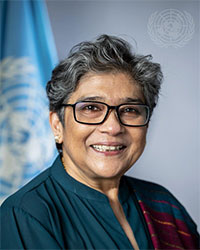
USG Rabab Fatima

Graduation with momentum:
Graduation often coincides with a significant shift in the international support landscape. As preferential trade arrangements, concessional financing, and dedicated technical assistance begin to phase down, countries may face heightened fiscal pressures, reduced competitiveness, and increased exposure to external shocks. Without well-sequenced and forward-looking transition planning, these shifts can slow progress toward the Sustainable Development Goals (SDGs) and strain national systems.

Yet within these challenges also lie opportunities. With the right policies, partnerships, and incentives, graduation can catalyse deeper structural transformation, expand access to new financing windows, strengthen institutions, and unlock pathways to diversified, resilient, and inclusive growth. The task before us is to manage risks while harnessing these opportunities—ensuring that no country graduates without momentum.

Smooth Transition Strategies: A National Imperative
The DPoA calls for every graduating country to develop inclusive, nationally owned Smooth Transition Strategies (STS) well-ahead of the graduation date. These strategies must be fully integrated into national development plans and SDG frameworks, ensuring coherence and resilience. They should prioritize diversification, human capital investment, and adaptive governance, while placing women, youth, and local actors at the center of design and oversight. STS must be living documents—flexible, participatory, and backed by robust monitoring and financing.

Reinvigorated Global Partnerships: The essential Pillar
No country can navigate this transition alone. The Doha Programme of Action calls for an incentive-based international support structure that extends beyond graduation. For LDCs with high utilization of trade preferences – the withdrawal of preferential market access must be carefully sequenced to avoid abrupt disruptions. For climate-vulnerable SIDS and LLDCs, enhanced access to climate finance, debt solutions, and resilience support are key elements in their efforts to tackle post-graduation challenges.

Deepened South-South and triangular cooperation, innovative financing instruments, blended finance, and strengthened private-sector engagement will be essential to building productive capacities and unlocking opportunities in digital transformation, green and blue economies, and regional market integration.

iGRAD: A Transformative Tool
The operationalization of the Sustainable Graduation Support Facility—iGRAD—is a concrete step forward. By providing tailored advisory services, capacity-building, and peer learning, iGRAD can serve as a critical tool to help countries anticipate risks, manage transitions, and sustain development momentum. Its success, however, hinges on strong political support and adequate, predictable resourcing from development partners.

Graduation as a Catalyst for Transformation
Graduation should not be the end of the story—it should be the beginning of a new chapter of resilience and opportunity. With integrated national strategies and reinvigorated global partnerships, we can turn graduation into a catalyst for inclusive, sustainable development. Let us seize this moment in Doha to reaffirm our collective commitment: no country should graduate into vulnerability. Together, we can ensure that graduation delivers on its promise—for communities, for economies, and for future generations.

Rabab Fatima is UN Under Secretary General and High Representative for the Least Developed Countries, Landlocked Developing Countries and Small Island Developing States

IPS UN Bureau
 

From Access to Action — Carbon Markets Can Turn Developing Countries’ Ambitions into Realities

Biodiversity, Climate Action, Climate Change, Climate Change Finance, Climate Change Justice, Conferences, COP30, Economy & Trade, Environment, Global, Headlines, Sustainability, Sustainable Development Goals, TerraViva United Nations

Opinion

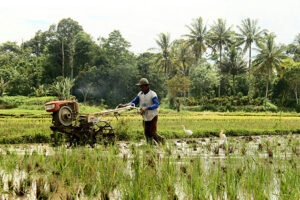
Local farmer ploughing a field in Indonesia. Credit: Unsplash

RIO DE JANEIRO, Brazil, Nov 26 2025 (IPS) – The UN climate talks at COP30 once again brought the critical issue of climate finance to the forefront of global discussions.

However, while much of the debate revolved around traditional forms of aid directed at developing countries most vulnerable to the impacts of climate change, a faster, more transformative approach lies in expanding access to carbon markets.


When emerging and developing economies (EMDEs) are equipped with the tools and knowledge needed to engage in these markets on their own terms, carbon finance can be generated and harnessed in ways that reflect their unique natural assets, governance, social contexts, and national priorities.

Achieving global climate and sustainable development goals depends on ensuring that those worst affected by climate change can fully participate in and benefit from this growing flow of finance.

EMDEs are on the frontlines of climate change — from rising sea levels threatening Pacific island nations to intensifying droughts and fires in the Amazon and Horn of Africa, and increasingly intense and frequent hurricanes in the Caribbean. These crises often hit hardest in regions that have contributed least to global emissions and in the most difficult position to react to them.

Yet, these same nations face a climate finance shortfall of $1.3 trillion per year. Carbon markets present an opportunity for these countries to bridge this gap by turning their natural advantages into climate finance assets.

Despite successful initiatives aimed at bolstering both high-integrity supply and demand for carbon credits, significant barriers to access persist, particularly for EMDEs. From fragmented policy landscapes to weak governance structures, limited institutional capacity, and low investor confidence, various obstacles prevent the vast potential of EMDEs to engage fully.

The Access Strategies Program — led by the Voluntary Carbon Markets Integrity Initiative — is a direct response to these challenges. It helps governments design and implement their own pathways into high-integrity carbon markets, enabling them to build the policies, institutional capacity, and investor confidence needed to meet their climate finance needs and transform their potential into progress.

Each country’s natural capital — from Brazil’s vast rainforest and agricultural landscapes, to the Caribbean’s blue carbon ecosystems, or Kenya’s grasslands and renewable energy potential — represents a unique competitive advantage, ready to be realised.

Simultaneously, no two countries share the same development goals or governance contexts. In some, carbon markets can drive forest conservation and biodiversity protection; while in others, they deliver the most impact by strengthening rural livelihoods or financing clean energy transitions.

The Access Strategies model recognises this uniqueness, tailoring its support to help countries use carbon finance in ways that align with their own specific economic and environmental strategies and goals.

For example, the Partnership for Agricultural Carbon (PAC) — developed with the Inter-American Institute for Cooperation on Agriculture (IICA) — is building capacity across Latin American and Caribbean agriculture ministries to participate in high-integrity carbon markets. It provides training, policy guidance, and decision-making tools that help governments and farmers identify viable carbon projects aligning with national agricultural and sustainability goals.

The collaboration has given small and medium producers a clearer route to investment, while positioning agriculture as a central player in regional climate strategies. Another example of the Access Strategies work is the recently launched Amazon Best Practices Guide, which will help Amazon state governments design and implement carbon market frameworks made specifically for their unique ecological and governance realities.

Moreover, in countries such as Kenya, Peru, and Benin, the Program has provided tailored support to develop policy and regulatory frameworks, strengthen institutional capacity, and attract responsible investment for high-priority climate mitigation projects — all in line with country-led goals.

These examples show what’s possible when governments have the tools and expertise to engage in high-integrity carbon markets on their own terms. More countries should seize this opportunity to tap into the growing flow of finance from carbon markets.

While carbon markets are not a silver bullet, they are one of the few scalable and self-sustaining tools available when grounded in integrity and tailored to each country’s needs.

Programs like Access Strategies do more than transfer technical knowledge — they build the enabling conditions for locally led action, drawing on countries’ unique ecological, social, and institutional insights to shape solutions that work in practice.

The focus of global climate action should not only be on new funding pledges, but on ensuring funding that is already available is effectively redirected for EMDEs countries to harness their own natural capital and promote social inclusion, while meeting their climate goals and reshaping their development pathway.

Building this kind of capacity is how we turn global ambition into lasting, locally owned progress, and moreover how carbon finance can become a true instrument of sustainable development.

Ana Carolina Avzaradel Szklo, Technical Director, Markets and Standards, Voluntary Carbon Markets Integrity Initiative (VCMI)

IPS UN Bureau


Beyond Buzzwords: COP30’s Opportunity to Deliver on Sustainable Food Systems

Climate Action, Climate Change, Conferences, COP30, Economy & Trade, Environment, Food and Agriculture, Food Security and Nutrition, Food Sustainability, Food Systems, Global, Green Economy, Headlines, Natural Resources, Sustainability, Sustainable Development Goals, TerraViva United Nations

Opinion


In the midst of the COP30 climate talks, consensus will depend on recognizing that climate action and protecting livelihoods must advance together.

Delegates met at the Global Climate-Smart Agriculture Conference in Brasília before the COP30 climate talks. Credit: 2025Clim-Eat/Flickr

BELÉM, Brazil, Nov 20 2025 (IPS) – The language of agricultural sustainability changes like the seasons—from “climate-smart” to “regenerative,” “agroecological,” and “nature-positive.” Each term reflects good intentions, but the growing list risks duplication, confusion and delays.


The recent CSA Conference in Brasília gathered leaders from policy, science and finance ahead of COP30 to focus not on buzzwords but on the shared foundations of sustainable food systems, which is all the more important in the Grave New World. For all the various theories of change, many share the same principles of soil health, crop innovation, inclusive finance and resilient livestock production.

In the midst of the COP30 climate talks, consensus will depend on recognizing that climate action and protecting livelihoods must advance together. Leaders must challenge themselves to measure success not only in emissions reduced, but also in the quality of life sustained by a thriving and resilient rural economy. With Brazil’s COP presidency determined to accelerate agreements into action, the challenge now is to accept and advance context-specific approaches in pursuit of a shared goal.

At present, fragmentation continues to divide institutions, donors, NGOs and producers, with competing ideologies slowing progress toward sustainability at the speed and scale required. For example, while a vast number of organizations are currently backing the concept of regenerative agriculture, others tread the paths of sustainable intensification or climate-smart agriculture. But some of the practices, such as agroforestry, could fall under each of these concepts.

And the Koronivia Joint Work on Agriculture (KJWA), established prior to COP26, has been succeeded by Sharm el-Sheikh Joint Work on the Implementation of Climate Action on Agriculture and Food Security and yet farmers are still waiting for clear national strategies to emerge from years of workshops and working papers. While the principles underpinning these joint work programs are sound, they have not generated action at the speed needed.

On the other hand, the six CSA Conference themes—from soil health and crop innovation to finance and policy—offer a fundamental framework around which there is already much agreement and can deliver results under whichever buzzword it is categorized. The themes also reflect the priorities of Brazil’s Action Agenda and ABC+ Plan, highlighting practical areas of consensus.

Brazil’s experience offers tangible examples of how shared priorities can move from discussion to delivery. The ABC+ Plan (2020–2030) forms the backbone of the country’s low-carbon agriculture strategy, integrating sustainable practices like no-till farming, pasture recovery and biological nitrogen fixation into a coherent national framework. It represents a direct contribution to the COP30’s Action Agenda’s agricultural pillar, transforming abstract goals on soil health and productivity into measurable outcomes.

Building on this, Brazil’s RENOVAGRO is the financing arm that enables the implementation of the ABC+ Plan, demonstrating how public policy can activate private investment to move all Action Agenda ambitions forward together. By tying credit eligibility to verified adoption of low-carbon practices, the program allows farmers to commit to transitions that would otherwise be out of reach. This realizes the ABC+ Plan’s policy objectives and shows that progress depends not necessarily on new ideas, but on acting decisively on the systems that already work.

At COP30, the challenge is not to settle on the right language but to sustain the right actions—whatever this might look like according to local circumstances and resources. Progress depends on scaling what we already agree on: sound policies, accessible finance that doesn’t exclude vulnerable populations and resilient food systems that keep production within environmental limits. The next phase must prioritize implementation over invention.

Leaders have an opportunity to move from promises to performance. The task ahead is to scale what already works—not to define new concepts, but to deliver proven solutions faster.

Brazil’s example shows that integration works better than focusing on the continued search for a universal solution. There is no single path forward, only a combination of context-specific approaches bound by diplomatic agreement and sustainable financing.

By focusing on fundamentals, we can avoid the paralysis of competing definitions and begin to act collectively by applying the policies and practices we know work in ways that fit local realities.

Ana Maria Loboguerrero, Director, Adaptive and Equitable Food Systems at Gates Foundation
Dhanush Dinesh, Chief Climate Catalyst at Clim-Eat

IPS UN Bureau


Cold or Heat, A Disputed Roadmap to Leave Fossil Fuels Behind in COP30

Biodiversity, Civil Society, Climate Action, Climate Change, Conferences, COP30, Editors’ Choice, Environment, Headlines, Integration and Development Brazilian-style, Latin America & the Caribbean, Natural Resources, Sustainability, Sustainable Development Goals, TerraViva United Nations

Climate Change

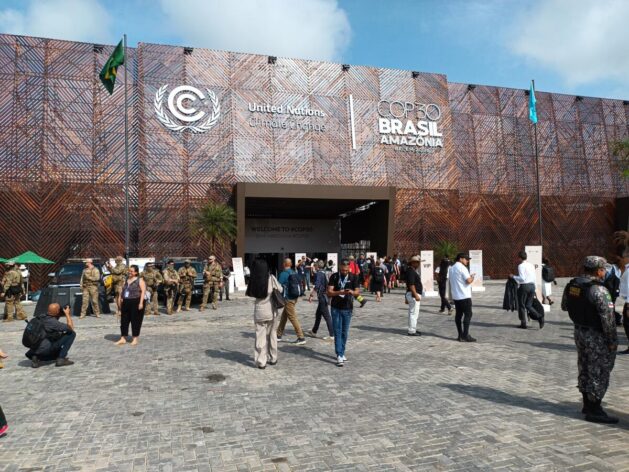
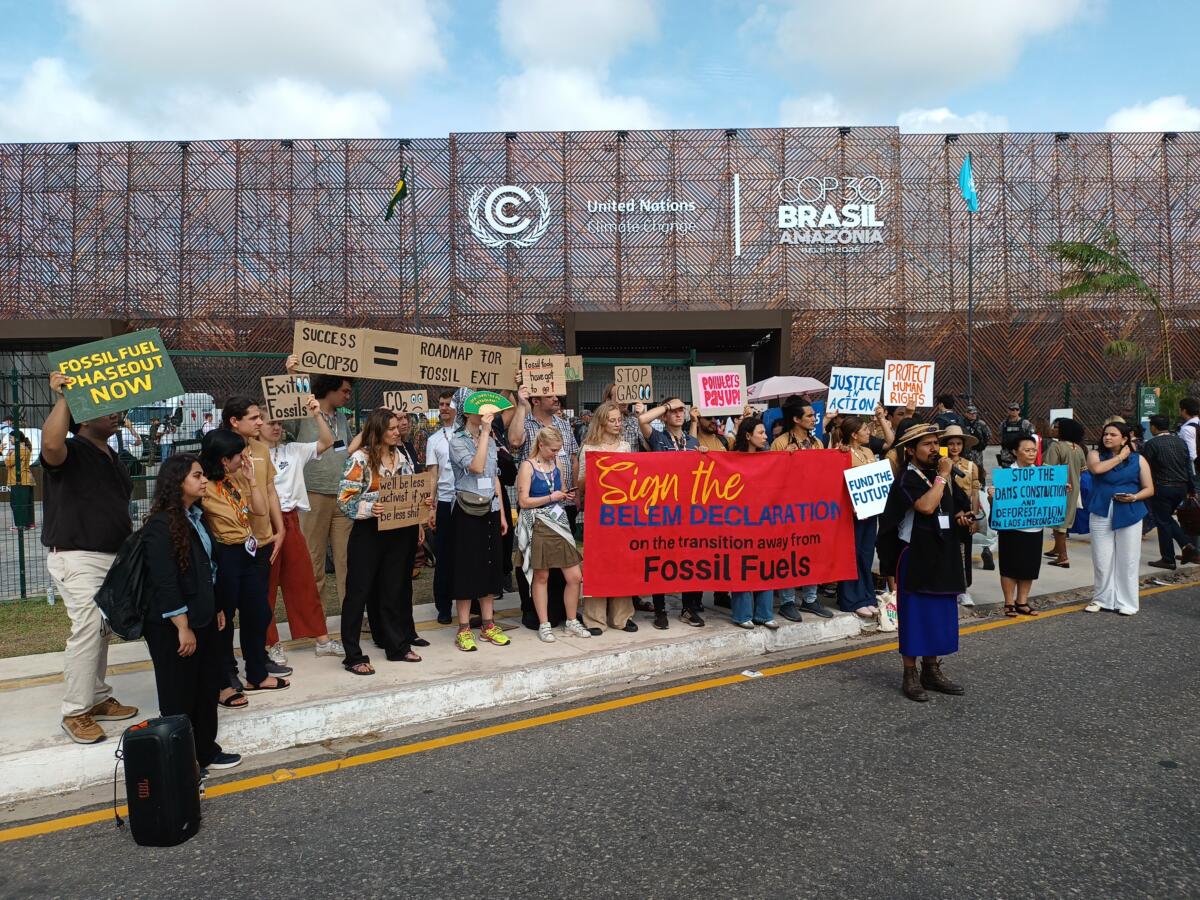
Entrance to the Hangar Convention Center of the Amazonia in the northeastern Brazilian city of Belém. The climate summit, which began on November 10 and is due to conclude on Friday the 21st, is debating issues such as the phase-out of fossil fuels and adaptation goals. Credit: Emilio Godoy / IPS

Entrance to the Hangar Convention Center of the Amazonia in the northeastern Brazilian city of Belém. The climate summit, which began on November 10 and is due to conclude on Friday the 21st, is debating issues such as the phase-out of fossil fuels and adaptation goals. Credit: Emilio Godoy / IPS

BELÉM, Brazil, Nov 20 2025 (IPS) – The heat in the Hangar Convention Center of the Amazonia, in the northeastern Brazilian city of Belém, has reached the negotiation rooms of the climate summit. Over the past 72 hours, one of the most delicate and significant discussions of this climate meeting has been taking place: the path to progressively abandon the production and use of coal, gas, and oil.


In recent hours, a global coalition of rich and developing countries, led by Colombia, has doubled down on pushing for a fossil fuel phase-out roadmap, while major producer countries resist it.

“The plan must have differentiated commitments, the elimination of fossil fuel subsidies, and the reform of the international financial system, because foreign debt payments are punishing us,” Colombian Environment Minister Irene Vélez explained to IPS.

For the official, the 30th United Nations Conference of the Parties (COP30) on climate change must result in a roadmap. “People are mobilizing, demanding climate action; we have to start now,” she urged.

In Belém, the gateway to the planet’s largest rainforest, it is no longer just about reducing emissions but about transforming the foundation of the energy system, thus acquiring a moral, political, and scientific urgency. What was initially meant to be the “Amazon COP” has mutated into the “end-of-the-fossil-era-COP,” but the roadmap to achieve it is a toss-up.

“The plan must have differentiated commitments, the elimination of fossil fuel subsidies, and the reform of the international financial system, because external debt payments are punishing us” –Irene Vélez.

Two years after the world agreed at COP28, held in 2023 in Dubai, to move away from fossil fuels, Belém is the moment of truth, upon which the effort to keep global warming below the 1.5° Celsius limit largely depends—a goal considered vital to avoid devastating and inevitable effects on ecosystems and human life.

Thus, the discussion among the 197 parties to the United Nations climate convention has shifted from the “what” to the “how,” and especially to the “when,” questions that have turned potential coordinates into a geopolitical labyrinth.

In that vein, a coalition of over 80 countries emerged on Tuesday the 18th to push the roadmap, including Colombia, Chile, Guatemala, and Panama among the Latin American countries.

One challenge for the roadmap advocates is that the issue is not explicitly part of the main agenda, a resource that the Brazilian presidency of COP30 could use to shirk responsibility on the matter.

The issue appears on the thematic menu of COP30, which started on the 10th and is scheduled to conclude on the 21st, and whose official objectives include approving the Global Goal on Adaptation to climate change and securing sufficient funds for that adaptation.

Approximately 40,000 people are attending this climate summit, including government representatives, multilateral agencies, academia, and civil society organizations.

An unprecedented indigenous presence is also in attendance, with about 900 delegates from native peoples, drawn by the ancestral call of the Amazon, a symbol of the menu of solutions to the climate catastrophe and simultaneously a victim of its causes.

Also present and very active in Belém are about 1,600 lobbyists from the hydrocarbon industry, 12% more than at the 2024 COP, according to the international coalition Kick Big Polluters Out.

The clamor from civil society demands an institutional structure with governance, clear criteria, measurable objectives, and justice mechanisms.

“The roadmap has become a difficult issue to ignore; it is already at the center of these negotiations, and no country can ignore it. The breadth of support is surprising, with rich and poor countries, producers and non-producers, indicating that an agreement is about to fall,” Antonio Hill, Just Transitions advisor for the non-governmental and international Natural Resource Governance Institute, told IPS.

Activists protest on Wednesday the 19th against fossil fuel exploitation at the entrance to the venue of the Belém climate summit, in the Amazonian northeast of Brazil. Credit: Emilio Godoy / IPS

Activists protest on Wednesday the 19th against fossil fuel exploitation at the entrance to the venue of the Belém climate summit, in the Amazonian northeast of Brazil. Credit: Emilio Godoy / IPS

Poisoned

The push for the roadmap comes from the Fossil Fuel Non-Proliferation Treaty, promoted by civil society organizations, strongly adopted by Colombia, and which so far has the support of 18 nations, but no hydrocarbon-producing Latin American country, such as Argentina, Brazil, Ecuador, Mexico, or Venezuela.

Colombia, despite also being a producer and exporter of fossil fuels, has presented its Roadmap for a Just Energy Transition, with which it seeks to replace income from coal and oil with investments in tourism and renewable energy.

Colombia’s 2022-2052 National Energy Plan projects long-term reductions in fossil fuel production. The country announced US$14.5 billion for the energy transition to less polluting forms of energy production.

But for the rest of the region, the duality between maintaining fossil fuels and promoting renewable energies persists.

A prime example of this duality is the COP30 host country itself, Brazil. While the host President, Luiz Inácio Lula da Silva, and his Minister of Environment and Climate Change, Marina Silva, have insisted on the need to abandon fossil fuels, the government is promoting expansive oil and gas extraction plans.

In fact, just weeks before the opening of COP30, the state-owned oil group Petrobras received a permit for oil exploration in the Atlantic, just kilometers from the mouth of the Amazon River.

But Lula and his team committed that this summit in the heart of the Amazon would be “the COP of truth” and “the COP of implementation,” and the issue of fossil fuels has become central to the negotiations, which Lula joined on Wednesday the 19th to give a push to the talks and the outcomes.

In their Nationally Determined Contributions (NDCs)—the set of mitigation and adaptation policies countries must present to comply with the Paris Agreement on climate change signed in 2015 at COP21—Argentina, Brazil, Mexico, or Chile avoid mentioning a managed phase-out of fossil fuels.

Simply put, they argue they cannot let go of the old vine before grasping the new one. This stance also involves a delicate aspect, as nations like Ecuador depend on revenues from hydrocarbon exploitation.

Therefore, the Global South has insisted on its demand for funding from rich nations, due to their contribution to the climate disaster through fossil fuel exploitation since the 17th century.

The result of the presented policies is alarming: although many countries have increased their emission reduction targets on paper, they lack details on phasing out production. The only existing roadmap is the growing extractive one.

In fact, the Global Stocktake of the Paris Agreement process, originating from COP28, demanded that countries take measures to move towards a fossil-free era.

The argument is unequivocal: various estimates indicate that fossil fuels contribute 86% of greenhouse gas emissions, the cause of global warming.

But a key point is where to start. For Uitoto indigenous leader Fanny Kuiru Castro, the new general coordinator of the Coordinator of Indigenous Organizations of the Amazon Basin –which  brings together the more than 350 native peoples of the eight countries sharing the biome–, the starting point must precisely be at-risk regions like the Amazon.

“It is a priority. If there isn’t a clear signal that we must proceed gradually, it means the summit has failed and does not want to adopt that commitment. We will have another 30 years of speeches,” she told IPS, alluding to that number of summits without substantial results.

In the Amazon, oil blocks threaten 31 million hectares or 12% of the total area, mining threatens 9.8 million, and timber concessions threaten 2.4 million.

And in that direction, a major obstacle arises: how to finance the phase-out. The roadmap has a direct link to the financial goals aimed at the Global South, with a demand for US$1.2 trillion in funding for climate action starting in 2035.

“Can the COP deliver the financial backing that countries need to reinvent their economies in time to guarantee just and inclusive development?” Hill questioned.

The atmosphere in Belém is of a different urgency compared to Dubai or Baku, where COP29 was held a year ago. The roadmap to a world free of fossil fuel smoke remains a blurry map, drawn freehand on ground that is heating up far too quickly.

In Belém, humanity is deciding whether to brake gradually or to accelerate, with the air conditioning on and a full tank.


Wealthy Nations Urged to Curb Climate Finance Debt For Developing Countries

Active Citizens, Civil Society, Climate Action, Climate Change, Climate Change Finance, Climate Change Justice, Conferences, Development & Aid, Economy & Trade, Environment, Gender, Global, Headlines, Sustainability, Sustainable Development Goals, TerraViva United Nations

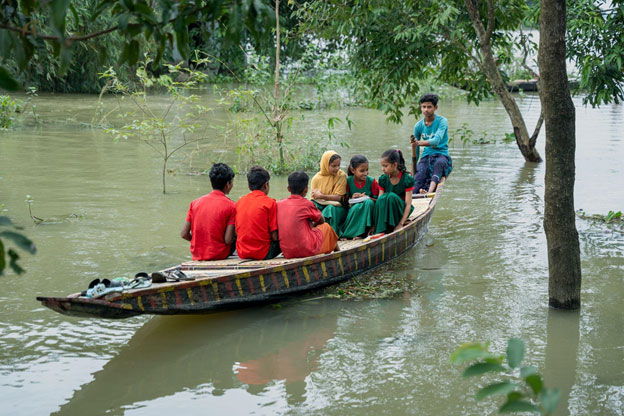
Children in Bangladesh riding a boat through a flooded river to attend school. Bangladesh is one of the most climate-sensitive regions in the world. Credit: UNICEF/Suman Paul Himu

UNITED NATIONS, Oct 8 2025 (IPS) – In recent years, international climate financing has declined sharply, leaving billions of people in developing nations increasingly vulnerable to natural disasters and unable to adapt effectively. With major cuts in foreign aid, these communities are expected to face the brunt of the climate crisis, while wealthier nations continue to reap economic benefits.


A new report from Oxfam and CARE Climate Justice Center, Climate Finance Shadow Report 2025: Analyzing Progress on Climate Finance Under the Paris Agreement, showcases the significant gaps in climate financing for developing countries in the Global South, and the far-reaching implications for climate resilience and global preparedness.

This comes ahead of the 30th United Nations (UN) Climate Change Conference (COP30), in which world leaders, diplomats, and civil society groups will converge in Belém, Brazil, from November 10–21, to discuss strategies to strengthen global cooperation, advance inclusive and sustainable development, and accelerate efforts to address the climate crisis. The United Nations Environment Programme (UNEP) states that there will be a major focus on allocating public funds for mitigation and adaptation efforts in developing countries, aiming to mobilize at least USD 300 billion annually by 2035 for developing countries and a yearly USD 1.3 trillion over the same period.

In the report, CARE and Oxfam found that developing countries are paying disproportionately high disbursements to wealthy nations in exchange for comparatively modest climate finance loans—spending about seven dollars for every five dollars they receive in return. This, compounded with “the most vicious foreign aid cuts since the 1960s”, shows a nearly 9 percent drop in climate funding in 2024, which is projected to drop by a further 9-17 percent in 2025.

“Rich countries are failing on climate finance and they have nothing like a plan to live up to their commitments to increase support. In fact, many wealthy countries are gutting aid, leaving the poorest to pay the price, sometimes with their lives” said John Norbo, Senior Climate Advisor at CARE Denmark. “COP30 must deliver justice, not another round of empty promises.”

As of 2022, developed nations reported pledging approximately USD 116 billion in climate funding for developing countries. However, the actual amount delivered is less than one-third of the pledged total — estimated at only USD 28–35 billion. Nearly 70 percent of this funding came in the form of loans, often issued at standard rates of interest without concessions. As a result, wealthy nations are driving developing countries deeper into debt, despite these nations contributing the least to the climate crisis and lacking the resources to manage its impacts.

It is estimated that developing countries are indebted by approximately USD 3.3 trillion. In 2022, developing countries received roughly USD 62 billion in climate loans, which is projected to produce over USD 88 billion for wealthy countries, yielding a 42 percent profit for creditors. The countries issuing the highest concessional loans in climate financing were France, Japan, Italy, Spain, and Germany.

“Rich countries are treating the climate crisis as a business opportunity, not a moral obligation,” said Oxfam’s Climate Policy Lead, Nafkote Dabi. “They are lending money to the very people they have historically harmed, trapping vulnerable nations in a cycle of debt. This is a form of crisis profiteering.”

Despite wealthy nations issuing high loans to developing countries, Least Developed Countries (LDCs) received only 19.5 percent of the total public climate funding over 2021-2022, while Small Island Developing States (SIDs) received roughly 2.9 percent. Only 33 percent of this funding went toward climate adaptation, a “critically underfunded” measure according to Oxfam, as the majority of creditors favor investing in mitigation efforts that deliver faster financial returns. Additionally, only 3 percent of this funding went to gender equality efforts, despite women and girls being disproportionately impacted by the climate crisis.

The report also underscores the dire impacts of the misallocation of climate financing and funding cuts, as vulnerable communities in particularly climate-sensitive environments find themselves with far fewer resources to adapt to natural disasters.

In 2024, communities in the Horn of Africa were ravaged by brutal cycles of droughts and flooding, which displaced millions of civilians and pushed tens of millions into food insecurity. In Rio Grande do Sul, Brazil, massive floods caused over 180 civilian deaths, displaced 600,000 people, and the resulting damage led to billions of dollars in losses. According to figures from UNICEF, around 35 million children in Bangladesh experienced school disruptions in 2024 due to heatwaves, cyclones, and floods, posing serious risks to their long-term development. The United Nations Environment Programme (UNEP) warns that global temperatures are on course to rise to a “catastrophic” 3°C by the end of the century, with extreme weather events expected to intensify further.

Ahead of the COP30 conference, Oxfam has urged wealthy nations to honor their climate finance commitments, including the delivery of the full USD 600 billion pledged for the 2020–2025 period, aligning with the UN’s target of mobilizing USD 300 billion annually. The organization also called for a substantial increase in global funding for climate adaptation and loss management, alongside the implementation of higher taxes on the wealthiest individuals and fossil fuel companies—which could generate an estimated USD 400 billion per year. Additionally, Oxfam emphasized the need for developed countries to stop deepening the debt of climate-vulnerable nations by expanding the share of grants and highly concessional financing instead of standard loans.

IPS UN Bureau Report


FFD4 Must Deliver for the World’s Most Vulnerable Nations

Aid, Climate Action, Climate Change, Conferences, Development & Aid, Economy & Trade, Education, Environment, Global, Headlines, Health, Poverty & SDGs, Sustainability, Sustainable Development Goals, TerraViva United Nations

Opinion

OHRLLS Office Banner. Credit: OHRLLS

UNITED NATIONS, Jul 1 2025 (IPS) – Five years from the 2030 deadline for the Sustainable Development Goals (SDGs), we face a development emergency. The promise to eradicate poverty, combat climate change, and build a sustainable future for all is slipping away. The SDG financing gap has ballooned to over $4 trillion annually—a crisis compounded by declining aid, rising trade barriers, and a fragile global economy.


At the heart of this crisis is a systemic failure: the world’s most vulnerable nations—Least Developed Countries (LDCs), Landlocked Developing Countries (LLDCs), and Small Island Developing States (SIDS)—are being left behind. The Fourth International Conference on Financing for Development (FFD4) in Seville is a historic chance to correct course.

We must seize it.

LDCs: Progress Stalled, Financing Denied

Three years into the Doha Programme of Action, LDCs are lagging precariously. Growth averages just 4.1%, far below the 7% target. FDI remains stagnant at a meager 2.5% of global flows, while ODA to LDCs fell by 3% in 2024. Worse, 29 LDCs now spend more on debt than health, and eight spend more on debt than education.

USG Rabab Fatima

These numbers demand action: scaled-up concessional finance, deep debt relief, and innovative tools like blended finance to unlock private investment. Without urgent measures, the 2030 Agenda will fail its most marginalized beneficiaries.

LLDCs: Trapped by Geography, Strangled by Finances

Six months after adopting the ambitious Awaza Programme of Action, LLDCs remain hamstrung by structural barriers. Despite hosting 7% of the world’s people, they account for just 1.2% of global trade, with export costs 74% higher than coastal nations. FDI has plummeted from $36 billion in 2011 to $23 billion in 2024, while ODA continues its downward spiral. Official Development Assistance (ODA) has also declined significantly from $38.1 billion in 2020 to $32 billion in 2023, with projections indicating continued downward trends.

The Awaza Programme outlines solutions—trade facilitation, infrastructure, and resilience—but these will remain empty promises without financing. FFD4 must align with its priorities, ensuring LLDCs get the investment they need to transform their economies.

I seize the opportunity to warmly invite all of you to continue these critical discussions at the Third United Nations Conference on Landlocked Developing Countries (LLDC3), to be held in Awaza, Turkmenistan, from 5 to 8 August 2025 under the theme “Driving Progress through Partnerships”.

SIDS: Debt, Disasters, and a Broken System

For SIDS, the crisis is existential. Over 40% are in or near debt distress; 70% exceed sustainable debt thresholds. Between 2016 and 2020, they paid 18 times more in debt servicing than they received in climate finance. This is unconscionable. Countries on the frontlines of the climate crisis should not be left on the margins of global finance. Nations drowning in rising sea level – which they did not contribute to – should not be drowning in debt.

We can continue patching over cracks in a broken system. Or we can build a more equitable foundation for sustainable development, and for that addressing debt sustainability is not only an economic necessity, but also a development imperative. No country should be forced to choose between servicing debt and protecting its future.

The Way Forward: Solidarity in Action

FFD4 must deliver:

    1. Debt relief and restructuring for LDCs, LLDCs, and SIDS to free up resources for development.
    2. Scaling up concessional finance and honoring ODA commitments.
    3. Mobilizing private capital through de-risking instruments and blended finance.
    4. Climate finance justice, ensuring SIDS and LDCs receive grants and concessional finance, not loans, to build resilience.

The moral case is clear, but so is the strategic one: A world where billions are left in poverty and instability, should be a world of shared risks and responsibilities. FFD4 must be the moment we choose a different path—one of equity, urgency, and action. The time for excuses is over. The agreement on the Compromiso de Sevilla is the start – the real test will be its implementation.

As we move forward on those important responsibilities s and necessary actions, my Office, UN-OHRLLS, is with you every step of the way.

Rabab Fatima, UN Under-Secretary-General and High Representative for the Least Developed Countries, Landlocked Developing Countries, and Small Island Developing States

IPS UN Bureau