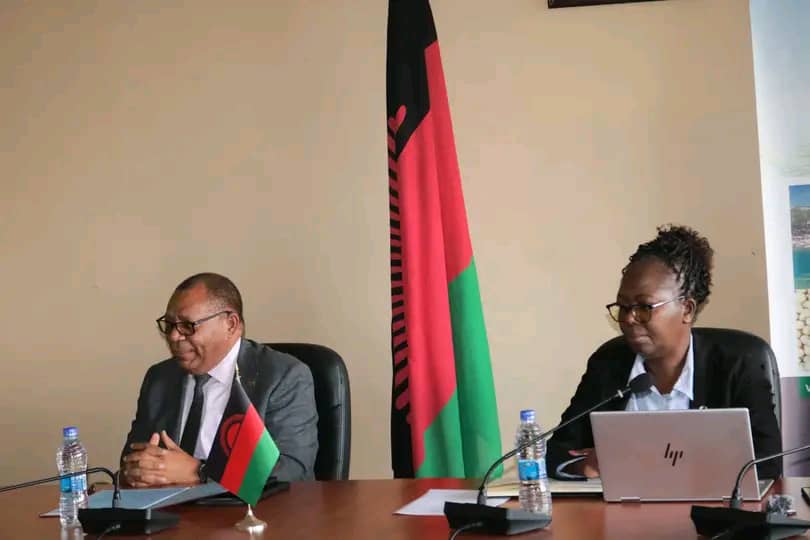
LILONGWE-(MaraviPost)-Minister of Industrialisation, Business, Trade and Tourism, Dr. George Partridge, has urged Illovo Sugar Malawi to ensure that sugar is available to the public throughout the Christmas season and up to the next production cycle.
The Minister made these remarks during a high-level meeting this morning with Illovo Sugar Malawi’s management team and the Competition and Fair Trading Commission (CFTC) at the Ministry headquarters in Lilongwe.
Dr. Partridge emphasized that Malawians expect to find sugar on the shelves as they prepare for Christmas.
He reassured Illovo Sugar management of his full support as the government works to resolve the ongoing supply issues.
In response, Illovo Sugar Malawi’s Managing Director, Ronald Ngwira, assured the Minister that the company has sufficient reserves to sustain the country through the lean period.
Ngwira explained that production is temporarily halted due to wet fields that make cane cutting impossible, but with over 70,000 metric tonnes in storage, he is confident that the stock will last until production resumes in April.
Malawi consumes around 15,000 metric tonnes of sugar per month, and Ngwira believes that the current reserve should be enough to meet the country’s needs if domestic demand remains stable.
However, Ngwira highlighted some challenges impacting sugar availability on the market, including hoarding and smuggling by certain traders.
In response, Minister Partridge assured the meeting that his Ministry would collaborate with relevant authorities such as the Ministry of Local Government, the Ministry of Homeland Security, and the Malawi Revenue Authority (MRA) to investigate and take action against those involved in these illegal activities.
This joint effort aims to ensure that the sugar supply remains stable and that any malpractices are addressed swiftly.
Share this:
Like this:
LikeLoading…
Discover more from The Maravi Post
Subscribe to get the latest posts sent to your email.
Ignite your Zimbabwean pride at Dzoka Festival, a celebration of our people, our rich cultural heritage, timeless traditions, and welcoming spirit. Don’t miss out on this vibrant homecoming for the diasporans!
p dir=”ltr”>A son of filmmaker Rob Reiner and producer Michele Singer Reiner has been arrested on suspicion of murder and is being held without bail. Authorities in Rhode Island are asking for the public’s help in identifying the gunman behind the shooting at Brown University. And, Australian authorities say the two suspected gunmen behind the mass shooting at a Hanukkah celebration on Bondi Beach were inspired by Islamic State.
<
p dir=”ltr”>Want more analysis of the most important news of the day, plus a little fun? Subscribe to the Up First newsletter.
<
p dir=”ltr”>Today’s episode of Up First was edited by Matteen Mokalla, Andrea DeLeon, Rebecca Rosman, Lisa Thomson and Alice Woefle.
<
p dir=”ltr”>It was produced by Ziad Buchh, Nia Dumas and Christopher Thomas.
<
p dir=”ltr”>We get engineering support from Stacey Abbott. Our technical director is Carleigh Strange. And our Supervising Senior Producer is Vince Pearson.
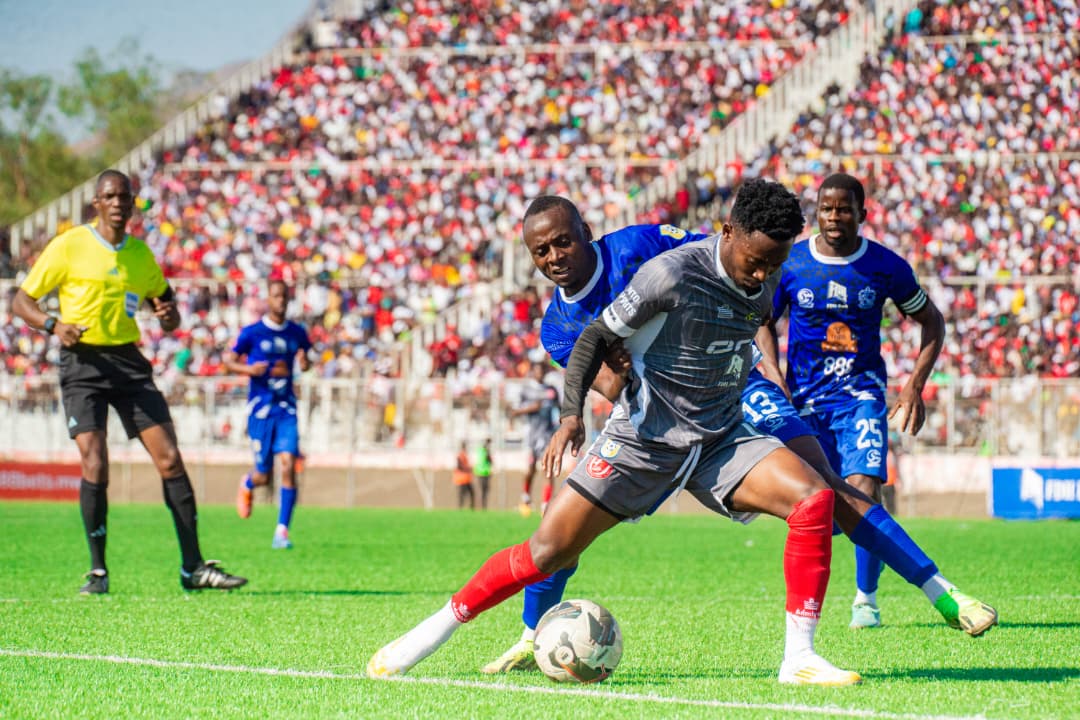
LILONGWE-(MaraviPost)-The Football Association of Malawi (FAM) Competitions Committee has ordered FCB Nyasa Big Bullets to pay a fine of five million kwacha for misconduct following incidents that occurred during the team’s 2025 FDH Bank Cup semifinal match against Mighty Wanderers on 2nd November, 2025 at the Kamuzu Stadium in Blantyre.
In a decision communicated after the Committee held its meeting on 5 December 2025, FAM has also handed a 12-month ban to Bullets’ security personnel, Thomson Chauluka, from all football-related activities.
The charges were formally issued on 20 November 2025, giving both the club and the individual 48 hours to respond.
FCB Nyasa Big Bullets submitted a written response, which the Committee accepted as their right to be heard in line with Article 25.8 of the FDH Bank Cup Rules and Regulations.
Chauluka did not submit any response.
Following its review, the Committee ruled that FCB Nyasa Big Bullets supporters engaged in violence and hooliganism in the 50th minute of the match by pelting stones and bottles onto the field of play and in the direction of the second assistant referee, forcing the match to be halted for three minutes. The Club was fined MK1 million for the offence.
The club was further found guilty of failing to take adequate precautions to prevent its security personnel from abandoning duty.
In the 95th minute, steward Thomson Chauluka entered the field of play and poured a liquid substance on Mighty Wanderers FC goalkeeper.
For this misconduct, FCB Nyasa Big Bullets were fined MK2 million.
Additionally, the Committee ruled that the club’s failure to control its supporters and security official brought the game of football, FAM, and the competition sponsor into disrepute. As a result, the club was fined a further K2 million.
The total fine imposed on FCB Nyasa Big Bullets amounts to K5 million, which must be settled before the club’s next official match.
Mr Chauluka was found guilty of assaulting an opponent and has been banned from all football-related activities, including attending FAM-sanctioned matches, for a period of 12 months with immediate effect.
FAM has also directed FCB Nyasa Big Bullets to ensure full compliance with the individual ban imposed on Chauluka, warning that failure to do so may result in further sanctions against the club, including fines or points deduction.
Both FCB Nyasa Big Bullets and Mr Chauluka have been informed of their right to appeal the decision to the FAM Disciplinary Committee within 72 hours of receipt of the ruling, subject to meeting the conditions outlined in Articles 25.12 and 25.13 of the 2025 FDH Bank Cup Rules and Regulations.
Share this:
Like this:
LikeLoading…
Discover more from The Maravi Post
Subscribe to get the latest posts sent to your email.
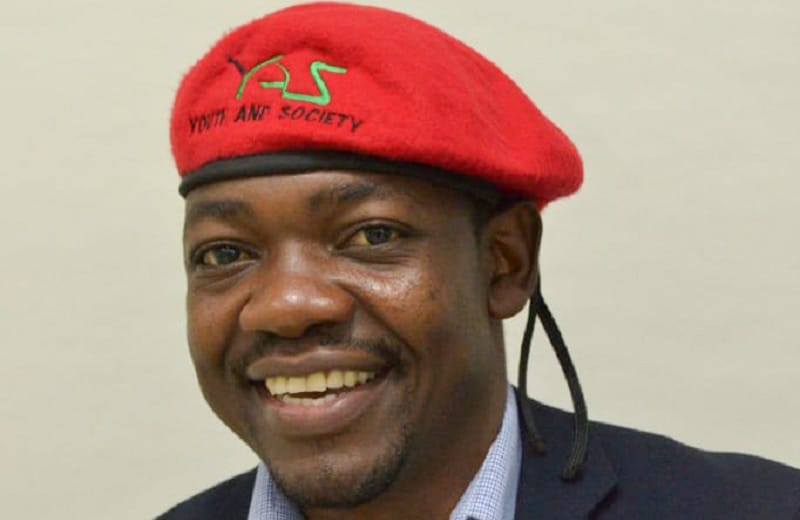
BLANTYRE-(MaraviPost)-A frontline human rights activist and governance advocate Charles Kajoloweka has declined his appointment to the board of the Technical, Entrepreneurial and Vocational Education and Training Authority (TEVETA).
In a letter dated December 15, 2025, addressed to Chief Secretary Justin Saidi, Kajoloweka who is also the founder and Executive Director (ED) of Youth and Society (YAS) says his decision has been made based on the principles of ethics, accountability, and institutional integrity.
He notes that accepting the appointment could potentially compromise, or be perceived to compromise, the independence of YAS and the credibility of its advocacy work.
“It is therefore in the best interests of accountable governance, public trust, and institutional clarity that I respectfully decline the offer,” says Kajoloweka Kajoloweka in the statement.
This is not the first time Kajoloweka has turned down a public appointment.
In September 2020, he also declined an appointment to the board of the National Youth Council (NYC).
Share this:
Like this:
LikeLoading…
Discover more from The Maravi Post
Subscribe to get the latest posts sent to your email.
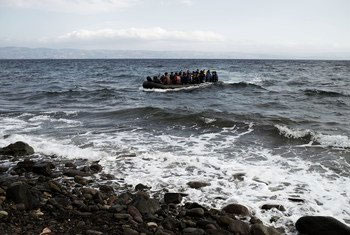
Europe’s push to shift asylum procedures to third countries risks outsourcing not only refugees, but also its moral and political responsibility.
VIENNA, Austria, Dec 16 2025 (IPS) – The debate on reforming the European asylum system has gained significant momentum following the agreement reached by EU interior ministers last week. Alongside questions of solidarity and distribution, the possibility of establishing ‘return hubs’ outside the EU was at the heart of the meeting.
Outsourcing asylum procedures – or at least those concerning rejected asylum seekers – has long been a desire of many heads of state and government, and the European Commission now aims to make this possible by creating the necessary legal foundations, for example by scrapping the so-called connection criterion. In future, rejected asylum seekers would therefore no longer need to demonstrate a personal link to the third country to which they are transferred.
Previously, such links included earlier stays or family members living there. Yet the EU remains a long way from concrete implementation.
One reason is the high cost of such outsourcing projects. According to the UK’s National Audit Office, the British Rwanda deal cost the equivalent of more than €800 million, with limited effect: only four asylum seekers were relocated over two years.
Under Prime Minister Keir Starmer, the plan was shelved for good due to excessive costs and minimal benefit. And despite the heated migration debate in the United Kingdom, a revival appears unlikely. Denmark faced a similar situation with its own Rwanda plans, which the country put on hold in 2023 due to unfeasibility. And then there is the much-cited Italy–Albania agreement, whose original idea – conducting asylum procedures under Italian law on Albanian soil – was never implemented.
Practical implementation remains doubtful
What third countries gain from allowing such outsourcing on their territory is obvious: money, and even more importantly, political capital. Speaking on a panel at the ‘Time to Decide Europe’ conference organised by the Vienna-based ERSTE Foundation, Albania’s Prime Minister and Socialist Edi Rama stated openly that his small country of just under three million people must join any alliance willing to take it in.
This includes – and above all – the EU. For Albania, which is an EU candidate country, it therefore makes sense to appear accommodating to a not insignificant member state with which it is also historically closely connected, and to help solve its unpopular ‘migration question’, at least to the extent that refugees arriving in Italy do receive protection, but, in practice, ‘not in my backyard’.
So far, however, this principle has not been put into action due to objections raised by Italian courts. That is also why – and to put the costly asylum camps built in the Albanian towns of Shëngjin and Gjadër (construction and operations are believed to have already cost hundreds of millions of euros) to some use – the European Commission created the option of return hubs, which were formally adopted last week at the meeting of EU ministers.
Italy can therefore repurpose the facilities originally intended for asylum procedures as deportation centres for asylum seekers who were already on Italian territory and whose applications have been legally rejected. Here too, the number of cases remains limited, and it is unclear on what legal basis those transferred there could be held for extended periods to prevent them from re-entering the EU via Montenegro and Bosnia. De facto detention, however, would present yet another legal complication, even if the connection criterion and other EU-law barriers are removed.
Anyone striving for ‘fair burden-sharing’ would have to redistribute towards Europe, not away from it.
There is, therefore, still a long way to go before any concrete return hubs become reality. Not only because, in the usual trilogue process, the European Parliament must also give its approval — and some MEPs, including Birgit Sippel of the Socialists and Democrats group, have already announced their opposition.
But even if a parliamentary majority can be secured, the practical implementation remains doubtful: where are the trustworthy and willing third countries; how can infrastructure be built there; how can respect for human rights standards be monitored and enforced from Europe (which proves difficult even within an EU member state such as Hungary); and how should looming legal disputes be handled?
Among the countries mentioned so far are several that themselves regularly appear among the places of origin of refugees arriving in Europe. Alongside Rwanda, the East African state of Uganda is frequently cited; it already hosts the largest number of refugees from other parts of Africa, especially from Sudan, South Sudan, Burundi and the Democratic Republic of Congo. Like Rwanda, it lies directly next to regional conflict zones; the protection rate for Ugandan nationals in European host countries stands at around 60 per cent.
The country is considered authoritarian — and precisely for that reason, it has an interest in striking an outsourcing deal with EU member states, such as the one it has already concluded with the Netherlands. Such an agreement implicitly acknowledges and legitimises the Ugandan government.
The notorious EU–Turkey Statement of 2016 demonstrated how refugees accommodated in third countries can repeatedly be used as leverage in foreign policy disputes, for example when Prime Minister Erdoğan had them bussed to the Greek border to put pressure on the EU. EU strategists may euphemistically call this ‘migration diplomacy’, but for the layperson, it is simply blackmail.
The example of Uganda illustrates not only how Europe, through deals with third countries, outsources not just refugees but also bargaining power and control; it also reflects the fundamental imbalance in a one-sided debate on externalisation.
Already today, 71 per cent of all refugees find protection in developing and emerging countries, with 66 per cent hosted in neighbouring countries in the Global South or the Middle East and North Africa. Anyone striving for ‘fair burden-sharing’ would therefore have to redistribute towards Europe, not away from it.
Europe’s answer cannot, under any circumstances, be to emulate the Trump administration by resorting to ever-tougher asylum policies.
This leads to the fundamental questions that EU policymakers appear increasingly unwilling to ask, let alone answer: How does Europe want to position itself in future with regard to global refugee protection? How will people in need of protection from persecution – whose numbers are rising in an ever more unstable world – gain access to that protection?
How can the liberal post-war order be preserved, including and especially the Geneva Conventions, which were created in response to the lessons of the two World Wars and the Shoah? How should Europe position itself vis-à-vis an increasingly illiberal, in parts authoritarian United States, which now tends to view Europe more as an adversary than a partner?
A confident response to the new US national security strategy – which claims that migration threatens Europe with ‘civilisational erasure’ – must lie in emphasising Europe’s civilisational achievements since 1945. These include, above all, the prohibition of torture enshrined in Article 3 of the European Convention on Human Rights: it applies absolutely, and therefore also to asylum seekers who are obliged to leave and who may not be deported to countries where they risk inhuman treatment. This is precisely where the line between civilisation and barbarism lies.
Furthermore, a united Europe that wants to stand its ground against attacks from former allies must recognise societal diversity as one of its strengths, and acknowledge the indispensable contribution that migrants – from guest workers and refugees to highly skilled expats – have made to Europe’s reconstruction and prosperity.
Europe’s answer cannot, under any circumstances, be to emulate the Trump administration by resorting to ever-tougher asylum policies that effectively validate the American assessment.
For that would indeed amount to an obliteration — an obliteration of the founding idea of a united, open and liberal Europe which, let us not forget, received the Nobel Peace Prize in 2012 and stands for a rules-based order that has ensured decades of peace as well as economic prosperity. In short: for the very life that we are fortunate enough to enjoy day after day, in diversity, security and freedom.
Dr Judith Kohlenberger heads the FORM research institute at WU Vienna and is affiliated with the Austrian Institute for International Affairs, the Jacques Delors Centre Berlin and the Einstein Centre Digital Future. Her book Das Fluchtparadox (The Flight Paradox) was named Austrian Science Book of the Year in 2023 and nominated for the German Non-Fiction Prize. Her most recent publication is Migrationspanik (Migration Panic) (2025).
Source: International Politics and Society (IPS), Brussels, Belgium