Linking the Malawian Diaspora to the Development of Malawi”
Malawi
Malawi (/məˈlɔːwi,məˈlɑːwi/; Chichewa pronunciation:[maláβi]; Tumbuka: Malaŵi), officially the Republic of Malawi and formerly known as Nyasaland, is a landlocked country in Southeastern Africa. It is bordered by Zambia to the west, Tanzania to the north and northeast, and Mozambique to the east, south and southwest. Malawi spans over 118,484 km2 (45,747 sq mi) and has an estimated population of 19,431,566 (as of January 2021). Malawi’s capital and largest city is Lilongwe. Its second-largest is Blantyre, its third-largest is Mzuzu and its fourth-largest is its former capital, Zomba.
LILONGWE-(MaraviPost)-In a heartfelt demonstration of compassion and social responsibility, Diplomats Car Hire has donated MK5 million to Think Pink Malawi in support of the 2025 Breast Cancer Awareness Campaign.
The contribution reflects the company’s enduring commitment to empowering women and giving back to the community.
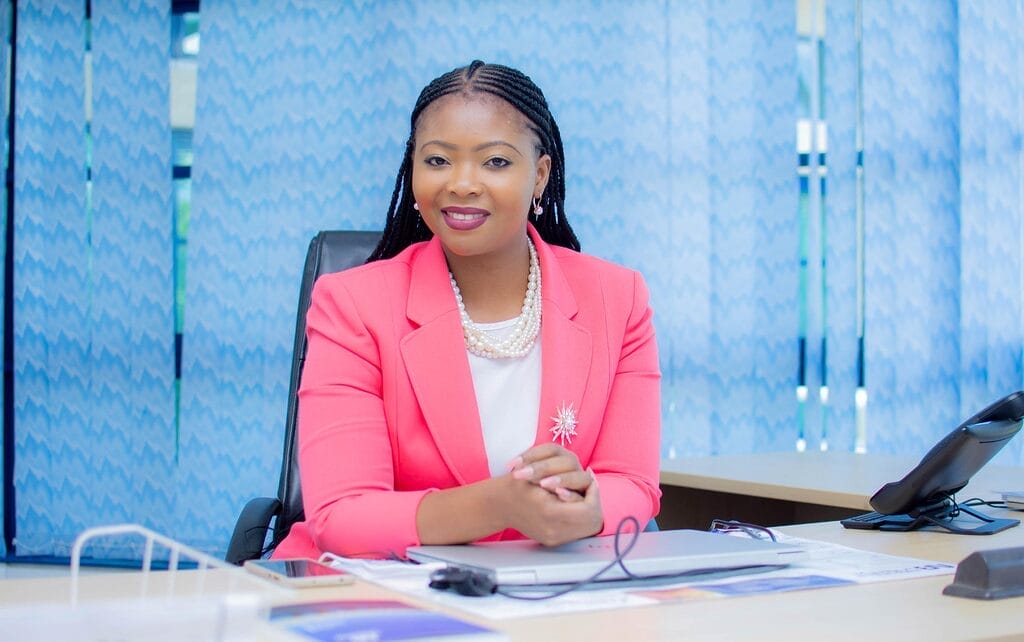
During the official cheque handover ceremony held in Lilongwe, Wezi Chiweta, representing Dr. Triephornia Mpinganjira, Managing Director of Diplomats Car Hire, reaffirmed the company’s dedication to supporting this vital cause, emphasizing that a healthy woman means a happy home and a healthy nation.”
The donation, she notes, is part of the company’s broader contribution toward building a stronger and healthier Malawi.
“Cancer affects more than just individuals — it paralyses families, workplaces, and entire communities. No woman should ever feel alone in this fight. Dr. Triephornia Mpinganjira therefore encourages women and girls in particular, and all people in general, to go for cancer screening. at The International Blantyre Cancer Centre in Blantyre , Nyambandwe. The International Blantyre Cancer Centre is one such institution that offers free annual cancer screening, amongst others.
Accepting the donation on behalf of Think Pink Malawi, Eleanor Nkosi, Co-Founder of the organization, expressed sincere gratitude for the company’s generosity.
“We are deeply grateful to Diplomats Car Hire for this significant and timely contribution. Their support will help us expand our reach — providing more women with vital breast cancer information, early detection services, and emotional support. Partnerships like this form the foundation of lasting impact,” said Nkosi.
She further emphasized that private sector engagement is crucial in advancing awareness efforts, particularly in rural communities where access to healthcare services remains limited.
Founded in 2014 by the late Blandina Khondowe, Think Pink Malawi continues to lead nationwide advocacy and awareness initiatives in the fight against breast cancer.
This year’s campaign, themed,“Think Pink, Walk Proud,” will feature a walk from the Parliament Buildings to the Bingu International Convention Centre (BICC) Gardens, followed by a Family Food Festival aimed at promoting health education and community unity.
Diplomats Car Hire, owned by Dr. Triephornia Thomson Mpinganjira, is one of Malawi’s leading vehicle rental companies — renowned for its professionalism, corporate social responsibility, and unwavering commitment to national development.
Share this:
Like this:
LikeLoading…
Discover more from The Maravi Post
Subscribe to get the latest posts sent to your email.
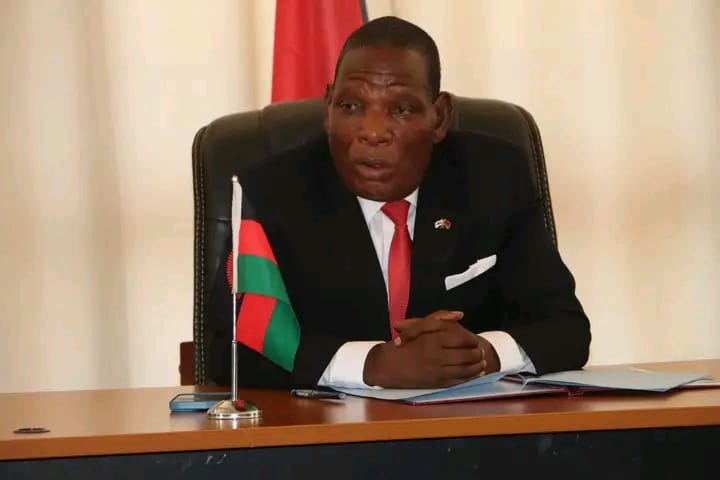
BLANTYRE-(MaraviPost)-The Minister of Finance, Economic Planning and Development, Joseph Mwanamvekha, has announced that Malawi has secured substantial international support to address the country’s economic challenges.
Speaking during a media briefing on Food Crisis Support, Mwanamvekha revealed that the World Bank has provided $45 million for emergency food assistance targeting four million Malawians.
The funding is part of a broader package of support secured during recent discussions in Washington, D.C., which aimed at stabilizing the economy and addressing challenges related to food, foreign exchange, fuel, and fertilizer supply.
The African Development Bank has also pledged additional support, further bolstering the country’s efforts to address its economic woes.
The International Monetary Fund (IMF) will visit Malawi in the first week of November to assist in efforts to stabilize the economy.
This development comes on the back of China’s debt forgiveness and grant to Malawi, with the Chinese government forgiving $20 million of Malawi’s debt and granting an additional $3 million to support the country.
According to Mwanamvekha, the government is taking steps to ensure fiscal sustainability, including cutting expenditures, reforming policies, and restructuring debt.
He assured the public that the government is confident there will be no devaluation of the local currency.
With this support, Malawi is expected to make significant strides in addressing its economic challenges and improving the lives of its citizens.
Share this:
Like this:
LikeLoading…
Discover more from The Maravi Post
Subscribe to get the latest posts sent to your email.
More than a million federal workers are missing their first full paycheck as the shutdown stretches into week four, with pressure building on Washington to end the standoff. A wild NBA gambling scandal involving secret gadgets lands an active player and a Hall of Fame coach in legal trouble. And Russia’s president shrugs off new U.S. sanctions after President Trump cancels his summit with Vladimir Putin.
Want more comprehensive analysis of the most important news of the day, plus a little fun? Subscribe to the Up First newsletter.
<
p class=”readrate”>Today’s episode of Up First was edited by Emily Kopp, Russell Lewis, Kate Bartlett, Mohamad ElBardicy and Martha Ann Overland.
<
p class=”readrate”>
<
p class=”readrate”>It was produced by Ziad Buchh, Ben Abrams and Christopher Thomas
<
p class=”readrate”>
<
p class=”readrate”>We get engineering support from Stacey Abbott. And our technical director is Carleigh Strange.
<
p class=”readrate”>
<
p class=”readrate”>And our Executive Producer is Jay Shaylor
BLANTYRE-(MaraviPost)-Music, laughter, and splendour will fill Peak Gardens in Lilongwe on Sunday as top local artists Kelly Kay, Eli Njuchi, Praise Umali, Fada Moti, and Temwa take the stage for a day packed with entertainment, fun, and relaxation.
The performances will headline National Bank of Malawi (NBM) plc’s Family Day, a celebration designed to appreciate employees, customers, and stakeholders while promoting work-life balance and community engagement.
The event, to be hosted by renowned MBC Radio 2 DJ, Joy Nathu, is scheduled to run from 6 am to 5 pm and promises a vibrant mix of live music, cultural showcases, and wellness activities for all ages.
NBM plc Marketing and Corporate Affairs Manager, Akossa Hiwa, said the Family Day underscores the Bank’s appreciation of its people and its commitment to shared growth.
“We are taking time to celebrate the people behind our success, our employees, their families, and our customers. This event reflects our dedication to work-life balance and the importance of building lasting relationships.
“It’s also an opportunity to celebrate Mo626, which has transformed digital banking in Malawi by offering secure and convenient financial solutions,” said Hiwa.
Apart from the music performances, the event will also feature yoga sessions, financial literacy games for children, and a relaxation lounge for families to unwind.
“NBM plc has always valued its people and the communities it serves. This Family Day is about deepening that connection and celebrating success together,” said Hiwa.
Excitement has already spread among customers following the Bank’s announcement on its social media pages.
One enthusiastic follower, Theressa Mwamande, said she is eager to attend and praised NBM plc for going beyond banking.
“I am really excited about this Family Day. It’s a wonderful idea that shows NBM plc cares about its customers beyond banking. It will be a great chance to relax, meet others, and enjoy quality time with family,” said Mwamande.
Adding to the excitement, Umali confirmed his performance through his page, writing: “Live with my band this coming Sunday, 16 pa Mo Family Day at Peak with National Bank of Malawi plc.”
The event will also feature raffle draws, three-legged and sack races, karaoke sessions, and fun categories such as Best Dressed Family and Most Enthusiastic Team.
Children will enjoy bouncy castles, face painting, and arts and crafts, ensuring fun for everyone.
Share this:
Like this:
LikeLoading…
Discover more from The Maravi Post
Subscribe to get the latest posts sent to your email.
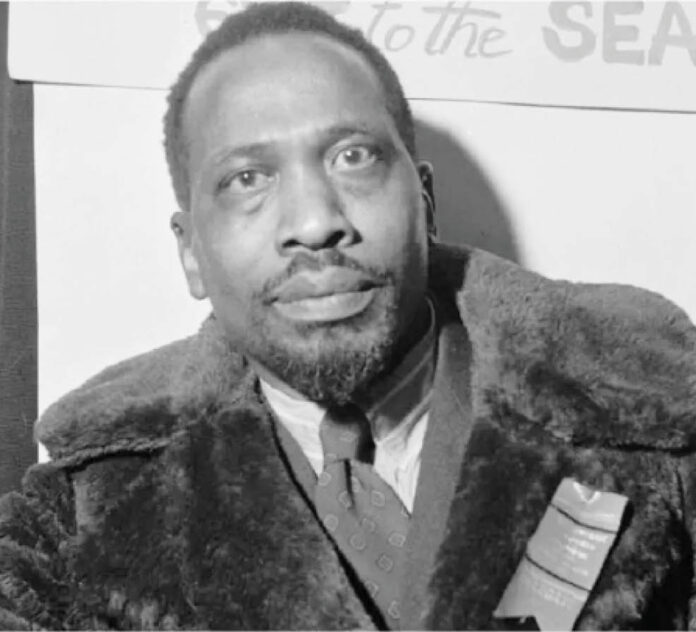
Jomo Kenyatta, who would become the first president of the Republic of Kenya in 1964, was one of many major names who attended the event
In October 1945, delegates from across the world descended on a town hall on the outskirts of Manchester city centre to attend a seismic event in African politics, the ripple effects of which still resonate 80 years later. The Fifth Pan-African Congress, held between 15 and 21 October 1945, was a key moment for the movement that liberated many Africans from colonial rule. Among those who attended were Obafemi Awolowo, one of the driving forces of Nigerian independence, feminist and human rights campaigner Amy Ashwood Garvey, Trinidadian radical George Padmore and the future presidents of Malawi, Ghana and Kenya – Hastings Banda, Kwame Nkrumah and Jomo Kenyatta. But it was not, as its name makes clear, the first such gathering, so how did it come to have such significance and why was it held in Chorlton-on-Medlock Town Hall? What is Pan-Africanism? Pan-Africanism is a philosophy which held that all people of African descent should unite to stand against racial injustice, inequality and colonialism in Africa. It began in the mid-19th Century but came to the fore in the early 20th Century, when Trinidadian barrister Henry Sylvester Williams organised the First Pan-African Conference in London in 1909. That event was followed by Pan-African Congresses in 1919, 1921 and 1923, which were held either solely or jointly in Paris, London, Brussels and Lisbon, four cities which had been the seats of European colonial power, before a fourth event in New York in 1927. Each congress ended with a list of resolutions, which were mainly made around the need for more rights for Africans, for the end of British rule and for home rule and a say in the governance of their own countries. Why was Manchester chosen? The Pan-African movement was disrupted by world events in the 1930s and 1940s and did not hold a congress again until after the end of World War Two. Its leading figures were keen to get things going again after that conflict was finally ended with Victory over Japan Day on 15 August 1945. Within two months, delegates were filing into the main chamber at Chorlton-upon-Medlock Town Hall to see the start of the Fifth Pan-African Congress. Its aim was to tackle the post-war struggle against racial discrimination and help its delegates find a path to liberation for those living under what they saw as unjust colonial rule. Harry Eyre, an expert on the congresses who helps with the documenting of black histories as the librarian for the Ahmed Iqbal Ullah RACE Centre and Education Trust, said there were a “plethora” of reasons why the city was chosen to host. The main one, he said, was the strength of black communities and their established network of businesses in Manchester. Ras T. Makonnen, for example, owned a number of restaurants, hotels and nightclubs, so people travelling from all over the world had places to stay and eat. He acted as treasurer for the congress and is named on a plaque commemorating the congress on the building where it was held, which is now part of Manchester Metropolitan University. Harry said Makonnen was friends with Padmore, who has been described as “one of the most influential black political thinkers of the 20th Century”, and the pair were both instrumental in bringing the event to Manchester. Harry’s colleague Maya Sharma, the head of the trust, added that in their archives, there was evidence that there had been an “African and Caribbean presence in Manchester for decades”, long before the arrival of the Windrush generation. She said the Oxford Road area around the town hall had a flourishing black community with businesses such as cafes, restaurants and a bookshop. Who was involved? Many of the delegates at the congress were political heavyweights, activists and vocal supporters of the Pan-African movement. They came from Manchester and the surrounding area, from other parts of Great Britain and more than 25 other countries, the majority of which were still part of the what had become known as the British Commonwealth of Nations. They represented more than 50 organisations and political associations, from the Women’s International League for Peace and Freedom to the Communist Party of Great Britain. Alongside Awolowo, Ashwood Garvey, Padmore, Banda, Nkrumah and Kenyatta were the likes of African National Congress activist and writer Peter Abrahams, Sierra Leone People’s Party founder Lamina Sankoh, All African Convention founder Davidson Don Tengo Jabavu and Tikiri Banda Subasinghe, who would go on to serve as the Speaker of the Sri Lankan Parliament. There was also at least one delegate who had been there from the start, as the congress chairman was William Edward Burghardt Du Bois, the African American thinker and journalist who had helped to organise the first event in 1919. Why was it so significant? Harry said the congress was unique as the previous ones had involved primarily people of upper classes and of professional backgrounds. In Manchester though, the event catered for a much larger demographic of activists from all over the world as well as also from black communities in the UK and specifically the city itself. He said while its impact was not “instantaneous”, it “led to the success of independence movements” in decades that followed across the British Empire and other colonial strongholds. He said Jomo Kenyatta and Kwame Nkrumah, who would go on to lead homelands of Kenya and Ghana independence, came together to plan the means with which they would eventually achieve that. “It was a sort of zenith of the movement, the beginning of the struggle after the Second World War,” he added. Maya said the Manchester event “raised some very clear demands” which included an end to colonial rule in Africa and the Caribbean and racial equity for people of African heritage everywhere. “They also demanded economic justice and fair wages,” she said. Source: BBC
When the National Pan-Hellenic Council (NPHC) was founded on May 10, 1930, at Howard University in Washington, D.C., few could have imagined that its mission of unity, scholarship, and service would one day return to the land of its ancestors.
The first chapters to reach African soil appeared in Liberia in the late 1940s, but it is in Ghana that this movement has found new energy—a revitalization uniting the continent and its diaspora. Ninety-five years later, that circle closed in Accra, where the West African Regional National Pan-Hellenic Council (WARNPHC) was formally chartered on May 10, 2025.
The NPHC—commonly known as the Divine Nine—has long been a cornerstone of leadership in historically Black institutions. Its members include educators, activists, and community builders whose influence has shaped African-American progress for nearly a century.
What began in the halls of Howard now thrives on African soil, where fraternity and sorority members apply the same principles of service and solidarity to strengthen communities and deepen diaspora ties.
A Historical Return
The first seeds were planted in 1948, when Zeta Phi Beta Sorority, Inc. established a chapter in Monrovia, Liberia—the first Black Greek-lettered organization on African soil. A decade later, in 1958, Alpha Kappa Alpha Sorority, Inc. chartered in Monrovia, advancing scholarship, service, and sisterhood.
In 1960, Sigma Gamma Rho Sorority, Inc. chartered the Gamma Alpha Chapter at the University of Liberia, extending that legacy through education and leadership. Two years later, Delta Sigma Theta Sorority, Inc. followed suit.
As independence movements surged, leaders like Dr. Kwame Nkrumah of Ghana and President Nnamdi Azikiwe of Nigeria—both Phi Beta Sigma members—embodied a new African consciousness. The intellectual presence of Dr. W. E. B. Du Bois (Alpha Phi Alpha) and Shirley Graham Du Bois (Delta Sigma Theta), who made Ghana their home, gave profound weight to this trans-Atlantic bond.
Also influential were President William Tubman and First Lady Antoinette Tubman of Liberia, whose era fostered exchange between Africa and African Americans. In that same spirit, Adelaide Casely-Hayford, a Sierra Leonean-Ghanaian educator and proud Zeta Phi Beta, championed girls’ education and African pride, paralleling Dr. Anna Julia Cooper (Alpha Kappa Alpha), whose Pan-African scholarship laid early foundations for global Black solidarity. Together, they linked education and culture as vehicles for liberation.
The Modern Resurgence
Long before Ghana’s Year of Return (2019), Black Greek members were rebuilding roots on the continent. Educators, entrepreneurs, and civic leaders revived community and purpose that transcended borders. Among them were Nana Serwa Wiafe, Kwabena “Kwab” Asamoah, Emmanuel Gamor, Iris Ampofo-Barnes, Richard Adzei, Michael Darko, Nana K. Asare, Obed Lartey, Jonathon Akuamoah, Ken Takyi Agyapong Jr., Abdul Kareem Abdullah, Ceola Oware, Afi Keni, Anthony Kwaku Prah Biney, Kofi Apraku, Adjoa Asamoah, Ozbert K. Boakye, Dr. Nana Kwame Wiafe-Ababio, and Dzigbordi Kwaku-Dosoo.
Later, Ellen Johnson Sirleaf of Alpha Kappa Alpha, Africa’s first elected female head of state and President of Liberia (2006–2018), carried that legacy forward. She reflected the enduring power of education and integrity—principles also upheld by Joseph Boakai of Liberia (Alpha Phi Alpha) and Peter Mutharika of Malawi (Phi Beta Sigma), both modern heads of state within the Divine Nine network.
Supporting this return were Victoria Cooper, Jerome Thompson, Jimmie Thorne, Sherrie Thompson, Norma Brooks-Puplampu, David Kweku Fleming, Craig Norman, and Glenda “Peaches” Simpkins, all members of the African American Association of Ghana (AAAG). Their decades of work linking repatriates with Ghanaian institutions created fertile ground for service and connection.
Greeks of the Motherland
The modern expansion began with Greeks of the Motherland, founded by Nana Serwa Wiafe (DST) and Kwabena “Kwab” Asamoah (OPP) to connect fraternity and sorority members across Africa. The initiative became a digital and social hub linking Divine Nine members in Ghana, Liberia, Kenya, Tanzania, Nigeria, Sierra Leone, and South Africa, coordinating mentorships, service projects, and community events.
Leaders such as Wayne Francis, Shannan Akosua Magee, Beverly Booker-Ammah, Maurice Cheetham, Erica Daniels, Bryan Cox, Nzali Johnetta Abrahams, Cassandra Blaine, Jamille Brown Shuler, LeAnn Arnold, Delia Gillis, Lynn Tawiah, Richard A. Moore, Adaamah Craig, Shermaine Moore Boakye, Annabelle McKenzie, Christa Sanders, Wanida Lewis, Adrienne Corder, Terrell Sanders, and Diallo Sumbry—the first African-American Tourism Ambassador—organized the popular Divine Nine Mixers, fostering cross-organizational fellowship.
This period of growth paved the way for the first Divine Nine chapter in Ghana, when Omega Psi Phi Fraternity, Inc., which had first chartered in Liberia in 1955, made history again in 2011. Known for its service and camaraderie, the fraternity hosted iconic barbeques at Kwabena Asamoah’s home, becoming a cornerstone of Accra’s Divine Nine calendar. These gatherings built networks that helped lay the foundation for the West African Regional NPHC (WARNPHC).
Ghana Gives Birth
On May 10, 2025, Ghana became the birthplace of a new Pan-Hellenic era with the chartering of the West African Regional NPHC (WARNPHC) under Christopher Ray, President of Phi Beta Sigma Fraternity, Inc. The Council unites Divine Nine organizations across West Africa, advancing service, leadership, and diaspora connection.
Ambassadors and Icons Prominent figures have amplified this movement’s reach: Samia Nkrumah (Zeta Phi Beta) – Ghanaian politician and daughter of Kwame Nkrumah. A. J. Akua Okyerebea Johnson (Delta Sigma Theta) – Actress, producer, and health ambassador. Malika Mene (Zeta Phi Beta) – First Lady of the AfCFTA, advocate for women’s entrepreneurship. Gina Paige (Alpha Kappa Alpha) – Co-founder of African Ancestry. Farida Nana Efua Bedwei (Sigma Gamma Rho) – Software engineer and author. Hamamat Montia (Sigma Gamma Rho) – Model and entrepreneur. Engracia Mofuman (Sigma Gamma Rho) – Linguist and educator. Dr. Nana Kweku Nduom (Alpha Phi Alpha) – Business leader and advocate for sustainable enterprise.
Together, they reflect how heritage, culture, and service intersect in Ghana’s Pan-Hellenic landscape.
Service in Action and Beyond
Even before the charter, Divine Nine members in Ghana demonstrated unity through projects such as the D4 Project in Greater Ada for menstrual health, Maternal Health Initiatives covering hospital costs, Borehole Water Projects led by Team CSR Ghana under Jonathon Akuamoah, and Youth and STEM Mentorships promoting Pan-African leadership. The Uplift Torgorme Foundation continues similar work across the Volta Region.
Today, Divine Nine chapters operate in Ghana, Liberia, Nigeria, The Gambia, and South Africa, with expanding links in Benin, Kenya, and Tanzania. What began as a cultural return has evolved into a continental movement—a fusion of diaspora vision and African leadership that redefines service and scholarship across borders.
Nearly a century after the NPHC’s founding at Howard University, the spirit of the Divine Nine now thrives on African soil—not merely as a homecoming, but as a continuation.
The writer is a Ph.D Student, University of Ghana- Kwame Nkrumah Institute of African Studies