Linking the Malawian Diaspora to the Development of Malawi”
Malawi
Malawi (/məˈlɔːwi,məˈlɑːwi/; Chichewa pronunciation:[maláβi]; Tumbuka: Malaŵi), officially the Republic of Malawi and formerly known as Nyasaland, is a landlocked country in Southeastern Africa. It is bordered by Zambia to the west, Tanzania to the north and northeast, and Mozambique to the east, south and southwest. Malawi spans over 118,484 km2 (45,747 sq mi) and has an estimated population of 19,431,566 (as of January 2021). Malawi’s capital and largest city is Lilongwe. Its second-largest is Blantyre, its third-largest is Mzuzu and its fourth-largest is its former capital, Zomba.
BLANTYRE-(MaraviPost)-The National Football Coaches Association (NFCA) has moved swiftly to quash a shocking report that falsely claimed veteran coach Rodgers Yasin had passed away, describing the publication as misleading and deeply distressing.
In a strongly worded statement signed by General Secretary Sullivan Kenneth Kandulu, the association clarified that Coach Yasin is alive and in good health.
The statement followed what it described as an urgent verification exercise by its Executive Committee.
According to the NFCA, members of the Executive Committee personally visited Coach Yasin at his residence immediately after learning about the circulating report.
The visit confirmed that the coach was safe, stable and unaware of how such alarming misinformation had surfaced.
The association expressed profound regret over the emotional turmoil the false news caused, not only to Coach Yasin himself but also to his family, close friends and the broader football fraternity.
Describing the incident as unfortunate and irresponsible, the NFCA said such reports have the potential to damage reputations, cause psychological harm and shake public trust in the media.
The body emphasized that it takes matters of misinformation seriously and has since activated internal governance and disciplinary procedures to address the issue in line with its established framework.
The association further called on media institutions to exercise professionalism and responsibility when handling sensitive information, particularly matters involving life and death.
It urged journalists and the general public to always verify information through official NFCA communication channels before publishing or sharing reports that could cause panic and confusion.
Coach Yasin, who currently serves as Technical Director of Chilobwe United, has been instrumental in shaping young talent and strengthening grassroots football structures.
Most recently, he guided Chilobwe United to promotion into the NBS Bank National Division League, a milestone achievement that has elevated the club’s competitive standing.
Yasin’s coaching résumé also includes stints with top sides such as Nyasa Big Bullets FC, Tigers FC, Masters Security and Bangwe All Stars, where he built a reputation as a disciplined and visionary tactician.
On behalf of the United States, I offer my heartfelt congratulations to the citizens of The Gambia as you celebrate 61 years of independence.
As you mark this important milestone, we reaffirm the strong and lasting relationship between our nations. I look forward to deepening our collaboration by strengthening our bonds and advancing shared economic interests.
The United States values The Gambia’s unwavering partnership and engagement on international issues, reflecting our mutual dedication to fostering global peace and prosperity.
I look forward to continuing our joint efforts and further enhancing the ties between our countries in the years to come.
Amid calls from the Public Affairs Committee (PAC) to President Professor Arthur Peter Mutharika to fire Cabinet ministers and government officers with outstanding corruption cases, governance and human rights advocates have urged the President to exercise caution.
Recently, the Public Affairs Committee (PAC) – a quasi-religious grouping, which together with the Catholic Bishops, spearheaded the birth of multiparty democracy in 1992, called upon President Mutharika to sack officials facing corruption and other charges.
However, a seasoned governance and human rights advocate Undule Mwakasungula cautioned the President against acting on the calls wholesome, fearing this could be a recipe for disaster.
He reminded Malawians that hasty decisions have ruined lives and careers for innocent citizens before, citing the case of former Minister of Agriculture, Dr. George Chaponda, who was victimized for a crime he never committed.
“PAC’s call to fire ministers and senior officials over corruption allegations deserves attention. However, it does not automatically mean the President made a mistake in appointing them. First, the President acted on the information available at the time of the appointments. Many of those appointed had strong qualifications, experience, and a proven track record. For this reason, it will be unfair to say the President failed in make the right choices,” reacted Mwakasungula.
He wondered why PAC is raising this issue now when they were silent when the appointments were being made.
Mwakasungula urges PAC and other groups to avoid handling this matter emotionally or politically, emphasizing that government needs stability to function well.
“If every allegation leads to immediate removal, government operations may be seriously affected. Then also a risk that such calls could be used politically to weaken the administration rather than to promote justice. Much as oversight is necessary, but it should strengthen, not be used to paralyze government functions. We must also keep the principle of “innocent until proven guilty” at the center. Allegations are not proof. Removing ministers or officials based only on accusations is creating fear and instability, and may encourage the use of rumors as political weapons. This would harm our governance more than it would help,” emphasized the most revered governance and human rights advocate.
In a separate interview, a human rights lawyer, Alfred Munika, echoed Mwakasungula’s views, stressing that it would be unfair to punish someone who is still presumed innocent.
“We have seen cases where officials are acquitted after being dismissed, only to be left without a job or reputation. The case of George Chaponda, former Minister of Agriculture, is a stark reminder of the dangers of knee-jerk reactions. Dr. Chaponda was dismissed from the cabinet over maize-gate allegations, only to be acquitted and cleared by the court. This shows how hasty decisions can ruin lives and careers,” said Munika.
He further argued that it is not practical for a president to work with entirely new faces, who did not accompany him on his campaign trail.
“These are people he knows, trusts, and has worked with. Replacing them overnight could lead to a vacuum in leadership and disrupt government operations,” said Munika.
As Mwakasungula concluded, while accountability is crucial, due process must be respected. The Constitution guarantees the right to a fair hearing, and it’s essential that this principle is upheld.
“The President should focus on ensuring that the law takes its course rather than pre-empting it,” said Mwakasungula.
Mutharika’s predecessors have faced similar pressures, often with disastrous consequences.
In 2013, Joyce Banda sacked several officials over corruption allegations, only to see some reinstated or cleared later. This created uncertainty and undermined government effectiveness.
The PAC’s call for sackings may be well-intentioned, but it’s essential to consider the broader implications.
Malawi needs stability and continuity, not a revolving door of officials. Mutharika should resist this pressure and prioritize prudent governance over populist posturing.
Instead, the President could consider suspending officials with cases in court, allowing them to defend themselves while ensuring they don’t interfere with investigations.
This balanced approach would demonstrate commitment to accountability while upholding the principles of fairness and justice.
As Mwakasungula puts it, “A president can’t just wake up one morning and decide to start afresh with new faces. That’s not how governance works.”
Mutharika would do well to heed this advice and prioritize wise counsel over hasty decisions.
DOHA, Qatar, 18 February 2026-/African Media Agency(AMA)/- Thales, world leader in high technologies for Defence, Aerospace and Cybersecurity & Digital, plans to recruit more than 9,000 employees worldwide in 2026.
These hiring prospects follow the recruitment of 8,800 employees in 2025, exceeding the initially announced target of 8,000 new talent. Over the past 5 years, Thales has recruited at least 8,000 people per year to support the growth dynamics of its three business sectors.
In 2025, Thales received 1.4 million applications worldwide, exceeding its record of one million CVs received in 2024. The Universum ranking positioned Thales in first place amongst the most attractive employers for engineering school students in France (and second place in 2024).
Strengthening the diversity of teams and management committees remains a priority for the Group. In 2025, women accounted for 32% of all recruitments. 69% of the Group’s management committees are composed of at least 4 women and Thales aims to reach 75% in 2026.
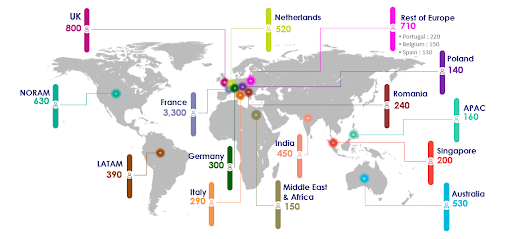
In 2026, Thales plans to recruit 150 people in the Middle East and Africa with 60 in the United Arab Emirates and 30 in the Kingdom of Saudi Arabia.
In France, Thales will recruit 3,300 people, including 1,630 in the Ile-de-France, 290 in Brittany, 280 in Nouvelle Aquitaine, 270 in Provence-Alpes-Côte d’Azur, 250 in Occitanie, 220 in Centre-Val de Loire, 180 in Auvergne-Rhône-Alpes and 130 in Pays de la Loire.
In addition to the 9,000 external recruitments, and thanks to the variety of Thales’ three business sectors, roles and geographies, 3,500 employees will benefit from internal mobility. Additionally, the Group’s “Learning Company” approach, with more than 35 internal academies, will enable employees to develop their skills, thereby maintaining Thales’ expertise at the highest level worldwide.
Thales is committed to advancing the integration of people with disabilities, with an employment rate of over 7% in France in 2025.
Around 40% of new arrivals will be assigned to engineering (software and systems engineering, cybersecurity, artificial intelligence, and data) and 25% to industry (technician, operator and engineer positions).
Thales reinforces commitment to inspire and support young talent in Science, Technology, Engineering and Mathematics (STEM)
Thales is dedicated to fostering the careers of young people and places strong emphasis on welcoming apprentices and interns, particularly in France, where it will support 1,700 trainees and 1,600 apprentices from Bac+2 to Bac+5, as well as 1,000 third-year and 500 second-year students in 2026. For these young people, these opportunities serve as a stepping stone to future employment. In 2025, apprentices and interns accounted for 15% of Thales’ recruitment in France.
Through its “Vocation Makers” programme, Thales is actively engaging with young people ages 6 to 18 to spark their interest in science and technology. This is achieved through site visits and educational presentations in schools. In 2025, the Group met with 250,000 students worldwide, ranging from primary to high school levels.
In parallel, Thales has launched the STEM for All’s programme, a scholarship and mentorship initiative in partnership with the French Academy of Technologies. The programme is designed to support and inspire young students from disadvantaged backgrounds who aspire to pursue careers in STEM. In its inaugural year, 40 awards were given in France and Belgium, each including a €5,000 grant and one-year of mentorship from a Thales employee. In 2026, STEM for All will be expanded in 2026 to countries including the Czech Republic, Poland, Greece, Romania, Italy, Germany, the Netherlands, Brazil and South Korea.
“We take great pride in seeing Thales’ appeal grow stronger year after year. The talented individuals who join us are driven by a desire to contribute to the development of sovereign, innovative, and sustainable solutions that the world needs more than ever. Together, we shaping the future by inspiring an increasing number of young people, especially young women, to pursue careers in science and technology.” Patrice Caine, CEO of Thales
About Thales Thales (Euronext Paris: HO) is a global leader in advanced technologies in advanced for the Defence, Aerospace and Cyber & Digital sectors. Its portfolio of innovative products and services addresses several major challenges: sovereignty, security, sustainability and inclusion. The Group invests more than €4 billion per year in Research & Development in key areas, particularly for critical environments, such as Artificial Intelligence, cybersecurity, quantum and cloud technologies. Thales has more than 83,000 employees in 68 countries. In 2024, the Group generated sales of €20.6 billion.
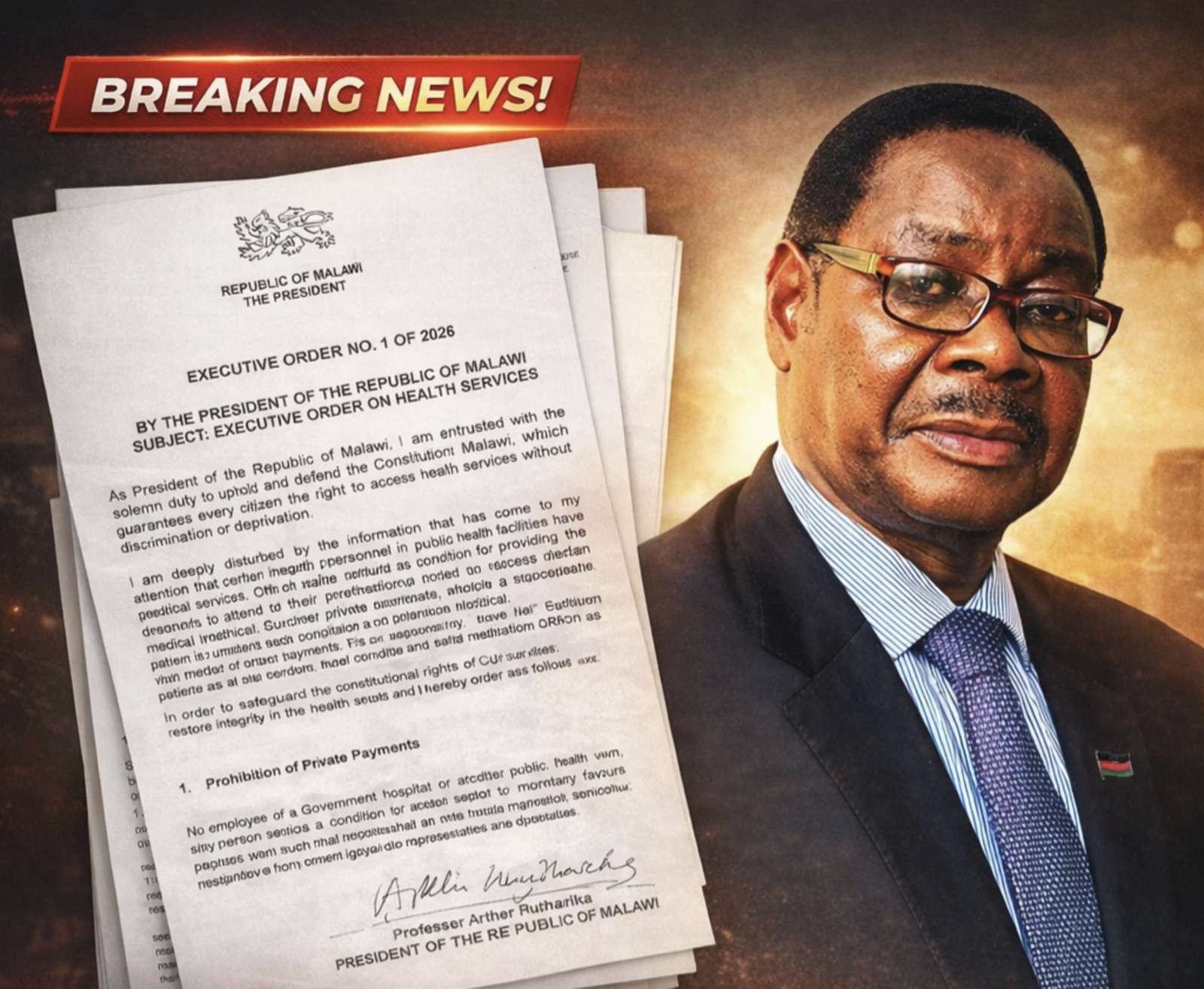
LILONGWE-(MaraviPost)-The Forum for National Development (FND) has strongly welcomed and fully supported the Executive Order issued on 16 February 2026 by President Arthur Peter Mutharika, describing it as a bold step toward restoring integrity, discipline and accountability in Malawi’s public health sector.
The statement has been signed by Fryson Chodzi, National Coordinator of the Forum for National Development (FND), who emphasized the organisation’s full backing of the reform measures.
In its statement, FND says the Executive Order is a necessary intervention aimed at correcting long standing structural weaknesses that have negatively affected service delivery in public hospitals and clinics across the country.
According to FND, the decision to prohibit public health employees from owning or operating private health facilities and requiring them to divest within 30 days is a decisive move to eliminate conflicts of interest that have undermined public confidence and compromised patient care.
For years, concerns have persisted that divided loyalties among some health workers contributed to drug shortages, absenteeism and the redirection of patients from public hospitals to privately owned clinics.
The organisation believes the new Order directly confronts this problem and reaffirms that public service must serve the public interest, not private profit.
Equally commendable, FND says, is the strict prohibition against public health personnel soliciting, demanding or receiving bribes from patients.
The practice of extorting money for services that are legally free has, according to the organisation, been one of the most painful injustices within the health system.
FND notes that poor Malawians particularly women, the elderly and those in rural communities have often been denied access to treatment simply because they could not afford unofficial payments.
The Executive Order, it says, sends a strong message that exploitation of vulnerable citizens will no longer be tolerated.
The organisation outlines several potential benefits of the reform, including the protection of the poor from unlawful financial demands and ensuring equal access to free public healthcare services.
It also says the Order will help restore ethical standards, reinforce zero tolerance for corruption in frontline service delivery and rebuild public trust in government hospitals.
Furthermore, FND believes the reforms will strengthen service delivery by ensuring full time commitment from public health workers while reducing corrupt practices that weaken efficiency and accountability.
The organisation adds that the measures will also help preserve public resources such as medicines, equipment and funds from misuse and diversion.
Describing the Executive Order as a demonstration of courageous leadership and deep commitment to social justice, FND says the move reflects a clear understanding that corruption in essential services disproportionately harms the poor and widens inequality.
FND has since urged health professionals, administrators and oversight institutions to embrace the reform in good faith, stressing that implementation must be firm, fair and transparent, supported by strong monitoring systems and improved working conditions.
In conclusion, the organisation maintains that the Executive Order is more than just a regulatory directive “it’s a powerful statement of values affirming that Malawi’s public health system must operate on integrity, fairness and service to the people”.