Linking the Malawian Diaspora to the Development of Malawi”
Malawi
Malawi (/məˈlɔːwi,məˈlɑːwi/; Chichewa pronunciation:[maláβi]; Tumbuka: Malaŵi), officially the Republic of Malawi and formerly known as Nyasaland, is a landlocked country in Southeastern Africa. It is bordered by Zambia to the west, Tanzania to the north and northeast, and Mozambique to the east, south and southwest. Malawi spans over 118,484 km2 (45,747 sq mi) and has an estimated population of 19,431,566 (as of January 2021). Malawi’s capital and largest city is Lilongwe. Its second-largest is Blantyre, its third-largest is Mzuzu and its fourth-largest is its former capital, Zomba.
p class=”MsoNormal”>The Justice Department releases a vast trove of documents relating to convicted sex offender Jeffrey Epstein. Also, Congress left Washington D.C. for its holiday break without reaching a deal on health care. Millions of Americans will face price hikes on their insurance premiums. And surviving the holiday season, we’ll have tips on what can be a stressful time of the year.
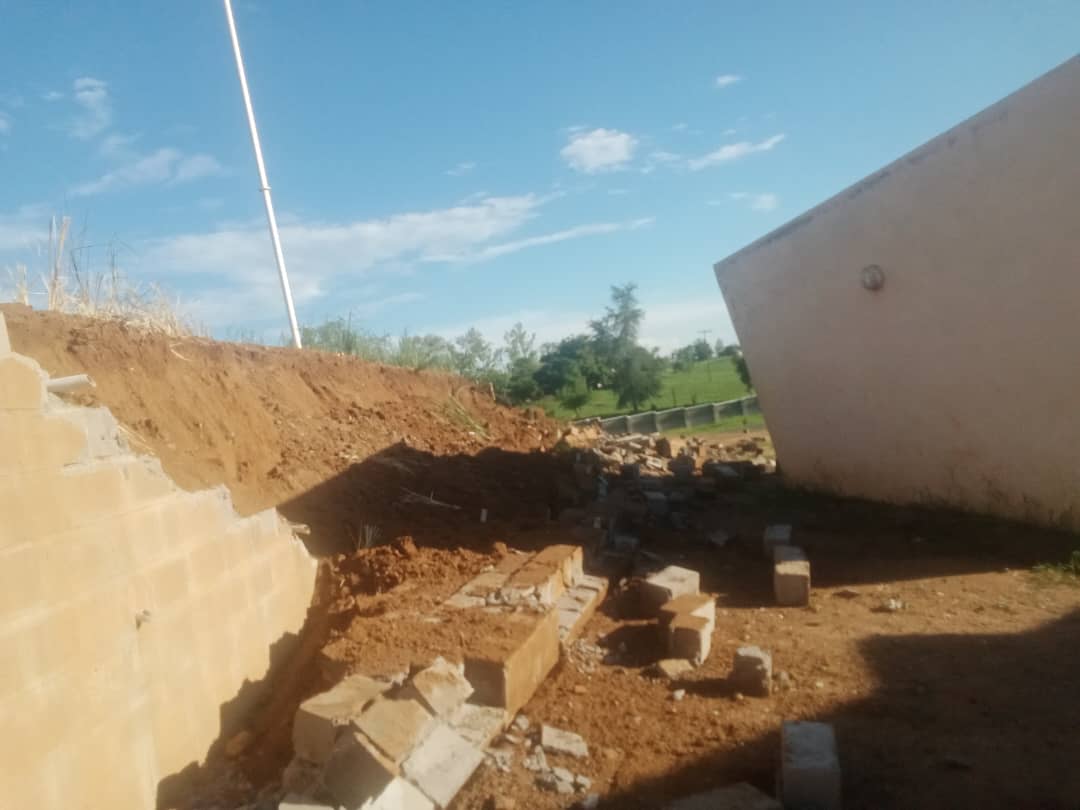
MWANZA-(MaraviPost)-Concerned residents from Mwanza District have called on government authorities to urgently reinforce and rebuild part of the perimeter fence at Joyce Chitsulo Stadium following the collapse of a section of the wall just months after the facility was opened.
The residents say the incident is alarming given that the stadium is a public facility expected to host large crowds during football matches and other major events, stressing that public safety should not be compromised.
Speaking to MaraviPost publication,community members expressed disappointment that the fence failed in less than four months, describing the development as a clear indication that the structure was not built to acceptable standards.
They warned that the damaged fence has left parts of the stadium exposed, increasing the risk of vandalism and posing danger to pedestrians, especially children who frequently pass near the area.
The affected residents have since urged authorities to ensure that the fence is reconstructed using durable materials and proper engineering methods, rather than making temporary fixes that could fail again.
They also appealed to the National Construction Industry Council (NCIC) to closely monitor public projects and ensure that contractors delivering shoddy work are held accountable. The communities argued that such negligence not only wastes public resources but also endangers lives, calling for stricter enforcement of construction standards.
Responding to the concerns, Bonongwe Construction contractor Maliseni Mtondera admitted that the collapsed section had structural weaknesses related to the initial construction design.
Mtondera explained that the soil behind the wall was heavy and unstable, exerting pressure that exceeded the strength of the wall, which he said was too small relative to the volume of earth supporting it.
He said the problem was largely technical and became evident after construction, adding that the company has since identified the weakness and prepared corrective measures.
Meanwhile, Mwanza District Director of Public Works Eric Nyekanyeka urged the public not to panic, saying such incidents can occur and do not necessarily mean that the entire stadium was poorly constructed.
On his part, Martin Kadaona, Chairperson of Civil Society Organisations in Mwanza, said the incident should serve as a lesson to the council to strengthen monitoring and inspection of development projects, ensuring that quality standards are strictly followed at all stages of construction.
The Joyce Chitsulo Stadium, located in Mwanza District, was officially opened in September 2025 and named in honour of the late Mwanza West legislator and Deputy Minister Joyce Chitsulo
Share this:
Like this:
LikeLoading…
Discover more from The Maravi Post
Subscribe to get the latest posts sent to your email.
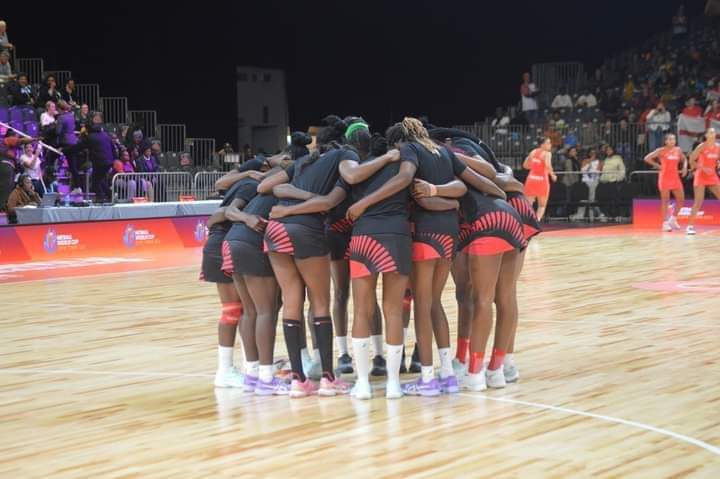
The Malawi Queens’ 2025 Africa Netball Cup campaign has left many fans searching for answers after the team finished in fourth position, a result that falls far below the nation’s proud netball standards.
Once a dominant force on the continent, Malawi now finds itself trailing behind familiar rivals such as Uganda, South Africa and Zimbabwe, whose performances remain consistently stronger.
One of the major factors believed to be contributing to the Queens’ decline is the lack of continuous technical development for coaches.
Malawi Queens
While Malawi boasts some of the most experienced netball coaches in the region, experience alone is no longer enough in modern netball.
The game has evolved and without regular refresher courses, international exposure and modern tactical training, even seasoned coaches risk falling behind.
Another critical issue lies within the Netball Association of Malawi (NAM) itself. There are growing concerns that internal divisions within the association are affecting planning, unity and progress.
An association that is not fully functional or united struggles to provide clear direction, strong leadership and long-term technical strategies for the national team.
Ironically, these struggles are happening at a time when Malawi now has a National Netball League, something that did not exist in the past.
Historically, the Queens were at their strongest even without a formal league structure.
This raises serious questions about whether the league is being effectively utilised to develop talent, identify players and prepare athletes for international competition.
On the continental stage, the gap between Malawi and its rivals appears to be widening.
Uganda, South Africa and Zimbabwe continue to invest heavily in structured player development, sports science and high performance systems.
Their steady growth contrasts sharply with Malawi’s declining competitiveness, as seen in the Queens’ low performance levels during the 2025 tournament.
The fourth place finish was not just about losing matches, it reflected deeper systemic problems.
Poor execution, lack of tactical sharpness and inconsistent performances pointed to preparation issues that go beyond what happens on the court. These are signs of structural weaknesses rather than isolated mistakes.
For many netball followers, the current situation is frustrating because the talent is still there.
Malawi continues to produce gifted players but talent without proper systems, unity and technical support cannot deliver consistent success at the highest level.
This weekend mirror serves as a reminder that success in modern sport demands more than passion and history.
It requires strong governance, continuous learning, unity within associations and strategic investment in both coaches and players.
If NAM fails to address its internal divisions and prioritise technical growth, Malawi risks slipping further down the African netball ladder.
The Queens’ past glory should be a foundation to rebuild from not a comfort zone to hide in.
As the dust settles on the 2025 Africa Netball Cup, the message is clear,reflection must lead to action.
Without urgent reforms and renewed focus, the Malawi Queens may continue to struggle while their rivals surge ahead.
The weekend calls for honest conversations, bold decisions and a shared vision because the Queens’ crown will not return by hope alone, but through deliberate change.
Share this:
Like this:
LikeLoading…
Discover more from The Maravi Post
Subscribe to get the latest posts sent to your email.
…..Projects at various stages of being completion we are hardly unveiled to the public not because they were ready for use but because the political moment demanded visibility…..
According to local media, the period leading up to national elections in Malawi has increasingly blurred the line between genuine development work and political performance.
Public infrastructure, instead of following disciplined technical schedules, has often been pulled into the orbit of campaign strategy.
Projects at various stages of incompletion have been hurriedly unveiled to the public, not because they were ready for use, but because the political moment demanded visibility.
In many instances, several projects were “officially opened” within a single day, creating an impression of extraordinary productivity.
What mattered most in these moments was not whether a road was durable, a school functional, or a health centre fully equipped.
What mattered was the image of action.
Commissioning ceremonies became tools of persuasion, designed to signal delivery rather than demonstrate lasting value.
The assumption underpinning this approach was that voters respond more readily to what they can see than to what they can sustainably use.
Yet beneath the spectacle lies a series of consequences that only surface long after election posters have come down.
Projects launched before completion are often victims of rushed execution.
Design elements are simplified, timelines compressed, and quality assurance postponed or ignored altogether.
Contractors operating under political pressure may prioritize speed over standards, knowing that the most critical inspection is not technical, but ceremonial.
Engineers and oversight institutions, constrained by directives from above, may find themselves endorsing stages of work that would normally require further testing.
On commissioning day, the structures may look complete.
Within months, cracks appear, systems malfunction, and users begin to experience the real cost of premature celebration.
Maintenance budgets are strained earlier than planned.
The useful life of infrastructure assets is reduced without ever being openly acknowledged.
In extreme cases, rehabilitation becomes unavoidable, effectively turning one project into two expenditures.
This culture also reshapes how public money is allocated.
Resources are diverted from essential but invisible components such as drainage systems, safety installations, and long-term maintenance frameworks.
Instead, funds flow toward elements that make a project look complete enough for a public launch.
Projects that cannot be easily showcased are postponed or quietly deprioritized.
Development planning loses its coherence, becoming responsive to political timelines rather than technical logic or national need.
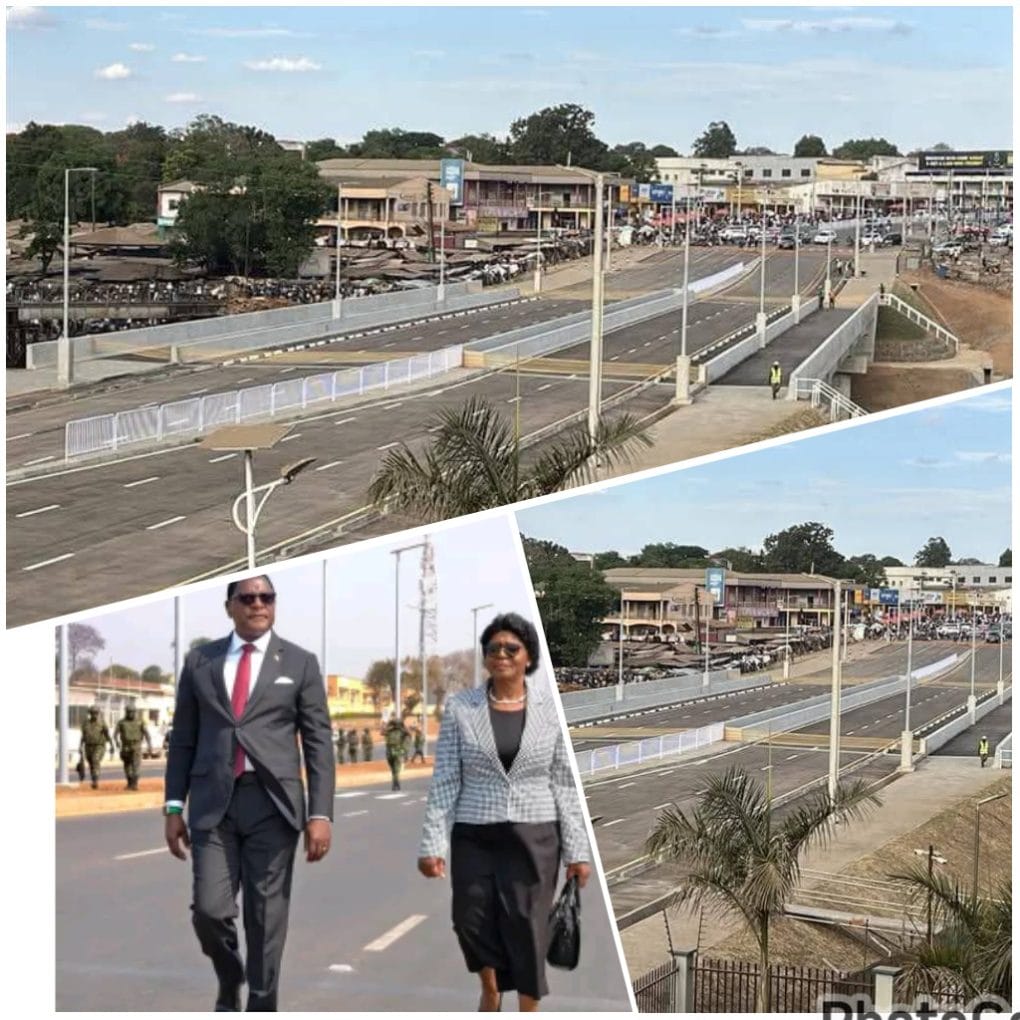
Within this environment, the five-lane K57 billion Lilongwe bridge presents a striking contrast.
Unlike many smaller projects, it resisted being pulled into the rhythm of campaign-driven commissioning.
Its sheer size and engineering complexity made symbolic completion impractical.
A bridge of that scale cannot be half-finished without creating obvious and dangerous risks.
Structural integrity, load-bearing capacity, and system integration are not features that can be convincingly staged.
In this case, engineering realities set firm limits on political manoeuvring.
The project also attracted intense scrutiny from professionals, the media, and the wider public.
Any attempt to rush or misrepresent its readiness would have been immediately exposed.
The political consequences of failure would have been severe, both in terms of safety and credibility.
As a result, the space for theatrics was significantly reduced.
This contrast exposes a deeper truth about governance and infrastructure delivery.
Where institutions are fragile and projects are modest or scattered, political influence can easily override technical judgment.
Where projects are large, complex, and highly visible, professional standards and public attention can act as a substitute for formal accountability.
The broader habit of favouring appearance over substance carries long-term political risks.
While frequent project launches may initially impress, repeated encounters with incomplete or failing infrastructure erode public trust.
Citizens become sceptical of official announcements and cynical about government promises.
For civil servants and technical professionals, this environment is deeply discouraging.
Expertise is sidelined in favour of performance.
Long-term planning is sacrificed to short-term political gain.
From an economic perspective, the costs are substantial.
Rushed construction, frequent variations, and post-election repairs inflate overall expenditure.
Development partners and investors observe these patterns closely.
Political interference is factored into risk assessments, often translating into higher costs or reduced confidence.
The lesson from the Lilongwe bridge is therefore not simply about one project that avoided premature celebration.
It is a reminder that meaningful development requires protection from electoral pressures.
Until infrastructure delivery is insulated from campaign imperatives, quality will remain negotiable.
And until that separation is achieved, Malawians will continue to pay more for projects that deliver less.
In the end, progress is not measured by the number of ceremonies held before an election.
It is measured by whether infrastructure still serves its purpose long after the votes have been counted.
Share this:
Like this:
LikeLoading…
Discover more from The Maravi Post
Subscribe to get the latest posts sent to your email.
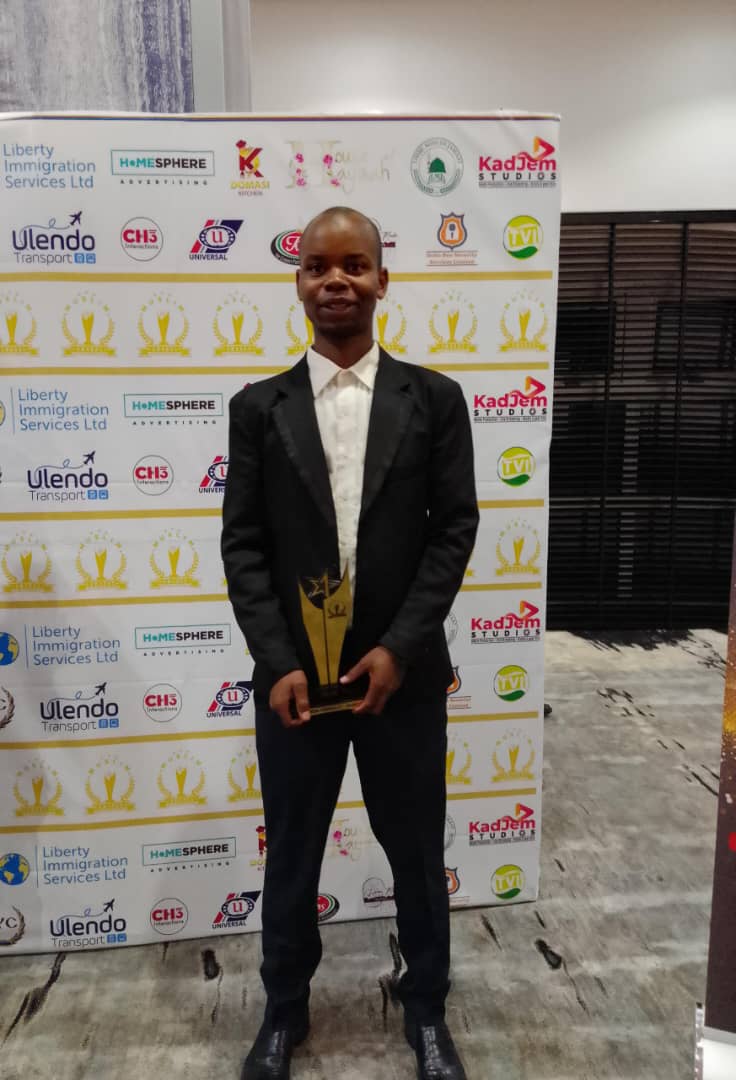
BLANTYRE-(MaraviPost)-The Muslim Awards 2025 on Friday night in Blantyre turned the spotlight on the growing influence of digital media, with Maravi Post journalist Shaffie Mtambo emerging as Best Media Personality Online.
The award underscores the power of responsible online journalism in shaping public discourse.
Held in a colourful atmosphere that drew together religious leaders, politicians, media practitioners and community members from across Malawi, the ceremony celebrated Muslims who are making notable contributions in various fields, ranging from arts and education to sports and media.
In his remarks after receiving the accolade, Mtambo said the honour was less about personal glory and more about recognition of collective effort within the media industry.
He dedicated the award to his colleagues at Maravi Post and to the communities whose stories continue to shape his journalism.
Mtambo noted that the award has motivated him to work even harder, explaining that the support he received during the voting process reflected public trust in the publication’s commitment to quality storytelling.
He thanked readers and supporters for believing in his work and the Maravi Post platform.
The Muslim Awards, established in 2022, have become an annual platform for celebrating excellence among Muslims in Malawi.
Over the years, the event has expanded to include categories such as poetry, nasheeds, drama, education, media and community development, reflecting the diversity of talent within the Muslim community.
In other categories, Ishmael Dinala claimed the Best Poem award, while Prince Mtelera received a Special Recognition Award for his contribution to the community.
Lilongwe Islamic Secondary School was named Best Islamic Education Institution, and Gift of the Givers won Best Islamic Organisation.
Sports excellence was also recognised, with Muhammad Sulumba taking home the Best Sports Personality award. In the digital creative space, Ibrahim Mtengula was crowned Best Content Creator.
Traditional media categories equally featured prominently, as Tagamchira Meeklem Chiperesa won Best Media Personality, TV, Alick Abdul Majid claimed the radio category, and Aubrey Thom Vakhani emerged winner in the print media section.
Minister of Local Government, Ben Phiri, said he was impressed by the level of talent showcased among nominees and winners.
He described the awards as important networking platforms that bring together creatives from different parts of the country.
Phiri further noted that President Professor Arthur Peter Mutharika supports initiatives that recognise and reward creativity, stressing that meaningful development requires proper planning and appreciation of talent.
He called for stronger collaboration between government and society to help Malawian creatives reach higher standards.
Share this:
Like this:
LikeLoading…
Discover more from The Maravi Post
Subscribe to get the latest posts sent to your email.
The Kennedy Center in Washington, D.C. is one step closer to being called the Trump-Kennedy Center.
On December 18, 2025, the White House confirmed the board of the Kennedy Center voted to rename the building that is in honor of President John F. Kennedy.
“I have just been informed that the highly respected Board of the Kennedy Center, some of the most successful people from all parts of the world, have just voted unanimously to rename the Kennedy Center to the Trump-Kennedy Center, because of the unbelievable work President Trump has done over the last year in saving the building,” White House press secretary Karoline Leavitt wrote via X at the time. “Not only from the standpoint of its reconstruction, but also financially, and its reputation. Congratulations to President Donald J. Trump, and likewise, congratulations to President Kennedy, because this will be a truly great team long into the future! The building will no doubt attain new levels of success and grandeur.”
Soon after the news broke, several Kennedy family members spoke out against the board’s decision.
Maria Shriver questioned why Trump has been so interested in having his name be part of the cultural center.
“Next thing perhaps he will want to rename JFK Airport, rename the Lincoln Memorial, the Trump Lincoln Memorial. The Trump Jefferson Memorial. The Trump Smithsonian. The list goes on,” she wrote via Instagram. “Can we not see what is happening here? C’mon, my fellow Americans! Wake up! This is not dignified. This is not funny. This is way beneath the stature of the job. It’s downright weird. It’s obsessive in a weird way. Just when you think someone can’t stoop any lower, down they go…”
According to NBC News, Trump told reporters at the White House that he was “surprised” and “honored” by the board’s vote.
Keep reading to see how other Kennedy family members reacted to the news:
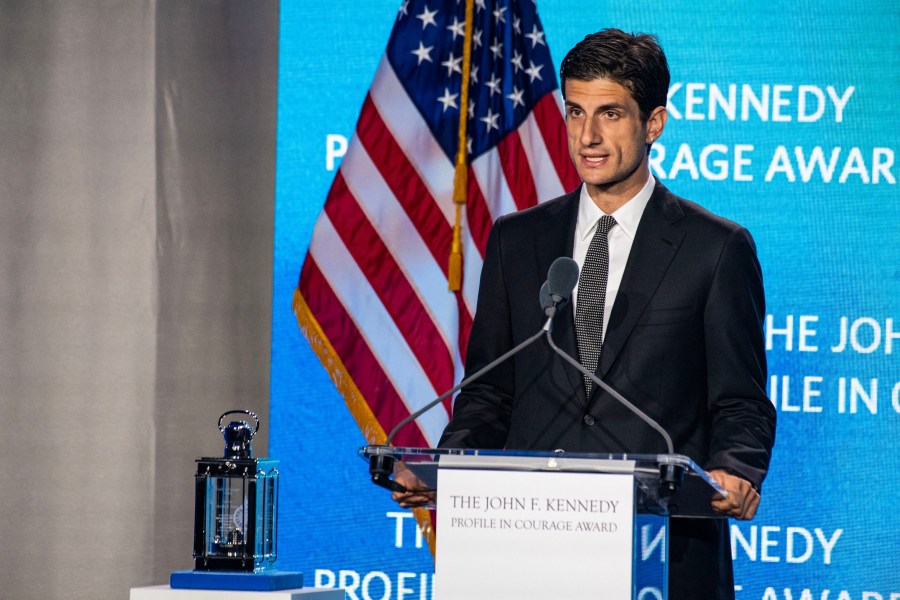
Jack Schlossberg
Jack SchlossbergJoseph Prezioso / AFP
JFK’s only grandson vowed to fight back against the Kennedy Center’s new name.
“SEND ME TO CONGRESS TO SMOKE THESE FOOLS — MAKE YOUR VOICE HEARD LOUD AND CLEAR,” Schlossberg, who is running for New York’s 12th Congressional District, said via Instagram on December 18, 2025. “I won’t back down or be drowned out.”
Joe Kennedy III
After seeing Leavitt’s announcement about the Kennedy Center, JFK’s nephew decided to speak out on social media.
“The Kennedy Center is a living memorial to a fallen president and named for President Kennedy by federal law,” he wrote via X on December 18, 2025. “It can no sooner be renamed than can someone rename the Lincoln Memorial, no matter what anyone says.”
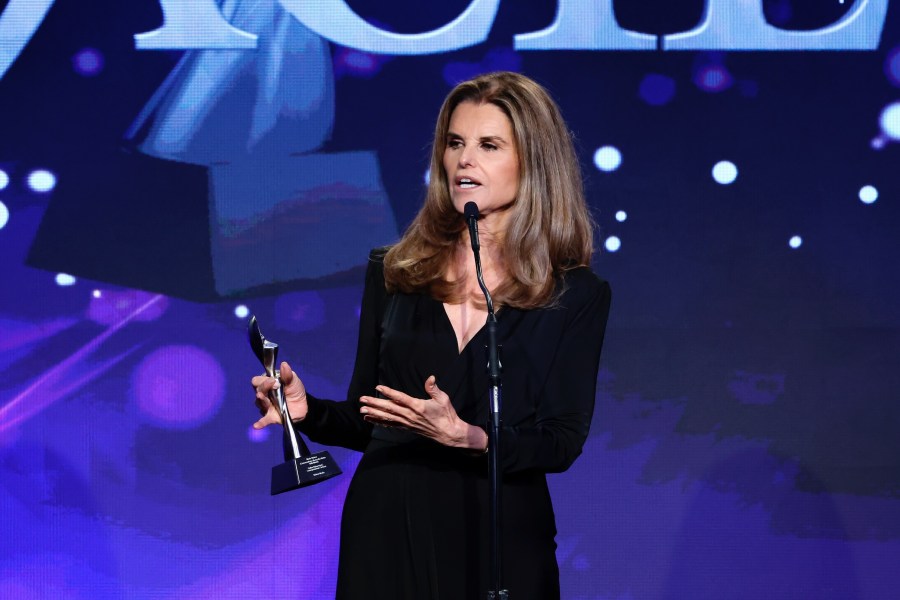
Maria Shriver
Maria ShriverEmma McIntyre/Getty Images for Alliance for Women in Media Foundation
The journalist and niece of JFK expressed her disappointment at the Kennedy Center being renamed to the Trump-Kennedy Center.
“The Kennedy Center was named after my uncle, President John F Kennedy. It was named in his honor. He was a man who was interested in the arts, interested in culture, interested in education, language, history,” she wrote via Instagram on December 18, 2025. “He brought the arts into the White House, and he and my Aunt Jackie [Kennedy Onassis] amplified the arts, celebrated the arts, stood up for the arts and artists.”
Shriver continued, “It is beyond comprehension that this sitting president has sought to rename this great memorial dedicated to President Kennedy. It is beyond wild that he would think adding his name in front of President Kennedy’s name is acceptable. It is not.”
After workers installed Trump’s name to the Kennedy Center building, Shriver spoke out again.
“This will always be the John F. Kennedy Center for the Performing Arts,” she wrote via Instagram later that month. “A great man would have said to his hand picked board, ‘Thank you, but the building already has its name. Let it stand. Let it be. I don’t need that.’ But then again…”
Kerry Kennedy
“President Trump and his administration have spent the past year repressing free expression, targeting artists, journalists, and comedians and erasing the history of Americans whose contributions made our nation better and more just,” JFK’s niece Kerry wrote via X on December 18, 2025. “President Kennedy proudly stood for justice, peace, equality, dignity, diversity, and compassion for those who suffer. President Trump stands in opposition to these values, and his name should not be placed alongside President Kennedy’s.”
One day later, Kerry reacted to Trump’s name being installed on the building.
“Three years and one month from today, I’m going to grab a pickax and pull those letters off that building, but I’m going to need help holding the ladder,” she wrote via X. “Are you in? Applying for my carpenter’s card today, so it’ll be a union job!!!”
“Perhaps the board isn’t aware that the Kennedy Center is 𝗧𝗛𝗘 memorial to the president of the United States, John F. Kennedy. Would they rename the Lincoln memorial? The Jefferson? That would be an insult to great presidents. This too is an insult to a great president,” JFK’s nephew Tim wrote via X in December 2025. “ Notwithstanding their short-sighted action, it is and will remain the John F. Kennedy Center for the Performing Arts.”
Share this:
Like this:
LikeLoading…
Discover more from The Maravi Post
Subscribe to get the latest posts sent to your email.