Linking the Malawian Diaspora to the Development of Malawi”
Malawi
Malawi (/məˈlɔːwi,məˈlɑːwi/; Chichewa pronunciation:[maláβi]; Tumbuka: Malaŵi), officially the Republic of Malawi and formerly known as Nyasaland, is a landlocked country in Southeastern Africa. It is bordered by Zambia to the west, Tanzania to the north and northeast, and Mozambique to the east, south and southwest. Malawi spans over 118,484 km2 (45,747 sq mi) and has an estimated population of 19,431,566 (as of January 2021). Malawi’s capital and largest city is Lilongwe. Its second-largest is Blantyre, its third-largest is Mzuzu and its fourth-largest is its former capital, Zomba.
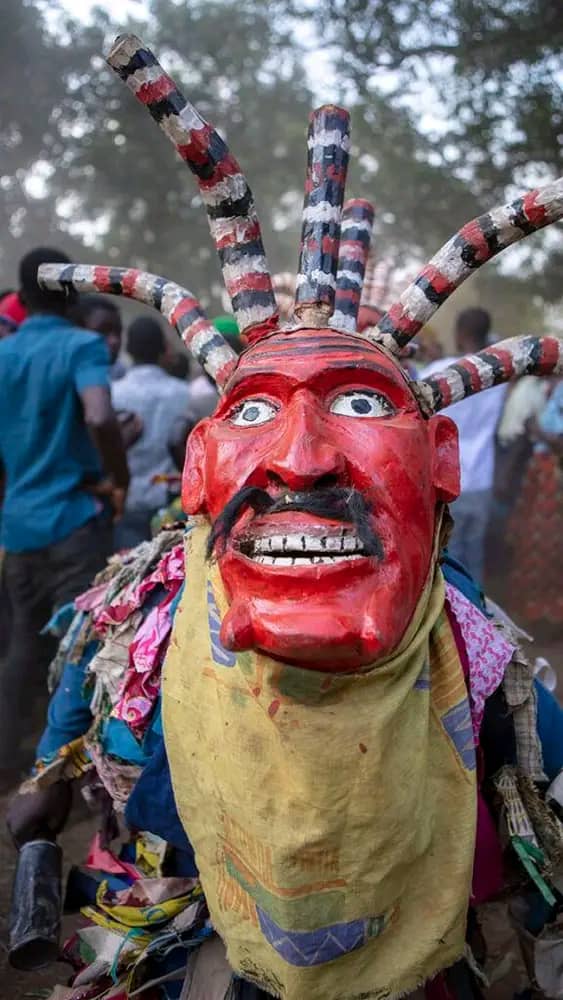
KASUNGU-(MaraviPost)-A group of Gule Wamkulu masqueraders stormed Chulu Primary School in Kasungu, causing panic among learners and teachers.
The masked performers, regarded as sacred figures in Chewa culture, reportedly arrived atu the school searching for a teacher they accuse of revealing spiritual secrets to pupils.
According to information from the school, the targeted teacher allegedly told learners during class that Gule Wamkulu characters are ordinary people.
He is also said to have claimed that the dancers go to the graveyard to dress in their traditional regalia as a way of frightening communities.
These remarks have angered local chiefs and community leaders, who believe the teacher’s statements undermine the cultural values of the Chewa people.
Traditional authorities argue that such teachings risk eroding the children’s respect for Gule Wamkulu and weakening their connection to their heritage.
They maintain that cultural institutions should be upheld and protected, especially within Chewa communities where Gule Wamkulu plays an important spiritual and social role.
Some community leaders have demanded that the teacher be removed from the school as a consequence of his alleged comments.
They have warned that failure to take action may force them to “handle the matter themselves,” a threat that has increased tension around the school.
Teachers and learners at Chulu Primary School remain frightened after the incident, with some describing the unexpected appearance of the dancers as traumatising.
Education officials in the district are expected to intervene to restore calm and ensure that learning continues without further disruption.
The situation has highlighted the delicate balance between cultural preservation, education, and modern teaching practices in Malawi’s rural schools.
Community leaders insist that cultural respect must be maintained, while education authorities caution that schools should remain safe spaces for learners and teachers.
The incident has sparked a wider debate on how cultural traditions should be handled within the education system.
For now, parents and teachers are hoping for a peaceful resolution that protects both cultural values and the safety of everyone at Chulu Primary School.
Share this:
Like this:
LikeLoading…
Discover more from The Maravi Post
Subscribe to get the latest posts sent to your email.
In a dramatic escalation of international political tensions, a series of high-stakes statements from global leaders have sent shockwaves through diplomatic circles and the world’s media.
U.S. President Donald Trump has issued a striking ultimatum to Venezuelan President Nicolás Maduro, demanding that he flee the country immediately to “save yourself and those closest to you.”
This bold directive comes amid growing instability in Venezuela and reflects the persistent friction between the United States and the Maduro regime.
Trump’s order is not just a call for a change in leadership but a stark warning that the United States is prepared to exert significant pressure on Venezuela.
The message underscores the urgency and gravity with which Washington views the situation, signaling a no-nonsense approach that could potentially lead to drastic consequences if ignored.
The implication is clear: the window for Maduro’s peaceful exit is closing rapidly, and the consequences of defiance could be severe.
This ultimatum has elicited an immediate response from China, which has cautioned the United States against any military intervention in Venezuela.
Beijing’s warning highlights the complex geopolitical stakes involved, emphasizing that Venezuela is a country where China holds substantial investments and strategic interests.
China’s position serves as a reminder that the Venezuelan crisis is not merely a regional issue but a flashpoint in the broader contest for influence between major world powers.
The Chinese government’s admonition reflects its broader foreign policy of opposing unilateral military actions that threaten sovereign nations, especially where Chinese economic and diplomatic interests are concerned.
By publicly challenging Washington’s potential intentions, China is signaling its readiness to defend its investments and maintain its foothold in Latin America, further complicating the already tense situation.
Meanwhile, in a separate but equally momentous development, Russian President Vladimir Putin issued a chilling message to Europe, stating that Russia is prepared to fight if Europe desires war.
This declaration intensifies fears of a renewed and dangerous confrontation on the European continent, where tensions between Russia and Western countries have been simmering for years.
Putin’s words carry a dual warning: a readiness to defend Russian interests at all costs and a stark challenge to Europe’s political will to escalate conflict.
Putin’s statement cannot be viewed in isolation. It comes at a time when Europe is navigating a complex security environment marked by energy disputes, military posturing, and diplomatic standoffs. The readiness to “fight if Europe wants war” is a stark reminder of the fragile peace and the high stakes involved in diplomatic interactions between Russia and European nations.
It raises concerns about the potential for miscalculations that could spiral into broader conflict.
Adding another layer to this geopolitical puzzle is Ukrainian President Volodymyr Zelensky’s candid admission of fear that the United States might lose interest in Ukraine’s ongoing conflict.
Zelensky’s statement reveals a deep anxiety about sustaining international support in a protracted and challenging war environment.
The U.S. has been a critical ally to Ukraine, providing military aid, financial support, and diplomatic backing. Any perceived waning of this support risks undermining Ukraine’s position and morale.
Zelensky’s concern reflects the broader uncertainty faced by countries caught in geopolitical struggles dependent on external support.
The possibility of diminished U.S. engagement could embolden opposing forces and shift the balance of power in the region, with far-reaching consequences for European and global security.
Taken together, these developments paint a picture of a world teetering on the edge of heightened conflict and instability.
The Trump administration’s ultimatum to Maduro, China’s warning against U.S. military action, Putin’s readiness to confront Europe militarily, and Zelensky’s fears of declining American interest all signal a period of intense rivalry and precarious diplomacy.
The connections between these statements are deeply intertwined.
The Venezuelan crisis, while geographically distant from Europe and Ukraine, is a critical arena where global powers are vying for influence.
The U.S. push against Maduro is not just about Venezuela’s internal politics but also involves challenging China’s expanding reach in Latin America.
China’s swift warning to Washington underscores the global nature of this contest, where economic and military interests overlap.
Simultaneously, Russia’s belligerent posture toward Europe reflects its broader strategic calculation to assert dominance and deter Western influence near its borders.
This posture has a ripple effect on the security dynamics surrounding Ukraine, where Moscow’s ambitions have already led to conflict.
Zelensky’s worries about U.S. commitment highlight the fragile alliances underpinning the current balance of power.
This convergence of geopolitical flashpoints underscores the complexity and interconnectedness of global politics today.
Each leader’s statement not only addresses a specific regional issue but also reverberates across continents, influencing diplomatic calculations and military strategies worldwide.
The urgency in Trump’s demand for Maduro to flee suggests an attempt to force a rapid resolution in Venezuela, potentially preempting further deterioration or foreign intervention.
However, China’s cautionary stance signals that any U.S. military action may provoke wider diplomatic and economic repercussions, including a hardening of Sino-American relations.
Putin’s readiness to engage militarily if provoked by Europe serves as a stark reminder that the specter of conflict remains alive in Europe, despite efforts at diplomacy and sanctions.
His message is a warning to European nations to carefully weigh their actions and avoid missteps that could escalate tensions beyond control.
Zelensky’s public expression of concern about U.S. interest highlights the fragility of international coalitions and the critical role that sustained support from powerful allies plays in conflict zones.
It also serves as a call for renewed engagement and reassurance from Washington to prevent any erosion of commitment.
In sum, these developments collectively represent a moment of heightened alert in international affairs.
The interplay between the United States, China, Russia, Europe, Venezuela, and Ukraine illustrates the multidimensional challenges facing global peace and security.
The world watches anxiously as these leaders navigate a precarious path, where decisions made in the coming days and weeks could shape the geopolitical landscape for years to come.
The urgency, warnings, and fears expressed by these key figures serve as both a reflection of current tensions and a cautionary tale about the dangers of escalating conflicts in a highly interconnected world.
The international community’s response to these developments will be crucial in determining whether diplomacy can prevail or if the world is headed toward a more volatile and uncertain future.
Share this:
Like this:
LikeLoading…
Discover more from The Maravi Post
Subscribe to get the latest posts sent to your email.
LILONGWE-(MaraviPost)-In a rare insightful and adorable of people centred legislator for Malawi Congress Party (MCP)’s Mchinji North East Anthony Masamba has called on lawmakers consider reducing their own salaries and fuel allowances to support President Peter Mutharika’s government austerity measures.
Despite Masamba’s good intention for the country amid ailing economy, many greedy Members of Parliament (MPs) stood against him in Parliament on Tuesday afternoon.
The well-trained media personnel Masamba raised the point while contributing to debate on an amendment bill seeking to revise the Value Added Tax (VAT) rate.
“Is it right for us to enjoy full salaries and fuel benefits while imposing punitive measures on poor Malawians?
“Why can’t we trim our benefits to save some money for our people?” He asked, prompting murmurs—mostly in disagreement—across the chamber.
First Deputy Speaker Victor Musowa responded Masamba by urging him to pursue the idea through a Private Member’s Bill.
“The chair has received your request. If you want to implement it, present it during Private Members Business and this House will support you,” Musowa appealed.
Meanwhile, Malawians across the country have lauded Masamba for showing a true colour of legislator who puts the nation first than personal interests.
“Titakhalanawo 20 ma MPs ngati akulu awawa, it’s my hope kuti Malawi athakukhala dziko lokoma kwambiri. Aliyense waona yekha kuti ma MPs aja tidawavotera aja amangotinamiza kuti amakonda ma constituencies athu, anthu aja amangowona zammimba mwawo.
“Ulemu wanu Honourable Anthony Masamba Mulungu azikudalitsani. Zangovuta kuti inuyo mulinokha ku parliament yemwe mumalakalaka kuona a Malawi akukhala moyo woyenera,” lauds Limbani Chisale from Ntcheu.
Share this:
Like this:
LikeLoading…
Discover more from The Maravi Post
Subscribe to get the latest posts sent to your email.
Stable Ronaldo from the FaZe Clan was doing what he does best Tuesday afternoon — streaming live on social media — but things went sideways after cops say he became the subject of a “swatting” call in L.A. LE sources tell TMZ … the FaZe Clan…
Share this:
Like this:
LikeLoading…
Discover more from The Maravi Post
Subscribe to get the latest posts sent to your email.
Malawian Pastor Esau Daison Kachinga jailed 10 years for sleeping
CHIPATA-(MaraviPost)-Malawian Pastor Esau Daison Kachinga, pastor of Life Changers Church, has been sentenced to ten years in prison for sexually assaulting three women who went to his home to pray.
According to court ruling on the matter, one victim said she visited Kachinga on September 17, 2025, to pray for her husband, who is imprisoned in Chipata, Zambia.
She was told to bring an unopened bottle of water but was taken to a room and raped under the guise of a prayer session.
Pastor Kachinga however denied all charges during the trial, but three witnesses testified against him, leading to his conviction.
Justice Godfrey Nyirenda condemned the Victim Support Unit at Mchinji Police Station for attempting to bribe the victim with MK150,000, which she refused and reported.
Nyirenda ruled that Kachinga’s actions violated sections 132 and 133 of the Criminal Procedure Code and deserved strict punishment.
The sentence was meant to warn other men and protect women from similar abuse.
Meanwhile, Mchinji Social Welfare Office officials have welcomed the verdict.
Share this:
Like this:
LikeLoading…
Discover more from The Maravi Post
Subscribe to get the latest posts sent to your email.
LILONGWE-(MaraviPost)-Airtel Malawi plc through the Airtel Africa Foundation on Tuesday, December 2, 2025 donated MK300 million humanitarian contribution to support households affected by prolonged drought, crop failure, and severe food shortages.
The funds intend to reach out to thousands of Malawian families struggling through one of the toughest hunger seasons in recent years, announcing a
The company is responding to the declaration of state of disaster by President Professor Arthur Peter Mutharika in all the 28 districts of Malawi.
This donation reflects Airtel Malawi’s belief that during moments of national hardship, standing together is the greatest strength a country can have.
The support underscores the company’s enduring commitment to the wellbeing of Malawians and its promise to show up where the need is greatest.
Speaking during the handover ceremony, Airtel Malawi plc Managing Director, Aashish Dutt observes, “The hunger crisis is affecting the lives of so many families and children across our country. As Airtel Malawi, we feel this pain deeply. We are not just a network; we are part of every community we serve. When our nation hurts, we hurt. And when our nation needs us, we step forward.
“Through this partnership with DODMA and the Malawi Red Cross Society, we are hopeful that more families will find relief, and more children will have the nourishment they need to stay in school and thrive.”
Commenting on the donation, Minister of Finance, Economic Planning and Decentralization, Joseph Mwanamvekha expressed appreciation over the timely support.
“We welcome this generous donation from Airtel Malawi at a time when many families are struggling. This assistance will directly support vulnerable communities and ensure children are not going to school on empty stomachs.
“As government, we remain committed to working with the private sector to ensure urgent relief reaches all the Malawians who need it most,” lauds Mwanamvekha.
The Malawi Red Cross Society welcomed the contribution, describing it as a timely show of solidarity and compassion.
“Airtel Malawi’s support has come at a moment when many families are unsure of where their next meal will come from. This contribution will bring relief and hope to 2000 households and 10 primary schools in the hardest-hit districts of Blantyre rural and Chikwawa.
“We are grateful for this partnership, which strengthens our humanitarian response and touches lives where it matters most,” said Chifundo Kalulu, Secretary General- CEO of Malawi Red Cross Society.
Airtel Malawi appreciates the Ministries of Information and Communications Technology; Finance, Economic Planning and Decentralization; as well as the Department of Disaster Management Affairs (DODMA) for providing clear direction on how the private sector can complement Government efforts in this regard.
This lifeline will be delivered in partnership with the Department of Disaster Management Affairs (DoDMA) and Malawi Red Cross Society (MRCS) and will provide emergency food assistance to vulnerable families.
.
Share this:
Like this:
LikeLoading…
Discover more from The Maravi Post
Subscribe to get the latest posts sent to your email.