Linking the Malawian Diaspora to the Development of Malawi”
Malawi
Malawi (/məˈlɔːwi,məˈlɑːwi/; Chichewa pronunciation:[maláβi]; Tumbuka: Malaŵi), officially the Republic of Malawi and formerly known as Nyasaland, is a landlocked country in Southeastern Africa. It is bordered by Zambia to the west, Tanzania to the north and northeast, and Mozambique to the east, south and southwest. Malawi spans over 118,484 km2 (45,747 sq mi) and has an estimated population of 19,431,566 (as of January 2021). Malawi’s capital and largest city is Lilongwe. Its second-largest is Blantyre, its third-largest is Mzuzu and its fourth-largest is its former capital, Zomba.
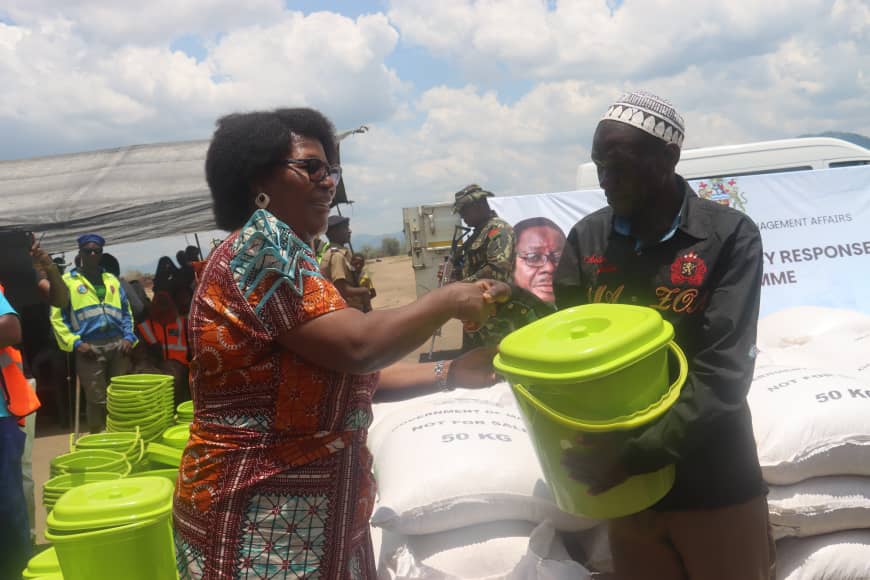
BLANTYRE-(MaraviPost)-On Monday, December 1, 2025, Malawi’s Vice President shared insights from her recent mission to Mangochi and Thyolo, where she travelled to assess the impact of the destructive storm rains on affected families.
Reflecting on the visit, the country’s deputy leader expressed gratitude to God for protecting the nation, noting that despite the severity of the storm, no lives were lost.
Her tour enabled her to witness the extent of the damage firsthand and engage in meaningful discussions with residents whose homes and livelihoods had suffered.
These interactions reinforced the administration’s resolve to prioritise support for every household struck by the disaster.
The Vice President also commended President Professor Arthur Peter Mutharika for his unwavering leadership in disaster management and for ensuring swift emergency responses across the country.
Current assessments show that more than 2,421 households nationwide have been affected by various storm-related incidents since the rainy season began.
She noted that the increase in weather-related emergencies highlights the growing unpredictability of the climate and urged citizens to remain vigilant.
The Vice President reaffirmed the government’s commitment to supporting communities facing hunger and hardship during this challenging period.
Part of the relief effort includes the continued distribution of maize to vulnerable families, a programme that will run until the next harvest.
She concluded her remarks with a heartfelt prayer, asking God to continue safeguarding the people of Malawi as they rebuild and recover.
Share this:
Like this:
LikeLoading…
Discover more from The Maravi Post
Subscribe to get the latest posts sent to your email.
YAOUNDE-(MaraviPost)-Cameroon’s preparation for the upcoming Africa Cup of Nations has taken a significant turn following the release of the national team’s official squad.
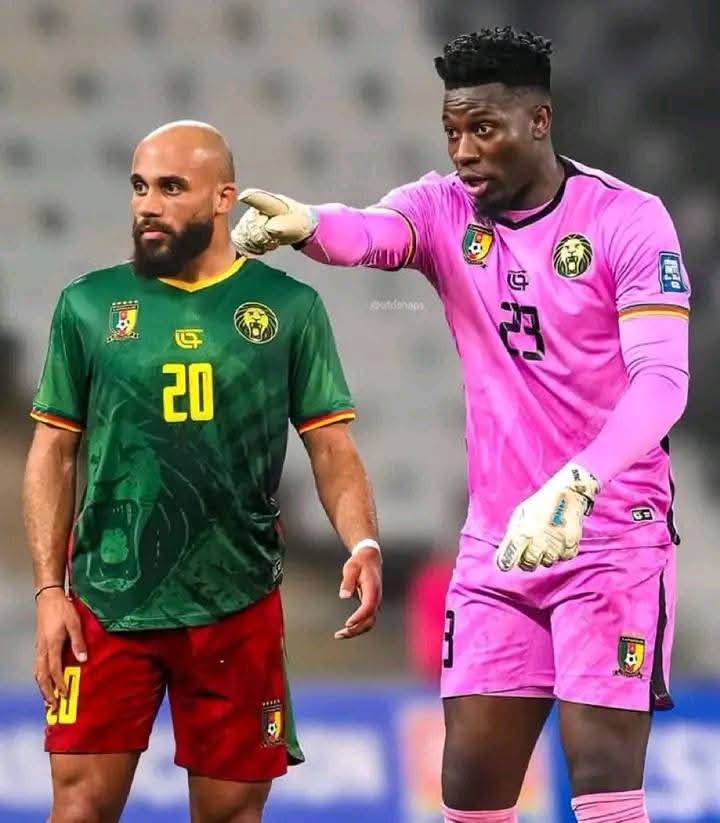
The announcement features the inclusion of Manchester United forward Bryan Mbeumo, while experienced goalkeeper André Onana, currently playing in Saudi Arabia, has been omitted entirely.
Mbeumo’s selection comes as no surprise to analysts who have followed his impressive form since joining Manchester United.
His pace, technical ability and increasing influence at club level have made him a key figure and the national team’s technical panel views him as an essential asset in Cameroon’s attacking setup for the continental tournament.
The forward is expected to bring dynamism to the frontline with his versatility allowing him to operate comfortably both centrally and on the wings.
His presence adds creativity and a goal threat that Cameroon will rely on as they aim for a strong showing at AFCON.
On the other hand, the exclusion of Onana has raised considerable debate.
Despite being widely regarded as one of Africa’s top goalkeepers, he has been dropped from the squad, a decision that has caught many by surprise.
Onana, currently playing in Saudi Arabia, has long been a central figure for the Indomitable Lions, featuring prominently in past international campaigns.
Cameroon’s technical team has not publicly explained the reasons behind Onana’s omission, leading to speculation among supporters and analysts.
Some suggest it may be linked to recent availability concerns or the desire to introduce fresh options in the goalkeeping department ahead of the tournament.
The decision places added responsibility on the goalkeepers selected to replace Onana, who will be expected to perform at the highest level under immense pressure.
It also signals the coaching staff’s intent to adopt a new direction, whether tactically or in terms of team culture.
Reactions from fans have been mixed.
A portion of supporters applauded the inclusion of in-form players like Mbeumo, while others expressed concern over the absence of a goalkeeper with Onana’s experience and international pedigree.
Share this:
Like this:
LikeLoading…
Discover more from The Maravi Post
Subscribe to get the latest posts sent to your email.
LILONGWE-(MaraviPost)-The country’s leading premier network provider TNM has reached out two million Mpamba Tikankhe customers with MK50 billion funds disbursement.
This has been possible within two years of the loan facility following its inception.
TNM has therefore fully partnered with Credit Data Bureau for loan defaulters tracing.
Addressing the joint press conference on Monday, December 1, 2025 in the capital Lilongwe, TNM Mpamba General Manager Christopher Sukasuka, said the the loan facility has over 1.5 million regular customers with payment and collection rates at 95 percent.
Sukasuka added Mpamba Tikankhe mostly targets rural audience while helping them access timely loans for farm inputs, utilities services accessibility and other daily needs.
He therefore disclosed that ‘Mpamba Ndikankhe’ regular users can now borrow up to MK500,000 instantly via mobile services.
Echoing the same, Credit Data Bureau Managing Director, Patricia Mwase, said the bureau has partnered with TNM to simplify the loan access process .
Mwase added that her company has also come monitor and ensure repayment of loans through the ‘Ndikankhe’ program.
She therefore lauded company’s zeal to reduce loan defaulters across all financial institutions.
Share this:
Like this:
LikeLoading…
Discover more from The Maravi Post
Subscribe to get the latest posts sent to your email.
If driverless cars are the future, we might see way more of this … a Waymo took a left turn smack dab into the middle of a police standoff … and it’s all on video. Viral video spreading on social media shows one of the driverless ride service…
Share this:
Like this:
LikeLoading…
Discover more from The Maravi Post
Subscribe to get the latest posts sent to your email.
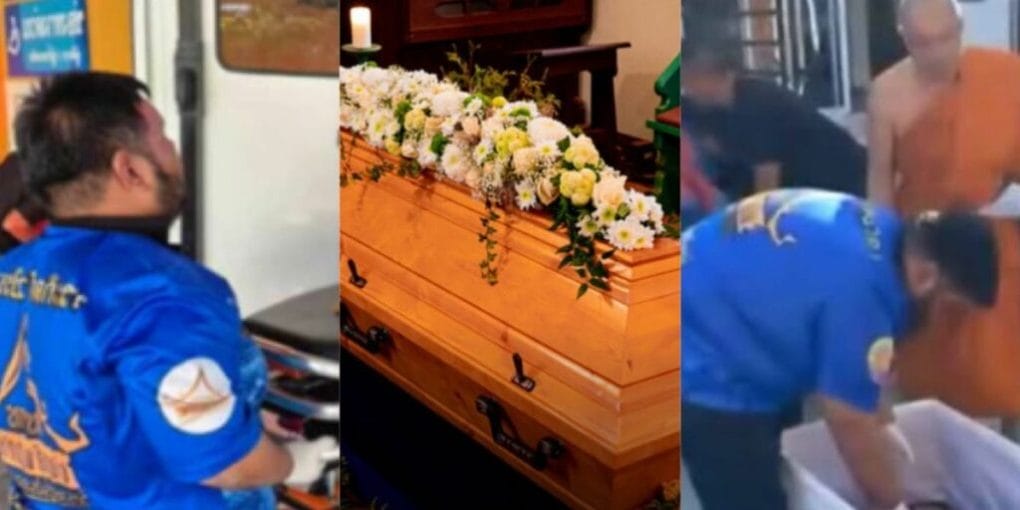
BANGKOK-(MaraviPost)-A 65-year-old woman in Nonthaburi, on the outskirts of Bangkok in Thailand has shocked her family when she knocked from inside her coffin after being declared dead.
Chonthirat Sakulkoo, who had been unwell for two years, was cared for by her brother, Mongkol Sakulkoo. When she was found unresponsive, Mongkol assumed she had passed away and began preparations for her cremation.
“All the documents had been issued, and we placed her in a coffin,” Mongkol explained.
However, before the cremation, Mongkol took Chonthirat to Chulalongkorn University Hospital to fulfill her wish to donate organs, but the hospital refused to accept her without an official death certificate.
At the Wat Rat Prakongtham crematorium, staff also insisted on a doctor’s certification before proceeding. It was during this discussion that Chonthirat suddenly knocked from inside the coffin.
Mongkol, surprised, asked to have the coffin opened, where family members were stunned to see her eyes slightly open and knocking.
Watch the video…
Doctors later diagnosed Chonthirat with acute hypoglycaemia, a condition that causes dangerously low blood sugar and can mimic death-like symptoms.
She is now receiving proper medical care at Bang Yai Hospital.
Share this:
Like this:
LikeLoading…
Discover more from The Maravi Post
Subscribe to get the latest posts sent to your email.
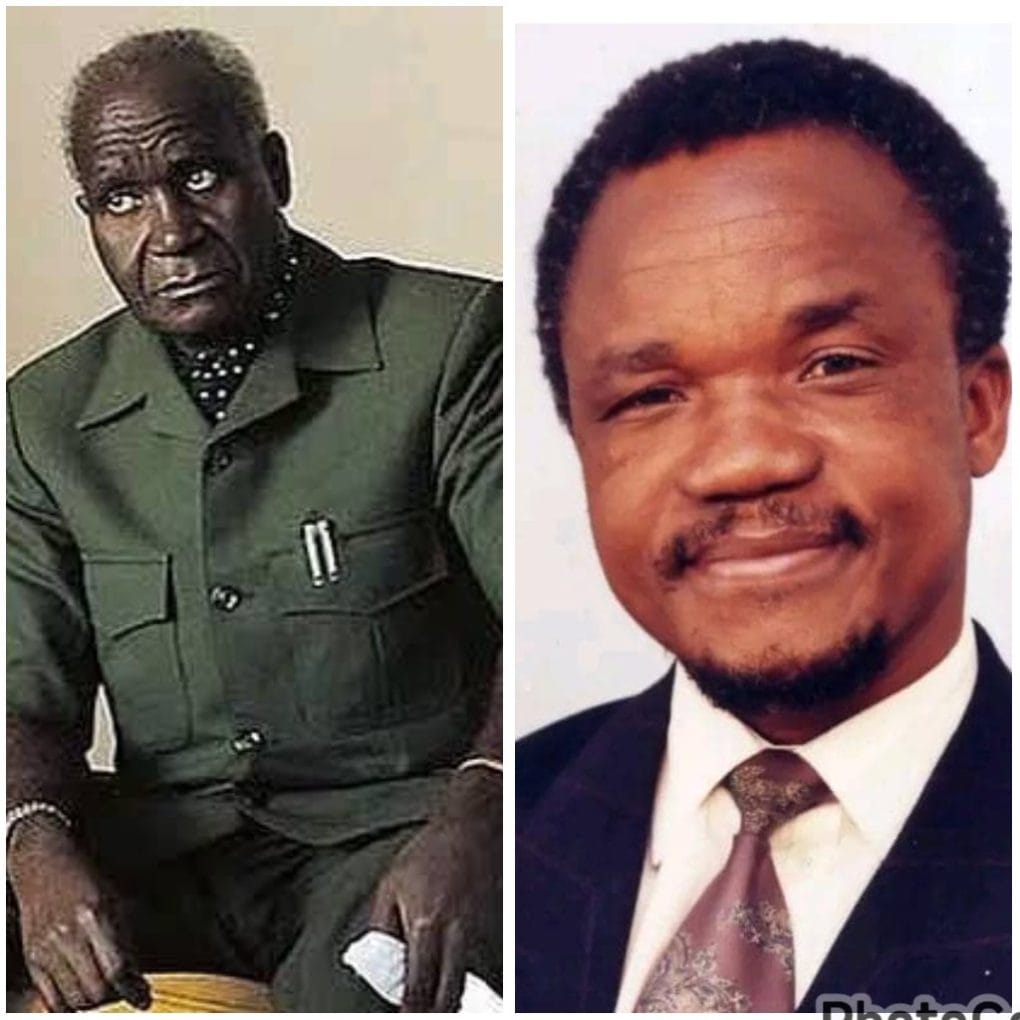
LUSAKA-(MaraviPost)-When Zambia transitioned from Kenneth Kaunda’s 27-year rule to Frederick Chiluba’s new multiparty era, the change appeared peaceful on the surface.
However, beneath the handshake diplomacy, one of Southern Africa’s most psychologically brutal political confrontations was unfolding.
On Christmas Day, 1997, Kaunda was arrested, a moment chosen for maximum symbolic impact.
Christmas, traditionally a day of presidential addresses and national unity, became the backdrop for Kaunda being bundled into a vehicle by armed officers.
The timing led many senior diplomats to conclude that the arrest was meant to break Kaunda psychologically, rather than simply pursue legal action.
The government accused Kaunda of involvement in a failed coup in October 1997, led by junior soldiers.
Yet Zambian intelligence insiders later admitted that there was no concrete evidence linking Kaunda to the mutiny.
Kaunda had been out of power for six years, had no military command, and was leading a peaceful political movement under UNIP.
Despite this, he became the central figure blamed for a coup he did not participate in.
At the time, Kaunda was experiencing an unexpected political resurgence, drawing large crowds to his rallies and maintaining widespread respect across rural districts.
Inside State House, Chiluba’s camp feared that Kaunda could potentially win the 1998 elections if allowed to run.
Kaunda’s moral authority still overshadowed other political figures and remained a unifying force across tribal lines, unlike the fragmented new elite.
For many observers, his arrest was interpreted as a pre-emptive political strike rather than a measure of national security.
During the same period, Kaunda was shot in the neck by government forces while leading a peaceful protest.
This injury left him physically vulnerable at the time of his detention.
For many Zambians, this act reinforced the perception that the state was willing to use lethal force against a national symbol.
Kaunda was subsequently held in Mukobeko Maximum Security Prison, a facility typically reserved for murderers, armed robbers, and political radicals.
This was not merely imprisonment but an attempt to erode his legacy by equating him with dangerous criminals.
Some prison officials later revealed they were instructed to treat Kaunda “as an ordinary dangerous suspect,” delivering a psychological blow aimed at undermining his stature.
The international community, including the Commonwealth, the United Nations, and African heads of state, intervened behind the scenes to pressure Chiluba to release Kaunda.
Even Nelson Mandela reportedly sent private messages condemning the treatment of the former president.
Diplomats feared that Zambia was descending into personal vendetta politics, with the potential to trigger ethnic tensions or civil unrest.
Chiluba’s own cabinet was divided on the matter, with some ministers warning that humiliating Kaunda could backfire politically.
Nevertheless, hardline security advisors convinced Chiluba that neutralising Kaunda was essential to consolidating power.
Ironically, the detention had the opposite effect of what Chiluba intended.
Kaunda emerged from prison more respected, seen as a statesman, and admired internationally as a martyr of democratic abuse.
The attempted political witch hunt, while meant to cripple Kaunda’s comeback, ultimately strengthened his legacy.
Historians agree that there was no direct evidence linking Kaunda to the coup, the arrest’s timing and style were deeply political, and Chiluba had strong incentives to remove a key rival.
Official statements cited national security, but the methods, symbolism, and sequence of events pointed clearly to a targeted political campaign.
The detention of Kaunda remains a powerful reminder of how political power struggles can shape the destiny of nations and the enduring respect commanded by principled leadership.
Share this:
Like this:
LikeLoading…
Discover more from The Maravi Post
Subscribe to get the latest posts sent to your email.