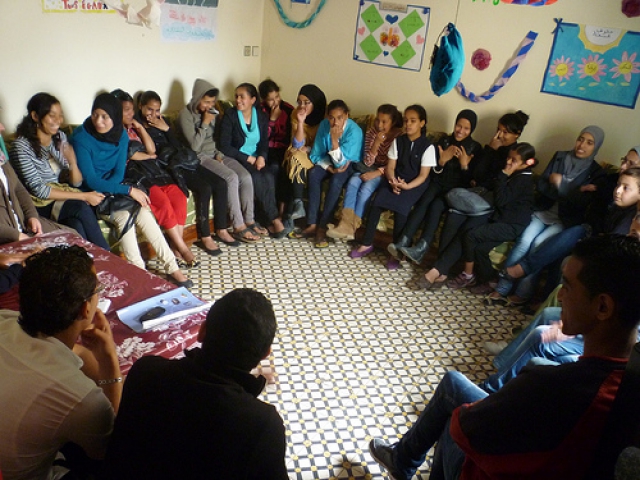
Work-study students, interns, and volunteers of the High Atlas Foundation have opportunities to analyze development as it is experienced in rural and urban communities, by farmers, women, youth, and people of all backgrounds. We also give the students and volunteers the encouragement and support that they need in order to write their observations, improve upon their writing, and to share their work with the public.
This Newsletter is composed of the published articles by HAF’s work-study students, volunteers, and interns. We hope that you find them informative and inspiring. We also hope that you visit HAF and take this opportunity to assist people’s development, research and analyze their situations and how conditions at national and international levels impact people’s lives, and write about it for a global audience. You can now do this and more and receive college credit through the University of Virginia.
These articles that are published in outlets around the world are important not only in regards to the professional growth of the young writers, but because they share the perspectives of the people about whom they are writing, and advocate positions and policies that advance sustainable growth in Morocco and beyond.
We hope to see you in Marrakech as a visiting (and writing) member of HAF’s team.
Yossef Ben-Meir, Ph.D. President High Atlas Foundation yossef@highatlasfoundation.org
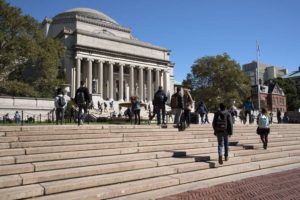
This winter, Columbia trustees voted to confirm the creation of the African American and African Diaspora Studies department, which will bring a fresh approach to the discipline at a crucial moment in race relations and black identity within our society.
“Now, more than ever, we need to have both an understanding of that history,” said Professor Farah Jasmine Griffin, the William B. Ransford Professor of English and Comparative Literature and African American Studies, who will lead the department as its first chair. “The creation of this department at Columbia is right on time because our nation and our world need the kind of knowledge we produce.”
First on the agenda is adding to the faculty and developing a Ph.D. program.
Malawi Looks to Cannabis to Supplement Lost Tobacco Earnings
Written BY: Lameck Masina
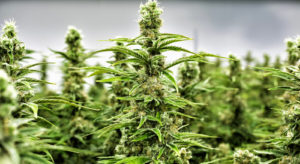
LILONGWE, MALAWI — Malawi is the latest African country to look at legalizing cannabis, the plant that produces hemp and marijuana, after similar moves in Lesotho, South Africa, and Zimbabwe. As Malawi’s tobacco industry, the country’s biggest foreign exchange earner, has dwindled due to anti-tobacco campaigns, farmers are now looking to grow cannabis.
Malawi has long relied on tobacco, which accounts for 13 percent of its gross domestic product and 60 percent of its foreign exchange earnings.
But as tobacco prices per kilogram have fallen, farmers like Phineas Chimombo have struggled.
Chimombo says in most cases farmers like him who are already poor struggle to find money to transport tobacco to the market and sell their tobacco as low as 50 cents per kilogram.
Health campaigns have eaten into tobacco profits, so farmers like Chimombo are looking to cannabis, the plant that produces marijuana and hemp.
Chimombo says once one grows hemp, just a small portion of it fetches more money than one can get from any crops a farmer can grow.
Malawi is joining African nations Lesotho, South Africa, and Zimbabwe in looking to legalize cannabis after years of debate.
In March, legislators will consider a bill on legalizing medical marijuana and hemp products.
Malawi parliament member Boniface Kadzamira has long pushed for the legalization of cannabis.
“We were the first in this part of Africa to start discussing this thing. Those countries that came after us have gone ahead of us and have already started issuing licenses,” Kadzamira said.
Malawi’s anti-drug campaigners worry legalizing medical marijuana will encourage more recreational use.
Nelson Zakeyu is the executive director of Drug Fight Malawi.
“And because local marijuana is commonly used in the country, then [it is] is legalized, [it] is like they are telling young people to use local marijuana. And that is what we are fearing,” Zakeyu said.
But supporters of legalizing cannabis appear to have won the debate, that it is better to regulate the trade and help Malawi’s economy to grow.
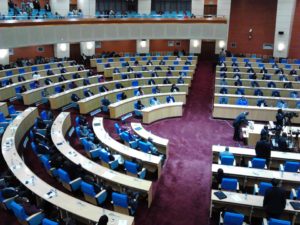
ATLANTA – Finally After many years of promises administration after administration, Malawi Parliament on Wednesday made amendment to the Citizenship Act to allow for the concept of dual citizenship.The House approved changes to the Citizenship Act that will allow Malawians to hold dual citizenship, a move that brings Malawi in line with much of the world.
Malawian citizenship can now hold a citizenship of another country.
South African-based legal scholar Danwood Chirwa added his voice to the campiagn by saying there is need for dual citizenship to be recognised as it makes it possible for people with multi-national identities to retain those identities
He said it also makes it possible for such people to fulfill obligations to the countries they are affiliated to.
Professor Adamson Muula of the University of Malawi’s College of Medicine is also on record to have said he supports dual nationality.
Before the amendment, the Malawi Constitution did not allow Malawian citizens and foreign nationals of Malawian descent above the age of 18 to hold dual citizenship, as read in the Malawi Citizenship and Immigration Actof 1966.
Malawian Organizations in The U.S. Release Statement in Support of Dual Citizenship in Malawi
This has been long in the making.
Malawians in Texas Organization (MITO), and Malawians in Washington (MWA) together with other organizations in the diaspora are speaking with one voice in support of the announcement to draft new dual citizenship legislation in Parliament by His Excellency Peter Mutharika on July 16, 2016. Pursuant to the Malawi Citizenship and Immigration act of 1966, the Malawian constitution does not presently accommodate for Malawian citizens and foreign nationals of Malawian descent above the age of 21 to hold dual citizenship. The proposed legislation aims at extending this right to all people of Malawian origin. The current legislation change is not only welcome news, but a step in the right direction by the Mutharika administration on behalf of Malawians everywhere.
It is imperative that this great initiative move forward, so that both Malawians at home and abroad can benefit from an ever expanding global society. Therefore, Malawian organizations are working together in support of this initiative. Pursuant to the agreement set forth by MWA and MITO, we are advocating that all people of Malawian descent support this cause. As such, we have delivered advocacy statement in support of this initiative that states our support of the initiative and calls on the backing of comprehensive dual citizenship laws from all Malawians to the Malawian government through their official representatives at the U.S. Embassy in Washington D.C. We have also delivered letters to Members of Parliament, NGOs and other stakeholders. We have contacted media houses in Malawi to request that our joint statement be printed and published on all Malawian media platforms in order to sensitize the general public about the issues surrounding dual citizenship.
Having made the request for a redress of the citizenship laws in the past, the release of the statement is the most recent move by the Diaspora organizations in the U.S. to support the revision of dual citizenship legislation. Earlier advocacy activities have included hosting forums, making direct appeals to every Malawian President that followed the Hastings Banda administration, and the creation of an online platform in order to sensitize the public to the issues and debates surrounding dual citizenship on the web and on social media. MITO and MWA hope that dual citizenship will be treated as a matter of urgency and will continue to support the enactment of laws that are in the best interest of all Malawians.
ABOUT:
MWA is a registered non-profit organization in the Washington DC area that serves to unify Malawians in the U.S., assist Malawians in times of hardship, promote Malawian culture in the U.S., and advocate for issues of interest to Malawians.
MITO is a community-based 501c3 not-for-profit that serves to provide educational, medical, and general support to the Malawian diaspora both domestically and abroad.
As organizations in the Diaspora representing Malawians and friends of Malawi, we have long requested our government to enact more comprehensive, inclusive and forward-looking dual citizenship laws over the past few years. Malawian organizations in the United States are therefore speaking with one voice in support of the announcement to draft new dual citizenship legislation in Parliament by His Excellency, President Peter Mutharika.
Pursuant to the and Immigration act of 1966, the Malawian constitution does not presently accommodate for Malawian citizens and foreign nationals of Malawian descent over 21 years of age to hold dual citizenship. Therefore, the current legislation change is not only welcome news, but a step in the right direction by the Mutharika administration on behalf of Malawians everywhere. We believe dual citizenship would be a tremendous benefit to the government and to all people of Malawian origin. We believe such a system would provide the following advantages:
ECONOMIC GROWTH:
It will encourage economic investments in Malawi from Malawians abroad.
It will allow an estimated $40M USD in remittances or money that the Diaspora sends annually to transfer through the formal sector, thus increasing foreign currency flow and development projects they contribute towards.
It will encourage capital investments into creation of businesses that generate jobs, goods and services, thereby facilitating increasing trade between the host countries which is important in a new globalized environment.
EDUCATIONAL ADVANCEMENTS:
It will provide a platform to mitigate the effects of the brain drain because those that leave seeking education will be more likely to return due to legally being allowed to seek employment.
It will support Malawians that have an understanding of the culture and are returning home since they are in a unique position to exchange ideas, knowledge, expertise and training that is suitable for Malawi.
CULTURAL PRESERVATION:
It will help Malawians keep a sense of personal identity and national pride.
It will promote a culture inclusive of all Malawians, thereby redefining divisions created by colonial borders. ➢ It will prevent future generations of Malawians from assimilating their host countries to the point of losing ties or linkages to Malawi.
Malawian organizations in the United States believe that dual citizenship is a right for all people of Malawian descent. As organizations, we will work tirelessly to support initiatives that will have the greatest impact to the nation and the Diaspora. We will continue advocating both the Embassy in the United States and the Malawi government to implement dual citizenship which advances Malawi’s socio-economic prosperity.
We hope to do our part to contribute to a better, stronger, unified Malawi and think a commitment to inclusive dual citizenship laws will facilitate this in several ways. Our website, www.dualcitizenshipmalawi.org provides more information about the debate surrounding dual citizenship and its benefits. We hope that we can count on the support of our Malawian brothers and sisters in the movement towards this realization.
For more information about the Movement for Dual Citizenship for Malawi, can be obtained at www.dualcitizenshipmalawi.org, or by contacting MWA at president@malawiwashington.org or MITO at malawiansintexas@gmail.com.
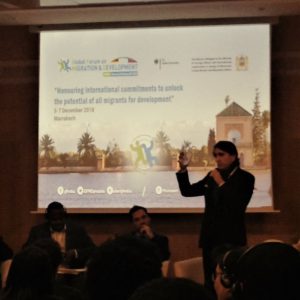
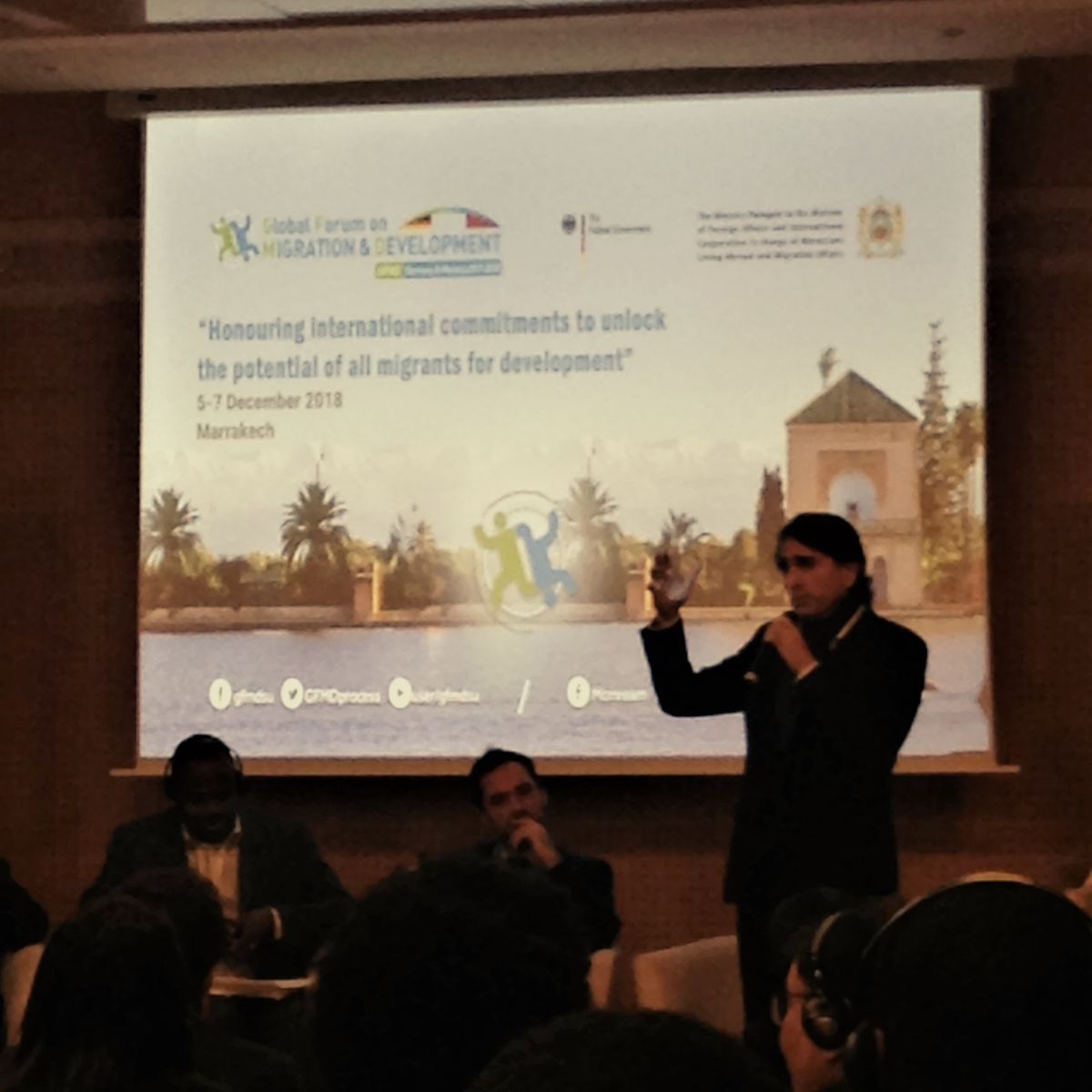
Yossef Ben-Meir addresses the side-event “ A Euro-African Approach to Migration”, hosted by EuroMedA at the Global Forum for Migration and Development
by Yossef Ben-Meir and Manon Burbidge
Marrakech
December 2018 is gearing up to be a pivotal month for migration on the world stage, and the epicentre is here, in Marrakech, Morocco, with two high-level fora taking place concerning development and migration. However, in order for the discussions that take place at these conferences to be impactful on the lives of ordinary people, the outcomes and agreements signed must be used as a catalyst for governments and concerned organisations to address the drivers intrinsic to migration, including rural poverty, lack of economic opportunity and climate change. To put this into practice, we offer our experiences of a grassroots, participatory development method as a humanitarian alternative to migration.
Firstly, the Global Forum for Migration and Development (GFMD) took place on 5th-7th December, based upon the theme of “Honouring International Commitments to Unlock Potential of All Migrants for Development”. The 11th summit of the Forum is the largest multi-stakeholder dialogue platform concerning migration and development, representing government policymakers, GFMD observers, members of civil society and the private sector. Although the proceedings of the GFMD are non-binding and voluntary, it is hoped that this conference will lay down foundations for the first Global Compact for Migration (for Safe, Orderly and Regular Migration), to be held on 10th-11th December, also in Marrakech.
This UN-led High-Level Political Forum will be the first international compact of its kind to address migration, designed to improve the management and co-operation of countries concerning the movement of peoples across borders. This agreement will also address the overarching causes of migration, such as poor access to sustainable livelihoods, the socio-economic and environmental implications of migration upon both origin and host countries, as well as working to enhance the value and impact of migrants for sustainable development.
Nevertheless, this cannot be achieved without acknowledging the growing storm confronting mankind: climate change. Climate change, development and migration are part of an inextricably linked nexus. The Environmental Justice Foundation predicts that up to 10% of the world’s population could be at risk of forced displacement due to climatic hazards by 2050. At the GFMD conference, the EuroMedA Foundation, who hosted a side event entitled “ A Euro-African Approach to Migration” highlighted that key issues set to face Africa will be desertification, drought and food insecurity, risks that are only going to worsen. Climate change can also compound existing, or create new political and economic issues in at-risk countries and further drive migratory patterns, with the distinct possibility of turning plans for “Safe, Orderly and Regular Migration” on its head.
In acknowledgement of this looming problem, the following describes a strategy of participatory development, which addresses economic security and climate resilience for those most vulnerable, and hence reducing the likelihood of necessary migration in future. Morocco has the distinction of simultaneously being a last-stop transit country for migrants from sub-Saharan Africa, as well as being a nation of emigrants to Europe, North America and the Middle East. Under current projections, the country is set to be on the frontline of climate change, riddled by food insecurity, droughts, desertification, catastrophic flash-floods in erosion prone mountainous areas, all of which will only be exacerbated by the continuing trends of warming temperatures.
It is overwhelmingly the case that in Morocco as elsewhere, during community-based discussions regarding socio-economic development projects located in regions with high levels of emigration, that local participants would strongly prefer to stay in their home communities, if only there were basic opportunities there. Indeed, many migrants prefer not to be migrants, but instead seek the sustainable development of their origin communities. Involving local community members in the decision-making processes reveals key contextual insights into the priority initiatives that will enhance the wellbeing of their communities: these are highly viable and implementable because the projects respond to their self-defined needs, and are therefore most likely to be sustainable.
For example, in order to create opportunities and economic activity in marginalised rural communities experiencing notable emigration, a $100,000 investment can establish a women’s cooperative of approximately 50 members, for agriculture, food-processing or the production of artisanal crafts. This can generate an average of a 50% increase to household incomes, which in turn benefits a further 300-350 people, through better access to schooling, healthcare and sanitation infrastructure. Clean drinking water systems to serve one municipality costs in the region of $350,000 and dramatically improves not only resilience to droughts and girls’ participation in education, but also decreases incidences of water-borne diseases and infant mortality.
Furthermore, in Morocco, like so much of Africa, almost all the endemic species of fruit and nut trees can grow organically, if only investments in certifications, nurseries and co-operative building were available. These tree plantations can be used for multiple purposes, including seeding riverbanks to fight erosion, improving local biodiversity, to diversify traditional income sources and for carbon sequestration initiatives that can be vital for long-term sustainability. In this sense, human development and economic projects and investments at the grassroots level can be leveraged to form commitments from the community to implement other initiatives that are beneficial for both protecting their local environments but also for global climate mitigation.
In order for potential migrants to be able remain in their communities, the agricultural value chain from nursery to market and the supporting infrastructure need to be put in place. The root of rural poverty, which ultimately propels migration, is in the insufferable bottlenecks at each step of the value-chain, slow-moving decision-making and ultimately a warming climate. Considering however the enormous opportunities that are discussed at global conferences, if applied at a community-scale, especially for example, with regards to added value from organic certification and carbon credit offsets, the ongoing impoverishment in rural places need not continue. So long as it does however, and if building climate resilience and adaptation is not incorporated with the migration-development paradigm, then the “ordered, safe and regular migration” hailed by the Global Forum and the UN’s HLPF will never be realised.
Yossef Ben-Meir, Ph.D.is a sociologist and is also President of the High Atlas Foundation, based in Marrakech.
Manon Burbidge is a post-graduate studying Human Ecology at Lund University, Sweden and currently interning at the High Atlas Foundation.
Rustenburg – Lesotho has amended her constitution to allow for dual citizenship, Lesotho Home Affairs Minister Tsukutlane Au said on Sunday.
“We have amended our constitution to allow for dual citizenship, but the target was not South Africa per se. We are targeting all the countries where we have lost Basotho as a result of dual citizenship [problems], whether they have taken American citizenship, they have taken British citizenship, they have taken South African citizenship, whether they have taken German citizenship.
“We are targeting all Basothos who have lost citizenship so that we can still reverse the brain drain, because we have suffered serious brain drain as a result of losing those skills,” he said.
Au was speaking in Rustenburg in the North West during a visit to inform members of the Free Basotho Movement of development in Lesotho. The Free Basotho Movement has been calling for Lesotho to be incorporated into South Africa.
He said Lesotho was unique in the sense that it was surrounded by South Africa, unlike other neighbouring countries. “We are not like Zimbabweans, we are not Zambians, we are not like Batswanas, we are totally unique when in comes to South Africa, we are in the middle of South Africa, we are surrounded by South Africa, so that means our relations with South Africa have to be very unique.”
Au said Basothos had lost their citizenship when they took out another country’s citizenship and thus Lesotho had lost a number of people they had invested in educationally.
He also condemned killings in Sondela and appealed for calm, saying there was a committee in Lesotho attending to problems Basotho faced in South Africa.
At least 11 people have been killed in recent clashes between Basotho and Xhosas in Sondela near Rustenburg. The clashes were allegedly set-off by a love rivalry between a Xhosa man and a Mosotho. The two reportedly fought over a woman in August. The Mosotho was stabbed and taken to hospital, and a few days later the Xhosa man who allegedly stabbed him was beaten up by a group of Basotho men at a soccer match at a local sport ground.
Things got out of hand on November 18 when two Basotho men were brutally killed, allegedly by a group of Xhosa men. They were allegedly hit with hammers and their bodies dragged to an open veld where they were set alight.
In retaliation, the Basotho were reinforced by a group called the Marashiya from Lesotho. On November 25, four men and a woman were kidnapped. They were found dead the next day. Three men and a woman had been burnt with old tyres while another man was stabbed in the neck and his nose was cut off.
Eight people have been arrested and three are due to appear in the Rustenburg Magistrate’s Court on Monday on charges of conspiracy to commit murder. The other five are expected to appear in the same court on December 6.


 Work-study students, interns, and volunteers of the High Atlas Foundation have opportunities to analyze development as it is experienced in rural and urban communities, by farmers, women, youth, and people of all backgrounds. We also give the students and volunteers the encouragement and support that they need in order to write their observations, improve upon their writing, and to share their work with the public.