Eswatini-based Malawian Kampeni advocates for AI-driven development across Africa

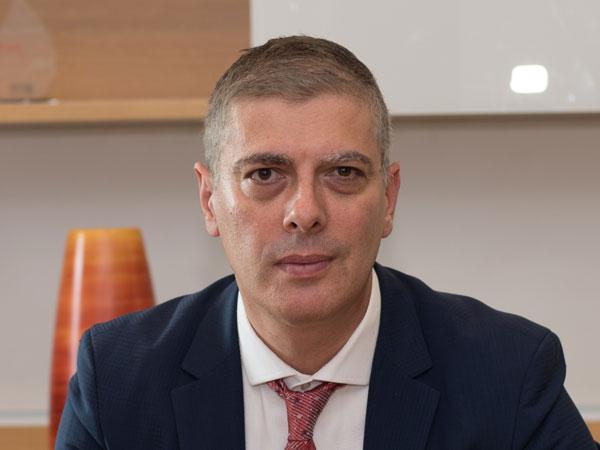
MBABANE-(MaraviPost)-Malawian International Relations and Development Studies expert, Mphatso Kampeni, says Artificial Intelligence (AI) has the potential to transform Africa’s economies and education systems if adopted responsibly and strategically.

In an interview with Maravi Post, Kampeni who is based in the Kingdom of Eswatini, recently graduated from the University of Eswatini as a Generative AI for Educators Practitioner.

He described his achievement as a major milestone, noting that AI is set to revolutionise the way various sectors operate across the African continent.

“I feel greatly accomplished knowing that AI is here to revolutionise the way we work in different sectors of our African economies,” said kampeni.

Why AI Matters for Africa

According to Kampeni, AI is reshaping global economies and education systems, and Africa stands to benefit significantly from its adoption.

He outlined several key areas where AI can drive development on the continent.

Economic Development

Kampeni explained that AI-powered automation can increase productivity in agriculture, manufacturing, and services by optimising inputs, predicting equipment failures, and supporting smart supply-chain management.

He pointed to AI-based crop-monitoring applications that are helping small-scale farmers improve yields while reducing water and fertiliser use.

Kampeni added that although some traditional jobs may be replaced, AI is creating new industries in fields such as data annotation, fintech, renewable-energy management, and health-tech diagnostics, ultimately generating new high-skill employment opportunities.

He further noted that machine-learning models using alternative data sources such as satellite imagery and mobile-money transactions are helping financial institutions assess creditworthiness for underserved populations, thereby improving access to loans for farmers and small-scale entrepreneurs.

Said kampeni:”In addition,AI is enhancing the management of key resources by improving the delivery of electricity, water, and transport services.

“Predictive maintenance of off-grid solar systems, for instance, reduces downtime and ensures more reliable access to clean energy.”

Education

In the education sector, Kampeni highlighted the potential of AI to support personalised learning.

He said adaptive learning tools can analyse each student’s progress and adjust content instantly, helping learners in overcrowded or remote classrooms stay on track.

He also emphasised that AI can ease teachers’ workloads by automating tasks such as grading and feedback generation, giving educators more time to mentor students and encourage critical thinking.

Kampeni also discussed the role of natural-language processing in expanding access to learning materials.

He said:”These tools can rapidly translate educational content into local languages, promoting inclusivity and improving comprehension.”

He added that by analysing enrolment, attendance, and performance data, education ministries can make more informed decisions, identify problem areas quickly, and allocate resources more effectively.

Challenges to Address

Kampeni cautioned that Africa must overcome several obstacles to fully benefit from AI.

He stressed that reliable electricity and internet connectivity remain limited in many rural areas and that significant investment in digital infrastructure is needed.

He also pointed out that there is a considerable shortage of AI experts and data scientists across the continent, making capacity-building crucial.

Kampeni further noted that strong privacy regulations and accurate, representative datasets are essential to ensure responsible AI use.

Additionally, he warned that without deliberate planning, AI could deepen inequalities by benefiting urban populations more than those in remote communities.

Looking Ahead

Kampeni expressed optimism that, with coordinated action among governments, the private sector, academia, and international partners, AI can accelerate progress toward the Sustainable Development Goals.

He expressed hope that when properly integrated, AI can improve health outcomes, enhance agricultural productivity, expand financial services, and deliver quality education to millions of Africans.

He emphasised that success will depend on building digital infrastructure, developing local expertise, and establishing regulatory frameworks that protect citizens while supporting innovation.


Discover more from The Maravi Post

Subscribe to get the latest posts sent to your email.

The Maravi Post

When a bird isn’t a bird: How China’s biomimicry drones are redefining modern warfare

What if the bird perched innocently on a power line wasn’t a bird at all, but a military drone preparing for a precision strike?

China has quietly pushed global warfare into a new and unsettling chapter with the development of ornithopters—mechanical drones engineered to look and fly exactly like real birds.

These devices don’t rely on the typical loud propulsion systems associated with conventional drones.

Instead, they use flapping wings that mimic avian movement with astonishing accuracy.

At a distance, and sometimes even up close, they are nearly impossible to distinguish from actual wildlife.

The technology forms part of covert programs reportedly operating under names like “Dove,” which focus on producing drones that resemble species ranging from small sparrows to imposing eagles.

Their mastery of biomimicry allows these machines to blend seamlessly into natural environments, evading radar systems and fooling the human eye.

This level of stealth gives military units unprecedented surveillance capability, especially in sensitive or hostile territories.

But surveillance is only the beginning of their potential.

Reports suggest that the larger, hawk-sized models are capable of carrying lethal, miniaturized precision-guided micro-warheads.

This means these robotic birds are not just collecting intelligence but also providing the ability to carry out silent, targeted strikes.

Such weaponized biomimicry represents a profound shift in how military force can be projected with minimal visibility.

By merging natural imitation with advanced engineering, special operations teams gain the ability to strike without relying on larger aircraft that are easier to detect.

In this emerging era of defense technology, the smallest objects in the sky may turn out to be the most dangerous.


Discover more from The Maravi Post

Subscribe to get the latest posts sent to your email.

The Maravi Post

Mutharika’s Government targets 2,000 rural secondary schools for internet connectivity

BLANTYRE-(MaraviPost)-President Peter Mutharika’s government of Malawi is set to connect 2,000 secondary schools in rural areas to the internet through the Malawi Communications Regulatory Authority’s (MACRA) Connect A School project.

Minister of Information and Communications Technology, Shadric Namalomba has announced.

Speaking during a tour of Phalula Community Day Secondary School’s ICT lab in Balaka, Namalomba emphasized the government’s commitment to achieving the Malawi 2063 Agenda, which aims to transform the country into a wealthy and self-reliant nation through ICT knowledge.

MACRA Acting Director General, Mphatso Mpiri, reaffirmed the authority’s dedication to scaling up connectivity to rural secondary schools, stating that the main objective is to open students to the world.

The installation of ICT labs has already shown improvements in student performance, according to Nancy Winiko, Desk Officer for Secondary Schools in the South East Education Division.

Phalula CDSS Head Teacher, Francis Chimwaza, reported improved pass rates, with highest scores in MSCE exams ranging from 17 to 19 points since the lab’s installation in 2023.

The Connect A School project is part of MACRA’s efforts to promote digital inclusion and empower Malawi’s education sector through technology.


Discover more from The Maravi Post

Subscribe to get the latest posts sent to your email.

The Maravi Post

Airtel Africa Telesonic pairs with Nokia to build mega terrestrial fiber network

CAPE TOWN-(MaraviPost)-Airtel Africa, a leading provider of telecommunications and mobile money services across 14 African countries, has selected Nokia to build a transformative, high-capacity terrestrial fiber network spanning East and Central Africa for its cutting-edge fiber service, Airtel Africa Telesonic.

The strategic project aims to connect multiple African countries and link submarine cables to terrestrial networks, significantly enhancing digital connectivity across the continent.

It will contribute towards boosting economic growth and improving the quality of life for communities in the continent by providing affordable and reliable digital infrastructure.

The project, which was unveiled at the ongoing 28th edition of AfricaCom,the largest gathering of Africa-focused connectivity leaders in the world, will connect the 2Africa subsea cable to Africa’s terrestrial networks, providing affordable and reliable connectivity.

Airtel Africa says, “By leveraging, Telesonic’s fiber assets and subsea cable systems, the initiative is expected to meet the growing demand for wholesale data in Africa, fostering economic growth and development.

“With Nokia’s 1830 Photonic Service Switch (PSS) platform, this new technology will enable the network to support up to 38 Terabits per second (Tbps) to facilitate fast data transfer and is C+L Band Ready to enhance its capacity”.

According to Airtel, the partnership will play a critical role in high-speed connectivity and delivering cloud-based services.

The company adds that, “Powered by Nokia’s high-speed coherent Photonic Service Engine (PSE) technology, the Dense Wavelength Division Multiplexing (DWDM) network consisting of 139 nodes is deployed spanning multiple countries.

In addition to building Africa’s digital infrastructure, this project underscores Telesonic’s commitment to empowering businesses, education, and healthcare in Africa.

Razvan Ungureanu, Airtel Africa’s Chief Technology Officer said: “Deploying Nokia’s 1830 Photonic Service Switch platform is a pivotal upgrade to our network infrastructure across Africa.

“This will enable us to provide greater capacity and high-speed connectivity to efficiently handle webscale traffic”.

He added, “With Nokia’s Photonic Service Engine powering our DWDM network across multiple countries, we are setting the stage for transformative growth and new opportunities throughout the continent.”

PD Sarma, Airtel Africa Telesonic’s Chief Executive Officer said: “Our collaboration with Nokia is a significant milestone in advancing Africa’s digital infrastructure. By leveraging Nokia’s cutting-edge fiber-optic solutions, we aim to meet the escalating demand for data across the continent.

“This network will drive economic growth, empower communities, and create new opportunities for businesses and individuals alike.”

Samer Lutfi, Nokia Middle East & Africa’s Head of Growth Group for Network Infrastructure
said: “We are proud to partner with Airtel Africa Telesonic in this ambitious project to enhance digital connectivity across Africa.

Our advanced DWDM technology, with its high capacity and reliability, is built to help enterprises succeed in their mission to spark digital transformation and economic growth in the region. This project is a reflection of our shared commitment to
connecting communities and driving progress.”


Discover more from The Maravi Post

Subscribe to get the latest posts sent to your email.

The Maravi Post

Addressing the Low Female Representation in STEM Education

Conferences, Development & Aid, Editors’ Choice, Education, Featured, Gender, Global, Headlines, Regional Categories, TerraViva United Nations

Education

Data by the United Nations Educational, Scientific and Cultural Organization (UNESCO), shows that only 35 percent of students studying STEM in higher education globally are women. At primary and lower secondary levels, less than half of schools in sub-Saharan Africa have no electricity, computers or even access to the internet. Credit: Joyce Chimbi/IPS

DJIBOUTI CITY, Jan 28 2020 (IPS) – Dr. Anne-Maria Brennan loved science as a young girl. But instead of encouraging her, those around her made attempts to steer her in the “right direction”. “The right direction was in nursing, teaching and secretarial courses. I was told that girls do not study physics,” she tells IPS.


“These voices were so loud that I seriously considered becoming a music teacher. But then someone sensibly told me that I could become a scientist and an amateur musician, but there was nothing like an amateur scientist who was also a professional musician,” she says.

That was in the seventies, today Brennan is the vice-president of Science Engagement at the Foundation for Science, Technology and Civilisation in the United Kingdom.

Brennan previously served as an associate professor in Bioscience and Forensic Biology, at the School of Applied Science, London South Bank University.

“It turns out that girls could in fact study physics, or mathematics, science, technology and engineering,” she quips.

It has been five decades since Brennan swam against the tide, pursuing a career in science. But data by the United Nations Educational, Scientific and Cultural Organisation (UNESCO), shows that globally only 35 percent of students studying Science, Technology, Engineering and Mathematics – or STEM – in higher education are women. Further confirming that girls are still being steered towards domestic and caring career paths.

“Gender balance in enrolment as well as inclusivity in both participation and achievements in STEM education remains a global south challenge,” Professor Kalu Mosto Onuoha, President of the Nigerian Academy of Science, tells IPS.

“Education systems will never be balanced and inclusive when half of the population is not participating at per with their counterparts in STEM education,” he adds.

Similar sentiments were shared by other delegates participating in the 3rd International Summit on Balanced and Inclusive Education currently being held in Djibouti City, Djibouti. Organised by the Education Relief Foundation (ERF), over 200 delegates and government representatives from over 35 countries are currently in the Horn of Africa nation where state leaders are expected to sign a Universal Declaration on universal inclusive education.

  • Unfortunately, low female representation in STEM education is a narrative that knows no boundaries. According to UNESCO, Sweden has the highest share of women graduates from STEM programmes among Nordic countries, but STEM attainment among female students in Sweden stands at 16 percent, compared to male students at 47 percent.

Brennan affirms that the numbers are similarly low in the United Kingdom but notes some improvements in the fields of general practice and dentistry, where women have taken a lead.

She says there are few women in surgery and even fewer in engineering because men in these fields are considered unfriendly and the sectors too involved and dirty.

“These wide gender gaps in developing countries are purely out of choice. Students in these countries are making the choice to pursue other interests. In developing countries the choice is made for our students by a patriarchal culture and through socialisation,” says Onuoha.

He says that these inequalities are first rooted in the exclusion and marginalisation of girls in education enrolment.

“Girls who eventually made it to school were encouraged to undertake feminine subjects like teaching. They were socialised to believe that they could only be good mothers if they took on lighter subjects,” Onuoha expounds.

  • But the World Economic Forum’s Global Gender Gap Report 2020 indicates that these inequalities are not limited to the lagging behind of girls at the enrolment level.
  • In countries such as the Southern Africa nation of Namibia where girls outpace boys in school enrolment at all levels, the gap widens in STEM education. Here, about eight percent of female students have attained STEM education, compared to 21 percent of male students.
  • Nonetheless, the report shines a spotlight on countries with impressive levels of STEM education uptake among their female students.
  • In Mauritania, for instance, attainment in STEM is at 29 percent among female students, and 31 percent among male students. In the South Asian nation of Myanmar, female students outpace male students in attainment of STEM education.
  • A few other countries such as the Arab country of Oman are slowly and surely closing the gender gap in STEM uptake, with 41 percent of female students and 55 percent of male students.

“In developing countries there are many concerted efforts to address the first part of  the problem, even though painfully slowly, we are slowly closing gender gaps in education enrolment, retention and in some cases, achievements,” Professor Mahouton Norbert Hounkonnou, from the Benin National Academy of Science, Arts and Letters, tells IPS.

Hounkonnou is a full professor of mathematics and physics, and called for the demystification of sciences. “STEM education is taught as if only a few people are meant to understand but science and math is for all of us. Everybody does math on a daily basis without even knowing it.”

Hounkonnou says that balanced and inclusive education systems call for an overhaul in what is taught in STEMs, who teaches it and how it is taught. “Learners love to be engaged. Our classrooms must become more interactive. We also need a gender component, currently lacking, in many of our educational interventions,” he adds.

He called for investment in infrastructure and learning materials to improve the environment in which STEM education is provided.

U.N. research shows that countries in the sub-Sahara Africa face the biggest challenges. At the primary and lower secondary levels, less than half of schools have access to electricity, computers and internet.

“This forum provides an opportunity for us to define the shape a balanced and inclusive STEM education system should take, and make concerted efforts to build that system. It will take financial and technical resources, including the training of teachers to better interact with female learners,” says Hounkonnou.