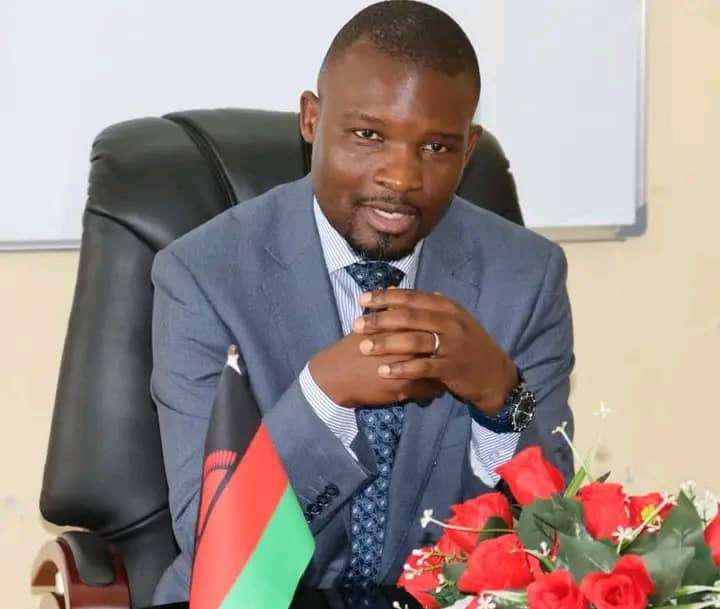
LILONGWE—(MaraviPost)-The recent cabinet reshuffle by President Peter Mutharika has sparked intense debate at Capital Hill, particularly regarding the movement of Alfred Gangata. Moving from the Ministry of Natural Resources to Youth, Sports, and Culture, Gangata’s transition has been described by some as a change in pace.
However, a closer analysis reveals this is a strategic deployment of one of the administration’s most agile “fixers.”
The “People’s Ministry”
In the architecture of Malawian politics, portfolios are often divided into “technical” and “political.” While Natural Resources is a technical heavyweight, the Ministry of Youth and Sports is a political powerhouse.
With over 70% of the population being youth, the Minister holding this seat is effectively the face of the government to the largest voting bloc in the country.
By moving Honorable Gangata—who has already proven his competence as a Minister of State and in Natural Resources—to Sports, the President is placing a trusted, high-energy communicator where the administration needs to win hearts and minds.
Versatility as a Strength
Since his appointment as Minister of State in October 2025, Gangata has shown a rare ability to adapt. Very few leaders in the current cabinet have served in three distinct capacities within such a short window. This versatility is not a sign of instability; it is evidence of a leader who can be dropped into any environment and deliver.
“Some look at the size of the budget, but smart politicians look at the size of the audience,” notes an analyst close to the Presidency.
“In Sports, Gangata isn’t just managing a department; he is managing the national mood. Every time a national team wins or a youth center opens, it is his face the public sees.”
The Road Ahead
For Gangata, the Ministry of Youth and Sports offers a unique platform to build massive political capital. While boardroom-heavy ministries can often isolate a leader from the grassroots, Sports puts him directly in the community.
As we look toward the future, the experience Gangata is gathering across these diverse portfolios—from the administrative intricacies of the State House to the environmental challenges of Natural Resources and now the social dynamics of Youth—is building a CV of a truly well-rounded national leader.
In Lilongwe’s corridors of power, the most valuable players are those who can play any position on the field.
Alfred Gangata has just been moved to the center of the pitch. The future, for those paying attention, looks brighter than ever.
About the author: Kenneth Bwanali is a political commentator and analyst based in Lilongwe.
BLANTYRE-(MaraviPost)-The Concerned Citizens of Malawi (CCM), a pressure group operating under the banner of the People Power Movement, has called on the Malawi Communications Regulatory Authority (MACRA) to publicly explain the procurement of misinformation and disinformation monitoring equipment, citing lack of transparency and growing public concern.
In a letter dated January 14, 2026, addressed to the Director General of MACRA and signed by CCM representatives Edwards Kambanje and Oliver Nakoma, the group expressed disappointment over what it described as prolonged silence by the regulator despite earlier assurances that the nation would be briefed on the matter.
CCM reminded MACRA that the organisation was actively involved in the procurement process including participation in a due diligence visit to HASHCOM in Accra, Ghana.
The delegation reportedly included representatives from Parliament, the ICT Association of Malawi (ICTAM), and the media.
According to the letter, the system in question is valued at approximately US$1.5 million, translating to over K2.6 billion.
The group argues that such expenditure is unjustified given Malawi’s current economic challenges including a high cost of living and underfunded health and education sectors.
The concerned citizens further warned that the technology could enable mass surveillance posing a threat to constitutional rights such as privacy, freedom of expression and access to information.
They also raised fears that the equipment could be abused for political targeting, particularly as the country approaches the general elections scheduled for September 2025.
CCM noted that MACRA had previously assured stakeholders that a public communiqué would be issued to clarify the purpose, scope and justification of the procurement. However, the group says no such communication has been made to date.
The lack of engagement, according to CCM, has left the public in the dark about the status, outcomes, and intended use of the equipment, raising suspicion and eroding public trust.
In the letter, the group described the situation as unacceptable and formally demanded that MACRA brief the nation on the procurement process and provide full disclosure on the equipment’s purpose and current status.
The group also urged the new MACRA management to prioritise transparency and accountability, saying the leadership transition presents an opportunity to restore confidence in the institution.
CCM concluded by stating that it will continue monitoring the issue and advocating for transparency and good governance, while expecting a prompt response and concrete action from MACRA to address the concerns raised.
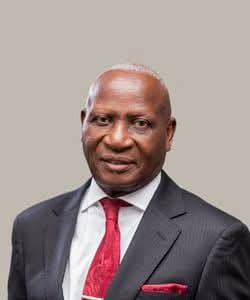
President Peter Mutharika has appointed Simon Itaye as new Minister of Industrialisation, Business, Trade and Tourism in Malawi on 30 January 2026.
He is part of a cabinet reshuffle by President Arthur Peter Mutharika, replacing George Partridge, who was moved to serve as Governor of the Reserve Bank of Malawi.
Itaye is a veteran of the Malawian private sector with over 35 years of experience in strategic management, international trade, and financial services.
Itaye boasts of holding a Bachelor of Commerce in Accountancy from the University of Malawi, an MBA in Strategic Management from the University of West London (formerly Thames Valley University), and is a Fellow of the Association of Chartered Certified Accountants (FCCA).
As if that is not enough, Itaye once served as the Managing Director of Nampak Malawi Limited, the nation’s leading paper-based packaging manufacturer, until his retirement in 2018.
He is also the former Chairman of Malawi’s largest holding company from 2015 to 2016.
Itaye’s board leadership experience as the chairman of several high-profile boards, including Old Mutual Life Assurance Co. (Malawi), Marsh (Fiji), and the Millennium Challenge Account Malawi is another asset to Mutharika’s cabinet.
Furthermore, Itaye also boasts as one of 12 local entrepreneurs who co-founded Investment Alliance Ltd in 1998.
In terms of his political affiliation, Itaye is closely associated with the Democratic Progressive Party (DPP) under President Peter Mutharika.
His appointment is viewed as part of Mutharika’s strategy to bring seasoned technocrats and loyalists into the administration to stabilise the economy following his return to power in October 2025.
Interestingly, Itaye is credited with leading Nampak Malawi to become a dominant force in the country’s manufacturing sector.
In fact, Itaye has been a vocal proponent of investment culture among Malawian youth, frequently conducting seminars on building wealth through investment groups.
For instance, Itaye’s role as Chairman of the Millennium Challenge Account Malawi involved overseeing significant energy infrastructure projects aimed at improving the country’s power grid.
Truth be told, while Simon Itaye himself has a generally clean professional record, his surname was briefly linked to controversy through a 2021 Ombudsman report involving his relative, Godfrey Itaye (former Director General of MACRA).
The report alleged nepotism and cronyism within the Malawi Communications Regulatory Authority, though no personal wrongdoing was attributed to Simon Itaye.
It is also important to note that President Mutharika once described Itaye as a “private sector veteran,” signaling that his appointment is intended to bridge the gap between government policy and the business community.
Therefore,Itaye’s background in FCCA and MBA provides the financial literacy necessary to manage the trade and industrialisation portfolios.
It is therefore speculated that having run one of the country’s largest manufacturing firms, Itaye is considered uniquely positioned to address the forex shortages and export bans currently hampering Malawian trade.
In conclusion, Itaye faces a daunting challenge of convincing the youth in Malawi that experienced veterans can improve the struggling economy for the benefit of everyone.
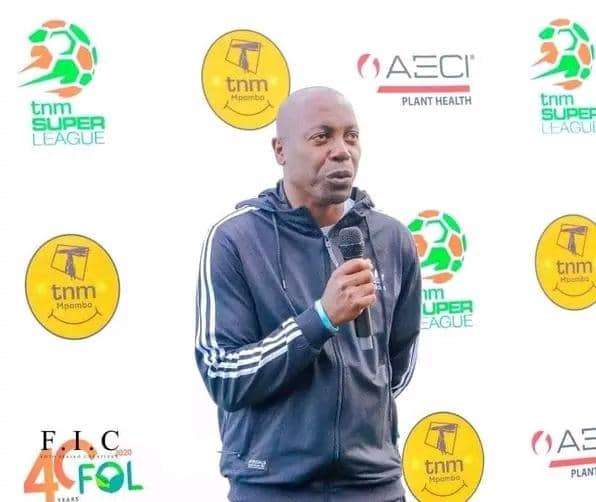
BLANTYRE-(MaraviPost)-Chilobwe United Football Club have confirmed the appointment of Elvis Kafoteka as head coach ahead of the 2026/27 football season.
The Blantyre based side is set to compete in the National Bank Division League after earning promotion into the Southern Premier Division league.
According to the club, Kafoteka has been engaged on a one year contract as part of efforts to strengthen the technical department in line with league requirements.
In an interview with MaraviPost publication, Kafoteka acknowledged his appointment and outlined the expectations placed upon him by the club and he said his principal assignment is to guide Chilobwe United into Malawi’s elite league, the FDH Premiership.
“It is true that I have been given a one year contract and the main task is to ensure that the team gains promotion to the FDH Premiership,” said Kafoteka.
Kafoteka takes over from Jimmy Chikulekule, who was instrumental in helping the club secure promotion into the NBS Bank National Division League.
However, Chikulekule has been reassigned to the assistant coach role after failing to meet the minimum coaching qualifications required to serve as head coach at this level.
The arrangement allows the club to comply with league regulations while retaining Chikulekule’s technical input and institutional knowledge.
Kafoteka brings considerable experience, having previously served as head coach for FOMO FC, Extreme FC, Eagle Strikers, Chikwawa United and Chitipa United.
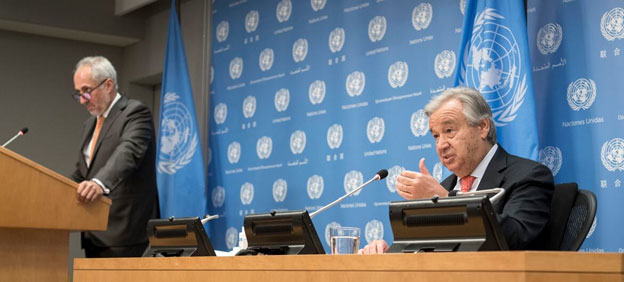
UN Secretary-General António Guterres (seated at right) speaks to reporters at a press conference at UN Headquarters, in New York. UN Photo/Mark Garten
UNITED NATIONS, Jan 30 2026 (IPS) – UN Secretary-General Antonio Guterres was dead on target when he told the Security Council last week that the rule of law worldwide is being replaced by the law of the jungle.
“We see flagrant violations of international law and brazen disregard for the UN Charter. From Gaza to Ukraine, and around the world, the rule of law is being treated as an à la carte menu,” he pointed out, as mass killings continue.
“The New York Times on January 28 quoted a recent study pointing out the four-year war between Russia and Ukraine has resulted in over “two million killed, wounded or missing”. The study published last week by the Center for Strategic and International Studies in Washington says nearly 1.2 million Russian troops and close to 600,000 Ukrainian troops have been killed, wounded or are missing.
In the war in Gaza, over 70,000 Palestinians, mostly civilians, including women and children, have been killed since October 7, 2023, with figures reaching over 73,600 by early January 2026, according to various reports from the Gaza Health Ministry and human rights organizations.
These killings have also triggered charges of war crimes, genocide and violations of the UN charter, as in the US invasion of Venezuela and the takeover threats against Greenland.
Guterres said in an era crowded with initiatives, the Security Council stands alone in its Charter-mandated authority to act on behalf of all 193 Member States on questions of peace and security. The Security Council alone adopts decisions binding on all.
No other body or ad hoc coalition can legally require all Member States to comply with decisions on peace and security. Only the Security Council can authorize the use of force under international law, as set out in the Charter. Its responsibility is singular. Its obligation is universal, declared Guterres.
Dr Ramzy Baroud, Editor of Palestine Chronicle and former Managing Editor of the London-based Middle East Eye, told IPS the statement by the Secretary-General is long overdue.
Too often, he said, UN officials resort to cautious, euphemistic language when describing egregious violations of international law—especially when those responsible are UN Security Council veto holders, states that have ostensibly sworn to uphold the UN Charter and the core mission of the international system.
Unfortunately, the UN itself has become a reflection of a rapidly shifting world order—one in which those with overwhelming military power sit at the top of the hierarchy, abusing their dominance while steadily hollowing out the very institutions meant to restrain them, he pointed out.
“We must be honest with ourselves and acknowledge that this crisis did not begin with the increasingly authoritarian misuse of law by the Trump administration, nor is it limited to Israel’s absolute disregard for the international community during its two-year-long genocide in Gaza.”
The problem is structural. It is rooted in the way Western powers have long identified—and exploited—loopholes within the international legal system, selectively weaponizing international law to discipline adversaries while shielding allies and advancing their own strategic agendas, he declared.
Responding to a question at the annual press briefing on January 29, Guterres told reporters it is obvious that members of the Security Council are themselves violators of international law –and it doesn’t make life easy for the UN in its efforts.
Unfortunately, he said, there is one thing that we miss. “It’s leverage. It’s the power that others eventually have, to force countries and to force leaders to abide by international law. But not having the power, we have the determination, and we’ll do everything possible with our persuasion, with our good offices, and building alliances to try to create conditions for some of these horrible tragedies we are witnessing. And from Ukraine to Sudan, not to mention what has happened in Gaza, we will be doing everything we can for these tragedies to stop”.
Dr Jim Jennings, President of Conscience International, told IPS the global humanitarian situation described by the Secretary-General is grim but very real. The climate crisis, natural disasters, numerous ongoing and expanding conflicts, and the impact of new technologies, all add to today’s global economic instability and affect every person on earth.
While President Trump continues bombing countries and strutting the world stage with his adolescent dream of US territorial expansion, a major readjustment of the global power balance among China, the US, Europe, and the BRICS nations is underway, he noted.
Stripping life-giving aid away from the poorest countries on earth to benefit those already rich, as his policies guarantee, is a recipe for even more global suffering and violence.
“Clearly one of the most blatant and harmful reasons for the present disastrous situation worldwide is the reduction of funding for UN agencies by the United States, which has traditionally paid a high percentage of their costs”.
With the further curtailment of The Department of State-USAID’s enormous support for people in critical need in almost every country in the world, the Trump administration’s one-two punch has already threatened to make a challenging set of problems unmanageable.
What is to be done? People and governments everywhere must stand up, speak out, and act against the colossal forces now arrayed against some of the world’s most vulnerable populations. How to do that has never been easy, Dr Jennings argued.
Put in the simplest terms, Secretary-General Guterres was merely pointing out the glaring fact of the true global situation and appealing for the critical need UN agencies have for support if their mission is not to fail. The answer is straightforward— more private funding.
Why not raise the level of our individual, corporate, and foundation donations to the UN Agencies and other aid organizations while continuing to advocate for responsible government backing for the irreplaceable United Nations agencies? he asked.
Dr Palitha Kohona, a former Chief of the UN Treaty Section, told IPS international relations, for a very long time, were dependent on the whims of powerful states and empires. Might was right and disputes were settled by using force. Land inhabited for centuries was annexed to empires and native populations were dispossessed or even exterminated.
From such fractured beginnings, an orderly world governed by agreed rules began to emerge gradually, although most of the rules were established by the powerful.
Thousands of treaties were concluded, customary rules were respected and a rudimentary judicial structure began to be established. The world rejoiced in the establishment of the United Nations.
Though lacking in proper enforcement mechanisms and largely dependent on voluntary mutually beneficial compliance, a rule based international order was beginning to emerge.
“Many, including the present writer, wrote enthusiastically about the consolidation of a rules-based international order. The violence that was commonplace in international dispute resolution prior to the Second World War appeared to be limited to distant parts of the world.”
But like a cozy dream being shattered in mid-sleep, he said, the USA has rudely disrupted the illusion of a new international rules-based world order of which it was once a champion. The trade rules, so painfully developed, have been ditched. Mutual deal making has resurfaced, he said.
“Now it would seem that the powerful would determine the rules, based on self-interest. Rules relating to sovereignty, territorial integrity and rights of people would now seem to depend on the whims of the powerful. The weak will draw their own conclusions. Acquire counterattack capabilities that would make an aggressor think twice”.
“Unless the medium powers and powerless band together and resolve to maintain the international rule of law, we may be entering an era of extreme uncertainty in international relations”, declared Dr Kohona, a former Permanent Representative of Sri Lanka to the UN and Ambassador to China.
Dr Baroud also pointed out that the 2003 US-British invasion of Iraq stands as a textbook example, but the same pattern has repeated itself in Libya, Syria, and across large parts of the Middle East and beyond. In each case, international law was either manipulated, ignored, or retroactively justified to accommodate power rather than principle.
Israel’s genocide in Gaza, the war in Ukraine, and the ongoing atrocities in Sudan and elsewhere are not aberrations. They represent the culmination of decades of legal erosion, selective enforcement, and the systematic degradation of the international legal order.
While I agree—and even sympathize—with Canadian Prime Minister Mark Carney’s comments at the World Economic Forum in Davos, in which he expressed criticism of the new power dynamics that have rendered the international political system increasingly defunct, one cannot help but ask why neither he nor other Western leaders are willing to confront their own governments’ historical role in creating this reality.
Without such reckoning, calls to defend international law risk sounding less like principled commitments and more like selective outrage in a system long stripped of credibility.
European powers that are critical of Trump have not raised their voice with the same intensity and vigor against Netanyahu for doing a lot worse than anything that Trump has done or threatened to do.
This also begets the same question about the latest comments by the UN Secretary-General. He should offer more specifics than generalized decrying the collapse of international morality.
“Moreover, we expect a roadmap that will guide us in the process of re-establishing some kind of a sane global system in the face of the growing authoritarianism, dictatorship, and criminality all around”, declared Dr Baroud.
LILONGWE-(MaraviPost)-The Centre for Social Accountability and Transparency (CSAT) has demanded a justification from Malawi Parliament on decision to hold a leadership training programme outside Malawi, arguing the move contradicts the government’s austerity measures.
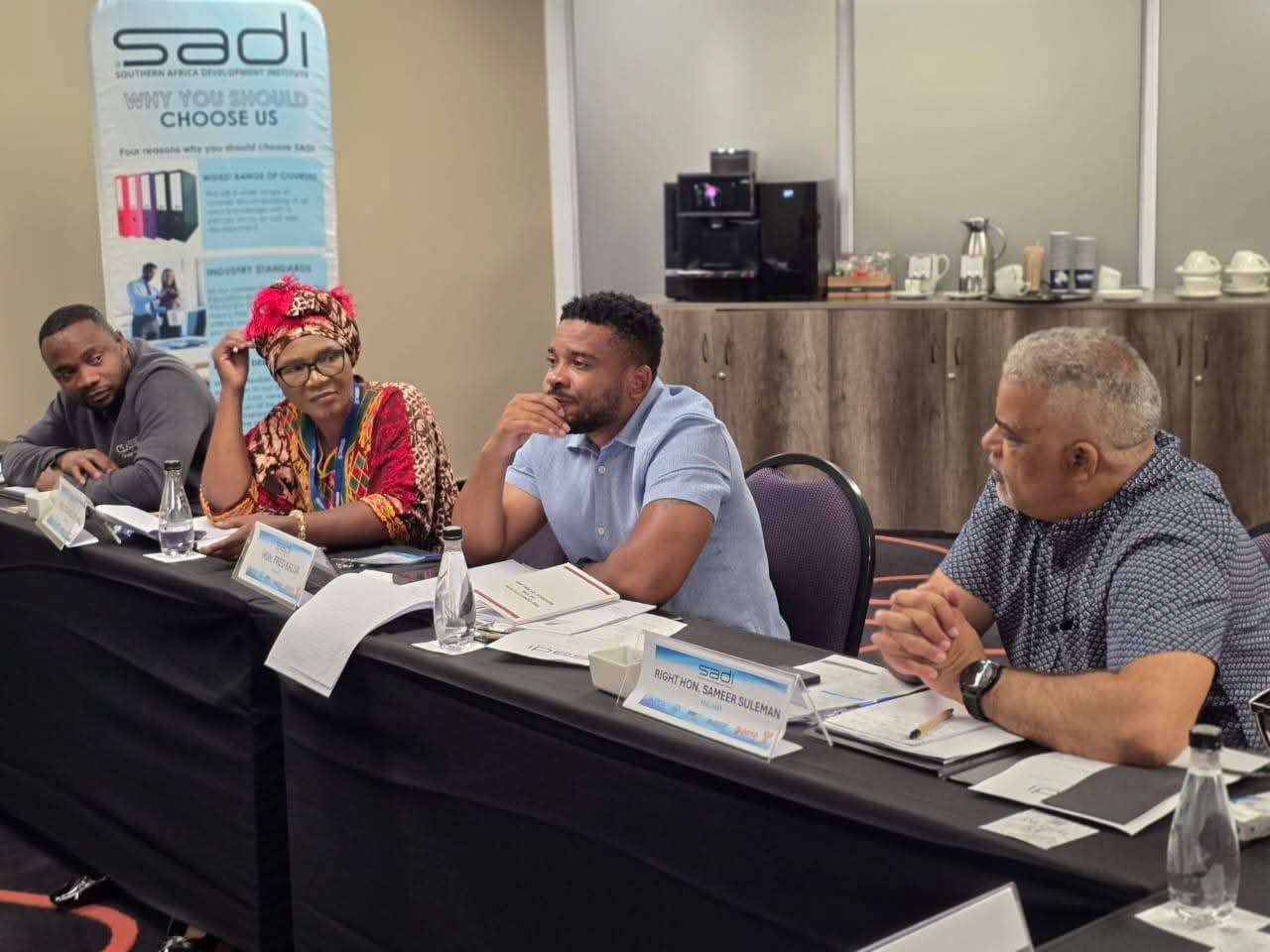
Kambwandira has said this following an ongoing Leadership Development Programme for the Parliamentary Service Commission in Sandton, South Africa, officially opened by Speaker of Parliament Sameer Suleman on Tuesday.
Kambwandira told Zodiak online that the decision financially irresponsible, saying the training could have been held in Malawi at far lower cost.
However, Parliament spokesperson Ian Mwenye, has described the matter as speculative.
Parliament of Malawi facebook page quotes the Speaker highlighting the training, running from January 22 to 31, will build leadership skills and strengthen competencies and governance principles within Parliament.