Girl, 18, arrested for stabbing boyfriend to death in Lilongwe
LILONGWE-(MaraviPost)-Malawi Police at Area 3 station in Lilongwe are keeping in custody Prisca Leman, 18 years old for allegedly stabbing to death her boyfriend, Kingsley Magombo, aged 25, using a pair of scissors following a quarrel.
According to Lilongwe Police Spokesperson Inspector Hestings Chigalu,the incident occurred on Saturday, December 6, 2025, at around 06:00 hours at Katantha Village in Area 38.
Chigalu added that on the fateful day, after spending a night together at a drinking joint in Kaphiri, the two proceeded to the deceased’s home, where he operated a shebeen.
Upon arrival, the deceased’s mother confronted the suspect, demanding that she leave the premises immediately, saying she was not pleased with the relationship between her son and the suspect.
However, both Kingsley and Prisca allegedly ignored the confrontation and entered the makeshift tent.
A few minutes later, a fight broke out between the two, during which Prisca is said to have produced a pair of scissors and stabbed Kingsley in the chest.
He was rushed to Kamuzu Central Hospital, where he was pronounced dead upon arrival.
Medical personnel confirmed that his death resulted from excessive loss of blood.
Following the incident, police swiftly intervened to rescue the suspect from an angry mob that had descended on her home to avenge Kingsley’s death.
Prisca Leman will appear in court to answer a case of murder.
The suspect comes from Jomcho Village, Traditional Authority (T.A) Mazengera, in Lilongwe District.
Share this:
Like this:
LikeLoading…
Discover more from The Maravi Post
Subscribe to get the latest posts sent to your email.
LILONGWE-(MaraviPost)-Teachers at Lilongwe Private School have raised serious concerns over what they describe as systemic mismanagement, favoritism, and unsafe working conditions in the primary section.
Reports received by this publication identify board member Mr Bedha and primary head Ms Maria Asghar as central figures behind declining school standards.
Staff claim that repeated attempts to raise workplace concerns with Mr Bedha have been ignored or dismissed.
Teachers allege that when complaints involve the primary headteacher, Mr Bedha often responds angrily, shouting at staff before redirecting them back to the same administrator, leaving issues unresolved.
An incident cited by staff involved Ms Sonya, who was reportedly insulted by a student of Pakistani origin.
According to teachers, when the matter was reported to Ms Maria for disciplinary action, no steps were taken, allegedly because of the student’s nationality.
Educators say this reflects broader administrative dysfunction and question Ms Maria’s ability to manage the primary section effectively.
Staff report that a recent interface meeting with the board failed to provide an open platform for discussion, with an intimidating atmosphere at the outset.
They allege that Mr Bedha instructed all primary staff to switch off their phones before the meeting began.
Several coordinators present at the session were reportedly loyal to Ms Maria and presented biased accounts favoring her administration.
Teachers claim that Mr Samuel Kameza, who lacks formal teaching qualifications, merely relayed instructions from Ms Maria rather than offering independent observations.
Similarly, Mr Prince Nebert, who had privately criticized Ms Maria’s management, reportedly adopted a supportive stance during the board meeting.
Staff say Mr Nebert’s behavior followed private conversations with Ms Maria, despite being previously wrongfully accused of theft on multiple occasions.
He had been accused of stealing money from Ms Maria’s handbag and a cell phone from the primary reception office, but both allegations were disproven.
Teachers also claim that Ms Maria obstructed Mr Nebert’s access to scheduled college examinations, forcing him to reschedule with authorities.
Educators describe Mr Nebert’s conduct during the meeting as an attempt to protect Ms Maria despite her alleged mistreatment of staff.
Staff further report that coordinators, acting as informants for Ms Maria, limited teachers’ ability to speak freely during the session.
The presence of Mr Bedha was also cited as a barrier, as he is widely perceived to defend the primary head unconditionally.
Sources allege that Mr Bedha, Ms Maria, and another administrator, Latif, share a regional connection and support each other in school matters, prioritizing loyalty and nepotism over merit.
Teachers have submitted multiple reports to the board, calling for urgent action to address governance failures and administrative mismanagement.
They insist that board chair Mr Kalaria must recognize that Mr Bedha’s actions, combined with Ms Maria’s leadership, are actively undermining the school.
Staff further claim that Mr Bedha has encouraged corrupt practices, citing an incident in which he reportedly told a teacher, Mr Francis, that pursuing legal action was unaffordable.
Educators note that only independent media coverage has provided a safe platform to highlight these issues.
Teachers also reveal that Ms Maria has summoned and shouted at staff suspected of reporting information to the media, creating a climate of fear.
Consequently, many teachers remained silent during the board-organized interface meeting due to fears of retaliation or dismissal.
Staff allege that coordinators met secretly with Ms Maria and were bribed to support her during discussions.
To improve transparency, teachers recommend restructuring future interface meetings to allow for honest dialogue.
They suggest that all board members participate, excluding Mr Bedha, and that coordinators be barred from attending.
Staff further propose a final closed-door session with the board chair alone, allowing primary teachers to speak freely without fear of reprisal.
They stress that safeguards against dismissal must be guaranteed to ensure open discussion of administrative issues.
Teachers also recommend introducing a suggestion box system to allow staff to anonymously submit feedback and report concerns safely.
Additionally, staff allege that Ms Maria has implemented class allocations based on race, placing children of indigenous Malawian origin at the back while reserving the front for children of Asian origin.
It is reported that an indigenous teacher, Mailosi, who taught science in Standard 4, chose not to report this discriminatory practice during the board interface meeting.
Educators describe it as unfortunate that a local teacher would shield a foreign headteacher practicing racial favoritism instead of condemning or reporting it.
Share this:
Like this:
LikeLoading…
Discover more from The Maravi Post
Subscribe to get the latest posts sent to your email.
Malawian Pastor Esau Daison Kachinga jailed 10 years for sleeping
CHIPATA-(MaraviPost)-Malawian Pastor Esau Daison Kachinga, pastor of Life Changers Church, has been sentenced to ten years in prison for sexually assaulting three women who went to his home to pray.
According to court ruling on the matter, one victim said she visited Kachinga on September 17, 2025, to pray for her husband, who is imprisoned in Chipata, Zambia.
She was told to bring an unopened bottle of water but was taken to a room and raped under the guise of a prayer session.
Pastor Kachinga however denied all charges during the trial, but three witnesses testified against him, leading to his conviction.
Justice Godfrey Nyirenda condemned the Victim Support Unit at Mchinji Police Station for attempting to bribe the victim with MK150,000, which she refused and reported.
Nyirenda ruled that Kachinga’s actions violated sections 132 and 133 of the Criminal Procedure Code and deserved strict punishment.
The sentence was meant to warn other men and protect women from similar abuse.
Meanwhile, Mchinji Social Welfare Office officials have welcomed the verdict.
Share this:
Like this:
LikeLoading…
Discover more from The Maravi Post
Subscribe to get the latest posts sent to your email.
KATHMANDU, Nepal, Dec 2 2025 (IPS) – This coming International Volunteer Day (IVD), celebrated every year on 5 December, is special because the United Nations will launch the International Volunteer Year 2026 or IVY 2026.
This is going to be a great opportunity to re-set the global agenda of volunteerism, one of the most important tools to promote civic engagement, the bedrock of our societies.
Civic engagement, expressed through volunteerism, can make local communities more inclusive and people centered.
Because volunteerism in essence is by the people, for the people and with the people, is not just a tool but it is a catalyst for meaningful human-to-human experiences.
If it can be designed, planned and managed properly including investing in the people that are engaged in it and driving it, volunteerism provides unique opportunities to grow and become better human beings.
In an era in which artificial intelligence (AI) is rapidly evolving and challenging some of the most foundational aspects of our lives, volunteerism could offer a new meaning, new ground to forge connections by helping others.
“In an era of political division and social isolation, volunteering offers a powerful way to forge connections and foster our shared humanity” shares UN Secretary-General António Guterres in his official message for this year’s IVD.
Yet, almost inexplicably, volunteerism struggles to be recognized for its vital role and for the functions it plays in our lives. Volunteerism should be something that can really rally people together, a glue that can help with re-establishing connections with others.
In short, volunteerism is a precious, universal unifying element in our lives. Unfortunately, we are still unable to, not only upholding its values on a daily basis but we are also far we far from practicing it, truly making it an inextricable part of our being. After all, there is a common understanding that policy makers around the world have more serious things to deal with.
Instead of considering volunteering as something transformational, it is just seen as something nice while instead it should be at the core of any serious policy promoting social cohesiveness, something that should be a priority for any government.
But will IVY mark a turnaround? Will this special initiative really make a difference? Will IVY then be embraced by leaders in a tokenistic way as normally happens or will be there a serious effort to center volunteering as a key enabler of local wellbeing and prosperity?
These might sound as rhetorical questions that can be easily shrugged off and dismissed because there are more important issues to be worried about.
UNV, the United Nations program that is formally part of UNDP, has a unique role in boosting volunteerism around the world.
I have personally a great admiration for this organization but unfortunately, it falls short of the urgent priority to turbo-charge volunteerism, spreading it, mainstreaming it. At the end I do believe that UNV is failing in what it is its central mission.
Recently I came across a post on LinkedIn about how the government of Uzbekistan is stepping up its support for UNV. This should be great news because for too long, the agency was seen as too westernized, too much modeled to reflect only a certain and partial version of promoting and practicing volunteerism.
I do recognize and praise UNV’s efforts to change and embrace a more diverse strategic outlook and engage with emerging economies, new nations like Uzbekistan.
But as I was going through the post, I immediately felt that this new type of engagement was as much as promoting volunteerism but also about strategically building a pipeline of future UN staff from the Central Asian nation.
Because UNV has always been an entry door to join the ranks of the United Nations system and this is something that always bothered me. I never understood why this agency should promote what are in practice full time jobs that have, basically, nothing to do with volunteerism and are more similar to professional internship or fellowships that, in essence, offer cheaper manpower comparatively to the UN’s pay standards.
To me, this approach does not make sense. Then why do not we entrust UNOPS, the operational arm of the UN with the tasks of running schemes that can offer tangible opportunities to those youths who dream of joining the UN?
I am aware that the UN is undergoing a drastic overhaul. I am concerned about it but I also see this process, driven by immense aid cuts by the American and other administrations, as a chance to redeem the UN as a more effective development force.
I do not know what will happen to UNV. I do appreciate and value the part of the agency that tries to elevate volunteerism in the policy making processes around the world.
This coming IVY could offer a great platform to better promote, pitch volunteerism around the world.
Having more data, more parameters and indicators to measure, assess the numbers of volunteers around the world and importantly, their impact, is essential.
In this type of tasks, UNV has developed a unique degree of expertise and it can really exercise the best of the convening powers that the United Nations have been famed for.
In the eventuality of any restructuring, this component of UNV must be not only protected and safeguarded but it must also be boosted. Perhaps UNV needs to shed itself of the outsourcing and onboarding functions it ended up assuming.
They were not supposed to become so central in the agency’s identity but they became the most important, budget wise, component of the agency. Either another agency takes up these responsibilities or UNV can fully separate such functions from its core business agenda.
An autonomous, semi-independent function could operate as it is already working now but it should be sealed off from other dimensions.
This would constitute a semi spin-off of the operation of placing full time United Nations Volunteers (UNV Volunteers) in UN Agencies, a task that is deemed strategically important for many nations as the case of Uzbekistan I ran into tells us.
In envisioning such restructuring, each government willing to sponsor its UNV volunteers, should be charged an additional budget item that could be directed to support the core functions of UNV.
I still imagine UNV running volunteering schemes around the world but these should be part time and only in partnership with civil society. The current model of UNV Volunteers should be re-branded and decontextualized from any association with volunteerism.
The reason for this is simple: these promising young professionals, all well-meaning and well-motivated, are not volunteers nor they are not engaged in any volunteerism centered activity.
If UNV wants to still facilitate and deploy full time volunteers, then, the model being championed by VSO, centered on partnership with local organizations and offering small living stipends to its volunteers, should be considered.
This year’s theme of IVD is “Every Contribution Matters”.
A new and different UNV, more grounded, more agile and closer to local communities and civil society organizations, can be imagined, ensuring that every contribution would “really” matter.
Simone Galimberti writes about the SDGs, youth-centered policy-making and a stronger and better United Nations.
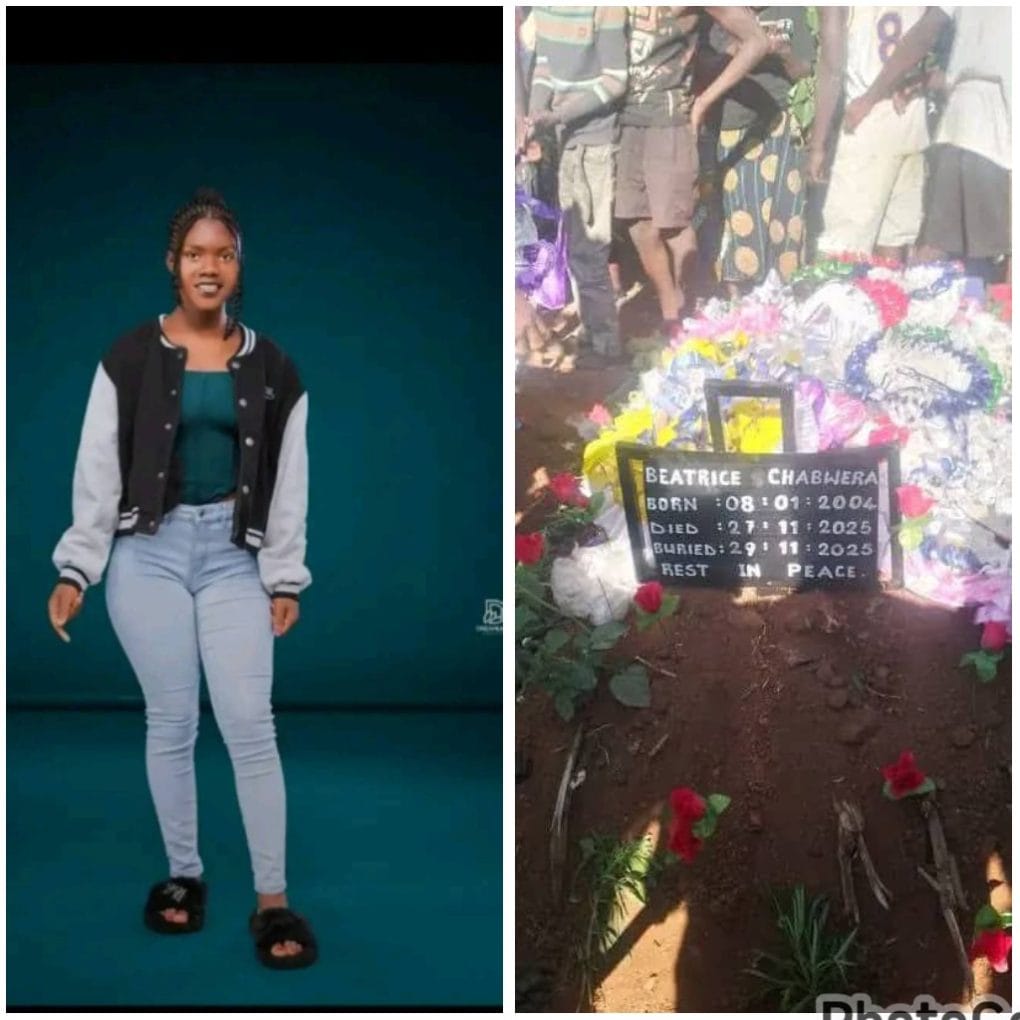
LILONGWE-(MaraviPost)-Dark clouds engulfed the capital city of Malawi on Saturday afternoon, when exactly at 2:03pm, the coffin of a twenty-one year-old girl Beatrice Chabwera was lowered into the grave.
There were tears, and sound of birds singing, “Tukruku tuktuku” inside the cemetery as slowly the innocent girl was on her way to her final resting place.
The choir members were singing,”Amayi tsalani ngakhale mundikonda,Ambuye tsogoleleni ndili ndekha.”
Friends to Beatrice were waving at the coffin as slowly it descended into the grave.
One relative shouted on top of her voice,”Yenda bwino mwanawanga Mulungu akutsogolele,”as adzukulu were instructing each other …lafika bwelesani makasu pafupi.
It was a sad moment, as women shed tears while most of the men hold their hands at their back. Adzukulu started burying the body of Beatrice ,who was sent to an early grave by some evil people.
After she was laid to rest,one by one starting with women left the cemetery leaving behind some relative to Beatrice who kneel down on the tombstone of their lovely Queen.They bowed down and shed tears.
As l write, Beatrice is all alone 6 ft under the ground not that she was sick or had an accident,but some unknown assailants,who stabbed her on the back and neck.
These people are enjoying in their homes,while Beatrice is down on the ground in a tinny coffin.
May Beatrice soul rest in peace
Share this:
Like this:
LikeLoading…
Discover more from The Maravi Post
Subscribe to get the latest posts sent to your email.
In a powerful and heartfelt call to action on November 25th, marking the International Day for the Elimination of Violence against Women, Malawi’s First Lady, Prof. Gertrude Mutharika, and Minister of Gender, Mary Navicha, have united their voices to renew the nation’s commitment to ending gender-based violence (GBV) in all its forms.
Their combined leadership and unwavering dedication have raised the profile of this critical issue across the country, inspiring citizens to join hands in creating a safer, more equitable Malawi.
Prof. Gertrude Mutharika, a passionate advocate for women’s rights and safety, launched the 16 Days of Activism against Gender-Based Violence under the national theme, “Unite to End Gender Based Violence in Malawi.”
Her message was clear and resonant: the fight against GBV requires the collective effort of every Malawian — men, women, and youth alike. “A safe woman is a strong nation,” she affirmed, emphasizing the indispensable role that women’s safety plays in the nation’s overall strength and progress.
Her appeal was not just symbolic but deeply rooted in the realities faced by many women in Malawi.
Gender-based violence, which includes physical, emotional, sexual, and psychological abuse, remains a pervasive challenge, disrupting families and communities and threatening the country’s social fabric.
In a nation where tradition and modernity often intersect, Prof. Mutharika’s leadership stands as a beacon of hope, urging society to break the silence and stigma surrounding violence against women.
Complementing the First Lady’s call, Minister Mary Navicha has added a vital dimension to the discourse by addressing the often overlooked issue of violence against men.
Speaking candidly, Navicha acknowledged that while women and girls are predominantly victimized, men also face abuse, and their plight deserves attention and support.
This inclusive approach broadens the national conversation on GBV, ensuring no victim is marginalized or ignored.
Minister Navicha also brought to light the emerging threat of online abuse, a form of gender-based violence that is increasingly affecting women and girls in Malawi.
She urged the public and organizations alike to take this digital menace seriously, highlighting the need for robust measures to combat cyber exploitation and harassment.
In particular, she appealed to women and girls to exercise caution by avoiding the sharing of explicit images, a step she believes can help prevent digital exploitation and protect vulnerable individuals from further harm.
Her remarks showed a nuanced understanding of the evolving landscape of violence, reflecting a progressive stance that aligns with global efforts to address GBV in all its manifestations.
Navicha’s emphasis on digital safety is a critical reminder that the fight against gender-based violence must keep pace with technological advances that, while beneficial, can also be weaponized.
Minister Navicha’s leadership has been recognized and supported at the highest level of government, with President Professor Arthur Peter Mutharika appointing her to serve as Minister of Gender.
Her appointment signals a strong governmental commitment to tackling GBV, backed by a woman who is both knowledgeable and passionate about the cause.
Navicha’s approach combines advocacy, education, and practical strategies to engage communities, institutions, and policymakers in building a comprehensive response to gender violence.
Together, these two remarkable women embody the spirit of resilience and determination needed to confront one of Malawi’s most pressing social challenges.
They have become symbols of hope and change, inspiring not only government officials but also grassroots organizations, civil society, and ordinary citizens to take concrete steps toward a violence-free society.
Their messages resonate deeply in a country where cultural norms and economic hardships sometimes perpetuate cycles of abuse.
By standing united, Prof. Mutharika and Minister Navicha are helping to dismantle harmful stereotypes and encouraging a culture of respect, equality, and safety for all individuals, regardless of gender.
The First Lady’s statement that “A safe woman is a strong nation” encapsulates a profound truth—when women are protected and empowered, the entire nation benefits.
This vision aligns with Malawi’s broader developmental goals, recognizing that gender equality is not only a matter of human rights but also a driver of economic growth and social stability.
Meanwhile, Minister Navicha’s inclusive approach ensures that the gender-based violence agenda is comprehensive and sensitive to the needs of all victims. Her focus on digital abuse also positions Malawi to engage with contemporary challenges that many countries are only beginning to address.
As the 16 Days of Activism unfold, the country is witnessing a renewed energy and commitment to eradicate gender-based violence.
Educational campaigns, community dialogues, and policy reforms are being prioritized, with both Prof. Gertrude Mutharika and Minister Mary Navicha at the forefront of these efforts. Their leadership is galvanizing a movement that transcends political lines and social divisions, uniting Malawians in a common cause.
This united front is critical because gender-based violence thrives in silence and isolation. By breaking the silence, these leaders are encouraging survivors to come forward, seek help, and find justice.
They are also challenging perpetrators to be held accountable, signaling that such violence will no longer be tolerated.
The partnership between the First Lady and the Minister of Gender exemplifies how high-profile women leaders can influence national attitudes and policies.
Their commitment is not just ceremonial; it is active and ongoing, involving engagement with communities, collaboration with NGOs, and advocacy within government structures.
Moreover, their public profiles bring visibility to GBV issues at a time when global attention is focused on gender equality and women’s rights.
Malawi’s efforts, led by these two leaders, contribute to the international movement to end violence against women and girls, aligning the country with global frameworks such as the Sustainable Development Goals (SDGs).
In a society where patriarchal norms have long held sway, the voices of Prof. Gertrude Mutharika and Mary Navicha represent a transformative force. They are redefining leadership by prioritizing compassion, inclusivity, and action.
Their work underscores that ending gender-based violence is not just about protecting women and girls but about building a just society where everyone can thrive free from fear.
As Malawi continues this vital journey, the nation can take pride in having such dedicated women at the helm—leaders who are not only advocates but also role models, showing that change is possible when courage and commitment unite.
The call to “Unite to End Gender Based Violence in Malawi” is more than a slogan; it is a rallying cry that has found its champions in Mary Navicha and Gertrude Mutharika.
Their leadership lights a path forward, inviting every Malawian to join hands in creating a future where dignity, respect, and safety are guaranteed for all.
May their tireless efforts inspire lasting change and a Malawi where violence is nothing but a dark memory, replaced by hope, justice, and equality for every citizen.
Share this:
Like this:
LikeLoading…
Discover more from The Maravi Post
Subscribe to get the latest posts sent to your email.












 This is going to be a great opportunity to re-set the global agenda of volunteerism, one of the most important tools to promote civic engagement, the bedrock of our societies.