Kofi Time: The Podcast

Armed Conflicts, Civil Society, Climate Change, Food and Agriculture, Health, Multimedia, Peace, Podcast

Aug 24 2022 –  

About the Podcast

Regarded as one of the modern world’s icons of diplomacy, what is Kofi Annan’s legacy today? What can we learn from him, and how can we prepare for tomorrow, based on his vision for a better world?

In this exclusive 10-part podcast, Ahmad Fawzi, one of Kofi Annan’s former spokespersons and communication Advisor, will examine how Kofi Annan tackled a specific crisis and its relevance to today’s world and challenges.

Kofi Annan’s call to bring all stakeholders around the table — including the private sector, local authorities, civil society organisations, academia, and scientists — resonates now more than ever with so many, who understand that governments alone cannot shape our future.

Join us on a journey of discovery as Ahmad Fawzi interviews some of Kofi Annan’s closest advisors and colleagues including Dr Peter Piot, Christiane Amanpour, Mark Malloch-Brown, Michael Møller and more.

Listen and follow us on Apple Podcasts, Spotify and SoundCloud

Brought to you by the Kofi Annan Foundation and the United Nations Information Service.


Kofi Time: The Official Trailer

Join us as we take a journey of discovery about Kofi Annan’s leadership style and what makes it so relevant and important today.


Multilateralism: Then & Now | Kofi Time with Lord Mark Malloch-Brown | Episode 1

In this episode, Lord Malloch Brown shares insights with podcast host Ahmad Fawzi on how Kofi Annan strengthened the United Nations through careful diplomacy and bold reforms, and how significant advances were made during his tenure as Secretary-General. He comments on the state of multilateralism today, as the organization is buffeted by the crisis in Ukraine and the paralysis of the Security Council.


Making Peace: Then & Now | Kofi Time with Christiane Amanpour | Episode 2

In this episode of Kofi Time, host Ahmad Fawzi interviews renowned journalist Christiane Amanpour. Together, they discuss a world in turmoil, and what would Kofi Annan – who did so much for peace – do today?

Christiane shares her thoughts on the ‘Kofi Annan way’, the difficult job mediators and peacebuilders face, and the courage they must show. With Ahmad, they deliberate whether there is a type of ‘calling’ for those who work in this field.


Health Crises: Then & Now | Kofi Time with Dr Peter Piot | Episode 3

In this episode of Kofi Time, our special guest is Dr Peter Piot. Dr Piot discusses how he and Kofi Annan worked together to reverse the HIV/AIDs tide that swept through Africa in the 1990s, through patient but bold diplomacy, innovative partnerships and an inclusive approach that brought to the table previously marginalized communities. Dr Piot and podcast host Ahmad Fawzi discuss whether this approach be replicated today as the world enters the third year of the COVID-19 pandemic and must prepare for future heath emergencies.


Fighting Hunger: Then & Now | Kofi Time with Catherine Bertini | Episode 4

In episode 4 of Kofi Time, our special guest is Catherine Bertini. Ms. Bertini discusses how she worked with Kofi Annan to fight hunger and malnutrition around the world. Not only is access to food far from universal, but it is also severely impacted by conflicts and climate change. As food prices increase and access becomes even more challenging, how can we replicate Kofi Annan’s approach to improving food systems to make sure no one gets lefts behind on the path to food security globally?


Leadership: Then & Now | Kofi Time with Michael Møller | Episode 5

In episode 5 of Kofi Time, host Ahmad Fawzi interviews diplomat Michael Møller on Kofi Annan’s special kind of leadership. A respected leader among his peers and the public, Kofi Annan served the people of the world with courage, vision and empathy. Embodying moral steadfastness and an acute political acumen, his leadership was one of a kind. What drove him, and how can we emulate his leadership style to face today’s global challenges?


Human Rights: Then & Now | Kofi Time with Zeid Raad Al Hussein | Episode 6

In episode 6 of Kofi Time, our special guest is Zeid Raad Al Hussein. Zeid discusses his friendship with Kofi Annan and how they worked together to protect human dignity and promote human rights. Through the creation of the Human Rights Council and International Criminal Court, Kofi Annan played a critical role in establishing the mechanisms that we have today to protect human rights and fight impunity. How can we uphold Kofi Annan’s legacy and ensure that respect for human rights is not just an abstract concept but a reality?


Podcast Host & Guests



Ahmad Fawzi Kofi

Time Podcast Host

Mr Fawzi is the former head of News and Media at the United Nations. He worked closely with Kofi Annan both during his time as Secretary-General and afterwards, on crises including Iraq and Syria. Before joining the United Nations, he worked for many years in broadcast journalism, as a news editor, reporter and regional news operations manager. From 1991 to 1992, he was the News Operations Manager for the Americas for Visnews — now Reuters Television. Also with Reuters Television, Mr Fawzi served as Regional News Manager for Eastern Europe, based in Prague, from 1989 to 1991 — a time of tumultuous political change in that region. Concurrently with his assignment in Prague, he coordinated coverage of the Gulf war, managing the war desk in Riyadh, as well as the production centre in Dahran, Saudi Arabia. In 1989, Mr Fawzi was Reuters Television Bureau Chief for the Middle East, based in Cairo. Prior to that, he worked in London as News and Assignments Editor for Reuters Television. Previously, he was Editor and Anchor for the nightly news on Egyptian Television.



Lord Mark Malloch-Brown

Episode 1 Guest

Mark Malloch‐Brown is the president of the Open Society Foundations. He has worked in various senior positions in government and international organizations for more than four decades to advance development, human rights and justice. He was UN Deputy Secretary‐General and chief of staff under Kofi Annan. He previously Co-Chaired the UN Foundation Board. Malloch-Brown has worked to advance human rights and justice through working in international affairs for more than four decades. He was UN deputy secretary‐general and chief of staff under Kofi Annan. Before this, he was administrator of the UNDP, where he led global development efforts. He covered Africa and Asia as minister of state in the United Kingdom’s Foreign Office. Other positions have included World Bank vice president, lead international partner in a political consulting firm, vice-chair of the World Economic Forum, and senior advisor at Eurasia Group. He began his career as a journalist at the Economist and as an international refugee worker. He was knighted for his contribution to international affairs and is currently on leave from the British House of Lords. Malloch-Brown is a Distinguished Practitioner at Oxford University’s Blavatnik School of Government, an adjunct fellow at Chatham House’s Queen Elizabeth Program, and has been a visiting distinguished fellow at the Yale Center for the Study of Globalization.



Christiane Amanpour

Episode 2 Guest

Christiane Amanpour is a renowned journalist, whose illustrious career has taken her from CNN where she was Chief international correspondent for many years, to ABC as a Global Affairs Anchor, PBS and back to CNN International for the global affairs interview program named after her. She has received countless prestigious awards, including four Peabody Awards, for her international reporting and her achievements in broadcast journalism. She served as a member of the board of directors of the Committee to Protect Journalists and a UNESCO Goodwill Ambassador for Freedom of Expression and Journalist Safety. She is also an honorary citizen of Sarajevo and was made a Commander of the British Empire in 2007 by Her Majesty Queen Elizabeth.



Dr Peter Piot

Episode 3 Guest

Dr Peter Piot co-discovered the Ebola virus in Zaire in 1976. He has led research on HIV/AIDS, sexually transmitted diseases, and women’s health, mostly in sub-Saharan Africa. Peter Piot was the founding Executive Director of UNAIDS and Under-Secretary-General of the United Nations from 1995 until 2008. Under his leadership, UNAIDS has become the chief advocate for worldwide action against AIDS. It has brought together ten organizations of the United Nations system around a common agenda on AIDS, spearheading UN reform Peter Piot was the Director of the Institute for Global Health at Imperial College; London and he held the 2009/2010 “Knowledge against poverty” Chair at the College de France in Paris. He is a Fellow of the Academy of Medical Sciences and was elected a foreign member of the National Academy of Medicine of the US National Academy of Sciences.



Catherine Bertini

Episode 4 Guest

An accomplished leader in food security, international organization reform and a powerful advocate for women and girls, Catherine Bertini has had a distinguished career improving the efficiency and operations of organizations serving poor and hungry people in the United States and around the world. She has highlighted and supported the roles of women and girls in influencing change. She was named the 2003 World Food Prize Laureate for her transformational leadership at the World Food Programme (WFP), which she led for ten years, and for the positive impact she had on the lives of women. While in the US government, she expanded the electronic benefit transfer options for food stamp beneficiaries, created the food package for breastfeeding mothers, presented the first effort to picture healthy diets, and expanded education and training opportunities for poor women. As a United Nations Under-Secretary-General, and at the head of the World Food Programme for ten years (1992 to 2002), she led UN humanitarian missions to the Horn of Africa and to Gaza, the West Bank, and Israel. During her time serving with WFP, Catherine Bertini was responsible for the leadership and management of emergency, refugee, and development food aid operations, reaching people in great need in over 100 countries, as well as advocacy campaigns to end hunger and to raise financial resources. With her World Food Prize, she created the Catherine Bertini Trust Fund for Girls’ Education to support programs to increase opportunities for girls and women to attend school. At the Maxwell School of Citizenship and Public Affairs at Syracuse University, where she is now professor emeritus, she taught graduate courses in humanitarian action, post-conflict reconstruction, girls’ education, UN management, food security, international organizations, and leadership. She served as a senior fellow at the Bill and Melinda Gates Foundation early in its new agricultural development program. Bertini is now the chair of the board of the Global Alliance for Improved Nutrition (GAIN). Concurrently, she is a Distinguished Fellow at the Chicago Council on Global Affairs. She has been named a Champion of the 2021 United Nations Food Systems Summit. She is a professor emeritus at Syracuse University.



Michael Møller

Episode 5 Guest

Mr Møller has over 40 years of experience as an international civil servant in the United Nations. He began his career in 1979 with the United Nations High Commissioner for Refugees and worked for the United Nations in different capacities in New York, Mexico, Iran, Haiti, Cyprus and Geneva. He worked very closely with Kofi Annan as Director for Political, Peacekeeping and Humanitarian Affairs in the Office of the Secretary-General between 2001 and 2006, while serving concurrently as Deputy Chef de Cabinet of the Secretary-General for the last two years of that period. Mr Møller also served as the Secretary-General’s Special Representative for Cyprus from 2006 to 2008 and was the Executive Director of the Kofi Annan Foundation from 2008 to 2011. From 2013 to 2019, Mr Møller served as Director-General of the United Nations Office at Geneva as well as Personal Representative of the United Nations Secretary-General to the Conference of Disarmament. He currently is Chairman of the Diplomacy Forum of Geneva Science and Diplomacy Anticipator. A Danish citizen, Mr Møller earned a Master’s degree in International Relations from Johns Hopkins University, and a Bachelor’s degree in International Relations from the University of Sussex, in the United Kingdom.


Zeid Raad Al Hussein

Episode 6 Guest

Zeid Ra’ad Al Hussein is IPI’s President and Chief Executive Officer. Previously, Zeid served as the UN’s High Commissioner for Human Rights from 2014 to 2018 after a long career as a Jordanian diplomat, including as his country’s Permanent Representative to the UN (2000-2007 & 2010-2014) and Ambassador to the United States (2007-2010). He served on the UN Security Council, was a configuration chair for the UN Peace-Building Commission, and began his career as a UN Peacekeeper in the former Yugoslavia. Zeid has also represented his country twice before the International Court of Justice, served as the President of the Assembly of State Parties to the Rome Statute of the International Criminal Court from 2002-2005, and in 2005, authored the first comprehensive strategy for the elimination of Sexual Exploitation and Abuse in UN Peacekeeping Operations while serving as an advisor to Secretary-General Kofi Annan. Zeid is also a member of The Elders, an independent group of global leaders working together for peace, justice and human rights, founded by Nelson Mandela. Zeid holds a PhD from Cambridge University and is currently a Professor of Practice at the University of Pennsylvania.
    Source

Global Biodiversity Agenda: Nairobi Just Added More to Montreal’s Plate

Biodiversity, Climate Action, Climate Change, Conferences, Conservation, Environment, Featured, Global, Headlines, TerraViva United Nations

Biodiversity

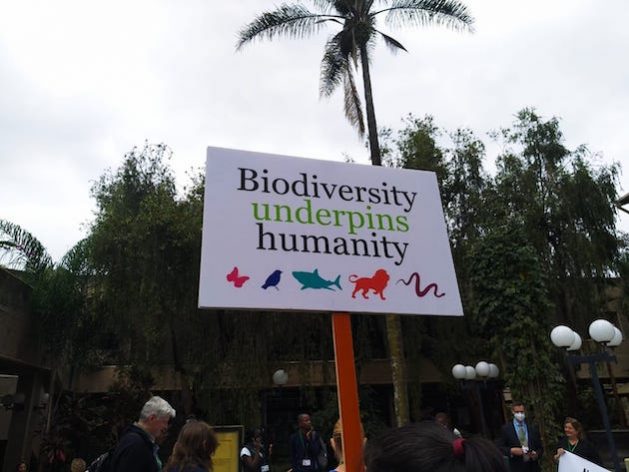
A placard on display at activists' demonstration outside the 4th meeting of the CBD Working Group at the UNEP headquarter in Nairobi. Credit: Stella Paul/IPS

A placard on display at activists’ demonstration outside the 4th meeting of the CBD Working Group at the UNEP headquarter in Nairobi. Credit: Stella Paul/IPS

Nairobi, Jun 27 2022 (IPS) – As the last working group meeting of the Post 2020 Global Biodiversity Agenda concluded here on Sunday, the delegates’ job at COP15 Montreal just got tougher as delegates couldn’t finalize the text of the agenda. Texts involving finance, cost and benefit-sharing, and digital sequencing – described by many as ‘most contentious parts of the draft agenda barely made any progress as negotiators failed to reach any consensus.


Nairobi – the Unattempted ‘Final Push’

The week-long 4th meeting of the Working Group of the Biodiversity Convention took place from June 21-26, three months after the 3rd meeting of the group was held in Geneva, Switzerland. The meeting, attended by a total of 1634 participants, including 950 country representatives, had the job cut out for them: Read the draft Post 2020 Global Biodiversity Framework (GBF) and its 21 targets, discuss, and clean up the text – target by target, sentence by sentence, at least up to 80%.

But, on Saturday – a day before the meeting was to wrap up, David Ainsworth – head of Communications at CBD, hinted that the progress was far slower than expected. Ainsworth mentioned that the total cleaning progress made was just about 8%.

To put it in a clearer context, said Ainsworth, only two targets now had a clean text – Target 19.2 (strengthening capacity-building and development, access to and transfer of technology) and target 12 (urban biodiversity). This means that in Montreal, they could be placed on the table right away for the parties to decide on, instead of debating the language. All the other targets, the work progress has been from around 50% to none, said Ainsworth.

An entire day later, on Sunday evening local time, co-chairs of the WG4 Francis Ogwal and Basile Van Havre confirmed that those were indeed the only two targets with ‘clean’ texts. In other words, no real work had been done in the past 24 hours.

On June 21, at the opening session of the meeting, Elizabeth Maruma Mrema, Executive Secretary of the Convention on Biological Diversity, described the Nairobi meeting as an opportunity for a ‘final push’ to finalize the GBF. On Sunday, she called on the parties to “vigorously engage with the text, to listen to each other and seek consensus, and to prepare the final text for adoption at COP 15”.

Answering a question from IPS News, Mrema also confirmed that there would be a 5th meeting of the Working Group before the Montreal COP, indicating the work done in the Nairobi meeting wasn’t enough to produce a draft that was ready to be discussed for adoption.

The final push, it appeared, had not even been attempted.

Bottlenecks and Stalemate

According to several observers, instead of cleaning up 80% of the texts over the past six days, negotiators had left 80% of the text in brackets, which signals disagreement among parties. Not only did countries fail to progress, but in some cases, new disagreements threatened to move the process in the opposite direction. The most fundamental issues were not even addressed this week, including how much funding would be committed to conserving biodiversity and what percentage figures the world should strive to protect, conserve, and restore to address the extinction crisis.

True to the traditions of the UN, the CBD wouldn’t be critical of any party. However, on Sunday evening, Francis Ogwal indicated that rich nations had been dragging their feet on meeting the commitment of donating to global biodiversity conservation. Without naming anyone, Ogwal reminded the negotiators that the more time they took, the tougher they would get the decision.

At present, said Ogwal, 700 billion was needed to stop and recover global biodiversity. “If you keep giving less and less, the problems magnify. Ten years down the line, this will not be enough,” he said.

The civil society was more vocal in criticizing the delegates for losing yet another opportunity.

According to Brian O’Donnell, Director of the Campaign for Nature, the negotiations were faltering, with some key issues being at a stalemate. It is, therefore, up to heads of state and other political and United Nations leaders to act with urgency. “But time is now running out, and countries need to step up, show the leadership that this moment requires, and act urgently to find compromise and solutions,” O’Donnell said in a statement.

The Next Steps

The CBD Secretariat mentioned a string of activities that would follow the Nairobi meeting to speed up the process of building a consensus among the delegates. The activities include bilateral meetings with some countries, regional meetings with others, and a Working Group 5 meeting which will be a pre-COP event before COP15.

Finally, the CBD is taking a glass-half-filled approach toward the GBF, which is reflected in the words of Mrema: “These efforts (Nairobi meeting) are considerable and have produced a text that, with additional work, will be the basis for reaching the 2050 vision of the Convention: A life in harmony with nature,” she says.

The upcoming UN Biodiversity Conference will be held from 5 to December 17 in Montreal, Canada, under the presidency of the Government of China. With the bulk of the work left incomplete, the cold December weather of Montreal is undoubtedly all set to be heated with intense debates and negotiations.
IPS UN Bureau Report


Healthy Planet Needs ‘Ocean Action’ from Asian and Pacific Countries

Asia-Pacific, Climate Action, Climate Change, Conferences, Development & Aid, Economy & Trade, Environment, Headlines, Poverty & SDGs, Sustainability, TerraViva United Nations

Opinion

BANGKOK, Thailand, Jun 27 2022 (IPS) – As the Second Global Ocean Conference opens today in Lisbon, governments in Asia and the Pacific must seize the opportunity to enhance cooperation and solidarity to address a host of challenges that endanger what is a lifeline for millions of people in the region.


Armida Salsiah Alisjahbana

If done right ocean action will also be climate action but this will require working in concert on a few fronts.

First, we must invest in and support science and technology to produce key solutions. Strengthening science-policy interfaces to bridge practitioners and policymakers contributes to a sound understanding of ocean-climate synergies, thereby enabling better policy design, an important priority of the Indonesian Presidency of the G20 process. Additionally policy support tools can assist governments in identifying and prioritizing actions through policy and SDG tracking and scenarios development.

We must also make the invisible visible through ocean data: just three of ten targets for the goal on life below water are measurable in Asia and the Pacific. Better data is the foundation of better policies and collective action. The Global Ocean Accounts Partnership (GOAP) is an innovative multi-stakeholder collective established to enable countries and other stakeholders to go beyond GDP and to measure and manage progress towards ocean sustainable development.

Solutions for low-carbon maritime transport are also a key part of the transition to decarbonization by the middle of the century. Countries in Asia and the Pacific recognized this when adopting a new Regional Action Programme last December, putting more emphasis on such concrete steps as innovative shipping technologies, cooperation on green shipping corridors and more efficient use of existing port infrastructure and facilities to make this ambition a reality.

Finally, aligning finance with our ocean, climate and broader SDG aspirations provides a crucial foundation for all of our action. Blue bonds are an attractive instrument both for governments interested in raising funds for ocean conservation and for investors interested in contributing to sustainable development in addition to obtaining a return for their investment.

These actions and others are steps towards ensuring the viability of several of the region’s key ocean-based economic sectors, such as seaborne trade, tourism and fisheries. An estimated 50 to 80 per cent of all life on Earth is found under the ocean surface. Seven of every 10 fish caught around the globe comes from Pacific waters. And we know that the oceans and coasts are also vital allies in the fight against climate change, with coastal systems such as mangroves, salt marshes and seagrass meadows at the frontline of climate change, absorbing carbon at rates of up to 50 times those of the same area of tropical forest.

But the health of the oceans in Asia and the Pacific is in serious decline: rampant pollution, destructive and illegal fishing practices, inadequate marine governance and continued urbanization along coastlines have destroyed 40 per cent of the coral reefs and approximately 60 per cent of the coastal mangroves, while fish stocks continue to decline and consumption patterns remain unsustainable.

These and other pressures exacerbate climate-induced ocean acidification and warming and weaken the capacity of oceans to mitigate the impacts of climate change. Global climate change is also contributing to sea-level rise, which affects coastal and island communities severely, resulting in greater disaster risk, internal displacement and international migration.

To promote concerted action, ESCAP, in collaboration with partner UN agencies, provides a regional platform in support of SDG14, aligned within the framework of the UN Decade of Ocean Science for Sustainable Development (2021-2030). Through four editions so far of the Asia-Pacific Day for the Ocean, we also support countries in identifying and putting in place solutions and accelerated actions through regional dialogue and cooperation.

It is abundantly clear there can be no healthy planet without a healthy ocean. Our leaders meeting in Lisbon must step up efforts to protect the ocean and its precious resources and to build sustainable blue economies.

Armida Salsiah Alisjahbana is an Under-Secretary-General of the United Nations and Executive Secretary of the Economic and Social Commission for Asia and the Pacific (ESCAP)

IPS UN Bureau


Reclaiming Our Future

Armed Conflicts, Asia-Pacific, Civil Society, Climate Action, Climate Change, COVID-19, Education, Headlines, Inequality, Labour, Poverty & SDGs, TerraViva United Nations

Opinion

BANGKOK, Thailand, May 23 2022 (IPS) – The Asia-Pacific region is at a crossroads today – to further breakdown or breakthrough to a greener, better, safer future.

Since the Economic and Social Commission for Asia and the Pacific (ESCAP) was established in 1947, the region has made extraordinary progress, emerging as a pacesetter of global economic growth that has lifted millions out of poverty.


Yet, as ESCAP celebrates its 75th anniversary this year, we find ourselves facing our biggest shared test on the back of cascading and overlapping impacts from the COVID-19 pandemic, raging conflicts and the climate crisis.

Few have escaped the effects of the pandemic, with 85 million people pushed back into extreme poverty, millions more losing their jobs or livelihoods, and a generation of children and young people missing precious time for education and training.

As the pandemic surges and ebbs across countries, the world continues to face the grim implications of failing to keep the temperature increase below 1.5°C – and of continuing to degrade the natural environment. Throughout 2021 and 2022, countries across Asia and the Pacific were again battered by a relentless sequence of natural disasters, with climate change increasing their frequency and intensity.

More recently, the rapidly evolving crisis in Ukraine will have wide-ranging socioeconomic impacts, with higher prices for fuel and food increasing food insecurity and hunger across the region.

Rapid economic growth in Asia and the Pacific has come at a heavy price, and the convergence of these three crises have exposed the fault lines in a very short time. Unfortunately, those hardest hit are those with the fewest resources to endure the hardship. This disproportionate pressure on the poor and most vulnerable is deepening and widening inequalities in both income and opportunities.

The situation is critical. Many communities are close to tipping points beyond which it will be impossible to recover. But it is not too late.

The region is dynamic and adaptable.

In this richer yet riskier world, we need more crisis-prepared policies to protect our most vulnerable populations and shift the Asia-Pacific region back on course to achieve the Sustainable Development Goals as the target year of 2030 comes closer — our analysis shows that we are already 35 years behind and will only attain the Goals in 2065.

To do so, we must protect people and the planet, exploit digital opportunities, trade and invest together, raise financial resources and manage our debt.

The first task for governments must be to defend the most vulnerable groups – by strengthening health and universal social protection systems. At the same time, governments, civil society and the private sector should be acting to conserve our precious planet and mitigate and adapt to climate change while defending people from the devastation of natural disasters.

For many measures, governments can exploit technological innovations. Human activities are steadily becoming “digital by default.” To turn the digital divide into a digital dividend, governments should encourage more robust and extensive digital infrastructure and improve access along with the necessary education and training to enhance knowledge-intensive internet use.

Much of the investment for services will rely on sustainable economic growth, fueled by equitable international trade and foreign direct investment (FDI). The region is now the largest source and recipient of global FDI flows, which is especially important in a pandemic recovery environment of fiscal tightness.

While trade links have evolved into a complex noodle bowl of bilateral and regional agreements, there is ample scope to further lower trade and investment transaction costs through simplified procedures, digitalization and climate-smart strategies. Such changes are proving to be profitable business strategies. For example, full digital facilitation could cut average trade costs by more than 13 per cent.

Governments can create sufficient fiscal space to allow for greater investment in sustainable development. Additional financial resources can be raised through progressive tax reforms, innovative financing instruments and more effective debt management. Instruments such as green bonds or sustainability bonds, and arranging debt swaps for development, could have the highest impacts on inclusivity and sustainability.

Significant efforts need to be made to anticipate what lies ahead. In everything we do, we must listen to and work with both young and old, fostering intergenerational solidarity. And women must be at the centre of crisis-prepared policy action.

This week the Commission is expected to agree on a common agenda for sustainable development in Asia and the Pacific, pinning the aspirations of the region on moving forward together by learning from and working with each other.

In the past seven-and-a-half decades, ESCAP has been a vital source of know-how and support for the governments and peoples of Asia and the Pacific. We remain ready to serve in the implementation of this common agenda.

To quote United Nations Secretary-General Antonio Guterres, “the choices we make, or fail to make today, will shape our future. We will not have this chance again.”

Armida Salsiah Alisjahbana is the United Nations Under-Secretary-General and Executive Secretary of the Economic and Social Commission for Asia and the Pacific

IPS UN Bureau

  Source

Indian Agriculture Towards 2030

Asia-Pacific, Biodiversity, Civil Society, Climate Change, Combating Desertification and Drought, Environment, Food and Agriculture, Food Security and Nutrition, Food Sustainability, Headlines, Natural Resources, TerraViva United Nations, Trade & Investment, Water & Sanitation

Opinion

KATHMANDU, Nepal, Apr 4 2022 (IPS) – India began its journey as an independent nation in 1947 with fresh memory of the Bengal Famine of 1943 which claimed 1.5 to 3 million lives. Against this backdrop, the First Five Year Plan (1951-56) prioritized agriculture which, however, shifted to heavily industrialization in the second Plan.


Shyam Khadka

The mid-1960s was a difficult time when consecutive droughts hit food production and India had to import about 11 million metric ton (MMT) of wheat per year – about 15% of its domestic food grain production – under US Public Law 480. With the availability of high yielding miracle seeds of wheat and rice accompanied by increasing use of chemical fertilisers, provision of minimum support price (MSP) for rice and wheat, expansion in irrigated area, and gradual mechanization of farms, Indian agri-food system fortunately took a definitive positive turn beginning late 1960s. As a result, India has become the largest producer of milk (187.7 MMT in 2019-20) and cotton (37.5 million bales in 2019-20) and the second largest producer of rice (117.5 MMT in 2019-20) and wheat (106.2 MMT in 2019-20), fruits (97.97 MMT in 2018-19) and vegetables (183.17 MMT in 2018-19). India today is not only food self-sufficient but also a net exporter of agricultural produce. In short, the success of Indian agriculture in last six decades has been nothing less than spectacular.

The success, however, has come with significant costs. The resource intensification that the Green Revolution requires has adversely affected natural resources and environment. India pumped 245 million cubic meters – about 25 percent of total groundwater withdrawn globally – for irrigation in 2011. As a result, ground water in 1,034 blocks (16% of total blocks) are over-exploited. Worse, ground water table has become critical in 4% and semi-critical in 10% of the blocks. Similarly, some 37% of land area in the country (120.4 mn ha) is affected by various types of land degradation. Subsidy policy-induced non-judicious use of fertilizers has led to the chemicalization of soil and pollution of water through leaching and run-off. Despite abundant supply of food grains, in 2020 41.7% of under-5 children suffered from stunting. India is home to 208.6 million – or over a quarter – of world’s undernourished people. Other challenges that Indian agriculture faces today include uneven regional growth, rising fiscal constraints, mounting and unsustainable level of subsidies, small holding size and further fragmentation of holdings and accompanying land tenurial issues, and low resource use efficiency, particularly of water. These factors act as serious impediments for sustained agricultural growth and farmers’ livelihoods.

Amidst the success and emerging challenges NITI Aayog, the apex public policy think tank of the Government of India and the Food and Agricultural Organization of the United Nations (FAO) decided to facilitate a national dialogue among key stakeholders including government agencies, academia, civil society organisations, farmers, private sector, international organizations, media and others to articulate a vision for 2030 and pathways for the remandating of agriculture in India. To this end, 10 thematic papers were commissioned from distinguished professionals. A 3-day national dialogue entitled, ‘Indian Agriculture Towards 2030: Pathways for enhancing Farmers’ Income, Nutritional Security and Sustainable Food and Farm Systems” was held in January 2021. NITI Aayog and FAO have now come up with a publication with the same title (Chand, R., Joshi, P, and Khadka, S., Editors (2022), Springer).

In addition to the challenges enumerated above the books also deals with issues of climate change and its impact on agricultural production and farmers’ incomes and the strategies to mitigate such change; growing incidence of pests, pandemics, and transboundary diseases and threat to biosecurity affecting agricultural production; and alternative farming systems for transformative and sustainable agroecology and biodiverse future. The role of science, technology and innovation is identified as key to sustainable and resilient agriculture. Similarly, role of structural reforms and governance are discussed in detail and the role of price policies, market reforms and institutions are being highlighted for an efficient, inclusive and sustainable agriculture.

The National Dialogue identified pathways for transformation with emphasis on remandating Indian agriculture in a way that makes it more productive, efficient, resilient, resource conserving, nutrition centered and globally focused. These transformational outcomes are to be achieved by focusing on following pathways:

    • Increasing investment in agriculture, first to reverse the declining trend and then achieving ‘efficient’ growth rather than growth alone, increased adoption of improved technology, reorienting agricultural science, technology and innovations, applying digital solutions and artificial intelligence, better use of information and communication technology, application of One Health concept;
    • Making Indian agriculture globally-focused, shifting attention from self-sufficiency to adding value through increased processing and achieving a high rate of export growth
    • Enhancing the efficiency of the water and other resources, mainly by correcting distorted water pricing, adopting water conserving technologies and agro-ecological approach, changes in the cropping pattern, and reversing neglect of rainfed areas;
    • Making agriculture climate resilient, by adopting several no-regret technological and institutional options as well as by undertaking more targeted research, use of big data analytics, and adoption of a science-based and green growth approach;
    • Tackling nutrition and food safety, by diversifying diet, reducing post-harvest losses, encouraging bio-fortifications, empowering women, enforcing food safety standards, improving water sanitation and hygiene, and promoting food safety awareness and nutrition education;
    • Focusing sharply on innovations, incentives and institutions that contribute to enhance productivity, enhance resilience to climate change, incentivize water and energy conservation, and by adopting more conducive regulatory environment such as for exploiting ground water; and
    • Adopting appropriate policies and improving governance such as by reducing distortion caused by the MSP, accelerating rural infrastructure creation, ensuring greater engagement of the state governments, enhancing access to credit and extension services, and expansion of contract farming.

As emphasised by Honourable M. Venkaiah Naidu, Vice-President of India in his foreword, the book ‘provides a sound basis for reflection because they distil important lessons and present an array of policy options for the government to choose from’.

Shyam Khadka is a former senior official of the Food and Agriculture Organization of the United Nations who served as representative in India (2015-18) and was Senior Portfolio Manager in United Nations International Fund for Agricultural Development (1997-2014). An international development professional, Khadka works on policies, programs and projects that aim at developing agriculture, ensuring food security, and reducing poverty globally.

IPS UN Bureau

  Source

Changing a System that Exploits Nature and Women, for a Sustainable Future

Active Citizens, Civil Society, Climate Action, Climate Change, Conferences, Environment, Gender, Global Governance, Headlines, Human Rights, Indigenous Rights, IPS UN: Inside the Glasshouse, Latin America & the Caribbean, Regional Categories, Women & Climate Change

Women & Climate Change

Peruvian farmer Hilda Roca, 37, stands in her agro-ecological garden in Cusipata, a town located at more than 3,300 meters above sea level in the highlands of Cuzco, where she grows vegetables for her family and sells the surplus with the support of her adolescent daughter and son. CREDIT: Mariela Jara/IPS

Peruvian farmer Hilda Roca, 37, stands in her agro-ecological garden in Cusipata, a town located at more than 3,300 meters above sea level in the highlands of Cuzco, where she grows vegetables for her family and sells the surplus with the support of her adolescent daughter and son. CREDIT: Mariela Jara/IPS

LIMA, Mar 7 2022 (IPS) – “Pachamama (Mother Earth) is upset with all the damage we are doing to her,” says Hilda Roca, an indigenous Peruvian farmer from Cusipata, in the Andes highlands of the department of Cuzco, referring to climate change and the havoc it is wreaking on her life and her environment.


From her town, more than 3,300 meters above sea level, she told IPS that if women were in power equally with men, measures in favor of nature that would alleviate the climate chaos would have been approved long ago. “But we need to fight sexism so that we are not discriminated against and so our rights are respected,” said the Quechua-speaking farmer.

The link between climate change and gender is the focus of the United Nations’ celebration of this year’s International Women’s Day, Mar. 8, under the theme “Gender equality today for a sustainable tomorrow”.

The aim is to “make visible how the climate crisis is a problem that is closely related to inequality, and in particular to gender inequality, which is expressed in an unequal distribution of power, resources, wealth, work and time between women and men,” Ana Güezmes, director of the Gender Affairs Division of the Economic Commission for Latin America and the Caribbean (ECLAC), told IPS.

Latin America is highly vulnerable to the climate crisis despite the fact that it emits less than 10 percent of the greenhouse gases that are warming the planet.

In addition, climate injustice has a female face in the region: lower-income population groups, where the proportion of women is higher, are more exposed to climate effects due to their limited access to opportunities, despite the fact that they are less responsible for emissions.

The extreme poverty rate in the region increased from 13.1 percent to 13.8 percent of the population – from 81 to 86 million people – between 2020 and 2021, according to data released by ECLAC in January. Women between 25 and 59 years of age are the most affected compared to their male counterparts. This situation is worse among indigenous and rural populations, who depend on nature for their livelihoods.

These aspects were highlighted at ECLAC’s 62nd Meeting of the Presiding Officers of the Regional Conference on Women, held Jan. 26-27, whose declaration warns that women and girls affected by the adverse impacts of climate change and disasters face specific barriers to access to water and sanitation, health and education services, and food security.

And it is women who are mainly responsible for feeding their families, fetching water and firewood, and taking care of the vegetable garden and animals.

“That is why we maintain that the post-pandemic recovery must be transformative in terms of sustainability and equality,” Güezmes emphasized from ECLAC headquarters in Santiago, Chile.

To this end, she said, this recovery “must untie the four structural knots of gender inequality that affect the region so much: socioeconomic inequality and poverty; the sexual division of labor and the unjust organization of caregiving; the concentration of power and patriarchal, discriminatory and violent cultural patterns; and the predominance of the culture of privilege.”

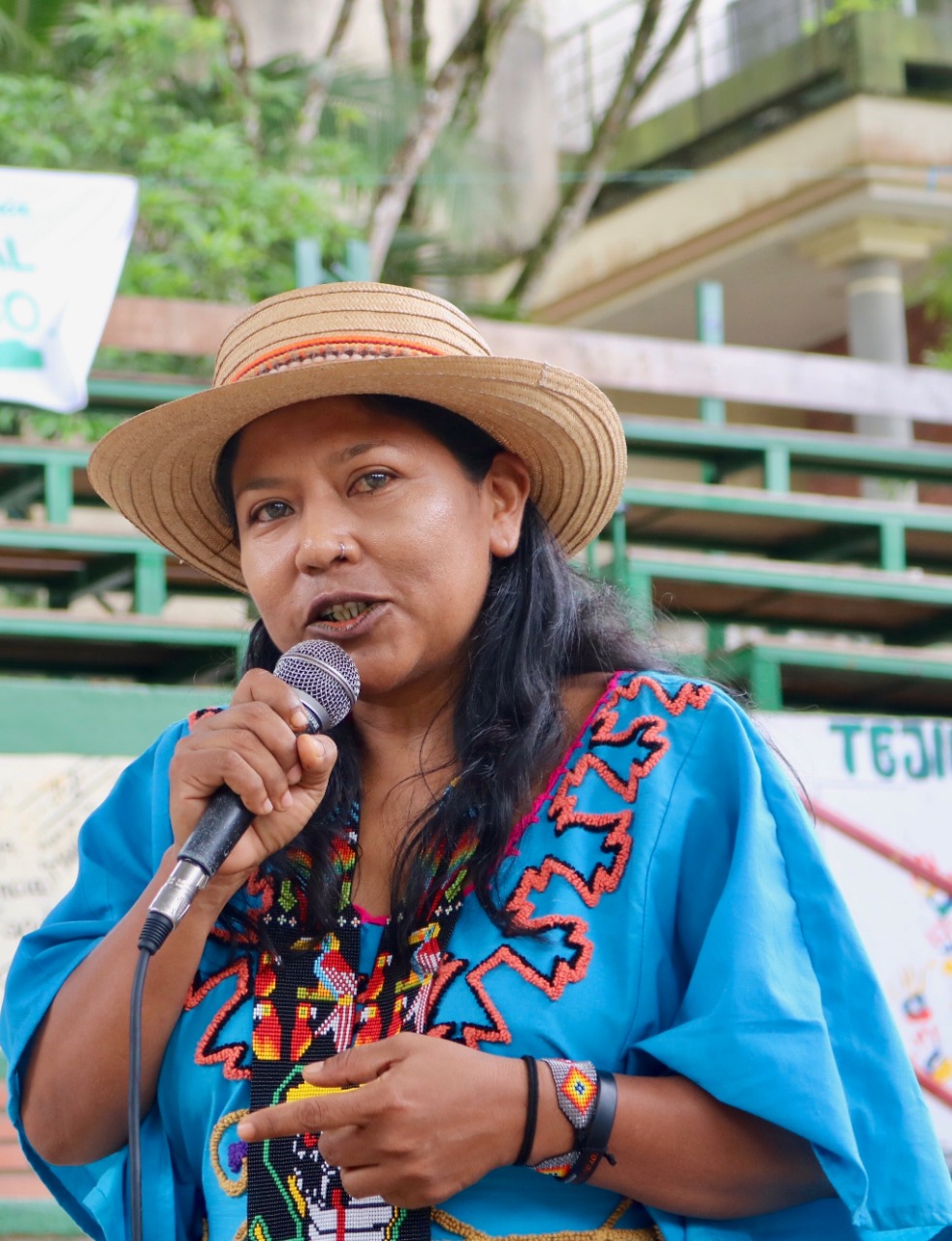
Luz Mery Panche, an indigenous leader of the Nasa people of Colombia. : Courtesy of Luz Mery Panche

Luz Mery Panche, an indigenous leader of the Nasa people of Colombia. : Courtesy of Luz Mery Panche

Reconciling with Mother Earth

Luz Mery Panche, an indigenous leader of the Nasa people, discussed the need to incorporate a gender perspective into the climate crisis. She talked to IPS from San Vicente del Caguán, in the department of Caquetá, in the Amazon region of Colombia, a country facing violent attacks on defenders of land and the environment.

For her, more than sustainable, “it is about moving towards a sustainable future.”

“We need to change the conditions that have generated war and chaos in the country, which is due to the hijacking of political and economic power by an elite that has been in the decision-making spaces since the country emerged 200 years ago,” she said.

Panche is a member of the National Ethnic Peace Coordination committee (Cenpaz) and in that capacity is part of the special high-level body with ethnic peoples for the implementation of the peace agreement in her country. She is a human rights activist and a defender of the Amazon rainforest.

She argued that to achieve a sustainable future “we must reconcile with Mother Earth and move towards the happy, joyful way of life that we deserve as human beings.”

This, she said, starts by changing the economic model violently imposed on many areas without taking into account the use of the soil, its capacities and benefits; by changing concepts of economy and the educational model; and by organizing local economies and focusing on a future of respect, solidarity and fraternity.

Panche said that in order to move towards this model, women “must have informed participation regarding the effects of climate change.

“Although we prefer to call Mother Earth’s fever ‘global warming’. And it is up to us to remember to make decisions that put us back on the ancestral path of harmony and balance, what we call returning to the origin, to the womb, to improve coexistence and the sense of humanity,” she said.

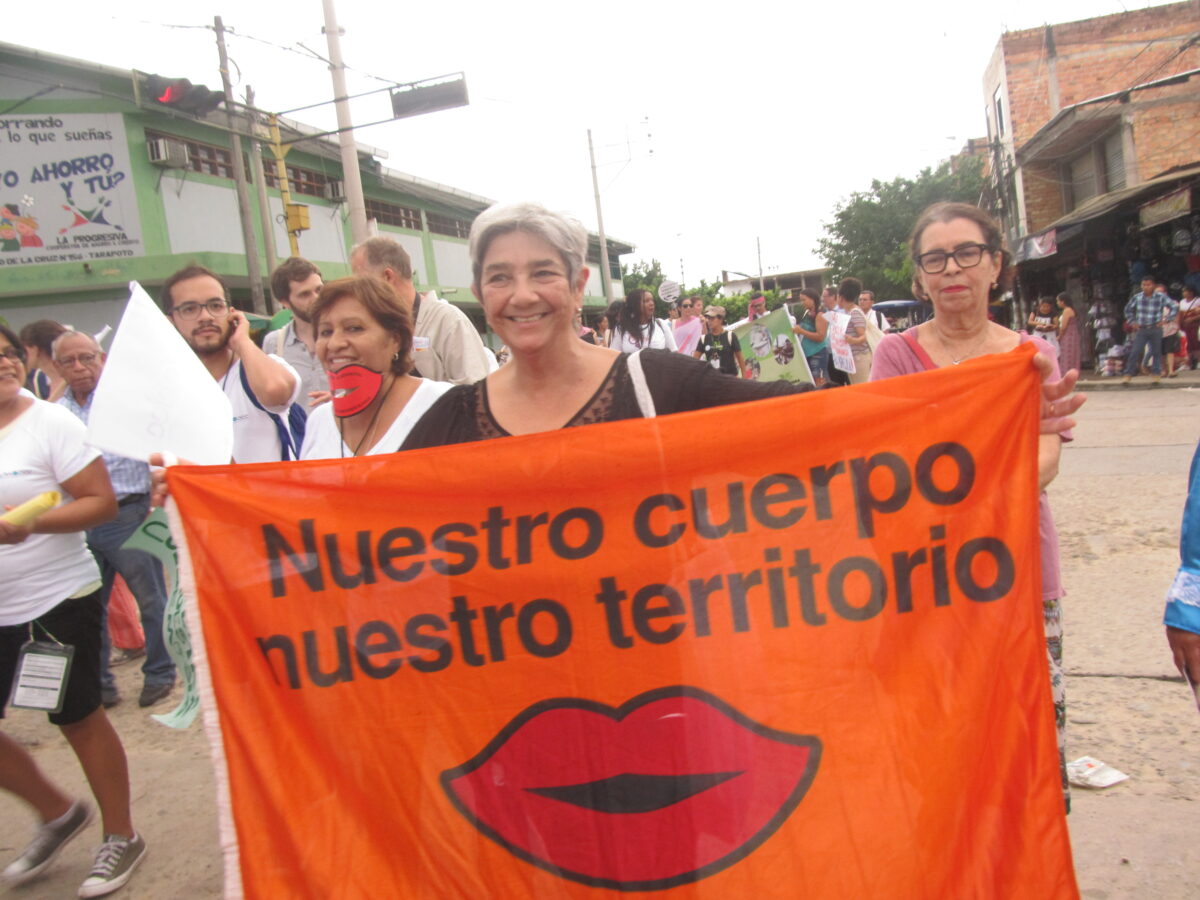
Uruguayan ecofeminist Lilian Celiberti carries a banner reading "Our body, our territory" in the streets of Tarapoto, a city in the central Peruvian jungle, during an edition of the Pan-Amazon Social Forum. CREDIT: Mariela Jara/IPS

Uruguayan ecofeminist Lilian Celiberti carries a banner reading “Our body, our territory” in the streets of Tarapoto, a city in the central Peruvian jungle, during an edition of the Pan-Amazon Social Forum. CREDIT: Mariela Jara/IPS

Changing times: another kind of coexistence with nature and equality

Lilian Celiberti, Uruguayan ecofeminist and founder of the non-governmental Cotidiano Mujer and Colectivo Dafnias, told IPS from Montevideo that governments have the tools to work on gender equality today in order to have a sustainable future tomorrow, as this year’s Mar. 8 slogan states.

But against this, she said, there are economic interests at play that maintain a development proposal based on growth and extreme exploitation of nature.

She called for boosting local economies and agroecology among other community alternatives in the Latin American region that run counter to the dominant government approach.

“But I believe that we are at a very complex crossroads and that only social participation will be able to find paths of multiple, diverse participation and collective sustainability that incorporate care policies and awareness of the eco-dependence of human society,” she said.

Celiberti said “we are on a planet of finite resources and we have to generate a new relationship with nature, but I see that governments are far from this kind of thinking.”

ECLAC’s Güezmes emphasized that social movements, especially those led by young indigenous and non-indigenous women in the region, have exposed the multiple asymmetries and inequalities that exist.

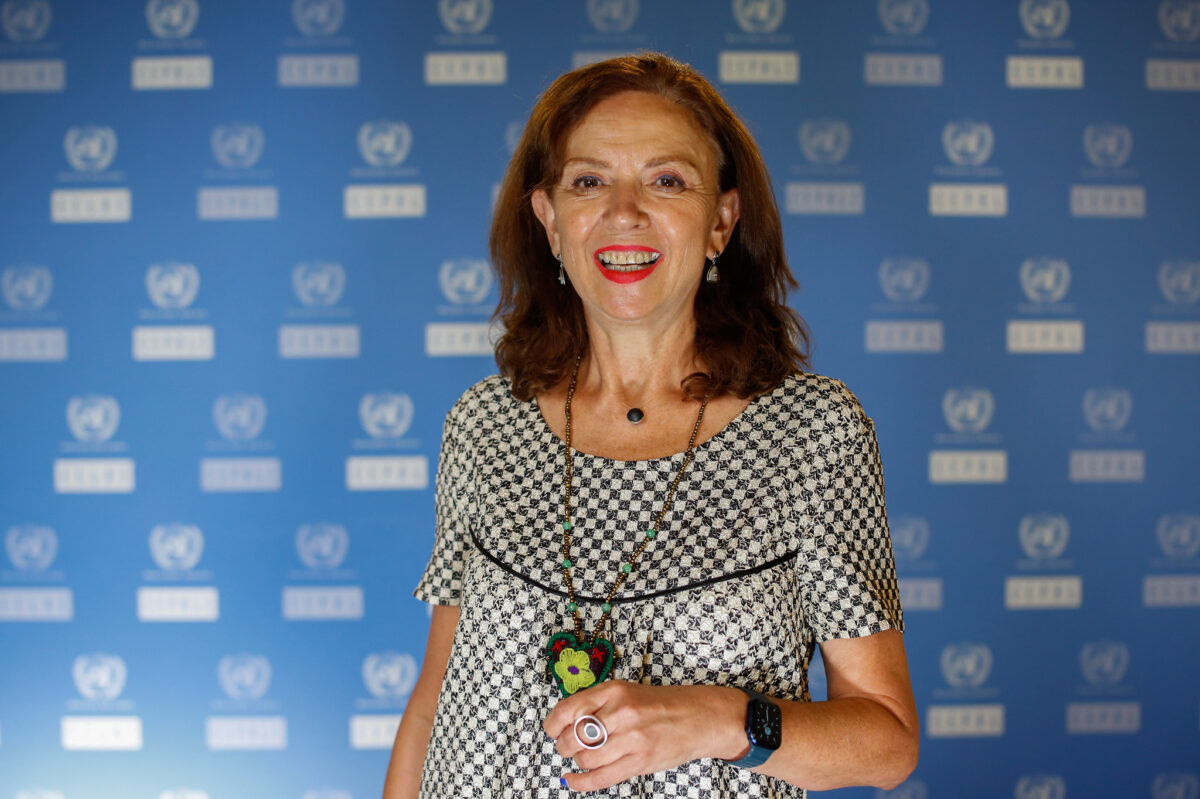
Ana Güezmes is director of the Gender Division of the Economic Commission for Latin America and the Caribbean. CREDIT: ECLAC

Ana Güezmes is director of the Gender Division of the Economic Commission for Latin America and the Caribbean. CREDIT: ECLAC

“We have an intergenerational debt, where young women have put at the center of the debate the unsustainability of the current development style that has direct impacts on our future at a global level and direct impacts on their livelihoods, territories and communities,” said Güezmes, who is from Spain and has worked for years within the United Nations in several Latin American countries.

She recognized the contribution of feminist movements that focus on a redistribution of power, resources and time to move towards an egalitarian model that includes the reduction of violence.

And she warned that from a climate perspective, the window of opportunity for action is closing, so we must act quickly, creating synergies between gender equality and climate change responses.

Güezmes said that “we are looking at a change of era” with global challenges that require a profound transformation that recognizes how the economy, society and the environment are interrelated. “To leave no one behind and no woman out, we must advance synergistically among these three dimensions of development: economic, social and environmental,” she remarked.

The expert cited gender equality as a central element of sustainable development because women need to be at the center of the responses. To this end, ECLAC plans to promote affirmative actions that bolster comprehensive care systems, decent work and the full and effective participation of women in strategic sectors of the economy.

She also raised the need to build “a renewed global pact” to strengthen multilateralism and achieve greater solidarity with middle-income countries on issues central to inclusive growth, sustainable development and gender equality.

“We have reiterated the urgent need to advance new political, social and fiscal pacts focused on structural change for equality,” Güezmes stressed.

She stated that in this perspective, the participation of women in all their diversity in decision-making processes is very important, particularly with regard to climate change.

To this end, she remarked, it is necessary to monitor their degree of intervention at the local, national and international levels – where asymmetry persists – and to provide women’s organizations, especially grassroots ones, with the necessary resources to become involved in such spaces.

“It involves strengthening financial flows so that they reach women who are at the forefront of responses to climate change and who are familiar with the situation in their communities, and boosting their capacities so that women from indigenous, native and Afro-descendant peoples participate in decision-making spaces related to the environment to promote the exchange of their ancestral knowledge on adaptation and mitigation measures,” she said.

Güezmes highlighted the contribution of women environmental activists and defenders to democracy, peace and sustainable development. It is necessary to “recognize their contribution to the protection of biodiversity and to development, despite doing so in conditions of fragility and exploitation and having less access to land, productive resources and their control,” she said.

For her part, Roca, who like other local women in the Peruvian Andes highlands practices agroecology to adapt to climate change and reconcile with Pachamama, calls for their voices to be heard.

“We have ideas and proposals and they need to be taken into account to improve the climate and our lives,” the indigenous farmer said.

  Source