2020 Is the Decade of Action & It Has to Be a Sprint

Africa, Armed Conflicts, Climate Change, Conferences, Crime & Justice, Development & Aid, Economy & Trade, Featured, Gender, Global, Headlines, Human Rights, Labour, Peace, Poverty & SDGs, Sustainability, TerraViva United Nations, Trade & Investment

Opinion

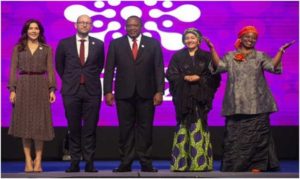
Hosted by the governments of Kenya, Denmark and UNFPA, world leaders gather for the 3-day Nairobi Summit on ICPD25 to advance sexual, reproductive health & rights for all. November 12, 2019. Photo Courtesy: Redhouse Public Relations

NAIROBI, Kenya, Dec 31 2019 (IPS) – Happy New Year, Kenya. 2020 marks a decade of action towards the realization of the Sustainable Development Goals by 2030.

Peace and development are inextricably linked, with each making the achievement of the other far more likely. This puts the conflict-prevention and development work of the UN at the heart of the agenda in East Africa, but in a multi-agency and programme environment, making meaningful progress is challenging.


Aware of this, the UN began a process of structural reforms led by the UN Secretary-General António Guterres who made reforms of the United Nations, a priority at the very beginning of his term in January 2017. The aim being to deliver better results through cooperation, collaboration and integration. 2019 was the year that the impact of these reforms became real and nowhere more than in the peace, conflict-prevention and development pillars of the UN’s work.

At the country level, that shift towards a nimble, 21st century UN challenges deeply entrenched practices and operations. In a country team with over 23 individual agencies, funds and programmes, the reform process can be complicated, even messy.

To the credit of the Kenya country team, we overcame the challenges of ceding long-held agency interests for the collective good and achieved some ground-breaking milestones in our partnership with governments, civic organizations and the private sector.

The most outstanding was our venturing out to confront challenges that transcend borders. East Africa faces major threats to peace and development across multiple fronts, and respective UN country teams have, in a remarkable show of teamwork, sought to harmonize their responses to these threats. Internecine border conflicts and the effects of climate change together make a formidable challenge that brought together UN teams from Kenya and Uganda, in a pact that seeks to bring sustainable development to the Karamoja triangle.

This pact follows from another successful regional collaboration project on the Kenya-Ethiopia border where communities accustomed to recurrent hostilities are now reaching out to each other to find solutions to common socio-economic challenges.

We believe that our regional surge towards prevention, peacemaking and diplomacy will have a particular impact on the youth, who suffer an enduring sense of being neglected and ignored. This narrative is a breeding ground for extremism and radicalization, so addressing such concerns was a key point of deliberation during last July’s African Regional High-Level Conference on Counter-Terrorism and the Prevention of Violent Extremism in Nairobi.

The same regional approach was behind the initiative by Kenya, Uganda, Tanzania, Ethiopia and Somalia to sign the Declaration and Action Plan to End Cross-border FGM in April 2019. This was the first time multiple countries had come together to tackle this pernicious cross-border crime.

But there remain many in the region still left behind by development, and we continue to stand up for them through our UN Development Assistance Framework 2018-2022. The framework’s gender equality and rights focus is unmistakable, because in too many communities, the simple fact of being born female shatters one’s chances of living in full human dignity.

Our focus on giving a leg-up to those left farthest behind has attracted a positive response from our partners in national and county governments. By staying in lockstep with national priorities on issues such as health, agriculture and housing, the common thread of messages from our partners is that we are staying effective and responsive to the ambitions of Kenyans.

As 2020 beckons, the decade of action starts and it has to be a sprint to deliver on the SDGs, the UN team in Kenya is rolling up its sleeves with greater urgency, ambition and innovation. We will enhance regional cooperation and private-public partnerships as we work with the Government towards lifting millions of the citizens of this region out of poverty and upholding their human rights.

We are re-imagining ways of delivering development in ways such as the co-creation of an SDG innovation lab between the Government of Kenya, the Centre for Effective Global Action at the University of California in Berkeley, the Rockefeller Foundation, and the UN. The SDG Lab will kick off with support for the delivery of Kenya’s Big Four agenda by harnessing, big data, technology and innovation to achieve scale and impact.

As a UN country team, we got off the blocks in 2019 in pursuit of UN Deputy Secretary General Amina Mohammed’s challenge to “flip the orthodoxy” for the repositioning of the UN. We have dared to go beyond the typical and will do whatever it takes to respond effectively to the challenges faced by Kenya’s people, now and in the future.

Siddharth Chatterjee is the United Nations Resident Coordinator in Kenya.
 

Carbon Markets Can Provide a Crucial Part of the Solution to the Climate Crisis

Climate Change, Conferences, Development & Aid, Economy & Trade, Energy, Environment, Global, Green Economy, Headlines, Labour, TerraViva United Nations

Opinion

Fenella Aouane, Principal Green Finance Specialist, Investment and Policy Solutions Division, Global Green Growth Institute (GGGI)

SEOUL, South Korea, Dec 18 2019 (IPS) – One of the main discussions at the COP25 climate change talks was Article 6, which is designed to provide financial support to emerging economies and developing countries to help them reduce emissions by using global carbon markets. Carbon pricing is an essential piece of the puzzle to curb emissions. Without a value on carbon, there is less incentive to make positive changes, especially in the private sector. The most efficient way to carry this forward is to allow trading of carbon both nationally and internationally, which will ensure the lowest cost of mitigation for participants globally.


Fenella Aouane

The COP25 negotiations in Madrid have largely been dominated by Article 6 negotiations on potential carbon markets as they are perceived by many, including businesses, as a way to generate financial flows to emerging economies and developing countries, and to reduce emissions at the lowest possible cost. Thus, it’s crucial to adopt decisions on Article 6 as rules need to be set to show how such markets will operate – this is the guidance the Article 6 rulebook will create. The sooner the better, overall mitigation in global emissions (OMGE) will be possible under the Paris Agreement through international carbon trading with aspects such as corresponding adjustments, which were lacking under the Kyoto Protocol. Carbon markets are a way to not only manage mitigation emissions cuts, but help to find the lowest cost and therefore a strong motivator for implementing international efforts.

The Global Green Growth Institute (GGGI), a Seoul-based treaty-based international, inter-governmental organization that supports emerging economies and developing country governments transition to a model of economic growth that is environmentally sustainable and socially inclusive, is already involved in several programs, funded by developed country governments such as Norway and Sweden. GGGI is working with the Norwegian Ministry of Climate and Environment on wider policy approaches, which have been made possible under Article 6 of the Paris Agreement through cooperative approaches. This program looks at helping its member and partner governments to identify areas above their Nationally Determined Contribution (NDC) targets, where emissions reductions directly resulting from policy interventions are quantified and transacted. This creates a flow of carbon finance, in exchange for the transfer of the resultant internationally transferred mitigation outcomes (ITMOs). These programs will not only create ITMO transactions but also set up the lasting infrastructure needed for countries to be able to govern and properly account for future transfers, ensuring environmental integrity and transparency.

GGGI has a key role to play. A further good example is GGGI’s recent collaboration with the Swedish Energy Agency (SEA). The two organizations will work together to catalyze international trading of mitigation outcomes in support of the increased climate ambitions needed under the Paris Agreement. Through a joint cooperation, SEA and GGGI will identify and structure mitigation activities and support the establishment of governance frameworks within host countries as required under the developing rulebook of Article 6 of the Paris Agreement, with the goal of completing ITMO transactions.

Although specific rules related to cooperative approaches under Article 6 have yet to be codified, Article 6 aims at supporting the authorization of international emissions trades while avoiding double counting and ensuring environmental integrity, permitting the movement of the related emission reductions between registries, and better linking national emission trading schemes, project-level transactions, and cooperative approaches.

What next? Carbon markets can and should be seen as an opportunity to lower the cost of cutting greenhouse gas emissions and enabling countries to commit to more ambitious targets. At next year’s Glasgow climate change conference, countries need to come forward with more ambitious Nationally Determined Contributions. GGGI’s work on pioneering designs for international carbon transactions over 2020 will help shape how the carbon markets can contribute to this increased ambition. It has also made the 2020 NDCs a priority in support of its Members and will ensure that there is strong support to deliver this next year. We need to come to Glasgow with concrete plans and steps. However, tackling climate change cannot be solved by one government alone. There needs to be high-level political commitment and collective action – these are a must.


Social Summit Demands Stronger Commitments in Climate Talks

Civil Society, Climate Change, Conferences, Development & Aid, Economy & Trade, Editors’ Choice, Environment, Featured, Global, Global Governance, Globalisation, Green Economy, Headlines, Human Rights, Indigenous Rights, IPS UN: Inside the Glasshouse, Poverty & SDGs, Regional Categories

Climate Change

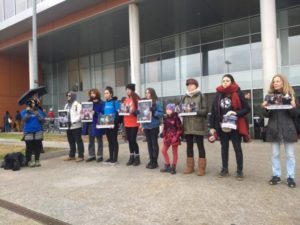
One of the continuous protests staged at the Social Summit for Climate Action, meeting Dec. 7-13 parallel to the official 25th Conference of the Parties (COP25) on climate change. The Summit, hosted by the Complutense University of Madrid, is tackling issues such as the controversial trading of carbon credits, human rights in the climate struggle and opposition to the growing production of hydrocarbons. Credit: Emilio Godoy/IPS

One of the continuous protests staged at the Social Summit for Climate Action, meeting Dec. 7-13 parallel to the official 25th Conference of the Parties (COP25) on climate change. The Summit, hosted by the Complutense University of Madrid, is tackling issues such as the controversial trading of carbon credits, human rights in the climate struggle and opposition to the growing production of hydrocarbons. Credit: Emilio Godoy/IPS

MADRID, Dec 9 2019 (IPS) – As the COP25 deliberations enter the decisive final week, representatives of environmental and social organisations gathered in a parallel summit are pressing the governments to adopt stronger commitments in the face of a worsening climate emergency.


In the debates in the week-long Social Summit for Climate Action, which began Dec. 7 parallel to the Dec. 2-13 United Nations 25th Conference of the Parties (COP25) on climate change taking place in Madrid, skepticism has been expressed with respect to the results to come out of the official meeting.

“Nothing good is going to come out of it for Central America, only proposals that are going to make it more vulnerable. The damage is going to become more serious,” Carolina Amaya, representative of the Salvadoran Ecological Unit, told IPS, pointing out that the region is one of the most exposed to the climate crisis, facing persistent droughts, intense storms, rising sea levels and climate migrants.

The social summit is taking place at the public Complutense University, in the west of the Spanish capital, about 15 km from the IFEMA fairgrounds which are hosting COP25 after Chile pulled out on Oct. 30 from holding the event due to massive anti-government protests and social unrest.

The alternative activities, which also end on Friday Dec. 13, include a varied menu of issues, such as free trade and its socioenvironmental impacts, oil drilling in indigenous territories, the protection of forests, and opposition to trading reductions in greenhouse gas (GHG) emissions, which cause global warming.

They are also discussing the monetisation of environmental services, increased funding for the most vulnerable nations, climate justice and attacks against land rights activists.

The Madrid Social Summit is also holding sessions in Santiago de Chile, under the same slogan, “Beyond COP25: People for Climate”, although there are fewer representatives of organised civil society than at previous COPs because of the last minute change of venue.

Civil society groups are also organising activities at their green pavilion within the official COP25 compound of the United Nations Framework Convention on Climate Change (UNFCCC), where their participation is more formal and ceremonious.

The demands of civil society gained visibility thanks to the mass demonstration held in Madrid on Friday Dec. 6, with the participation of Swedish activist Greta Thunberg, the reluctant star of the official conference and social summit.

COP25 is the third consecutive COP held in Europe, this time under the motto “Time to act”.

The deliberations, which enter the crucial phase of the adoption of agreements Tuesday Dec. 10, are focusing on financing national climate policies, rules for emission reduction markets, and the preparation of the update of emissions reductions and funding of the Warsaw International Mechanism for Loss and Damage, designed to assist regions particularly affected by climate change.

COP25 is the climate summit that directly precedes the 2020 entrance into effect of the historic Paris Agreement on climate change, adopted in the French capital in 2015, which left key areas to be hashed out at the current conference, such as the controversial emissions market.

In their statement to the COP, the organisations criticise the economic model based on the extraction of natural resources and mass consumption, blaming it for the climate crisis, and complaining about the lack of results in the UNFCCC meetings.

“The scientific diagnosis is clear regarding the seriousness and urgency of the moment. Economic growth happens at the expense of the most vulnerable people,” says the statement, which defends climate justice “as the backbone of the social fights of our time” and “the broadest umbrella that exists to protect all the diversity of struggles for another possible world.”

At the social summit, the first “Latin American Climate Manifesto was presented on Monday Dec. 9, which lashes out at carbon credit trading, the role of corporations in climate change and the increase in production of hydrocarbons, while expressing support for the growth of agroecology, the defence of human rights and the demand for climate justice.

In addition, indigenous peoples are holding their own meeting, the “indigenous Minga“, with the message “Traditional knowledge at the service of humanity in the face of climate change.” They are demanding respect for their rights, participation in the negotiations and recognition of their role as guardians of ecosystems such as forests.

“We are here to raise our voices and offer our contribution to fight” against the climate emergency, Jozileia Kaingang, a chief of the Kaingang people and a representative of the non-governmental Articulation of the Indigenous Peoples of Brazil, told IPS.

Brazilian indigenous groups are in conflict with the government of far-right President Jair Bolsonaro because of its attempts to undermine their rights and encourage the commercial exploitation of their territories. In fact, the Brazilian government delegation does not include a single indigenous member – unprecedented in the recent history of the COPs.

Faced with this dispute and the critical situation of the Amazon jungle, Brazil’s indigenous people have sent representatives to Madrid to speak out and seek solidarity.

The murder of two leaders of the Guajajara people in northeastern Brazil on Saturday Dec. 7 shook the indigenous delegation. Two murders had already occurred in that native community in the last two months.

In 2017, the States Parties to the UNFCCC adopted at COP23 the Local Communities and Indigenous Peoples Platform for the exchange of experiences and best practices, thereby ensuring the participation of these groups in the negotiations of the convention.

The Platform’s facilitative working group, composed of delegates from seven States Parties and seven indigenous peoples, is currently developing its plan for the period 2020-2021.

Martín Vilela, a representative of the Bolivian Platform for Climate Change umbrella group of local organisations, questioned the effectiveness of the climate summits.

“The agreements are only paper. Emissions continue to rise and countries’ voluntary targets are insufficient. The countries have to be more ambitious if they really want to avoid major disasters,” he told IPS.

Social organizations fear that the Paris Agreement, when it replaces the Kyoto Protocol next year, will be stillborn, because countries are failing to keep their promises, even though scientists are warning that the goal of limiting global warming to 1.5 degrees Celsius is insufficient.

The Agreement sets mandatory emission reduction targets for industrialised countries and voluntary targets for developing countries in the South.

“The countries need to know that we’re monitoring them. We, the organisations, must prepare ourselves to demand better action,” said Amaya from El Salvador.

For her part, Brazil’s Kaingang argued that the climate struggle would only be effective if it includes indigenous peoples.

COP26 will be hosted by Glasgow, Scotland in November 2020, after pre-conference meetings in Germany and Italy.

This article was supported by the COP25 Latin American Journalistic Coverage Programme.


Indigenous Knowledge, a Lesson for a Sustainable Food Future

Biodiversity, Climate Change, Conferences, Development & Aid, Economy & Trade, Environment, Featured, Food & Agriculture, Food Sustainability, Global, Headlines, Health, Indigenous Rights, Poverty & SDGs, TerraViva United Nations, Trade & Investment

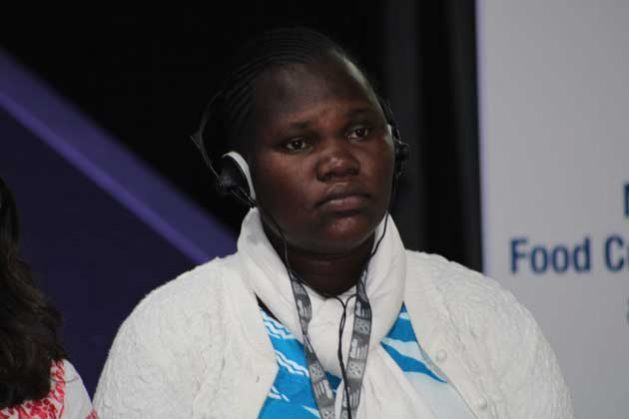
BCFN Yes winner Geraldin Lengai is researching bio-integrated crop management among tomato farmers in Tanzania. Credit: Busani Bafana / IPS

MILAN, Italy, Dec 4 2019 (IPS) – Local knowledge systems rooted in traditional practices and culture passed down generations provide sustainable solutions to food and nutritional insecurity on the back of climate change, a conference heard this week.


More than 370 million indigenous people, living in 70 countries, make up just 6 percent of the global population, according to the United Nations. But their food systems are models of diet diversity, innovation, conservation and local adaptability the world can benefit from in the face of risks such as climate change, delegates at the 10th Forum on Food and Nutrition convened by the Barilla Centre heard.

Speaking at a panel session on Preserving Mother Earth, Food Culture, Local Traditions and Biodiversity, Mattia Prayer Galletti, lead technical specialist on indigenous peoples and tribal issues at IFAD, said indigenous peoples have a connection with nature. They understand the concept of sustainability and the protection of natural resources.

IFAD has promoted an Indigenous People’s Forum to foster dialogue and consultant among indigenous people organisations and IFAD member countries. Through this Forum, IFAD has supported the economic empowerment of indigenous people, particularly women and the youth. IFAD has also contributed to the improvement in livelihoods of indigenous peoples through the Indigenous Peoples Assistance Facility which has provided small grants of up to US$50 000 for development projects.

He said indigenous food systems provide food security and biodiversity because indigenous communities have cultivated resilient foods, making them ideal in adapting to climate change. This despite the growing threats indigenous communities have faced, including marginalisation, loss of their ancestral lands and the destruction of their way of life.

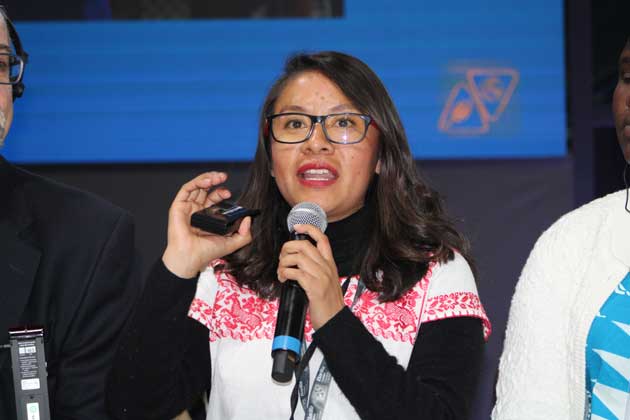
Dali Nolasco Cruz, an advisory board member of the Indigenous Terra Madre (ITM) from Mexico. Credit: Busani Bafana / IPS

Dali Nolasco Cruz, an advisory board member of the Indigenous Terra Madre (ITM) from Mexico, concurred saying indigenous people are being criminalised and killed by big powers that are extracting natural resources in their lands.

“We need alliances, we need to fight for Mother Earth,” Cruz said, “We need to transform our livelihoods by protecting the Earth to help others.”

Indigenous Innovations for food security

Indigenous knowledge provides innovations researchers are convinced can provide models for promoting resilience in our current food systems. Several researchers shared their on-going work on this.

Martina Occelli, a PhD student at the Santa Anna School of Advanced Studies in Pisa, is undertaking multidisciplinary research on how smallholder farmer’s collective knowledge is shaping soil productivity in the Gera Gera region of Ethiopia among 300 smallholder farmers. The research has shown that collective knowledge within and between households which farmers learnt from their fathers was relevant in determining the soil ability, which is critical in food production and resilience.

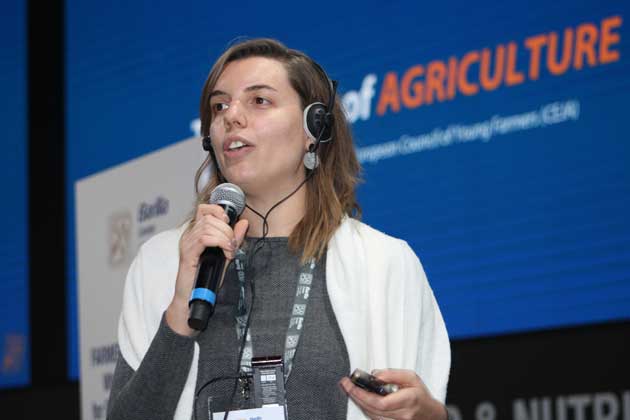
Martina Occelli speaks at the 10th International Forum on Food and Nutrition. Credit: Busani Bafana / IPS

Occelli is a winner of 2018 BCFN Yes international multidisciplinary contest launched by the BCFN Foundation in 2012 to support research on promoting the intersection of food sustainability and environmental sustainability.

Geraldin Lengai, another BCFN Yes winner, is researching on enhancing sustainable agriculture through the adoption of bio-integrated crop management among tomato farmers in Tanzania comparing conventional and non-conventional farming methods. Her research expects to provide insights into the use of organic pesticide properties of ginger and turmeric – cash crops grown by farmers in Tanzania – in fighting pests and diseases in vegetables. Also, she has researched the efficacy of organic fertilisers such as goat manure and chicken manure on the productivity of the spice coriander and amaranthus, a plant cultivated as a vegetable.

“Sustainable agriculture is important because you need a doctor once in a while, but you need the farmer at least three times a day,” Lengai told IPS. “I believe people should have access to food that is safe and healthy. How we produce the food, process it and how the food reaches the end consumer is the business of sustainable agriculture, and my research is on crop protection because people use crop protection synthetically yet there are alternatives that nature has provides. Before synthetic pesticides, our forefathers used tobacco to control insects, and if we can look at other plants that have the same capacity, we can promote sustainable agriculture.”

Lengai said the benefits of manure has in producing vegetables and the near to zero cost for farmers who keep animals means farmers have a sustainable fertiliser for organic produce which is attractive for global markets. Citing the case of pesticides with the Kenya market for French beans, Lengai said organic produce had secured international markets which have traceability systems in place.

“Growing organic vegetables and using organic pesticides and fertilisers is a win-win for everybody for the environment, for the farmer for the consumer,” said Lengai. She added that synthetic pesticides are favoured because they are easy to apply and cheaper – but come at a cost to the environment and health.


Climate Summit Kicks Off, Caught Between Realism and Hope

Civil Society, Climate Change, Conferences, Development & Aid, Editors’ Choice, Environment, Europe, Featured, Global, Global Governance, Globalisation, Headlines, IPS UN: Inside the Glasshouse, Poverty & SDGs, Regional Categories

Climate Change

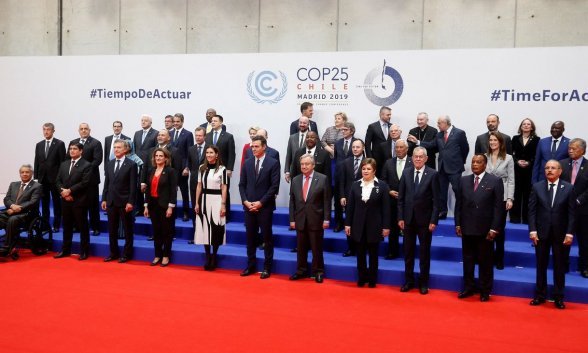
Family photo at the opening of the 25th Conference of the Parties (COP25) on climate change, taking place in Madrid Dec. 2 to 13. Credit: UNFCCC

Family photo at the opening of the 25th Conference of the Parties (COP25) on climate change, taking place in Madrid Dec. 2 to 13. Credit: UNFCCC

MADRID, Dec 2 2019 (IPS) – Tens of thousands of delegates from state parties began working Monday Dec. 2 in the Spanish capital to pave the way to comply with the Paris Agreement on climate change, while at a parallel summit, representatives of civil society demanded that the international community go further.


Calls to combat the climate emergency marked the opening of the 25th Conference of the Parties (COP25) to the United Nations Framework Convention on Climate Change (UNFCCC), in light of the most recent scientific data showing the severity of the crisis, as reflected by more intense storms, rising temperatures and sea levels, and polar melting.

Pedro Sánchez, acting prime minister of Spain – selected as the emergency host country after the political crisis in Chile forced the relocation of the summit – called during the opening ceremony for Europe to lead the decarbonisation of the economy and move faster to reduce emissions of carbon dioxide (CO2), the greenhouse gas generated by human activities.

“Today, fortunately, only a handful of fanatics deny the evidence” about the climate emergency, Sánchez said at the opening of the COP, held under the motto “Time to act” at the Feria de Madrid Institute (IFEMA) fairgrounds.

COP25 is the third consecutive climate conference held in Europe. The agenda focuses on issues such as financing for national climate policies and the rules for emission reduction markets – outlined without specifics in the Paris Agreement, which was agreed four years ago and is to enter into force in 2020.

It will also address the preparation of the update of emissions reductions and funding of the Warsaw International Mechanism for Loss and Damage, designed to assist regions particularly vulnerable to the adverse effects of climate change.

In the 1,000 square metres where COP25 is being held, 29,000 people – according to estimates by the organisers – including some 50 heads of state and government, representatives of the 196 official delegations and civil society organisations, as well as 1,500 accredited journalists, will gather until Dec. 13.

But the notable absence of U.S. President Donald Trump, Russian President Vladimir Putin, Indian Prime Minister Narendra Modi, Chinese President Xi Jinping, Brazilian President Jair Bolsonaro, and UK Prime Minister Boris Johnson does not give cause for optimism.

These include the leaders of the countries that produce the most greenhouse gas (GHG) emissions, making their lack of interest in strengthening the Paris Agreement more serious.

On Nov. 4, U.S. Secretary of State Mike Pompeo said he submitted a formal notice to the United Nations to begin the process of pulling out of the climate accord.

U.N. Secretary-General António Guterres said during the opening ceremony that “The latest, just-released data from the World Meteorological Organisation show that levels of heat-trapping greenhouse gases in the atmosphere have reached another new record high.

“Do we really want to be remembered as the generation that buried its head in the sand, that fiddled while the planet burned?”

In its Emissions Gap Report 2019, the U.N. Environment Programme warned on the eve of the opening of COP25 of the need to cut emissions by 7.6 percent a year between 2020 and 2030 in order to stay within the 1.5 degree Celsius cap on temperature rise proposed in the Paris Agreement.

Many delegations admitted that the world is off track to achieving the proposed 45 percent reduction in GHG by 2030 and to becoming carbon neutral by 2050.

In fact, delegates pointed out on Monday, emissions reached an alarming 55.3 billion tons in 2018, including deforestation.

One of the hopes is that more countries, cities, companies and investment funds will join the Climate Ambition Alliance, launched by Chile, the country that still holds the presidency of the COP, and endorsed by at least 66 nations, 10 regions, 102 cities, 93 corporations and 12 large private investors.

More than 70 countries and 100 cities so far have committed to reaching zero net emissions by 2050.

Social summit

Parallel to the official meeting, organisations from around the world are gathered at the Social Summit for Climate under the slogan “Beyond COP25: People for Climate”, which in its statement to the conference criticises the economic model based on the extraction of natural resources and mass consumption, blaming it for the climate crisis, and complaining about the lack of results in the UNFCCC meetings.

“The scientific diagnosis is clear regarding the seriousness and urgency of the moment. Economic growth happens at the expense of the most vulnerable people,” says the statement, which defends climate justice “as the backbone of the social fights of our time” and “the broadest umbrella that exists to protect all the diversity of struggles for another possible world.”

The first week of the COP is expected to see the arrival of Swedish activist Greta Thunberg, who has unleashed youth mobilisation against the climate crisis around the world.

In terms of how well countries are complying, only Gabon and Nepal have met their Nationally Determined Contributions (NDCs), the mitigation and adaptation measures voluntarily adopted, within the Paris Agreement, to keep the temperature rise below 1.5 degrees Celsius.

But these two countries have practically no responsibility for the climate emergency.

The plans of Bhutan, Costa Rica, Ethiopia and the Philippines involve an increase of up to 2.0 degrees, while the measures of the rest of the countries range from “insufficient” to “critically insufficient”.

Latin America “has to be more ambitious: although progress has been made, the measures are insufficient. We need a multilateral response to the emergency. We have only 11 years to correct the course and thus reach carbon neutrality in 2050 and meet the goal of keeping the temperature rise to 1.5 degrees,” said Manuel Pulgar-Vidal, global head of Climate and Energy at the World Wildlife Fund (WWF).

The Marshall Islands already submitted their NDCs 2020, while 41 nations have declared their intention to update their voluntary measures and 68 nations – including those of the European Union – have stated that they plan to further cut emissions.

In its position regarding the COP25, consulted by IPS, Mexico outlined 10 priorities, including voluntary cooperation, adaptation, climate financing, gender and climate change, local communities and indigenous peoples.


Under Pressure. Can COP25 Deliver?

Civil Society, Climate Change, Conferences, Development & Aid, Energy, Environment, Featured, Global, Green Economy, Headlines, Natural Resources, TerraViva United Nations

Opinion

Farhana Haque Rahman is Senior Vice President of IPS Inter Press Service; a journalist and communications expert, she is a former senior official of the United Nations Food and Agriculture Organization and the International Fund for Agricultural Development.

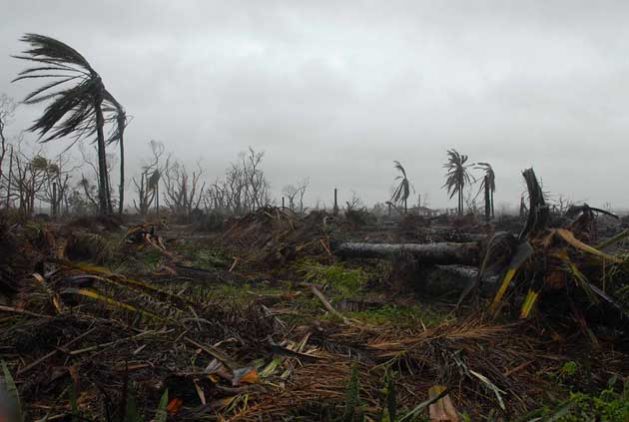
Climate change effects, such as extreme weather events, drive up environmental remediation costs. Credit: Jorge Luis Baños/IPS

ROME, Dec 2 2019 (IPS) – Mass public pressure backed by the weight of scientific reports is starting to bring governments to their senses as the annual UN climate summit kicks off in Madrid today.


But despite warnings that the planet is reaching critical tipping points, the two weeks of talks with nearly 30,000 participants and dozens of heads of government attending may still end in that familiar sense of disappointment and an opportunity missed.

The annual Conference of the Parties, this year being COP25, was to have been a highly arcane if crucial process of finding agreement on carbon markets, known in the jargon as Article 6 of the ‘rulebook’ to implement the 2015 Paris Agreement on stopping the planet from overheating.

Highly contentious, and in part pitting developing countries like Brazil, China and India against others, the Article 6 debate could not be resolved at last year’s summit – COP24 in Katowice, Poland – nor at meetings in Bonn in June and hence was left for COP25 to try and fix. The other big elephant in the room – setting more ambitious national targets to reduce carbon emissions – was conveniently going to be left to be settled at next year’s COP26 in Glasgow, Scotland.

But action is needed now, and senior officials representing nearly 200 countries have been put on notice that the climate emergency in all its forms is dominating the public sphere across the world. Just last week we saw student-led demonstrations and strikes in many places that appropriately fell on Black Friday, delivering a broadside against rampant consumerism as well as government inaction.

Farhana Haque Rahman

“Striking is not a choice we relish; we do it because we see no other options,” youth leaders Greta Thunberg of Sweden, Luisa Neubauer of Germany and Angela Valenzuela of Chile declared in a joint statement.

“We have watched a string of United Nations climate conferences unfold. Countless negotiations have produced much-hyped but ultimately empty commitments from the world’s governments—the same governments that allow fossil fuel companies to drill for ever-more oil and gas, and burn away our futures for their profit.”

UN Secretary General António Guterres has told COP25 that “the point of no return is no longer over the horizon”.

“In the crucial 12 months ahead, it is essential that we secure more ambitious national commitments – particularly from the main emitters – to immediately start reducing greenhouse gas emissions at a pace consistent to reaching carbon neutrality by 2050. We simply have to stop digging and drilling and take advantage of the vast possibilities offered by renewable energy and nature-based solutions,” Guterres said.

Just last month the UN Environment Programme’s annual Emissions Gap Report warned that the Paris Agreement ambition of keeping average temperatures within 1.5 degrees Celsius above pre-industrial times was “on the brink of becoming impossible”.

Global greenhouse gas emissions in 2030 would have to be under 25 billion tonnes of carbon dioxide equivalent to reach that target but, at current rates of growth, emissions are projected to reach more than double that level. Clearly drastic action is needed.

Reinforcing the sense of emergency, the World Meteorological Organization reported that atmospheric concentrations of carbon dioxide and other greenhouse gases reached new record highs in 2018. China is the world’s largest emitter.

Spain stepped in to offer Madrid as a venue for COP25 after Chile withdrew as host because of mass anti-government unrest. However Chile is still leading the conference and together with Spain will be pushing countries to act quickly to raise the ambition of their carbon emission reduction targets. Spanish Prime Minister Pedro Sanchez says the goal is for “the largest number of countries” to commit to net zero emissions by 2050.

From 2020 to 2030, emissions must be cut 7.6% a year to meet the 1.5 degrees Celsius goal, the UNEP says.

However the main negotiation process in Madrid is expected to focus on the unfinished business of the market-based mechanisms to create and manage new carbon markets under the Paris Agreement. This would allow countries and industries to earn credits for above-target emission reductions that can then be traded. Big developing countries have already accumulated huge amounts of carbon credits under the previous but now largely discredited carbon credit scheme. It is a highly complex tangle of interests.

Carbon Brief, a UK-based climate website, says the Article 6 debate has the potential to “make or break” implementation of the Paris Agreement which comes into force next year.

“To its proponents, Article 6 offers a path to significantly raising climate ambition or lowering costs, while engaging the private sector and spreading finance, technology and expertise into new areas. To its critics, it risks fatally undermining the ambition of the Paris Agreement at a time when there is clear evidence of the need to go further and faster to avoid the worst effects of climate change,” Carbon Brief explains.

While Article 6 is a highly technical area, the underlying issues are political, with some countries forming unofficial alliances to defend their own interests rather than the common good of the planet. But politicians have been put on notice that this time the world’s public is watching closely. Horse-trading cannot be allowed to put our futures at risk.