With Climate Change, Government Apathy, Who Should Kerala’s Fishworkers Turn To?

Asia-Pacific, Civil Society, Climate Change, Climate Change Justice, Development & Aid, Economy & Trade, Editors’ Choice, Featured, Food and Agriculture, Human Rights, Labour, Natural Resources, Sustainable Development Goals, TerraViva United Nations, Trade & Investment

Opinion

Fishworkers are often invisible in discussions about climate change, yet they are at the heart of food security, feeding millions while struggling to feed their own families. Their fight for survival is not just about tradition or livelihood—it’s about justice. Shouldn’t their futures be at the forefront of climate justice debates?

The iconic Chinese fishing nets along the Kerala coast offer a picturesque scene that draws tourists from around the world. However, the fishworkers that have used them for centuries livelihoods are in peril. Credit: Aishwarya Bajpai/IPS

The iconic Chinese fishing nets along the Kerala coast offer a picturesque scene that draws tourists from around the world. However, the fishworkers that have used them for centuries livelihoods are in peril. Credit: Aishwarya Bajpai/IPS

KOCHI, India, Oct 10 2024 (IPS) – Every morning before dawn, fishworkers along the shores of Kochi, Kerala, head out to sea, casting their nets in the shadow of the iconic Cheenavala—the Chinese fishing nets that have become a symbol of their community. I witnessed this time-honored tradition, once a reliable means of survival, now a daily gamble, a fight against unpredictable seas and shrinking fish populations. 


The COVID-19 pandemic exposed how vulnerable they are; despite being classified as essential workers, they were left without the protections they needed.

And now, as climate change tightens its grip, these fishworkers find themselves on the front lines of a new crisis. Rising sea temperatures, erratic weather, and depleting fish stocks have pushed them further into despair, forcing them to navigate a future as uncertain as the waters they depend on.

Martin, a fishworker from Kochi, Kerala, who smiled and invited me on his boat, has been fishing for over 25 years, reflecting on the mounting hardships. After a while explaining to me about the huge boat and the process of fishing, he said, “In these difficult times, when the government should be supporting us after generations of families have relied on fishing, we are left with nothing and are desperate for help. We purchase our tools and equipment for fishing, yet there’s no assistance from the government for education or healthcare.”

Fishworkers face uncertain future due to climate change and a lack of support from government. Credit: Aishwarya Bajpai/IPS

Fishworkers face uncertain future due to climate change and a lack of support from government. Credit: Aishwarya Bajpai/IPS

Martin continued, “Five to six people work on a boat, and money has to be given to the owner as well. We have started to rely on tourism now, where we invite tourists, especially foreigners, onto our boats (private property) to explain our craft and fishing process, for which we sometimes get compensated. Some are generous, and some are not! This used to be the only way of earning in the rough season (Monsoon Fishing Ban), but now, after the climate change, this has become the only source of income for us.”

Kochi, once known as Cochin, was a major global trading hub. It drew merchants from Arabia and China in the 1400s, and later the Portuguese established Cochin as their protectorate, making it the first capital of Portuguese India in 1530.

Today, the city’s rich architectural heritage, along with the iconic Cheenavala (Chinese fishing nets), are major tourist attractions. Fishermen here use these Chinese fishing nets as a traditional method of fishing.

Believed to have been introduced by the  Chinese explorer Zheng He from the court of Kublai Khan, these iconic nets became a part of Kochi’s landscape between 1350 and 1450 AD. The technique, which is quite impressive to witness, involves large, shore-based nets that are suspended in the air by bamboo/teakwood supports and lowered into the water to catch fish without the need to venture out to sea. The entire structure is counterbalanced by heavy stones, making it an eco-friendly practice that preserves marine life and vegetation, relying solely on natural materials without harmful gadgets.

Once a vital tool for sustaining the livelihoods of Kochi’s fishworkers, the traditional Cheenavala fishing nets have now become a symbol of a deepening crisis. Climate change, particularly the warming of the Arabian Sea, has drastically reduced fish populations.

Ironically, the government profits from promoting this iconic symbol even as the seafood industry faces closures, with four export-oriented fish processing units shutting down in Kerela in recent months due to the shortage of fish. This stark contrast highlights the growing disconnect between tradition and survival in the face of climate change.

The walls of Kerala are adorned with graffiti advocating for fishworkers and marine biodiversity. In Kochi, a mural reads, “Save the largest fish on Earth,” calling attention to the need for conservation. Credit: Aishwarya Bajpai/IPS

The walls of Kerala are adorned with graffiti advocating for fishworkers and marine biodiversity. In Kochi, a mural reads, “Save the largest fish on Earth,” calling attention to the need for conservation. Credit: Aishwarya Bajpai/IPS

Despite the Chinese fishing nets being a major tourist attraction, the government has shown little or no interest in preserving them. The process started in 2014 when a Chinese delegation, led by Hao Jia, a senior official of the Chinese embassy in India, met with Kochi’s then-mayor, Tony Chammany, to help renovate the nets and proposed constructing a pavement along Fort Kochi beach.

KJ Sohan, former mayor of Kochi and president of the Chinese Fishing Net Owners’ Association, expressed his support for the Chinese initiative to preserve the traditional fishing nets. He emphasized that such large nets, rooted in ancient techniques, are unique to this region. However, he also highlighted the significant governmental neglect of these nets. Insurance companies refuse to cover them, and they need to be replaced twice a year, which incurs substantial costs.

The Tourism Department later instructed the Kerala Industrial and Technology Consultancy Organisation (KITCO) to refurbish 11 of these nets and allotted 2.4 crore rupees (24 million), along with teakwood and Malabar for the repairs.

The authorities had initially refused to release funds directly, requiring the owners to start the refurbishment first, with promises of staggered payments. It has recently come to light that the boat owners, many of whom took out high-interest loans to begin the renovation, are now in financial distress as they have yet to receive the promised government funds, despite completing the work over a year ago.

 A Chinese fishing net on the coast of Kochi, Kerala (India). Credit: Aishwarya Bajpai/IPS

A Chinese fishing net on the coast of Kochi, Kerala (India). Credit: Aishwarya Bajpai/IPS

Many took out loans and installed new coconut timber stumps, but even after nearly finishing the work, they are still waiting for the funds. This has left the fishworkers in debt while authorities cite GST-related issues for the delay. The owners argue they are exempt from the tax.

Fishworkers, both men and women, are often invisible in discussions about climate change, yet they are at the heart of food security, feeding millions while struggling to feed their own families. Their fight for survival is not just about tradition or livelihood—it’s about justice. If the government continues to turn a blind eye, Kerala’s fishworkers may have no choice but to seek support elsewhere, from international bodies, non-governmental organizations, or global climate finance mechanisms. Their struggles must be recognized, and their voices amplified in the push for climate justice.

Kerala’s fishworkers are not just battling the seas—they are fighting for their future. Without immediate action and meaningful support, we risk losing not only their livelihoods but an entire way of life. If the government cannot rise to the occasion, the world must step in to ensure that these communities do not slip into obscurity.

IPS UN Bureau Report

  Source

Agroecology: The Game-Changing Solution to Global Food, Climate and Conflict Crises

Armed Conflicts, Biodiversity, Civil Society, Climate Action, Climate Change, COP16, Editors’ Choice, Environment, Featured, Food and Agriculture, Food Security and Nutrition, Food Sustainability, Global, Headlines, Humanitarian Emergencies, Natural Resources, Sustainable Development Goals, TerraViva United Nations

Biodiversity

Edward Mukiibi, President, Slow Food. Credit: Busani Bafana/IPS

Edward Mukiibi, President, Slow Food. Credit: Busani Bafana/IPS

TURIN, Italy, Oct 8 2024 (IPS) – Edward Mukiibi, President of Slow Food, champions agroecology as a transformative answer to the world’s most pressing crises: food insecurity, climate change, and violent conflicts.


In a world where these challenges intersect, Mukiibi called for an urgent rethink of our approach to food systems. 

Agroecology, a practice already embraced by millions of farmers worldwide, is emerging as a sustainable alternative to the industrialized agriculture model that dominates today. It emphasizes biodiversity, environmental stewardship, and equitable livelihoods—elements that Mukiibi insists are key to addressing the multifaceted crises facing our planet.

Speaking ahead of the highly anticipated Terra Madre 2024 event in Turin, Mukiibi called for immediate global action to end the misuse of food as a weapon in war-torn regions like Gaza and Ukraine, where food scarcity is exacerbating human suffering.

“Slow Food strongly advocates for an end to all violence in the ongoing conflicts, from the Gaza Strip to Sudan, from Lebanon to the Democratic Republic of Congo, from Ukraine to Yemen, and opposes the use of food as a weapon of war, said Mukiibi, calling for immediate negotiations to achieve a just solution that ensures the dignity of all people and fosters a peaceful future for everyone.

With global crises growing more complex, Mukiibi stresses that agroecology is not just about farming techniques—it is a framework for building more resilient societies.

Carlo Petrini, Founder, Slow Food. Credit: Busani Bafana/IPS

Carlo Petrini, Founder, Slow Food. Credit: Busani Bafana/IPS

The Power of Agroecology

As climate change accelerates, its devastating impacts—melting glaciers, rising sea levels, extreme weather events, and shifting ecosystems—are becoming harder to ignore. Mukiibi linked these environmental crises directly to our food systems, calling industrial agriculture a “leading culprit.” He argues that agroecology offers a path toward resilience, citing its ability to regenerate soil health, reduce social inequality, and provide local communities with economic opportunities.

Mukiibi’s call for change comes as 3,000 international delegates convene at the biennial Terra Madre event to explore solutions for sustainable food systems. He argues that agroecology not only regenerates soil fertility and promotes environmental health but also strengthens local economies, reduces social inequalities, and builds resilience against climate-induced disasters.

“As climate change intensifies, agroecology offers a path to more resilient and equitable food systems,”  Mukiibi declared. “This situation compels us to reflect on the transformation needed if we want to achieve a food system that feeds all people well, regenerates and protects the environment, and allows local cultures to survive and prosper.”

A Call for Global Food System Reset

Carlo Petrini, the founder of Slow Food, echoed Mukiibi’s sentiments, calling for nothing less than a complete reset of the global food system.

“The current global food system is not only unfair but is criminal because it destroys our mother earth, it destroys biodiversity and is based on waste and it has turned food into a price, not into a value,” said Petrini. “We need to restore the value of food because food represents our common good; with food we can establish relations with each other, we can establish reciprocity.”

Petrini emphasized the political significance of food in shaping our future, asserting that the fight for sustainable food systems is inherently tied to larger social and environmental battles.

Petrini also condemned multinational corporations that prioritize profit over the health of the planet, calling on them to stop polluting ecosystems through unsustainable food production methods. He called for an ecological transition.

Food and Humanity

Pope Francis, head of the Catholic Church, also weighed in, highlighting the spiritual and cultural dimensions of food.

In a message to the Terra Madre network, the Pope criticized the commodification of agriculture, noting that it is being manipulated for profit at the expense of both the environment and human dignity.

The Pope praised Terra Madre for fostering a movement that respects the integrity of both food and culture. He argued that only through recognizing the value of food and promoting food education can humanity move towards a future of universal fraternity—a future where diversity is celebrated rather than a cause of division.

The Food Revolution

Launched 20 years ago, Terra Madre has sparked a global food revolution. Over the past two decades, it has united small-scale producers, farmers, and consumers committed to creating a better, cleaner, and fairer food system.

Mukiibi said Terra Madre 2024 serves as a reflection point, a moment to assess the progress made and chart a course for the future.

Coinciding with Terra Madre, the G7 Agriculture Ministers met in Sicily, where Slow Food has urged governments to place food at the center of global political agendas. The call is clear: food must be recognized as a cornerstone of fundamental rights and environmental sustainability.

Mukiibi underscored that millions of farmers around the world are already practicing agroecology, ensuring food sovereignty, food security, and healthy diets. He emphasized the need to build on these successes by expanding the Slow Food network and empowering more farmers to take up agroecological practices.

Agroecology is a path forward for resilient local food systems, Mukiibi noted, explaining that Slow Food was building a network of Slow Food Farms to empower farmers and make them central to future sustainable food systems.

A Hopeful Vision for the Future

Mukiibi’s message is agroecology is not just a farming method—it’s a movement with the potential to tackle some of the most profound challenges of our time.

“Agroecology is the solution, not just for a more sustainable food system, but for addressing inequality, social injustice, and the global environmental crisis.”

As the world grapples with the devastating impacts of climate change, violent conflict, and food insecurity, the vision laid out by Slow Food offers a hopeful path forward—one where food is not a weapon, but a source of unity, resilience, and renewal.

IPS UN Bureau Report

  Source

Why Africa Should Embrace Territorial Markets to Withstand Climate Shocks and Crises

Active Citizens, Africa, Civil Society, Climate Action, Climate Change, Cooperatives, Development & Aid, Economy & Trade, Editors’ Choice, Environment, Featured, Food and Agriculture, Food Security and Nutrition, Food Sustainability, Headlines, Sustainable Development Goals, TerraViva United Nations, Trade & Investment

Economy & Trade

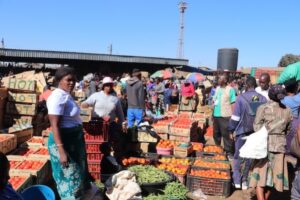
Farmers, traders and consumers at the Mbare Musika Territorial Market in Harare, Zimbabwe. Credit: Isaiah Esipisu/IPS

Farmers, traders and consumers at the Mbare Musika Territorial Market in Harare, Zimbabwe. Credit: Isaiah Esipisu/IPS

HARARE, Oct 4 2024 (IPS) – African policymakers, local leaders and the private sector have been asked to create an enabling environment that will help African traders and farmer folks build reliable systems for food security and resilience through territorial markets.


During a week-long 2024 Africa Agroecological Entrepreneurship and Seed Festival in Harare, Zimbabwe, experts observed that persistent crises have shown the importance of resilient close-to-home ‘territorial’ markets that feed billions of people every day—from public markets and street vendors to cooperatives, from urban agriculture to online direct sales, and from food hubs to community kitchens. 

“For instance, following Russia’s invasion of Ukraine, global food prices spiked by 15 percent, forcing policymakers around the world to question how to reduce dependency on volatile global markets and strengthen food self-sufficiency,” said Dr. Million Belay, the General Coordinator at the Alliance for Food Sovereignty in Africa (AFSA).

“Further, questions have been raised about how people are actually fed and by whom, prompting us to ask: in this century of crisis, what kinds of food supply chains and markets can build resilience and help fulfill the right to food—nourishing people around the world more sustainably and equitably?” asked Belay.

To answer the question, experts are calling for policies and a sound working environment that will empower territorial markets that promote dietary diversity and affordable nutritious foods for all, allow producers and food workers to retain control over their livelihoods, and produce food that is adaptable to climate change shocks and emerging crises.

These markets have been broadly defined as markets that are centered on small-scale agroecological food producers and business owners that produce and sell a variety of commodities, and often meet the preferences of the majority of farmers, traders and consumers.

Studies have shown that these markets play a crucial role in making food accessible and affordable, especially for low-income populations in the Global South, allowing for the purchase of small and flexible quantities of food, price bargaining, informal credit arrangements, and being located in or near low-income neighborhoods.

A new study launched on the sidelines of the Harare event that culminated into the fifth Biennial Africa Food Systems Conference, however, shows that profit-oriented corporate value chains are highly concentrated in Africa’s market places.

The report, titled ‘Food from Somewhere,’ by the International Panel of Experts on Sustainable Food Systems (IPES Food), finds that just seven grain traders control at least 50 percent of the global grain trade, six major corporations control 78 percent of the agrochemical market, the top eight carriers of freight account for more than 80 percent of the market for ocean freight capacity and globally, 1 percent of the world’s largest farms control 70 percent of the world’s farmland.

This, according to experts, amounts to a corporate capture of Africa’s food systems.

The report is therefore advocating for a paradigm shift, urging governments to reinvest in local and regional supply infrastructure, relocalize public purchasing and develop food security strategies for a more resilient and equitable approach to food security.

“The problem for smallholders is not of being connected to markets (most are already involved in markets) but rather the conditions of their access and the rules and logics by which markets operate—who determines prices and on what criteria, who controls the costs of production, who holds market power, among other issues,” said Mamadou Goïta, a member of IPES and the lead author.

A spot check at the Mbare Musika territorial market in Harare found a variety of foodstuffs sourced from all eight regions of Zimbabwe, among others from neighboring countries, such as apples and other fruits from South Africa, fish and ginger from Mozambique, groundnuts from Malawi, sorghum from Botswana, as well as grapes from Egypt and tamarind from Tanzania, among others.

“This is the central hub for smallholder farmers and traders, supporting over seven million people from all over Zimbabwe and other parts of the continent,” said Charles Dhewa, Chief Executive Officer, Knowledge Transfer Africa (KTA), whose flagship known as eMkambo (eMarket) is to create a physical and web-based market for agriculture and rural development, integrating the use of mobile phones and the internet to create, adapt and share knowledge.

Mbare Musika Market, which is in the outskirts of Harare, is located next to the main bus-park, through which food is brought in using informal means such as passenger buses and vans from different parts of the country, in small and big quantities, and of different varieties and qualities.

“The evidence is clear—localized food systems are vital for feeding an increasingly hungry planet and preventing food insecurity and famine,” said Shalmali Guttal, the Executive Director of Focus on the Global South. “They provide nutritious, affordable food and are far more adaptable to global shocks and disruptions than industrial supply chains,” she added.

Jennifer Clapp, professor and Canada Research Chair in Global Food Security and Sustainability at the University of Waterloo, Canada, pointed out that during this time of rising hunger and ecological fragility, global industrial food chains will be catastrophically liable to break down under the strain of frequent crises.

“To have a chance of reaching the world’s zero hunger goal by 2030, we need to re-imagine our food systems, and we need to bolster the food markets that serve the poor,” she said.

IPS UN Bureau Report

  Source

Rejuvenating Tradition To Help Save Ancient Engineering Marvel—Dhamapur Lake

Arts, Asia-Pacific, Civil Society, Conservation, Environment, Featured, Food and Agriculture, Food Security and Nutrition, Headlines, Natural Resources, Religion, Sustainable Development Goals, TerraViva United Nations

Environment

The Vijayanagar rulers constructed an earth-fill dam in 1530 AD to create Dhamapur Lake. There is now a campaign to save it. Credit: Rina Mukherji/IPS

The Vijayanagar rulers constructed an earth-fill dam in 1530 AD to create Dhamapur Lake. There is now a campaign to save it. Credit: Rina Mukherji/IPS

PUNE, India, Oct 2 2024 (IPS) – Dhamapur is a small village in Malvan taluka of west Sindhudurg district, housing the famous Dhamapur Lake. The Vijayanagar kings constructed an earthfill dam in 1530 A.D., creating a man-made lake surrounded by hills on three sides. Canals connect it to the Karli river, irrigating lush paddies and farms that grow the red Sorti and Walay rice varieties typical to the region.


A Bhagwati temple constructed in the typical Konkan style stands on its banks. Small shrines to anthills flank this temple, which is devoted to Goddess Bhagwati. This is because all over the Konkan region, anthills are considered manifestations of the Earth Goddess and worshipped as Goddess Sateri. These are monuments to biodiversity and well-being; white ants or termites that build anthills are known to aerate the soil, help seed dispersal, and improve soil fertility. The worship of anthills is an old Vedic practice that continues to survive in and around the Konkan region of Maharashtra, Goa, and its neighborhood to this day.

The construction of the earthfill dam on Dhamapur Lake too spells of local ingenuity. Made up of porous laterite stone that is locally found here, every layer of stone is alternated with a layer of biomass made of twigs and branches.

This freshwater reservoir, used for irrigation and drinking water purposes, is one of Maharashtra’s oldest engineering marvels. Its waters and the Kalse-Dhamapur forests that flank it nurture a wide variety of unique floral and faunal species, making it a popular tourist destination.

But beauty apart, this man-made lake, which is geographically on higher ground as compared to the surrounding countryside, plays an important role in recharging the groundwater, acting as a sponge during the monsoons.  Apart from serving as an important source of drinking water and irrigation, Dhamapur Lake nurtures an entire ecosystem. Its waters and surrounding forests harbour a wide variety of flora and fauna, some of which are endangered species. Its significance can be gauged from the fact that it was given the Word Heritage Irrigation Structure (WHIS) Award by the International Commission of Irrigation and Drainage (ICID) in 2020.

But in recent times, several encroachments have affected this extensive waterbody. Guest houses, wells, and walkways built in its floodplains to boost tourism have been eating into its extensive area, in scant regard to the flora and fauna that thrive in its pristine waters.

Fighting for Dhamapur Lake

In recent years, though, Dhamapur Lake has found a savior in Sachin Desai and his organisation, Syamantak Trust. Incidentally, Sachin Desai and his wife, Meenal, have an interesting background that illustrates their love for the natural world and India’s time-honored traditions.

Believers in home schooling, the Desais fought out with the authorities to home-school their daughter. Abandoning high-paying corporate jobs, these two professionals set up the University of Life on their ancestral property to familiarize youngsters with traditional bricklaying, carpentry and farming skills in 2007. To stem the migration from the region, they sought to inculcate love and respect for traditional practices, foods, and cuisine among youngsters. This was how the Syamantak Trust came into being.

In the years that followed, learners and youngsters who spent time at the University of Life went to use the knowledge they acquired to specialize in respective fields or venture into entrepreneurship, selling local products to tourists frequenting Dhamapur. Rohit Ajgaonkar, once a student at the University of Life, has become an active volunteer with Syamantak and runs a small eco-café in Dhamapur.  Remarkable in its use of local materials, the eco-café has an array of local delicacies such as kashayam and jackfruit, wood apple, and mango ice creams.

Rohit and his mother, Rupali Ajgaonkar, also run a shop adjoining their eco-café, wherein they sell hand-pounded local masalas, mango and jackfruit toffee, local pickles, cashew butter, kokum syrups and kokum butter.  Prathamesh Kalsekar, another student of the University of Life who is the son of a local farmer, is now doing his B.Sc. (Agriculture) at the Konkan Krishi Vidyapeeth. He has raised a private forest on his family land in Dhamapur, and now grows many local fruit and vegetable trees, bushes, and plants, particularly focusing on nutrient-rich wild varieties. He has also set up a nursery of saplings for distribution among local farmers.

A temple on the outskirts of Dhamapur Lake. Credit: Rina Mukherji/IPS

The Bhagwati temple is on the banks of Dhamapur Lake. The temple is built in the typical Konkan style, wherein the deity is placed at one end in the sanctum sanctorum. The main section of the temple is reserved for the assembly of elders who meet and discuss matters related to the village. The temple is reminiscent of a bygone era when a place of worship also served as a place for the community to assemble and parley. Credit: Rina Mukherji/IPS

The Ongoing Battle to Save Dhamapur

These skills and respect for nature came in handy when Syamantak embarked on its mission to save Dhamapur and other waterbodies in Sindhudurg district through a community-led movement, following the construction of a skywalk undertaken by the authorities in 2014, and the running of diesel-run boats for tourists by the panchayat (village self-governing body). But this was easier said than done, notwithstanding the public zeal.

Desai and his volunteers realized that “Sindhudurg district has several wetlands and waterbodies. However, the authorities haven’t notified or demarcated any of them. This permits encroachments, a lot of them by government bodies.” In the case of Dhamapur Lake, the high flood line was ignored, and private parties encroached upon the peripheral areas of the lake. Even the state government’s Department of Agriculture had built a nursery and sunk a well on the floodplains of the lake.

Making use of the National Wetland Atlas prepared by the Space Applications Centre of the Indian Space Research Organization (ISRO) and the Maharashtra Remote Sensing Applications Centre in 2010, during the tenure of Minister of Environment & Forests Jairam Ramesh, Syamantak Trust approached the Western Zonal bench of the National Green Tribunal. Some residents of Sindhudurg district also filed an Environment Interest Litigation (EIL) to save the lake. At that time, the phytoplankton population had already decreased due to the construction of 35 pillars and the 500-meter-long cement concrete skywalk.

An Interim Order in 2018 by the Tribunal not only halted all further construction but saw every bit of concrete broken down and removed from the precincts of the lake. It also stopped the use of diesel boats on the lake . Furthermore, the state Public Works Department (PWD) was ordered to shell out Rs 1.5 crore for mitigation measures to be undertaken to reverse the damages caused by the construction of the 2.5 km skywalk and the use of diesel boats.

Meanwhile, following the formation of a 32-member Wetland Brief Documentation Committee as per an Order by the District Collector, the Syamantak Trust organized the local citizenry to document the flora and fauna of Dhamapur lake. They were soon joined by students from the local college of architecture, academicians, botanists, zoologists, and geographers from Mumbai and other parts of India, besides Dr Balkrishna Gavade and Dr Yogesh Koli, who lent their expertise for the study.  Mapping Dhamapur helped the volunteers learn about the kind of biodiversity hotspot the Western Ghats region is, especially in the forested tracts around Dhamapur Lake.

Five months spent documenting the various wetland flora and fauna showed 35 species of birds belonging to 18 families to frequent the lake, such as the Eurasian Marsh Harrier, Indian Pond Heron, Lapwing, Kingfisher,  and Small Bee-Eater. The lake was found to be particularly lush with phytoplankton and zooplankton species, which are the building blocks of a wetland ecosystem. The volunteers would also learn about how the Wax Dart butterfly was reported for the first time in Maharashtra, on the banks of Dhamapur lake.

Once Dhamapur was mapped, the volunteers went on to document a total of 57 wetlands and waterbodies in Sindhudurg district, including those as yet unlisted by the authorities. These included Vimleshwar in Devgad, Pat Lake in Kudal, and Jedgyachikond in Chaukul, among others.

The Uphill Struggle to Save Dhamapur Lake

The mapping and summary of violations were to come in handy when fighting to conserve Dhamapur Lake at the NGT.  However, the community’s fight to have Dhamapur Lake recognized as a wetland has not borne fruit so far. “Our case was dismissed by the NGT in 2023 on the grounds that the lake does not qualify to be a wetland in keeping with the Wetlands (Conservation and Management) Rules 2017, since it was constructed for drinking water and agricultural purposes,” Desai tells IPS.

However, the Trust and its community volunteers have not given up yet. They have now approached the Supreme Court to demand

1) Demarcation of the Lake’s buffer zone and high flood line; and

2) Notification of the Lake by the state government in its gazette.

Once notified, the Lake, they feel, would be protected against further encroachment from public and private bodies alike.

Meanwhile, Syamantak Trust, along with members of the local community, continue to familiarize visiting students and persons from other parts of India with this unique water-body and its flora and fauna through eco-trails. As of this year, Syamantak Trust has begun hosting classical music concerts with the theme “Connect to Nature,” allowing music lovers to explore the vast repertoire of Hindustani classical music and its connection to the seasons and nature’s clock.

Currently, the Desais and their volunteers in the local community sincerely hope that once people in Dhamapur and beyond learn to appreciate and love nature, it will help them connect better with the lake and its entire ecosystem. This can be the best and only bulwark against the destructive march of climate change.

IPS UN Bureau Report

  Source

Tanzania’s Maasai Women Adopt Climate-Smart Solutions To Tame Drought

Active Citizens, Civil Society, Climate Action, Climate Change, COP29, Development & Aid, Editors’ Choice, Environment, Featured, Food and Agriculture, Headlines, Natural Resources, Population, Sustainability, Sustainable Development Goals, TerraViva United Nations, The Southern Africa Water Wire

Food and Agriculture

Maria Naeku, a Maasaiwoman in Mikese village in Mvomero district tends to her vegetable garden.Credit: Kizito Makoye Shigela/IPS

Maria Naeku, a Maasaiwoman in Mikese village in Mvomero district tends to her vegetable garden.Credit: Kizito Makoye Shigela/IPS

MVOMERO, Tanzania, Sep 24 2024 (IPS) – In the scorching sun of Mikese village in Tanzania’s eastern Mvomero district, 31-year-old Maria Naeku tirelessly tends to her small vegetable patch. Each time she pulls a weed, the red soil stains her hands as she guides the trickle of water from a maze of pipes through an elevated bed to nurture her plants. In a drought-stricken area, Naeku’s small garden is a lifeline for her family, giving them food and income.


“When the drought hit, our cattle died, and we couldn’t get milk for the children,” Naeku says. “I knew I had to find a way to feed my family, so I had to grow vegetables.” 

The drip irrigation technique, where a network of pipes with tiny holes spit water directly to the plant in a split second, was new to her but she tried. “I didn’t  know how if tiny drops of water could nourish the crops,” she says. “But when I saw green leaves sprouting from the soil, I knew I had a brighter future.”

Naeku’s quickly became an expert, her success inspired other women across  the village to follow her lead. The Maasai, traditionally, known for cattle rearing—a symbol of wealth and security are increasingly adopting climate-smart farming to cope with drought as rains have become erratic due to climate change. Women like Naeku, who once depended entirely on these herds, have been forced to adopt innovative farming techniques to survive.

Shattering the Patriarchy

In Maasai culture, men have long held the reins of power, with women relegated to the roles of caregivers and homemakers. Decision-making, particularly in land and livestock matters, has traditionally been the exclusive domain of men. However, the severe droughts have shifted these dynamics. With their cattle dwindling and their families hungry, Maasai women have begun to step into roles once reserved for men, embracing climate-smart agriculture as an alternative means of survival.

“We are no longer just caretakers of our families,” says 34-year-old Nasarian Lengai, a mother of five who has become a local champion for horticulture farming at Mikese. “We are decision-makers who are shaping the future of our community.”

Initially skeptical, Lengai strongly believe in horticulture using organic farming practices. “When I first heard about these methods, I didn’t think they’d work for us,” she says. “But after seeing how much better my crops are now, I’m sure this is the right way to go.”

For centuries, the Maasai have relied on cattle for their food—milk, meat, and even blood. Switching to farming was a big change from their old ways.

“We used to believe that having many cattle was the only way to keep wealth and ensure security,” says Esuvat Joseph, who leads the Tupendane Maasai women’s group at Mikese village. “But now we understand that we need to cope with drought. We’ve learned to keep fewer cattle and focusing more on farming.”

Tupendane group has also embraced water conservation techniques, constructing ground reservoirs to collect rainwater. “This water is very important,” she explains. “We use it for irrigation when the rivers dry up.”

Climate-smart Solutions

The Maasai women’s adoption of climate-smart agriculture is not just a response to immediate needs but a strategy for long-term resilience. Through initiatives supported by the Norwegian Church Aid—an international charity—these women are learning to diversify their income sources, reducing their dependence on livestock and embracing sustainable horticulture practices.

“We’re teaching these women how to make the most of their small plots of land,” explains Oscar John, the program manager with Norwegian Church Aid. “By diversifying their income sources, they’re less dependent on livestock, which is increasingly vulnerable to drought.”

Conservation agriculture, a key component of this initiative, promotes sustainable farming techniques that improve soil health and increase crop yields without depleting natural resources.

For the women of Mvomero, this has been a divine plan. They are learning to grow drought-resistant crops, rotate their fields, and use organic fertilizers, all of which contribute to better crop yields.

As more women embrace climate-smart agriculture, the ripple effects are being felt in neighboring villages, as women once skeptical of these new methods, are now seeing the success in Mvomero and beginning to learn these practices in their own drought-stricken lands.

Empowerment in Action

The shift from livestock to crop farming has had a huge impact on the social dynamics within the Maasai community. Women, who were once sidelined in decision-making processes, are now taking the lead in managing their families’ resources. This newfound empowerment is improving their social and economic status while challenging the patriarchal norms that have long defined their society.

“We’ve always been made to believe that men are the decision-makers,” says Lengai. “But now we’re showing that women can lead too. We can take care of our families and make better decisions.”

This sense of empowerment is evident in the way the women of Mvomero approach their work. They are tending to their crops and building a future where their voices are heard and their contributions are valued. The construction of rainwater harvesting systems, for example, is a task that these women have taken on with pride. “We don’t wait for our husbands to do it; we build these reservoirs ourselves,” says Joseph. “It’s our way of showing that we can take care of ourselves.”

The men in the community are recognizing the shifting gender roles, and some of them are starting to appreciate the benefits of shared decision-making. While resistance remains, the success of these women is slowly changing attitudes. As the benefits of climate-smart agriculture become more apparent, more men are joining their wives in these efforts, working together to secure a better future for their families.

Challenges on the Horizon

The transition from livestock to crop farming is not without its difficulties, particularly for a community that has long measured wealth by the size of its herds. “There are still some who resist change,” admits Joseph. “They see farming as a lesser occupation compared to cattle herding. But as more of us succeed, the mindset is shifting.”

The path to fully accepting these new practices is slow, and the women of Mvomero know their success is just the start. They face many challenges ahead, including the risk of drought and strong cultural norms that shape gender roles in Maasai society.

But the women are strong. They know that their efforts are not just to overcome the on-going crisis but also about creating a better future for their children.

“We are planting the seeds of change,” says Naeku. “Our daughters will grow up knowing that they can be anything they want to be. They will see that women can lead, that we can innovate, and that we can solve any problems.”

A Model for the Future

The success of the Maasai women in Mvomero is beginning to attract attention from other drought-hit areas in Tanzania. Development organizations and government agencies are taking note of the community’s innovative approach and exploring ways to replicate it in other regions facing similar challenges.

“We see this as a model that can be adapted and implemented in other parts of the country,” says John. “The key is to empower communities, particularly women, to take control of their resources and livelihoods. When people are given the tools and knowledge they need, they can achieve incredible things.”

As Maasai women in pastoral communities make progress, they are not only securing their own future but also creating a stronger and fairer society. Their journey shows determination, innovation, and empowerment—a true example of women’s strength in overcoming challenges.

In Tanzania’s Maasai steppe, where the future of pastoral communities is uncertain, these women are showing that with the right support, even the most marginalized can overcome   their problem and lead a better life.

IPS UN Bureau Report

  Source

Climate Change Exacerbated Flash Floods in Bangladesh

Asia-Pacific, Civil Society, Climate Change, Education, Environment, Food and Agriculture, Headlines, Health, TerraViva United Nations, Water & Sanitation

Bangladesh Feni Flood August 2024. People wading through the flood waters, in search of shelter in Feni. Credit: UNICEF/Sultan Mahmud Mukut

UNITED NATIONS, Sep 6 2024 (IPS) – Since late August, severe flash floods and monsoons plaguing Bangladesh have affected nearly 6 million people. Bangladeshi officials have declared the floods to be the country’s worst climate disaster in recent memory. These recent floods follow the wake of Cyclone Remal, which devastated Bangladesh and West Bengal earlier this year.


Floods have caused widespread destruction in Bangladesh, with the Feni, Cumilla, Laxipur, Chattogram, and Noakhali districts among those hit hardest. The United Nations Children’s Fund (UNICEF) has stated that 71 people have been reported dead. The floods have decimated villages, with thousands of homes having been destroyed or submerged underwater, causing widespread internal displacement.

“So far, a reported 500,000 people have been displaced in more than 3,400 evacuation shelters”, Stéphane Dujarric, Spokesman for the UN Secretary-General, said during a press briefing held on September 4 at the headquarters in New York.

“We, along with our humanitarian partners, are mobilized and supporting the government-led flood response,” Dujarric said. “We are also helping with local efforts to help the most vulnerable people and communities impacted by these floods.”

Displacement shelters in Bangladesh have become overcrowded due to the sheer amount of civilians that were displaced from their communities. According to an August 30 report from the United Nations Inter-Cluster Coordination Group (ICCG), this has heightened protection concerns for affected women and girls.

Floods have also damaged critical infrastructure in Bangladesh, greatly impeding relief efforts by humanitarian organizations. Farah Kabir, Country Director of ActionAid Bangladesh stated “The disruption of roads and communication has further escalated their plight, making it difficult for them to reach safety and essential resources. The UN reports that certain areas are entirely inaccessible to aid workers due to the extent of the high water levels.

According to the ICCG report, in Noakhali, approximately 50 percent of the flood-affected areas are considered “unreachable” by local authorities and aid personnel. The floods have also caused significant power outages, aggravating these challenges in accessibility.

This has taken a significant toll on nationwide education. Floods have ravaged educational facilities across the nation and have made countless roads and passages inaccessible, making schooling for children extremely difficult. According to Dujarric, over 7000 schools are now closed due to flooding, which has impacted 1.7 million children and young people.

Water sanitation systems have been severely compromised with the swelling of dirty water filling the streets. Without access to emergency medical supplies, the risk of contracting waterborne diseases has risen significantly.

Kabir added, “The collapse of the sanitation system in many areas has heightened the public health crisis”.

Last week, In one instance last week, Bangladesh’s Directorate of General Health Services (Dte. GHS) reported that over a period of 24 hours since the flooding began, 5000 people had been hospitalized, reporting cases of diarrhea, skin infections and snake bites. UNICEF is currently on the frontlines of this disaster, distributing 3.6 million water purification tablets to prevent the spread of illnesses.

Additionally, the livelihoods of millions have been impacted by the floods. Agriculture, specifically, has been hit the hardest. According to Bangladesh’s agriculture ministry, the floods have resulted in a loss of 282 million US dollars due to crop damage, impacting over 1.3 million farmers. This is significantly detrimental as the agricultural sector employs roughly 42 percent of Bangladesh’s workforce.

Dujarric added that the floods have caused 156 million US dollars worth of losses in livestock and fisheries. This has devastated Bangladesh’s economy as well as greatly exacerbated levels of food insecurity nationwide.

“With supplies disrupted, thousands of families are still stranded in shelters without any food,” said Simone Parchment, the World Food Programme (WFP) Representative in Bangladesh, in a press release issued on August 30. “Our focus is on delivering emergency assistance to the people who have been displaced and lack the means to cook for themselves.”

Hundreds of thousands of people are facing risks of starvation and malnutrition as aid workers scramble to distribute dry food to shelters. WFP is currently in the process of delivering fortified biscuits to 60,000 families in areas that have been hit the hardest.

The UN’s Acting Relief Emergency Coordinator, Joyce Msuya, has allocated 4 million dollars from the UN’s Central Emergency Response Fund (CERF). In addition, UNICEF is on the frontlines of this disaster, providing over 338,000 people with live-saving supplies. However, current efforts are not enough to mitigate this disaster. UNICEF has requested over 35 million dollars from donors in order to provide all families affected with medical assistance.

It is also imperative to tackle the climate crisis, as Bangladesh is one of the world’s most climate-sensitive nations. A 2015 report by the World Bank Institute stated that approximately 3.5 million people in Bangladesh are affected by annual river flooding, an issue that is only worsened by the climate crisis.

Deputy Representative of UNICEF Bangladesh Emma Brigham remarked that the devastation caused by the floods in the eastern regions of Bangladesh are “a tragic reminder of the relentless impact of extreme weather events and the climate crisis”, particularly for children. “Far too many children have lost loved ones, their homes, schools, and now are completely destitute,” she said.

IPS UN Bureau Report

  Source