It was a meeting that changed their lives forever.
The year was 2020, and reports had emerged from China that a never-before-seen coronavirus was spreading quickly, sickening hundreds of people and turning deadly.
More than 7,000 miles away in Bethesda, Maryland, tensions were high in Dr. Barney Graham’s lab at the Vaccine Research Center of the National Institutes of Health. He convened a meeting of the lab’s scientists who were developing vaccines for other types of respiratory viruses.
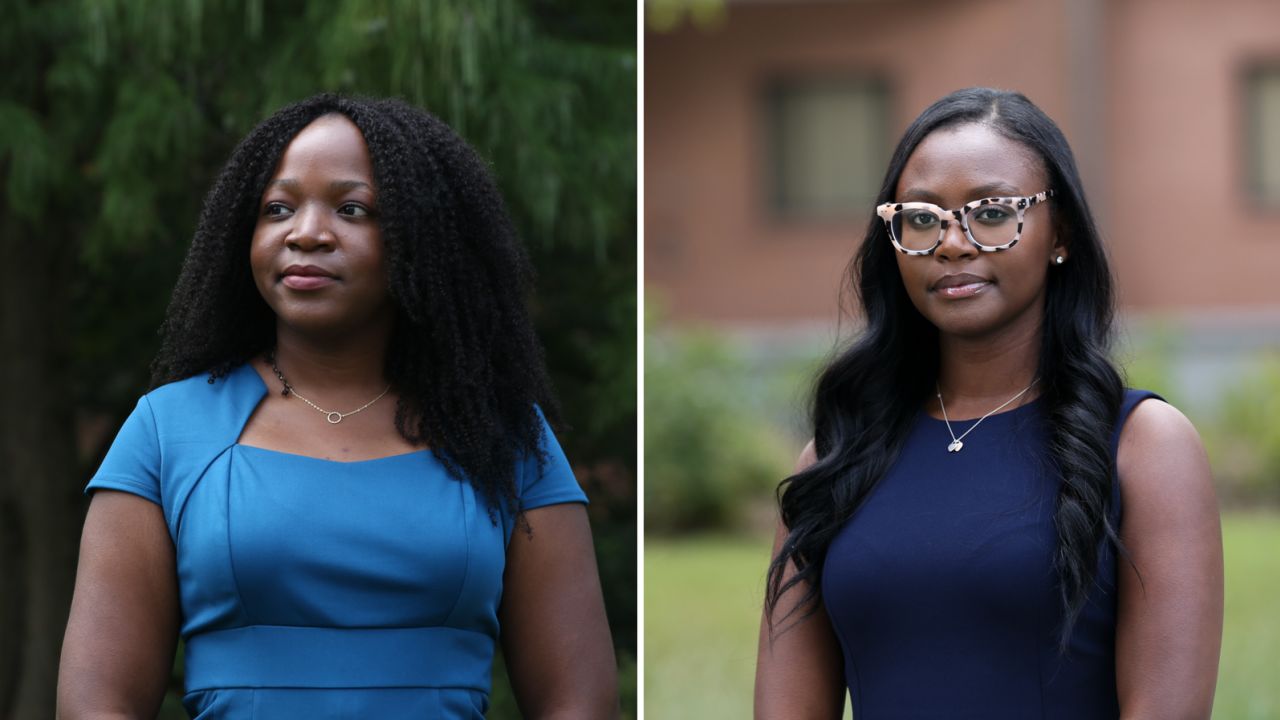
Among about two dozen scientists in Graham’s lab were three young students: Olubukola Abiona, Geoffrey Hutchinson and Cynthia Ziwawo.
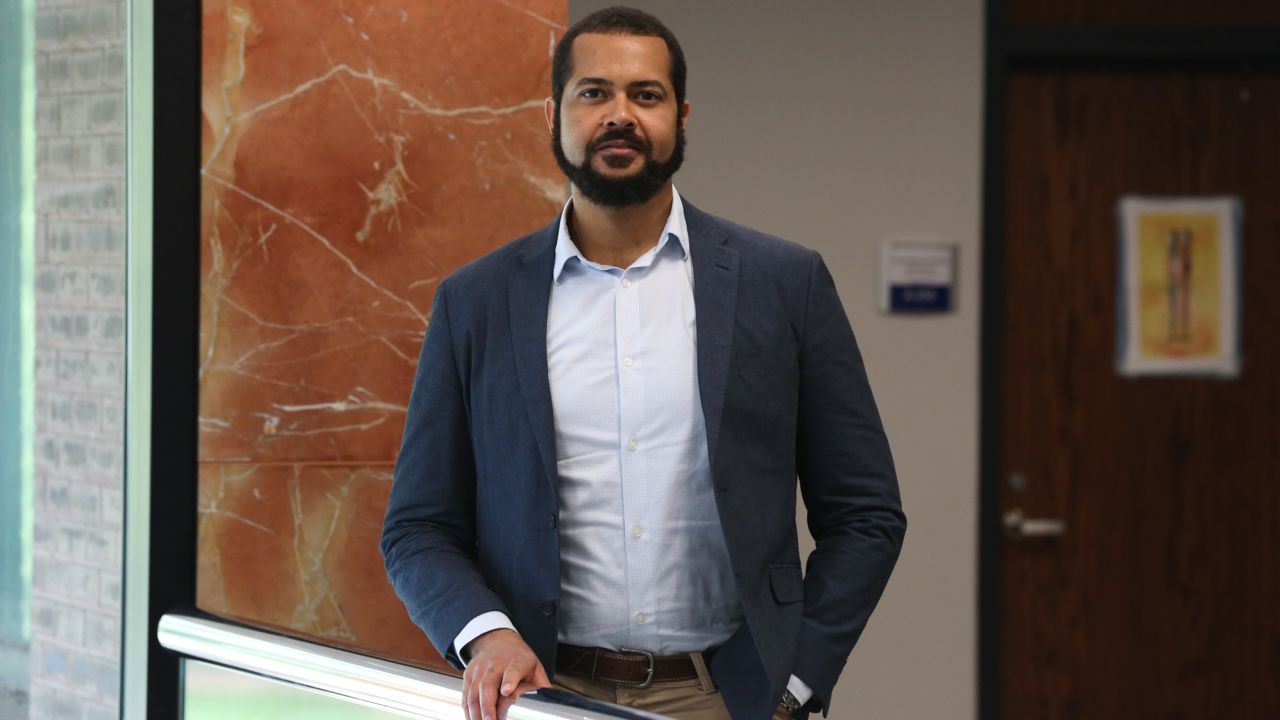
“We were sitting in that meeting, and Dr. Graham said, ‘It’s time to start thinking about running the drill,’ ” said Hutchinson, now 33 and a fourth-year doctoral student at the University of Washington.
“At the Vaccine Research Center, the mindset is sort of like anytime there’s something like that spreading, you can use it as an opportunity for a drill — a drill for the big one — if there’s going to be a real pandemic,” he said.
The “drill” consisted of Abiona and Hutchinson making lab versions of this novel coronavirus’ protein. As with other types of coronaviruses, the scientists knew that this one carried a structure called a spike protein, which it uses to enter human cells and cause infections. Next, the protein went to Ziwawo, who tested the kind of immune responses a vaccine would elicit in response to it.
“We knew we were doing things that were important, but then it was like ‘Oh, wow, this is really big,’ ” Ziwawo said. “And then Fauci is coming to the lab.”
Shortly after the official drill was launched, Dr. Anthony Fauci, then director of the National Institute of Allergy and Infectious Diseases, announced to the world that the NIH was working on a vaccine against the coronavirus, part of an existing collaboration with the biotechnology company Moderna.
What the world didn’t know at the time was that those three students — Abiona, Hutchinson and Ziwawo — were doing the foundational work for those vaccines to eventually save lives.
‘It was just all hands on deck’
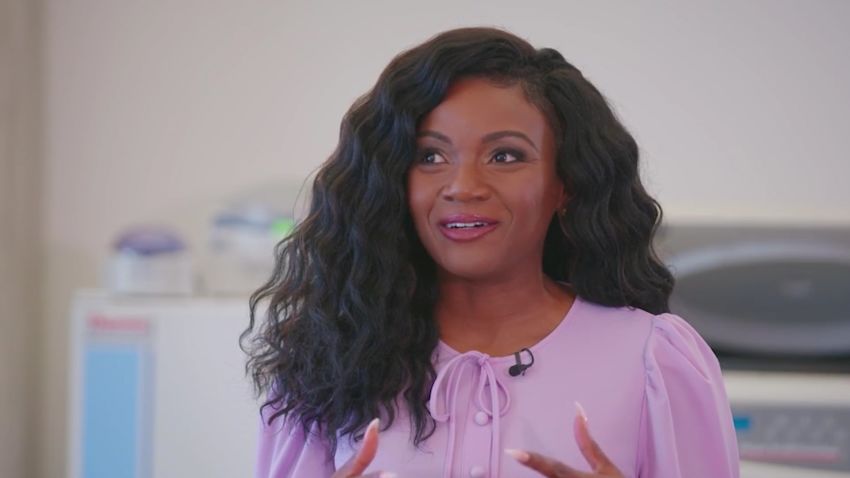
At the lab, Abiona, Hutchinson and Ziwawo worked under renowned immunologist Dr. Kizzmekia Corbett, then an NIH senior research fellow who guided them through their experiments and testing. The students hadn’t known each other before working together in the lab.
“At that point, it was just all hands on deck, and we were ready to go,” Corbett said of developing the Moderna Covid-19 vaccines, adding that the team felt confident and trusted each other through their work.
<div data-uri="cms.cnn.com/_components/video-resource/instances/clmjdchjz000k3b6i0ijtk519@published" data-component-name="video-resource" data-editable="settings" class="video-resource" data-fixed-ratio="16×9" data-video-id="politics/2021/04/04/covid-vaccine-kizzmekia-corbett-black-scientist-orig.cnn" data-live data-analytics-aggregate-events="true" data-custom-experience data-asset-type="hlsTs" data-medium-env="prod" data-autostart="unmuted" data-show-ads="true" data-source="CNN" data-featured-video="true" data-headline="Meet the trailblazing Black woman scientist behind a Covid-19 vaccine" data-description="34-year-old Kizzmekia Corbett is a key developer behind the Moderna vaccine. She tells CNN's Abby Phillip about her life in science, preparing for the next pandemic and the importance of empathy when it comes to tackling vaccine hesitancy in the Black community." data-duration="09:09" data-source-html=" – Source: CNN” data-fave-thumbnails=”{"big": { "uri": "https://media.cnn.com/api/v1/images/stellar/prod/210404120025-kizzmekia-corbett-orig-thumbnail.jpg?q=x_0,y_0,h_1080,w_1919,c_fill/h_540,w_960" }, "small": { "uri": "https://media.cnn.com/api/v1/images/stellar/prod/210404120025-kizzmekia-corbett-orig-thumbnail.jpg?q=x_0,y_0,h_1080,w_1919,c_fill/h_540,w_960" } }” data-vr-video=”false” data-show-html=”” data-byline-html=”
“The work that these four people did in particular, I think, has been underappreciated and somewhat heroic, in my opinion,” said Graham, who was deputy director of the Vaccine Research Center and chief of the Viral Pathogenesis Laboratory at the time.
“Their work led to not just the Moderna vaccine rapidly entering clinical trials but also to the discovery of monoclonal antibodies that were used for treatments and informed the development of other coronavirus vaccines, as well,” he said.
Graham, who is now a professor at the Morehouse School of Medicine and inaugural director of the school’s newly announced David Satcher Global Health Equity Institute, added that he made an effort to select a cohort of scientists in his lab who reflected the diversity of the rest of the United States in race, ethnicity and background.
“When he’s brought in different people in his laboratory from different backgrounds and ZIP codes and ethnicities, he’s had the opportunity to engage with them and understand how they think about science, how they would apply discoveries and how those discoveries would be integrated into a community differently,” said Dr. Valerie Montgomery Rice, president and CEO of the Morehouse School of Medicine.
“They’re going to ask questions from a different lens because of the differences they’ve experienced throughout life.”
The need for greater diversity in medicine has been an ongoing challenge for the scientific community. Only about 5.7% of physicians in the United States are Black or African American, according to data from the Association of American Medical Colleges. In the communities they serve, an estimated 12% of the US population is Black or African American.
Abiona, Hutchinson and Ziwawo are well aware of the lack of diversity in science and medicine. This week, as they reunited in person for the first time since working together in that NIH lab during the early days of the Covid-19 pandemic, they discussed it and their own journeys to where they are today – including working hard in school, learning lessons when lab experiments failed and chasing curiosity.
Their nostalgia quickly turned to laughter when Abiona joked that after she left the NIH,she felt like her life mirrored that of the Disney Channel’s Hannah Montana, a fictional character with a double life as a typical teenager by day and a famous pop singer at night.
Abiona described herself as a medical student by day and a Covid-19 vaccine researcher by night, finishing some of the pivotal work produced atone of the most renowned labs in the world and helpingdevelop a lifesaving vaccine in record time.
Mutual admiration
As the trio met for lunch at the Morehouse School of Medicine in Atlanta ahead of the inaugural Dr. David Satcher Global Health Equity Summit, hosted by the Morehouse School of Medicine and KPMG LLP, each grew emotional when they reflected on what they admired about each other.
While working side by side in Graham’s lab, Abiona, whose family is from Nigeria, and Ziwawo, whose family is Malawian, bonded over choosing to be doctors without the typical pressure some children face from their parents to pursue medicine — while acknowledging that they somehow still ended up giving in to the African stereotype of becoming a doctor, lawyer or engineer.
The two are now in pursuit of medical degrees: Ziwawo, 25, is a fourth-year student at Indiana University School of Medicine, and Abiona, 27, is a third-year dual-degree medical and Ph.D. student at Case Western Reserve University.
Abiona said she admired Ziwawo’s confidence and determination. Ziwawo said she saw Abiona as a mentor who made her feel welcome in the lab.
All three students grew up with a genuine interest in science and medicine. Ziwawo knew that she wanted to be a doctor since the age of 5. Abiona fell in love with science later, as a teenager, after doing a science and technology program in high school.
Hutchinson always thought science was interesting, but his passion for studying infectious diseases grew after his time in Mozambique. As he studied protein and the role it would play in the design of vaccines, he would often reflect on his time in a rural town in the northern part of the country, where, before joining the NIH lab, he served in the Peace Corps and taught chemistry to high school students.
He saw firsthand the devastating illnesses, such as hepatitis B, that easily could have been prevented with vaccinations. But many of the children there didn’t have access to such life-saving vaccines.
“The dormitory actually had to kick a bunch of students out of the dorms. They had chronic viral infections, something that we all get vaccinated against here” in the United States, Hutchinson said.
Abiona and Ziwawo both admired Hutchinson’s compassion.
The three students had hope in the world’s battle against the Covid-19 pandemic much sooner than many other people did.
The rest of the world cheered when the first Covid-19 shots went into arms — but for Abiona, Hutchinson and Ziwawo, the moment came much earlier, when their work indicated that the vaccine elicited an immune response in lab tests.
“It will turn yellow when it tells you, ‘Yes, you have a response,’ ” Ziwawo said about the tests. “That’s when I understood the gravity of what we were doing.”
They saw the results and cheered.
The fruits of Abiona, Hutchinson and Ziwawo’s labor were evident this week as the United States began to roll out updated versions of the Moderna and Pfizer/BioNTech Covid-19 vaccines.
The updated vaccines “validate the work we did” in the early days of the pandemic, Graham said. “It’s now established a new pathway for developing new and better vaccines.”
The mRNA vaccines have been updated to teach the body to fight the XBB.1.5 subvariant of the coronavirus and other closely related strains that are currently circulating.
“Barring the emergence of a markedly more virulent variant, the FDA anticipates that the composition of COVID-19 vaccines may need to be updated annually, as is done for the seasonal influenza vaccine,” the US Food and Drug Administration said in a statement Monday when it signed off on the new vaccines.
On Tuesday, the US Centers for Disease Control and Prevention recommended the vaccines for everyone 6 months and older.
Abiona, Hutchinson and Ziwawo all confirmed Wednesday that although they haven’t made their appointments yet, they plan to get the updated shots.
Youth rally at the UN for climate justice. Credit: Abigail Van Neely/IPS
UNITED NATIONS, Sep 15 2023 (IPS) – “What do we want? Climate justice! When do we want it? Now!” youth chanted in an unusually lively conference at the United Nations Headquarters.
Earlier on Thursday morning (September 14), almost 500 young people had streamed into the room to a DJ’s upbeat soundtrack. Spirits were high despite the more somber rallying cry of this year’s International Day of Peace youth event: the planet is on fire. Many speakers focused on the idea that there cannot be peace without climate justice.
“We cannot begin to talk about peace without talking about the climate crisis,” environmental justice advocate Saad Amer said after leading the crowd in the kind of chants more likely heard at a protest. Fossil fuel disputes spark wars that disproportionately affect people of color, Amer explained. Youth must take charge to “re-write destiny.”
To 21-year-old Mexican climate justice activist Xiye Bastida, “Peace is the ability to drink clean air and clean water.” Bastida, a member of the Otomi-Toltec indigenous community, spoke of her community’s traditional commitment to living in harmony with the earth. Now, indigenous people are being displaced as regenerative practices are forgotten. Bastida called for a world free of extreme weather and exploitation. The climate crisis reflects a broken system, she said, but peace is the bravery to imagine a better world.
Young people are “creating a youth movement for climate action, seeking racial justice, and promoting gender equality,” the Under-Secretary-General for Global Communications, Melissa Fleming, told the audience. In a recorded statement, Secretary-General Antonio Guterres reiterated that youth action has power. Still, only four governments have concrete plans to include young people in policymaking, Youth Envoy Jayathma Wickramanyake noted.
As she lived through brutal conflicts in her home country of Sri Lanka, Wickramanayake said she wondered why people around her continued to fight. Today, she told other young activists that the root causes of conflict always run deep – from inequality to poverty. She stressed that peace cannot be differentiated from development.
The event occurs days before the Sustainable Development Goal (SDG) Summit, a critical opportunity for world leaders to address failures to implement the goals so far.
“Next week there will be an important breakthrough in creating the conditions to rescue the sustainable development goals. I’m very hopeful that the SDG summit will indeed represent a quantum leap in the response to the dramatic failures that we have witnessed,” Guterres said during a news conference.
Meanwhile, youth are left with memories of their chants: “The oceans are rising, and so are we!” “We are unstoppable – another world is possible!”
Hundreds of Malawians have stormed the social media celebrating a rare feat achieved by American lawyer of Malawi Origin Moyenda Mutharika Knapp saying she has put Malawi on the map.
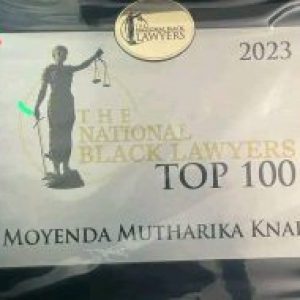
Moyenda Mutharika Knapp, has been shortlisted among the top 100 black American attorneys by the National Black Lawyers, an elite network of legal experts in the United States who are selected based on their success and influence based for providing excellent legal representation in their respective practice areas.
According to the National Black Lawyers website https://nbltop100.org. The daughter to former President Peter Mutharika, Moyenda has made it to the 100 Top Black American Lawyers in the USA.
She is an attorney with in-house and law firm experience with experience handling employer side employment law, commercial litigation, and ERISA long term disability matters.
Among other things, Moyenda Knapp has represented employers in employment law matters; plans, administrators, and employers in ERISA long term disability lawsuits; and companies in business disputes.
In an interview with our publication, the former Malawi’s leader daughter said she has over the years defended employers in employment discrimination, harassment, retaliation, and wrongful termination cases in state and federal courts and before administrative agencies, such as the Illinois Department of Human Rights, the Equal Employment Opportunity Commission, and the Financial Industry Regulatory Authority (FINRA) and that based on her performance, she thinks that has helped her to be enlisted among the top 100 Black Lawyers in the USA.
The US-Based Malawian barrister has been an adjunct professor at Northwestern University Pritzker School of Law, where she teaches two courses: Trial Advocacy and Civil Discovery since 2005.
She is admitted in Illinois,U.S. District Court for the Northern District of Illinois, including the Trial Bar, U.S. Court of Appeals for the Seventh Circuit, U. S. District Court for the Central District of Illinois, U.S. District Court for the Southern District of Indiana, U. S. District Court for the Eastern District of Michigan, U.S. District Court for the Eastern District of Wisconsin, U.S. District Court for the Western District of Wisconsin, Washington, DC (Inactive but in good standing),Massachusetts (Retired but in good standing)
The National Black Lawyers Association in the United States has named Moyenda Mutharika-Knapp, the daughter of former Malawi President Peter Mutharika, among the top 100 Black Lawyers in the United States of America.
Mutharika-Knapp is among top 100 black in a country with over 1.3 million active lawyers.
“[National Black Lawyers Association} selects the most successful and influential lawyers with reputations for providing excellent legal representation in their respective practice areas. In sum, we are an African-American legal brain trust,” reads the Association’s website.
The National Black Lawyers Association has recognized Moyenda Mutharika-Knapp
Moyenda is the second-born daughter of Mutharika who also worked as a law professor in the United States before joining politics in Malawi.
According to the National Black Lawyers Association website, she is an attorney with in-house and law firm experience and has experience handling employer side employment law, commercial litigation, and long term disability matters.
She has also represented employers in employment law matters; plans, administrators, and employers in long term disability lawsuits; and companies in business disputes.
“I have defended employers in employment discrimination, harassment, retaliation, and wrongful termination cases in state and federal courts and before administrative agencies, such as the Illinois Department of Human Rights, the Equal Employment Opportunity Commission, and the Financial Industry Regulatory Authority (FINRA). I draft employment related documents, such as separation agreements, and provide employment counseling.
“Since 2005 I have been an adjunct professor at Northwestern University Pritzker School of Law, where I teach two courses: Trial Advocacy and Civil Discovery,” she says in her entry on the website.
National Black Lawyers Association has listed former President Professor Peter Mutharika’s daughter Moyenda Mutharika Knapp among 100 top Black American Lawyers in United States of America (USA).
According to National Black Lawyers Association website, Mutharika’s daughter Moyenda has in-house law firm experience, handling employer side employment law, commercial litigation and long term disability matters.
Moyenda who is admitted to bar in Illinois, also teaches trial advocacy and civil discovery as adjunct professor at Northwestern university Pritzker school of law since 2005.
There are over 1.3 million active lawyers in USA according to the American Bar Association.
One of the country’s legal experts, Ngeyi Kanyongolo says this is an achievement which speaks to high level of excellence and an inspiration to many lawyers especially female lawyers in Malawi.
The National Black Lawyers was created to celebrate legal excellence by promoting our attorneys as subject-matter experts, developing a strong national network of top African American attorneys, and facilitating the exchange of timely information to enable our members to maintain their status as leaders.
Daughter of former President Peter Mutharika, Moyenda has been selected among the 100 Top Black American Lawyers in the USA by the National Black Lawyers Association.
The development has excited many Malawians especially Democratic Progressive Party (DPP) supporters who have taken to social media to congratulate her.
DPP Councilor for Blantyre City Soche East Ward Leonard Chimbanga wrote: “Congratulations to Moyenda Mutharika Knapp who is an American Lawyer of Malawi origin to be selected among the 100 Top Black American Lawyers in the USA by the National Black Lawyers Association.”
Concurring with Chimbanga’s remarks DPP’s legal advisor Charles Mhango wrote: “Congratulations to Moyenda for this achievement. This is no mean achievement in the legal profession, more particularly in the United States of America. We are all very proud of this achievement.”
Moyenda is currently based in United States of America.