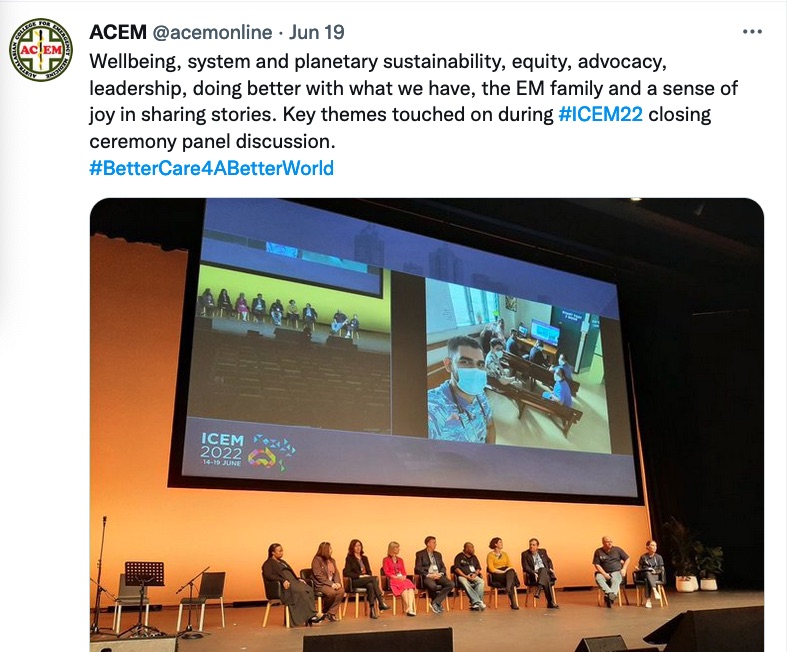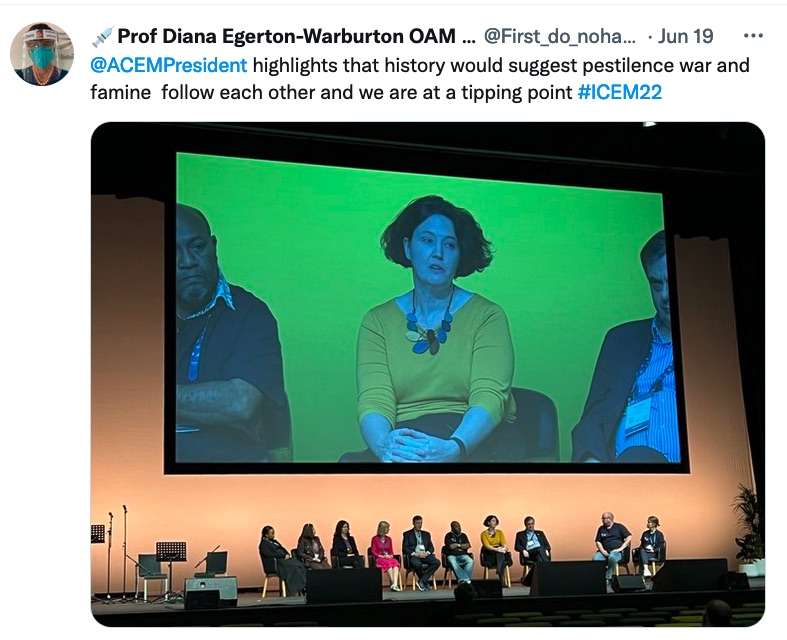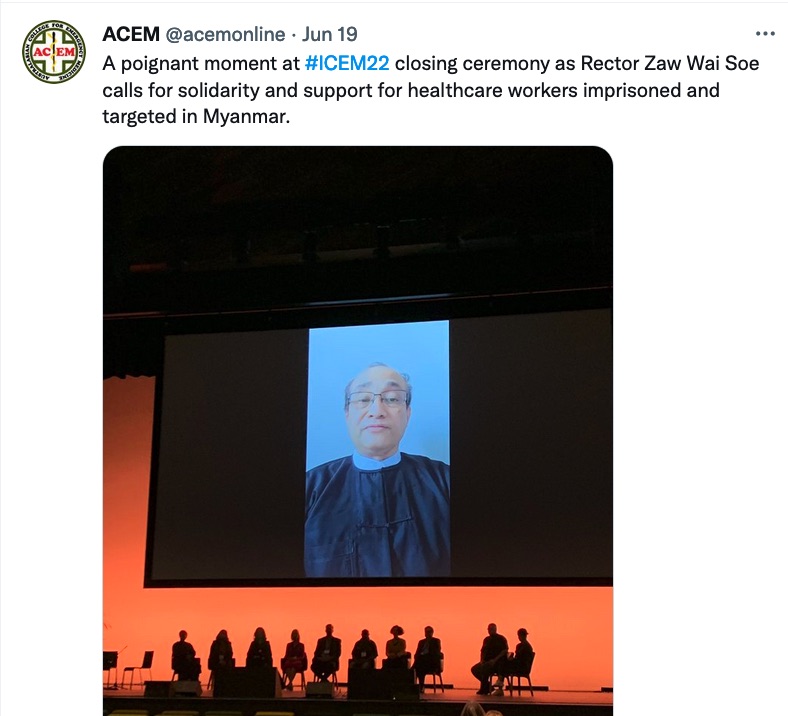
Hearing from world leaders on equity and emergency care

Equity and emergency care was the theme for day two of the 21st International Conference on Emergency Medicine, on 17 June.

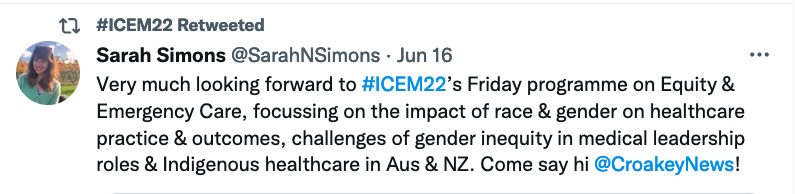
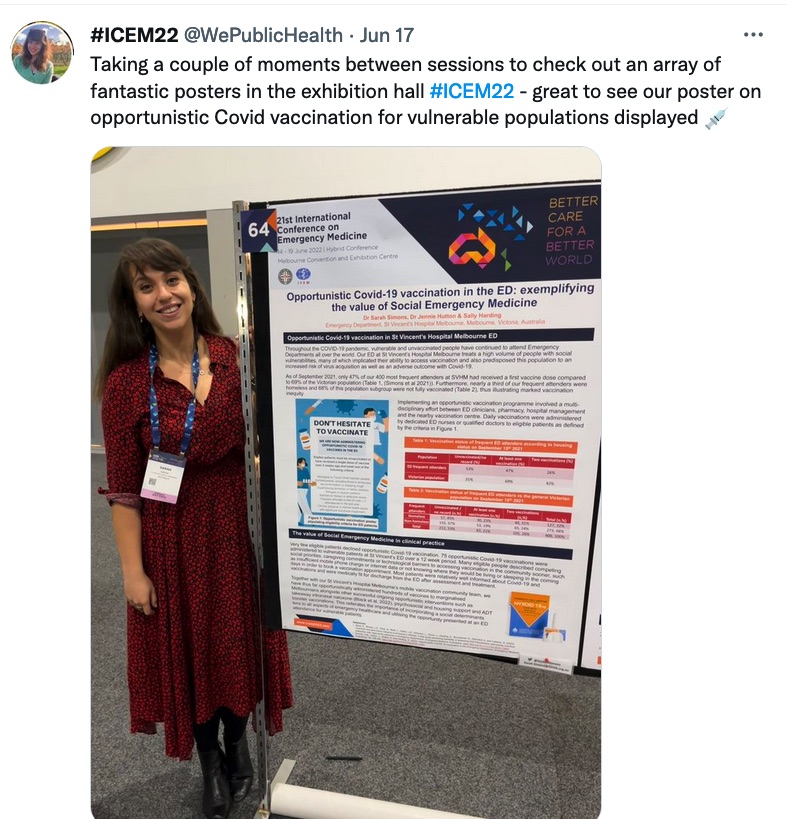
Dr Sarah Simons, an emergency medicine registrar in Naarm/Melbourne, live-tweeted the discussions from @WePublicHealth as part of Croakey Conference News Service coverage of #ICEM22.

Below is a selection of her tweets. In the second half of the post are some wrap-up reflections from conference participants.

Despite concerns aired at the conference about workforce burnout, Simons observed, “the enthusiasm, storytelling, connections and engagement at this conference offer a lot of cause for optimism”.

Stay tuned for more stories to come, and follow this Twitter list, including more than 110 ICEM presenters and participants.


Sarah Simons tweets:

Why equity matters

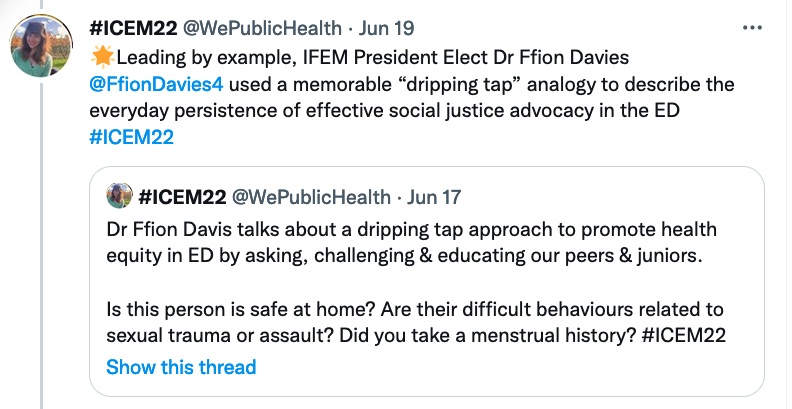
The session was chaired by Dr Simon Judkins and Dr Ffion Davies, with a panel discussion facilited by Dr Clare Skinner.
Global health equity and the social determinants of health: the African experience

Dr Mulinda Nyirenda opened the plenary session talking about her experiences as an Emergency Physician in Malawi.

Access to care, system resilience and investment and funding in emergency care continue to be pertinent issues in Africa – more recent investment in resuscitation resources in particular has lead to a spike in better outcomes.

@MulindaNyirenda speaks about how the social determinants of health are increasingly prevalent in emergency care in Malawi, more so than with routine checks or elective care and even more relevant when looking at the challenges between rural and metropolitan healthcare access.

Emergency care in Malawi is primary care; staffing shortages and more broader resource limitations implicate access to healthcare; 40 percent of @MulindaNyirenda’s work is emergency resuscitation medicine but the remainder is often more primary care based.

NCDs are increasingly prevalent in Africa, especially hypertensive emergencies and strokes. Emergency care cannot be only for the rich.

Pursuing health equity for asylum seekers and displaced persons across the globe

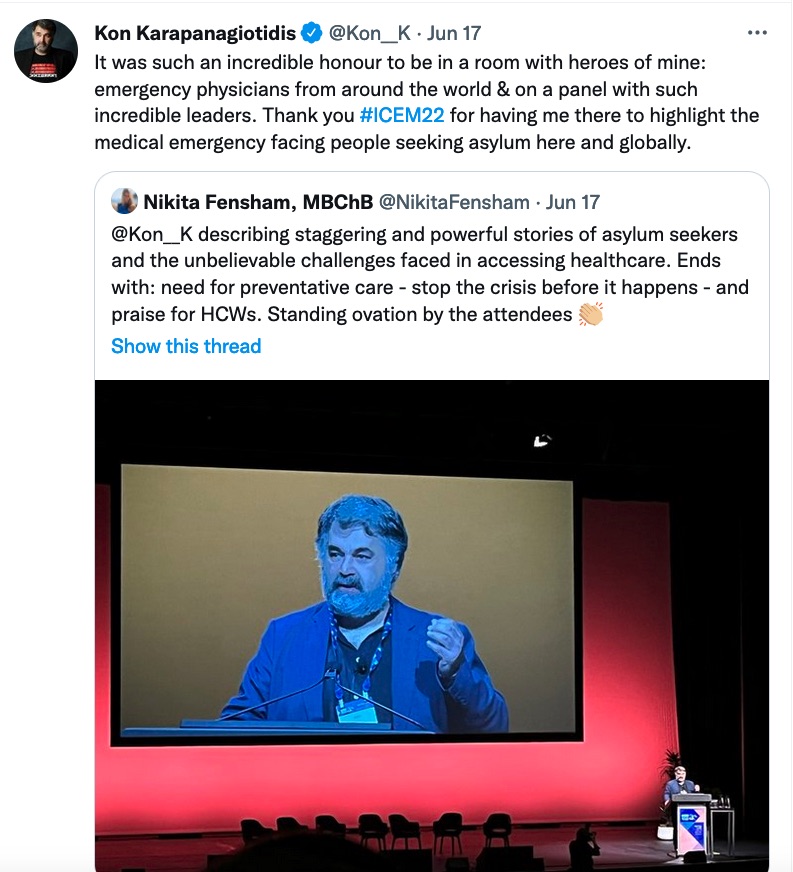
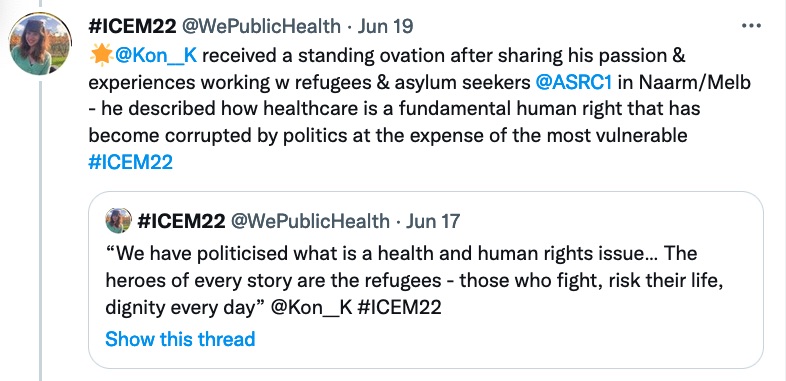
Kon Karapanagiotidis, CEO and founder of the Asylum Seeker Resource Centre, said: “We have politicised what is a health and human rights issue… The heroes of every story are the refugees – those who fight, risk their life, dignity every day.”

There are still more than 200 refugees in Nauru living in squalor, but despite governmental failings, Karapanagiotidis speaks of the courage and compassion of the Australian public to uphold the human rights of refugees by protesting and blocking exits to hospitals to prevent deportation.

Health is a human right. Ahmed was 24 when he died of a foot infection in Nauru.

He talks about how @ASRC1 doubled down to keep doors open and cover medicines, supply food all through the pandemic. COVID mortality rates for Greek people in Melbourne are eight times higher than the general population – 13 times higher for Middle Eastern people.

So what if we cared for people before the crisis really begins? Prevention is better than cure.
Development of gender equity and equality systems in emergency medicine

Imron Subhan, India and Priyadarshini Marathe, United Kingdom

@imronsubhan and@PRIYAMARATHE10 speaking on the development of gender equity and equality systems in emergency medicine. “We’re here to make you uncomfortable. How does your patient’s gender matter in the ED?”

@imronsubhan has five minutes and one message: gender equality is not solely a woman’s problem. Sex and gender must be embedded early into our health curricula. Biases are introduced when medicine is taught as universal and unisex.

“Teaching gender equity and equality should be like basic life support” – lifesaving and not optional.

Dr Priyadarshini Marathe: Practical everyday tips and tricks for addressing biases and inequity: flagging biases on a ward round; create a WhatsApp group as a safe space with peers (for example, female colleagues in your workplace) to listen, empathise and share knowledge and experience.

Write yourself a couple of stock answers for educating peers and challenging interactions “it sounds we are at a different stage of learning about this”.  Recommended reading with books/novels directing to lived experiences.

Equity, First Nations Peoples and healthcare

Professor Greg Phillips now shares insights from his 25 year career in equity and healthcare for First Nations people.

He describes 60,000 years of thriving First Nations culture, science, art, politics, geology, medicine and law long preceding colonisation in Australia.
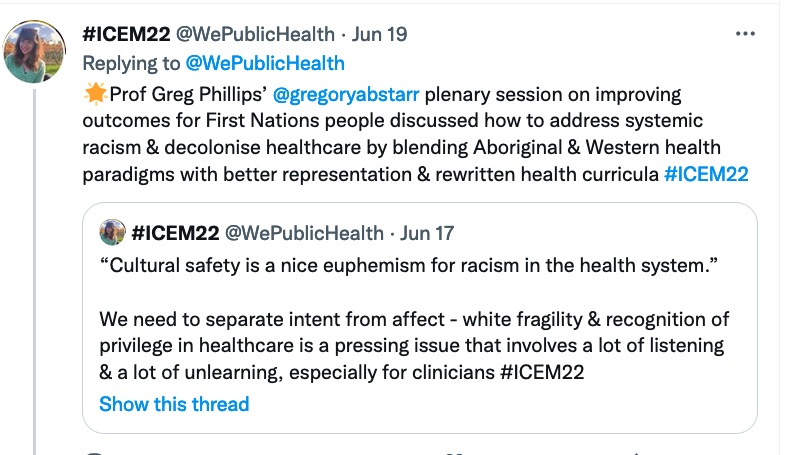
Recognising privilege and white fragility on an individual and systematic level in healthcare is vital for health equity. It can be extremely confronting to have this pointed out to us as clinicians who genuinely believe we are always trying our best for our patients.

Aboriginal representation at every level and in every discipline is vital, as is rewriting health curricula and integration of culture.

How does our advocacy shape and influence future healthcare?

Professor Phillips references the legacy of the late Professor Paul Farmer who spoke about how the practice of medicine should not be about benevolence, but instead about social justice.

Health inequities in African American and Latin American communities: challenges and solutions

Dr Gillian Schmitz talks about health inequities in the USA, using COVID as an example of disparities in housing, transport, employment and diet influencing health and access to care for African American and Latin American communities.

This reinforces the need for screening in the ED: HIV, hepatitis, STIs as well as smoking cessation & opportunistic vaccinations for flu and hepatitis. Teaching communities about communicable diseases with appropriate language and translation provision is paramount.

@GillianMD1 also talks about firearm violence in the US, a subject that many Australian emergency clinicians are very fortunate to have limited experience of and a pertinent example of how health and political action are directly intersecting and implicated.


Indigenous health service equity

First up of the breakout sessions was Dr Glenn Harrison chairing a discussion on Indigenous health service equity.

Dr Inia Tomash was first up from Auckland, sharing his national research project on examining inequalities in Aotearoa NZ EDs with patient centred markers of care and mortality. Māori people are known to be high users of ED services with room for improvement of care.

Retrospective review of NZ ED admissions 2006-2012: 5.9 million presentations in total. After repression analyses and control for confounders, ED mortality and representation after ED discharge was significantly higher for Māori population, suggesting different patterns in ED usage between Māori & non-Māori people – younger, more deprived, longer triage time.

Tomash’s top tips for redressing ED inequity: accept that this a problem that needs addressing and that puts patients at risk. We can start by quantifying our own biases and develop our critical consciousness.

The mindset of “going overboard for difficult patients” needs to change; this should instead be normalised as the gold standard! Use the resources available and engage with local Indigenous health units, practitioners and liaison officers.

Innovation in First Nations dermatology
Crystal Williams and Gabrielle Ebsworth

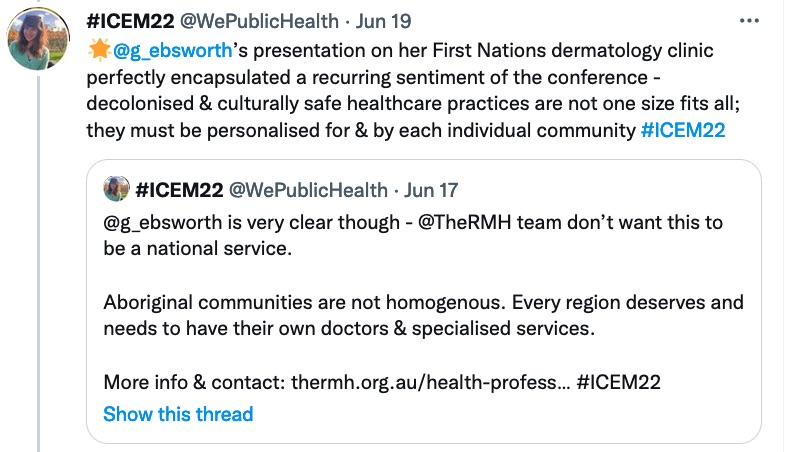
Gabrielle Ebsworth told us about her important work with the First Nations dermatology clinic. What started as a small rural telehealth service last February is now a dedicated successful face to face and telehealth service for and by First Nations people with easy, open referral processes and patient engagement. Demand currently far exceeds current resources and funding.

There are only four First Nations dermatologists in Australia, all of whom have only become fellows in the last two years. Part of the clinic’s work includes a monthly journal club for Victoria GPs to promote education, awareness and improve quality of referrals.

@g_ebsworth is very clear though – @TheRMH team don’t want this to be a national service. Aboriginal communities are not homogenous. Every region deserves and needs to have their own doctors and specialised services. More info is here.
Overcoming racism and bias 
Gina Bundle, senior Aboriginal Health Liasion officer @thewomens

Gina spoke about her lived experience of the legacy of the Stolen Generations, how she ensures the hospital is held to their apology to protect every First Nations woman and baby and keeps their promises.

Creating an environment that First Nations people can walk into and know that they feel safe is incredibly important – the presence of Indigenous artwork and possum skin cloaks in a healthcare setting is so much more than decoration.

Part of Gina’s role is to keep her colleagues’ diaries updated with important First Nations calendar events all year round. National Sorry Day is so more than just a march; she wants colleagues to visit their offices, seek advice and share experiences long after NAIDOC week.


Development of gender equity and equality systems

Gender equality in EM – where do we stand today?
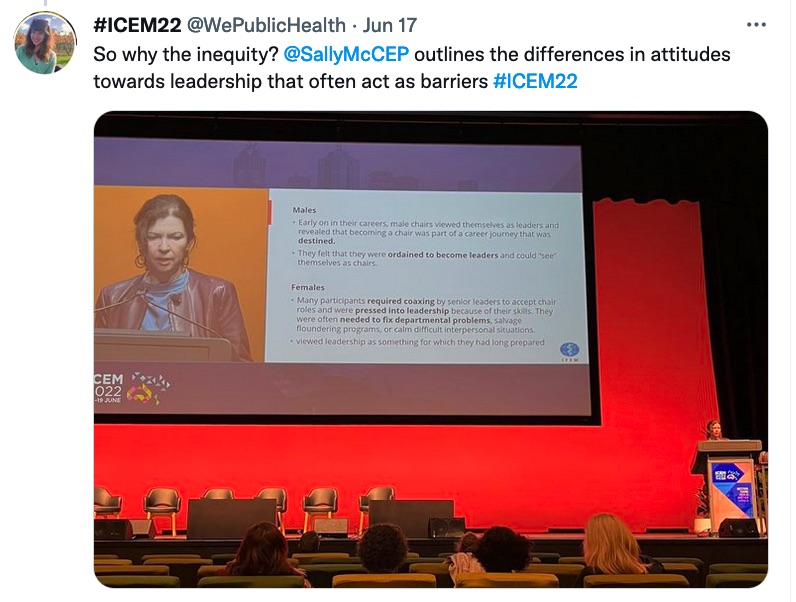
Dr Sally McCarthy says we still have some way to go – a brief glance at the predominantly female audience here speaks volumes about our approach to improving gender equality in EM and shows we have a long way to go still.
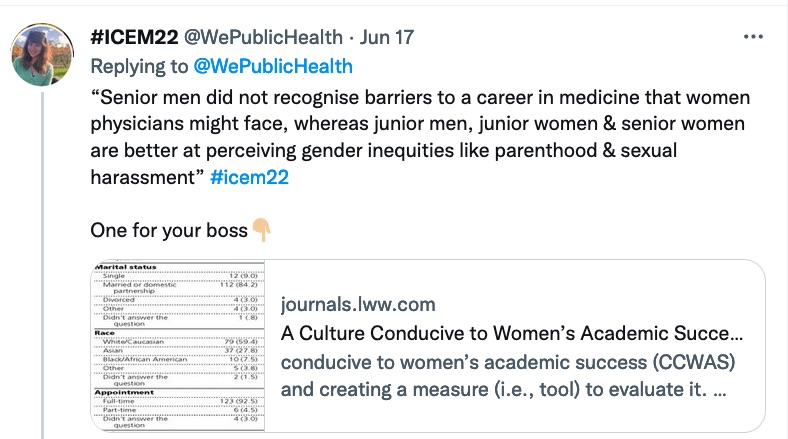
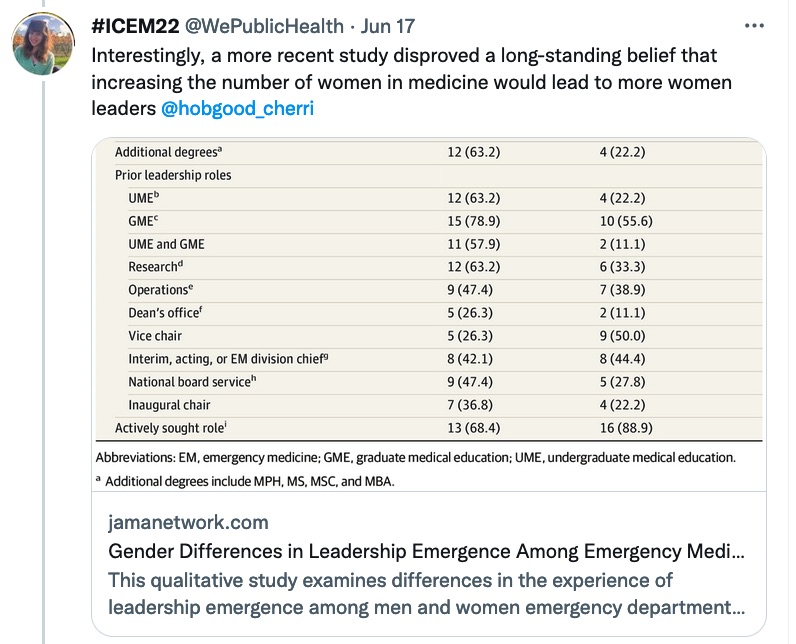
See the article mentioned above here. See the JAMA article here.
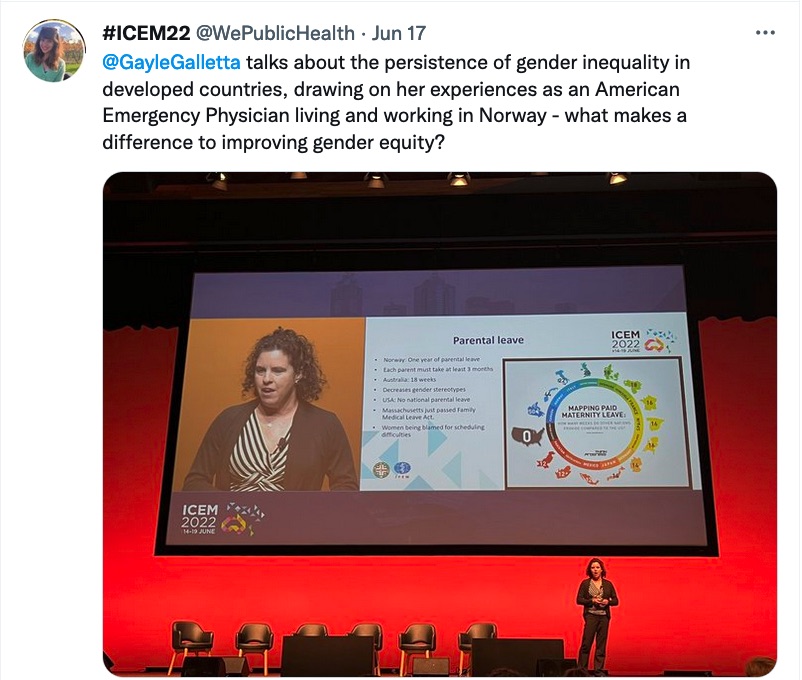
Persistence of gender inequality in developed countries – why?
Dr Gayle Galletta talks about the persistence of gender inequality in developed countries, sharing her experiences as an American Emergency Physician in Norway.
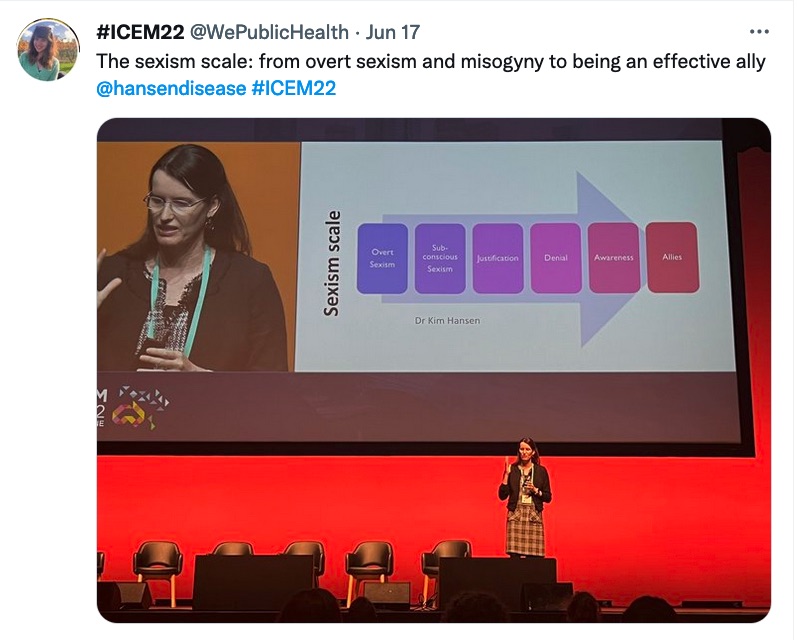
Taking women leadership to the next level – the 2.0 move
Dr Kim Hansen
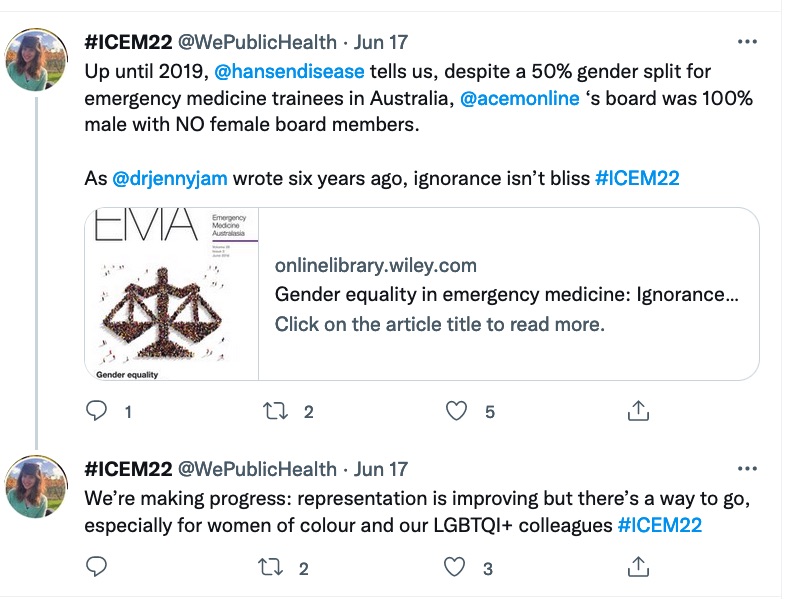
Equity through advocacy

The role and power of research
Professor Brendan Crabb – @CrabbBrendan – shares about how research can be integrated into community care in order to build capacity and self sustained progression in emergency healthcare.

He describes the malaria incidence as an example – barriers to malaria are both technical and non technical requiring a variety of approaches. Research is a powerful tool of hope and a valuable a starting point to implement real, physical change.

The role and power of politics and advocacy for emergency care from the Tuvalu perspective
Dr Aloima Taufilo, Tuvalu

Wise words and inspirational efforts from @ATaufilo as she reflects on the power of social media communication to maintain and strengthen not only health literacy but political relationships to advocate for more than 2,000 Tuvali people with COVID last year.

Societal racism feeds into health system, clinician and patient factors – doctors often take cognitive shortcuts in decision making processes, with challenges including time constraints, multi tasking, need for closure, stress and sleep deprivation.

The role and power of education
Professor Papaarangi Reid, Aotearoa/New Zealand, talks about the power of education. A key message of COVID was to “listen to the scientists” but this proved insufficient; the science also needs political will and social capital to get anywhere.
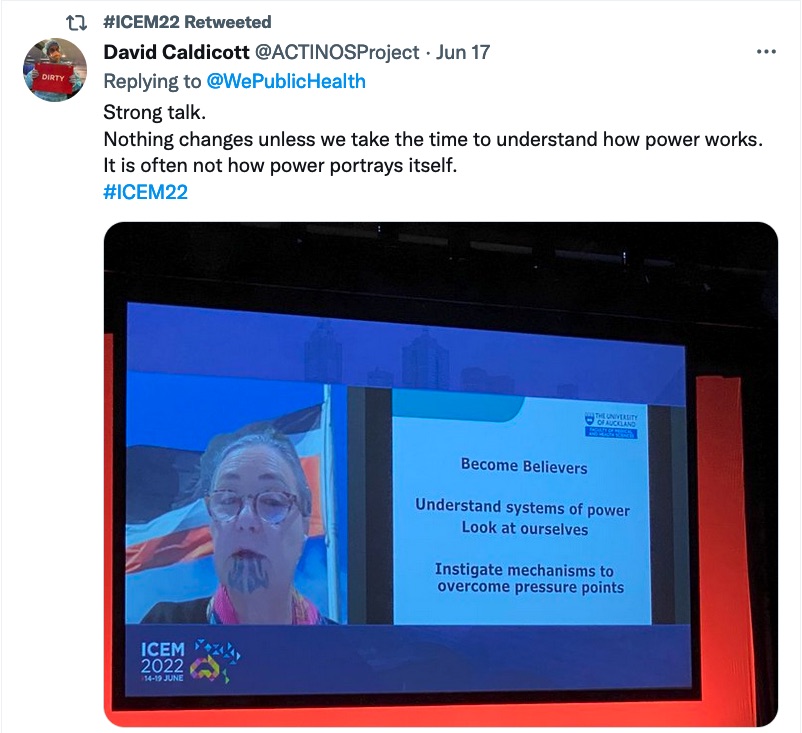
The role and power of the media
Jo Chandler, Australian journalist
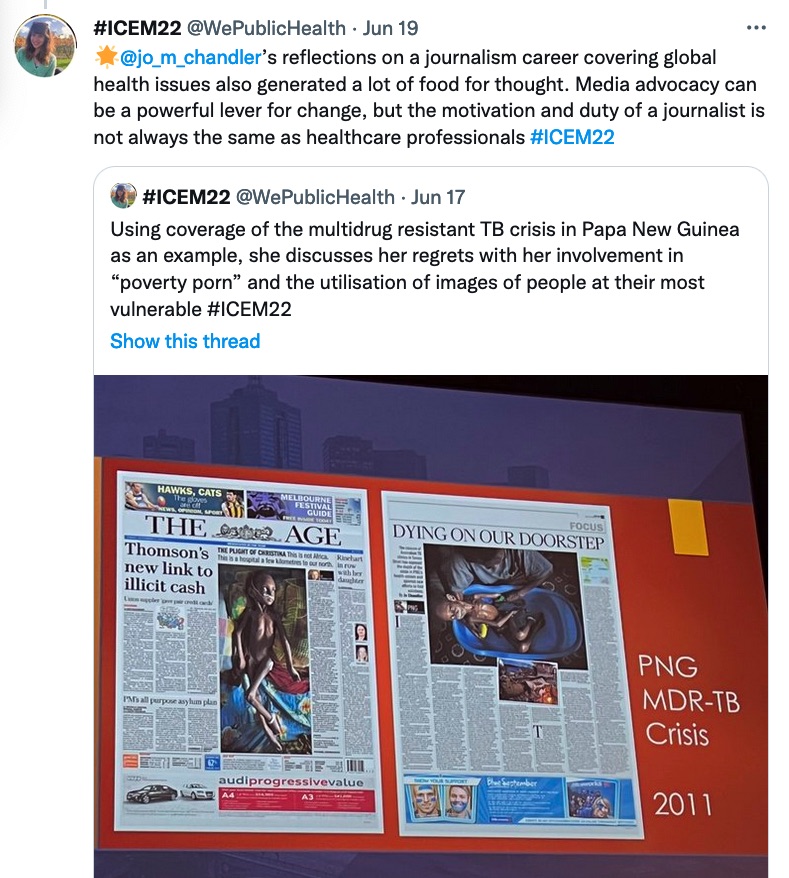
“Did it make a difference?” It can be difficult to know without a parallel universe, but shortly after publication an urgent and reactive mobilisation of resources and funding was injected into PNG.

How do we weigh up the risks of media advocacy and subsequent media exposure to advocate for vulnerable people? A great audience question from Dr Georgina Phillips in our advocacy plenary.

@jo_m_chandler answers that one blessing of social media is immediate engagement w educative, practice changing and informative feedback in real time. Longevity of journalistic relationships is also vital to build relationships and share narratives without damaging consequences.

The role and power of professional advocacy
Dr Dinesh Palipana shares his story with our audience – half way through university, he acquired a life changing spinal cord injury in a car accident. He found himself negotiating a minefield of challenges related to his disability & went on to complete medical school

He tells us how the ability to advocate for others reflects an immense position of privilege. Our titles and positions as doctors afford us great authority and privilege. Sometimes we don’t dare to speak up, for fear of reprobation, loss of status, vanity or fear.

“The biggest mistake a physician can make is to treat someone’s body but not their soul.” We have a responsibility to our communities, to acknowledge our privilege and to speak up with courage and make powerful people feel uncomfortable.

Dr Jenny Jamieson concludes today’s events, describing how Emergency Medicine sits at the coalface of society, combining science, sociology, anthropology and health.

In my view, the enthusiasm, storytelling, connections and engagement at this conference offer a lot of cause for optimism.

A final point: as emergency doctors we’re used to life and death situations, and many of us learn how to detach when things get tough for our own psychological self preservation. We need to be empathetic with humanity and humility but burnout is real. How do we find the balance?


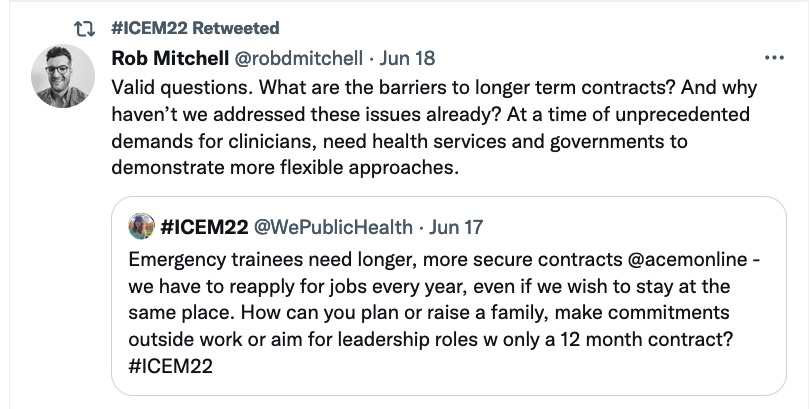
Trainee matters
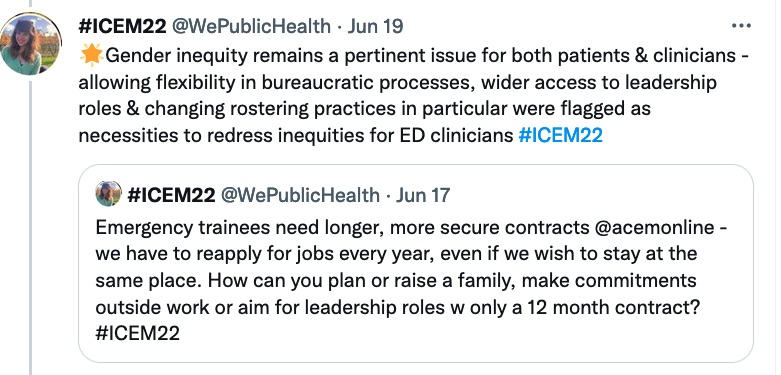

The author at work

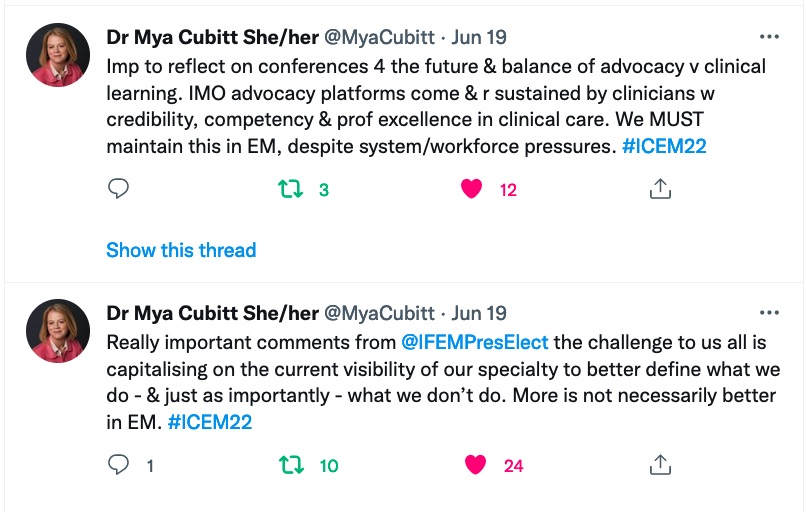
Final conference reflections

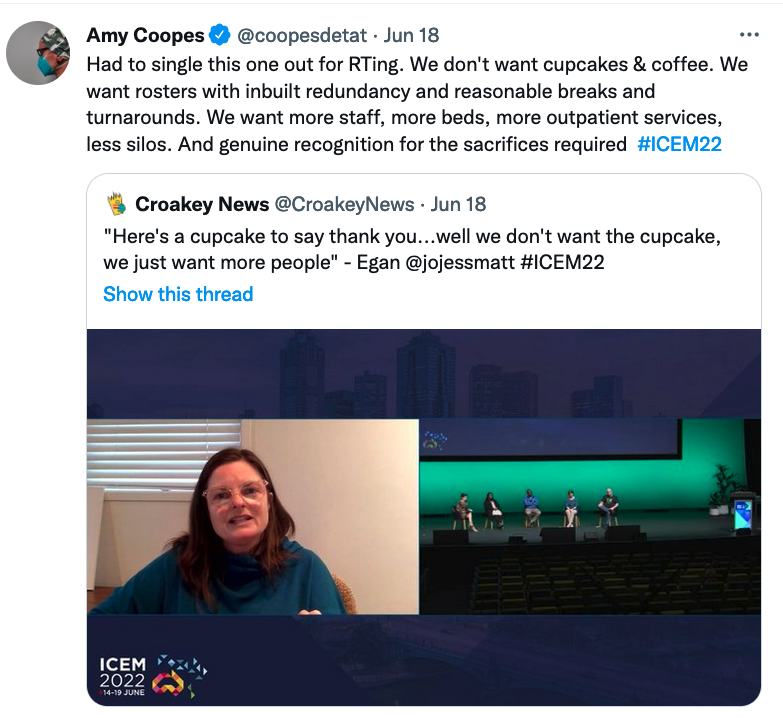
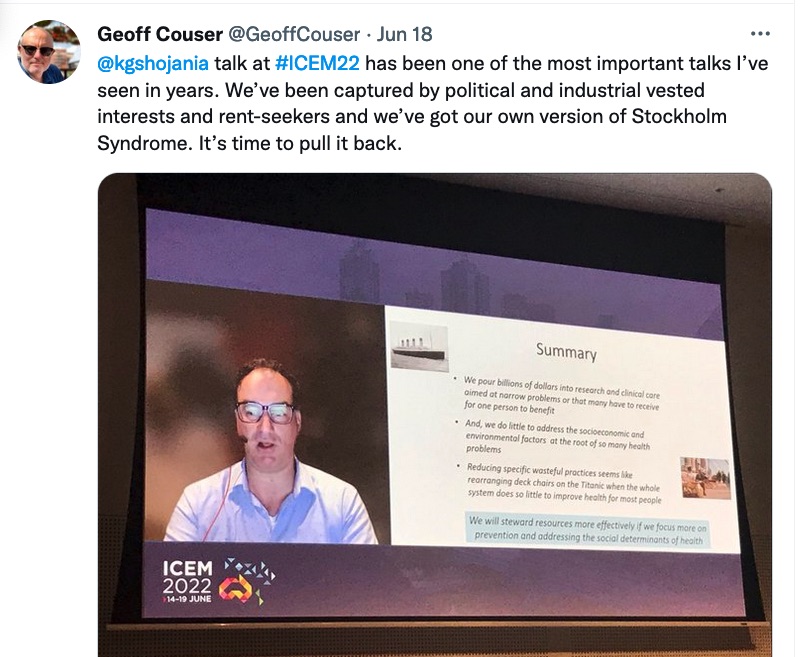
As the conference wound up, participants shared reflections.


Thanks tweeps!

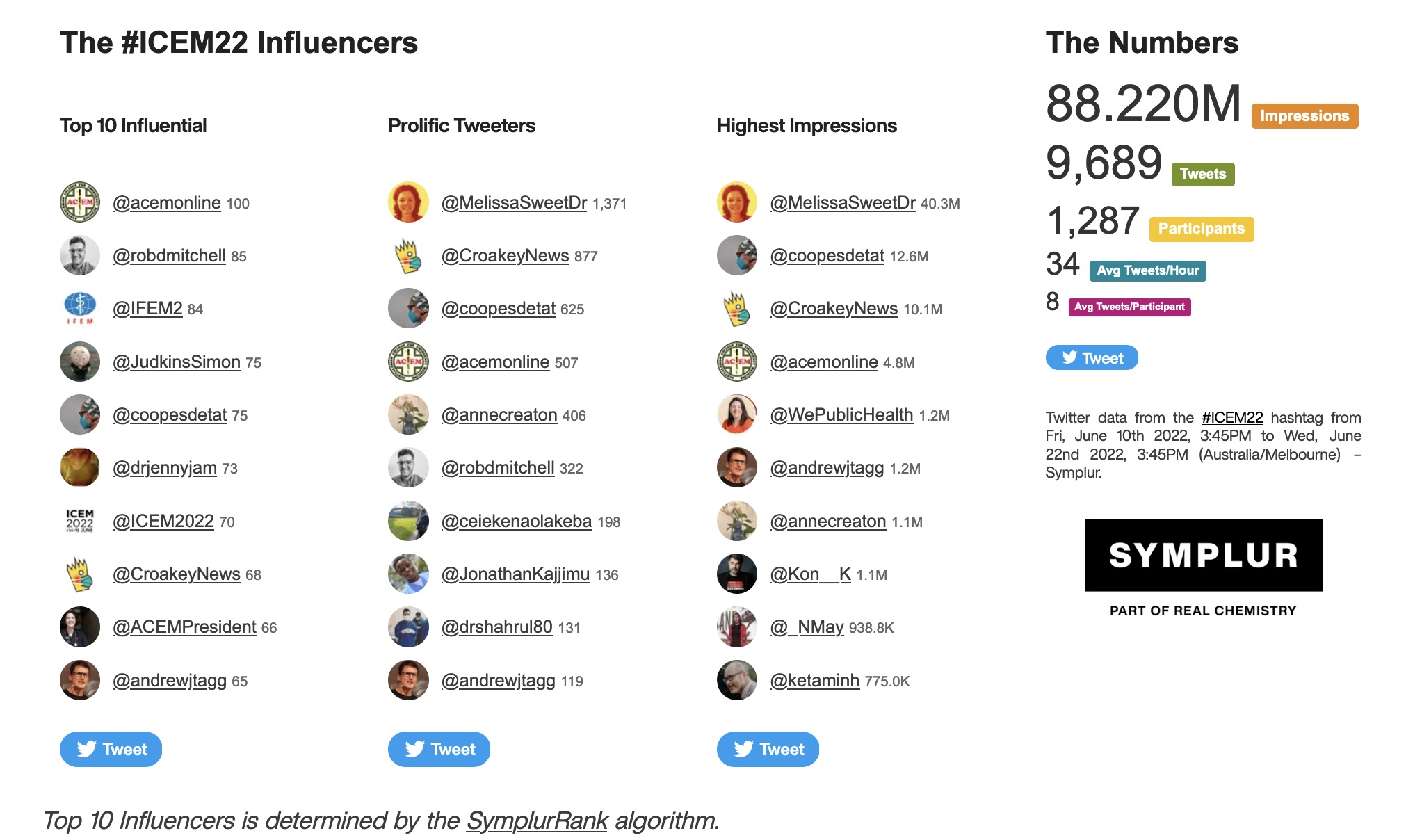
The Croakey Conference News Service team acknowledges and thanks #ICEM22 participants for their engaged and contributory tweeting.

According to Symplur analytics, 1,287 Twitter accounts engaged with the hashtag, sending 9,689 tweets and creating 88.2 million Twitter impressions during the period 10-22 June.

See the Twitter transcript.
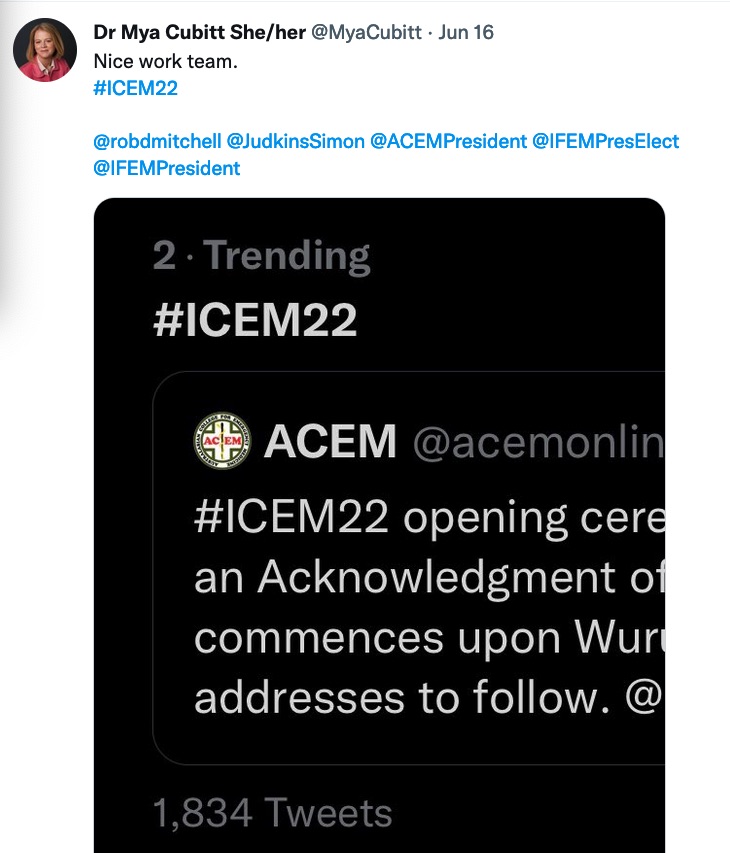
The hashtag also trended on 16 June.


Follow this Twitter list of #ICEM22 presenters and participants, and bookmark this link to track coverage by Croakey Conference News Service.
Source

Colombia Votes for Social Justice

Armed Conflicts, Civil Society, Development & Aid, Featured, Headlines, Human Rights, Latin America & the Caribbean, Regional Categories, TerraViva United Nations

Opinion

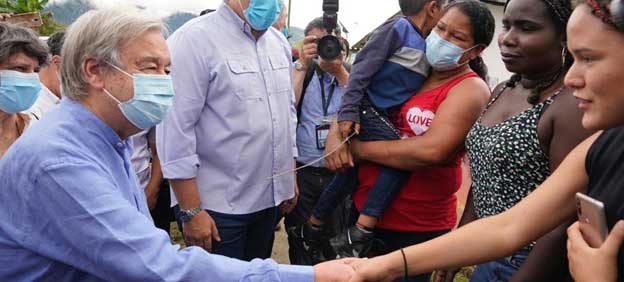
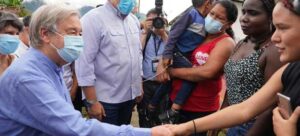
Secretary-General António Guterres talks to villagers in Llano Grande, Colombia, where he witnessed how the peace process was developing in Colombia. November 2021. Credit: UNMVC

BOGOTA, Colombia, Jun 22 2022 (IPS) – On Sunday, 19 June 2022, the hopes of millions of Colombians working for a more democratic, safer, ecological, and socially just country came true.


Senator Gustavo Petro, in a duo with his Afro-Colombian vice-presidential candidate, environmental expert Francia Márquez, received approximately 50.44 per cent or 11,281,013 of the votes cast, and has been elected the 42nd President of Colombia.

Both his predecessor Iván Duque and his opponent Rodolfo Hernández publicly congratulated him on his election victory.

Some 22,445,873 people or 57.55 per cent exercised their right to vote in the run-off election on 19 June 2022, about 3.7 per cent more than in the first round three weeks ago. Only in 1998 was the turnout higher.

Getting people to the polls is not always easy in Colombia: Thousands of people in some parts of the country again had to travel for several hours, even days, to reach one of the polling stations. In some regions, heavy rain also prevented people from voting. In addition, threats, violence, and vote-buying continue to restrict voting, especially in remote rural areas.

Oliver Dalichau

For the first time in the country’s history, neither a conservative nor a member of the Liberal Party will lead the government of Latin America’s fifth largest economy.

With Gustavo Petro, the winning streak of leftist movements and parties in Latin America continues and provides further momentum for the upcoming elections in Brazil in October 2022.

Gustavo Petro’s opponents

In this historic situation for Colombia, what will matter is how the losers behave. On Sunday, Petro not only relegated his direct challenger, the anti-women and anti-migrant 77-year-old self-made millionaire and populist, Rodolfo Hernández, to second place, but with him also the country’s previous political elite.

With 47.31 per cent or 10,580,412 votes, Hernández received much less support than the polls had predicted.

However, significantly more people than in the last elections opted for neither candidate: 490,118 or 2.23 per cent gave a voto blanco.

This is a Colombian peculiarity that allows voters to express their disagreement with the candidates but, unlike abstention, allows them to exercise their democratic right.

Precisely because this triumph is so unique, President Petro should now reach out to his critics, remind the losers of their responsibility in state politics and call on the opposition to work constructively. At the moment, it is unclear whether the losers will be able to accept their new role.

The military, traditionally strong in Colombia, also remains a key player in this phase of the democratic transition. It is expected that the military leadership will soon send out signals that leave no doubt about Gustavo Petro’s election victory.

He will also be their commander-in-chief after his inauguration on 7 August. Should the recognition fail to materialise publicly, Petro’s presidency would be tainted from the outset and rumours of an imminent coup d’état would continue to do the rounds. Both Colombian NGOs and the international community should keep a close eye on this.

Six urgent challenges

In any case, the new president faces enormous challenges. It is already questionable whether Petro will find a majority in the Colombian parliament for a fundamental change of the unequal living conditions, the high unemployment, inflation rate, national debt, and the necessary socio-ecological transformation of the country.

Although quite a few deputies of his left-progressive alliance Pacto Histórico support Petro after the congressional elections in March, he lacks a legislative majority of his own.

Moreover, the newly elected representatives must first prove that they can stick together and also lead a government together, especially now that the ministers are to be appointed. Tensions are already pre-programmed in the colourful spectrum of the Pacto Histórico.

The government’s most urgent tasks include:

Reviving the peace process: In the last four years under Iván Duque’s ultra-right government, the peace process signed in 2016 with the former guerrilla group FARC was hardly implemented.

President Petro needs to relaunch it, push for its implementation, and ensure that social and local leaders are better protected from displacement, violence, and assassination. This year alone, more than 60 of these líderes sociales have been murdered.

After this process, a dialogue with the guerrilla organisation ELN would be necessary too. It is up to the new government to send out signals define conditions as to whether and how negotiations can take place.

A new economic policy: Petro takes over a country with the highest inflation rate of the last 21 years from his unpopular predecessor. With a current debt of around 63 per cent of gross domestic product (GDP) and a budget deficit of over six per cent, the president-elect has announced that he will begin his term with a structural tax reform.

This envisages an increase in the tax burden for the richest 0.01 per cent of the population. This idea is vehemently opposed by the political right. During the election campaign, they left no stone unturned to discredit Petro, accusing him of preparing the country’s economic decline.

Commitment to women’s rights and greater equality: Petro proposes the creation of a Ministry of Equality led by Francia Márquez, which would be responsible for formulating all policies to empower women, people of all sexual orientations, the different generations, and ethnic and regional diversity in Colombia.

Under Petro, women in particular could expect to gain priority access to public higher education, credit, and the distribution and formalisation of land ownership.

Petro and Marquez are proposing an energy transition that will rule out new developments of future oil fields.

Land reform and protection of indigenous people, peasants, and Afro-Colombian women: The extremely unequal distribution of land is one of the structural causes of the armed conflict in Colombia. The internal displacement of recent decades has led to the expansion of arable land: the resulting tensions are at the root of conflicts between ethnic communities (indigenous and Afro-Colombian) and peasant women over access to this land.

All these groups have been and continue to be excluded from the development of the country. At the same time, they are among the most affected by the armed conflict’s violent dynamics.

Petro’s government will need to ensure a more equitable distribution that enables the integration of ethnic and farming communities into the production and development circuits.

Better education for more people: During the social protests last year (and already in 2019 and 2020), the demand for more public and quality education was one of the central messages of the mostly peacefully demonstrating Colombians.

Petro promises to provide them with a higher education system in which public universities and secondary schools in particular are properly funded.

More environmental protection: Under the Duque government, environmental and climate protection in Colombia was largely neglected, deforestation increased, and the first fracking pilot wells were approved. Petro and Marquez have announced fundamental change.

They are focusing on a more environmentally-friendly production and service model and are proposing an energy transition that will rule out new developments of future oil fields. This process is to be accompanied by a land reform on unproductive lands – mostly resulting from illegal forest clearance.

A Colombia of social justice

Beyond these urgent reform tasks, the president and his government will also have to find answers in other important areas, such as integrated security reform, a diversified new foreign policy, a different drug policy, and on the regulation of narcotics.

At the same time, they must not disregard the necessary coalition with civil society that ultimately lifted them into office.

Gustavo Petro and Francia Márquez achieved something historic on that memorable Sunday in June 2022. The expectations for both are huge, perhaps even unrealistic. On the one hand, the winning couple must stick together and remain capable of compromise.

At the same time, both have raised many hopes and are exemplary for the new Colombia: both want a more social, a more ecological, a more secure, and a more democratic republic.

President Petro will make mistakes and he will hardly be granted the usual 100 days grace period.

The fact that the ultra-conservative and liberal power elites were voted out of office by the majority of Colombians is a political turning point for the country. The losers will hardly accept the new opposition role constructively – and as an important element of a consolidated democracy.

It is more likely that they will torpedo the new government from day one and do everything they can to make it fail.

President Petro will make mistakes and he will hardly be granted the usual 100 days grace period – neither by his hopeful supporters from civil society, nor by the more than ten million people he has failed to convince of his programme and person.

He will have to govern openly, transparently, and with a certain flexibility to be able to react appropriately to national and international challenges. He will have to change his behaviour, which is often described as arrogant and self-centred.

And he should emphasise the social team spirit that was the basis for the victory of the Pacto Histórico. That is the only way he can succeed in breathing new life into the peace process and achieve the urgently needed reforms in economic and social policy for Colombia. And he will need many allies to succeed, both at home and abroad.

German and European politicians would be well advised to pledge their support to the new president and strengthen the peace process along the way. At the same time, this would contribute to the consolidation of democratic institutions after this historic change of government.

Both remain crucial for a sustainable, peaceful development of the country, and necessary for a Colombia of social justice.

Oliver Dalichau heads the office of the Friedrich-Ebert-Stiftung in Colombia.

Source: International Politics and Society (IPS)-Journal published by the International Political Analysis Unit of the Friedrich-Ebert-Stiftung, Hiroshimastrasse 28, D-10785 Berlin

IPS UN Bureau

  Source

Hichilema, Lungu Attending Funeral Ceremony Of Zambia’s Veteran Politician Sikota Wina

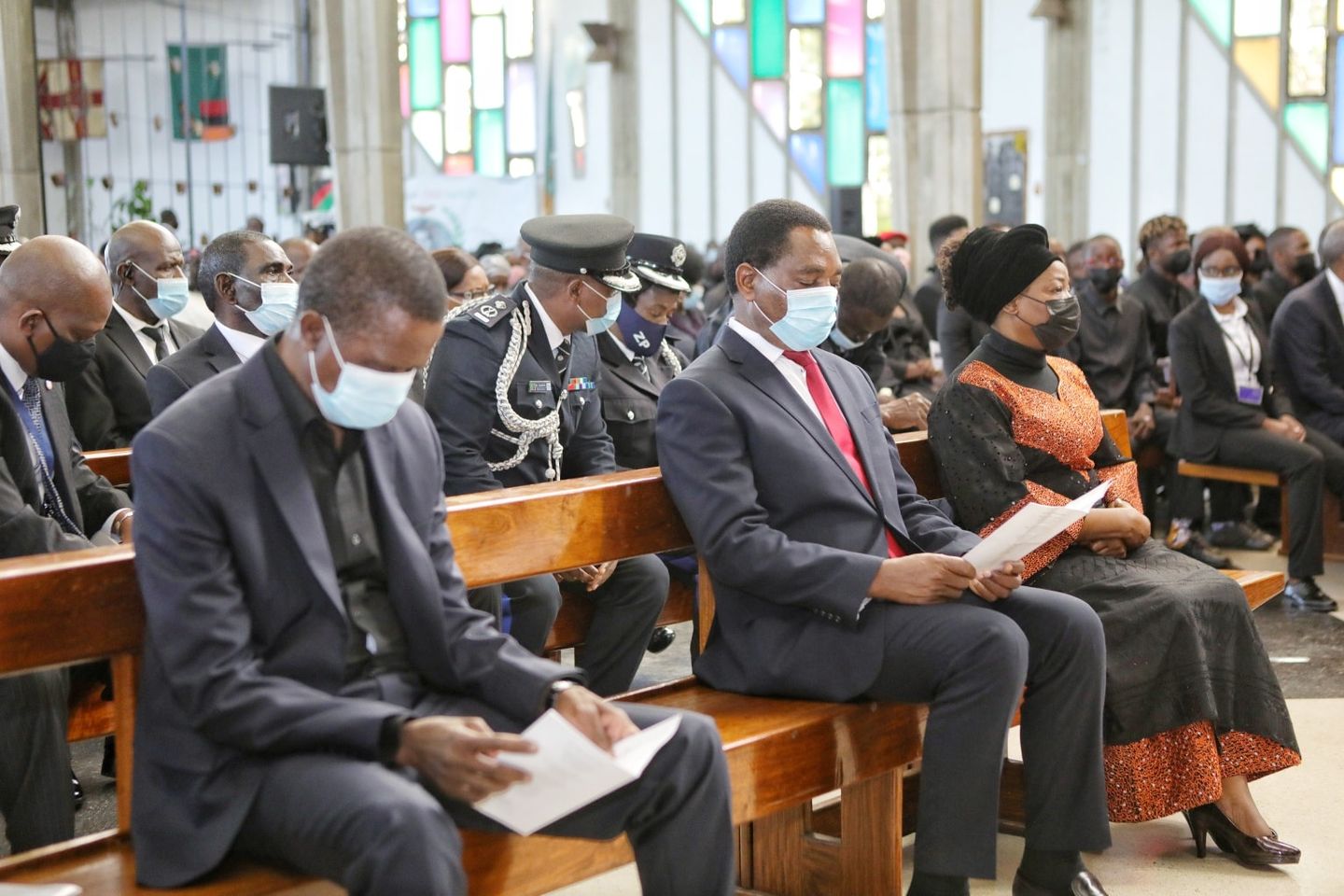
President Hakainde Hichilema and former head of State Edgar Chagwa Lungu are attending the funeral ceremony of Zambia’s first minister and veteran politician Sikota Wina.

The veteran politician died last week.

The two leaders are following the proceedings at the ongoing funeral Church Service of late Dr Wina at Cathedral of the Holy Cross.

Mr Sikotwa was a member of the Legislative Council and the National Assembly.

He also held the posts of Minister for Local Government and Minister of Information, Broadcasting and Tourism.

The deceased was born on 31 August 1931 and was originally married to Glenda Puteho McCoo, an African-American, before marrying Nakatindi Wina, a politician and member of the Barotseland royal family, in the 1970s.

(Visited 290 times, 290 visits today)

Source

Fire the corrupt, US envoy urges

United States Ambassador David Young has asked President Lazarus Chakwera to dismiss public officers implicated in corruption to demonstrate his commitment to fight the vice perpetuating poverty in the country.

He said this on Wednesday evening at his residence in Lilongwe during the commemoration of the first anniversary of the US Government’s Juneteenth National Day attended by senior Malawi Government officials including Cabinet ministers, Speaker of Parliament Catherine Gotani Hara, Malawi Defence Force Commander General Vincent Nundwe as well as other diplomats and dignitaries.

Tembo (R) and Young propose a toast

Young said while Malawi is making efforts to grow its economy, government should step up efforts to combat corruption.

He said: “Corruption creates a web of relationships that perpetuate poverty and illegality. Battling corruption is a long-term battle, but it must begin today in earnest. The corrupt must be dismissed from positions of power.

“Through the development of a culture of transparency and openness and with a strong dedication to access to information for the public, the rot of corruption will fade.”

The envoy stressed that the fight against corruption is Malawi’s battle and, therefore, should be led by Malawians.

He pledged that the US and other development partners will continue supporting Malawi’s efforts in combatting the vice.

Young joins other voices from the diplomatic community, including the United Kingdom (UK) and European Union (EU), who have also expressed worry with the levels of corruption in the country.

The EU has previously indicated that its resumption of direct budgetary support is partly dependent on the fight against corruption.

And in his speech during Queen Elizabeth II’s Platinum Jubilee celebrations held in Lilongwe last week, British High Commissioner David Beer also took advantage of the presence of senior government officials to tackle the issue of corruption.

Britain’s National Crimes Agency (NCA) is currently investigating Malawian-born UK-based businessperson Zuneth Sattar on allegations that he bribed politically-exposed persons in Malawi to gain favours in form of public contracts.

Besides corruption, Young said Malawi’s other big task is to grow the economy through increased investment and private sector engagement.

Speaking during the event, Minister of Foreign Affairs Nancy Tembo said the Chakwera administration is committed to fight against corruption by, among others, ensuring an independent ACB.

She acknowledged that Malawi is going through many challenges, including economic hardships, extreme poverty, diseases and food insecurity, but added that government is aware that countering these challenges requires pragmatic and sustainable policy solutions.

Said Tembo: “The Malawi Government is currently implementing an array of short, medium and long-term programmes. These include the Covid-19 Socio-Economic Recovery Plan, the Social Cash Transfer Programme, the Affordable Inputs Programme and provision of loans to small and medium-scale enterprises through the National Economic Empowerment Fund.”

Juneteenth National Day was set aside to commemorate the emancipation of enslaved African-Americans in the US.

Source

China Says It Has ‘Zero Tolerance’ for Racism Amid Malawi Fallout

The Chinese government is working to prevent continued diplomatic fallout and protect its image in Africa after racist videos of African children made by a Chinese man living in Malawi surfaced this week.

The BBC’s investigative report into the videos found a man named Lu Ke who allegedly filmed African children unknowingly saying offensive things in Mandarin such as “I’m a black monster and I have a low IQ.” The videos were then sold on a Chinese website, according to the BBC.

The news sparked outrage in Malawi, with netizens expressing their fury on Twitter and Foreign Minister Nancy Tembo saying the country felt “disgusted, disrespected and deeply pained.”

After the Chinese Embassy in Malawi was initially criticized for its tepid response to the scandal, dismissing the videos as old news because they were filmed in 2020, they released a new, stronger statement on Thursday.

The embassy said, “The Chinese community in Malawi has voiced their condemnation to racism in strong words,” adding that “the isolated case by a fool individual does not change the whole picture.”

China’s top diplomat in the region, Wu Peng, has also been engaging in damage control. He went to Malawi on Tuesday, where he met government officials, tweeting, “Nice to feel in person the Warm Heart of Africa. Malawi is a beautiful country with lovely people.”

Wu Peng also tweeted, “I just reached an agreement with Malawian FM that both #China&#Malawi have zero tolerance for racism. China has been cracking down on these unlawful acts in the past yrs. We’ll continue to crack down on such racial discrimination videos in the future.”

The day after his visit, Malawi’s Ministry for Foreign Affairs tweeted about a new Chinese scholarship opportunity for Malawians to study in China for a master’s degree, which some skeptics online saw as another way for Beijing to mitigate the fallout from the scandal.

Many Malawians are unconvinced by China’s apologies. The online news publication Malawi 24 reported that a Malawi-based group, the Centre for Democracy and Economic Development Initiatives, has called on the police to trace all Chinese nationals in the country and find out whether they’re there illegally or misrepresenting their reasons for being in the country.

Ralph Mathekga, a South African political analyst, told VOA that China has a history of racism toward Africans, yet governments on the continent were often loath to raise such issues because of Beijing’s economic clout.

“The video is not too surprising. … I think China is never brought to account in human rights and race relations in the country’s relationship with Africa,” he said.

But Cobus van Staden from the South African Institute of International Affairs said the videos could still be damaging.

“These kinds of depictions of Africans have a long, bad historical precedence. … I think it could be harmful for China’s image on the continent,” van Staden told VOA.

In Washington, Marco Rubio, a Republican senator from Florida and one of the most vocal China critics in Congress, tweeted about the BBC documentary, saying it was “disgusting and inhumane” and directly blaming the Communist Party of China.

In recent years, one of Beijing’s key talking points has been racism in the United States. Chinese officials and state media regularly focus on high-profile cases of police killings of African Americans like George Floyd to accuse the U.S. of racism and human rights abuses.

Source

Transforming Nigeria’s Health Sector For Greater Livelihood

Nigeria’s health sector is one that has suffered all forms of neglect as other key sectors, such as education. At almost 62 years (by October 1), and blessed with enough resources, both human and capital, the country, by all standards, should have been more developed to the point of contending for a World Power status. But this is obviously not the case. Historically, though, Nigeria has undergone various forms of development: from the days of colonial rule, through self rule characterised by years of military dictatorship with intermittent civilian rule, to the present day democracy, the country could easily be said to have seen the good, bad, and ugly of its existence  as a country.
Unfortunately, however, this has not reflected in what the country has become today by global consideration, compared to even some countries that have far less resources to boast of, and hence considered poorer.
Consequently, its history, particularly the nasty side, keeps repeating itself, and this manifests in virtually all sectors of the country’s being, one of which is the Health Sector. Like all sectors of Nigeria’s economy, the health sector has not been given the attention it deserves, resulting in not just those who have the wherewithal to seek effective and reliable health care outside the shores of the land, but also brain drain of the country’s finest health care providers to other countries. Nigeria, no doubt, currently faces tremendous health challenges. Experts have at various points sought to identify these challenges from different perspectives. In spite of the diverse reasons they arrived at, all are agreed on three: Corruption, Lack of proper funding, and Bad (or poor) management of resources.
Available statistics on Nigeria’s health sector paint a grim picture: an average of 20,000 Nigerians travel to India each year for medical assistance due to the absence of a solid healthcare system at home; and Nigeria is responsible for a high amount of under-five child death. In a recent report, the United Nations Children Education Fund (UNICEF) said “preventable or treatable infectious diseases such as malaria, pneumonia, diarrhea, measles and HIV/AIDS account for more than 70per centof an estimated one million under-five deaths in Nigeria”. The World Health Organisation (WHO) also stated in another report that nearly ten percent of newborn deaths in the world last year occurred in Nigeria, and that five countries accounted for half of all newborn deaths, with Nigeria third on the list.
These countries are India (24 per cent), Pakistan (10per cent), Nigeria (9per cent), the Democratic Republic of the Congo (4per cent) and Ethiopia (3per cent). Most newborn deaths occurred in two regions: Southern Asia (39per cent) and sub-Saharan Africa (38per cent). Although some other studies, like the Global Burden of disease, show steady improvements in child survival rates, the persistent rate of avoidable deaths in Nigeria truly calls for concern. The question that readily comes to mind is why Nigeria’s health sector is in such precarious state, given its human and capital resources, which are globally acclaimed as the best? Is it the result of lack of personnel? This is not likely, considering that about 77per cent of African American doctors in the United States (US) are  Nigerians.
In fact, Nigerians have achieved notable feats in American medicine to the point that there is now a popular joke that if all Nigerians withdrew their services from the health sector in the US, the sector would collapse. In this wise, the story of the Nigerian Doctor, Oluyinka Olutoye, based in Houston, is still very fresh: he made history not long ago by bringing out a foetus from a mother’s womb, removed a tumour, and then successfully restored the unborn baby in the womb.  there is hardly any top medical institution in the US or Europe where you will not find Nigerians managing at the top echelon. Universities, both in Nigeria and abroad, annually churn out hundreds of qualified medical doctors that could compete favourably with their peers in the globe to a reasonable extent, even with the disadvantage of a beleaguered educational system suffering from the same plague as its health counterpart.
This brings one to the issue of corruption in Nigeria’s health sector, which, not surprisingly, is only a manifestation of what all other sectors of the economy are and which ultimately points to the fact that those who are in governance have not deemed it necessary to improve the sector, knowing that they could afford the best treatment in the world. Government’s performance in the health sector in terms of creating the enabling environment for the development of the health sector, at best, has been abysmal. Investment in infrastructure has been poor and meager remuneration for health workers has resulted in a massive brain drain to the US and Europe, where they are highly taken care of. According to the President of the Medical and Dental Consultants Association of Nigeria (MDCAN), Dr Victor Makanjuola, more than 100 of its members left the country in the past 24 months. As at 2020, Nigeria had a doctor-patient ratio of 1:2,753, in sharp contrast to the World Health Organisation’s (WHO) minimum recommended ratio of 1:400 or 600. In his words, “the mass exodus of medical and dental consultants to more developed countries has brought significant disruptions to Nigeria’s health care ecosystem”.
Meanwhile, the annual budget of the government for the health sector is 4.17per cent of the total national budget, which is the equivalent to only $5 per person per year. Hardly does a year pass without a major national strike by nurses, doctors, or health consultants. The major reasons for these strikes are poor salaries and lack of government investment in the health sector. Unfortunately, many Nigerians cannot afford services of private hospitals, because they are simply too expensive. Finance is obviously a major problem for patients. Consequently, it would not be out of place for one to think that management of the National Health Scheme (NHS) through the Health Maintenance Organisations (HMOs) would help people secure better quality health care. But, here, again, corruption has crushed this opportunity and made quality medical care inaccessible for people who contributed to the system, because they do not get the value of their contribution. In terms of funding, despite the myriads of healthcare issues experienced by Nigerians, the Federal Government has continued to pay lip service to funding the health sector.
With each subsequent Minister of Health in Nigeria, the country’s return to democratic rule in 1999 assumes office with high hopes of transforming the health sector, majority of them left the position with little or no positive effect to the sector, and, by extension, not making any significant impact on the health of Nigerians. Some even left the sector worse off. This is partly due to their poor policy formulations, leadership styles, or insurmountable challenges they met on ground, which also include the unwillingness of relevant authorities, such as the Presidency and National Assembly, to do the needful. Global economic and development experts have often said for any nation to be considered strong economically, and on human capital development, it must have given priority to the education, and health of its citizenry.
This seems to be why in April 2001, members of the African Union (AU), including Nigeria, met in Abuja and agreed to allocate 15 per cent of their national budgets to the health sector with the belief that if this was done, the poor health indices across the continent would be resolved in five years. Unfortunately, Nigeria could not use the same clout it exhibited in bringing these countries together to make that “Abuja Declaration” come alive: Nigeria had since then refused to honour an agreement it played host to 21 years ago, resulting in the poor health indices, high mortality rate and reduced life expectancy rate currently experienced in the country.
Since the declaration, the highest health allocation for Nigeria was in 2012 where 5.95 per cent was allotted to the health sector. In 2014, it allocated N216.40 billion (4.4per cent) , in 2015, it was N237 billion (5.5per cent), while in 2016 and 2017 it was 4.23per cent and 4.16per cent respectively.  2018 followed the same trend, with further reduction of the proposed health sector allocation from 4.16 per cent in 2017 to 3.9 per cent, even with the ever growing health sector concerns. Meanwhile, (WHO) says, for Nigeria to be seen to prioritise healthcare, it must at least spend a minimum of N6, 908 per Nigerian in a year. When multiplied by 200 million people it will amount to N1.4 trillion. WHO, also recommended a minimum of 13 per cent of annual budget for health.
Notably, the Nigerian Government has not tilted towards the WHO’s 13 per cent, not to talk about the AU’s 15 per cent, even as some countries have started raising their health budgetary allocation towards fully keying into the WHO recommendation of 13 per cent or the Abuja Declaration by the African Union of 15 per cent. Rwanda, for instance, reportedly devoted 18 per cent of its total 2016 budget to healthcare; Botswana budgeted 17.8 per cent; Malawi, 17.1 per cent; Zambia, 16.4 per cent; and Burkina Faso, 15.8 per cent.  Nigeria, on the other hand, still lags behind in this regard, a situation that has had direct consequences on the funding capacity of the Health Ministry and its affiliated agencies and parastatals, thereby making the fight against poor healthcare very unrealistic. For instance, while N340 billion was allocated to the health sector in the 2018 national budget, how much was indeed released by the Federal Government to the sector at the end of the day, and how much was actually spent could not be ascertained. This brings to the fore the challenge of “bad management of resources”, which are even in adequate at the point of allocation, and possible release, which cannot be ascertained.
This scenario vividly captures the situation at the lower two tiers of the health sector – State and Local Government – which even spend far less in percentage. Here, however, Rivers State stands out, as the incumbent Governor, Nyesom Wike, made the health sector part of his priority. Since he assumed office in 2015, He has touched virtually all facets of the health sector from infrastructural development, through provision of equipment, and man power development for the sector. It started with the workforce in the primary healthcare community, which was on strike, and the secondary health care sector, which was either shut down or facilities dilapidated when he assumed office. Governor Wike quickly swung into action with what later became his characteristic energy and proactive leadership style by first recalling the striking Primary Health workers to work, and also paid House Officers at the then Braithwaite Memorial Specialist Hospital (BMSH) their outstanding dues and allowances, inherited from the previous administration.
The question likely to be playing in the hearts of keen observers of the health sector in the State may not be far from whether his successor can continue from where he will stop at the end of his tenure.  At the Federal level, there have been calls for a way forward. Most of such calls harp on the need for policy makers in the country and health professionals in Nigeria and the Diaspora to come together and come up with a blue print for the sector. Such blueprint should have a time frame for each stage, and be genuinely followed to the letter. They also propose a genuine and deliberate effort by the Federal Government to meet either the WHO’s 13 percent or AU’s 15 percent of total budget to the development of the health sector in terms of infrastructural and human capacity development, and equipment, as well as ensure that such monies are put into the use they are meant for.

By: Sogbeba Dokubo

Print Friendly, PDF & Email

Source