Water, Climate, Conflict & Migration: Coping with 1 Billion People on the Move by 2050

Aid, Civil Society, Development & Aid, Economy & Trade, Featured, Global, Headlines, Human Rights, Labour, Migration & Refugees, Poverty & SDGs, TerraViva United Nations

Opinion

Nidhi Nagabhatla is Principal Researcher, Water Security at the UN University’s Institute for Water, Environment and Health, funded by the Government of Canada and hosted by McMaster University in Hamilton, Canada
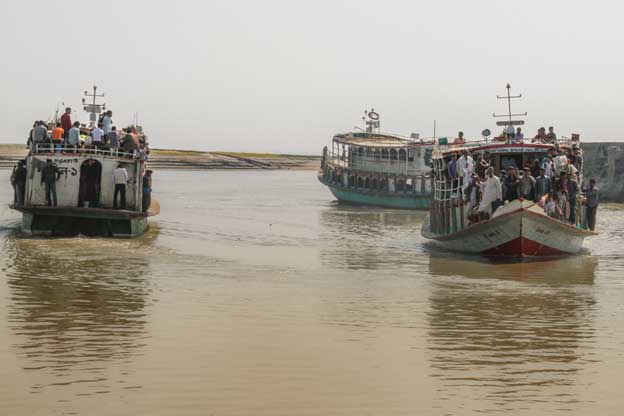
Padma River Basin, Bangladesh Credit: Nidhi Nagabhatla

HAMILTON, Canada, Jun 8 2020 (IPS) – Do migrants willingly choose to flee their homes, or is migration the only option available?

There is no clear, one-size-fits-all explanation for a decision to migrate — a choice that will be made today by many people worldwide, and by an ever-rising number in years to come because of a lack of access to water, climate disasters, a health crisis and other problems.


Data are scarce on the multiple causes, or “push factors,” limiting our understanding of migration. What we can say, though, is that context is everything.

UN University researchers and others far beyond have been looking for direct and indirect links between migration and the water crisis, which has different faces — unsafe water in many places, chronic flooding or drought in others.

The challenge is separating those push factors from the social, economic, and political conditions that contribute to the multi-dimensional realities of vulnerable migrant populations, all of them simply striving for dignity, safety, stability, and sustainably in their lives.

A new report, ‘Water and Migration: A Global Overview,’ (https://bit.ly/3gxDgE7) from UNU’s Institute for Water, Environment and Health, offers insights into water and migration interlinkages, and suggests how to tackle existing gaps and needs.

Its information can be understood easily by stakeholders and proposes ideas for better informed migration-related policymaking, including a three-dimensional framework applicable by scholars and planners at multiple scales and in various settings.

The Report also describes some discomforting patterns and trends, among them:

    • By 2050, a combination of water and climate-driven problems and conflicts will force 1 billion people to migrate, not by choice but as their only option;
    • Links to the climate change and water crises are becoming more evident in a dominant trend: rural-urban migration;
    • That said, there is a severe lack of quantitative information and understanding re. direct and indirect water and climate-related drivers of migration, limiting effective management options at local, national, regional, and global scales
    • Global agreements, institutions, and policies on migration are concerned mostly with response mechanisms. Needed is a balanced approach that addresses water, climate, and other environmental drivers of migration
    • Unregulated migration can lead to rapid, unplanned, and unsustainable settlements and urbanization, causing pressure on water demand and increasing the health risks and burdens for migrants as well as hosting states and communities
    • Migration should be formally recognized as an adaptation strategy for water and climate crises. While it is viewed as a ‘problem,’ in fact it forms part of a ‘solution’
    • Migration reflects the systemic inequalities and social justice issues pertaining to water rights and climate change adaptation. Lack of access to water, bad water quality, and a lack of support for those impacted by extreme water-related situations constitute barriers to a sustainable future for humankind.

Case studies in the report provide concrete examples of the migration consequences in water and climate troubled situations:

    • The shrinking of Lake Chad in Africa and the Aral Sea in Central Asia
    • The saga of Honduran refugees
    • The rapid urbanization of the Nile delta, and
    • The plight of island nations facing both rising seas and more frequent, more intense extreme weather events.

In addition, the added health burdens imposed on people and communities by water pollution and contamination create vicious cycles of poverty, inequality and forced mobility.

While the Sustainable Development Goals (SDGs) agenda does not include an explicit migration target, its mitigation should be considered in the context of SDGs that aim to strengthen capacities related to water, gender, climate, and institutions. These issues resonate even as the world deals with the COVID-19 pandemic.

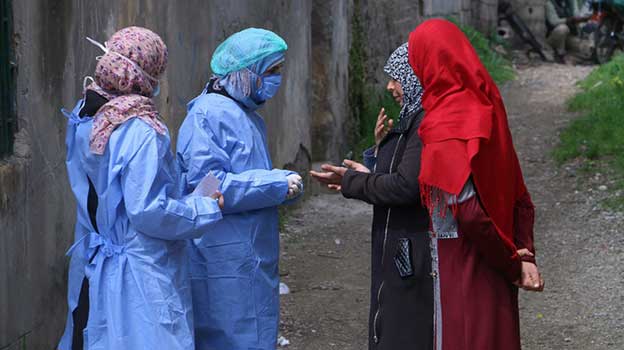
Recent news stories have chronicled the plight of desperate migrant workers trapped in the COVID-19 crisis in India, and of displaced people in refugee camps where social distancing is unachievable, as is access to soap and water, the most basic preventive measure against the disease.

Add to that the stigma, discrimination, and xenophobia endured by migrants that continue to rise during the pandemic.

Even at this moment, with the world fixated on the pandemic crisis, we cannot afford to put migration’s long-term causes on the back burner.

While the cost of responses may cause concerns, the cost of no decisions will certainly surpass that. There may be no clear, simple solution but having up-to-date evidence and data will surely help.

On World Environment Day ( https://bit.ly/3dnKkks) last week (June 5), we were all encouraged to consider human interdependencies with nature.

Let us also acknowledge that water and climate-related disasters, ecological degradation and other environmental burdens causes economic, health and wellbeing disparities for migrants and populations living in vulnerable settings.
  Source

NGOs – with Local Groups in the Lead – are on COVID-19 Frontlines

Civil Society, Featured, Global, Headlines, Health, Human Rights, Humanitarian Emergencies, Inequity, TerraViva United Nations

Opinion

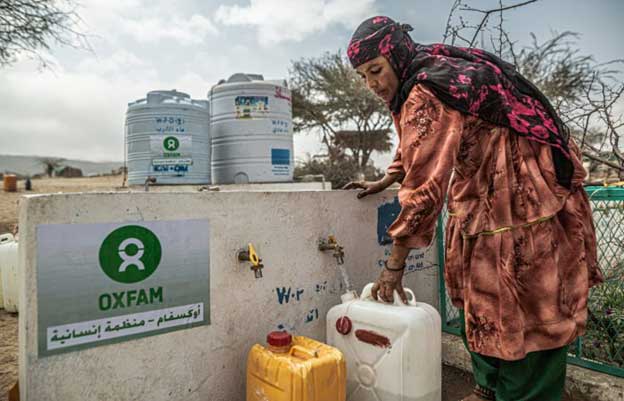
Abby Maxman is President & CEO of Oxfam America

Credit: Oxfam America

BOSTON, USA, May 11 2020 (IPS) – NGOs, at the international, national – and most of all local – level are on the frontlines every day.

I just heard from Oxfam staff in Bangladesh, that when asked whether they were scared to continue our response with the Rohingya communities in Cox’s Bazar, they replied: “They are now my relatives. I care about them — and this is the time they need us most.’”


These people – and those that they and others are supporting around the globe – are at the heart of this crisis and response.

As we talk about global figures and strategies, we must remember we are talking about parents who must decide whether they should stay home and practice social distancing or go to work to earn and buy food so their children won’t go hungry; women who constitute 70% of the workers in the health and social sector globally; people with disabilities and their carers; those who are already far from home or caught in conflict; people who don’t know what information to believe and follow, as rumours swirl.

Looking more broadly, we see that the COVID-19 crisis is exposing our broken and unprepared system, and it is also testing our values as a global community. COVID-19 is adding new and exacerbating existing threats of conflict, displacement, gender-based violence, climate change, hunger and inequality, and too many are being forced to respond without the proper resources – simple things like clean water, soap, health care and shelter. We must be creative and nimble to adapt our response in this new reality.

Most vulnerable communities

We know too well that when crisis hits, women, gender diverse persons, people with disabilities and their carers, the elderly, the poor, and the displaced suffer the worst impacts as existing gender, racial, economic and political inequalities are exposed.

Abby Maxman

These communities need to be at the center of our response, and we, as the international community, must listen to their needs, concerns and solutions.

Access

As we continue to ramp up our response, we must have access to the communities most in need. Likewise, COVID-19 cannot be used as an excuse to stop those greatest in need from accessing humanitarian aid.

Border closures are squeezing relief supply and procurement chains; Lockdowns and quarantines are blocking relief operations; And travel restrictions for aid workers have been put in place, disrupting their ability to work in emergency response programs.

Authorities should absolutely take precautions to keep communities safe, but we need to work at all levels to also ensure life-saving aid can still get through and people’s rights are upheld.

Local and national NGOs are on the frontline of the COVID-19 response, and communities’ access to the essential services and lifesaving assistance they provide must be protected. We also know that with effective community engagement, we can gain better and more effective access to communities.

Humanitarian NGOs and partners are adapting our approaches to continue vital humanitarian support while fulfilling our obligation to “do no harm.”

This adaptive approach, and our experience of ‘safe programming,’ shifting to remote management where possible; and scaling back some operations where necessary—will all be crucial as COVID-19 restrictions continue to amplify protection concerns and risk of sexual exploitation and abuse.

Funding

To mount an effective response, we must draw on our collective experience, but this crisis also offers an opportunity to change the way we work, including setting up new funding mechanisms to allow our system to leverage the complementary roles we all play in a humanitarian response.

Overall, NGOs urgently need funding that is flexible, adaptive, and aligned with Grand Bargain commitments. Our work is well underway, but more is needed to get resources to the frontlines.

We need to better resource country based pooled funds, which are crucial for national and local NGOs. Now more than ever, donors must support flexible mechanisms to increase funding flows to NGO partners.

Next Steps

In closing, the international community needs to come together to battle this pandemic in an inclusive and a responsive way that puts communities at the heart of solutions. Even while we respond in our own communities, we must see and act beyond borders if we are ever to fully control this pandemic.

The planning and response to COVID-19 need to be directly inclusive of local and national NGOs, women’s rights organizations, and refugee-led organizations leaders. We must address this new threat, while still responding to other pressing needs for a holistic response.
This means continuing our response to the looming hunger crisis, maintaining access to humanitarian aid, and supporting existing services including sexual and reproductive health and gender-based violence services.

We need to ensure humanitarian access is protected to reach the most vulnerable.

And funding needs to be quickly mobilized through multiple channels to reach NGOs and must be flexible both between needs and countries.

This much is clear: We cannot address this crisis for some and not others. We cannot do it alone. The virus can affect anyone but disproportionately affects the most marginalized. It is our collective responsibility to ensure that our global response includes everyone.

We owe it to those dedicated staff and their honorary “relatives” in Cox’s Bazar, and all those like them around the globe, to get this right.

This article was adapted from Abby Maxman’s comments as the NGO representative at the UN’s Launch of the Updated COVID-19 Global Humanitarian Response Plan on May 7, 2020.

  Source

Religion & its Discontents: Considerations Around COVID-19 & Africa

Civil Society, Economy & Trade, Featured, Global, Headlines, Health, Human Rights, Humanitarian Emergencies, Inequity, Religion, TerraViva United Nations

Opinion

Dr. Azza Karam is the Secretary General of Religions for Peace International and Professor of Religion and Development at the Vrije Universiteit (VU), Amsterdam; Dr. Mustafa Y. Ali is the Secretary General of the Global Network of Religions for Children (GNRC) based in Nairobi, Kenya.

Credit: United Nations

NEW YORK, May 8 2020 (IPS) – COVID-19 has spread to many nations around the world, and has been declared a pandemic by the World Health Organization. In the global south, the COVID-19 pandemic has stretched the available medical and health resources, triggered economic shocks, and caused social upheavals and insecurity in many countries and localities.


While the pandemic has caused huge numbers of infections and deaths in the global north, the consequences in the poorer nations in the global south is acute.

Serious challenges arising from responses from authorities to contain the pandemic ranging from hard to soft lockdowns, curfews, limitations in movements, and social distancing, are causing strains in communities.

From fragile economies to ill- equipped health facilities and underfunded health programs, to the almost non-existent social security measures that would ordinarily cushion large segments of pupations from falling further into poverty, the impact on many communities in the global south will be grave.

While COVID-19 has not had a devastating impact on Africa as it has elsewhere, according to official statistics, we fear that this may change.

On the health side, health experts are already warning that the pandemic could yet exact a much heavier death toll in the region if it overwhelms local health services – as has happened in the United States and United Kingdom.

There are also concerns that the relatively weak health systems and patchy testing may be enabling COVID-19 to spread through Sub-Saharan Africa, without a means of registering any of this data.

The official figures to date locate much of the pandemic’s regional burden in places like South Africa, which has reported nearly 5,000 confirmed cases of COVID-19 and recently deployed hundreds of Cuban doctors to help fight its impact, and more than 1,800 confirmed cases in Cameroon, which has launched nationwide testing in April.

Two countries in the region, Lesotho and Comoros, have yet to officially report any cases, let alone Covid related deaths. According to a director of the African Center for Disease Control, the collapse of global cooperation has marginalised Africa in the diagnostics market, and its lack of hospitals combined with a high prevalence of HIV, tuberculosis, malaria and malnutrition could lead to relatively high COVID-19 mortality rates.

Food security is another major issue. Speaking of concerns in Nigeria, Sister Agatha Chikelue, Executive Director of the Cardinal Onaiyekan Foundation and Coordinator of Religious for Peace’s interfaith Women’s Network, noted that people are afraid of dying of “Hovid” – the hunger caused as a result of loss of livelihoods from the lockdown.

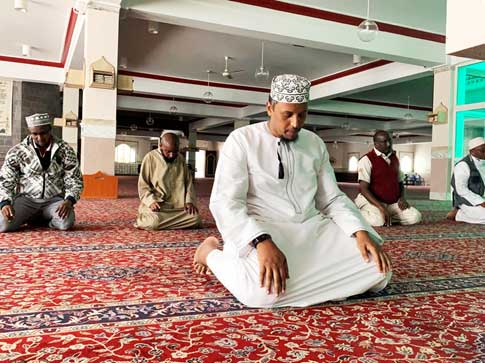
Religious leaders join COVID-19 fight in Africa. Credit: United Nations

Small wonder, therefore, that Nigeria is one of the countries already struggling to consider reopening some of their businesses, in spite of dire warnings.

According to a UN report, Africa is home to more than half of the 135 million who suffer acutely from food insecurity, which means there are serious concerns about famines and the potential for a significant death toll.

In other words, we are speaking of very real fears that the Covid crises may cause famine in combination with the drought, which will have dire consequences on the conflict-affected countries in the continent.

John Letzing, Digital Editor of Strategic Intelligence at the World Economic Forum, lists some of the dynamics facing the continent as reported on by a number of different sources. Notably,

Some Africans may be suffering indirectly from the impact of COVID-19 while
abroad – in early April, images and video emerged of Africans in Guangzhou,
China, being subjected to passport seizures and arbitrary quarantine,
according to this report. (The Diplomat). Africa has undergone an incredible
journey to make routine immunization possible, though immunization
coverage in sub-Saharan Africa has stalled at 72%. Now, COVID-19 presents
a further threat to progress, according to this analysis. (New African)

Despite the heralding of the coronavirus, there are those who argue that Africa’s governments did little to prepare themselves, their systems, or their people. Other commentators note that many countries have made plans to ease coronavirus-related measures.

There is some speculation that lessons learned from incidents like the 2014 Ebola outbreak will contribute to some countries’ capacities to weather the storm.

The fact is, that one of the key containment measures—social distancing—will be impossible in the crowded markets, high-density informal settlements and dwellings shared by more than one family. Another oft repeated advise is that of frequent handwashing in clean water. But what happens when clean water to drink, is in very short supply for many households across the sub-Saharan African continent?

Moreover, it is inconceivable that governments will, on their own, be able to meet the needs of all their citizens in this COVID pandemic. Many were already struggling to do so even before the pandemic struck.

Besides offering spiritual guidance and support, which is increasingly needed in times of fear and uncertainty, faith communities and organizations in Africa as elsewhere, have, over the years, supplemented governments’ efforts to provide education, health, nutritional and other developmental needs to their communities.

They also have been in the forefront of peacebuilding initiatives, and in advocating for rights-based approaches to development, protection of, and ending violence against children and minorities.

With the COVID-19 pandemic ravaging communities and creating fear and despondency, faith-based and faith-inspired organizations are already providing and augmenting critical services in health care provision – including but not limited to palliative care – and as part of the supply chains (for food, medicines, spiritual relief) reaching the heart of communities.

Religious organisations are also key to disseminating accurate news about the impacts and effects of the pandemic, rendering more critical their services as communicators and advisers on behavioral changes needed to keep communities safe.

Those of us engaged in working with religious actors speak of 84% of the world’s people claiming an affiliation to a faith tradition. This applies to all the world, and the sub-Saharan African subcontinent is no stranger to religiosity and belief as normal in everyday lives.

In times of fear, most believers will turn to faith, and this means that religious institutions, religious leaders and religious NGOs are playing a key role including psycho-social healing of COVID-19 traumas.

The fact is, however, that not all faith actors play the same role. And even when most play a positive role in helping communities and governments to cope, this does not mean all do. We know that some faith leaders are adamant that congregating for religious worship is a means of healing, because “God will spare us”.

These messages are hardly helpful when science and life and death experience indicate that social distancing is not only advisable, but downright necessary.

While the UN Secretary General’s call for a global ceasefire to all conflicts has been echoed by many religious leaders around the world, the question remains whether actors involved in extremist groups using religion as their raison d’etre will contemplate heeding such calls.

In fact, COVID-19 lockdowns may even be opportunities to ramp up violence, as government security services are otherwise engaged. This begs two important questions we have yet to find answers for:

To what extent will those religious institutions involved in providing for the daily spiritual, psycho-social, humanitarian care for their communities, and already overwhelmed in reconfiguring the very nature of religious worship, find the wherewithal to engage with the ‘radical fringes’ in African contexts already deeply divided by conflicts?

And what impact will COVID-19 have on the very same armed groups still insistent on playing out their conflicts? Already, some of those who still carry weapons, are working to serve some of their community needs – providing food, water and even money to households having to do without.

And as they serve their communities’ needs, the extremist groups have also ramped up attacks. In March and April, armed attacks in sub-Saharan Africa increased by 37 %, adding significant strain on the already overstrained resources, currently re-directed to COVID-related emergencies.

Sheikh Ibrahim Lethome, Secretary General of the Center for Sustainable Conflict Resolution, and Convener for the GNRC (Global Network of Religions for Children) Horn of Africa Working Group on religious-based extremism, is not surprised that the extremist groups have fully seized the confusion and despondency that COVID-19 has thrust into already fragile communities.

These stretch from the Sahel in West Africa, the Horn of Africa to Southern Africa’s Cabo Delgado in Mozambique

Will COVID-19 offer an opportunity for a different trajectory for some of those groups? As these groups continue to plant bombs, kill and maim, what will become of armed insurgency in the name of religion, when COVID-19 hits hard in Africa?

  Source

World’s Poor Hit by Double Jeopardy: a Deadly Virus & a Devastating Debt Burden

Civil Society, Economy & Trade, Featured, Global, Headlines, Health, Human Rights, Humanitarian Emergencies, Inequity, TerraViva United Nations

Credit: UNFPA

UNITED NATIONS, May 7 2020 (IPS) – The world’s poorer nations, reeling under an unrelenting attack on their fragile economies by the COVID-19 pandemic, have suffered an equally deadly body blow: being buried under heavy debt burdens.


Abiy Ahmed, prime minister of Ethiopia who was awarded the Nobel Peace Prize in 2019, said last week that in 2019, 64 countries, nearly half of them in sub-Saharan Africa, spent more on servicing external debt than on health.

Ethiopia alone, he said, spends twice as much on paying off external debt as on health. “We spend 47 percent of our merchandise export revenue on debt servicing”, he wrote in an oped piece in the New York Times.

According to the UK-based Jubilee Debt Campaign, some of the countries battling debt burdens include Lebanon, which spends about 41% of its revenue on debt service; El Salvador, which spends 38% of its revenues on debt service; and South Sudan, which spends 29%.

And these are not necessarily the most highly-indebted poor countries in the world — Sri Lanka pays 48% of its revenue in debt service, and Angola 43%.

On April 15, the Group of 20 countries (G20) offered temporary relief to some of the world’s lowest-income countries by suspending debt repayments until the end of the year.

But, regrettably, their best offer fell far short of expectations.

Secretary-General Antonio Guterres has called for a “debt standstill” across all developing countries affected by debt vulnerabilities. This includes external public and commercial debt.

“The private sector’s voluntary and well-coordinated engagement in debt relief discussions is crucial”, he adds.

In 2020, “we expect to lose the equivalent of more than 300 million jobs; a decline in global trade between 13 and 32 per cent; remittance flows to low‐ and middle‐income countries to drop by around 20 per cent; and foreign direct investment to decline by 35 per cent,” the United Nations warned last week.

Clemence Landers, a Policy Fellow at the Washington-based Center for Global Development (CGD), told IPS the G20 bilateral debt suspension is a good start, but it’s only a temporary stopgap measure.

In the months ahead, she pointed out, it will be clear that some countries need deeper and more permanent relief.

“The global community should use this time to establish the broad contours of an orderly debt relief process that distributes the burden equitably between all bilateral and commercial creditors”.

In parallel, argued Landers, the international financial institutions should find ways to deploy financing packages above levels that they have already announced to ensure that net flows to countries are robust. But an effective and orderly process is far from a given.

“It will largely hinge on the G20’s ability to provide an ambitious plan and maintain strong political pressure to achieve a coordinated approach,” she declared.

Professor Kunal Sen, Director United Nations University– World Institute for Development Economics Research (UNU-WIDER), told IPS the recent announcement by the governments of the G20 countries of a debt moratorium for the poorest countries is a welcome initiative as it allows these countries to allocate the funds that would have gone to service external debt to deal with the immediate needs of the pandemic.

According to Jubilee Debt Campaign, the suspension covers debt payments by 77 countries to G20 and other governments, from 1 May to the end of 2020, estimated to be $12 billion.

The payments will not be cancelled but come due to be paid between 2022 and 2024, along with interest accrued in the meantime. There will be a review by the G20 before the end of 2020 as to whether further action will be taken.

The G20 announcement also calls on private creditors to similarly suspend debt payments, and calls on multilateral creditors to explore options for doing so.

The G20 members are Argentina, Australia, Brazil, Canada, China, France, Germany, India, Indonesia, Italy, Japan, Mexico, Republic of Korea, Russia, Saudi Arabia, South Africa, Turkey, the United Kingdom, the United States and the European Union (EU).

The Ethiopian Prime Minister said at the very least, the suspension of debt payments should last not just until the end of 2020 but rather until well after the pandemic is truly over.

“It should involve not just debt suspension but debt cancellation. Global creditors need to waive both official bilateral and commercial debt for low-income countries,” he declared.

Richard Ponzio, Senior Fellow and Director of the Stimson Center’s Just Security 2020 Program, told IPS the G20 Finance Ministers wisely agreed on a ‘time-bound suspension of debt service payments’, between now and the end of the year, for 77 of the world’s poorest countries.

“Now it’s time for private creditors, who are owed USD $3 billion (or a quarter of total debt), to step up and participate in this initiative,” he noted.

Since the COVID-19 pandemic continues to affect countries in different ways, once they begin to transition from the current emergency to a full recovery phase, the G20 should revisit the need to sustain this policy, in 2021 and 2022, on a country-by-country basis, with the goal of helping all countries adversely affected by the pandemic to get back-up on their feet, Ponzio declared.

Anuradha Mittal, Executive Director at the Oakland Institute, a leading US-based policy think tank, told IPS the Covid-19 pandemic has unleashed a crisis of untold proportions – the disastrous impact of which is being felt by the poorest and poor nations.

According to the World Bank itself, COVID has pushed about 40-60 million people into extreme poverty, with best estimate being 49 million.

Bank’s projections suggest that Sub-Saharan Africa will be the region hit hardest in terms of increased extreme poverty, she said.

“At such a time, an inclusive bailout requires that united global response should ensure a just recovery and transition to a better future for those most in need.”

She pointed out that Central African Republic has just three ventilators, Sierra Leone has 13, Liberia has three, South Sudan has four.

Mittal said developing countries should be boosting healthcare systems to defend against the virus and protecting their economies and the poor, instead of using precious resources to pay off external debt, which anyway never benefitted the communities.

“These loans were often generated for so called “development” projects which have failed to bring development to the countries or populations that were intended to benefit”.

At this time, she argued, it is pertinent to cancel bilateral, multilateral and private debt for this year and instead, emergency additional finance should be provided. This time also calls for real negotiations around debt cancellation.

Above all, it is important to ensure removal of loan leverage to open up markets and force reforms such as the opening of land markets in Ukraine. Loan programs intended to control economies and natural resources have to stop, said Mittal.

Sarah-Jayne Clifton, Director of Jubilee Debt Campaign said the G20 offer is a first step in dealing with the magnitude of the coronavirus debt crisis, but much more needs to be done.

The G20 deal keeps vital money in countries for now, but today’s suspension will soon become tomorrow’s debt crisis unless payments are cancelled in full.

“We urgently need a UN-led process to cancel external debt owed to all creditors, for all countries in crisis,” said Clifton.

“The suspension of debt payments to private creditors is only voluntary. The UK and New York can make sure it happens by introducing emergency legislation to prevent any lender suing a country for stopping debt payments during the current crisis”.

Otherwise, she argued, “the real beneficiaries of today’s deal could be rich speculators who keep being paid thanks to debt suspensions by other lenders.”

Meanwhile, several Asian countries, including Sri Lanka, India, Pakistan, Bangladesh and the Philippines, have taken a severe beating primarily because of a sharp fall in migrant earnings resulting from the closure of industries and construction work in the Middle East and Gulf nations due to COVID-19.

According to the New York Times, millions of Indians who work in the Arab world — particularly in the oil-rich countries of the Gulf — have lost their jobs in recent weeks as Arab economies have contracted under lockdown.

“We have been getting distress calls from the Gulf,” said Mahesh Kumar, a spokesman for India’s foreign ministry.

The Times said Indian media have reported more than 150,000 Indians in the United Arab Emirates requesting to be evacuated — and that several large naval warships have already been dispatched to the UAE and the Maldives.

The writer can be contacted at thalifdeen@ips.org

  Source

How Coronavirus Makes us Rethink Youth Protests

Civil Society, Featured, Global, Headlines, Human Rights, TerraViva United Nations

Opinion

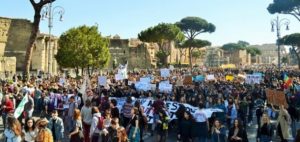
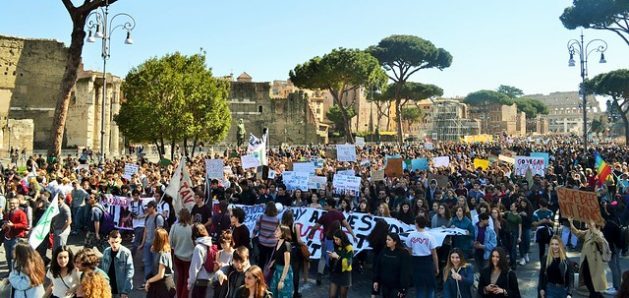
How coronavirus makes us rethink youth protests - Thousands of youth gather in Rome on Friday, Mar. 15, 2019 to join the climate strike. Credit: Maged Srour/IPS

Thousands of youth gather in Rome on Friday, Mar. 15, 2019 to join the climate strike. Credit: Maged Srour/IPS

LONDON, May 5 2020 (IPS) – As social distancing, quarantines and lockdowns have spread across the globe to slow the spread of coronavirus, they have imposed some of the greatest worldwide restrictions on public gatherings in living memory. These restrictions may be necessary for public health, but they require the most anxious scrutiny to prevent them being misused to quash legitimate political expression and discriminate against protesters, including children and young people who mobilise.


And while large scale street protests may temporarily be on hold in much of the world, there is an opportunity to rethink how we can protest, expanding online forms of collective activism and developing the protections that must be afforded to children protesting online.

How does coronavirus affect protests?

Children have the same right to protest as adults and they have been exercising this right in the streets with dramatic impact across the world. The global school strike for climate movement, led by Fridays For Future and sparked by Greta Thunberg, has shaped modern climate activism; the social inequality protests in Chile were kickstarted by high school students; the mass demonstrations over the killing of schoolchildren at a rally in Sudan pressured the military regime for reform; the national school walkout to protest gun violence in the United States captured the national debate; and Indian children have been actively involved in protests against the new citizenship law which may render many people stateless.

Under-18s’ right to protest derives mainly from two human rights protected under international law: freedom of expression (the right to express ourselves freely) and freedom of peaceful assembly (the right to peacefully come together with others and express our collective opinions). However, assemblies in the streets have been dramatically curtailed by the emergency measures aimed at stopping the spread of coronavirus. According to the COVID-19 Civic Freedom Tracker, 94 countries currently have measures in place affecting assembly, for example the suspension of events and bans on non-essential movement.

A number of these restrictions are problematic. Some emergency measures expressly discriminate against under-18s. Multiple countries have imposed curfews, including some which apply only to children and young people, for instance in France, Russia, Turkey, Colombia and Bosnia and Herzegovina. Other measures raise suspicions that they may be put in place to stifle political dissent. For example, El Salvador and Kyrgyzstan banned some mass rallies due to coronavirus, despite reporting no cases at the time. Iraq, which has seen the largest and bloodiest anti-government protests since 2003, also prohibited public gatherings.

In this context, some have rightly pointed out, from a language perspective, how the term ‘social distancing’ can be misread by citizens and misused by States as a ban on all public gatherings, including collective activism. However, coronavirus measures are in fact about physical distancing only; socially, people are still connected and politically active, with many exercising their right to protest off the streets, in various settings.

How can under-18s protest when the streets are empty?

Climate activists have suggested a variety of alternatives to street protests, such as cacerolazos (banging on pots and pans or making music) from windows, doors or balconies; webinars; teach-ins (educational forums on current issues); mass call-ins; online storytelling; and artivism workshops. Greta Thunberg encouraged student protesters to join strikes online. On 24 April, Fridays For Future groups in Germany staged the biggest digital demonstration yet, with over 230,000 livestream viewers and 40,000 tweets.

But is an online protest really a protest? Does the label matter?

Yes, it is. Yes, it matters.

We usually think of protests as occasions when people gather together to express their disagreement with something. In thinking this, we make three assumptions: that people gather for a common purpose, that they express their views at roughly the same time and that they come together in a common place. Our experience of protests also means that we readily situate them in public spaces, such as the street.

But in the case of the youth climate strikers, whether they skip (home)school to join a Fridays For Future webinar or share photos of themselves holding placards on social media, school students are still engaged in protests: they have a common purpose and act more or less simultaneously. The only thing that’s changed is the setting of their protest – and for good reason. Greta Thunberg explained that “In a crisis we change our behaviour and adapt to the new circumstances for the greater good of society”.

What the coronavirus pandemic shows us is that we need to question our assumptions. Recognising that protests are held not just in a common physical space, but also for example online, matters. It helps us understand that differing rights concerns arise in different protest settings. That protests allow us to help shape how societies are governed, even in times of crisis, makes this recognition all the more crucial.

What does this mean in practice?

Regarding online protests specifically, national laws need to account for potential risks against access to the internet, dissemination of information and protesters’ privacy and safety.

Perhaps most relevant to younger teenagers who want to protest online, the question of age-based access is significant. Popular social media platforms still impose a minimum age to join, including Facebook, Twitter and Instagram, which all require users to be at least 13 years old. For this reason and more, author and activist Naomi Klein underlined in a recent Talks For Future webinar that young protesters may need to move away from corporate information platforms.

Once online, the question of protesters’ privacy is especially pertinent. In some countries, children are forbidden from taking part in unauthorised protests, including in Russia, so when mobilising online, encryption and anonymity tools are essential to concealing one’s identity in order to avoid government sanctions. Any ban on these tools, such as Iran’s prohibition on encryption technologies through its national legislation, could severely undermine children’s freedom of assembly online.

Meanwhile affecting entire country populations, including under-18s, are national internet shutdowns. Thirty-three countries shut down the internet in 2019, an increase from the 25 that did so in 2018. In most cases it was to curb protests, with governments spuriously citing public safety, fake news and national security concerns.

The worst offenders were India, Venezuela, Yemen, Iraq, Algeria and Ethiopia. Particular sources of information may also be targeted. In Myanmar, for example, the government blocked access specifically to some ethnic media outlets.

In practice under-18s have shown us that collective mobilisation can continue beyond the street, with youth climate protesters in many countries exercising their rights to freedom of expression and freedom of assembly online. But for this to happen in every country, peaceful activism must be protected across the board, no matter what setting it may take place in.

Diana Gheorghiu conducts legal and policy research and analysis at CRIN, the Child Rights International Network

  Source

Financial Scams Rise as Coronavirus Hits Developing Countries

Civil Society, Economy & Trade, Featured, Global, Headlines, Health, Human Rights, Humanitarian Emergencies, Inequity, TerraViva United Nations

Opinion

David Medine is Senior Financial Sector Specialist at the Consultative Group to Assist the Poor (CGAP). He is also CGAP’s lead on data protection and security and works to develop novel, consumer-oriented approaches to data protection and to encourage the creation of cyber security resource centers for developing countries.

Credit: County of Los Angeles

WASHINGTON DC, May 5 2020 (IPS) – In the Philippines, Peru, India, Kenya, South Africa and many other developing countries, poor people who are already struggling with the health impact of the coronavirus pandemic have been targeted by online fraudsters trying to take unfair advantage of them.


There is the risk that these scams could undermine confidence in digital technologies that are proving so very important in keeping people informed and connected during the pandemic.

In particular, trust in digital financial services, which have been useful in advancing financial inclusion efforts, could be damaged at the very time that they have proven to be an effective means of getting payments to poor people quickly and efficiently.

Here are some examples of virus-related scams:

phishing

    • attack is offering housebound people in India a free Netflix subscription during the lockdown if they click on a survey link and forward the message to 10 WhatsApp users.
    • • Emails with suspicious links have also been sent purporting to be from the World Health Organization, United Nations and Centers for Disease Control and Prevention.

Scammers

    • have been visiting homes in South Africa to “recall” banknotes and coins they say are contaminated with the coronavirus, providing receipts for “clean” cash that is never delivered.

Fake

    • offers of emergency money for essentials have been reported in India.
    • • INTERPOL

warns

    • that criminals have been calling victims pretending to be clinic or hospital officials, reporting that a relative has fallen sick with the virus and requesting payments for medical treatment.
    • • People desperate to protect themselves are falling for offers of

fake

    • medical products, such as masks, vaccines and

testing kits

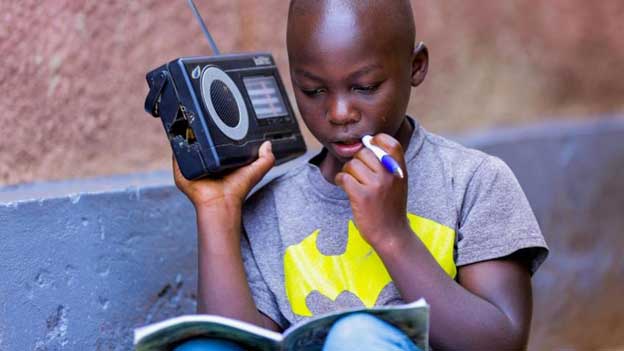
    • Education and COVID-19: UN helps children continue their learning

There have even been false claims that the coronavirus is related to exposure to new technologies (such as 5G, which can be used to deliver money mobiles services). There are measures authorities can take in response to better protect consumers.

Regulators, providers and consumer protection agencies can alert people to the risks; providers can make sure they have adequate consumer complaint mechanisms in place; and law enforcement can coordinate firm action, not only in country but across borders.

Credit: United Nations

Preying on vulnerable populations in developing countries at a time of crisis is unconscionable. A multi-pronged effort is needed to protect more people from becoming victimized at a time when many are struggling with lost income as a result of being forced to stay at home to combat the illness.

A concerted effort by the public and private sectors is needed to protect customers through educational efforts and high visibility law enforcement actions.

In the short term, education is key, and governments are often best positioned to take the lead. For instance, the South African Banking Risk Information Centre (Sabric) has been warning bank customers about criminals exploiting the virus to engage in phishing.

Similarly, the Philippines Department of Information and Communications Technology has asked Filipinos to be mindful of their safety online and to be wary of unverified COVID-19 websites or applications that require consumers to provide their personal data.

There is a need for governments to continue to identify consumer protection threats — initially, by reaching out to banks, microfinance institutions, fintechs, NGOs and other entities to find out what they are seeing in their markets. Efforts should then be made to warn people how to identify potential scams.

The Central Bank of South Africa has stated that neither banknotes nor coins have been withdrawn from circulation, so anyone offering to “recall” currency should be met with a skeptical eye.

While there is a natural instinct to provide financial support for friends and family in need of medical care, it is important to follow INTERPOL’s warning and confirm that unknown callers are really acting on their behalf. Such consumer warnings could be sent via SMS, WhatsApp or along with other governmental communications.

The private sector must also play a critical role in protecting consumers during the crisis. In the course of providing financial services, trusted firms can educate customers about how to avoid pitfalls, such as responding to fraudulent communications.

There is also the need for digital financial services companies to have effective consumer complaint and resolution centers so that customers who have been scammed have some recourse.

Prosecuting digital scam artists promptly and meting out harsh punishments will send a strong message. One recent example is the response to a brazen attempt by a fraudster in India purporting to sell the world’s tallest statue, the Statue of Unity, for $4 billion to raise money for the Gujarat state to fund its fight against coronavirus.

This action led the Indian police to lodge a case. Similarly, Indian police have registered cases against fake offers of discounted Jio and Netflix services. Such enforcement actions help further educate members of the public about protecting themselves against fraudulent actors.

In the connected world in which we live, it is often easier to commit fraud across borders than inside one’s own country. There is no better time than now for governments to work with their neighbors and go after criminals in each other’s countries.

Such an effort has been led by INTERPOL, an inter-governmental organization with 194 member countries, including many developing countries. INTERPOL has been receiving information from member countries on a near-daily basis regarding coronavirus fraud cases, along with requests to help stop fraudulent payments.

While targeted victims have been primarily located in Asia, criminals have used bank accounts in other regions such as Europe. INTERPOL has helped national authorities to block some of the payments, assisting with some 30 COVID-19 related fraud scam cases.

Where cooperative agreements between countries do not exist, perhaps a silver lining of the current crisis would be to promote such cross-border consumer protection efforts.

Collectively, we can combat the outrageous attempts by some to take advantage of this crisis for their financial benefit. Of course, to survive many people will need more medical and financial help, not just tips on how to avoid scams.

Many countries have undertaken wide-ranging relief efforts. Digital financial services, such as mobile money, are proven mechanisms for getting financial aid quickly to the poorest and neediest in times of crisis.

Let’s take steps now to ensure digital technology is used as a force for good.

  Source