Oct 13 2025 (IPS) – CIVICUS discusses enforced disappearances in Mexico with a member of the International Network of Associations of Missing Persons.
The crisis of disappearances in Mexico has reached alarming proportions, with over 52,000 unidentified bodies in morgues and mass graves. On 1 July, the Mexican Congress approved controversial changes to the General Law on Disappearances, which promise to modernise the search process through a national biometric system, but which human rights organisations and victims’ groups claim could establish an unprecedented system of mass surveillance.
What are the main changes and how will they affect searches?
The changes seek to strengthen the mechanisms for searching for, locating and identifying missing persons. The main innovations include the creation of a National Investigation File Database and a Single Identity Platform that will integrate various databases. The revised law also provides for the strengthening of the Unique Population Registry Code (CURP) through the incorporation of biometric data such as iris scans, photographs and fingerprints.
The law obliges authorities and individuals to provide information useful for search processes and incorporates new institutions such as the National Guard and the Ministry of Security into the National Search System. It also increases the penalties for the crime of enforced disappearance.
The new system aims to ensure faster and more efficient searches through technology and inter-institutional coordination. It also provides for the use of satellite imagery and advanced identification technologies, under the coordination of the National Search System.
What risks are posed by the authorities’ access to biometric data?
There are serious concerns that the changes give security and justice institutions, including prosecutors’ offices, the National Guard and the National Intelligence Centre, immediate and unrestricted access to public and private databases, including those containing biometric information. The official argument is that this will speed up searches.
However, civil society warns that the Single Identity Platform and the biometric CURP could become instruments of mass surveillance. It is feared the authorities could misuse the information and, instead of helping to find missing persons, use it to help control the population, putting the rights to privacy and security at risk.
How have victims’ groups reacted?
Victims’ collectives have rejected the reform as opaque and rushed. They complain that, although round table discussions were organised, these were merely symbolic and their proposals were not taken into account.
The families of missing persons argue the changes focus on technological solutions that don’t address the underlying structural problems of corruption, cronyism, organised crime and impunity. But no technological solution will work as long as the institutions responsible for abuses and cover-ups remain in charge of implementing it.
This law runs the risk of repeating the mistakes of the 2017 General Law on Enforced Disappearances. That was an important step forward, as it criminalised the offence, created a national search system and sought to guarantee the participation of families in locating and identifying missing persons. Unfortunately, it was never properly implemented. There are fears this new law, in the absence of effective enforcement mechanisms, will only deepen frustration and perpetuate impunity.
What alternatives do victims’ groups propose?
Their demands go beyond legislative changes: they demand truth and justice through thorough investigations, the prosecution of those responsible in state institutions and organised crime groups and an effective search in the field, with the coordination and active participation of victims’ groups.
The collectives also stress the urgency of identifying the over 52,000 unnamed people in morgues and mass graves, and are calling for the creation of an Extraordinary Forensic Identification Mechanism. And they demand real protection for those searching for their relatives, who continue to face threats and attacks.
Above all, they demand an end to impunity through the dismantling of the networks of corruption and collusion between authorities and organised crime. As one local activist summed it up, at the end of the day, without a genuine National Plan for Missing Persons, none of this will work. Each state also needs its own plan. Otherwise, we will remain in the same situation: without results, without reports and without answers about our disappeared.
Published on October 13, 2025 at 8:30 AM by Evance Kapito
African American singer Akon’s wife, Tomeka Thiam, is reportedly seeking €100 million (about US$108 million) as part of their divorce settlement after 29 years of marriage.
Tomeka claims she deserves the money as compensation for the support she provided throughout Akon’s career, saying she played a significant role in helping him build his wealth and success.
However, the court handling the case has so far only found about US$10,000 in Akon’s accounts. Reports suggest that most of the artist’s wealth may be registered under his mother’s name.
The revelation has sparked debate on social media, with some people accusing Akon of deliberately transferring ownership of his assets to avoid paying the settlement, while others argue that the singer may indeed be facing financial difficulties.
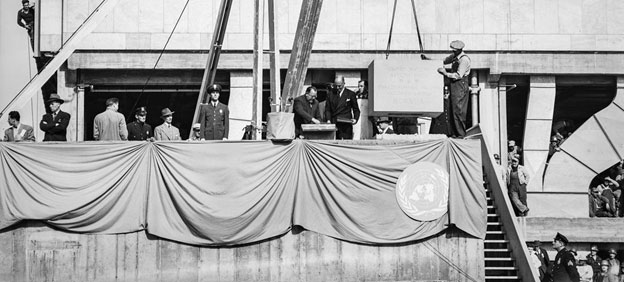
The corner-stone of the UN headquarters building was laid on UN Day at a special open-air General Assembly meeting held on 24 October 1949. Credit: UN Photo
KATHMANDU, Nepal, Oct 13 2025 (IPS) – The United Nations turned 80 this year. What should have been a moment of pride and celebration at the high-level session of the UN General Assembly in September 2025 turned instead into an occasion of bitter irony.
At the UN Headquarters in New York—fittingly located in the host country that once helped found and champion the organization—the loudest fireworks came not from commemoration but condemnation.
The President of the United States, boasting that he had “ended seven wars in seven months while the UN did nothing,” derided the very purpose of the institution. He dismissed climate change as a hoax, renounced the Sustainable Development Goals, and mocked multilateralism as an obsolete bureaucracy.
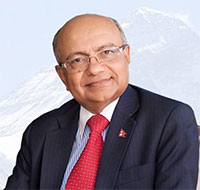
Kul Chandra Gautam
That outburst was shocking, but not surprising. The UN has long been an easy target for populist politicians. Yet even as it endures ridicule and neglect, the truth remains: if the UN did not exist, the world would have to create it again.
An Imperfect but Indispensable Institution
The UN’s failures are glaring and often heartbreaking. As the wars in Ukraine and Gaza rage on—each aided and abetted by two Permanent Members of its Security Council—the organization looks helpless, capable only of issuing pleas and providing meager humanitarian aid.
Its impotence is evident again in Haiti’s gang warfare, Myanmar’s and Sudan’s military atrocities, Afghanistan’s gender apartheid, and North Korea’s saber-rattling, just to name a few.
It is easy to blame “the UN,” but the real culprits are its Member States—especially the five veto-wielding powers of the Security Council, who too often place narrow national interests above global security. Many others strangle the UN with grand resolutions and lofty mandates but fail to fund them.
Hiding behind sovereignty, many governments oppress their citizens, foster corruption, and neglect their global commitments. Meanwhile, the richest nations, capable of lifting millions from poverty, pour trillions of dollars into their militaries.
Still, despite its flaws and frustrations, humanity cannot afford to abandon the United Nations. The challenges of our time— poverty, climate change, pandemics, terrorism, cybercrime, and mass displacement—are “problems without passports.” No nation, however powerful, can solve them alone. Only collective action through a multilateral system can address the interconnected crises that define the 21st century.
For smaller or poorer nations, the UN is an amplifier of voice and leverage. Acting together, they can negotiate more fairly with the powerful. For big and powerful nations, the UN provides legitimacy and a framework for cooperation that unilateral action can never achieve.
The UN, for all its imperfections, remains a mirror of our world: it reflects both our aspirations and our divisions. Its hypocrisy is our hypocrisy; its failures are our failures. Resolutions without resolve and promises without action are the true reasons for its ineffectiveness.
Yet amid the cynicism, it is worth recalling that the UN and its agencies have earned 14 Nobel Peace Prizes—more than any other institution in history. That is no small testament to its contributions to peacekeeping, humanitarian relief, human rights, and development.
But it cannot rest on past laurels. If the UN is to remain relevant, it must transform itself to meet the demands of a rapidly changing world.
Time for Tough Love and Real Reform
UN Secretary-General António Guterres has launched the UN@80 Initiative to sharpen the system’s impact and reaffirm its purpose. A recent system-wide Mandate Implementation Review uncovered a staggering reality: over 30% of mandates created since 1990 are still active, and 86% have no sunset clause. Many require the Secretariat and specialized agencies to carry them out “within existing resources”—an impossible task.
Hundreds of overlapping resolutions and reports clog the UN’s machinery, sustained by bureaucratic inertia and Member States’ appetite for endless paperwork. Too many meetings produce too little action.
Technology now offers a way out. Artificial intelligence can consolidate and streamline reporting, freeing up resources for real work. Likewise, the frequency of governing board meetings—three times a year for agencies like UNDP, UNICEF, UNFPA, UN Women, and WFP—could be reduced without sacrificing accountability.
Facing financial crisis, political hostility from major donors, and a proliferation of unfunded mandates, the UN has no choice but to rationalize its structure. Some agencies will have to merge or move their operations from costly headquarters in New York and Europe to lower-cost locations in Africa, Asia, and the Middle East.
UNICEF has already taken the lead with its “Future Focus Initiative,” with plans to cut headquarters budgets by 25% and relocate 70% of its staff to more affordable hubs such as Bangkok, Nairobi, or Istanbul. Such moves can reduce expenses, bring the organization closer to the field, and align it better with the realities of today’s world.
At the same time, the UN must take advantage of the tremendous growth in professional capacity within developing countries. Many of these nations now produce highly qualified experts who can serve effectively—and at lower cost—than expatriates from the Global North.
UNICEF pioneered this decades ago by hiring national professionals in its field offices. Expanding this practice system-wide would not only save money but also strengthen local ownership and credibility.
These are sensible, short-term measures. But they only scratch the surface. The real test of leadership lies in tackling the deep structural reforms that have eluded the UN for decades.
The Hard Reforms: Power, Accountability, and Money
1. Democratizing the UN
The UN’s mission is to promote peace, democracy, development and human rights—but its own structure remains profoundly undemocratic. The Security Council’s five permanent members hold veto power that can paralyze action even in the face of genocide or aggression.
That provision might have made sense in 1945, but it is indefensible in 2025. Yet changing it requires the consent of those same five powers. Only enlightened leadership in those countries and sustained public pressure globally can bring about reform.
Democratization must also extend to how the UN’s top leaders are chosen. The Secretary-General and heads of major agencies are still selected through opaque bargains among powerful nations. These posts are often “reserved” for certain nationalities rather than awarded on merit. The UN must move toward a transparent, merit-based system if it hopes to regain credibility.
2. Reviving the “Responsibility to Protect”
Too many regimes hide behind the shield of sovereignty to oppress their own people. The world leaders agreed at the UN Millennium Summit in 2005 that when a government fails to protect its citizens—or worse, becomes their tormentor—the international community has a Responsibility to Protect (R2P). The 2024 Pact for the Future reaffirmed that principle.
But R2P has rarely been applied because powerful nations invoke it selectively—protecting their allies and condemning their rivals. True leadership would mean upholding R2P universally, without double standards.
3. Rebalancing Priorities: Disarmament and Development
The UN was founded to prevent war. Yet worldwide military spending now exceeds $2.7 trillion a year—nearly $7.5 billion every day. NATO countries are expanding their defense budgets even as social spending shrinks and commitments to the poor are cut.
This is moral madness. Humanity needs fewer weapons and more investment in sustainable development. Redirecting even a fraction of global military spending toward the Sustainable Development Goals would do more to secure peace than all the bombs in the world.
4. Fixing the UN’s Finances
Money and power often speak louder than moral authority at the UN. The United States contributes about a quarter of the UN’s regular budget—and uses that leverage to exert disproportionate influence. Other large donors do the same.
In 1985, Swedish Prime Minister Olof Palme proposed a simple remedy: no single country should pay—or be allowed to pay—more than 10% of the UN’s budget. That would reduce dependence on any one donor while requiring modest increases from others. Ironically, Washington opposed it, fearing it might lose influence.
Reviving that proposal today could help depoliticize UN financing and make it more sustainable. The UN should also expand partnerships with private philanthropy, foundations, and innovative sources such as taxes on global financial transactions or the use of the global commons. Such mechanisms could liberate the organization from the recurring hostage drama of budget threats and withheld dues.
A Hopeful Horizon
History rarely moves in straight lines. Progress often comes two steps forward and one step back. Today, the post-World War II international order is fraying, and populist nationalism is resurgent. But in the long arc of human history, the movement toward global cooperation is irreversible.
We are slowly—but surely—evolving from primitive tribalism to modern nationalism and onward toward shared global solidarity. Multilateralism may be under siege, but it will rise again, reimagined and renewed, because our interdependence leaves no alternative.
I take hope from the energy and courage of Generation Z across the world—from Nepal and Bangladesh to Kenya, Indonesia, Morocco, and beyond. Young people are challenging corruption, inequality, and authoritarianism, and they see themselves increasingly as global citizens, connected through technology and united by shared aspirations rather than divided by borders or dogma.
If we can offer these young citizens opportunity and justice instead of inequality and despair, we will see the dawn of a more cooperative, humane, and equitable world. That, in turn, will breathe new life into the United Nations—still imperfect, still indispensable, and still humanity’s best hope for promoting peace and prosperity.
Kul Chandra Gautam, a former Deputy Executive Director of UNICEF and Assistant Secretary-General of the United Nations, is the author of‘Global Citizen from Gulmi: My Journey from the Hills of Nepal to the Halls of United Nations’.



 What are the main changes and how will they affect searches?