IRAN: ‘Sustainable Change Will Depend on Domestic Organisational Capacity, Not External Force’

Active Citizens, Civil Society, Crime & Justice, Economy & Trade, Featured, Headlines, Human Rights, Middle East & North Africa, Migration & Refugees, Press Freedom, TerraViva United Nations

Feb 16 2026 (IPS) –  
CIVICUS discusses the recent protests in Iran with Sohrab Razaghi, executive director of Volunteer Activists, a Netherlands-based diaspora organisation empowering Iranian civil society.

IRAN: ‘Sustainable Change Will Depend on Domestic Organisational Capacity, Not External Force’

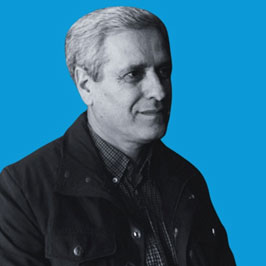
Sohrab Razaghi

Protests triggered by economic grievances erupted across Iran on 28 December, quickly evolving into broader anti-regime protests. The crackdown that followed resulted in what may be the largest massacre in modern Iranian history.

What sparked the protests, and in what ways were they different from previous ones?

Rising prices and the collapse of the national currency initially sparked the protests, but these quickly expanded beyond economic grievances. At least in part, this is because the economy is no longer seen as a purely technical issue but as a measure of the state’s ability to govern. A central question among social groups now is whether the government can manage crises and provide sustainable solutions.

Anger has built up, reflecting broken promises and lost futures. Over the past three decades, four major protest waves – in 2009, 2017, 2019 and 2022 – were met with repression, denial or superficial reforms. This pattern has produced a strong sense of humiliation and political voicelessness.

But perhaps the most decisive factor in the latest wave of protests has been the role of Generation Z, a generation that did not experience the 1979 revolution or the war with Iraq and does not have the ideological attachments of earlier generations. The dividing line is not just age but also expectations, lifestyles and values. While previous generations used to hope for gradual reform within the system, now many young people see no viable future within the current framework. For them, the most rational responses to what they perceive as a structural dead end are disengagement, migration or radical protest.

Recent protests, particularly those of 8 and 9 January, also reflected shifts in protest dynamics, with higher levels of violence visible in both rhetoric and practice. This escalation likely reflects accumulated frustration and political deadlock, but doesn’t necessarily indicate that the state has weakened. Security forces so far appear cohesive and operationally effective, and there are no clear signs of fragmentation inside the coercive apparatus.

But the rise in violence is troubling for democratic forces and civil society. When violent tactics become prominent, organised civic initiatives are marginalised and security-driven narratives prevail, weakening sustained civic action.

Additionally, Israeli and US statements expressing support for protesters and threatening military action had contradictory and largely negative effects.

While such rhetoric initially generated hope among some protesters, the lack of follow-up produced disillusionment and scepticism. Most importantly, statements by foreign governments, including Israel and the USA, strengthened the regime’s narrative. They enabled the authorities to frame protests as the products of foreign interference and protesters as instruments of external powers, including claims of involvement by Mossad agents. This narrative was very useful to justify securitisation and repression.

How have civil society and the media documented human rights violations amid internet shutdowns?

During near-total internet blackouts, local and community-based groups played crucial roles. They recorded the time and location of incidents, collected testimonies from multiple sources and preserved legal, medical and visual documentation while observing basic digital security principles.

When limited internet access became available, information was shared securely with international partners and diaspora networks. These networks helped archive data, liaise with human rights organisations and media and reduce pressure on activists operating inside Iran. International human rights organisations then cross-checked and verified reports before incorporating them into official documentation. Because communication shutdowns, security risks and restricted access to evidence prevented full documentation, they typically presented casualty figures and details of repression conservatively. At the same time, fake news and baseless casualty figures are also prevalent in diaspora and international media reports. It is essential to interrogate such reporting to preserve the credibility of fact-checked, evidence-based reports.

Under severe restrictions, independent and evidence-based documentation has been essential to preserve truth, counter denial and lay the groundwork for future accountability.

What’s limiting sustained pressure for change?

Recent protests have not expanded into broader forms of social organisation. Participation by labour unions, local networks and professional associations has been limited, restricting the potential for sustained institutionalised pressure. Without stronger organisational structures, documentation of abuses won’t necessarily translate into coordinated civic action. Social media-based coordination and mobilisation are effective for the start and first phase of protests, but on-the-ground leadership, networks and organising capacity are instrumental for sustaining protests and increasing pressure for change.

At the discursive level, significant attention has focused on appeals for foreign pressure rather than on building internal coalitions among social groups. In some cases, rhetoric has centred on state collapse rather than democratic transition, a framework that risks instability and further social fragmentation. The use of profanity and violent language – both inside Iran and among the diaspora community – has also alienated families and moderate groups, narrowing rather than broadening support.

Ultimately, for protests to evolve into movements capable of exerting sustained pressure for change, what’s needed is inclusive organisation, coalition-building and a unifying narrative.

What should the international community do to strengthen Iranian civil society?

Sustainable change will depend on domestic organisational capacity, leadership and representation, not external force. So international leaders should avoid war rhetoric and avoid engaging in any form of military intervention. Historical experience suggests that even limited foreign military intervention is unlikely to weaken domestic repression. Instead, it may well increase regime cohesion, at least in the short term, intensify nationalist sentiment and raise the costs faced by civil society activists, who can be easily portrayed as collaborators and traitors.

When supporting Iranian civil society, international allies should prioritise independent, nonviolent civil society organisations rather than opposition groups advocating violence. Narratives of ‘collapse at any cost’ marginalise civic initiatives and undermine the prospects of democratisation.

Long-term investment in capacity strengthening is essential. This includes supporting civic organising skills, digital security, democratic advocacy, nonviolent action and secure communication tools. Over recent decades, resources and repertoires for change within civil society have been weakened. Sustained engagement is required to rebuild these capacities, with up-to-date resources, techniques and tools.

Monitoring, documentation and evidence-based reporting grounded in credible local sources are among the most effective forms of support. Accurate reporting strengthens prospects for accountability and limits the space for propaganda.

Ultimately, sustainable democratic change in Iran will depend on civil society acting independently, rooted in domestic capacities and supported by context-aware, non-interventionist international engagement.

CIVICUS interviews a wide range of civil society activists, experts and leaders to gather diverse perspectives on civil society action and current issues for publication on its CIVICUS Lens platform. The views expressed in interviews are the interviewees’ and do not necessarily reflect those of CIVICUS. Publication does not imply endorsement of interviewees or the organisations they represent.

GET IN TOUCH
Website
LinkedIn
Sohrab Razzaghi/LinkedIn

SEE ALSO
‘The unprecedented level of violence points to a deep crisis of legitimacy’ CIVICUS Lens | Interview with Feminists for Freedom 09.Feb.2026
‘When international attention decreases, state violence often intensifies’ CIVICUS Lens | Interview with Hengaw Organization for Human Rights 27.Jan.2026
Israel vs Iran: new war begins while Gaza suffering continues CIVICUS Lens 19.Jun.2025
  Source

Witchcraft and Killing in Rivers State: Nobody Can Hamper the Progress of Others Through Magical Means

By Leo Igwe

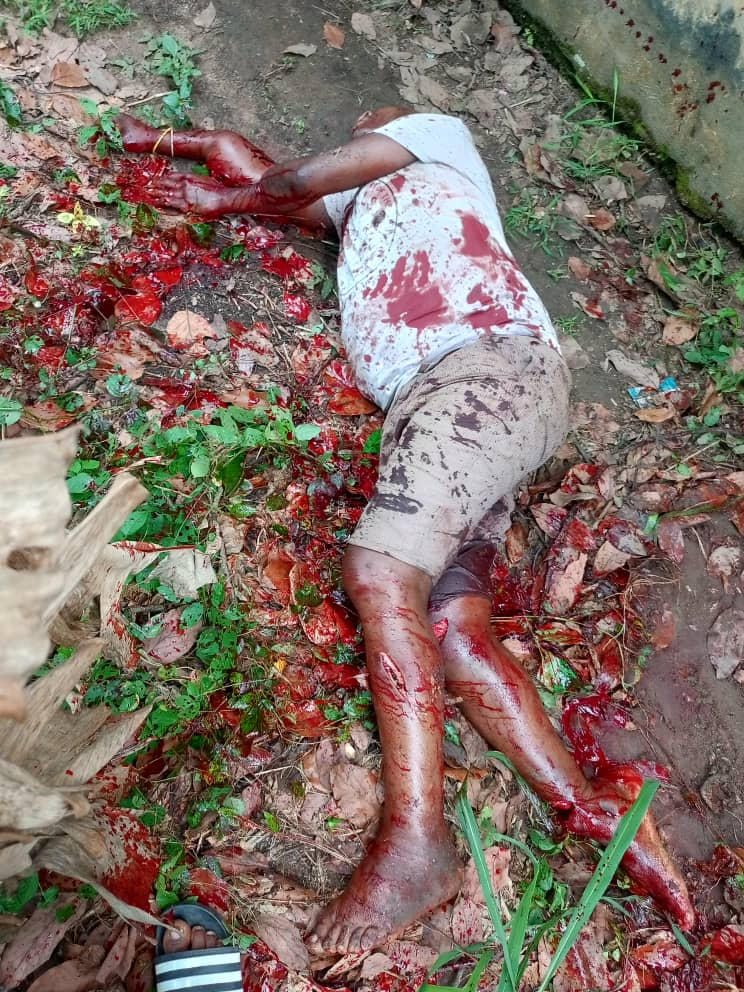
The Advocacy for Alleged Witches is saddened by the brutal murder of Chidiebere Isaiah by a relative, Nwalozie Chiwendu, following an accusation of witchcraft in Ofeh, Rivers State, in Southern Nigeria. The tragic news reached AfAW on February 15, 2026. AfAW contacted The Punch and Vanguard correspondents in Port Harcourt for the phone number of the youth president of the Ofeh community in Omuma Local Government Area. Through an advocate in the state, AfAW contacted a legal counsel from the community who confirmed the incident and has volunteered to facilitate any intervention. This legal counsel said he knew the victim and the suspected murderer very well. As reported, Chiwendu accused and murdered Isaiah for being responsible for his lack of progress. The legal counsel stated that Chiwendu dropped out of primary school. He never went to secondary school. “How did he expect to make significant progress and become rich if he was not educated?” He queried.

Chiwendu reportedly fled after the incident. The local police claimed that he was at large. As in previous cases in Rivers state, this matter will fizzle out after a while. The police stated that the investigation was ongoing, but that was all that would be heard about the case. There are no indications that the police are taking the case seriously, that they are tracking the suspect, or that they will bring him to justice soon. Witch persecution persists in the region due to impunity and lack of accountability, due to a failure of the police and the justice system. Last year, the police in Rivers state refused to prosecute pastors arrested for abusing children during exorcism and ritual cleansing in the state. All efforts and pressures on police authorities to bring these violators to justice came to nothing.

Meanwhile, advocates have been reacting and expressing their outrage following the horrific murder of Isaiah. One advocate stated, “See what ignorance has done: a tragedy for that community and the family. One brother is dead, and another brother is certainly going to be hanged for murder. Terrible!. Meanwhile, the pastors who preached this rubbish mentality into his ignorant head are walking about free, indoctrinating other ignorant people”. Another noted: “This is evil. So you claim to do something good by killing your brother because he is a witch, and you are running? You are not supposed to run away; rather, you should stay so we can tell you what a hero you are. Witchcraft does not exist. Say no to witch-hunts”. Furthermore, one advocate described the incident as: ” Absolutely tragic. No one should ever be killed over superstition or accusations of witchcraft. Education, awareness, and justice are the only answers. End the witch hunts now”.

Local sources informed AfAW that Isaiah had a wife and four children. His first child just finished secondary school. AfAW plans to visit the community and meet with family and community members to understand what happened and explore ways of supporting the family of the deceased during these difficult moments. Advocates will continue to pressure the police to bring the suspect to justice. Witchcraft accusations and jungle justice are against the law. The inability of the police to enforce the law drives these abuses.

In addition, AfAW will organize public awareness programs to reorient the minds of people in Rivers State. AfAW will educate the public to understand that nobody can harm, frustrate, or undermine the progress of others through magical or occult means.

That such a belief is superstitious and based on fear and ignorance!

Leo Igwe directs the Advocacy for Alleged Witches.

The Maravi Post

Former Malawi leader Joyce Banda receives top honor at AU Summit

ADDISA ABBA-(MaraviPost)-The 39th African Union Heads of State Summit wrapped up on Saturday in Ethiopia’s capital, with leaders from across the continent tackling water shortages and ongoing wars in several regions.

Banda was the biggest winner having being Awarded for Excellence in serving humanity.

This year’s summit focused on “Assuring Sustainable Water Availability and Safe Sanitation Systems to Achieve the Goals of Agenda 2063.”

Presidents, former heads of state, and other top officials spent three days talking about how to fix Africa’s water problems and stop the fighting in places like Sudan and eastern Congo.

Dr. Joyce Banda attended the summit after getting invitations from both the African Union and UN Women.

Water Problems Top the Agenda, Leaders at the summit said water security needs to be treated as a top priority.

They tied it directly to economic growth, public health, and dealing with climate change effects that are already hitting the continent hard.

The AU plans to make some big decisions on water and sanitation that could change how African countries develop over the next few years.

Millions of people across Africa still don’t have clean water or proper toilets.

This affects everything from kids getting sick and missing school to businesses struggling to operate.

Wars and Conflicts Get Attention

The summit also dealt with the wars still going on in Sudan, the Democratic Republic of Congo, the Sahel, and Libya.

Leaders talked about finding African solutions to African problems and getting more help to people caught in the fighting.

The push for home-grown answers shows that African countries want more control over how they handle peace and security issues.

Award for Grassroots Work
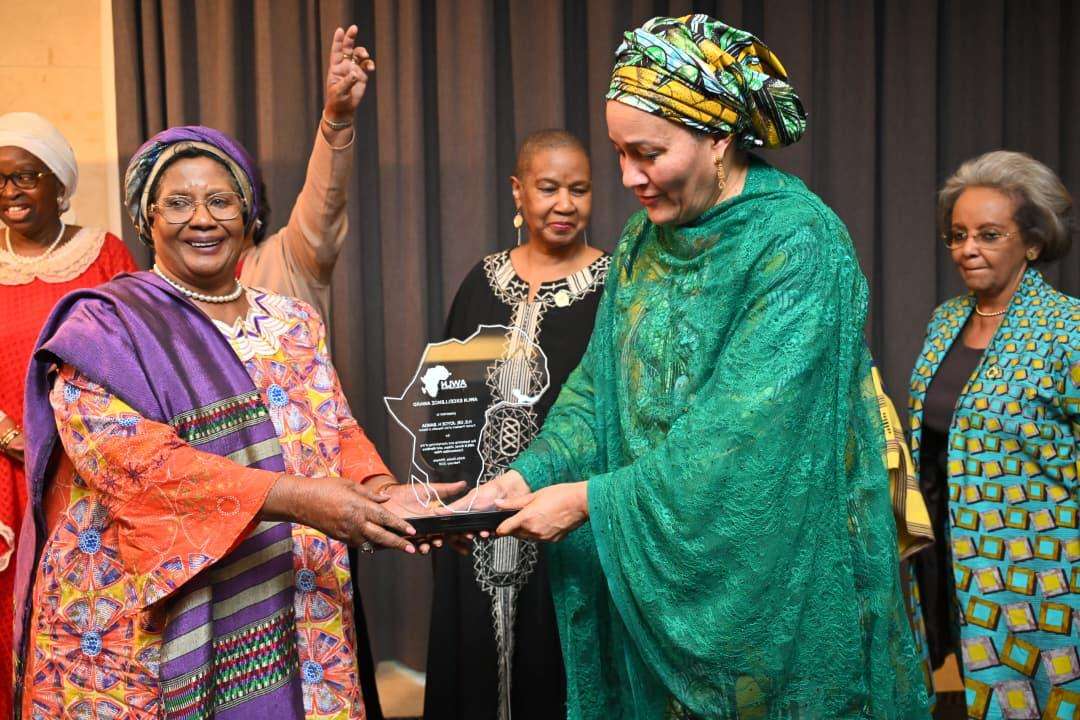
During the summit, the African Women Leaders Network gave an Award of Excellence to Dr. Joyce Banda, First female and Former President of Malawi.

The award recognized her years of work helping rural villages, city neighborhoods, and fishing communities.

The honor shows how important it is to have leaders who understand what’s happening on the ground and can bring those voices to big meetings like this one.

“This isn’t just about me. It’s about all the communities across Malawi and Africa who need development and peace,” Dr. Joyce Said said after getting the award.

What Comes Next
Now that the summit is over, countries will start putting the decisions on water, peace, and economic ties into action.

What happens next will matter a lot as Africa keeps working toward the goals set out in Agenda 2063, which maps out where the continent wants to be in the coming decades.

The African Union was set up in 2002 and now has 55 member countries working together on peace, unity, and development across the continent.

The Maravi Post

20 Lilongwe’s Area 25 households left in darkness after Escom cable theft

LILONGWE-(MaraviPost)-More than 20 households in Area 25C were left without electricity on the morning of Saturday, 14 February, after suspected thieves allegedly stole black service cables connected to Electricity Supply of Malawi (ESCOM) power lines.

Residents say they woke up to darkness after experiencing a sudden power outage during the night.

Because it had been raining, many initially assumed the blackout was caused by bad weather.

Speaking to Maravipost one of the victims, Rose Banda said her family only realized something was wrong when electricity did not return in the morning.

“In the middle of the night, the power went off. Since it was raining, we thought it was just a fault,” Banda explained.

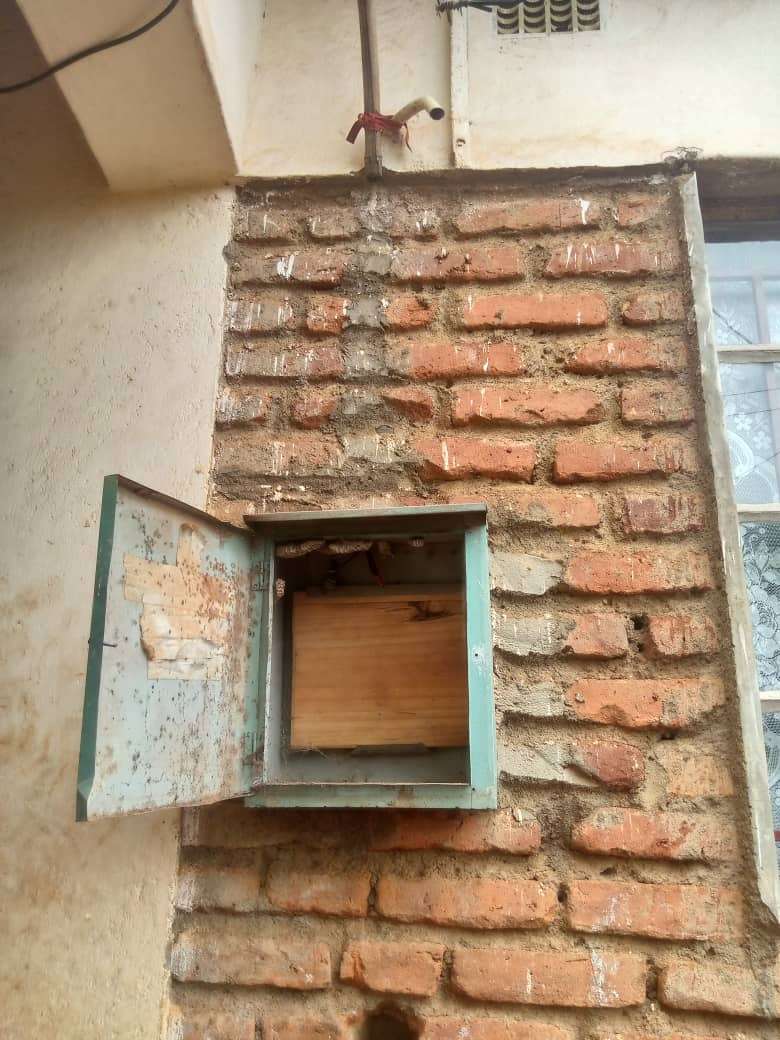
“When we woke up, we found that the metal box where ESCOM staff connect the electricity had been forced open, and the black wire was gone.”

Banda who rents the property with her family, said she immediately alerted her landlord, who lives nearby.

“When I went to inform the landlord, we discovered that their house had also been affected. That’s when we realized many houses in the area were victims,” she said.

Another resident, Innocent Mainga, suggested that the theft may have been motivated by the copper inside the cables.

“We have heard that these wires contain copper. That could be the reason the thieves targeted our area,” he said.

Cable theft has become an increasing concern in many communities, as stolen copper is often sold illegally for scrap.

The crime not only disrupts power supply but also exposes residents to safety risks due to damaged electrical infrastructure.

Affected households have called on authorities and Eskom to urgently address the situation and strengthen security measures to prevent further incidents.

Residents say the outage has disrupted daily activities, including cooking, refrigeration, and small home businesses that depend on electricity.

At the time of reporting, it was clear that no arrests has been made but Community members are urging anyone with information about the incident to report it to local authorities.

ESCOM staff have not visited the area since the incident, even though several victims say they have been calling reporting the issue since Saturday.

The Maravi Post

The Best Museums To Visit In Cape Town

With its rich and storied history, Cape Town has a lot to offer visitors. Our world-class museums showcase a glimpse of the city’s past, delving into struggles and the country’s road to freedom.

Here are some of the museums in Cape Town that are worth the visit.

The Iziko South African Museum 

Right in the middle of the historic Company’s Garden, the Iziko South African Museum is home to 1,5 million items of cultural and scientific significance. You’ll see traditional outfits from the last century, learn more about fossils and ancient insects, and view stone tools made by people 120,000 years ago. 

Location: 25 Queen Victoria Street, Gardens, Cape Town. 
Price: R80. 
Website: Find out more here. 

Iziko Slave Lodge 

The Iziko Slave Lodge is a powerful reminder of the hardships enslaved people once faced in South Africa. As one of Cape Town’s oldest buildings and a place where slaves once called home, it holds centuries of deeply rooted history.. Today, the museum explores the long and painful legacy of slavery through thought-provoking exhibitions, alongside temporary displays that put a spotlight on human rights awareness. Upstairs, the tone shifts slightly with fascinating collections of ceramics, silverware, and even ancient Egyptian artefacts. 

Location: Corner Adderley Street and Wale Street, Cape Town. 
Price: R80. 
Website: Discover more about the museum. 

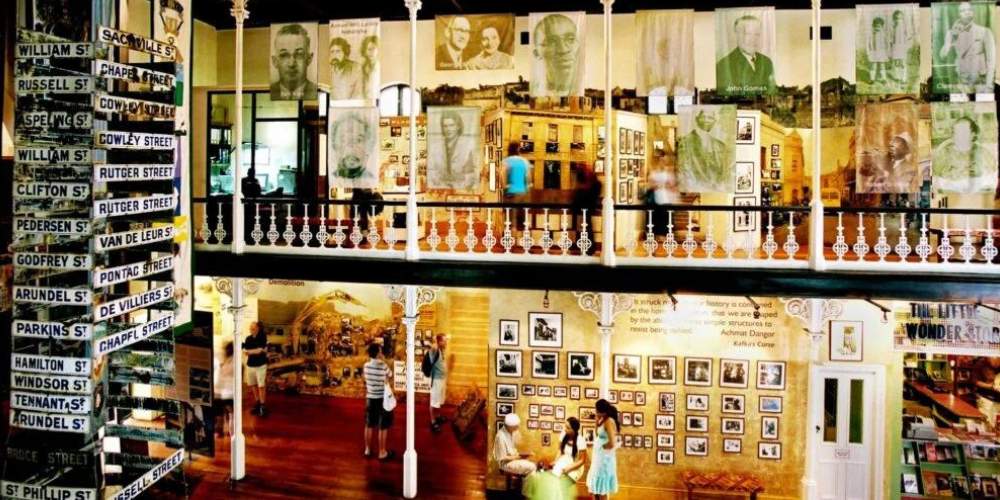
District Six Museum 

Few areas are as vivid an example of the Apartheid regime as District Six. A once racially diverse and vibrant community, the original residents were forcibly removed from the area when the National Party government declared it a “white group area”. It started taking shape in the late ’80s, just after the powerful Hands-Off District Six conference and officially opened in 1994 with its first exhibition, Streets: Retracing District Six. 

The museum is more than just a collection of photos and artefacts, it’s a living tribute to the people who once called District Six home. Its permanent exhibition, Digging Deeper, shares powerful personal stories from former residents, making it a deeply moving stop for both locals and visitors who want to understand the soul of the city. 

Location: 25A Buitenkant Street, District Six, Cape Town. 
Price: From R60. 
Website: Explore the District Six Museum 

Cape Town Museum of Childhood 

The Cape Town Museum of Childhood is a playful, interactive space that brings joy, memories, and childhood stories to life for kids and grown-ups alike. As the first museum of its kind in Africa, it offers a unique look at how childhood has been experienced, remembered, and celebrated over time. From toys and games to personal stories and cultural traditions, the museum showcases a fascinating collection of childhood-related exhibitions from across South Africa. Whether you’re visiting with little ones or just young at heart, it’s a feel-good experience that invites curiosity, connection, and conversation. 

Location: 3 Milner Road, Rondebosch, Cape Town. 
Price: Free. 
Website: Find out more here. 

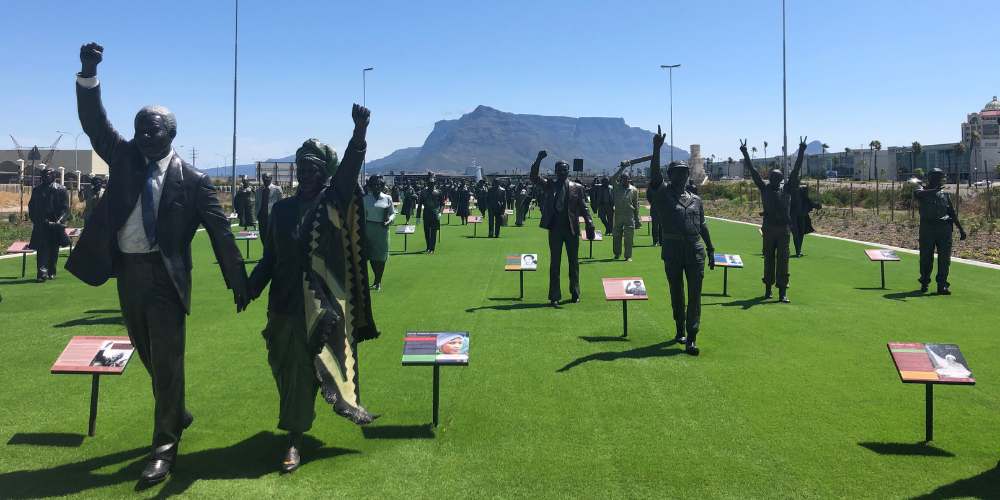
Long March to Freedom 

Brush up on your history in the most unique way! The Long March to Freedom is an outdoor exhibition featuring 100 life-size bronze sculptures of South Africa’s most famous heroes. From Nelson Mandela to Walter Sisulu, the Long March to Freedom transports you through the lives of these heroes and their role in the country’s 350-year journey 

Location: Century Boulevard, Century City, Cape Town. 
Price: Between R20-R75. Children under 6: free. 
Website: Take the tour. 

Long March to Freedom Exhibition, Cape Town

Cape Town Holocaust Centre 

The Cape Town Holocaust Centre stands alongside the South African Jewish Museum and offers a deeply moving and thoughtfully designed experience. Through powerful stories, photos, film, and interactive displays, the museum takes you through one of history’s darkest chapters, the Holocaust, while also shedding light on other genocides around the world. It’s a space for reflection and learning, with exhibitions that are self-guided, allowing visitors to move through at their own pace. The space encourages understanding, empathy, and remembrance. 

Location: 88 Hatfield Street, Cape Town City Centre, Cape Town. 
Price: Free. 
Website: More information here. 

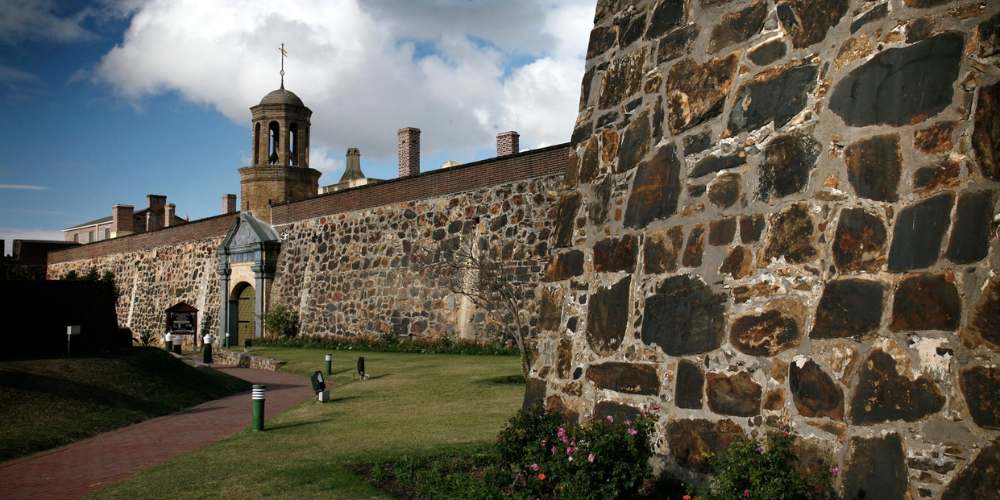
Castle of Good Hope 

Locally known as “The Castle,” this bastion fort is considered the best-preserved example of a 17th-century architectural structure in the world. A bell tower, situated over the main entrance, was built in 1684. The original bell, also known as the oldest in South Africa, was cast in Amsterdam in 1697 and weighs just over 300 kilograms. 

The Castle also acted as the local headquarters for the South African Army in the Western Cape and today houses the Castle Military Museum and ceremonial facilities for the traditional Cape Regiments. 

Location: Darling Street & Buitenkant Street, Cape Town. 
Price: R50 for Adults and R25 for children and pensioners.
Website: Explore more. 

Castle of Good Hope, Cape Town |Iziko Museums

Iziko Bo-Kaap Museum 

Bo-Kaap is one of the city’s most visited destinations. Beyond the iconic colourful houses, the area has an incredibly fascinating history. Many of the residents are descendants of enslaved people from Malaysia, Indonesia and various African countries who were forcibly brought to the city in the 16th and 17th centuries. The Bo-Kaap Museum is the perfect place to discover the history of the area. Be sure to check out depictions of the life of a typical Malay family. 

Location: 71 Wale Street, Schotsche Kloof, Cape Town. 
Price: R80. 
Website: Visit here. 

Robben Island Museum 

This well-known Cape Town attraction has a very chequered past. It was originally a refreshment station for explorers when the Dutch Settlers were in the Cape. It was later used as a leper colony and animal quarantine station. However, the island is most famous for being a political prison during the apartheid regime. Its most notable prisoner, Nelson Mandela, served 18 years in the island’s prison. Visitors to the island can expect an insightful tour by former political prisoners, which includes a visit to Mandela’s cell and a ferry ride.  

Location: Tours depart from The Nelson Mandela Gateway, which is located in the V&A Waterfront, close to the red Clock Tower. 
Price: R600 for adults and R310 for children. 
Website: www.robben-island.org.za 

Warrior Toy Museum

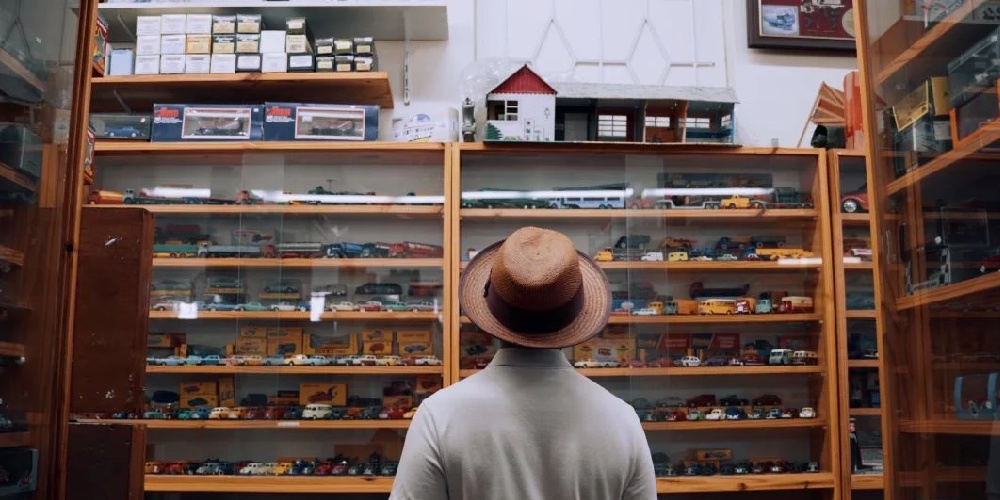
Escape into a childhood dream of toys, models, ships, trucks, aeroplanes and toy soldiers at the Warrior Toy Museum in Simon’s Town. The museum boasts over 4000 model cars, 500 dolls and teddy bears and has a special sale section for those who want to start their own collection. 

Location: 1067 King George Way, Simon’s Town, Cape Town
Opening Times: Daily from 10am to 4pm
Price: Various
Website: bit.ly/3W8zshA 

Toy Museum Simons Town

Rust en Vreugd

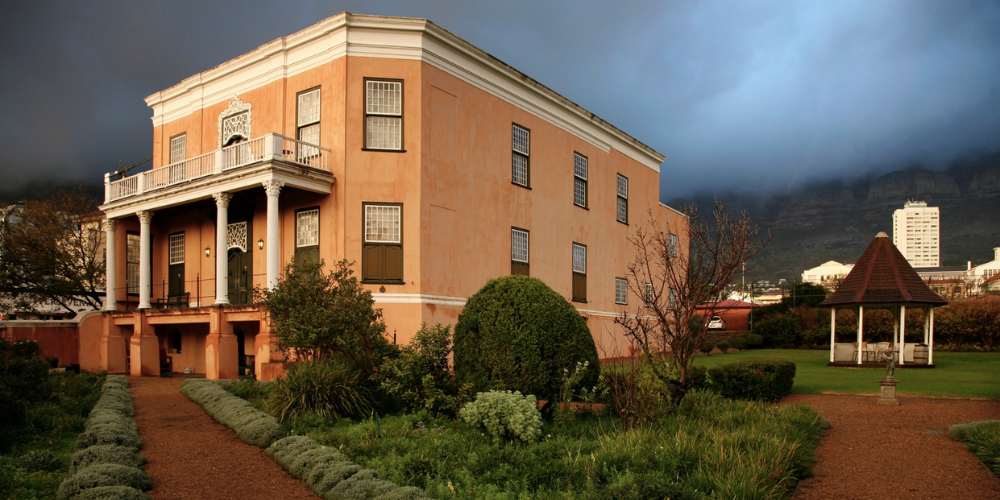
Rust en Vreugd was built on what was then the outer limits of the city in 1777 for a high-ranking official of the Dutch East India Company. In the early 1960s, it was restored and converted into a gallery space when William Fehr donated his private collection of works of art on paper (watercolours, prints and drawings) to the people of South Africa. Visitors will get to see part of the collection.

Location: 78 Buitenkant Street, Cape Town City Centre, Cape Town
Opening Times: Thursdays and Fridays, from 9am to 4pm 
Price: R60 (Free entry on commemorative days)
Website: www.iziko.org.za/museums/rust-en-vreugd

Rust en Vreugd, Cape Town | Iziko Museums

The post The Best Museums To Visit In Cape Town appeared first on Cape Town Tourism.

The Maravi Post