Former Malawi leader Joyce Banda pushes for African Unity

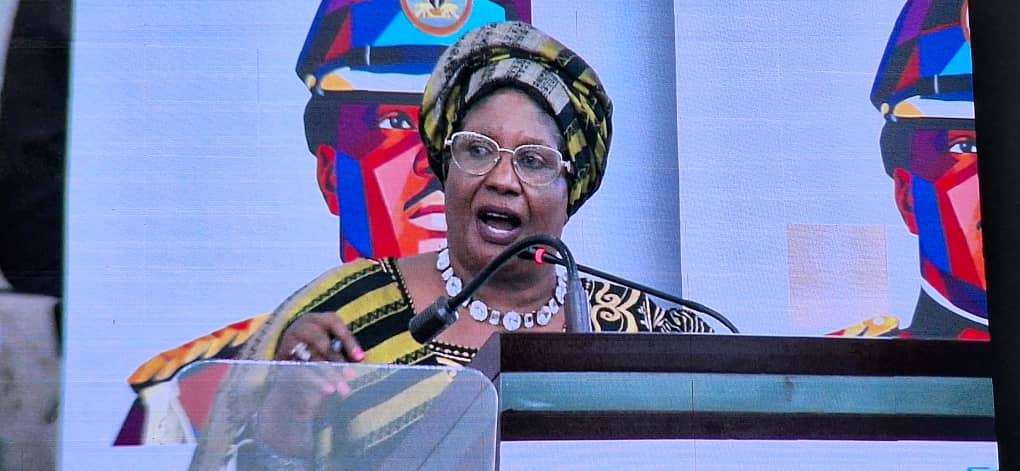
ABUJA-(MaraviPost)-Former Malawi Dr. Joyce Banda has called upon Africans to safeguard its natural resources in the awake of scramble for minerals by the western countries.

The former Malawi leader said Africans must stand united and speak with one voice and protect each other from abuse and exploitation of other countries who now want to benefit from African resources.

She called upon the leaders to emulate former president of the Federal Republic of Nigeria General Muhammed Murtala calling for unity and cohesion in advancement of development and economic agenda for Africa.

Dr. Banda said this in her address at Murtala Muhammed International Lecture and leadership conference held on Thursday, February 12 at ECOWAS secretarial conference hall in Abuja, Nigeria.

The Murtala Muhammed Memorial Lecture series on leadership in Africa commemorates the life and legacy of General Murtala Muhammed and convenes leading African and global voices to examine the future of governance, leadership and continental agency.

This year, the Murtala Muhammed Foundation held commemoration of 50 years after his assassination and his defining “Africa has come of age” address at the Organization of African Unity (OAU) summit in Addis Ababa.

President Olusegun Obasanjo, former president of Nigeria and Chairman of the Murtala Muhammed Foundation said this year’s conference revisits the meaning of Africa sovereignty, discipline in public service and principled leadership in a rapidly changing world.

In her address, the former Malawi leader said time has come for Africa to embrace unity and speak with one voice in a quest to move from aid to trade and achieve infrastructural as well as economic transformation for African nations.

Leaders from across Africa including the fourth president of Malawi were speaking through keynote reflections and practical dialogue that aimed to translate legacy into action, strengthen institutions, renew leadership standards, and position Africa confidently on the global stage.

Apart from Dr. Banda, other leaders present were Good luck Jonathan and Olusegun Obasanjo, Former Presidents of Nigeria, John Kufuor Former President of Ghana, João Lourenco, President of Angola, Ernest Bai Koroma, former president of Sierra Leone, former vice president of Nigeria professor Yemi Osinbanjo, His Highness Emir Mahammudu Sanusi II, Emir of Kano, Diplomatic community, scholars, the military and many others.

Before attending the Murtala Muhammed commemoration, Dr. Banda travelled to Warri Kingdom, Delta State to visit His Majesty Ogiame Atuwatse III and His Queen, the Olu of the Warri Kingdom.

She had discussions with the King and the Queen on issues bordering on economic transformation for women and the youth, philanthropy and education for the marginalized.

Public Relations Executive Assistant to former President Arnold Mnelemba confirmed the development saying the fourth Malawi leader had a successful mission in Nigeria.
The Maravi Post

Sports Minister Gangata for arts, culture promotion

BLANTYRE-(MaraviPost)-Minister of Youth, Sports and Culture Alfred Gangata has reaffirmed the Government’s commitment in recognizing the important role of arts and culture in national development.

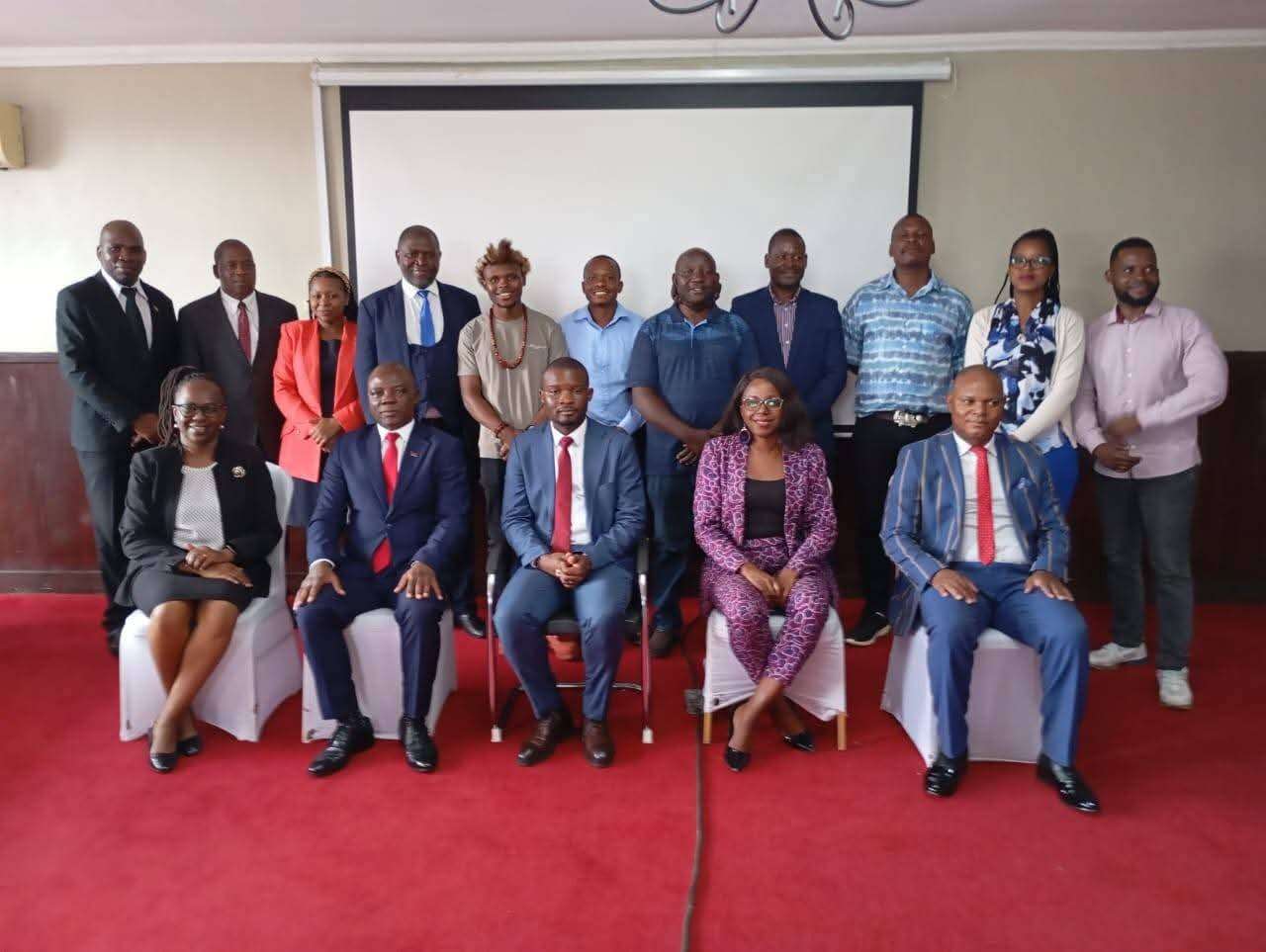
He made the remarks on Wednesday, February 11th, 2026 in Blantyre during the opening of the Southern Region consultation meeting for the development of the National Arts and Heritage Council (NAHEC) strategic plan.

He indicated that promotion of culture is included in Malawi 2063 agenda and the strategic plan aligns well with the high level vision.

The Maravi Post

Kenya starvation cult preacher Paul Mackenzie charged over 52 more deaths

CopyRight @2009 The Maravi Post , An Eltas EnterPrises INC Company Since @2005. Publishing and Software Consulting company

Contact us: contact@maravipost.com

The Maravi Post

Cameroon President Biya delays elections once again

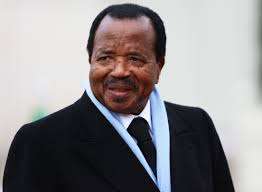
Cameroon’s President Paul Biya announced on Tuesday evening a “slight readjustment” of the timing of legislative and municipal elections that were expected at the start of February.

Originally scheduled for 2025, the elections had already been postponed once until early 2026. No new date was set.

In his televised address on the occasion of the 60th Youth Day, a rare public appearance by the nearly 93-year-old head of state, Biya justified the postponement by citing “certain compelling constraints”, while assuring that “the relevant provisions of the laws, and particularly the Constitution, would be respected”.

He also promised to form a new government, having announced its dissolution in his annual speech on New Year’s Eve.

In his speech, he acknowledged the difficulty many young Cameroonians have in finding work, but also called on them to avoid “delinquency, alcohol abuse drug use, and excessive use of social media”.

Cameroon’s Youth Day is traditionally one of the few times the president addresses the nation directly.

Biya, the world’s oldest head of state, has been in power since 1982 and was re-elected in October to an eighth term, leading to protests that were violently suppressed.

The Maravi Post

Chinese community in Abuja hosts temple fair to mark Spring Festival

CopyRight @2009 The Maravi Post , An Eltas EnterPrises INC Company Since @2005. Publishing and Software Consulting company

Contact us: contact@maravipost.com

The Maravi Post

‘After Decades of Denial and Silence, the Suffering of Rohingya People Is Being Heard at the World’s Highest Court’

Active Citizens, Armed Conflicts, Asia-Pacific, Civil Society, Crime & Justice, Featured, Gender Violence, Headlines, Human Rights, Migration & Refugees, TerraViva United Nations

Feb 9 2026 (IPS) –  
CIVICUS discusses the genocide case against Myanmar at the International Court of Justice (ICJ) with Mohammed Nowkhim of the Arakan Rohingya Society for Peace & Human Rights (ARSPHR), a civil society organisation led by Rohingya people born out of refugee camps in Bangladesh to document atrocities, preserve survivor testimony and advocate for accountability and justice.


‘After Decades of Denial and Silence, the Suffering of Rohingya People Is Being Heard at the World’s Highest Court’

Mohammed Nowkhim

On 12 January, the ICJ began hearings in the genocide case brought by The Gambia against Myanmar over the military’s treatment of the Rohingya Muslim minority. The Gambia, representing the Organisation of Islamic Cooperation’s 57 members, accuses Myanmar of breaching the Genocide Convention. The Gambia’s justice minister presented evidence of mass killings, sexual violence and village destruction during a government crackdown in 2017 that forced over 700,000 Rohingya people to flee to Bangladesh. Rohingya survivors testified in closed sessions. Myanmar denies genocidal intent, characterising its actions as counterterrorism. A final judgment is expected before the end of the year.

What atrocities were committed against Rohingya people and what is being examined in court?

During what were called ‘clearance operations’ in 2017, Myanmar security forces burned entire villages, raped women, killed children and threw them into fires and wells. According to documented reports, over 10,000 people were killed and around 700,000, including me, were forced to flee Myanmar. These were not random acts of violence; they were systematic and targeted attacks aimed at erasing our community.

In 2019, The Gambia, supported by 11 other states, filed a case against Myanmar at the ICJ, accusing it of genocide. Judges are now examining evidence of mass killings, sexual violence, village destruction and forced displacement. They are also reviewing official policies and actions that show intent to destroy Rohingya people as a group, including patterns of violence, coordination by state forces and the systematic denial of basic rights.

This case shows that genocide claims can be examined through law rather than dismissed for political convenience. But for the Rohingya, this is not just a legal process. It represents acknowledgment and a source of hope for present and future generations. After decades of denial and silence, our suffering is being heard at the world’s highest court and recognised in a legal space where truth matters. The hearings can’t erase our wounds, but they can offer some solace and a path towards justice.

What evidence supports the case against Myanmar?

The case was built on years of evidence-gathering. The Gambia relied on extensive material from the Independent Investigative Mechanism for Myanmar and United Nations (UN) fact-finding missions, as well as documentation collected over many years by human rights organisations, including Fortify Rights, Human Rights Watch and Rohingya-led groups.

Civil society played a key role when states failed to act. Even when the world looked away, organisations continued to document the truth and refused to let these crimes be erased or rewritten. Long before any court agreed to listen, groups including the ARSPHR were collecting survivor testimonies, documenting violations and carefully preserving evidence, knowing it might one day be used in court. Without that work, much of what happened would have been lost and perpetrators couldn’t have been challenged.

In a way, civil society became the memory of the Rohingya people. Today, this evidence forms part of the case before the ICJ.

Why is accountability so difficult?

Politics often protects perpetrators. Those with power choose stability over justice and shield those responsible for crimes. Myanmar’s authorities continue to deny wrongdoing and refuse to cooperate, which delays justice.

International law also has its limits. Justice moves slowly because ICJ rulings do not automatically lead to consequences. International courts can establish the truth, but they can’t force states to act. Enforcement depends on political will, often through the UN Security Council, where countries such as China and Russia can block action, even when crimes are clear and well documented.

What must happen to ensure justice?

There must be real action. Perpetrators must be held accountable, Rohingya citizenship must be restored and discriminatory laws that enabled genocide must be removed. Any return of refugees must be voluntary, safe and dignified. It can’t happen without international monitoring and guarantees of protection. People can’t be sent back to the same conditions that forced them to flee.

Ultimately, justice is not only about the past, but also about ensuring that future generations of Rohingya can live with rights, safety and dignity. This case is only the beginning. What happens after the judgment will decide whether justice is real or only symbolic.

CIVICUS interviews a wide range of civil society activists, experts and leaders to gather diverse perspectives on civil society action and current issues for publication on its CIVICUS Lens platform. The views expressed in interviews are the interviewees’ and do not necessarily reflect those of CIVICUS. Publication does not imply endorsement of interviewees or the organisations they represent.

GET IN TOUCH
Website
Facebook
Instagram
LinkedIn
Threads
Twitter
Mohammed Nowkhim/Facebook
Mohammed Nowkhim/LinkedIn

SEE ALSO
Myanmar’s junta tightens its grip CIVICUS Lens 12.Dec.2025
International Court of Justice offers hope of rules-based order CIVICUS Lens 19.May.2025
Myanmar at a crossroads CIVICUS Lens 28.Oct.2024

  Source