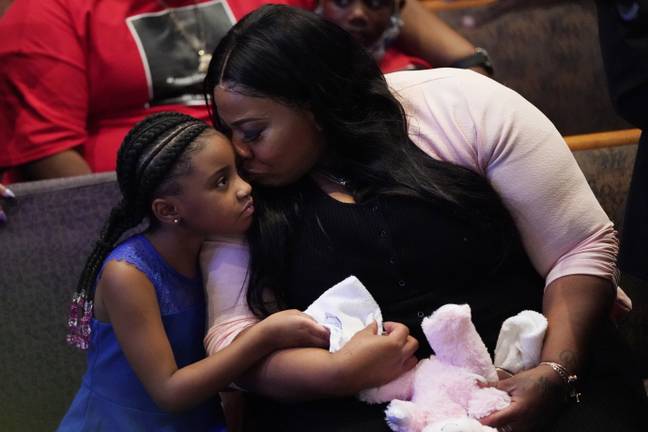
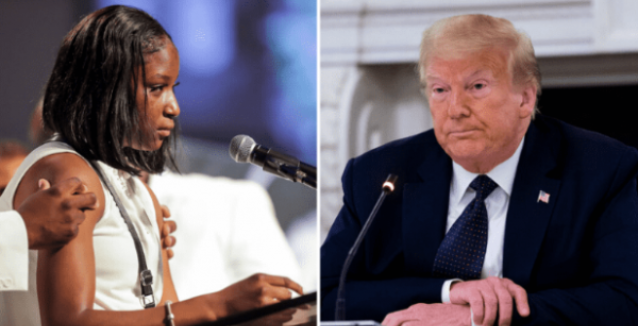
An American university has allocated funds to provide George Floyd’s daughter a full scholarship.
While Gianna is only six years old, she has been blessed with the opportunity to go to Texas Southern University for free if she chooses.
A statement on the university’s website says: “The Board of Regents of Texas Southern University (TSU) honors the memory of George Floyd on the day that he is laid to eternal rest. Mr. Floyd was a lifelong citizen of the Third Ward and a revered graduate of Jack Yates High School.
“The Board, in conjunction with the TSU Foundation Board, has approved a fund to provide a full scholarship for Floyd’s beloved daughter, Gianna. TSU’s executive and academic staff will prepare a place for Miss Floyd if she wishes to attend the University.”
Albert H. Myres, chair of the Board of Regents, said while a scholarship won’t bring back her dad, it will help ease ‘her journey through life’.
If the girl doesn’t want to go to Texas Southern then she still has a pretty decent option up her sleeve.
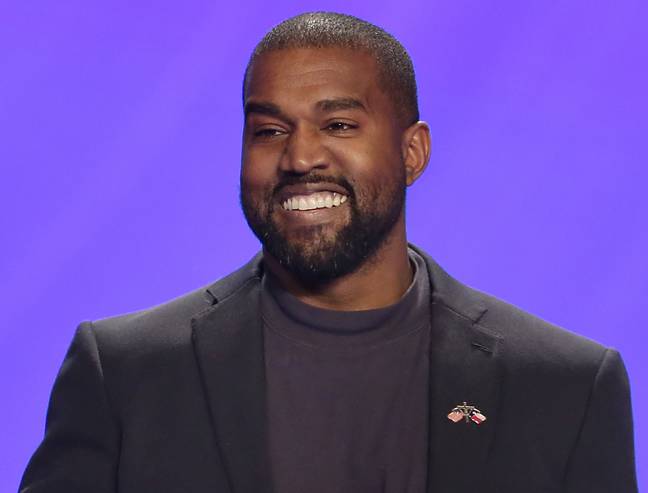
apper Kanye West has dedicated $2 million to a fund to help Gianna Floyd and the families of Ahmaud Arbery and Breonna Taylor – two African American people killed recently in the US.
A representative for West told news channel CNN that the generous donation will also help Black-owned businesses in his hometown of Chicago (and other cities) that are in crisis.
West’s spokesperson said that West has established a 529 education plan – a tax-advantaged investment vehicle in the States designed to encourage saving for future higher education expenses – that will fully cover tuition expenses for Gianna Floyd.
George Floyd died while in police custody in Minneapolis on 25 May. His death has sparked outrage the world over, with protests taking place across the United States and beyond.
Police officer Derek Chauvin applied pressure with his leg to Floyd’s neck for eight minutes and 46 seconds. He was later charged with third-degree murder and second-degree manslaughter in connection with Floyd’s death, although it has now been confirmed that the charges will be elevated to second-degree murder.
As there is significant uncertainty about how the epidemiological and economic situation will evolve, assessing the duration and the gravity of the pandemic seems like an impossible task.
However, recent forecasts suggest: trade volumes decreasing between 13% and 32% in 2020 (WTO, 2020), global growth falling to -3% (IMF, 2020) and different maritime seaborne scenarios ranging from a return to sector average (around 3% p.a.) after 2022 to growth rates falling by 17% by 2024 (Stopford,2020)[i].
Industries whose operations are more globalized (and particularly those that rely on Chinese inputs for production) were most exposed to initial supply chain disruption due to COVID-19. This was the case for precision instruments, machinery, automotive and communication equipment (UNCTAD, 2020).
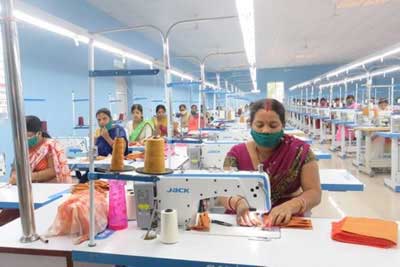
Given its non-essential nature, the fashion industry faces significant risks. Indeed, in times of COVID-19, as consumers around the world remain in lockdown, they no longer need new products. This industry is characterised by a highly integrated global supply chain.
In it, many developing countries play the role of the supplier of low-cost inputs. This article highlights some of challenges and concerns that some of these countries face, many of which are dependent on textile and garment exports.
The textile industry supply chains, trade logistics and developing countries
The accession of China to the WTO (2001) and the expiry of the WTO Agreement on Textiles and Clothing (which ended a 10-year trade regime managed through quotas) on 1st January 2005 contributed to making China an important centre of textile and clothing global value chains (GVCs).
These two developments led to shift apparel production and sourcing (by globalized retailers and producers) to China and other Asian countries because of low labour costs (UNCTAD, 2005), following the cost-reducing logic of GVCs.
As wages gradually rose in China and Chinese plants moved to produce higher-value goods, countries like Bangladesh, Pakistan and Vietnam, with lower wages costs started attracting factories to relocate their production from China.
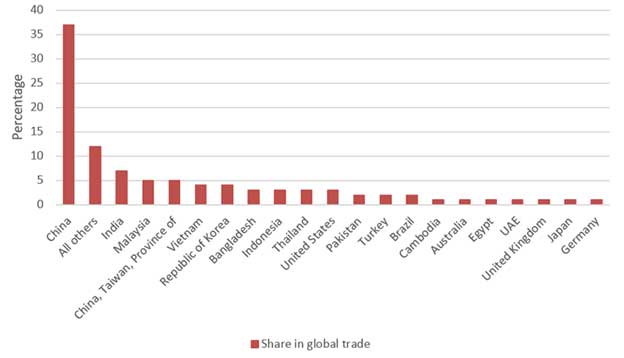
At the global level, China remains an important supplier of fashion goods (as shown in Figure 1) but has also become an important consumer of this industry.
Figure 1: Top 20 exporting countries of fashion goods* (share in global exports), estimated TEU 2019
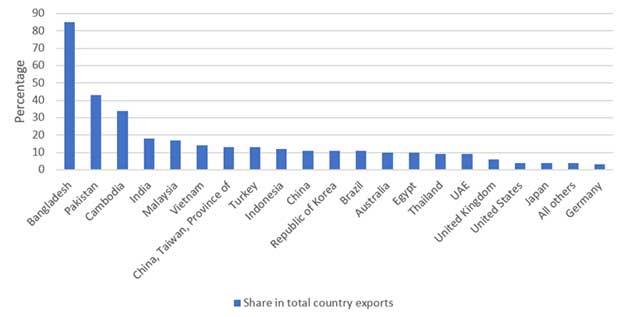
Major exporters of fashion goods for whom exports in the sector represent a significant share of export earnings are shown in Figure 2. Consequently, the Asian country most badly affected by the disease outbreak could be Bangladesh where circa 85% of its exports include fashion goods, as shown in Figure 2.
Figure 2: Top 20 exporting countries of fashion goods* (share in total country exports), estimated TEU 2019
Given the globalized nature of the industry, companies and retailers must transport their goods and raw materials across many countries. Besides China, other countries play an important role as key hubs around which trade of fashion products takes place.
This is the case for the United States (as the most important retail market), and some European countries (such as Belgium, Germany, France and UK), with ports such as Rotterdam and Antwerp featuring prominently in this trade. (CO, 2018).
In addition, clothing collections change quickly: their lifecycle is short (as perishable products) and their commercialization is characterized by strong seasonal peaks. In this sense, textile logistics are characterized by small stocks and short delivery times.
These goods and raw materials are usually transported using a combination of land, sea, and air. Within this trade logistics context, strong multimodal interlinkages are key to ensure Just in Time delivery.
E-commerce developments have further accentuated time-related logistics requirements, such as next day delivery, as well as the capacity of handling a large volume of returns and offering the possibility for manufacturers and dealers to check the location of their articles at any time.
Emerging concerns related to COVID19 from the perspective of developing countries
The COVID-19 outbreak led to production stops in China first, followed by closures of shops elsewhere around the world.
For the moment, European and American retailers, the two destination markets for this sector, are still cancelling their orders. Cancelled orders are a cause for concern in many sourcing countries.
It urged brands and retailers to consider the impact that their purchasing decisions during the coronavirus pandemic could have on workers and small businesses in the supply chain and, therefore, to honour their contracts with their suppliers.
In their statement, the STAR Network invited global businesses to “support business partners in the supply chain as much as possible, and aim at a long-term strategy of business continuity, supply chain unity and social sustainability.”
Supply chain disruption: the reduced production perspective
The evolution of local epidemiologic situation in key sourcing countries, has impacted workforce availability and production, as well as multimodal logistics underpinning global value chains.
Governments in developed countries around the world are implementing unprecedented actions to ease the effect on their economies from measures put in place to limit the spread of the pandemic.
Most developing countries do not have similar financial means, health systems or social safety nets to respond to the COVID-19 pandemic crisis and its economic impacts.
In this context, various assistance packages have been announced by IMF, the World Bank and others with a view to supporting economies, including emerging market economies.
Transport connectivity impact
Observable changes derived from the pandemic concerning maritime transport networks include, for example a reduction in service frequency (blank sailings and idle fleet) and changes in routing affecting particularly Asia-Northern Europe services, a key axis in the trade of fashion goods.
Shipping lines are reducing the number of port calls in the maritime services they offer to adapt to declining demand and cargo imbalances (JOC, 2020).
This is likely to affect the liner shipping connectivity of sourcing countries both in terms of intercontinental as well as intra-regional feeder calls and, if this situation persists, could make economic recovery even harder.
The fashion industry is undoubtedly under pressure in these uncertain times. Depending on the role that countries play in the supply chain, building resilience could entail different needs and approaches.
Prospects appear particularly bleak for low-cost sourcing countries that are highly dependent on textile and garments exports for revenues, concurrently faced with the challenge of limited financial means and less developed health systems and social safety nets to cope with the socio-economic effects of the pandemic.
In the short-term, lockdowns around the world have thrown a spotlight on risks associated with high supply chain interconnectedness and challenges associated with global sourcing.
This has also had an impact on trade logistics, as the glue that holds global value chains together. Observable changes introduced in maritime transport services to cope with reduced demand and cargo imbalances illustrate this.
The key question is what will this mean in the longer term, after surviving this unplanned humanitarian and financial crisis, particularly for the weakest links of the chain?
Driven by growing pressure towards more environmentally friendly lifestyles, the fashion industry was already confronted, before the pandemic, with increased concerns regarding its sustainability footprint, particularly consumption patterns associated with ‘fast fashion’ (increasing levels of expenditures and waste disposal) and associated production patterns (workplace conditions, environmental impact of textiles processing).
Will the current crisis accelerate a transformation in consumption patterns, inducing structural changes to the industry supply chain?
For example, could it lead to generalize new models such as ‘seasonless designs’ or lead to shorter value chains (i.e. increased local or regional sourcing)? Certainly, moving away from the “just in time” or “made- to- order” business models will have an impact on trading and transport patterns.
Niece to late American man, George Floyd who was murdered by a police officer, Brooke Williams has teared into United States of America (US) President Donald Trump as she stole the show in an emotional eulogy.
This came as emotions ran high at the at slain black American’s funeral service as mourners broke into floods of tears as they approached the dad-of-five’s coffin at Houston.
In a video, Williams directed her anger at Trump and Derek Chauvin, the officer who was seen in a viral video kneeling on Floyd’s neck for about eight minutes suffocating him.
“He begged and pleaded just for you to get up. But you just pushed harder. Why must this system be corrupt and broken? These laws need to be changed. No more hate crimes please. Somebody said make America great again. But when has America ever been great?
“Those four officers were literally on him for nine minutes and none of them showed they have a heart or soul. This is not just a murder, but a hate crime,” a teary Williams said.
Floyd’s daughter Gianna made outstanding remarks prior to the service that warmed the hearts of many saying her dad changed the world.
Trump who had earlier called for the shooting of protestors who were demonstrating over the 46-year-old’s death was under fire again on Friday, June 5, when he suggested Floyd was sitting in heaven happy about a slight better US jobs report than expected.
Charlotte Petri Gornitzka is Assistant Secretary-General and UNICEF Deputy Executive Director, Partnerships; Robert Piper is Assistant Secretary-General, Director of Development Coordination Office; and Ulrika Modéer is Assistant Administrator of UNDP & Director of Bureau of External Relations and Advocacy.
Coronavirus pandemic threatens crises-ravaged communities as UN appeals for global support. Credit: United Nations
UNITED NATIONS, Jun 9 2020 (IPS) – The COVID-19 pandemic upended almost every aspects of life as we know it. Even those countries that are supposed to have the means to manage the spread and mitigate the effects are struggling.
Besides the $5 trillion stimulus package that the G20 economies agreed to deal with the pandemic, individual countries are also devising various measures to shore up their health care systems, stabilize their economies, and assist affected workers and businesses.
Even before the full brunt of the coronavirus outbreak reached some of the poorest countries, the economic impacts are already being felt. With declining global demand for raw materials, breakdown of global supply chain, and mounting debt burden, the economic impact of the COVID-19 pandemic is estimated to exceed $220 billion.
The urgent shouldn’t crowd out the important
With greater uncertainty and fear of global recession looming large, governments are looking for resources needed to lessen the socio-economic pains of the crisis. In this process, official development assistance (ODA) won’t be spared and could come under increased scrutiny.
Decisions made now will have potentially devastating – or transformative – impact for years to come. Despite the economic and political pressure, we must protect ODA, which is needed more than ever.
The spread of COVID-19, especially in places with weak governance and health infrastructures, is expected to be overwhelming if the international community does not act now.
For example, in Sub-Saharan Africa, many countries have the lowest number of physicians per capita in the world while some experience ongoing conflicts, making it difficult to fight the virus.
Credit: UNFPA
The collateral impact of COVID-19 on health, education and nutrition systems will be extremely damaging, and in many cases irreversible, for children and society at large. And when the world opens up again, the resilience of the weakest health systems will dictate how well we do against future threats.
The UN Secretary General argued that “this human crisis demands coordinated, decisive, inclusive and innovative policy action—and maximum financial and technical support for the poorest and most vulnerable people and countries.”
It is critical for the international community to fulfil the humanitarian appeal for COVID-19 response while protecting existing commitments to long-term development and other ‘silent’ emergencies.
Doing so will help protect the most vulnerable people from being exposed to the effects of COVID-19 and preserve hard-earned development gains in fighting global poverty and expanding basic services.
Left to their own devises, fragile nations may risk the breakdown of socio-political order, civil unrest and state collapse, further exacerbating the dire situation.
Flexible funding key to tackling COVID-19
COVID-19 is not only a humanitarian crisis, but also a development crisis. Development agencies are supporting countries to prepare for, respond to, and recover from the crisis.
The effectiveness of their response to certain degree depends on the flexibility afforded to them in funding and operational procedures.
To tackle this uniquely complex health and development crisis, the adequacy and flexibility of funding to development agencies are pivotal. Flexible “core” funding is already making a difference in the COVID-19 response to reach people in need faster, empower local actors, deploy essential supplies to the frontline, and protect the most vulnerable – children, refugees, women.
This enabled the affected communities to practice due diligence and self-driven discretion to immediately respond to threats of the pandemic, while waiting for the pledged assistance to arrive. For instance, in Nigeria, funding flexibility allowed UNICEF to come up with an innovative solution to fight misinformation around COVID-19 while UNDP was able to support the government double the ventilator capacity in the country.
Collaboration, not competition
The COVID-19 pandemic is a devastating crisis in history. But it also posits an opportunity to remind the global community why multilateralism is vital to securing the world’s peace, security, and prosperity.
We witness how the health crisis of today’s globalized world interlinks global economy, geopolitics, and social values. Our effective response to the public health crisis should be seen as key to resolving the ensuing economic, humanitarian, and development challenges.
Understanding this interlinked and complex reality of COVID-19, governments need to work together closely to take coordinated actions and share scientific information, resources and expertise.
It is this strong motion for collaboration that underpins the UN agencies commitment to reinforce the humanitarian-development nexus to jointly respond to the COVID-19 crisis, working closely through the UN Crisis team, humanitarian response plan, UN Response and Recovery Fund for COVID-19.
For example, in Guinea-Bissau, WHO, UNICEF, UNDP, and IOM joined hands to help build isolation facilities and triage space, and procure necessary equipment for COVID-19, both for the national hospital as well as for the re-modelling of the UN clinic.
With strong solidarity and effective cooperation, the international community will not only arrest COVID-19, but also use the emergency to build back better health systems and a more inclusive and sustainable economy.
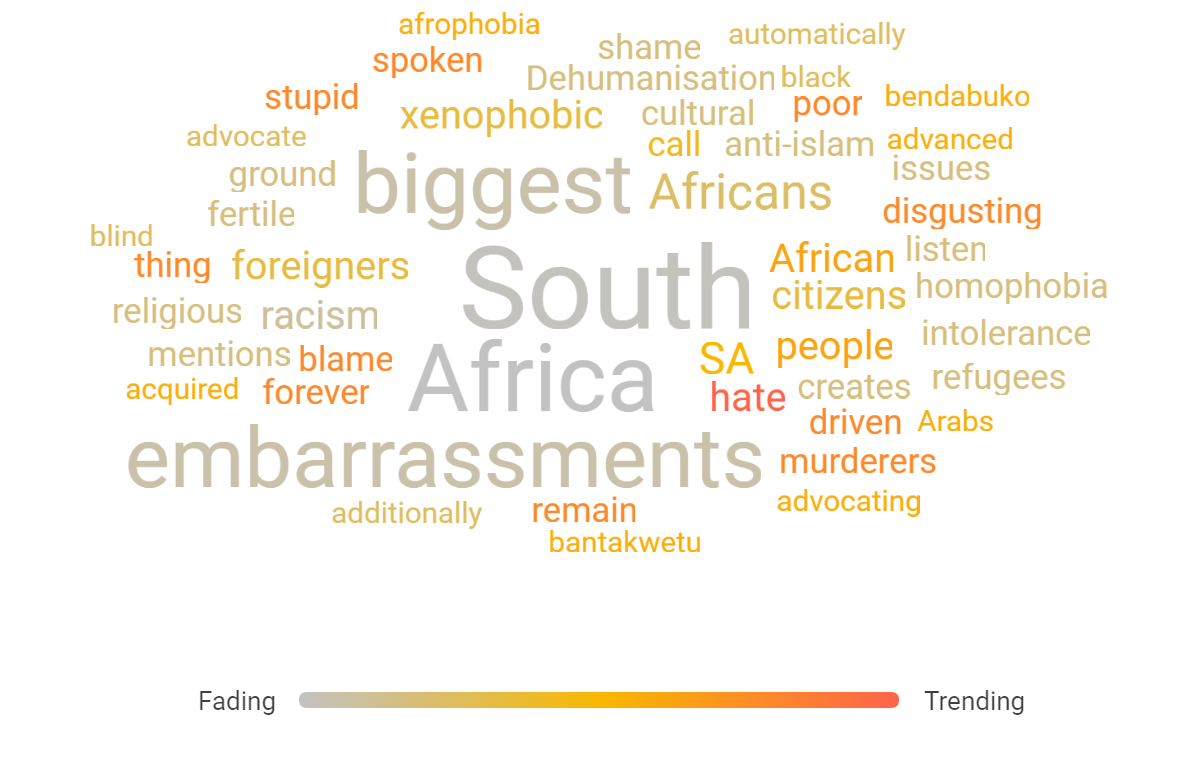
This is a summary of the trending, highest impact, and most active themes and their narratives related to social cohesion and division in South African public-domain social media conversations from 5 to 7 June 2020.
Standing up together
As the Black Lives Matter movement and worldwide protests continue to dominate social media conversations, more business leaders are demonstrating their support publicly.
On Friday Reddit co-founder @alexisohanian announced his resignation in a Twitter thread and appealed for his replacement to be a black candidate: “I co-founded@reddit 15 years ago to help people find community and a sense of belonging. It is long overdue to do the right thing. I’m doing this for me, for my family, and for my country.” The tweet has received over 25,100 retweets and 167,600 likes.
Others called on black executives to transform their organisations. South African businessman @G_XCON tweeted, “If you are the only Black person on any Board of Companies for a period of 12 months, just know that you are more of a problem than those racist that you serving with on that satanic Board.” The tweet gained traction with 186 retweets and 557 likes.
Following international solidarity over the killing of George Floyd, many have begun sharing other injustices plaguing black communities around the world. Twitter user @kidistbogale retweeted a post by @tayjordz that depicts gruesome images of black people as slaves in modern day Libya: “black lives matter applies ALL AROUND THE WORLD btw”. The tweet generated over 70,300 retweets and 102,700 likes. And
The @britishmuseum showed their support for the BLM movement – their 4-part thread included a link to a statement: “‘The British Museum stands in solidarity with the Black Community throughout the world. Black Lives Matter – Director Hartwig Fischer.” Read Hartwig’s thoughts and response here: http://ow.ly/st5S30qMVSO”. The tweet received over 2,800 retweets and 640 likes.
Incidents of police brutality continue to circulate on social media, fuelling protests and calls for reform in the US policing system. On Sunday film director and writer @avaretweeted a post by @_SJPeace showing a video of a white male police officer lying on top of a black woman, choking her: “Everyday. Everywhere. For. Black. People. This. Is. A. Very. Real. Possibility. White. People. Get. To. Ask. And. Argue. And. Assert. We. Must. Submit. And. Comply. Or. Else.” The tweet got 43,400 retweets and 83,700 likes.
Actor and musician @jaden echoed these sentiments, tweeting “In The African American Community Police brutality Has Reached A Incomprehensible Level And Governmental Changes MUST Be Made.#BLM” The tweet has 1,500 retweets and 8,800 likes.
Pointing fingers
Helen Zille expressed her disapproval of schools remaining closed: “This attempt to keep schools closed is highly irresponsible, and will do more damage to children’s lives than Covid. The only people who should stay home are children with dread diseases, or staff with co-morbidities.” Zille’s tweet received 1,000 likes and 326 retweets, with most comments disagreeing with her opinion, especially her belief that herd immunity will stop the spread of Covid-19.
The tweet was a response to an EWN.co.za article about previous DA leader Mmusi Maimane’s fight against the Concourt ruling to reopen schools. Maimane has advocated for schools to stay closed until proper safety measures have been implemented. Maimane responded to Zille’s tweet in a light-hearted manner, saying she chose to “throw shade” at him on his birthday.
On 3 June @PhumlaniMMajozi tweeted about organisations he claimed were destroying South Africa. Although the tweet was posted earlier in the week, it gained traction during the weekend, with over 1,700 likes, 518 retweets and 122 comments. Phumlani Majozi, a South African political researcher and commentator, named four organisations he believed were responsible for the destruction of South Africa over the past 15 years: the ANC, the SACP, Cosatu and other unions and the EFF. Some Twitter users agreed with him, while others asked him why he doesn’t start his own party and why he excluded organisations such as the DA, SANDF and BLF. Since posting the initial tweet, Phumlani has not commented or engaged with the tweet or the comments received.
Xenophobia bursts out
The hashtag #PutSouthAfricansFirst appeared in a tweet posted by @landback at 15:09 on Sunday 07 June. Accompanying the tweet was an image of a petition board reading: “We want our country back” together with an image of President Cyril Ramaphosa. The tweet states: “South Africans are busy mobilising to protest against your government’s open borders and high immigration policies.” The post has been retweeted 64 times.
At the weekend a petition was created on Change.org by Nandiswa Gschwari called, “Save South Africa from Foreigners and their Crimes.” The petition asked for 500 signatures and had received 459 signatures by Monday. The petition claims: “Farmers are being murdered by Zimbabweans, Mozambique’s and Malawians. The youth is dying of drugs, human trafficking by Nigerians. Our country has become a paradise for all sorts of criminal activities because of its lawlessness. Please sign and help us save South Africa and re build this beautiful country.”
British political commentator Katie Hopkins, known for her rightwing stance, aired her views in a video that was tweeted on 5 June and viewed more than 100,000 times. The tweet that accompanies the video says: “South Africa is a glimpse into our future. Under a new development, White South Africans will be given refuge & farming opportunity in Eastern Europe. Could Eastern Europe be the place white Christians call home?” Some white South Africans asked why they would need to go to eastern Europe, when South Africa was their country too?
Resorting to humour
South Africans sought some comic relief on Twitter this weekend, with many humorous tweets becoming popular.
Posing as “specialist correspondent Bob O’Connor”, Tyson Ngobeni explained to imaginary foreign viewers, the concept, function and significance of the “room divider”, a piece of furniture found in many South African households. The tweet received almost 9,000 likes and had been retweeted over 4,000 times.
Uyajola, the reality TV show hosted by Jub Jub that exposes South Africans who cheat on their partners, received over 47,000 mentions, mostly on Sunday after the show aired. Man’s NOT Barry Roux (@AdvoBarryRoux) tweeted, “Jub Jub made the pots do the things that cannot make the pots to be done” – the tweet received over 2,000 likes. There was largely positive sentiment towards the show, while some expressed dismay at the content. A tweet by @xplosivsa, which received only seven likes, noted: “We live in a sad society where the highlight of the week is a show about people cheating on each other.”
South Africans celebrated our unique use of the English language. @MuhammedAsmal4 tweeted: “South Africa is the only place where “don’t lie” means “tell me more.” The tweet received 1,800 retweets and almost 7,000 likes. Others responded with similar “South Africanisms”.
Another humorous tweet that received much attention was posted by @dannyeurl: “the only ex i miss is ex-tra money.” It received almost 300,000 likes internationally, and over 1,000 mentions locally. DM
The Centre for Analytics and Behavioural Change (CABC) is a non-profit organisation incubated at the Graduate School of Business at the University of Cape Town.The CABC stimulates positive social change through engagement, dialogue and advocacy. www.cabc.org.za
Nidhi Nagabhatla is Principal Researcher, Water Security at the UN University’s Institute for Water, Environment and Health, funded by the Government of Canada and hosted by McMaster University in Hamilton, Canada
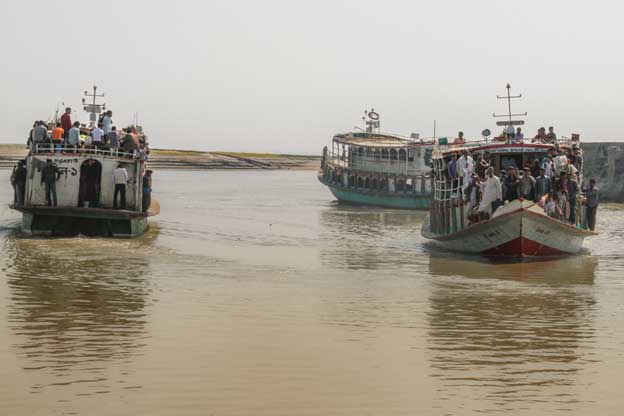
Padma River Basin, Bangladesh Credit: Nidhi Nagabhatla
HAMILTON, Canada, Jun 8 2020 (IPS) – Do migrants willingly choose to flee their homes, or is migration the only option available?
There is no clear, one-size-fits-all explanation for a decision to migrate — a choice that will be made today by many people worldwide, and by an ever-rising number in years to come because of a lack of access to water, climate disasters, a health crisis and other problems.
Data are scarce on the multiple causes, or “push factors,” limiting our understanding of migration. What we can say, though, is that context is everything.
UN University researchers and others far beyond have been looking for direct and indirect links between migration and the water crisis, which has different faces — unsafe water in many places, chronic flooding or drought in others.
The challenge is separating those push factors from the social, economic, and political conditions that contribute to the multi-dimensional realities of vulnerable migrant populations, all of them simply striving for dignity, safety, stability, and sustainably in their lives.
A new report, ‘Water and Migration: A Global Overview,’ (https://bit.ly/3gxDgE7) from UNU’s Institute for Water, Environment and Health, offers insights into water and migration interlinkages, and suggests how to tackle existing gaps and needs.
Its information can be understood easily by stakeholders and proposes ideas for better informed migration-related policymaking, including a three-dimensional framework applicable by scholars and planners at multiple scales and in various settings.
The Report also describes some discomforting patterns and trends, among them:
• By 2050, a combination of water and climate-driven problems and conflicts will force 1 billion people to migrate, not by choice but as their only option; • Links to the climate change and water crises are becoming more evident in a dominant trend: rural-urban migration; • That said, there is a severe lack of quantitative information and understanding re. direct and indirect water and climate-related drivers of migration, limiting effective management options at local, national, regional, and global scales • Global agreements, institutions, and policies on migration are concerned mostly with response mechanisms. Needed is a balanced approach that addresses water, climate, and other environmental drivers of migration • Unregulated migration can lead to rapid, unplanned, and unsustainable settlements and urbanization, causing pressure on water demand and increasing the health risks and burdens for migrants as well as hosting states and communities • Migration should be formally recognized as an adaptation strategy for water and climate crises. While it is viewed as a ‘problem,’ in fact it forms part of a ‘solution’ • Migration reflects the systemic inequalities and social justice issues pertaining to water rights and climate change adaptation. Lack of access to water, bad water quality, and a lack of support for those impacted by extreme water-related situations constitute barriers to a sustainable future for humankind.
Case studies in the report provide concrete examples of the migration consequences in water and climate troubled situations:
• The shrinking of Lake Chad in Africa and the Aral Sea in Central Asia • The saga of Honduran refugees • The rapid urbanization of the Nile delta, and • The plight of island nations facing both rising seas and more frequent, more intense extreme weather events.
In addition, the added health burdens imposed on people and communities by water pollution and contamination create vicious cycles of poverty, inequality and forced mobility.
While the Sustainable Development Goals (SDGs) agenda does not include an explicit migration target, its mitigation should be considered in the context of SDGs that aim to strengthen capacities related to water, gender, climate, and institutions. These issues resonate even as the world deals with the COVID-19 pandemic.
Recent news stories have chronicled the plight of desperate migrant workers trapped in the COVID-19 crisis in India, and of displaced people in refugee camps where social distancing is unachievable, as is access to soap and water, the most basic preventive measure against the disease.
Even at this moment, with the world fixated on the pandemic crisis, we cannot afford to put migration’s long-term causes on the back burner.
While the cost of responses may cause concerns, the cost of no decisions will certainly surpass that. There may be no clear, simple solution but having up-to-date evidence and data will surely help.
On World Environment Day ( https://bit.ly/3dnKkks) last week (June 5), we were all encouraged to consider human interdependencies with nature.
Let us also acknowledge that water and climate-related disasters, ecological degradation and other environmental burdens causes economic, health and wellbeing disparities for migrants and populations living in vulnerable settings.