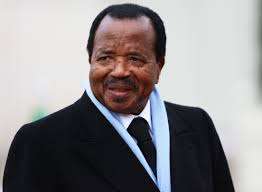
Cameroon’s President Paul Biya announced on Tuesday evening a “slight readjustment” of the timing of legislative and municipal elections that were expected at the start of February.
Originally scheduled for 2025, the elections had already been postponed once until early 2026. No new date was set.
In his televised address on the occasion of the 60th Youth Day, a rare public appearance by the nearly 93-year-old head of state, Biya justified the postponement by citing “certain compelling constraints”, while assuring that “the relevant provisions of the laws, and particularly the Constitution, would be respected”.
He also promised to form a new government, having announced its dissolution in his annual speech on New Year’s Eve.
In his speech, he acknowledged the difficulty many young Cameroonians have in finding work, but also called on them to avoid “delinquency, alcohol abuse drug use, and excessive use of social media”.
Cameroon’s Youth Day is traditionally one of the few times the president addresses the nation directly.
Biya, the world’s oldest head of state, has been in power since 1982 and was re-elected in October to an eighth term, leading to protests that were violently suppressed.
Tatiana — who is the granddaughter of late president John F. Kennedy and former first lady Jacqueline Kennedy Onassis — confirmed in an essay published by The New Yorker that she was battling acute myeloid leukemia and was given a year to live by doctors.
She learned that she has a “rare mutation called Inversion 3” that could not be “cured by a standard course” of treatment shortly after welcoming her daughter, Josephine, in May 2024. (Tatiana and her husband, George Moran, also share a son, Edwin Garrett Moran, who was born in 2022.)
“I did not — could not — believe that they were talking about me. I had swum a mile in the pool the day before, nine months pregnant. I wasn’t sick. I didn’t feel sick. I was actually one of the healthiest people I knew,” Tatiana wrote in The New Yorker. “I had a son whom I loved more than anything and a newborn I needed to take care of.”
News broke in December 2025 that Tatiana died. She was 35.
Keep scrolling for more information on Tatiana and her family.
George Moran
Tatiana Schlossberg met her future husband, George Moran, while they were both undergraduates at Yale University. Moran became a doctor at Columbia University’s Vagelos College of Physicians and Surgeons, while Schlossberg worked for The New York Times, Vanity Fair and The Washington Post as an environmental reporter.
The New York Times reported in September 2017 that the couple had tied the knot at the Kennedy family home in Martha’s Vineyard in a ceremony officiated by former Massachusetts governor Deval Patrick.
Tatiana’s younger brother, Jack Schlossberg, announced on NBC’s Today in 2022 that his sister and her husband had welcomed their first baby, a son named Edwin Moran.
“I can’t get away from them,” Jack said of his sister and his newborn nephew. “I love them.”
Tatiana and George welcomed their youngest child, a daughter, in 2024. They have chosen to keep her name private.
Following her terminal cancer diagnosis, Tatiana credited George for his immense support following her cancer diagnosis.
“George did everything for me that he possibly could. He talked to all the doctors and insurance people that I didn’t want to talk to; he slept on the floor of the hospital; he didn’t get mad when I was raging on steroids and yelled at him that I did not like Schweppes ginger ale, only Canada Dry. He would go home to put our kids to bed and come back to bring me dinner,” she recalled in the New Yorker.
Tatiana added, “I know that not everyone can be married to a doctor, but, if you can, it’s a very good idea. He is perfect, and I feel so cheated and so sad that I don’t get to keep living the wonderful life I had with this kind, funny, handsome genius I managed to find.”
Edwin Moran
Tatiana’s younger brother, Jack, announced that he’d become an uncle during a 2022 interview on NBC’s Today.
“[Tatiana’s son’s] name is Edwin but I like to call him Jack,” the Kennedy heir teased.
In her New Yorker essay, Tatiana recalled that Edwin’s visits to the hospital were rare bright spots as she received cancer treatment.
“My son came to visit almost every day. … The nurses brought me warm blankets and let me sit on the floor of the skyway with my son, even though I wasn’t supposed to leave my room,” she recalled.
Tatiana reflected on a bonding experience with her son as her hair began to fall out during treatment.
“My hair started to fall out and I wore scarves to cover my head, remembering, vainly, each time I tied one on, how great my hair used to be; when my son came to visit, he wore them, too,” she said.
Josephine
Tatiana and George welcomed their daughter, Josephine, in May 2024. After giving birth, Tatiana spent five weeks at Columbia-Presbyterian Hospital and was transferred to Memorial Sloan Kettering to undergo a bone-marrow transplant. She later underwent chemotherapy at home.
She wrote in her New Yorker essay that one of her biggest fears after receiving a terminal diagnosis was that her newborn daughter wouldn’t remember her.
“My son might have a few memories, but he’ll probably start confusing them with pictures he sees or stories he hears,” she wrote. “I didn’t ever really get to take care of my daughter — I couldn’t change her diaper or give her a bath or feed her, all because of the risk of infection after my transplants. I was gone for almost half of her first year of life. I don’t know who, really, she thinks I am, and whether she will feel or remember, when I am gone, that I am her mother.”
When the family announced Tatiana’s death in December 2025, it was revealed that her daughter’s name is Josephine.
John F. Kennedy and Jackie Kennedy
Tatiana is the granddaughter of late President John F. Kennedy and former first lady Jackie Kennedy. The Kennedys shared daughter Caroline Kennedy and son John F. Kennedy Jr. (They also lost two children, daughter Arabella and son Patrick.)
President Kennedy was killed at age 46 in a fatal shooting on November 22, 1963, in Dallas, Texas. Jackie later married Greek-Argentine magnate Aristotle Onassis, who died at age 69 in 1975. Jackie succumbed to Non-Hodgkin’s lymphoma at age 64 in May 1994.
Caroline Kennedy
John and Jackie Kennedy welcomed daughter Caroline Kennedy in November 1957. She was only 5 years old when her father was assassinated in 1963.
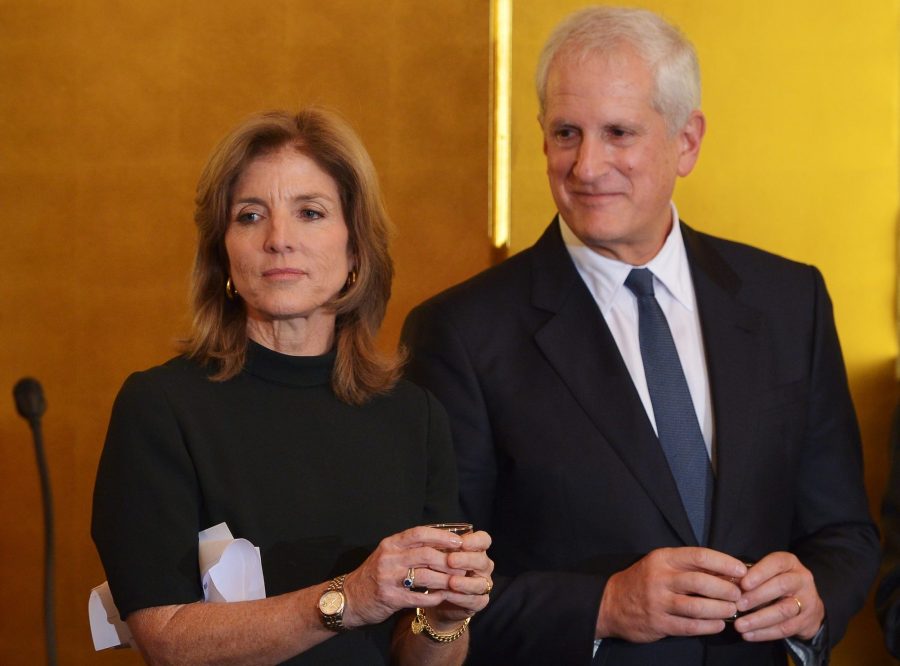
As an adult, Caroline worked at New York City’s Metropolitan Museum of Art, where she met her future husband, Edwin Schlossberg. They tied the knot at Our Lady of Victory Church in Centerville, Massachusetts in 1986 and later welcomed three children: Rose, Tatiana and Jack.
Caroline eventually followed in her family’s footsteps by entering politics as an ambassador to Australia and Japan during Joe Biden and Barack Obama’s presidential administrations.
Caroline Kennedy and Edwin Schlossberg in November 2013.MANDEL NGAN/AFP via Getty Images
Tatiana credited her parents and siblings with helping to raise her two children while she underwent grueling cancer treatment.
“My parents and my brother and sister, too, have been raising my children and sitting in my various hospital rooms almost every day for the last year and a half. They have held my hand unflinchingly while I have suffered, trying not to show their pain and sadness in order to protect me from it,” she wrote in her New Yorker essay. “This has been a great gift, even though I feel their pain every day. For my whole life, I have tried to be good, to be a good student and a good sister and a good daughter, and to protect my mother and never make her upset or angry. Now I have added a new tragedy to her life, to our family’s life, and there’s nothing I can do to stop it.”
Edwin Schlossberg
Caroline’s husband Edwin Schlossberg is an artist and designer. He founded the firm ESI Design and has written several books about design philosophy.
Edwin was appointed to the Commission of Fine Arts by President Obama in 2011, after receiving the prestigious National Arts Club Medal of Honor in 2004.
Rose Kennedy Schlossberg
Caroline and Edwin’s eldest daughter, Rose Schlossberg, arrived in June 1988 and was named after her maternal great-grandmother, Rose Fitzgerald Kennedy.
She attended Harvard University, where she once gave Lindsay Lohan and her then-girlfriend Samantha Ronson a campus tour, according to the Boston Herald. She later received her master’s degree in interactive telecommunications from New York University.
Rose has worked as a production assistant on the TV show Brick City and the 2012 documentary Hard Times: Lost on Long Island. She co-wrote and produced the Peabody Award-winning documentary series The Kalief Browder Story in 2017 and helped open a permanent exhibit for her late grandfather, John F. Kennedy, at the Kennedy Center in 2022.
She married restaurateur Rory McAuliffe in California in 2022.
John ‘Jack’ Bouvier Kennedy Schlossberg
Caroline and Edwin’s youngest child, son Jack Schlossberg, was born in January 1993.
As an adult, he became popular on social media for his shirtless selfies and pop culture clapbacks — including criticizing American Horror Story creator Ryan Murphy’s planned series about Jack’s late uncle John F. Kennedy Jr. and his wife Carolyn Bessette Kennedy. (The couple were killed in a 1999 plane crash, along with Carolyn’s sister Lauren Bessette.)
In November 2025, Jack announced plans to run for Congress in New York’s 12th congressional district in the 2026 midterm elections.
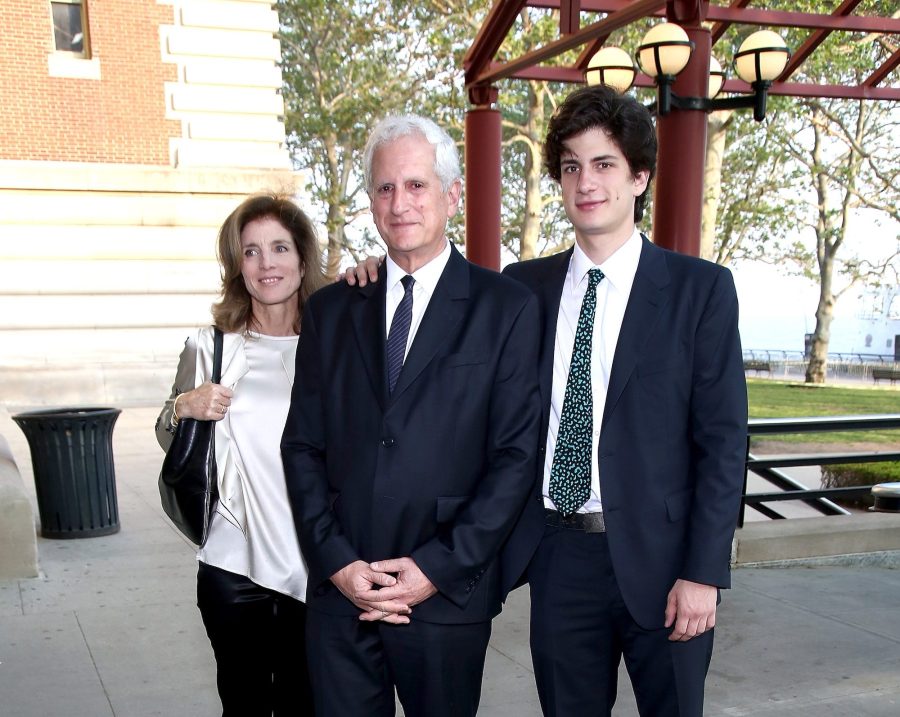
Caroline Kennedy, Edwin Schlossberg and Jack Schlossberg in May 2015.Paul Zimmerman/Getty Images
“I’m not running because I have all the answers to our problems. I’m running because the people of New York 12 do. I want to listen to your struggles, hear your stories, amplify your voice, go to Washington and execute on your behalf,” he wrote via Instagram.
Jack continued, “There is nowhere I’d rather be than in the arena fighting for my hometown. Over the next eight months, during the course of this campaign, I hope to meet as many of you as I can. If you see me on the street, please say hello. If I knock on your door, I hope we can have a conversation. Because politics should be personal.”
Robert F. Kennedy Jr.
Like most of her family, Tatiana has had a strained relationship with her cousin Robert F. Kennedy Jr. since he endorsed Donald Trump in the 2024 presidential election. RFK Jr. was later appointed by Trump to lead the Department of Health and Human Services, which drew concern over his history of vaccine skepticism.
Tatiana wrote about her rift with her cousin in her New Yorker essay, revealing that his confirmation to the HHS role added stress during her illness. She pointed out that her husband George’s job at Columbia University was potentially in danger because the school was “one of the Trump Administration’s first targets in its crusade against alleged antisemitism on campuses.”
“If George changed jobs, we didn’t know if we’d be able to get insurance, now that I had a preëxisting condition,” she wrote. “Bobby is a known skeptic of vaccines, and I was especially concerned that I wouldn’t be able to get mine again, leaving me to spend the rest of my life immunocompromised, along with millions of cancer survivors, small children, and the elderly.”
Tatiana unequivocally distanced herself from RFK’s statement that “there’s no vaccine that is safe and effective” during a 2023 appearance on the “Lex Fridman Podcast.”
“Bobby probably doesn’t remember the millions of people who were paralyzed or killed by polio before the vaccine was available,” she added. “My dad, who grew up in New York City in the nineteen-forties and fifties, does remember. Recently, I asked him what it was like when he got the vaccine. He said that it felt like freedom.”
Share this:
Like this:
LikeLoading…
Discover more from The Maravi Post
Subscribe to get the latest posts sent to your email.
Ukraine’s President Volodymyr Zelenskyy says he’s willing to hold elections if the US and other allies help ensure security. Is that a promise Trump can make as he pushes Ukraine to surrender territory to Russia Also, Kilmar Abrego Garcia, a man illegally deported by the Trump administration in March and eventually returned, is now free from immigration custody. Plus, Republicans in Indiana have rejected a redistricting proposal. President Trump successfully pushed other states to redraw their congressional maps to help Republicans win next year’s midterm elections, so why did Indiana’s Republicans break with the president?
Want more analysis of the most important news of the day, plus a little fun? Subscribe to the Up First newsletter.
Today’s episode of Up First was edited by Kate Bartlett, Anna Yukhananov, Larry Kaplow and Alice Woelfle.
It was produced by Ziad Buchh, Nia Dumas and Christopher Thomas.
We get engineering support from Stacey Abbott. Our technical director is Carleigh Strange
President Trump calls on Senate Republicans to end the government shutdown by scrapping the filibuster, even as he admits the standoff hurt the party in this week’s elections. The Supreme Court hears arguments on whether Trump overstepped his authority by imposing tariffs under a decades-old emergency powers law. And in Chicago, federal judges side against the administration in immigration enforcement cases, ordering cleaner detention centers and tighter limits on the use of force.
Want more comprehensive analysis of the most important news of the day, plus a little fun? Subscribe to the Up First newsletter.
<
p class=”readrate”>Today’s episode of Up First was edited by Jason Breslow, Krishnadev Calamur Cheryl Corely, Mohamad ElBardicy, and Alice Woelfle.
<
p class=”readrate”>
<
p class=”readrate”>It was produced by Ziad Buchh, Nia Dumas and Christopher Thomas
<
p class=”readrate”>
<
p class=”readrate”>
<
p class=”readrate”>
<
p class=”readrate” data-rr=”17″ data-pm-slice=”1 1 []”>We get engineering support from Stacey Abbott. And our technical director is David Greenburg.
Thelma Cabrera and Jordán Rodas launch their candidacy for the presidency and vice presidency of Guatemala in December 2022, which has been vetoed by the courts, in a maneuver that has drawn criticism from human rights groups at home and abroad. CREDIT: Twitter
By Edgardo Ayala SANTA CATARINA PALOPÓ, Guatemala, Mar 4 2023 (IPS)
Centuries of racism and exclusion suffered by indigenous peoples in Guatemala continue to weigh heavily, as demonstrated by the denial of the registration of a political party that is promoting the presidential candidacy of indigenous leader Thelma Cabrera in the upcoming general elections.
On Mar. 2, the Guatemalan Constitutional Court ruled against Cabrera’s party, the leftist Movement for the Liberation of the Peoples (MLP), which had appealed a Feb. 15 Supreme Court resolution that left them out of the Jun. 25 elections.“There is a racist system and structure, and we indigenous people have barely managed to start climbing the steps, but with great difficulty and zero opportunities.” — Silvia Menchú
Cabrera’s candidacy and that of her vice-presidential running-mate Jordán Rodas are now hanging by a thread, with their hopes depending on a few last resort legal challenges.
The deadline for the registration of candidates is Mar. 25.
A centuries-old racist system
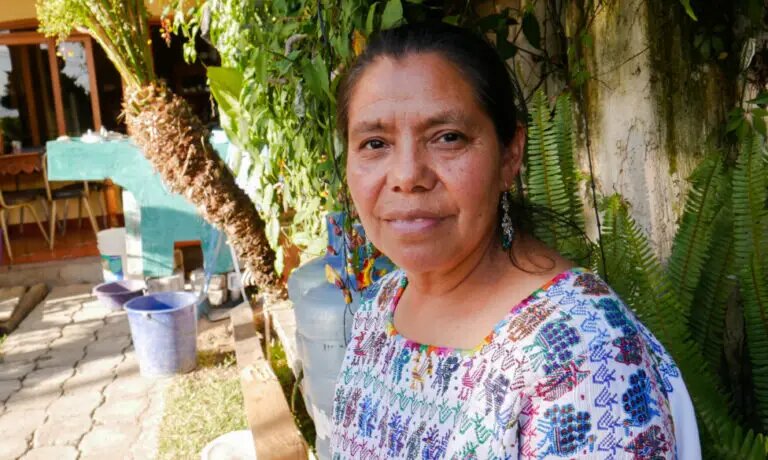
Guatemala’s political and economic elites “are looking for ways to keep her (Cabrera) from registering; everyone has the right to participate, but they are blocking her,” Sonia Nimacachi, 31, a native of Santa Catarina Palopó, told IPS. The municipality, which has a Cachiquel Mayan indigenous majority, is in the southwestern Guatemalan department of Sololá.
“We would like a person with our roots and culture to become president, I think it would help our people,” added Nimacachi, standing by her street stall in the center of town.
Nimacachi, a Cachiquel Mayan woman, sells “granizadas” or snow cones: crushed ice sweetened with syrup of various flavors, perfect for hot days.
The organization, based in Santa Catarina Palopó, carries out human rights programs focused on indigenous women.
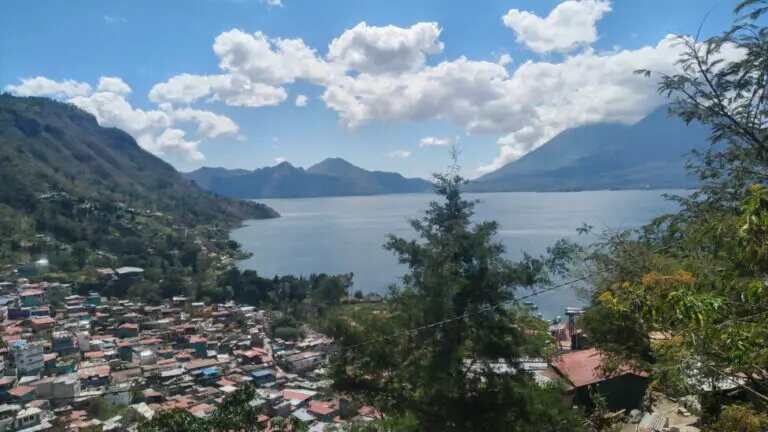
Santa Catarina Palopó, a picturesque Cachiquel Mayan town located on the shore of Lake Atitlán in the southwestern Guatemalan department of Sololá, is preparing for the upcoming general elections, where voters will choose a new president, vice president, 160 members of Congress, 20 members of the Central American Parliament, as well as 340 mayors. CREDIT: Edgardo Ayala/IPS
“Racism has prevailed, we are mistreated everywhere by the government and the authorities, we are seen as people with little capacity,” said Menchú, of the Maya Quiché ethnic group.
An alleged illegality attributed to Rodas, the vice-presidential candidate, was the cause for denying the MLP the right to register for the elections.
Analysts and social organizations perceive obscure maneuvering on the part of the powers-that-be, who cannot accept the idea that an indigenous woman is trying to break through the barriers of the country’s rigid, racist political system.
Cabrera is a 51-year-old Mayan Mam woman who is trying for a second time to run in the unequal fight for the presidency of this Central American country of 14.9 million inhabitants.
Of the total population, 43.7 percent identify as indigenous Mayan, Xinca, Garífuna and Afro-descendant peoples, according to the 2018 census.
In the 2019 elections Cabrera came in fourth place, winning 10 percent of the total votes cast.
In the Jun. 25 general elections voters will choose a new president for the period 2024-2028, as well as 160 members of Congress and 20 members of the Central American Parliament, and 340 mayors.
In Guatemala, the ancient Mayan culture was flourishing when the Spanish conquistadors arrived in the 16th century.
The descendants of that pre-Hispanic civilization still speak 24 different autochthonous languages, most of which are Mayan.
Years of exclusion and neglect of indigenous rural populations led Guatemala to a civil war that lasted 36 years (1960-1996) and left some 250,000 dead or disappeared.
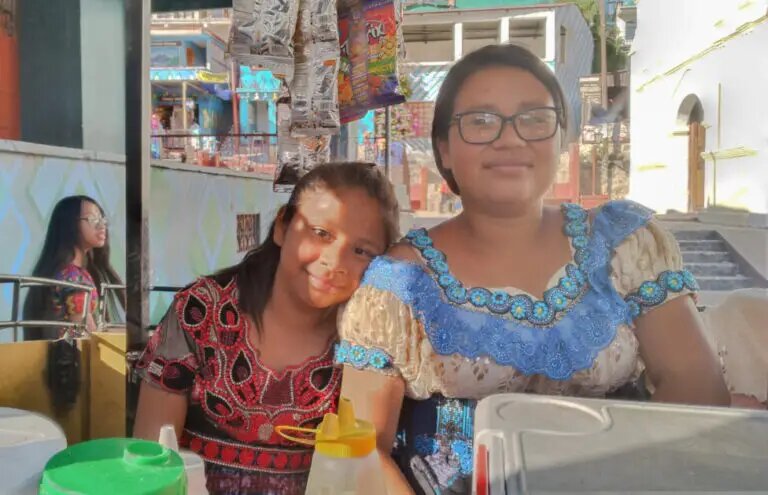
The presidential candidacy of Thelma Cabrera, of the Movement for the Liberation of the Peoples (MLP), must be allowed by the Guatemalan authorities, so that the indigenous population is represented in the Jun. 25 elections, says Silvia Menchú, director of the K’ak’a Na’oj (New Knowledge, in Cachiquel) Association for the Development of Women. CREDIT: Edgardo Ayala/IPS
A blatant maneuver
The Supreme Electoral Tribunal’s (TSE) rejection of the MLP arose from a complaint against Rodas, who served between 2017 and 2022 as head of the Office for the Defense of Human Rights.
In that office, Rodas strongly questioned alleged acts of corruption by the current government of Alejandro Giammattei, who took office in January 2020.
The criminal complaint against the vice-presidential candidate was filed on Jan. 6 by the current head of the Office for the Defense of Human Rights, Alejandro Córdoba.
After Cabrera and Rodas attempted to register as candidates, Córdoba said he had “doubts” about some payments allegedly received by his predecessor in the Office for the Defense of Human Rights.
His “doubts” apparently had to do with some alleged illegality on the part of Rodas, but since Córdoba has not described it in detail, his statements have been nothing but a weak half-hearted accusation.
However, that was enough for the Supreme Electoral Tribunal to reject the MLP on Feb. 2, which triggered protests by rural and indigenous people, who blocked roads in at least 12 parts of the country.
According to Guatemalan law, all candidates for popularly elected positions must have a document that attests that they have no pending legal issues.
But analysts have pointed out that this document should only take into account actual legal rulings handed down by courts, and not “doubts” vaguely expressed by some government official.
By vetoing Rodas, the TSE automatically bars his presidential runningmate Cabrera, who may actually be the ultimate target of the maneuver, since she is the one who is trying, once again, to win the votes of the indigenous population.
On Feb. 15, the MLP runningmates filed a provisional injunction with the Supreme Court, so that it would take effect immediately and overrule the TSE’s decision, while the Supreme Court studied and resolved the matter in depth.
But the injunction was rejected, so the MLP appealed the next day to the Constitutional Court, asking it to review the case and order the Supreme Court to admit the provisional injunction, to allow the fight for the registration of Cabrera and Rodas to continue forward.
But the appeal was denied Thursday Mar. 2 by the Constitutional Court.
However, the Supreme Court has not yet issued a final ruling on the injunction, but only a provisional stance. This means that when it is finally issued, if it goes against the MLP, Cabrera and Rodas could once again turn to the Constitutional Court, in a last-ditch effort.
But it seems as if the die is already cast.
In a tweet on Thursday Mar. 2, Rodas wrote: “The constitutional justice system has denied my constitutional right to be elected and denies the population the right to choose freely. We await the Supreme Court ruling on the injunction and the position of the @IACHR (Inter-American Commission on Human Rights). Our fight continues.”
Guatemala’s political and economic elites are determined to block the candidacy of indigenous leader Thelma Cabrera, says Sonia Nimacachi, a Cachiquel Mayan woman selling snowcones in Santa Catarina Palopó, in the country’s southwest. She would vote for Cabrera again, if her candidacy is finally allowed. CREDIT: Edgardo Ayala/IPS
Cabrera’s second attempt
This is Cabrera’s second attempt to run for the presidency. Her first was in the 2019 elections, when she failed to fully capture the indigenous vote.
“I would dare to think that the majority of the indigenous population did not vote for her because of those instilled prejudices: that she is a woman and also indigenous, not a professional, are issues that have nothing to do with the dignity and the quality of a person,” argued Silvia Menchú.
She added that the right-wing parties have been allies of the country’s evangelical churches, through which they keep in submission segments of the indigenous population that end up supporting conservative parties, rather than a candidate who comes from their Mayan culture.
To illustrate, she said that in Santa Catarina Palopó, a town of 6,000 people, there is only one school to cover primary and middle-school education, “but there are about 15 evangelical churches.”
In a joint statement, the two organizations said the electoral authority’s rejection of aspiring candidates “is based on dubious grounds, puts political rights at risk, and undermines the credibility of the electoral process.”
“The electoral process is taking place in the context of a decline in the rule of law, in which the institutions responsible for overseeing the elections have little independence or credibility,” they stated.
In addition to Cabrera and Rodas, the TSE also rejected the registration of right-wing candidate Roberto Arzú, because he allegedly began campaigning too early.
HRW and Wola added that “efforts to exclude or prosecute opposition candidates create unequal conditions that could prevent free and fair elections from taking place.”
Meanwhile, the TSE did endorse, on Feb. 4, the presidential candidacy of Zury Ríos, daughter of General Efraín Ríos Montt, who governed de facto between 1982 and 1983.
In 2013 the general was found guilty of genocide and crimes against humanity for the massacre of more than 1,400 indigenous Ixil people in the north of the country.
He was sentenced to 80 years in prison, but the Constitutional Court later revoked the ruling. Ríos Montt died in April 2018.
Article 186 of the Guatemalan constitution prohibits people involved in coups d’état, or their relatives, for running for president.
Meanwhile, snowcone vendor Sonia Nimacachi said in the central square of Santa Catarina Palopó that she still held out hope that Cabrera would be able to register as a candidate.
“If they let her participate, I would vote for her again,” she said, while serving a customer.