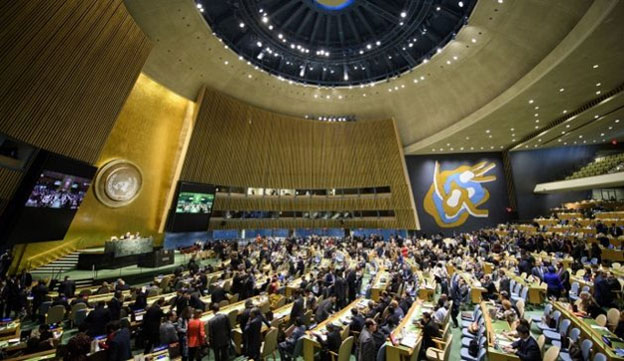
The United Nations Headquarters as seen from First Avenue in New York City. Credit: UN News/Vibhu Mishra
KATHMANDU, Nepal, Dec 10 2025 (IPS) – The election of the next Secretary-General of the United Nations comes at a highly inopportune moment in 2026, when the UN is being bypassed, and multilateralism—with the UN at its core—is under increasing challenge from some of the world’s most powerful states and leaders.
The new Secretary-General, taking office in 2027, will inherit an unprecedented financial crisis and a pressing need for major institutional reorganization simply to keep the UN afloat. At first glance, this hardly seems like the right moment for a new SG to advance a bold vision—one capable of winning over powerful leaders who appear lukewarm toward strengthening genuine multilateralism and instead prefer a multipolar order where each can guard its own sphere of influence.
Yet history reminds us that some of the boldest ideas have emerged during periods of great upheaval—wars, revolutions, and global crises. It is therefore conceivable that a visionary new UN leader could break new ground, introduce innovative ideas, and help plant the seeds for a rejuvenated, rules-based world order.
Kul Gautam
While many of today’s most powerful leaders may be ambivalent about multilateralism, the world’s general public—especially the digitally savvy younger generation—has a strong sense of global interdependence.
They increasingly identify as global citizens, eager to thrive in a borderless world, and are more likely to embrace visionary proposals for UN reform that meet the realities of the 21st century.
A promising starting point would be the election of the first-ever female Secretary-General of the UN. Another essential reform would be restructuring the UN’s financing system to make it more broad-based and less dependent on the whims of a few wealthy, powerful states.
Some consolidation of the UN’s sprawling architecture—much of it underfunded—is already underway through the current SG’s UN80 Initiative. A new SG could accelerate this effort, earning the support of both critics and cynics.
Still, even a dynamic and visionary new SG will require the backing of Member States. At present, leaders of the most powerful states, particularly the veto-wielding P5, seem disinclined to empower the world’s top diplomat as a true global leader.
While many enlightened global citizens—especially Gen Z—hope for a bold, inspiring figure at the helm, the major powers may prefer a more compliant “Secretary” rather than a strong, strategic “General.”
With the rise of the Global South and groupings such as BRICS+ and the G20, the balance of power—especially soft power—is shifting away from the states that founded the UN 80 years ago.
One hopes this evolving landscape will help strengthen the UN and reinvigorate multilateralism, which remains the only viable way to confront such transcendental issues as climate change, war and peace, pandemics, widening inequalities, and the profound opportunities and risks of the AI revolution.
The world urgently needs a more effective UN to address these pressing global challenges—none of which any nation, however rich or powerful, can tackle alone. It is to be hoped that world leaders, attuned to their peoples’ aspirations, will choose a highly capable new Secretary-General and empower her to help build a more peaceful and prosperous world for present and future generations.
Kul Gautam is a former UN Assistant Secretary-General, Deputy Executive Director of UNICEF and author of Global Citizen from Gulmi: My Journey from the Hills of Nepal to the Halls of the United Nations.
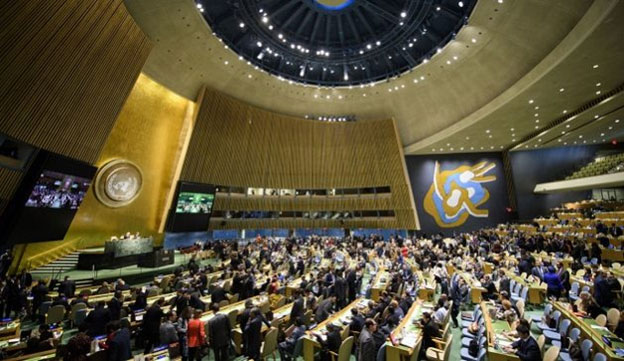
The UN General Assembly in session. Credit: UN Photo/Manuel Elias
NEW YORK, Dec 5 2025 (IPS) – From its inception, the UN General Assembly (UNGA) has been engaged in improving its working methods, mindful of, as early as in 1949, “… the increasing length of General Assembly sessions, and of the growing tendency towards protracted debates”.
Since the leadership of legendary Ambassador Samir Shihabi of Saudi Arabia as President of the General Assembly (PGA) during the 46th session in 1991 and thereafter, the Assembly’s agenda has included a dedicated item on the revitalization of the work of the Assembly and its Main Committees.
Since the 60th session in 2005, under the guidance of its articulate and forward-looking President, Ambassador Jan Eliasson of Sweden, the Assembly has established the Ad Hoc Working Group on the revitalization of the work of the General Assembly. Its mandate was to “to identify ways to further enhance the role, authority, effectiveness and efficiency of the General Assembly”.
Till now, more than 200 outcomes have been recorded in 30 different areas. The incumbent President of the landmark 80th session, Annalena Baerbock of Germany has now taken the initiative to move forward substantively on this perennial exercise of the world’s most universal multilateral body.
Election of a Woman as the Next Secretary-General
I would strongly suggest that her forward-looking leadership would restore the operational credibility of the United Nations by including in its revitalization exercise the role of the Secretary-General, facilitating the election of a woman as the next Secretary-General, transparency of the UN’s budgetary processes, addressing the current and future liquidity crises, and meaningful inclusivity of civil society in the Assembly’s work.
The role, functions and leadership of the Secretary-General need special attention of the Assembly as the appointing authority. The 75th PGA in 2020 Volkan Bozkir has rightly identified that “the Secretary-General is the engine and the transmission system”.
It is unfortunate that questions have been raised about the reticence of the Secretary-General in getting his hands dirty and in getting more proactively involved in and in mobilizing his senior management team towards ending the ongoing global conflicts and wars and promoting peace and reconciliation.
In a recent op-ed, a former UNICEF Deputy Executive Director and a longtime UN watcher Kul Chandra Gautam even exhorted the SG “not to hide behind the glasshouse at Turtle Bay and go beyond invisible subtle diplomacy to more visible shuttle diplomacy.”
After choosing nine men successively to be the world’s topmost diplomat, I strongly believe that the United Nations should have the sanity and sagacity of electing a woman as its next Secretary-General.
In its resolution A/79/372 adopted as recently as on 5 September this year, the Assembly in its paragraph 42(c) says that “ Noting with regret that no woman has ever held the position of Secretary-General, encourages Member States to strongly consider nominating women as candidates” and it also asserted in its paragraph 42(k) that “The Secretary General shall be appointed by the General Assembly upon the recommendation of the Security Council, in accordance with Article 97 of the Charter”.
The same resolution (79/327) committed the UNGA “ … to the continued implementation of … its resolution 76/262 of 26 April 2022 on the veto initiative, to enhance the work of the General Assembly, taking into account its role on matters related to the maintenance of international peace and security …”. In the current exercise, this area, of course, needs further attention and elaboration.
Transparency and accountability are essential in the budget processes of the UN.
Two other areas which need more scrutiny are extra budgetary resources received from Member States and consultancy practices including budgetary allocations for that by the Organization. Special attention in these areas is needed to restore the UN’s credibility and thereby effectiveness and efficiency for the benefit of the humanity as a whole.
Future financial and Liquidity crises
Tough decisions needed to avoid future financial and liquidity crises needed genuine engagement by all sides, yes, ALL sides, in particular the major “assessed” contributors.
Peacekeeping operations also face increasing liquidity pressure as the outstanding contributions for that area are reported to be $3.16 billion. These accumulations have been building up for some years. Why was no extra effort made by all sides well ahead of time to avoid the recurrent panic about the Organization’s liquidity crises?
Today’s financial and liquidity crisis is not caused by recent withholding of payments by a few major contributors for political reasons. Outstanding contributions for UN’s regular budget reached $2.27 billion last month.
At the UN, though the “process is an intergovernmental one and thereby Member States-driven”, absence of civil society involvement would seriously undermine the role and contribution of “We the Peoples …”. PGA Bozkir asserted that “civil society is the pillar of democracy, and we must, after some time, find a way that civil society is (re)presented here”.
Enhancing the UN’s credibility
Also, I am of the opinion that a formalized and mandated involvement of and genuine consultation with the civil society would enhance the UN’s credibility. The UN leadership and Member States should work diligently on that without fail for a decision by the on-going 80th session of the General Assembly.
Under the bold, upbeat and clear-sighted leadership of the incumbent PGA Annalena Baerbock whose proactive and forward-looking role has already drawn wide appreciative attention, the international community needs to wish her best of luck in this very important endeavor to revitalize the apex body of most universal multilateral entity – the UN General Assembly – in a positive way.
For that, now is the time to discuss and to decide on the urgent, focused and meaningful areas of action. The UN’s long-drawn revitalization efforts in reality should not end again in the repetitive regularity of an omnibus of redundancy.
Ambassador Anwarul K. Chowdhury is former Under-Secretary-General and High Representative of the United Nations; Permanent Representative of Bangladesh to the UN; Initiator of the UNSCR 1325 as the President of the UN Security Council in March 2000; Chairman of the UN General Assembly’s Main Committee on Administrative and Budgetary Matters and Founder of the Global Movement for The Cultural of Peace (GMCoP
KATHMANDU, Nepal, Dec 2 2025 (IPS) – This coming International Volunteer Day (IVD), celebrated every year on 5 December, is special because the United Nations will launch the International Volunteer Year 2026 or IVY 2026.
This is going to be a great opportunity to re-set the global agenda of volunteerism, one of the most important tools to promote civic engagement, the bedrock of our societies.
Civic engagement, expressed through volunteerism, can make local communities more inclusive and people centered.
Because volunteerism in essence is by the people, for the people and with the people, is not just a tool but it is a catalyst for meaningful human-to-human experiences.
If it can be designed, planned and managed properly including investing in the people that are engaged in it and driving it, volunteerism provides unique opportunities to grow and become better human beings.
In an era in which artificial intelligence (AI) is rapidly evolving and challenging some of the most foundational aspects of our lives, volunteerism could offer a new meaning, new ground to forge connections by helping others.
“In an era of political division and social isolation, volunteering offers a powerful way to forge connections and foster our shared humanity” shares UN Secretary-General António Guterres in his official message for this year’s IVD.
Yet, almost inexplicably, volunteerism struggles to be recognized for its vital role and for the functions it plays in our lives. Volunteerism should be something that can really rally people together, a glue that can help with re-establishing connections with others.
In short, volunteerism is a precious, universal unifying element in our lives. Unfortunately, we are still unable to, not only upholding its values on a daily basis but we are also far we far from practicing it, truly making it an inextricable part of our being. After all, there is a common understanding that policy makers around the world have more serious things to deal with.
Instead of considering volunteering as something transformational, it is just seen as something nice while instead it should be at the core of any serious policy promoting social cohesiveness, something that should be a priority for any government.
But will IVY mark a turnaround? Will this special initiative really make a difference? Will IVY then be embraced by leaders in a tokenistic way as normally happens or will be there a serious effort to center volunteering as a key enabler of local wellbeing and prosperity?
These might sound as rhetorical questions that can be easily shrugged off and dismissed because there are more important issues to be worried about.
UNV, the United Nations program that is formally part of UNDP, has a unique role in boosting volunteerism around the world.
I have personally a great admiration for this organization but unfortunately, it falls short of the urgent priority to turbo-charge volunteerism, spreading it, mainstreaming it. At the end I do believe that UNV is failing in what it is its central mission.
Recently I came across a post on LinkedIn about how the government of Uzbekistan is stepping up its support for UNV. This should be great news because for too long, the agency was seen as too westernized, too much modeled to reflect only a certain and partial version of promoting and practicing volunteerism.
I do recognize and praise UNV’s efforts to change and embrace a more diverse strategic outlook and engage with emerging economies, new nations like Uzbekistan.
But as I was going through the post, I immediately felt that this new type of engagement was as much as promoting volunteerism but also about strategically building a pipeline of future UN staff from the Central Asian nation.
Because UNV has always been an entry door to join the ranks of the United Nations system and this is something that always bothered me. I never understood why this agency should promote what are in practice full time jobs that have, basically, nothing to do with volunteerism and are more similar to professional internship or fellowships that, in essence, offer cheaper manpower comparatively to the UN’s pay standards.
To me, this approach does not make sense. Then why do not we entrust UNOPS, the operational arm of the UN with the tasks of running schemes that can offer tangible opportunities to those youths who dream of joining the UN?
I am aware that the UN is undergoing a drastic overhaul. I am concerned about it but I also see this process, driven by immense aid cuts by the American and other administrations, as a chance to redeem the UN as a more effective development force.
I do not know what will happen to UNV. I do appreciate and value the part of the agency that tries to elevate volunteerism in the policy making processes around the world.
This coming IVY could offer a great platform to better promote, pitch volunteerism around the world.
Having more data, more parameters and indicators to measure, assess the numbers of volunteers around the world and importantly, their impact, is essential.
In this type of tasks, UNV has developed a unique degree of expertise and it can really exercise the best of the convening powers that the United Nations have been famed for.
In the eventuality of any restructuring, this component of UNV must be not only protected and safeguarded but it must also be boosted. Perhaps UNV needs to shed itself of the outsourcing and onboarding functions it ended up assuming.
They were not supposed to become so central in the agency’s identity but they became the most important, budget wise, component of the agency. Either another agency takes up these responsibilities or UNV can fully separate such functions from its core business agenda.
An autonomous, semi-independent function could operate as it is already working now but it should be sealed off from other dimensions.
This would constitute a semi spin-off of the operation of placing full time United Nations Volunteers (UNV Volunteers) in UN Agencies, a task that is deemed strategically important for many nations as the case of Uzbekistan I ran into tells us.
In envisioning such restructuring, each government willing to sponsor its UNV volunteers, should be charged an additional budget item that could be directed to support the core functions of UNV.
I still imagine UNV running volunteering schemes around the world but these should be part time and only in partnership with civil society. The current model of UNV Volunteers should be re-branded and decontextualized from any association with volunteerism.
The reason for this is simple: these promising young professionals, all well-meaning and well-motivated, are not volunteers nor they are not engaged in any volunteerism centered activity.
If UNV wants to still facilitate and deploy full time volunteers, then, the model being championed by VSO, centered on partnership with local organizations and offering small living stipends to its volunteers, should be considered.
This year’s theme of IVD is “Every Contribution Matters”.
A new and different UNV, more grounded, more agile and closer to local communities and civil society organizations, can be imagined, ensuring that every contribution would “really” matter.
Simone Galimberti writes about the SDGs, youth-centered policy-making and a stronger and better United Nations.
The UN General Assembly in session. Credit: UN Photo/Manuel Elias
UNITED NATIONS, Nov 21 2025 (IPS) – The 193-member General Assembly (GA), the UN’s highest policy-making body, has long been the repository for scores of long-winded outdated resolutions accumulated over several decades– and lying in cold storage.
As part of the proposed restructuring of the United Nations, which is facing a severe liquidity crisis, there is now a move to streamline and revitalize the General Assembly which has been mired in a bureaucratic backlog.
The President of the General Assembly (PGA), Annalena Baerbock, has called on each Main Committee to review its working methods and propose concrete measures to enhance efficiency, including:
• Merging similar agenda items to avoid repetition; • Reducing the frequency, length and number of resolutions; • Using biennial or triennial cycles where appropriate; • Limiting explanations of vote to five minutes; and • Simplifying adoption procedures — one gavel, one decision, all texts.
These recommendations, mostly spelled out in a recent resolution, would help re-shape the General Assembly to respond to global challenges with agility and coherence. But unless these reforms are implemented, they remain just words on paper, just another resolution.
“Business as usual will not suffice. We need fewer repetitive resolutions, shorter debates, and smarter scheduling. No more ‘resolutions for resolutions’ sake,” the PGA said.
“We cannot preach on Sunday that we need fewer resolutions, then proceed to submit one for consideration on Monday. And this is, unfortunately, taking place”, she warned.
Dr Palitha Kohona, a former Chief of the UN Treaty Section and one-time Permanent Representative of Sri Lanka to the United Nations, told IPS the UN is burdened under a heavy baggage of resolutions piled up over 80 years.
“Many are no longer relevant, others are superfluous, and some repetitive. Given its current perilous financial situation, it would be appropriate for each department and office to review rigorously the resolutions under their purview and identify those that could be terminated.”
This, he said, may be done through an omnibus resolution. Some might require delicate negotiations with member states which might claim ownership to resolutions that they had proposed. Sensitively, handled, this could deliver considerable financial and staffing dividends.
New resolutions, he pointed out, should be vetted carefully to avoid redundancies. UN staff could proactively assist in this process. Even where resolutions are to be implemented within existing resource allocations, there will be some cost involved, including time.
Where a proposed resolution could not be implemented due to resource constraints, it should be vetoed from the beginning, said Dr Kohona, who until recently, was Sri Lanka’s Ambassador to the People’s Republic of China.
Action officers should be located or moved to an office where a resolution is most likely to be implemented and it would be most effective. For example, the responsibility for implementing UNDP-related resolutions should be allocated to Nairobi, he proposed. Peacekeeping should also be moved to Nairobi as most peacekeeping now happens in Africa, he declared.
Baerbock said: “We have seen the Main Committees put forward resolutions for three-day conferences, with no budget attached, fully aware of the fiscal situation we are debating at the same moment. We have seen over 160 sides events during High-Level Week, despite the call for less, or the call by some, for no side events at all”.
“And we have seen, already, three or four high-level meetings submitted for consideration for the 81st High-Level Week (next year), with four for each of the 82nd and 83rd, despite the decision of this Assembly – so by all of us – to limit this to a maximum of three.”
“While we all want to protect the things we care about, each of us must make concessions in this time of reform”, she declared.
Dr. Purnima Mane, a former Deputy Executive Director (Programme) and UN Assistant-Secretary-General (ASG) at the UN Population Fund (UNFPA), told IPS the major ongoing effort to review the working methods of each of the Committees of the UN GA and enhance their efficiency is certainly laudable.
It is a golden opportunity to challenge some of the so-called ‘givens’ of the ways in which the GA functions and focus on what matters in a streamlined fashion.
The currently proposed solutions however are somewhat peripheral even if they indicate a desire for change. One of the major problems faced by the Committees is the range of issues taken on without clear prioritization including a lack of focus on neglected, key issues. And the absence of a sense of urgency, she pointed out
“The suggestions offered touch on enhancing efficiency of working but avoid tougher issues perhaps due to lack of time and sometimes will on the part of some members to take the risk of proposing solutions which might necessitate dismantling of well-entrenched methods of working”.
Another barrier, she said, might be concerns about potential difficulties that are likely to be experienced in getting agreement on these methods and more so the possibility of limited involvement by member states in their implementation.
“Perhaps starting small and identifying possibly achievable objectives for how the committees are run and managed might be a good beginning, but without the commitment of member States to the issues being prioritized and to implement the resolutions being proposed, all this change and effort is unlikely to achieve any benefits, including saving of resources”, she said.
Reducing agenda items and avoiding repetitive resolutions and endless debates are all a good start but it requires the will of the member states to implement these resolutions, once passed, she added.
And while the will to implement is understood as a given, in reality that is exactly where the problem sometimes lies. How to encourage and ensure implementation is really the true challenge, said Dr Mane, a former President and CEO of Pathfinder International.
Andreas Bummel, co-founder and Executive Director of Democracy Without Borders, told IPS ironically, the issue of revitalizing the General Assembly itself has become a ritualistic item.
“Tackling the number of annual resolutions and avoiding useless repetition year after year is a no-brainer. This should have been implemented long ago. But deeper changes are needed”.
For instance, he said, there needs to be continuity and institutional memory in the office of the President of the General Assembly. It should be a two-year tenure and receive proper funding.
Further, by creating a Parliamentary Assembly, the instrument of Citizens’ Initiative and Citizens’ Assemblies, the General Assembly can become a center of innovation and inclusion for the entire UN system. This should be on the agenda.
Use or not use at your discretion. The final two sentences are the most important as far as I am concerned, declared Bummel.
Meanwhile, revitalization is also being extended to the Office of the President of the General Assembly (OPGA).
The 80th session, Baerbock said, benefited from an early, seamless handover from the 79th — allowing us to hit the ground running. Yet the volume of work remains immense.
“Our High-Level Week featured over seven major meetings in just a few days; The remainder of the session will see nearly twenty intergovernmental processes and multiple mandated High-Level Meetings; And the total number of resolutions has barely changed — many nearly identical to those of past sessions.”
But this is not sustainable, she said. And it’s contradicting the call from smaller missions that they cannot be in three meetings at the same time.
Transitions matter. Preparation matters. “We must ensure each presidency is set up for success”.
Artificial intelligence is reshaping how learners, teachers, and creators engage with education across the continent. A new wave of AI innovation transforming learning across countries on the African continent — from chat-based tutors to hybrid hubs and gamified farms. Credit: UNICEF
Through initiatives such as Digital Skills for Africa, Lumo Hubs, and Luma Learn, innovators are breaking barriers of access, cost, and language to build inclusive, localized learning systems.
UNITED NATIONS, Nov 19 2025 (IPS) – “Sometimes the best way to grasp a concept,” says Chris Folayan, co-founder and executive officer of Luma Learn, “is to learn it in your native language.”
Seventeen-year-old South African Simphiwe is one of more than 10,000 learners already using Luma Learn, an AI-powered tutor platform. For him, artificial intelligence isn’t an abstract idea: it is a personal tutor that is patient, consistent, and always online.
When on his phone, he’s not always chatting with a classmate or scrolling through social media. Many times, he’s studying physics with Luma Learn, that replies instantly, even in IsiZulu, his mother tongue.
Across several countries on the African continent, innovators like Folayan, Nthanda Manduwi, and Anie Akpe are reimagining what education can look like: localised, practical, and accessible to anyone with a phone or connection.
Together, they’re building a new learning ecosystem: one where AI isn’t replacing teachers but multiplying their reach.”
Nthanda Manduwi: Turning digital skills into interactive ecosystems
“I’ve always believed that technology can democratize opportunity,” says Nthanda Manduwi, founder of Digital Skills for Africa (DSA) and Q2 Corporation. “AI gives us a real chance to leapfrog the barriers that have slowed Africa’s progress, from infrastructure gaps to unequal access to training.”
Her journey began with Digital Skills for Africa, a platform designed to equip young people with practical tech competencies from AI and automation to no-code tools and digital marketing.
“Our courses like ‘Effective Use of AI’ or ‘AI and the Future of Digital Marketing’ were created to help learners not only understand AI but actually apply it,” she explains. “You leave with real, marketable skills you can use to build something or get hired.”
But scaling that vision revealed a challenge many edtech startups face. “We realised enthusiasm alone doesn’t pay the bills,” she says. “There was low willingness to pay for courses, even from institutions. So, we had to rethink how to make digital learning sustainable.”
That rethink led to Q2 Corporation, her new venture linking learning with livelihood. Under Q2’s umbrella sits Kwathu Farms—an innovative gamified agricultural simulator where users learn how to manage farms, predict supply chain issues, and test business models before investing real money.
“AI makes the learning immersive,” Ms. Manduwi explains. “Through simulations, learners can see how weather or market shocks affect yield, and how small decisions impact entire value chains. It turns agriculture into a classroom. And a business lab.”
Behind these simulations run Q2’s proprietary engines, NoxTrax and AgroTrax, which apply AI to real-time logistics and resource management. “It’s about showing that AI isn’t just for coders,” she says. “It’s for farmers, small businesses, anyone who wants to think and plan more intelligently.”
Ms. Manduwi’s mission remains rooted in access. “For Africa to truly benefit from AI, it can’t be an elite tool. It must live where people already are: on their phones, in their communities, in local languages.”
Anie Akpe: Creating spaces where AI meets human creativity
Where Ms. Manduwi builds ecosystems, Anie Akpe builds spaces. Through her work with African Women in Technology (AWIT)and Lumo Hubs, Ms. Akpe has spent over a decade helping innovators, especially women, turn curiosity into competence.
“With AWIT, I started by organising conferences across the continent,” she recalls. “We created safe spaces where women could connect with mentors and learn skills that weren’t taught in schools: digital literacy, entrepreneurship, coding, design.”
Soon, even male students began asking to participate. “That’s when I realized it wasn’t just about women in technology. It was about us (Africans) finding a place in a digital world that was changing fast.”
The next step came naturally. “When AI began to disrupt industries, I saw that we couldn’t just talk about skills. We had to create environments where people could use those skills,” she says. “That’s how Lumo Hubs was born.”
Each hub combines education, creativity, and entrepreneurship. “In one space, you might find a student learning AI-assisted graphic design, a seamstress using AI to plan production, and a young podcaster recording a show in a studio powered by the hub,” Ms. Akpe explains. “The model is hybrid, physical and digital, so even small towns can host a Lumo Hub.”
She is also deliberate about sustainability. “Community members pay; students pay less. It’s important that we don’t depend only on grants,” she says. “That balance keeps the hubs alive and the learning continuous.”
At the heart of Lumo Hubs lies mentorship. “You can’t separate technology from human guidance,” Akpe insists. “AI helps scale learning, but mentorship builds confidence.” Her approach remains rooted in empowerment. “AI can level the playing field if used right. A young person in Lagos or Uyo doesn’t have to wait for opportunity. They can create it.”
Chris Folayan: A tutor that never sleeps
For Chris Folayan, the idea behind Luma Learn came from a simple observation: “The continent doesn’t just have an access problem. It has a teaching gap too.”
According to UNESCO, Sub-Saharan Africa will need 15 million new teachers in the next five years to meet demand. “With classrooms that sometimes have over 100 students per teacher, no one can give every child the help they need,” Mr. Folayan says. “That’s where Luma Learn steps in.”
Luma Learn is an AI tutor that runs on WhatsApp, not a separate app.
“We chose WhatsApp for a reason,” he explains. “It’s already on most phones, it’s free to message, works on low bandwidth, and keeps data safe through encryption. That means a child in a rural area can learn without worrying about internet costs or app installations.”
The platform adapts to the learner’s grade level, curriculum, and preferred language. “Whether you need algebra in English or history in Swahili, Luma Learn can teach, quiz, and explain at your level,” he says. “It learns how you learn.”
Mr. Folayan shares two powerful testimonies. In Durban, a mother named Happyness wrote that her son, after years of illness, seizures, and missed schooling, caught up with the rest of the class with help from Luma Learn.
“Every time Vuyo wants to know something about school, we just ask Luma! What’s great is that Luma explains in our native language, IsiZulu.”
In another case, Simphiwe, a Grade 11 student from KwaZulu-Natal, sent over 1,200 messages to Luma. “Luma Learn wasn’t just another study resource,” he said. “It became the personal teaching assistant I desperately needed.”
Shared goals: One vision, many pathways
Three innovators. Three different models. One shared purpose: to make AI work for Africa’s learners, not the other way around. Across their stories, several threads stand out.
First, access—from WhatsApp tutors to open learning hubs to gamified ecosystems that teach real-world problem-solving.
Second, localisation—learning in local languages, within familiar tools, and around community realities.
Third, empowerment—every model links knowledge directly to opportunity.
From Ms. Manduwi’s gamified farms to Ms. Akpe’s creative hubs, to Mr. Folayan’s WhatsApp tutor, future classrooms are already here — decentralised, digital, and deeply human.
As Ms. Manduwi puts it, “We must stop treating AI as something imported. It’s a tool we can mold to fit our own systems.”
Ms. Akpe echoes that sentiment: “Africa doesn’t lack talent. It lacks platforms that meet learners where they are.”
And Mr. Folayan completes the picture: “No teacher wants their student left behind. With AI, we can make sure no one is.”
At the end of the day, a student in Durban learns physics through Luma. A young designer in Uyo experiments with AI tools at a Lumo Hub. A farmer in Lilongwe tests market scenarios on Kwathu Farms. Each represents a different face of the same revolution — a continent using intelligence, both human and artificial, to learn without limits.
As Ms. Akpe says: “The vision is simple: a generation that doesn’t just survive AI disruption but thrives because of it.” And as Ms. Manduwi concludes: “AI is not a threat to Africa. It’s our greatest chance to catch up. And lead.”
Anie Akpe and Chris Folayan were participants at the Global Africa Business Initiative (GABI): Unstoppable Africa2025, held in New York City on the margins of the UN General Assembly in September. The platform helps foster networking, exposure to potential business partners, and garner support for their initiatives.
Titan II ICBM – decommissioned nuclear missile – at the Titan Missile Museum, Green Valley, Sahuarita, Arizona. Credit: Stephen Cobb/Unsplash
UNITED NATIONS, Nov 6 2025 (IPS) – In recent days, nuclear state leaders have flouted the regulations and norms around nuclear non-proliferation and are flirting more openly with nuclear might in the name of projecting strength.
In the last week, the United States and the Russian Federation have made public shows of their nuclear messaging. On the 27th of October, President Vladimir Putin revealed a new nuclear-powered missile capable of staying airborne far longer than conventional missiles and even evading missile defense systems. Some experts have suggested that this is meant to reinforce Russia’s nuclear might, which Putin has leaned on since the start of the Ukraine invasion in February 2022.
More recently, on 29 October, President Donald Trump announced via social media that he wanted to resume nuclear testing for the first time in thirty years. In his post he wrote, “Because of other countries testing programs, I have instructed the Department of War to start testing our Nuclear Weapons on an equal basis.”
As he made this announcement just before his meeting with President Xi Jinping, some experts have considered that China’s expanding nuclear arsenal has prompted some calls in Washington D.C. to quickly modernize the U.S.’s own nuclear forces. Nuclear testing by major powers like China, Russia or the U.S. has not been conducted in decades. Yet analyses have warned that such an act would only further complicate relations between this triad.
All these developments should not come as a surprise. Even as countries have been aware of the dangers of nuclear weapons since 1945, this has not completely stopped them from expanding their forces. As of June 2025, there are over 12,400 nuclear warheads in the world in only a small percentage of countries. The U.S. and Russia account for 90 percent of those warheads, both possessing more than 5,000 nuclear warheads. According to the Stockholm International Peace Research Institute (SIPRI), nearly all nine of the nuclear states moved to modernize their existing nuclear arsenals and acquire new missiles in 2024.
Increasing geopolitical tensions have increased feelings of uncertainty and instability, which seems to have led countries to prioritize national security. The nuclear-armed states have made moves to expand the capabilities of their arsenals. SIPRI estimates that China now owns 600 nuclear warheads. Both the United Kingdom and France have ongoing programs to develop strategic weapons, including missiles and submarines. North Korea continues to expand its military nuclear program, accelerating the production of fissile material to make more nuclear warheads.
Concerns about nuclear testing have been reflected in headlines. Credit: IPS
The threat of nuclear weapons seemed to loom over major events this year, even as their efficacy as a deterrent was thrown into question. As India and Pakistan engaged in aerial battles and strategic strikes in May, the conflict demonstrated to the world how close two nuclear powers could come to war.
Meanwhile, in the context of the ongoing war in Ukraine and the perceived threat from Russia, European nations, including France and the U.K., are moving to prioritize investments in defense, including deterrence. Germany, Denmark and Lithuania are among some of the countries that have also expressed interest in hosting nuclear weapons for the nuclear states.
William Potter, Director of the James Martin Center for Nonproliferation Studies, expressed concern over the dangers posed by nuclear weapons due to miscalculations and misperceptions at a time when “there is a total lack of trust, respect, and empathy among the nuclear weapons possessors.”
“The more nuclear weapons, the greater the risk of their inadvertent use, but even more dangerous is the absence of a political climate in which serious arms control and disarmament measures can be pursued,” Potter told IPS.
The safeguards for nuclear arms control are also being challenged. The NEW-Start treaty, the last remaining arms control treaty between the U.S. and Russia, is set to expire in February 2026, though both countries have consideredvoluntarily maintaining the limits on deployed strategic nuclear weapons for one year. Yet in this past week, that promise has been undercut by both parties.
At the same time, there are the continuous calls for nonproliferation and disarmament. Advocates from all over have raised awareness on the impacts of radiation on communities, on public safety and on the environment. The United Nations has platformed and rallied these advocates and has raised the alarm for disarmament since its official beginning on 24 October, 1945.
Amidst this, there is the fear of a new nuclear arms race. During the high-level meeting on the elimination of nuclear weapons in September this year, the UN’s Chef de Cabinet Courtenay Rattray, who delivered remarks on behalf of Secretary-General António Guterres, said that the world was “sleepwalking” into this new arms race, now defined by new technologies and new domains for conflict such as cyberspace. Rattney warned that “the risks of escalation and miscalculation are multiplying.”
So if the nuclear states are modernizing their arsenals, how do modern technologies fit in? Artificial intelligence (AI) is the latest frontier that countries are navigating and investing significant resources in to achieve progress. Given that, national and global regulations on the safe governance of AI are still nascent as countries still work to agree on universal agreements for the frameworks for the ethical applications of AI.
As it becomes increasingly sophisticated and more accessible, member states have been investing resources into incorporating AI in the military domain. Given that it does not fit neatly into pre-existing deterrence frameworks, this has also raised concerns over AI’s possible “destabilizing effects,” according to Wilfred Wan, Director of the SIPRI Weapons of Mass Destruction Programme.
It has prompted stakeholders to engage in serious negotiations on AI governance in the military domain, including guardrails to reduce the risk of escalation, Wan told IPS. At the multilateral level, he cites the example of the Blueprint for Action that came out of the second summit on Responsible AI in the Military Domain (REAIM) in 2024. It is a non-binding agreement among 61 countries, including nuclear powers like the U.S., the U.K., France and Pakistan, that provides a framework for the responsibility that parties need to take in integrating AI, and recognizing gaps that policymakers must take into account. There is also the UN General Assembly Resolution 79/239 on “[AI] in the military domain and its implications for international peace and security.”
“This is certainly not a substitute for disarmament progress, but in the current strategic context, it can help rebuild some of the trust and confidence necessary for revitalizing those efforts,” Wan said.
Researchers from SIPRI have found there are no governance frameworks specifically for the nuclear-AI nexus compared to those for conventional military systems. “In the nuclear context, discussions have largely centered on retaining human control in nuclear decision-making. This is an essential principle but does not address other ways in which AI integration can affect the environment in which nuclear decisions are made, directly or indirectly,” Wan explained.
“Absent a framework that addresses these aspects, including through regulatory and technical measures, there remains the risk of accelerated integration of AI among nuclear-armed states in a manner that destabilizes the security environment, threatens strategic stability, and impacts the risk of nuclear use.”
When assessing the existing approaches to the governance of military AI, it shows common areas of concern, such as raising awareness through multi-stakeholder engagement and preserving the capacity for human intervention, along with applying safety and security measures to mitigate escalation risks.
At this time, nuclear disarmament and nonproliferation are critical and may even provide insight into negotiating the governance of AI in nuclear forces. The approaches to fostering multi-stakeholder dialogue that include policymakers, non-nuclear states, experts and the private sector could similarly apply to discussions around AI in nuclear forces. Though it should be noted that their limited knowledge of nuclear force structures may constrain meaningful contributions to the debate. Nevertheless, their participation must be facilitated if nuclear parties truly value human control in this factor.
Nuclear and non-nuclear states must recommit to the anti-nuclear agreements, including the Nuclear Non-Proliferation Treaty, the Treaty for the Prohibition of Nuclear Weapons, and the Comprehensive Nuclear Test Ban Treaty. Potter stressed the importance of disarmament and nonproliferation education, particularly to empower future generations to “pursue creative ways to reduce pressing nuclear dangers.”
The UN can employ its influence in advancing disarmament efforts through dialogue and awareness efforts from the General Assembly and the Office of Disarmament Affairs (UN-ODA). The UN has also confirmed it will convene an independent scientific panel to assess the effects of nuclear warfare and an Expert Group on Nuclear-Free War Zones.
“Nuclear disarmament is more important today than ever before, but it is not simply a question of securing lower numbers of nuclear weapons,” Potter said. “At a time when the “nuclear taboo” has been eroded and discussions about the use of nuclear weapons have been normalized, it is vital that policymakers act boldly in a fashion commensurate with the threat.”
IPS UN Bureau Report
Note: This article is brought to you by IPS Noram in collaboration with INPS Japan and Soka Gakkai International in consultative status with ECOSOC.





 This is going to be a great opportunity to re-set the global agenda of volunteerism, one of the most important tools to promote civic engagement, the bedrock of our societies.