Cape Town Restaurants Serving Iftar For Ramadan 2026

As Cape Town’s Muslim community welcomes the holy month of Ramadan, the city’s halal restaurants open their doors for specially curated iftar experiences, from buffets to set menus and everything in between.

This year, Ramadan in South Africa is expected to begin on the evening of Tuesday, 18 February 2026, with the first day of fasting on Wednesday, 19 February. The holy month will last 29 or 30 days, ending on or around 18 March 2026. Eid al-Fitr, the celebration marking the end of Ramadan, will take place between 19 and 20 March 2026.

Iftar, or Boeka (the Cape Malay term commonly used in Cape Town), marks the time when Muslims are allowed to eat and drink after a long day of fasting from dawn until sunset.

If you are looking for halal restaurants to break your fast or experience this tradition, here are some options:

126 Cape Kitchen & Cafe, Hyatt Regency Cape Town
Cape Town Restaurants Serving Iftar For Ramadan 2026

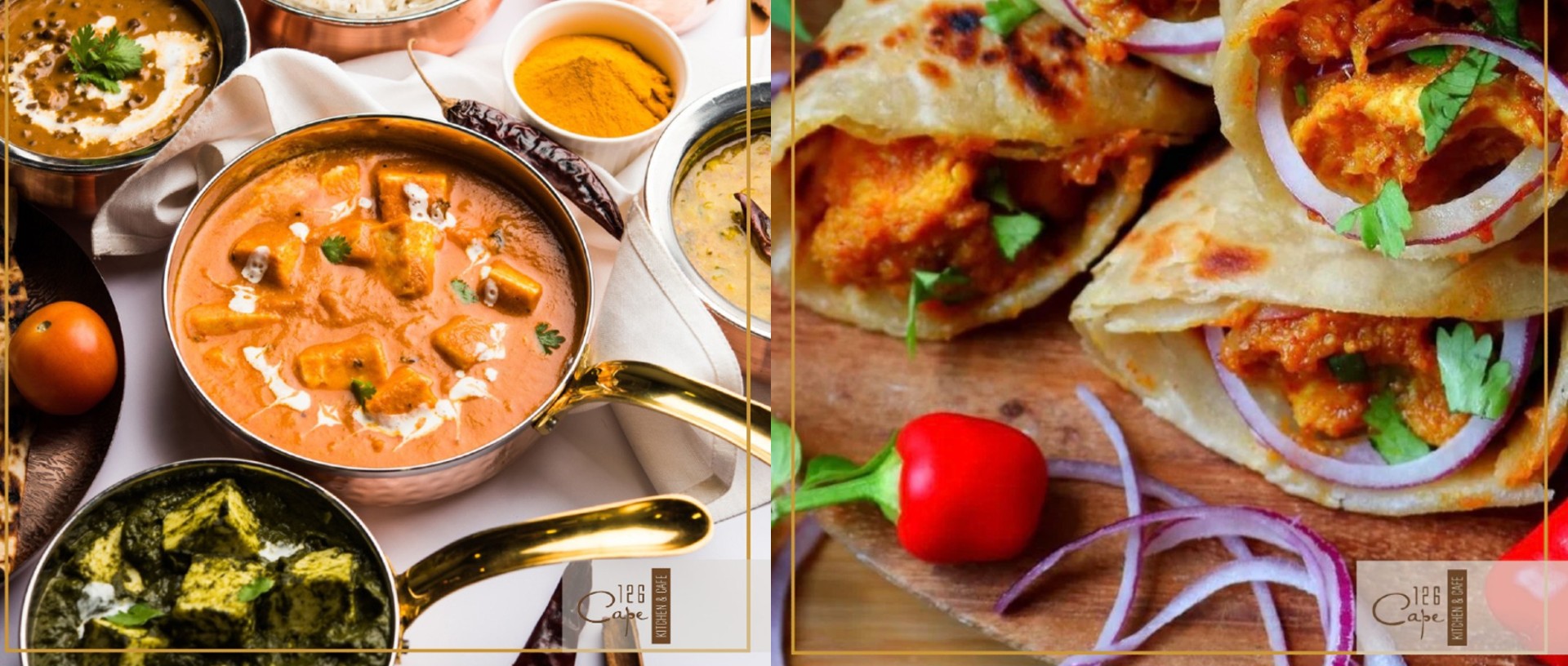
Located on the ground floor of the Hyatt Regency Cape Town, 126 Cape Kitchen & Cafe is inspired by the rich traditions of Bo-Kaap. The restaurant offers a fusion of Malay and Indian flavours. Enjoy their iftar buffet from 6-10pm, featuring traditional dhaltjies and samoosas, an array of salads and sides, and mains like bobotie, butter chicken, Penang lamb curry, and briyani.

Prayer facilities are available at the hotel.

Location: 126 Buitengracht St, Cape Town City Centre
Price: R350 for adults, kids under 12 pay half price. The à la carte menu will not be available.
Contact: Visit www.hyattrestaurants.com

Barakat at Time Out Market Cape Town

Barakat at Time Out Market will be offering complimentary water and dates to all guests to break their fast-during the month of Ramadan. The special includes butter chicken, served with a choice of samoosa and traditional Boeber for dessert.

Location: The Old Power Station, Dock Rd, Victoria & Alfred Waterfront
Price: R160 for the butter chicken, including a samoosa and boeber.
Contact: Visit www.instagram.com/barakat_tm

Cardamom Kitchen

If you’re on the go and want nourishing halal meals, Cardamom Kitchen has a selection of frozen meals, perfect for an easy iftar and suhoor. See the menu here

Location: 14 Sergeant St, Rondebosch East, Cape Town
Price: Various. Contact: 087 265 2262 or email info@cardamomkitchen.co.za

Bo-Kaap Deli, Bo-Kaap
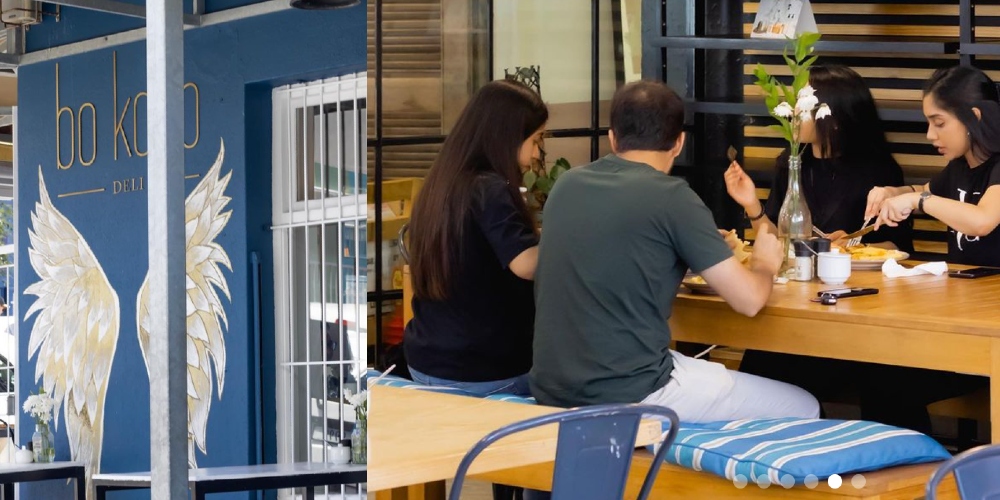
Bo-Kaap Deli will be hosting iftar every Friday and Saturday from 5:30 pm to 10 pm. Guests can order from the menu and enjoy complimentary savouries and soup. A dedicated prayer area is available inside the restaurant.

Location: 114 Church St, Bo-Kaap
Price: Various.
Contact: Call +27 76 346 6207

Nouveau Coffee and Grill, Century City

Nouveau Coffee and Grill’s buffet experience is perfect for gathering with family and friends. Expect a generous spread featuring your choice of soups, a fresh salad selection, grilled queen prawns, a South Indian butter chicken, a Durban-inspired masala breyani, the pasta of the day,

and a variety of desserts to end on a sweet note. There is a dedicated prayer area at the restaurants for guests to use.

Location: Shop 3, Century Village Centre, Century City
Price: R330 for guests over the age of 12, and R195 for children under 12. The à la carte menu will not be available.
Contact: Visit nouveau.co.za

Cova Cafe, Sea Point

Get your matcha and coffee fix after you break your fast at Cova Cafe. The cafe has introduced their Ramadan Seasonal late-night hours from Thursday to Saturday, from 9.30pm-11.30pm. Falooda and Karak Tea will also be available.

Location: Shop 2, 401 St Johns Rd, Cape Town
Price: Various.
Contact: Visit www.instagram.com/covacafe.sa

Aladdin, Cape Town City Centre
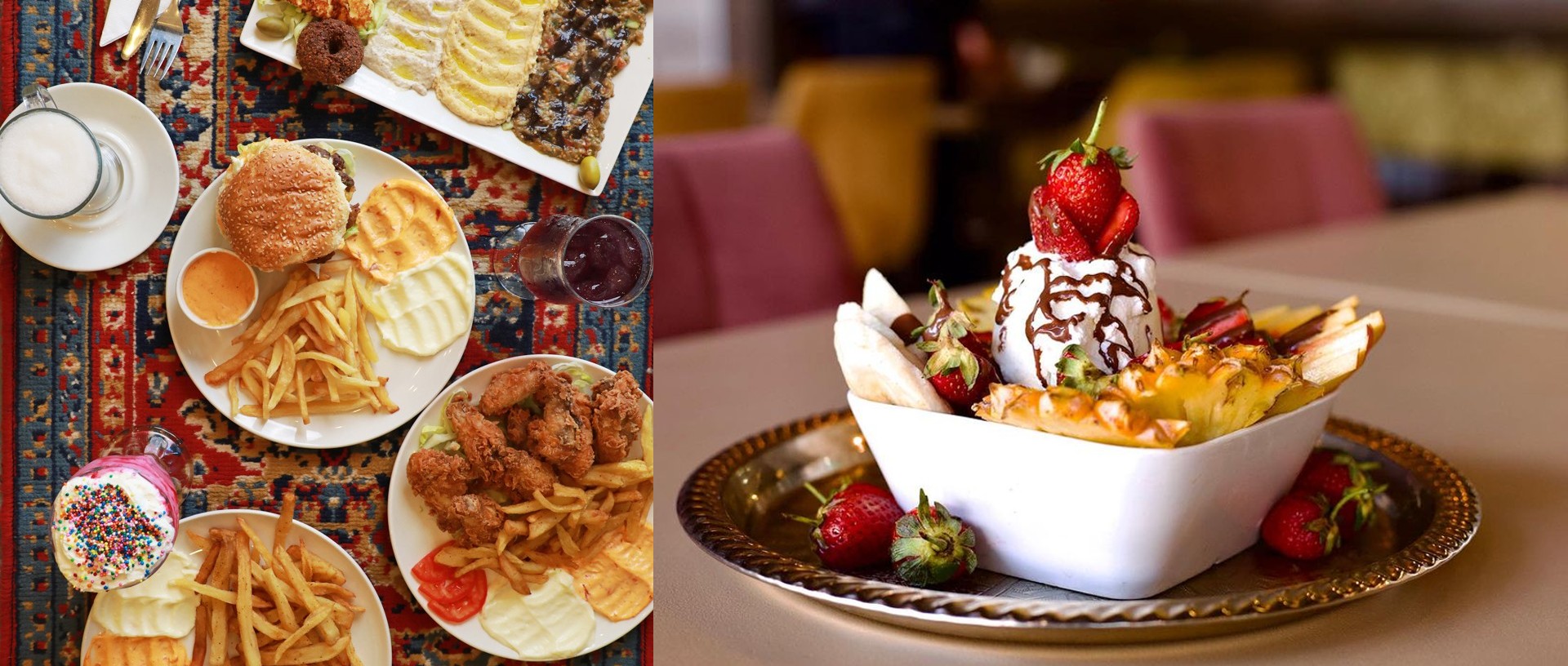
Indulge in a traditional Syrian meal at Aladdin during iftar. The curated set menu offers a choice of signature dishes, including chicken kofta, beef shish kebab and ribs, tender lamb shank served with rice or mashed potatoes, succulent lamb chops, and a variety of flavorful chicken specialties. Your meal begins with complimentary soup, fresh dates, and water. The Coowatool Islam Mosque is located across the road, making it convenient for guests to perform their evening prayers after their meal.

Location: 210 Loop St, Cape Town City Centre
Price: R210pp.
Contact: Call +27 63 065 7064

Alhambra Restaurant, Lansdowne

Indulge in a three-course dinner every Friday and Saturday during Ramadan at Alhambra. Start by choosing from a variety of delicious starters, then move on to hearty mains like creamy Alfredo pasta, tender sirloin, flavourful chicken and prawn dishes, juicy lamb chops, or a

generous seafood paella. Be sure to leave room for something sweet to round it all off. You’ll also be treated to a samoosa, a halfmoon, a koeksister, a date, and a refreshing falooda shot. The Masjid Al-Furqaan Mosque is within close vicinity. Booking is essential.

Location: 409 Imam Haron Rd, Lansdowne
Price: From R220pp. A kiddies’ menu will be available.
Contact: Call +27 21 697 1214 or visit: al-hambra.co.za/

On The Square at The Capetonian

On The Square at The Capetonian is going all out with a daily Ramadan Iftaar Buffet. Break your fast the traditional way with dates, followed by the chef’s soup of the day served with freshly baked breads and a cold buffet. When it’s time for mains, enjoy the chef’s curry of the day (beef or mutton) with basmati rice, flavourful Kabsa Mandi, grilled spicy chicken shiwaya, comforting roasts, pasta dishes, and fish. Finish off with decadent desserts, fresh fruit, and bottomless tea and coffee.

Location: Pier Place, Heerengracht St, Foreshore
Price: R275 per person for adults and half price for children under 12.
Website: capetonian.co.za/dining-on-the-square/

The post Cape Town Restaurants Serving Iftar For Ramadan 2026 appeared first on Cape Town Tourism.
The Maravi Post

From Pledges to Proof: UN Biodiversity Meeting Begins First Global Review of Nature Action

Biodiversity, Climate Action, Conferences, Development & Aid, Editors’ Choice, Environment, Featured, Gender, Global, Headlines, Indigenous Rights, Natural Resources, Sustainable Development Goals, TerraViva United Nations

Biodiversity

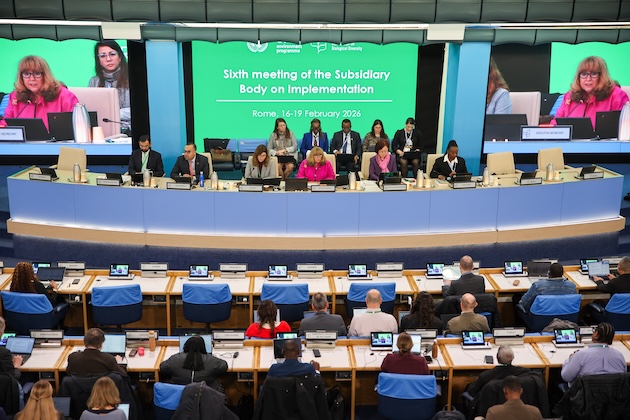
The 6th meeting of the Subsidiary Body of Implementation (SBI-6) is in progress in Rome. Credit: Mike Muzurakis | IISD/ENB

The 6th meeting of the Subsidiary Body of Implementation (SBI-6) is in progress in Rome. Credit: Mike Muzurakis | IISD/ENB |

ROME & DELHI, Feb 17 2026 (IPS) – Governments convened in Rome on Monday (February 16) for a critical round of UN biodiversity negotiations, launching the world’s first global review of how countries are acting to protect nature.


The sixth meeting of the Subsidiary Body on Implementation (SBI-6) of the Convention on Biological Diversity opened at the headquarters of the Food and Agriculture Organization (FAO), drawing government negotiators, technical experts and civil society observers from around the world. It will continue until February 19.

Although considered a technical gathering, the four-day session is expected to play a decisive role in shaping how progress under the Kunming–Montreal Global Biodiversity Framework will be assessed and whether political promises can be translated into measurable, on-the-ground action.

“This is a moment to move from commitments to delivery,” said Clarissa Souza Della Nina of Brazil, Chair of the Subsidiary Body on Implementation. “The task before us is to help countries accelerate action to halt and reverse biodiversity loss.”

Clarissa Souza Della Nina of Brazil, Chair of the Subsidiary Body on Implementation. Credit: Mike Muzurakis | IISD/ENB

Clarissa Souza Della Nina of Brazil, Chair of the Subsidiary Body on Implementation. Credit: Mike Muzurakis | IISD/ENB

A Global Stocktake for Nature

The Rome talks come two years after countries completed the first global stocktake under the Paris Agreement, which confirmed the world remains far off track on climate goals.

Now, a parallel exercise begins for biodiversity.

Under the CBD, governments will undertake the first global review of progress in implementing the Kunming–Montreal Global Biodiversity Framework (KMGBF), adopted in 2022. The framework includes 23 targets spanning conservation, finance, equity and economic transformation, with the overarching objective of halting and reversing biodiversity loss by 2030.

Biodiversity tracking is more complex than emissions accounting, but, according to CBD leadership, it is urgently needed.

“The time has come to make peace with nature… the implementation of the Kunming-Montreal Global Biodiversity Framework and the Paris Agreement in a synergistic fashion will make peace with nature within reach,” said Astrid Schomaker, Executive Secretary of the Convention on Biological Diversity.

Why Rome Matters

SBI-6 plays a central role in preparing for the upcoming global biodiversity review by examining implementation progress, highlighting gaps, and proposing ways to accelerate action. Negotiators will submit the outcomes directly to COP17 in Yerevan, Armenia, later this year.

“One year after COP16 concluded here in Rome, we must ensure these meetings deliver real progress. Submitting national reports on time is essential for a strong and credible global review in the race to 2030,” Schomaker said.

A major focus of SBI-6 is the Secretariat’s analysis of national biodiversity strategies and action plans submitted since 2022. But despite growing momentum, significant gaps persist. Many strategies still do not adequately integrate Indigenous Peoples, local communities, women, youth, or the private sector. Crucial targets relating to economic and social transformation — including sustainable consumption, equity and benefit sharing — remain underemphasised.

Inger Andersen, Executive Director of the United Nations Environment Programme (UNEP), underscored the stakes at the launch of the State of Finance for Nature 2026 report:

“Whether investments flow into nature’s destruction or into its protection will determine if we live in climate-vulnerable concrete jungles or in climate-resilient green cities,” she warned, stressing that financial and policy decisions made today will shape countries’ ability to meet biodiversity goals.

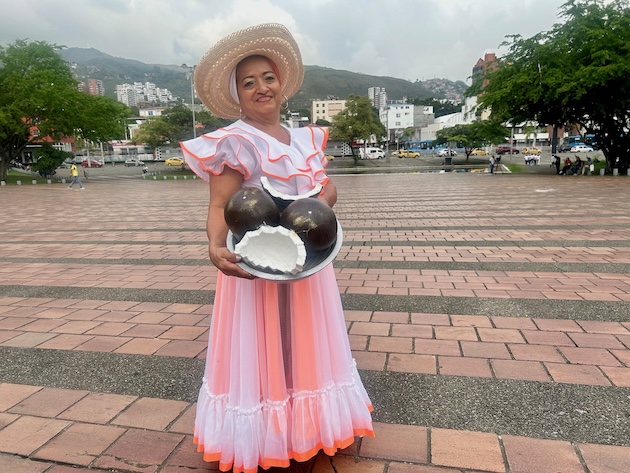
An indigenous woman and biodiversity defender from the Amazon is pictured holding a forest coconut. Women are asking for better implementation of article 23 of the KMGBF. Credit: Stella Paul/IPS

An indigenous woman and biodiversity defender from the Amazon is pictured holding a forest coconut. Women are asking for better implementation of article 23 of the KMGBF. Credit: Stella Paul/IPS

Gender, Finance and Capacity Challenges

Delegates are also reviewing progress under the CBD Gender Plan of Action (2023–2030). Early assessments show that only a quarter of countries involved women’s groups in shaping biodiversity strategies, and just 12 percent plan to do so in the future.

“Ensuring the full, effective and meaningful participation of women and other rights holders is fundamental to accountability, inclusivity and the effectiveness of biodiversity action, and to achieving the full ambition of the global framework,” the CBD Women’s Caucus stated in its official submission.

Finance remains another major point of discussion. While major funding decisions are expected later this year, Rome’s deliberations draw heavily on new research on biodiversity finance, sovereign debt, and the connections between climate and nature funding.

“If we want to mobilise the finance and resources that nature critically needs, business, finance and governments must confront the reality that persistent gaps in reliable data, incentives and institutional capacity are holding back meaningful action — and unless these barriers are addressed, many countries and sectors will continue to struggle to turn agreed goals into results,” said Matt Jones, Co-Chair of the IPBES Business and Biodiversity Assessment 2026.

Countdown to National Reports

The Rome meeting comes just weeks before countries must submit their Seventh National Reports under the CBD, due on 28 February 2026.

These national publications will serve as a principal source of information for the global biodiversity review, alongside national strategies and targets.

However, many countries remain unprepared to submit on time. On day one, Brazil, one of the most influential players in global biodiversity policy, stressed the need for flexibility.

“Ensuring the quality, consistency and internal validation of data and indicators requires additional time. In this context, Brazil suggests that SBI recommendations prioritise technical guidance, operational flexibility and targeted capacity-building support to enable high-quality reporting, rather than focusing solely on reinforcing deadlines,” the country’s delegate said.

A Test of Accountability

While SBI-6 is unlikely to produce headline-grabbing announcements, it will shape how global biodiversity action is evaluated over the next decade.

For Indigenous Peoples and local communities—who steward a significant share of the world’s remaining biodiversity—the meeting represents a critical test of whether rights, participation and lived realities will be meaningfully reflected in the global assessment process.

“This process must lead to accountability, not just documentation,” emphasised Pirawan Wongnithisathaporn, the Environment Program Officer at the Asia Indigenous Peoples Pact (AIPP), calling for tangible action rather than reporting alone.

SBI-6 will conclude on Thursday, February 19. Negotiations will continue at SBI-7 in August 2026 as governments move steadily toward the first global biodiversity review at COP17.

IPS UN Bureau Report


Chongqing’s daring design: The 6-storey gas station split by a hill

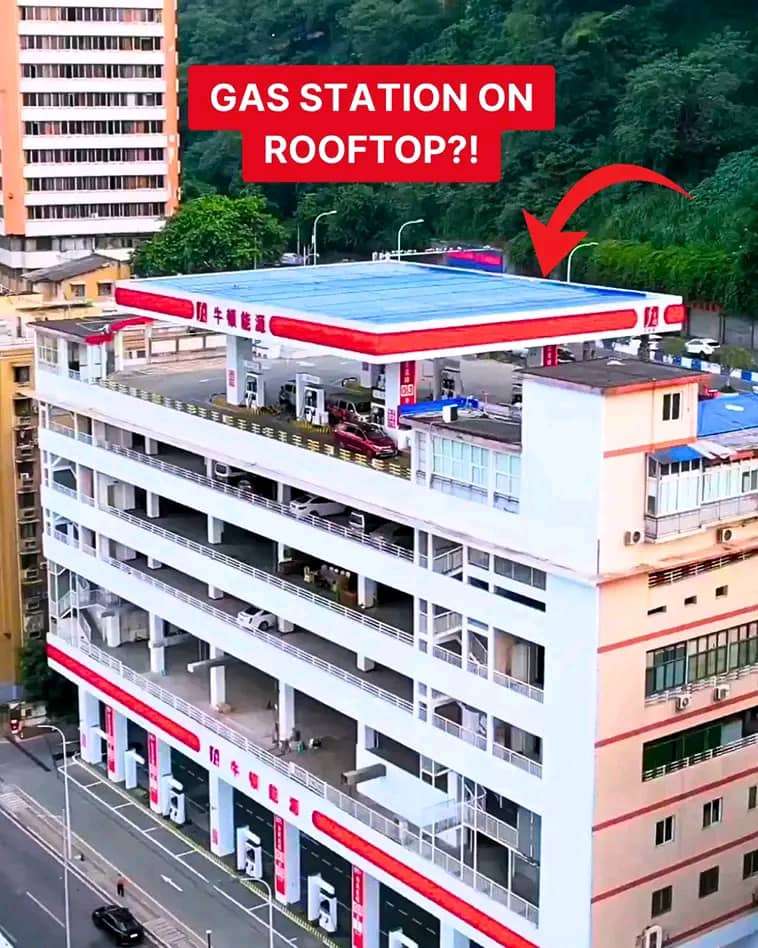
YUZHONG-(MaraviPost)-A striking architectural landmark in Chongqing’s Yuzhong District has captured global attention, featuring not one, but two gas stations positioned on different floors of the same building, showcasing the city’s innovative approach to urban design.

The building, situated in a steep, mountainous terrain, boasts two distinct gas stations: one conveniently located on the 1st floor, and another on the 6th floor (rooftop), defying traditional notions of urban planning and challenging perceptions of what is possible in construction.

The 1st-floor station is easily accessible via Changbin Road, at the base of the hill, while the 6th-floor rooftop station is level with Nanqu Road, higher up the slope, creating an intriguing “ground” illusion, where both stations are essentially at “street level” depending on the road you’re driving on.

The four floors between the two stations are utilized primarily as parking spaces, making the most of the building’s unique layout and maximizing the use of space in a densely populated urban area.

Interestingly, despite the stations appearing to be only a few stories apart, the driving distance between the lower entrance and the upper entrance is approximately 3 kilometers, due to the winding roads required to navigate the elevation change, highlighting the complexities of building in Chongqing’s challenging terrain.

This innovative structure is a testament to Chongqing’s reputation for “8D” or “magical” urban design, where architects and engineers push the boundaries of what is possible, creating functional spaces that are both practical and awe-inspiring.

The building has drawn comparisons to other incredible examples of Chongqing’s architecture, such as the train that runs through a residential building, solidifying the city’s reputation as a hub for innovative and daring design.

As a result, this gas station has become a must-see attraction for architecture enthusiasts and curious travelers alike, offering a glimpse into the city’s unique blend of functionality and creativity.

The Maravi Post