Malawi’s Judiciary: A political battleground undermining national progress, justice

The recent High Court ruling in Lilongwe that quashed the redeployment of five senior Malawi Defence Force (MDF) officers to the civil service epitomizes a judiciary deeply entangled in politics and far removed from the true essence of justice.

This ruling, and several others like it, reveal a disturbing trend: the Malawian judiciary appears less as an independent arbiter of law and more as a political actor obstructing the legitimate efforts of the government to implement its policies.

It is high time this uncomfortable reality is confronted honestly and without fear, for the good of Malawi and its future.

The Democratic Progressive Party (DPP), under the visionary leadership of Professor Arthur Peter Mutharika, has charted a clear path for Malawi’s development. Their government has demonstrated a commitment to reforms and to steering the country towards greater prosperity.

Yet, despite these noble intentions, the judiciary persistently stands as a formidable barrier, frustrating and nullifying executive decisions that are essential to the functioning of the state and the advancement of national interests.

The ongoing standoff between the executive and the judiciary is now undeniable, and the consequences of this power struggle are detrimental to Malawi’s progress.

Consider the redeployment of MDF senior officers—a routine administrative action that has been a normal feature of government operations, including during the previous Malawi Congress Party (MCP) regime.

Redeployment is not dismissal; it is a strategic repositioning within government ranks to meet evolving institutional needs. It is baffling, therefore, that the judiciary should intervene to halt such a standard practice.

One must ask: Why did the judiciary raise an alarm over redeployments under the DPP, when similar transfers occurred without controversy during MCP’s tenure? Is this selective legal activism, or worse, political interference masquerading as judicial prudence?

The hard truth is that the judiciary seems to be serving partisan interests rather than the rule of law. Its actions suggest a clear bias against the current administration.

By obstructing government moves such as redeploying MDF officers, the courts are effectively undermining the chain of command and the authority vested in the executive by the Constitution.

The military, by its very nature, is disciplined and hierarchical. Orders from senior commanders, including the Commander-in-Chief, must be obeyed promptly and without question.

The decision by some senior MDF officers to seek judicial intervention rather than comply with redeployment orders is a direct challenge to military discipline and the principle of obedience that underpins effective defense forces worldwide.

The judiciary should understand this fundamental aspect of military operations. Redeployment does not equate to job loss or demotion; it is a standard personnel management practice.

Instead of supporting the executive’s lawful directives, the courts have sided with officers who flout military discipline, thereby encouraging insubordination.

This is dangerous precedent-setting that threatens both national security and the principle of civilian oversight over the military.

Moreover, the judiciary’s penchant for nullifying executive decisions has broader implications.

It sends a message that every viable government initiative, no matter how reasonable or necessary, can be stalled or overturned by judicial fiat. If the DPP government fails to deliver on its promises, it will not be for lack of vision or effort, but because the judiciary has systematically hampered its ability to govern effectively.

This politicization of the judiciary is a betrayal of the very people the courts purport to serve.

Judge Kenyatta Nyirenda’s recent public tirades against the media further illustrate the judiciary’s troubling conduct.

His accusations of ignorance and propaganda directed at Malawi’s journalists are not only baseless but also deeply disrespectful to an institution that plays a critical role in democracy. The media—professional, dedicated, and often under-resourced—works tirelessly to inform the public and hold power to account.

The judge’s disparaging remarks, including questioning journalists’ credentials and competence, reveal a profound misunderstanding of the media’s role and an alarming intolerance for scrutiny.

The hard truth here is that Kenyatta Nyirenda, despite his legal expertise, is neither a media expert nor an authority on journalism. His attempt to undermine and belittle the press is an abuse of his position and an affront to the democratic principles of freedom of expression and information.

The judiciary must respect the independence of other institutions, especially those that serve as watchdogs over government and society.

Judges should confine their critiques to legal matters and refrain from launching unwarranted attacks on the media, which only serve to erode public confidence in the judiciary itself.

This situation is exacerbated by the judiciary’s own operational shortcomings.
Malawi’s courts are notorious for delays and inefficiencies. It is common knowledge that while litigants arrive early, often as early as 7:30 am, court sessions do not commence until well after 10:30 am.

Such delays undermine public trust and deny timely justice to those who need it most. Worse still, there is rarely an apology or explanation for these delays, signaling a lack of accountability and respect for the public.

If the judiciary claims to be the guardian of justice, it must first demonstrate professionalism and commitment to serving the people efficiently.

Malawi’s judiciary is far from infallible; it is not a demigod or a semi-god institution that should intimidate or threaten the citizenry.

The reverence accorded to the courts must be balanced with a critical appraisal of their performance and impartiality.

When judges stray from the law to serve political interests or personal biases, they do a disservice to the country’s democratic foundations.

The judiciary’s perceived partisanship and questionable rulings erode the public’s faith in the justice system and fuel cynicism about the rule of law in Malawi.

The hard truth is that Malawi’s judiciary is in desperate need of a complete overhaul. Structural reforms, enhanced transparency, accountability mechanisms, and rigorous training focused on judicial ethics and independence are urgently required.

Without these changes, the judiciary will continue to be a stumbling block to national development and a source of injustice for ordinary Malawians.

The judiciary’s interference in the redeployment of MDF officers, its antagonism towards the media, and its operational inefficiencies paint a grim picture of an institution that has strayed from its constitutional mandate.

The courts must cease using their authority to frustrate government policies and must respect the disciplined nature of military service.

Judge Kenyatta Nyirenda and his colleagues should recognize that their role is to interpret the law impartially, not to engage in political battles or vilify other democratic institutions.

Malawi deserves a judiciary that is independent, professional, and committed to delivering justice without fear or favor.

Until then, the country’s democratic progress will remain hostage to judicial overreach and partisanship. The time for candid reflection and bold reform is now. The future of Malawi depends on it.

Feedback:+265992082424

Email: jonesgadama@gmail.com

The Maravi Post

CAF maintains hosting AFCON in 2027

CAIRO-(MaraviPost)-The President of Confederation of African Football (CAF), Patrice Motsepe, has officially confirmed that the 2027 Africa Cup of Nations will be played as scheduled, dismissing speculation that the tournament could be postponed to 2028.

Motsepe made it clear that there are no plans to delay the continent’s biggest football showpiece, emphasizing that preparations are progressing and that CAF remains confident in the host nations’ readiness.

The tournament is scheduled to run from June 19 to July 18, 2027, setting the stage for a month long celebration of African football.

The confirmation brings relief to fans, players and participating nations who had been uncertain following widespread rumors.

The 2027 edition will be jointly hosted by Kenya, Tanzania and Uganda, marking a historic moment for the East African region.

It will be the first time in the tournament’s history that three countries co-host the competition.

The joint bid, popularly known as the “Pamoja” initiative meaning “together” in Swahili symbolizes regional unity and cooperation.

The three nations aim to use the tournament not only to showcase football talent but also to boost tourism, infrastructure development and regional integration.

Speculation about a possible postponement had emerged amid concerns about infrastructure readiness and scheduling challenges.

However, Motsepe dismissed such claims as unfounded, reiterating CAF’s commitment to ensuring the event proceeds as planned.

CAF has reportedly been conducting regular inspections and offering technical support to the host nations to ensure stadiums, training facilities and accommodation meet international standards well before kickoff.

The confirmation also settles debate about the tournament calendar, as CAF had been reviewing its long term scheduling strategy.

While discussions continue about possible adjustments to future editions, the 2027 tournament remains firmly on track.

For East Africa, hosting the competition is seen as a transformative opportunity.

The event is expected to draw thousands of international visitors and millions of television viewers worldwide.

The Maravi Post

Multilateralism Reaching Breaking Point

Active Citizens, Armed Conflicts, Civil Society, Democracy, Featured, Global, Headlines, Health, Human Rights, TerraViva United Nations

Opinion

Multilateralism Reaching Breaking Point

Credit: Jonathan Ernst/Reuters via Gallo Images

BRUSSELS, Belgium, Feb 13 2026 (IPS) – The latest World Economic Forum made clear the current crisis of multilateralism. Over 60 heads of state and 800 corporate executives assembled in Davos under a ‘Spirit of Dialogue’ theme aimed at strengthening global cooperation, but it was preceded by a series of events pointing to a further unravelling of the international system.


On 3 January, Donald Trump launched an illegal military strike on Venezuela to abduct President Nicolás Maduro, which was widely condemned as a violation of international law. On 7 January, he signed an executive order withdrawing the USA from 66 international bodies and processes, including 31 UN entities, such as the UN Democracy Fund, the UN Framework Convention on Climate Change and UN Women. Then came the launch of Trump’s Board of Peace, evidently an attempt to supplant the UN Security Council. The country that helped build the multilateral system is walking away from the parts it doesn’t like and seeking to reshape the rest in its interests.

Trump’s approach to multilateralism is nakedly transactional. His administration engages with international processes only when they advance immediate US interests and withdraws from those that impose obligations. This disassociates multilateralism from its core principles: accountability over shared standards, equality among nations and universality. It encourages other states to follow suit.

This approach brings devastating financial impacts. US threats to defund international bodies have left institutions scrambling. UN development, human rights and peacekeeping programmes all depended heavily on US financial contributions. The World Health Organization faces shortfalls that threaten its ability to respond to health emergencies because the US government quit without paying its overdue contributions.

The USA’s closest allies aren’t safe. Trump threatened NATO member Denmark with 25 per cent tariffs unless it agreed to the USA’s purchase of Greenland, and suggested he might seize the territory by force. NATO’s Article 5 on collective defence – invoked only once, by the USA after 9/11 – lies in doubt. European states are reacting by seeking strategic autonomy, slashing development aid and reducing UN contributions while finding extra billions for military spending.

Problematic alternatives are looking to capitalise on crisis. At Davos, China positioned itself as the grown-up alternative to Trump, promoting its Friends of Global Governance initiative, a group of 43 mostly authoritarian states including Belarus, Nicaragua and North Korea.

The queue of heads of government meeting China’s leader Xi Jinping shows many states are pivoting this way. But it comes at a cost: in China’s vision of international cooperation, state sovereignty is paramount and there’s no room for international scrutiny of human rights or cooperation to promote democratic freedoms.

It’s the same story with the new Board of Peace. The body originated in a controversial November 2025 Security Council resolution establishing external governance for Gaza, but Trump clearly envisions a permanent, wider role for it. He chairs it in a personal capacity, with full power to veto decisions, set agendas and invite or dismiss members. Permanent membership costs US$1 billion, with the money’s destination unclear.

The Board’s draft charter makes no mention of human rights protections, contains no provisions for civil society participation and establishes no accountability mechanisms. Most members so far are autocratic states such as Belarus, Egypt and Saudi Arabia. Its credibility is further undermined by the fact that Israel has just joined, despite having made a mockery of international humanitarian law. More democratic states have declined invitations, mostly due to concerns about the body’s unclear relationship with the UN. Trump’s response was to threaten increased tariffs against France and withdraw Canada’s invitation. He has made clear he considers himself above international law, casting himself as a de facto world president able to resolve conflicts through personal power and pressure.

As the old order dissolves, civil society must play a critical role in defining what comes next. While the UN – particularly its Security Council, hamstrung by the use of veto powers by China, Russia and the USA – needs reform, it remains the only global framework built on formal equality and universal human rights. As the UN faces assault from those abandoning it or seeking to dilute its human rights mandate, civil society must mobilise to keep it anchored to its founding principles and challenge the hierarchies that exclude global south voices.

It falls on civil society to organise across borders to uphold international law, document violations of international humanitarian and human rights law and demand accountability. Not for the first time, civil society needs to win the argument that might doesn’t make right.

Samuel King is a researcher with the Horizon Europe-funded research project ENSURED: Shaping Cooperation for a World in Transition at CIVICUS: World Alliance for Citizen Participation.

For interviews or more information, please contact research@civicus.org

  Source

Fiscal Police arrest former NEEF chief Mdyetseni, Mbozi

LILONGWE-(MaraviPost)-The Malawi Police have arrested former National Economic Empowerment Fund (Neef) chief executive officer (CEO) Humphreys Mdyetseni and Anderson Mbozi, an engineer in the Department of Irrigation.

National Police spokesperson Lael Chimtembo has confirmed the arrests, saying the two are facing charges linked to abuse of office.

“I can confirm that Mr. Humphrey Austin Mdyetseni from Sangambe Village, T/A Kabudula, (former Chief Executive Officer of the National Economic Empowerment Fund) and Mr. Anderson Mbozi of Chaluma Village, T/A Kalumbu, Lilongwe (an Engineer in the Department of Irrigation) have been arrested. They are being charged with abuse of office. Further details will be provided once the formal charge process is completed,” said Chimtembo.

Chimtembo did not provide further details on the circumstances surrounding the arrests.

Mdyetseni served as Neef CEO from 2020, when the institution was rebranded from Malawi Enterprise Development Fund to its current name.

NEEF is believed to have a centre of fraud inputs loans to former President Lazarus Chakwera’s Malawi Congress Party (MCP) regime sympathisers.

The Maravi Post

Namibia’s Onshore Drive: Emerging Opportunities Beyond the Deepwater Frontier

With onshore drilling results in hand and key production tests planned for 2026, Namibia’s frontier basins are moving into sharper focus – creating new openings for investors at this year’s Namibia International Energy Conference
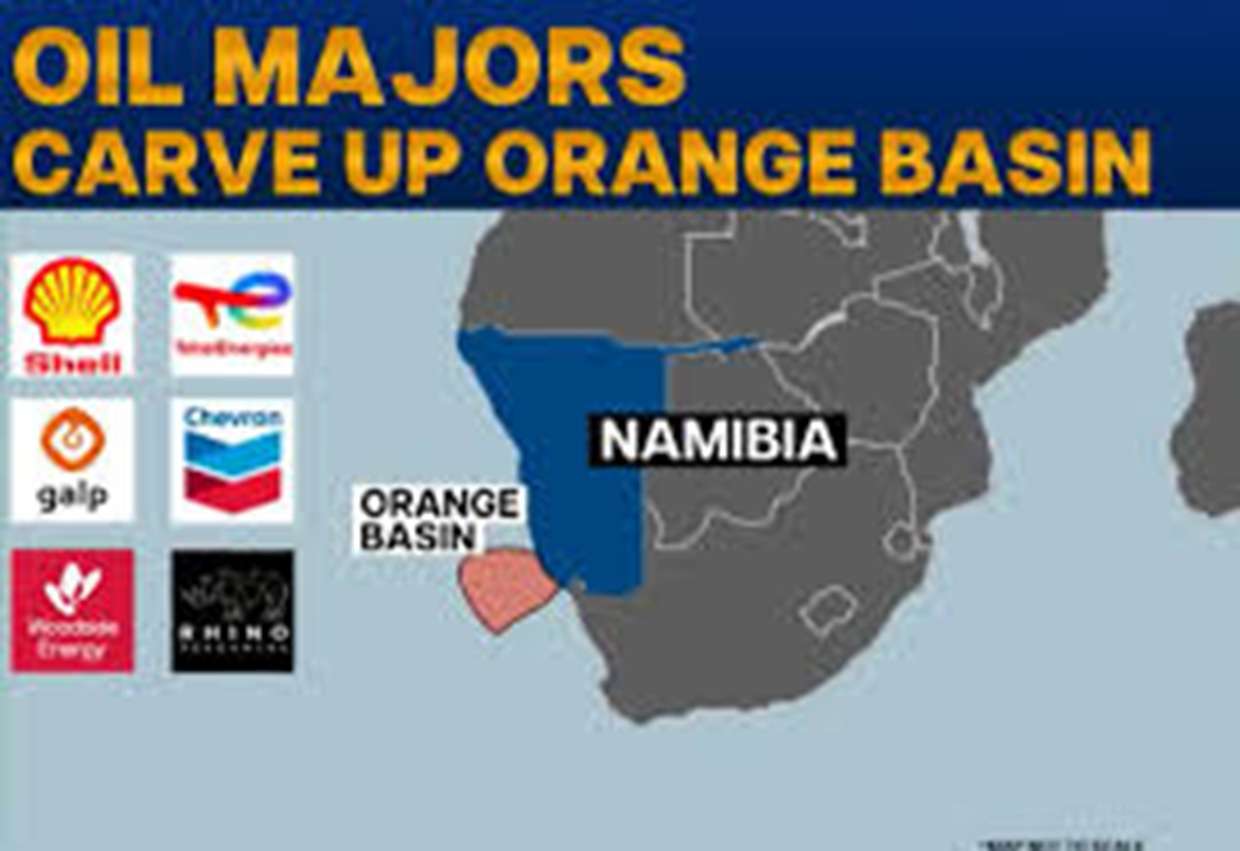
WINDHOEK, Namibia, February 12, 2026/ — Namibia’s upstream narrative has, until recently, been defined by deepwater success in the Orange Basin, where major offshore discoveries have transformed perceptions of the country’s hydrocarbon potential. Galp’s Mopane discovery, estimated to hold up to 10 billion barrels of oil equivalent, alongside TotalEnergies’ Venus find, has firmly positioned Namibia on the global exploration map and underpinned expectations of first offshore oil before the end of the decade. Alongside this offshore momentum, however, a parallel story is unfolding onshore, where frontier basins, lower entry costs and improving geological understanding are drawing increased attention from explorers and investors alike.
What Makes Onshore Namibia Attractive?

Onshore Namibia presents a compelling proposition, particularly in the current global investment climate. Compared with deepwater developments, onshore exploration offers significantly lower drilling and operating costs, shorter project timelines and greater flexibility during appraisal. These advantages help reduce risk while allowing companies to test frontier plays more efficiently – a key factor given that Namibia’s onshore basins remain underexplored by international standards.

The most advanced onshore exploration activity is currently taking place in the Kavango Basin, led by ReconAfrica. In December 2025, the company completed drilling at its Kavango West 1X well to a depth of approximately 4,200 meters. Data collected during drilling confirmed the presence of hydrocarbons across a substantial section of the well, including several zones that could potentially support future production. Additional hydrocarbon indications were identified at deeper levels, pointing to the possibility of multiple viable targets within the basin. While the well was not immediately placed into production, the results marked one of the most significant onshore milestones achieved in Namibia to date and confirmed the existence of a working petroleum system.

Building on these findings, ReconAfrica plans to return to Kavango West 1X in early 2026 to conduct a production test. The results of this program will be critical in determining whether the hydrocarbons identified can be produced at commercial rates and whether the Kavango Basin can progress from exploration concept to viable development. Beyond this initial well, the company controls a substantial onshore acreage position across Namibia and neighboring Angola, providing considerable scope for follow-up drilling and potential farm-in opportunities should results prove encouraging.

Further west, the Owambo Basin represents another onshore frontier attracting growing interest. Exploration efforts led by joint ventures involving Monitor Exploration, 88 Energy and Legend Oil Namibia have focused on gravity, magnetic and environmental surveys under Petroleum Exploration Licence 93. These studies have identified several structural leads, including large closures capable of supporting hydrocarbon trapping within a rift-related petroleum system. While seismic acquisition and interpretation are expected to continue through 2026, the basin is increasingly viewed as a medium-term opportunity that could complement progress in the Kavango Basin.

Exploration and Activity Outlook

Looking ahead, 2026 is shaping up to be a defining year for Namibia’s onshore ambitions. In addition to the planned Kavango West production test, operators are expected to expand geochemical sampling and subsurface studies across multiple lisence areas, both within Namibia and along its onshore extension into Angola. These programs are aimed at reducing exploration risk and supporting investment decisions at a time when African onshore oil and gas spending is forecast to rise, driven by demand for lower-cost, shorter-cycle developments.

As this onshore momentum builds, the Namibia International Energy Conference (NIEC) is emerging as a key forum for engagement between government, operators and investors shaping the country’s upstream future. Scheduled to take place in Windhoek from 14–16 April 2026 under the theme “The Road to First Oil and Beyond,” NIEC brings together policymakers, regulators, explorers, financiers and service providers at a critical point in Namibia’s development trajectory. While offshore projects continue to dominate global headlines, the conference provides onshore explorers with a platform to showcase progress, advance partnerships and engage investors seeking diversification beyond deepwater plays.

For onshore licence holders, NIEC creates tangible opportunities to progress farm-in discussions, secure technical and financial partners and align exploration timelines with national development priorities. As Namibia advances both offshore and onshore, NIEC ensures that policy, investment and technical planning move forward in step.

The African Energy Chamber serves as the strategic partner of NIEC 2026, working alongside government and industry to advance investment, local content and responsible energy development in Namibia.

Distributed by APO Group on behalf of African Energy Chamber.

SOURCE: African Energy Chamber

The Maravi Post

Education Ministry rolls out emergency school feeding program in Zomba

BLANTYRE-(MaraviPost)-The Ministry of Education, Science and Technology on Thursday, February 12, 2026, officially launched an emergency school feeding program, an initiative that will improve learners’ retention at Namadidi Primary School in Zomba.

The school feeding program aims to address the challenge of food insecurity and absenteeism among pupils in the district and other district that were hit with dry spells in 2025/2026, that led to food shortages and threatening the regular attendance of students.

The World Food Programme is overseeing the implementation of the program, which will benefit 338,000 pupils across 278 schools in the targeted districts, with financial support provided by Germany and Iceland.

Speaking at the launch, the Minister of Education, Science and Technology Bright Msaka expressed the government’s appreciation for the support received from Germany and Iceland and other key partners for the donations of school meals through World Food Program (WFP) saying that it will help to increase pupils’ attendance.

He highlighted that the government is greatly impressed with the donor’s commitment to helping children access school meals during this lean season.

However, the Minister reaffirmed the government’s commitment to continue providing meals throughout the year to help maintain high levels of school attendance and promote better learning outcomes by 2030.

On her part, United Nations Resident Coordinator for Malawi, Rebecca Adda Donto, emphasized the importance of coordination among the different donors involved in this effort.

She pointed out that this is an investing in resilient in the lives of pupils and communities who are benefiting from this program as parents are also receiving farm inputs.

She urged all partners to continue working together to maximize the impact of the school feeding program and ensure that resources are available to pupils as it takes $20 to feed a pupil for the whole year.

The Ambassador for Germany and Iceland to Malawi expressed their satisfaction with the positive impact in the school feeding program and the anticipatory sustainability of providing farm inputs to the communities as it will help to end hunger in the district.

The Maravi Post